When Edwidge Danticat arrived in Brooklyn at the age of twelve, in 1981, English was not her language. She wore Haitian clothes, spoke Creole as her mother tongue, and had a family history already marked by separation. Forty-five years later, she is one of the most respected living Haitian-American writers, a MacArthur Fellow and professor at Columbia University, where she holds the Wun Tsun Tam Mellon Professor of the Humanities. But above all, she has done something that few writers of her generation have achieved on this scale: she has placed Haiti at the heart of contemporary world literature.
A childhood between Port-au-Prince and waiting
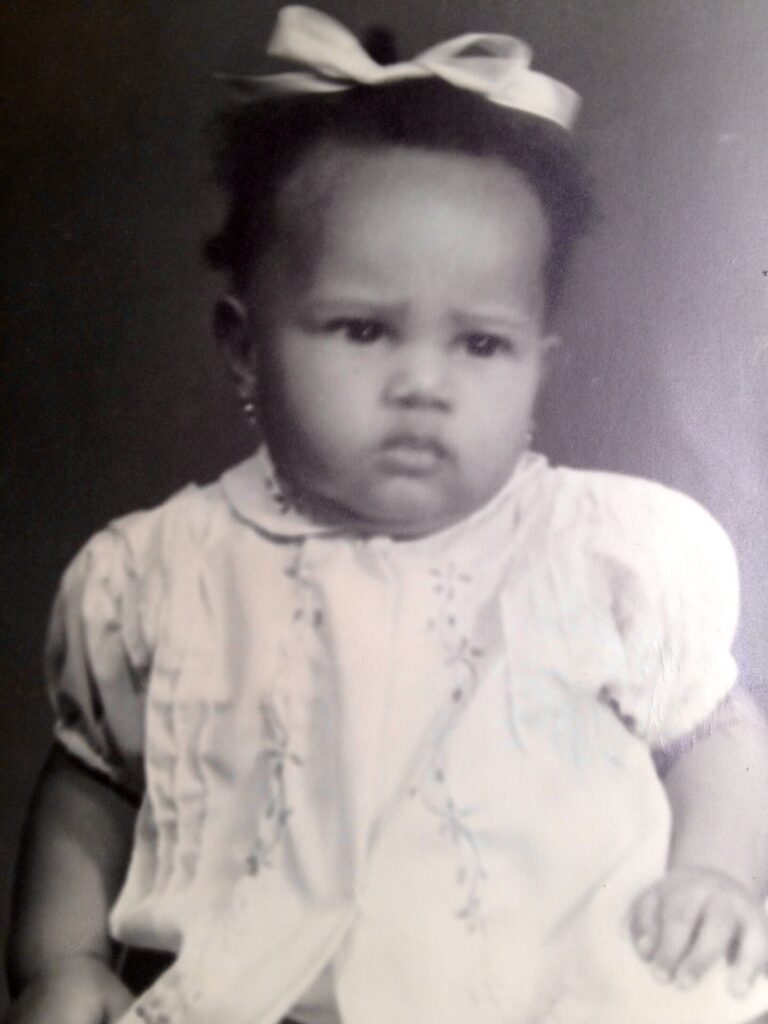
Edwidge Danticat was born on January 19, 1969 in Port-au-Prince, under the dictatorship of François Duvalier. Her father left for the United States when she was still very young, and her mother joined him a few years later. She was brought up in Haiti by her uncle Joseph and aunt Denise, in a house in Bel Air where other children were also experiencing the absence of parents who had left to seek a life elsewhere. “I remember missing them, but I accepted it as a fact of life”, she confided to the Vilcek Foundation. This childhood, divided between waiting, the surrogate uncle and the late arrival of biological parents, would nourish all her work.
Writing as a third language
Edwidge Danticat began writing as a child. As a teenager in Brooklyn, she wrote for New Youth Connections, a newspaper edited by New York high school students. She earned a BA in French literature from Barnard College in 1990, then a Master of Fine Arts in creative writing from Brown University in 1993. Her Master’s thesis became her first novel, Breath, Eyes, Memory, published in 1994 at the age of 25. The book was selected for Oprah’s Book Club in 1998, propelling her career to massive proportions.

Eighteen books and major recognition
The figures are impressive. Eighteen books published. A finalist nomination for the National Book Award for his short story collection Krik? Krak! in 1995. A MacArthur Fellowship in 2009, the famous “genius grant”. The Neustadt International Prize for Literature in 2018, one of the most prestigious American literary prizes. The PEN/Malamud Award in 2023. The PEN/Nabokov Award for Achievement in International Literature in 2026. The National Book Critics Circle Award. The American Book Award. These distinctions tell us one thing: Edwidge Danticat is not just a great voice of the Haitian diaspora. She is a major figure in contemporary American and Caribbean literature.

Haiti, not as a backdrop, but as a memory
But what’s most impressive is the thematic coherence. From Breath, Eyes, Memory to Everything Inside, via The Farming of Bones on the massacre of Haitians on the Dominican border in 1937, The Dew Breaker on the traces left by Duvalier’s violence and the deeply moving memoir Brother, I’m Dying on the death of her uncle in the American immigration detention system, Edwidge Danticat has never stopped writing Haiti. Not as an exotic subject. As a language, a memory, a family.
One of her singularities lies in the way she articulates individual and collective experience. Brother, I’m Dying, for which she won the National Book Critics Circle Award for autobiography, recounts the death of her uncle Joseph, a Haitian asylum seeker who died while in U.S. immigration custody. The book functions as both intimate mourning and political indictment. It helped shed light on the detention conditions of Caribbean migrants in the United States, long before the subject became central to American public debate.
A work for adults, young readers and the diaspora
Edwidge Danticat has also written eight books for children and teenagers, including Anacaona: Golden Flower, about the Taino queen who opposed the Spanish conquistadors. She has published a travelogue, After the Dance: A Walk Through Carnival in Jacmel, as well as several essays. Her collection Create Dangerously: The Immigrant Artist at Work has become a reference text for thinking about the place of the immigrant artist, caught between memory, exile, responsibility and creation.
Edwidge Danticat now teaches at Columbia University in the Department of African American and African Diaspora Studies. She lives in Miami, a city marked by a strong Haitian presence. This presence is not anecdotal. Since the 1980s, Miami has become one of the great capitals of the Haitian diaspora – and therefore, by extension, one of the cultural laboratories where contemporary Haitian-American literature is invented.


A turning point for contemporary Haitian literature
Edwidge Danticat ‘s absolute singularity lies in a simple fact. Before her, a part of Haitian literature was often read, in international circuits, as regional literature or as postcolonial Francophone literature. With her, written in English and awarded prizes by major American literary institutions, Haitian memory has gained a central place in world publishing. This shift could not have been achieved mechanically by a single person. But without Edwidge Danticat, it would not have happened on the scale it did.
A voice always on the move
The sequel confirms that his work remains in motion. Watch Out for Falling Iguanas, a children’s book illustrated by Jamaican artist Rachel Moss, was published by Akashic Books in 2025. And a new novel, Dèy, has been announced for August 2026. The title, in Haitian Creole, refers to mourning and memory. It extends what his work has been about for over thirty years: family, loss, exile, violence, but also the tiny gestures that allow us to stand.
Forty-five years after Brooklyn, Edwidge Danticat continues to write with the same precision and tenderness. And as long as she continues to write, Haiti will have a voice that carries beyond its borders.
Edwidge Danticat is a Haitian-American writer born in Port-au-Prince in 1969. She moved to Brooklyn at the age of twelve, and has built a major body of work around exile, family memory, migration, Haitian history and the diaspora. Her books include Breath, Eyes, Memory, Krik? Krak!, The Farming of Bones and Brother, I’m Dying, have made her one of the most important voices in contemporary Caribbean literature.
Edwidge Danticat occupies an essential place because she has enabled Haitian memory to enter the great circuits of world literature, notably through American publishing. Her work presents Haiti not simply as a setting, but as a language, a history, a wound, a strength and a family memory. She links the intimate to the collective, recounting the separations, political violence, migrations and dignity of Haitian families.
To enter Edwidge Danticat’s work, you need to start with Breath, Eyes, Memory, her first novel, which deals with filiation, exile and the links between Haiti and the United States. Krik? Krak! provides an insight into his art of the short story and his relationship with collective memory. The Farming of Bones sheds light on the history of the Haitian massacre on the Dominican border in 1937. Finally, Brother, I’m Dying is indispensable for grasping the intimate and political dimensions of his writing.