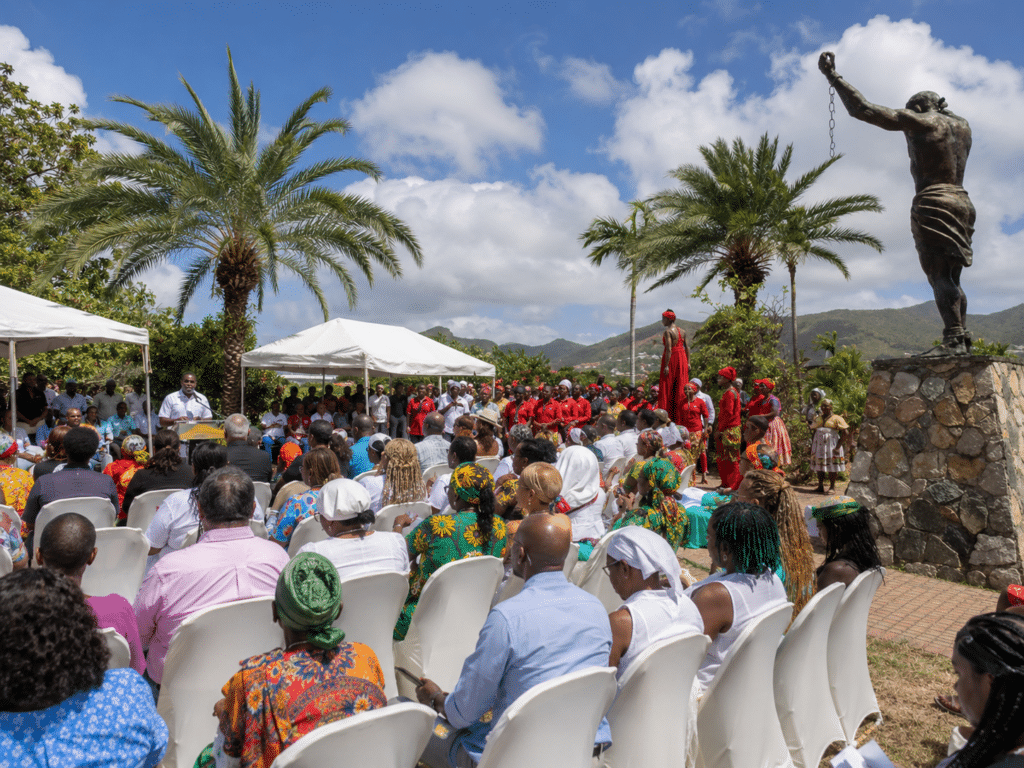
St. Maarten Emancipation Day takes on a special significance this year. On July 1, 2026, the official ceremony marking the 163rd anniversary of the abolition of slavery will be held at Belvedere Plantation, a site directly linked to the island’s history. More than just a commemoration, it is a reminder: freedom is conveyed not only through dates, but also through the places we choose to confront head-on.
St. Maarten Emancipation Day in Belvedere: More Than Just a Setting
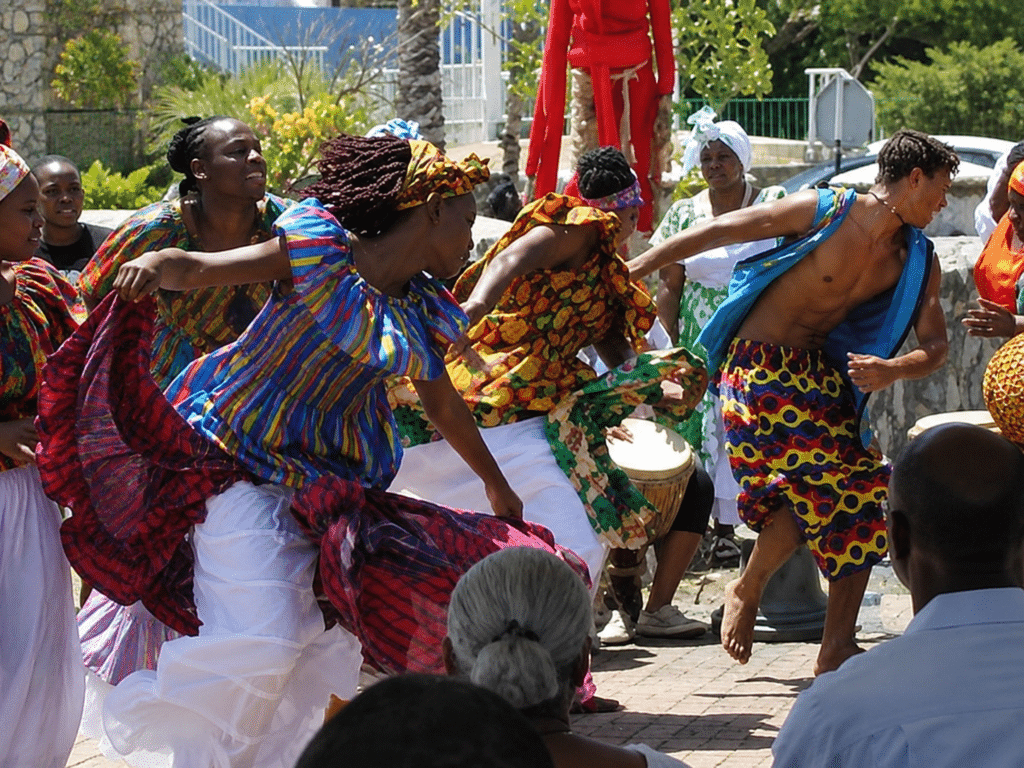
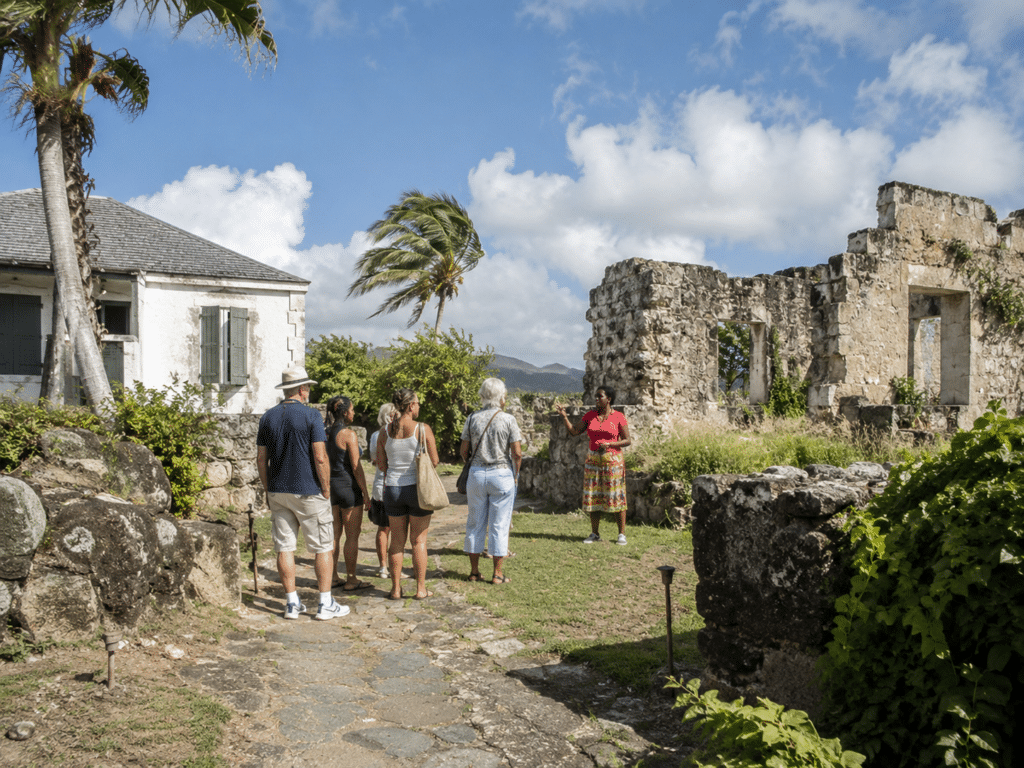
At Belvedere Plantation, this July 1st doesn’t feel like a ceremony held at a random location. The government of Sint Maarten has announced that the official event will take place at this site on Oyster Pond Road from 8 a.m. to 10 a.m., featuring speeches, poetry, songs, cultural dances, guided tours, and a historical presentation of the site. This choice speaks volumes. Belvedere is not just a historic site. It is listed on Sint Maarten’s official register of monuments. Its main house is estimated to date from around 1840, and on-site research indicates the existence of two former sugar mills on the plantation.
For St. Maarten Emancipation Day, this changes everything. Memory is no longer abstract. It returns to a specific place, to a landscape where the plantation economy, forced labor, the colonial hierarchy, and acts of human resistance have left their mark.
A date, but above all, a human story
July 1 marks the legal abolition of slavery in the Dutch colonies in 1863. Within the Kingdom of the Netherlands, this date specifically refers to Suriname and the Caribbean islands, which were under Dutch rule at the time. The Dutch government also notes that, for many people, the legal end of slavery did not immediately mean full and genuine freedom, particularly because of the forms of forced labor that followed in certain territories.
But Sint Maarten has an even more unique history. The island has been divided between two sovereign powers since the Treaty of Concordia: the Dutch part, Sint Maarten, and the French part, Saint-Martin. According to UNESCO, slavery was abolished on the French side on May 28, 1848, while it remained in effect on the Dutch side until July 1, 1863.
This border created a rare situation in the Caribbean. A single island territory had two opposing statuses: freedom on one side, slavery on the other. St. Maarten Emancipation Day therefore also tells the story of this geographical tension. On a small island, just a few kilometers could change a person’s life.
The 26 people at Diamond Estate
This is where the story takes on a deeply human dimension. On May 29, 1848, the day after slavery was abolished on the French side, twenty-six enslaved people from Diamond Estate Plantation on the Dutch side fled to Mount Fortune on the French side. There, they were recognized as free men and women.
The Dutch commander Johannes Willem van Romondt then asked the French commander to send them back. The French response was decisive: any enslaved person who reached French territory was to be considered free. This correspondence is now part of the “Route/Root to Freedom” collection, which was inscribed on UNESCO’s Memory of the World Register in 2017.
The story of St. Maarten Emancipation Day does not begin solely with a law passed far from the island. It also begins with people on the move, decisions made in haste, families crossing a border, authorities exchanging correspondence, and individuals who force history to move forward.
A memory that Sint Maarten is bringing back into the spotlight
St. Maarten Emancipation Day is also an important institutional milestone. The government notes that July 1 is commemorated every year and that it is the first public holiday established by the Parliament of Sint Maarten since the territory became a country within the Kingdom of the Netherlands on October 10, 2010.

St. Maarten Emancipation Day 2026 is part of this effort to pass on this legacy. The ceremony is organized by the Department of Culture, in collaboration with the Slavery Memorial Committee and the St. Maarten Development Fund. The announced theme, “Buss di chain & free your…,” invites the public to reflect on the impact of slavery on the past, present, and future. This is no small matter. In the Caribbean, where many societies are still grappling with how to name their wounds, Sint Maarten has chosen to make remembrance a public event—not merely a tribute, but a collective learning experience.

Belvedere, a site worth preserving to shape the future
The decision to choose Belvedere carries even more weight in light of recent developments at the site. In December 2025, Ministers Patrice Gumbs Jr. and Melissa D. Gumbs announced the completion of the purchase of “Belvedere Remainder,” a plot of land measuring 288,402 m², or 71.3 acres, or 28.8 hectares. A portion of the land, Belvedere Remainder South, covering 158,183 m², was allocated to the Ministry of Education, Culture, Youth, and Sports.
The issue, therefore, goes beyond today’s ceremony. It concerns how Sint Maarten intends to protect, restore, and pass on its historic sites. A plantation can remain a silent ruin. It can also become an open-air classroom, a place of reflection, a cultural resource, and an anchor for future generations.
This is what St. Maarten Emancipation Day 2026 reveals. Memory lives not only in official speeches. It lives in the paths we reopen, the names we repeat, the archives we revisit, the sites we protect, and the stories we finally agree to tell in full. On July 1, Sint Maarten therefore commemorates more than just the abolition of slavery. The island reminds us that freedom is a long story—sometimes incomplete, but always one to be passed on. And at Belvedere, this legacy finds a place, a depth, and a sense of responsibility.

St. Maarten Emancipation Day is a day of commemoration held every July 1 in Sint Maarten. It commemorates the abolition of slavery in the former Dutch colonies in 1863. In Sint Maarten, this date holds special significance, as the island has a unique history as a border territory divided between a French and a Dutch part.
Belvedere Plantation is significant because it links commemoration to a specific place of remembrance. In 2026, the official St. Maarten Emancipation Day ceremony will be held there to remind us that the history of abolition is not limited to a single date. It is also embedded in sites, landscapes, and physical traces that must be preserved.
July 1, 1863, marks the legal abolition of slavery in the Dutch colonies. For Sint Maarten, this date holds even greater significance, as the island shares a border with Saint Martin, where slavery had been abolished earlier on the French side. This difference created a unique historical situation: on the same island, freedom and slavery coexisted for several years.