The Greater Caribbean comprising 40 territories, is a true reflection of the demographic dynamics on a global scale. By 2020, the region will be home to over 300 million people, illustrating a marked contrast between a young population and aging trends. This article looks at the challenges and opportunities presented by these Demographic dynamics, while offering a detailed analysis of the demographic realities of this unique region.
Population growth
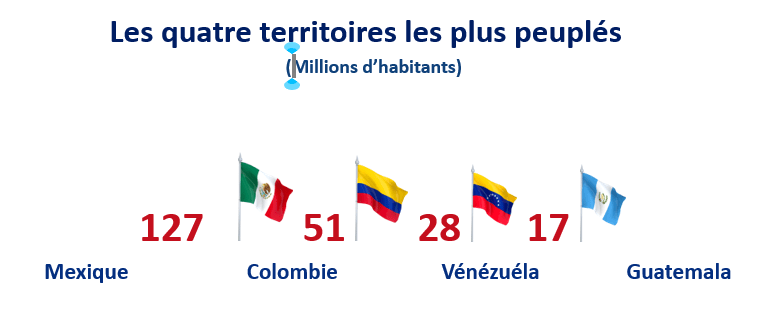
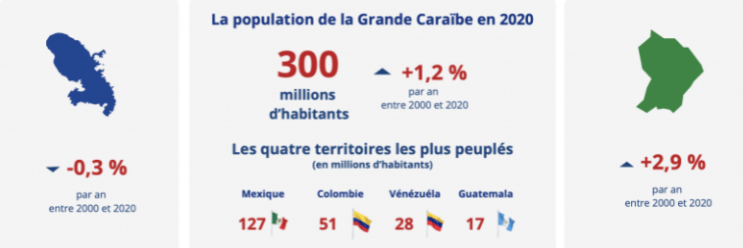
From 2000 to 2020, the population of the Greater Caribbean grew at an average annual rate of 1.2%. This growth is largely attributable to major countries such as the Mexico, Colombia, Venezuela and Guatemala which together make up a significant proportion of the regional population.
- Mexico 127 million inhabitants
- Colombia Population : 51 million
- Venezuela Population : 28 million
- Guatemala Population : 17 million
As economic leaders, these nations also face particular challenges, such as poverty, violence and immigration, which influence their demographic trajectories.
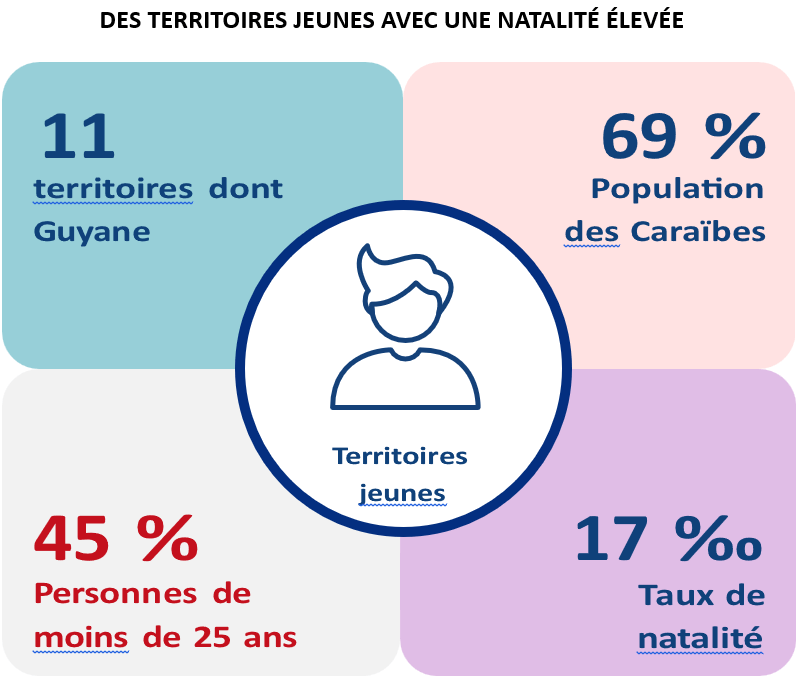

Young" territories and their demographic dynamics
La French Guiana stands out for its high birth rate, reaching 28 ‰, with a fertility index (FCI) of 3.8, well above the renewal threshold. These figures highlight a predominantly young population, with a large proportion of inhabitants aged under 25. This demographic dynamic offers prospects for economic development, provided that jobs are created to meet this population growth.
Young people in Guyanese society
The demographic dynamics structure of French Guiana, which is rich in young people, requires significant investment in education and vocational training. Public policies must focus on creating employment opportunities, improving access to education and promoting health to ensure a promising future for this population.
Aging regions and demographic dynamics
In contrast, the French West Indies – particularly Martinique, Guadeloupe and Saint-Martin – are facing a worrying demographic ageing process. In Martinique, around 30% of the population is over 60, and the aging index is high (1.05). Negative migratory movements exacerbate this situation, leading to challenges in terms of social support and health services.
Consequences of aging
The aging of the population is creating crucial challenges for healthcare and social protection systems. Governments in the French West Indies need to develop strategies to support the elderly, improve healthcare services and attract young families to balance the demographics.
Haiti: a special case in demographic dynamics
Demographic challenges
Haiti stands out for its unique demographic challenges. With one of the highest infant mortality rates in the region (47 ‰) and below-average life expectancy at birth, the country reflects profound inequalities regarding access to healthcare and education. Although its fertility rate is higher than that of many countries in the region, this does not compensate for other indicators of health and well-being.
Inequalities in health
The situation in Haiti is alarming. High infant mortality rates and low life expectancy are often the result of poor access to healthcare, malnutrition and precarious living conditions. Sustained efforts are needed to improve these conditions and offer Haitians prospects.
A fragile economy
Haiti’s already vulnerable economy is exacerbated by these demographic challenges. Widespread poverty and a lack of economic opportunities are driving many young people out of the country, leaving an aging population and a diminished workforce. It is vital to invest in economic and social development programs to foster an environment conducive to growth.
Towards solutions tailored to demographic dynamics
The demographic landscape of the Greater Caribbean poses significant challenges for public policy. Governments need to develop strategies adapted to local realities.
Youth and employment
For young territories like French Guiana, the challenge is to support young people in their career paths and integrate new generations into sustainable employment. Training and apprenticeship programs need to be strengthened to match the needs of the labor market.
Local initiatives
Local initiatives, such as public-private partnerships, can play a vital role in job creation. Companies should be encouraged to invest in training and offer internships to young people to give them valuable experience.
Aging and quality of life
For the French West Indies and Haiti, it is crucial to introduce policies aimed at improving the quality of life of the elderly, while addressing issues of migration and economic support. Governments need to design care programs adapted to the growing needs of this aging population.
Support for seniors
Support for the elderly must not be limited to medical care. It is also essential to promote social inclusion, by offering community activities and leisure programs that foster the mental and emotional well-being of seniors.
The demographic dynamics of the Greater Caribbean are both an asset and a challenge. Decision-makers need to engage in collective reflection to adapt public policies to the specific needs of each territory. By taking these diverse issues into account, the region can look forward to a future in which all its inhabitants, young and old alike, can flourish.
Summary of Demographic Dynamics
- Youth Guiana and other young territories boast a high birth rate and potential for economic development.
- Aging The French West Indies are faced with an aging population, requiring investment in health and social support.
- Special case Haiti, with its unique challenges, requires special attention to improve living conditions.