Arecibo, Puerto Rico: A 305-meter telescope collapsed on December 1, 2020

Aerial view of the former Arecibo radio telescope dish in Puerto Rico, surrounded by forest

For 53 years, Arecibo, in Puerto Rico, was home to the world’s largest single-dish telescope, with a mirror 305 meters in diameter. Its platform collapsed on December 1, 2020, without causing any injuries. The Arecibo site now houses an educational center open to the public by ticket.

On December 1, 2020, at approximately 7:55 a.m. (Puerto Rico time), the Arecibo telescope platform collapsed into the crater above it, where it had stood since 1963. No one was injured. The director of the National Science Foundation (NSF), Sethuraman Panchanathan, expressed sadness over the situation but was grateful that no one had been harmed. In Arecibo, in northern Puerto Rico, this collapse brings to a close a story that began in 1960. That year, teams entered a natural depression in the karst region to install a giant mirror there. A single number sums it all up: 305 meters.

Aerial view of Mar Chiquita, a natural cove on the coast of Puerto Rico

The Arecibo Observatory, a 305-meter dish in Puerto Rico

The Arecibo Observatory was the brainchild of Professor William E. Gordon, then a faculty member at the School of Electrical Engineering at Cornell University in the United States. Construction lasted from June 1960 to August 1963. The U.S. Department of Defense provided approximately $9 million in funding through ARPA. The official dedication took place on November 1, 1963.

The Arecibo telescope platform held by cables from a tower above the dish

The mirror measures 1,000 feet—or 305 meters—in diameter and is approximately 51 meters deep. It remains fixed to the ground. The receivers move above the basin inside a 90-metric-ton enclosure suspended 137 meters above the ground. In the early 1970s, the surface was redone with 38,788 aluminum panels, each measuring 3 feet by 6 feet.

Close-up of the suspended receiver platform of the Arecibo telescope above the dish

A 53-year-old record, until the arrival of FAST

For 53 years, the Arecibo Telescope remained the largest single-dish telescope on the planet. That record came to an end in July 2016, when the Chinese FAST telescope, located in Guizhou Province, surpassed it. This record applies to single-dish telescopes, not to all radio telescopes. The NSF has supported the observatory since the 1970s. Its discoveries include the first planet found outside the solar system and the detection of gravitational waves from a binary pulsar.

Visitor walkway overlooking the Arecibo dish in Puerto Rico

On the morning of December 1, 2020, in Arecibo

The observatory’s problems began in August 2020, when a support cable came loose from one of the three towers. A second cable, attached to the same tower, snapped on November 6, 2020. Each cable consists of about 160 strands. On November 19, the NSF announced that the telescope would be dismantled. Drones subsequently detected broken strands on two other cables on that tower.

On December 1, 2020, the approximately 900-metric-ton platform fell before dismantling could begin. The tops of the three towers were shattered, and the learning center adjacent to Tower 12 was heavily damaged by falling cables. Elizabeth Klonoff, vice president for research atthe University of Central Florida, had reiterated that staff safety remained the top priority. On October 13, 2022, the NSF clarified that its new call for proposals does not include the reconstruction of the 305-meter telescope.

Aerial view of the Arecibo dish after the platform collapse of December 2020

A center for students from Puerto Rico in place of the telescope

On September 25, 2023, the NSF announced Arecibo C3, an educational center with over $5 million in funding over five years. Its executive director, Wanda Díaz Merced, summed up the idea in these words. “Nosotros, los humanos, somos quienes vinculamos todas las ciencias del universo” (We, humans, are the ones who connect all the sciences of the universe). James L. Moore III, deputy director for STEM education at the NSF, adds that the center builds on the observatory’s scientific, educational, and cultural legacy.

Lighthouse on the coast of Puerto Rico near Arecibo

A pilot phase will begin in June 2024. By early 2026, more than 600 students, teachers, researchers, and local residents had participated in these pilot programs. The center’s partial reopening began in April 2026. It now welcomes visitors who have purchased tickets online at least 24 hours in advance. On Saturday, October 17, 2026, general admission is available from 9 a.m. to 5 p.m. for $5 per adult. It includes a tour of artifacts from the radio telescope, a terrace facing the remains of the dish, and a guided historical tour. In Arecibo, the telescope is no longer there, but the site continues to welcome visitors. What becomes of a site 305 meters in diameter when the instrument that made it famous is gone?

White dome standing near the coast in Puerto Rico

FAQ

The Arecibo Telescope in Puerto Rico had a mirror 305 meters in diameter—or 1,000 feet—and was approximately 51 meters deep.

The Arecibo Observatory’s platform collapsed on December 1, 2020, at approximately 7:55 a.m. Puerto Rican time. No one was injured.

Yes, the Arecibo C3 Center welcomes visitors who have purchased tickets online at the site of the former Arecibo Observatory in Puerto Rico. Be sure to check the center’s website for hours and admission prices before visiting.

Leave a Reply

Your email address will not be published. Required fields are marked *

More articles from RK

Aerial view of the former Arecibo radio telescope dish in Puerto Rico, surrounded by forest
TOURISM
Tolotra

Arecibo, Puerto Rico: A 305-meter telescope collapsed on December 1, 2020

For 53 years, Arecibo, in Puerto Rico, was home to the world’s largest single-dish telescope, with a mirror 305 meters in diameter. Its platform collapsed on December 1, 2020, without causing any injuries. The Arecibo site now houses an educational center open to the public by ticket. On December 1, 2020, at approximately 7:55 a.m. (Puerto Rico time), the Arecibo telescope platform collapsed into the crater above it, where it had stood since 1963. No one was injured. The director of the National Science Foundation (NSF), Sethuraman Panchanathan, expressed sadness over the situation but was grateful that no one had been harmed. In Arecibo, in northern Puerto Rico, this collapse brings to a close a story that began in 1960. That year, teams entered a natural depression in the karst region to install a giant mirror there. A single number sums it all up: 305 meters. The Arecibo Observatory, a
Read More »
Caribbean Cinema
FILM & VIDEO
Tolotra

S7/10 – Stories of Caribbean Cinema: Creating from Small Islands. Texts by Guillaume Robillard. Ciclic, 2026.

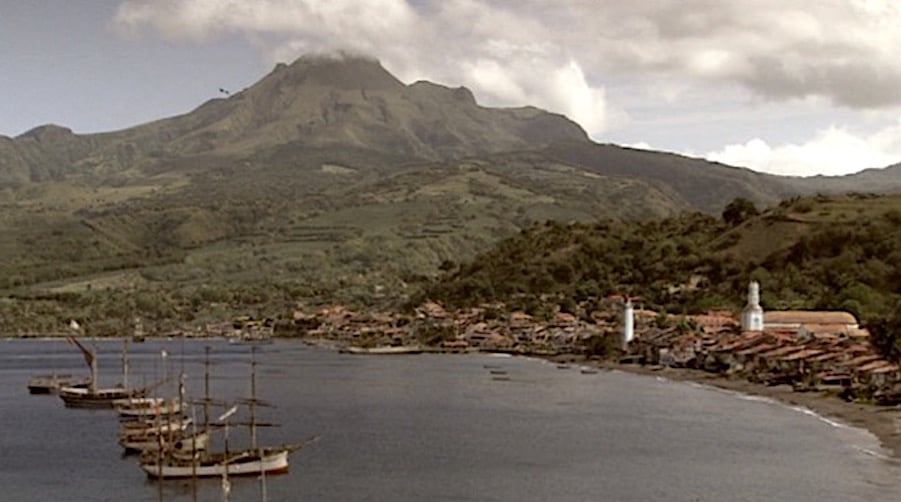
After Cuba, Jamaica, Trinidad and Tobago, Haiti, Guadeloupe, and Martinique, our serieson the history of Caribbean cinema continues its exploration of Caribbean cinema in the early 21st century. This seventh episode takes us from Antigua and Barbuda to Martinique. On one hand, Howard and Mitzi Allen are helping to build a local movie theater in a small island nation. On the other, Guy Deslauriers and Patrick Chamoiseau are depicting the origins of the biguine in 19th-century Saint-Pierre. You are watching the seventh episode of ten. Six episodes are already available on Richès Karayib, and three more will follow. 2001: ANTIGUA AND BARBUDA – “THE SWEETEST MANGO, THE SKIN” BY HOWARD ALLEN The Skin is the second feature film by the Allen couple—Howard directing and Mitzi producing. In 2001, they directed *The Sweetest Mango* (2001) so that their country would have its first “local” feature film to mark the dawn of
Read More »
Vintage black-and-white portrait of Anton de Kom in a light suit and felt hat
HISTORY & HERITAGE
Tolotra

Anton de Kom and Wij slaven van Suriname, a Book Against Colonialism

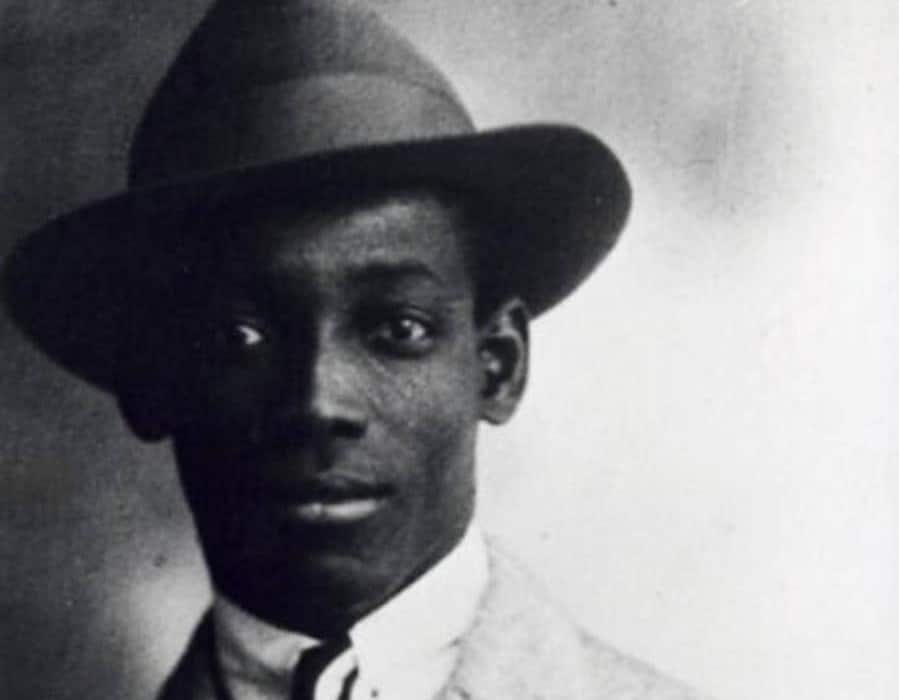
Anton de Kom, born in Paramaribo (Suriname) on February 22, 1898, and died at the Sandbostel camp (Germany) on April 24, 1945, is the author of We, the Slaves of Suriname, published in 1934. This book is described as the first history of Suriname written by a Surinamese author. He wrote it in the Netherlands after his expulsion from Paramaribo in 1933. On February 7, 1933, a crowd gathered in front of the prison in Paramaribo, Suriname—then a Dutch colony—to demand the release of Anton de Kom. Shots were fired. Two protesters were killed and many others were wounded, according to the Canon Netherlands. Arrested six days earlier, the man would never stand trial. The colonial authorities deported him to the Netherlands, and he would never see his country again. Anton de Kom, the son of a slave born in Paramaribo Anton de Kom was born in Paramaribo on February

Read More »

conTACT RK

we'd love to have your feedback on your experience so far

Join The List

Join our Richès Karayib community!  Sign up for our newsletter.

Want To Maximize Your Business Presence On Riches Karayib?

Complete the form to start the application