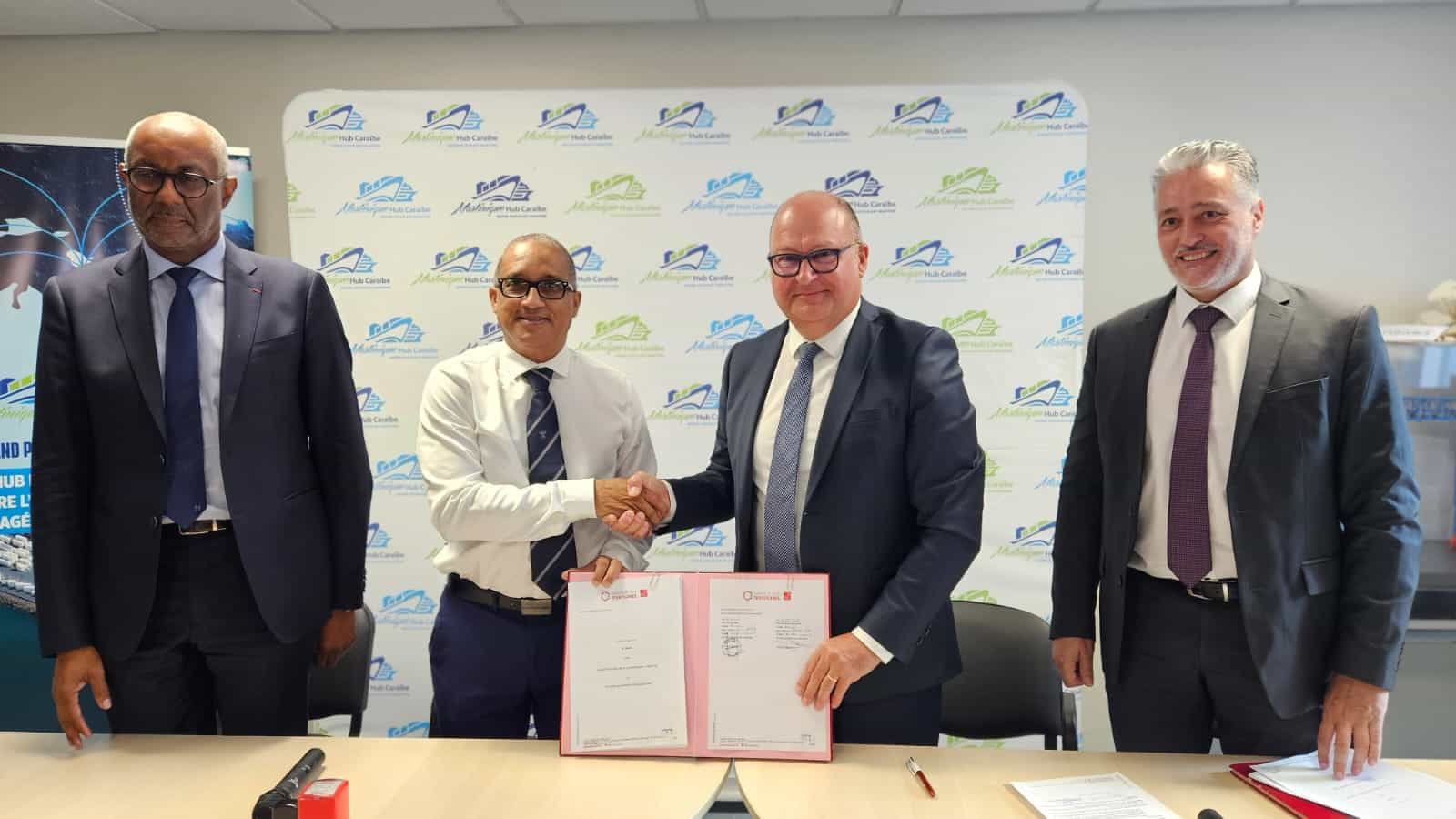
Port of Martinique: the Grand Port Maritime de Martinique, the island’s economic mainstay, is at the heart of an ambitious transformation. Combining infrastructure modernization, energy transition and cultural openness, the project – valued at 120 million euros according to Bruno Mencé – is not limited to simple logistical renovation. This project, known as Hub Antilles, is part of an overall strategy to revitalize the region, strengthen international exchanges and provide Martinique with a new living and cultural space.
A modern port with international ambitions
The port of Martinique is preparing to welcome larger ships between now and September, thanks to the extension of quays and the raising of gantry cranes. This major public works project will enable Martinique to position itself as a strategic maritime hub linking South America – with a particular focus on Brazil – to Europe. By modernizing the infrastructures of the Port of Martinique, the Grand Port aims to attract new commercial partnerships and boost trade with the Caribbean islands, Central America and, potentially, North America.


Ecological solutions for a greener Port
Energy transition plays a central role in this Hub Antilles project. To reduce its fossil fuel consumption by 50%, the port will install photovoltaic panels on its terminal. Bruno Mencé insists on this innovation: “We will become solar energy producers.”
By adopting this approach, the Port of Martinique is not only optimizing its energy costs, it is actively contributing to the reduction of CO₂ emissions and to the island’s energy autonomy. This ecological shift meets a crucial challenge for Martinique, historically dependent on fossil fuels, and echoes the desire to support a green economy.
Strengthening regional cooperation to boost Caribbean trade
The modernization of the Port of Martinique is accompanied by a strategy of regional cooperation. As a member of the Port Management Association of the Caribbean (PMAC), the Grand Port Maritime de la Martinique participates in collective initiatives to facilitate trade between the region’s ports. Bruno Mencé underlines the importance of this collaboration in overcoming the challenges posed by regulations that are sometimes too specific or divergent.
Bruno Mencé underlines the importance of this collaboration in overcoming the challenges of regulatory divergence and optimizing the performance of international trade. This concerted approach will help boost maritime traffic within the Caribbean, and reinforce Martinique’s competitiveness on the regional scene.
The Port at the service of culture and the region
In addition to its economic functions, the port is also a living and meeting place. Bruno Mencé asserts that “the port is at the service of the territory”, and insists on the need to create an interface between the port and the city, and even between the port and the territory. In partnership with the city of Fort-de-France, the Grand Port Maritime de la Martinique aims to open up the port to cultural initiatives – such as exhibitions – in order to reconcile urban space with port infrastructures.
Inspired by the cultural legacy of Aimé Césaire and the example set by SERMAC, this rapprochement aims to strengthen the links between commerce, culture and territorial development, transforming the port into a veritable catalyst for local life.
The transformation of the Grand Port of Martinique, as presented by Bruno Mencé, embodies a bold, integrated vision. Infrastructure modernization, innovative energy transition and cultural openness combine to make the port a major player in the island’s economic and territorial development. Beyond its logistical benefits, the project promises to reinvent the link between commerce and culture, offering Martinique an inspiring model of sustainability and regional cooperation. The port is thus positioned as a lever for progress and a powerful symbol of Martinique’s renewal.