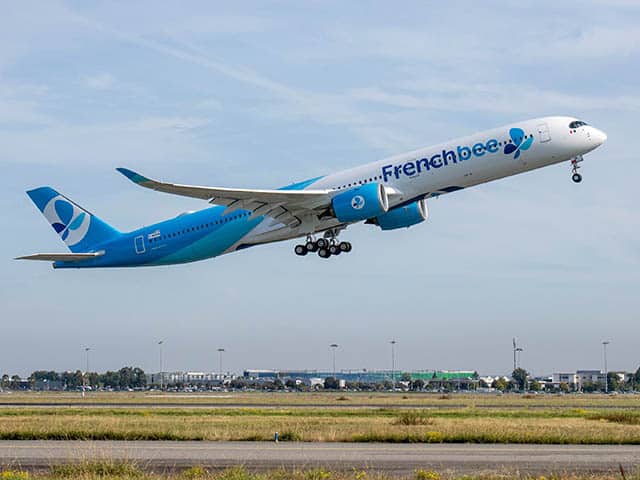


Air Caraïbes, French Bee and Volotea: an interline agreement to facilitate travel to the Tropics

Air Caraïbes, French Bee and Volotea

Air Caraïbes, French Bee and Volotea have just signed an unprecedented interline agreement enabling passengers of Spanish low-cost carrier Volotea to combine their short-haul flights with the long-haul routes of Air Caraïbes and French Bee. This alliance aims to considerably simplify bookings and connections, while expanding travel possibilities to the Caribbean, North America and the Indian Ocean without multiplying tickets or the risks associated with stopovers.

An unprecedented partnership in the European and overseas air markets

Air Caraïbes, French Bee and Volotea are opening a new chapter in the airline industry, by combining the low-cost business model with airlines specialized in long-haul flights to the French overseas territories. This cooperation expands Volotea’s network without direct investment in long-haul aircraft, while Air Caraïbes and French Bee strengthen their visibility in Europe, particularly in the face of well-established players.

This geographical alliance now covers connections between several European regional cities – including Lourdes, Rodez, Ancona, Genoa and Turin – and destinations such as Guadeloupe, Martinique, French Guiana, Réunion, Saint-Martin, Saint-Barthélemy, as well as the USA and Canada.

French Bee and Volotea
©Airbus H. Goussé

Simplified travel: one ticket, one reservation

At the heart of this partnership is the desire to make travel simpler and less stressful. Air Caraïbes, French Bee and Volotea now enable passengers to book a one-way ticket covering the whole journey, whether it’s a short-haul flight with Volotea or a long-haul one with Air Caraïbes or French Bee.

This integration considerably improves baggage management, with baggage transported directly to the final destination, eliminating the usual hassle of retrieving and depositing baggage during stopovers. The promise of “no more complexity is also based on optimized connections at Paris-Orly airport, the nerve center of these connections. This process makes journeys smoother and reduces the stress associated with delays or difficult connections between several airlines.

French Bee and Volotea
©French bee

An optimized network for a better passenger experience

The coordination of schedules between Volotea and the French long-haul airlines guarantees improved connectivity, enabling passengers to connect the main European regional capitals with the French overseas territories without hindrance. The dense network of short and long flights offers a wide range of connections, coupled with improved logistics management and lower overall costs. Air Caraïbes, French Bee and Volotea are thus reinforcing the fluidity of their routes.

French Bee and Volotea
VOE ©Marc Glen

Economic benefits for travellers

Volotea’s low-cost model, combined with the strength of Air Caraïbes and French Bee, now makes destinations previously often reserved for more expensive direct flights accessible at competitive prices. This economic gain is accompanied by greater choice, with the possibility of reaching places like Santo Domingo, Miami, Reunion or Polynesia without the constraint of multiple bookings.

These savings are not purely financial: the reduction in waiting time, the peace of mind linked to integrated baggage management, and the ease of booking clearly enhance the customer experience. Air Caraïbes, French Bee and Volotea are thus helping to democratize access to these destinations.

French Bee and Volotea
©Arnaud Gaulupeau-Groupe ADP

Impact on the traditional airline industry and future prospects

This strategic alliance between Air Caraïbes, French Bee and Volotea could shake up the traditional hierarchy of airlines linking Europe to its overseas territories. The association of a low-cost player with long-haul airlines brings a new dynamic that could encourage other airlines to consider similar collaborations.

At a time when demand for flexible, simple solutions at competitive fares is growing, this partnership is positioned as an appropriate response to travelers’ expectations, while strengthening the attractiveness of the French Overseas Territories and promoting their links with Europe.

French Bee and Volotea
©French bee

A stronger bridge between Europe and the French overseas territories

In short, the interline agreement signed between Air Caraïbes, French Bee and Volotea offers a turning point for travelers wishing to connect Europe with tropical and overseas destinations. Thanks to simplified routes, more affordable fares and better connection management, this agreement paves the way for a more connected, fluid and competitive air network.

Passengers benefit from a more integrated, less restrictive experience, while airlines strengthen their presence in a fast-changing market. This new balance between low-cost and long-haul could well redraw the map of air transport between Europe and the French overseas territories.

Leave a Reply

Your email address will not be published. Required fields are marked *

More articles from RK

Bonaire salt marshes: pink ponds and white salt mountains in the south of the island
HISTORY & HERITAGE
Tolotra

Bonaire: 3,700 hectares of salt marshes conceal a history of slavery

At the southern tip of Bonaire, a Dutch-speaking island in the Caribbean, the salt marshes stretch out in pink and white basins across nearly 3,700 hectares—thirteen percent of the island’s total area. This postcard view, photographed every year by thousands of visitors from the coastal road, hides a history dating back more than five centuries, the story of salt that shaped Bonaire’s economy and, for two hundred years, the lives of hundreds of enslaved people. Along EEG Boulevard, which runs along the southern coast of Bonaire, mountains of white salt come into view kilometers before you reach them. Each contains about 10,000 metric tons of salt that is 99.6% pure, piled nearly 15 meters high, with up to 200,000 metric tons stored at any given time. Their whiteness, so intense that you need to keep sunglasses handy, stands in stark contrast to the pink of the neighboring pools. The salt
Read More »
Journées européennes du patrimoine 2026
EVENT MANAGEMENT
Tolotra

European Heritage Days 2026: Martinique Opens Its Archives.

On September 15, at 5 p.m., the conference room of Martinique’s Cultural Affairs Department is already packed. Journalists, cultural leaders, organizations, artists, and heritage professionals have gathered to find out what the 43rd edition has in store. With just four days to go before the 2026 European Heritage Days , scheduled for September 19 and 20, this press conference already feels like a journey across Martinique—from its Creole huts to its lighthouses, from Saint-Pierre to the monuments we sometimes pass by without really noticing them. European Heritage Days 2026: A Lively Conference Johan-Hilel Hamel, Martinique’s director of cultural affairs, opened the meeting without putting on airs. He even warned that the evening would not be a long monologue. The conversation quickly began to flow. A representative from Les Trois-Îlets speaks, followed by Xavier Nicolas from the Directorate of the Sea, Philippe Villard from the Heritage Foundation, Florence Le Gal from

Read More »
caribbean cinema
FILM & VIDEO
Tolotra

S3/10 – Stories of Caribbean Cinema: Two Perspectives on the Year 1980. Texts by Guillaume Robillard. Ciclic, 2026.

With this third episode, *Stories of Caribbean Cinema* moves into the 1980s. The first two installments covered Cuba, Jamaica, Trinidad and Tobago, and Guadeloupe, from the 1960s through the emergence of Caribbean cinema. This time, two films made in the same year take radically different directions. In Jamaica, *Children of Babylon* explores romantic, sexual, and racial relationships with unusual freedom. In Guadeloupe, *Live Free or Die* draws on several centuries of history centered on the legacy of Commander Ignace. This article is the third installment in a series of ten. Two installments have already been published, and seven more will follow in this chronology of Caribbean cinema. 1980: JAMAICA – “CHILDREN OF BABYLON”, BY LENNIE LITTLE-WHITE This film is unique in Jamaican cinema and, more broadly, in Caribbean cinema as a whole. Far from the social deprivation of Kingston’s ghettos, in a villa in the countryside (complete with a swimming

Read More »

conTACT RK

we'd love to have your feedback on your experience so far

Join The List

Join our Richès Karayib community!  Sign up for our newsletter.

Want To Maximize Your Business Presence On Riches Karayib?

Complete the form to start the application