Grajé: a tradition that tells the story of French Guiana

Grajé

Talking about Grajé in French Guiana is to enter a universe deeply rooted in the memory of the savannahs. This dance, born of a difficult past, has passed through the generations without losing its symbolic force. It is one of those traditions that are not content to simply survive: they continue to live, to evolve, and to inhabit the daily lives of the communities that bear them.

A heritage shaped in the savannahs

In the communes of Sinnamary, Kourou and Iracoubo, Grajé remains a major cultural reference. The term refers to a whole: the rhythm, the dance, the outfits, and even the balls where the practice takes on its full dimension. Guyanese often speak of Grajé as a coherent whole, in which each element interacts with the others.

The distinctive pas glissé sums up the uniqueness of this dance. The feet brush the floor in a continuous, precise, almost ceremonial movement. Nothing is left to chance: the gesture must remain controlled, sober and perfectly in rhythm. It is this restraint that gives Grajé its presence, and sets it apart from other musical forms in French Guiana.

Grajé
Grajé
Grajé
©Fèstival Grajé

A history marked by work and transformation

It has its roots in the 18thᵉ century, in the heart of the plantations. There, African slaves had observed European steps, particularly those of the waltz, which they blended with the rhythms and codes of their own heritage. From this encounter was born a dance capable of translating what words could not always express.

The name itself carries a strong symbolic charge. In Creole, grajé means “to grate”, in reference to the grater used to process cassava. The pas glissé recalls this gesture, repeated on a daily basis. In a context where work was imposed, this movement, diverted towards dance, took on another value: that of a reappropriated gesture, turned into an artistic expression.

A couple's dance, regulated like a language

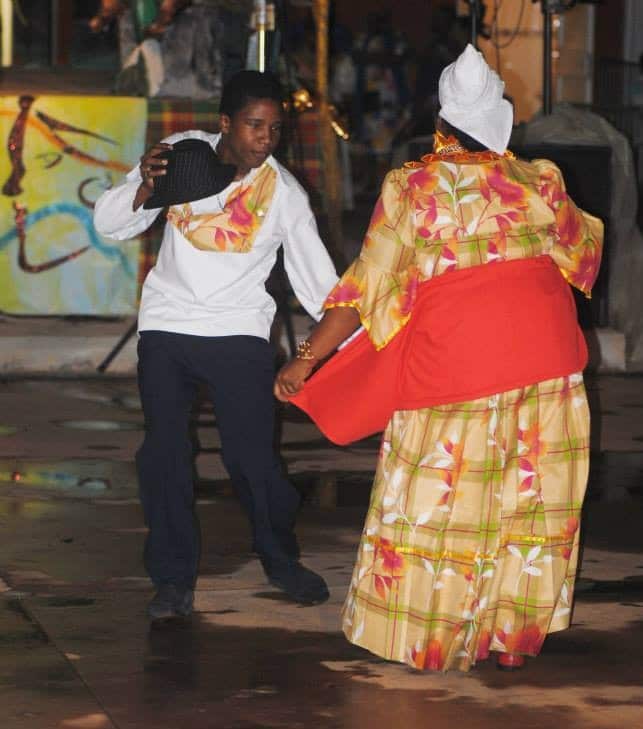
It is traditionally performed in pairs, with a well-defined structure. The dancers maintain a respectful distance and a measured, almost solemn style, as if each step were to honor the history from which it springs.

Aesthetics take center stage. Women wear loose, elegant gòl dresses, often accompanied by a headscarf and white petticoats. The men prefer light tones, black hats and structured clothing, reminiscent of the bals créoles that once enlivened the villages. This attire is not a matter of fixed folklore: it expresses a way of being together, of marking the importance of the moment.

Grajé
©Fèstival Grajé

The tanbou, the backbone of rhythm

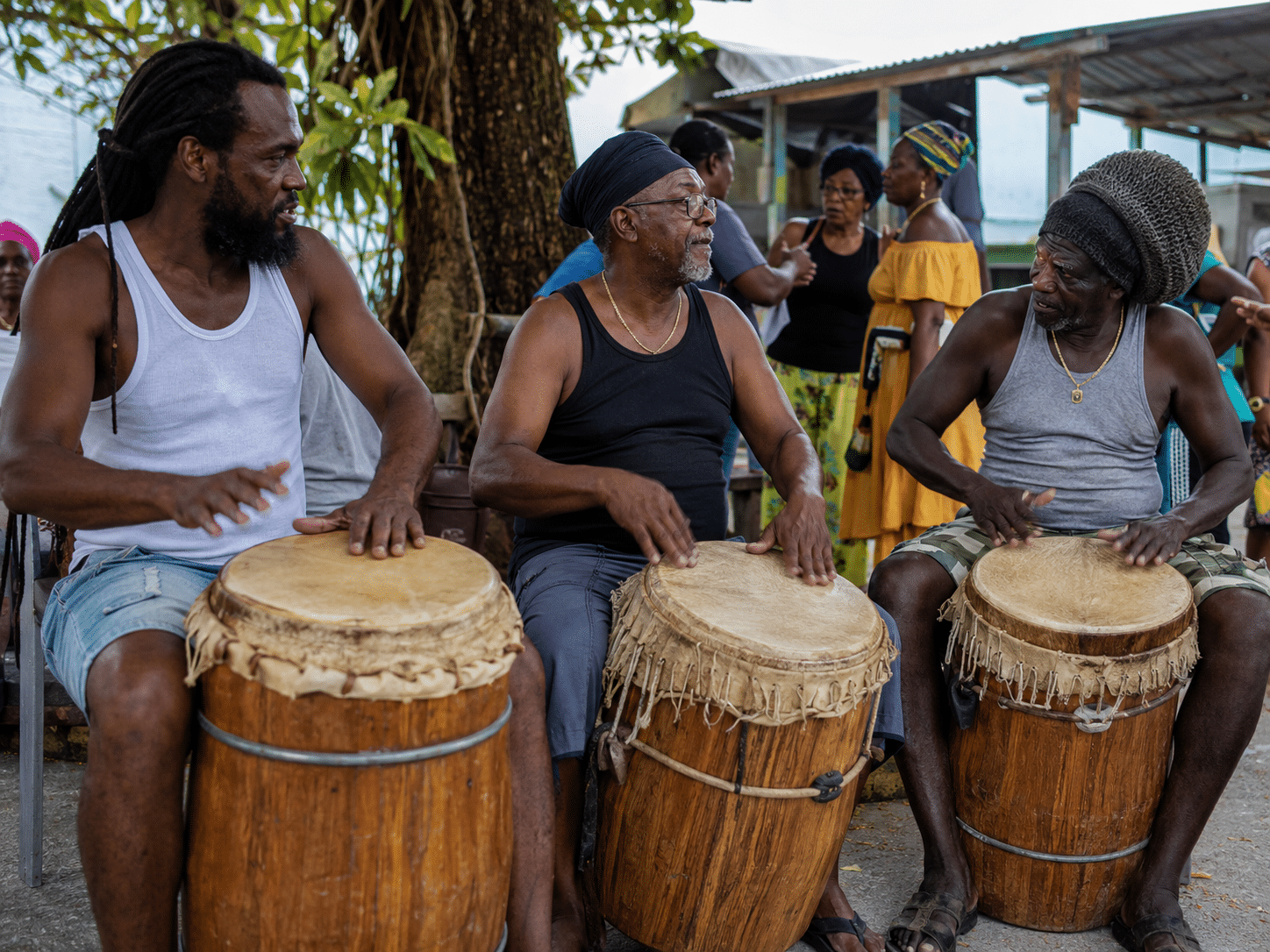
No Grajé exists without the tanbou. The Grajé tanbou, or srèk tanbouis a frame drum, recognizable by its taut skin and fire tuning. Its clear sound sets the tempo and structures the entire dance.

Around him, the percussionists form a veritable musical conversation. Each knows the function of his instrument, the place of his rhythm and the role he plays in the whole. It’s this precision that keeps the dance legible, even when the hall fills up or several couples are performing at the same time.

Grajé
Grajé
©Fèstival Grajé
Grajé
©Fèstival Grajé

A tradition still carried on by Guiana's communities

Grajé has never disappeared. In 2010, the commune of Sinnamary even strengthened its influence by organizing a festival entirely dedicated to this tradition. Since then, the dances have attracted just as many locals, including old savannah folk, folk groups, musicians and younger generations learning the practice.

Several ensembles – Les Immortels, Wapa, Dahlia, Acajou and Génipa – are taking part in this transmission. Each has its own way of interpreting the songs and rhythms, but all share the same desire: to keep alive a memory that matters.

The songs, long transmitted only by word of mouth, have been collected and transcribed, preserving a rich and precious repertoire. This approach is part of a wider movement to safeguard French Guiana’s intangible heritage, of which the Grajé is now a recognized part.

Grajé
©Fèstival Grajé
Grajé
©Fèstival Grajé

A memory that continues to be written

Grajé is not just a trace of the past. It’s a practice that’s still very much alive in modern-day French Guiana. At every ball, we find this collective energy, this way of being together that goes beyond the simple framework of dance. It unites, brings people together, and reminds us that certain traditions can stand the test of time without losing their meaning.

In savannahs and neighborhoods alike, it remains a deep-rooted cultural landmark. It’s a different way of telling a story, using the body, rhythm, drums and that slippery step that says it all without raising the voice.

Leave a Reply

Your email address will not be published. Required fields are marked *

More articles from RK

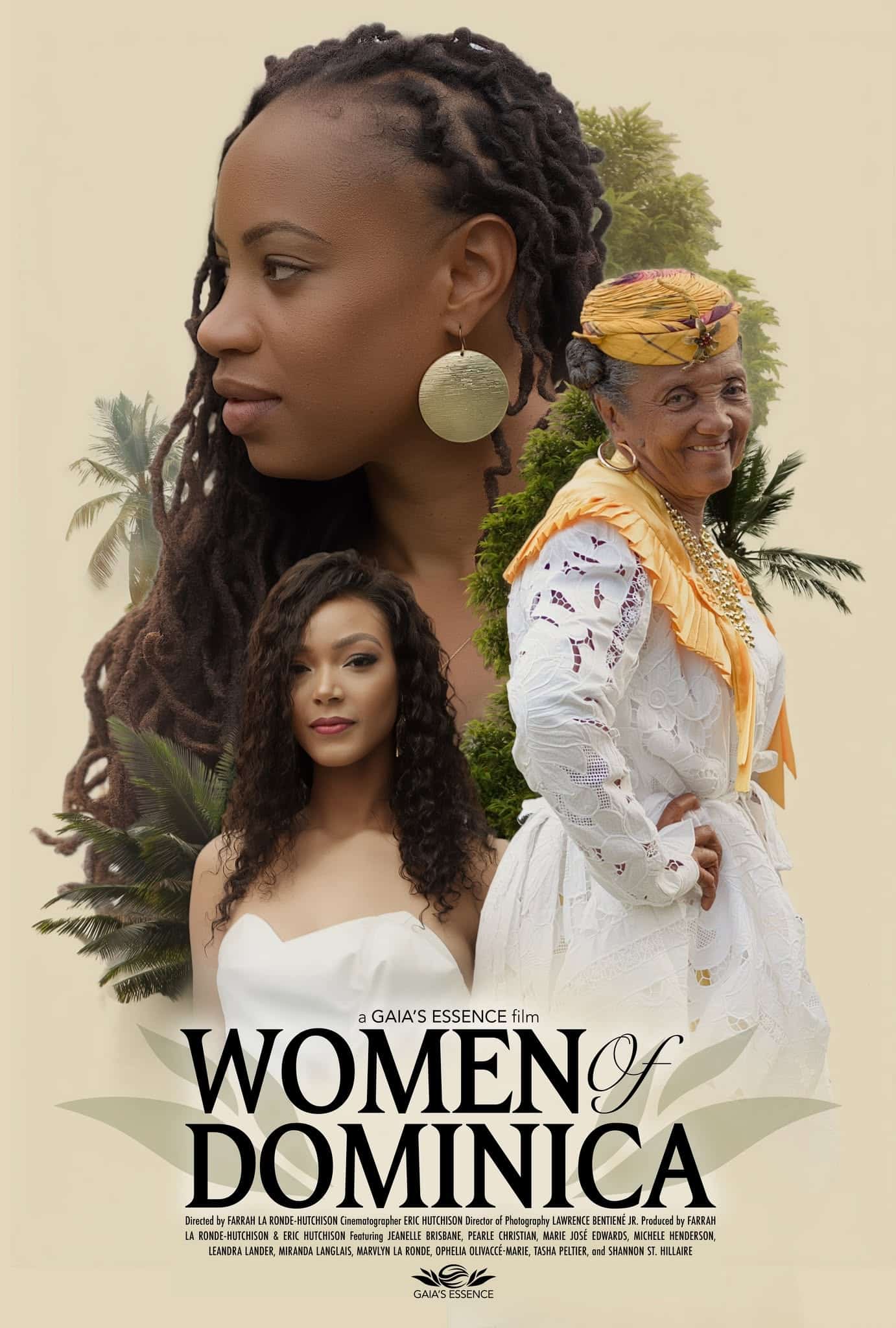
Affiche officielle du documentaire Women of Dominica
FILM & VIDEO
Tolotra

Dominique – Women of Dominica: The documentary that brings together ten women ahead of its premiere in Miami

“Women of Dominica” brings together ten women from different generations around a shared narrative: the Creole heritage of Dominica. The documentary, directed by environmental scientist-turned-filmmaker Farrah La Ronde-Hutchison, will have its U.S. premiere on September 5 in Miami, ahead of a wider release scheduled for 2027. Among the voices featured is that of Ophelia Marie, a historic figure in Dominican music. A story of passing down traditions, between a mother and her daughter The Women of Dominica project has its roots in a family story. In 2019, Farrah La Ronde-Hutchison’s mother received the Golden Drum, a Dominican award dedicated to the preservation of traditional Creole attire. She had carried this responsibility for more than thirty-five years, passing down to her daughter the techniques and fabrics of a garment that few in younger generations still know how to tie today. It was this tradition passed down from mother to daughter that
Read More »
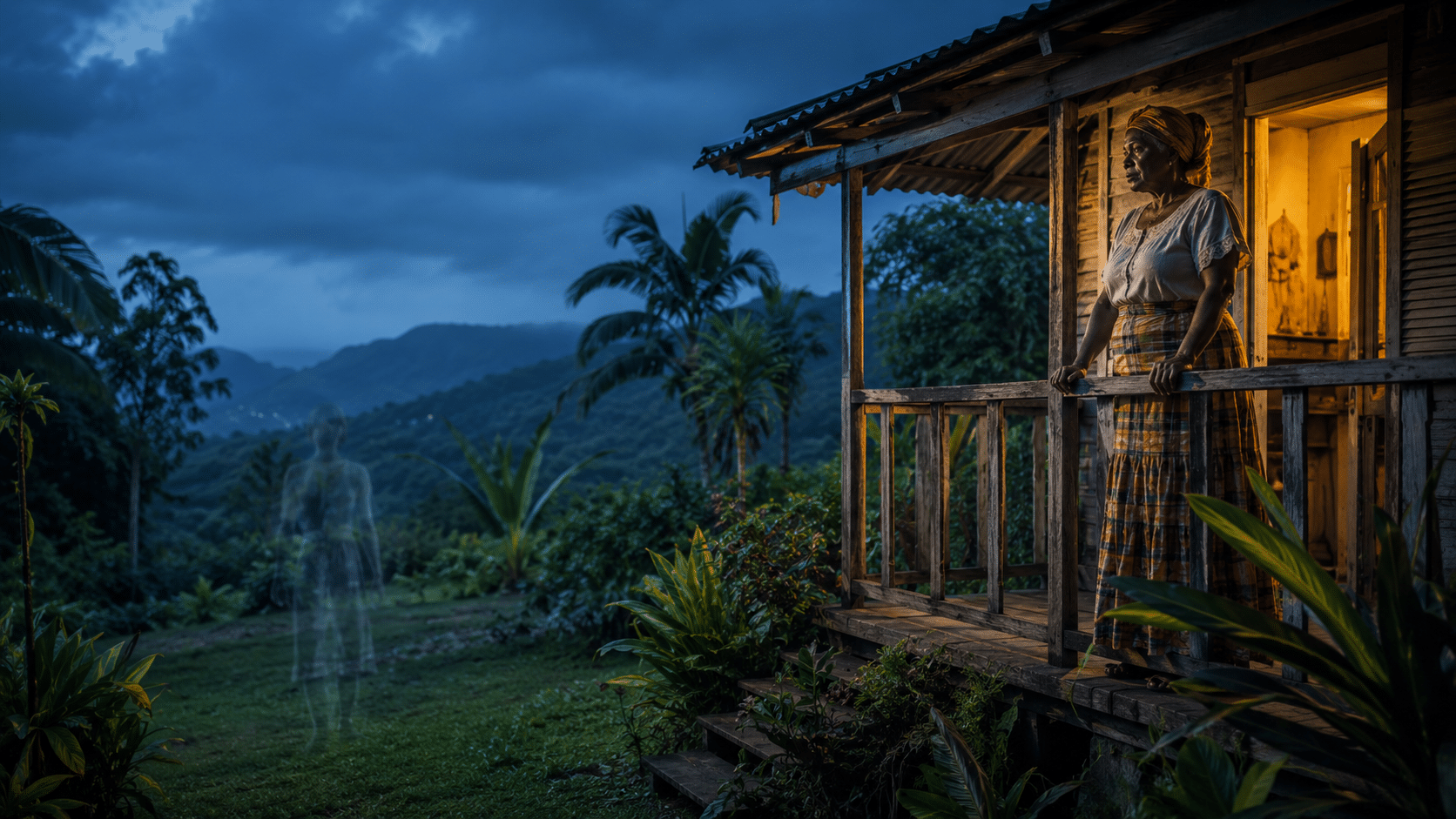
Femme jamaïcaine sur une véranda au crépuscule face à un duppy dans la cour
HISTORY & HERITAGE
Tolotra

“Duppy know who fi frighten”—why does this proverb protect the weak?

“Duppy know who fi frighten”: this Jamaican saying resonates from childhood onward, long before we fully understand its meaning. In Jamaica, at dusk, a scene plays out across generations. Children are called back inside before night swallows the garden. There’s no need to argue the point—outside, the duppies lurk, those spirits that didn’t follow the dead to the end of their journey. A man from Old Harbour, now in his eighties, told researchers in 2021 how these stories shaped his childhood evenings—not so much to terrify as to keep the children close to home. From this inherited fear arose a saying that is still heard today throughout the island: “Duppy know who fi frighten”—the duppy knows who to frighten. What does “Duppy know who fi frighten” mean? The Jamaican Patwah online dictionary illustrates the expression with a typical phrase, “Him cyaa try mi, duppy know who fi frighten,” which could
Read More »
gwoka
HISTORY & HERITAGE
Tolotra

Gwoka, the Guadeloupean drum that UNESCO has enshrined in history

In Pointe-à-Pitre, a bronze statue depicts a seated man with a ka drum between his legs. It pays tribute to Vélo, one of the greatest masters of gwoka, the Guadeloupean music that emerged from the resistance to slavery. Since 2014, UNESCO has designated it as a World Heritage Site. A Tambouyé Turned into a Statue Marcel Lollia, known as Vélo, was born on December 7, 1931, and died on June 5, 1984. He trained several generations of ka players—a drum carved from a tree trunk and covered with a stretched skin. He also inspired Akiyo, a cultural movement advocating for identity founded in 1979, which brought gwoka out of the small circles where it was still surviving. On June 5, 2004, twenty years after his death, a statue by sculptor Jacky Poullier was unveiled in Pointe-à-Pitre, modeled after an earlier Guadeloupean portrait dedicated to another of the island’s great figures.

Read More »

conTACT RK

we'd love to have your feedback on your experience so far

Join The List

Join our Richès Karayib community!  Sign up for our newsletter.

Want To Maximize Your Business Presence On Riches Karayib?

Complete the form to start the application