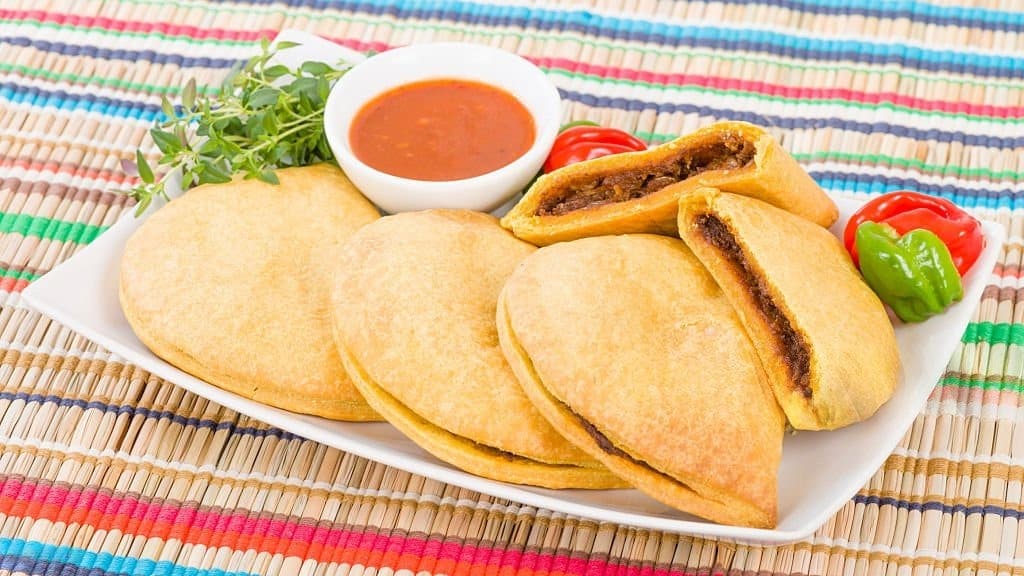
Jamaican Beef Patty occupies a singular place in Jamaica’s culinary landscape. Its golden shell, spicy aroma and unmistakable shape tell a story of encounters, crossings and transmissions. Now a staple of Jamaican daily life, this meat turnover is the fruit of a long journey that combines European heritage, African techniques and influences from the Indian subcontinent.
A dish shaped by centuries of crossbreeding
The origins of Jamaican Beef Patty date back to colonial times. British colonists introduced the Cornish pasty, a meat-filled turnover eaten by Cornish miners. Jamaican cooks quickly adopted it, adapting the dough and seasoning it with whatever they had on hand, gradually transforming this European model into a Caribbean specialty.
Curry, turmeric and certain spices are added later, carried by the arrival of Indian indentured laborers after the abolition of slavery. Powerful aromas, herbs and peppers from African traditions complete the picture.
This culinary encounter was decisive: Jamaican Beef Patty became a typically Jamaican product, a symbol of the creativity emerging in Creole cuisine.
Over the course of the XXᵉ century, it became part of everyday Kingston life. Small stalls proliferated, family recipes were passed down and specialist outlets developed. The patty became a lunchtime landmark, a popular after-school snack, a companion for busy days as well as all-too-brief evenings.
A recipe structured around flavours and textures
Preparing Jamaican Beef Patty is the balance between a colorful, lightly flaky pastry and a long-simmering filling. The Jamaican Beef Patty ‘s pastry must maintain a crumbly, supple texture, while the filling must remain juicy and fragrant, but never too liquid. This culinary precision is part of its identity.
Here are the essential steps, clearly presented:
For the dough
- – Mix flour, salt, a pinch of sugar, turmeric and curry powder.
- – Add the very cold shortening and sand the mixture.
- – Gradually add the ice water to form a homogeneous, but lightly worked dough.
- – Let stand in a cool place before spreading.
For the stuffing
- – Onions, garlic, cives and thyme in a little oil.
- – Add the ground beef and sear to develop the aromas.
- – Season with allspice, Scotch bonnet pepper and other spices.
- – Add a little broth or Caribbean sauce according to family tradition.
- – Reduce until you obtain a perfectly balanced, flavorful, bound texture.
Assembly and cooking
- – Roll out the dough into even discs.
- – Place a portion of stuffing on one half.
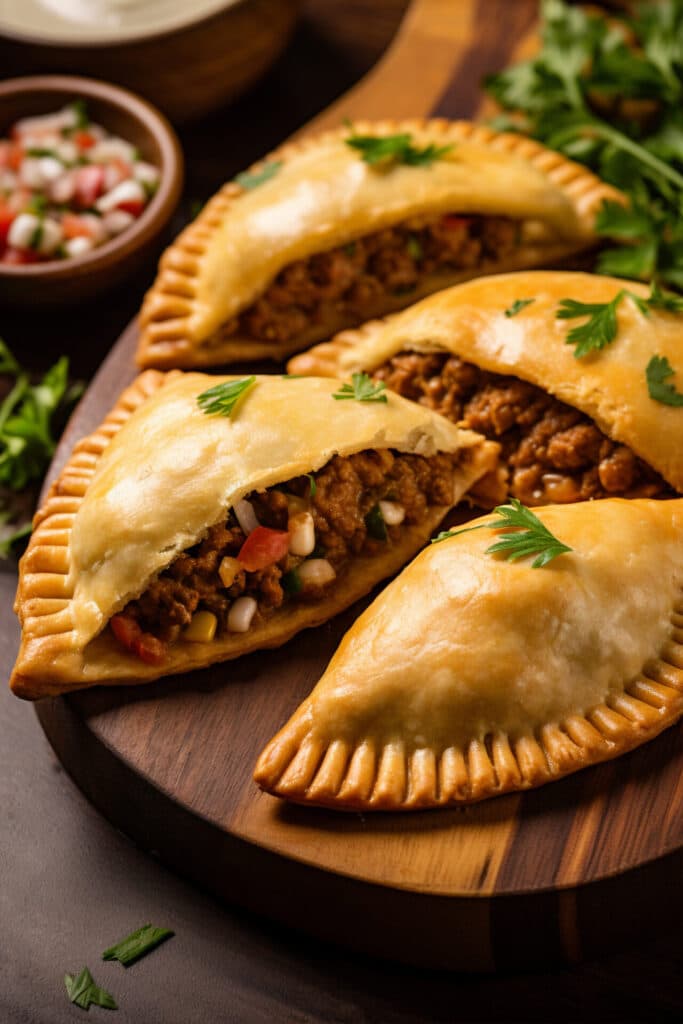
- – Fold into a half-moon shape and seal the edges with a fork or by hand.
- – Bake until golden and crumbly.
- – Serve hot, sometimes slipped into a coconut bread for a more generous version.


A cultural landmark in Jamaica and the diaspora
The Jamaican Beef Patty’s place goes far beyond the culinary sphere. In Jamaica, it accompanies workdays, missed appointments, school afternoons and downtown strolls. It can be found in snack shops, bakeries and street vendors. It’s as much a part of the collective imagination as the aromas of jerk or the flavors of ackee & saltfish.
When Jamaicans migrate to London, Toronto or New York, the patty follows. In Caribbean cafés, community grocery stores and neighborhood bakeries, it becomes a tangible link with the island. For those who grow up far from Jamaica, this taste acts as a bridge: it takes them back to family stories, community celebrations and Sundays when we tell the story of the island so as not to lose it.
This cultural dimension has even found its way into public debate. The “Patty Wars” in Toronto in the 1980s are the best-known example: an administrative controversy surrounding the name “beef patty” mobilized Jamaican retailers, determined to preserve the traditional name. The episode shows the extent to which this meat turnover has become a marker of identity. It’s not just a product sold over the counter, but a taste heritage recognized by an entire community.
A dish that continues to evolve
Today, Jamaican Beef Patty is available in a multitude of variations. The traditional beef recipe remains the benchmark, but chicken, callaloo, vegetables, shrimp and vegan versions are gaining ground. Between artisans who perpetuate family recipes and companies that export frozen patties all over North America, the dish navigates between tradition and modernity.
The success of Jamaican Beef Patty is testament to its ability to stand the test of time without losing its character. The patty retains the same silhouette, the same spicy fragrance, the same way of accompanying a moment’s pause or a long journey.


A culinary and cultural symbol
Jamaican Beef Patty is one of the best examples of the richness of Jamaican cuisine. It bears the heritage of the peoples who have shaped the island, it brings together techniques from several continents, and it symbolizes a deep bond between those who live in Jamaica and those who live far away. Its recipe tells of the past, its variations tell of the present, and its popularity suggests its place in the culinary future of the Caribbean.