Armel Vertino-Albert is a major figure on the Caribbean audiovisual scene, recognized for her long-standing commitment to cinematographic creation, the valorization of local narratives and the transmission of knowledge through images. At a time when overseas cinematographies were struggling to find their place, she has established herself as a director and producer whose work is helping to redefine the way in which Caribbean culture is told through the screen.
A major tribute in 2025
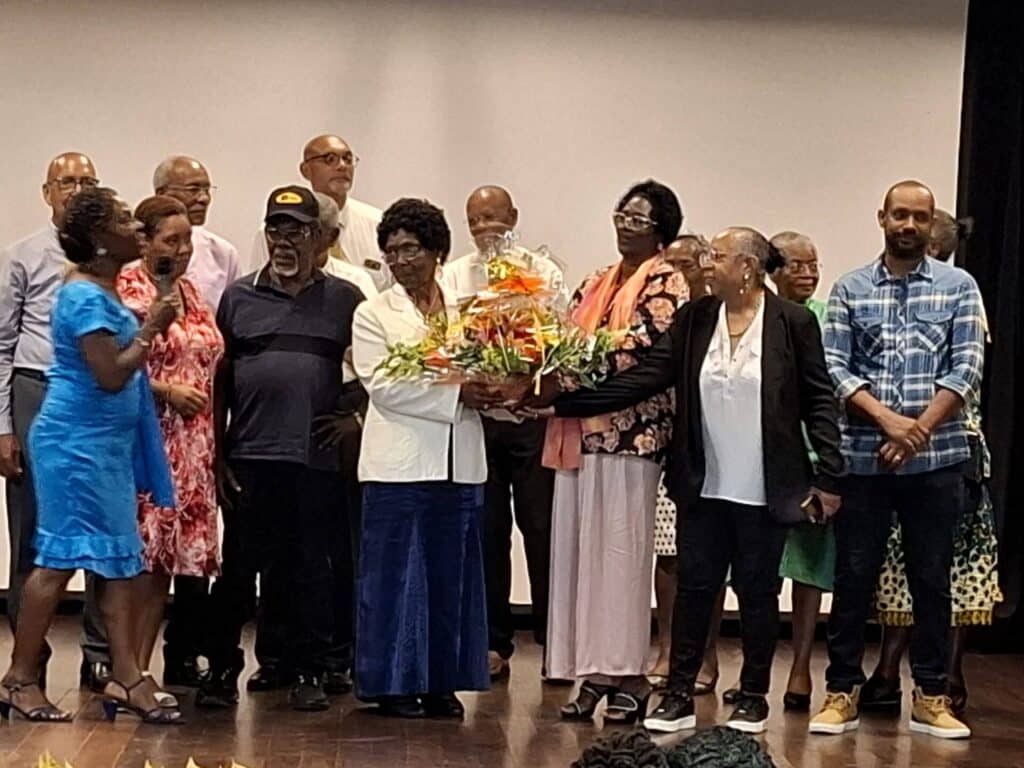
December 2025, Armel Vertino-Albert was honored in Pointe-à-Pitre, Guadeloupe, during a tribute organized to mark the 130 years of cinema. The ceremony paid tribute not only to her artistic career, but also to her lasting contribution to the development of cinema in the Caribbean.
The recognition of her work on this occasion highlighted the importance of her role in the cultural history of the region, highlighting her contribution to the affirmation of a cinema that carries the voices and experiences of the Caribbean.
A commitment since the 1960s
Active in the film industry since 1966, Armel Vertino-Albert has built a rich and multifaceted career, marked by films, productions and documentary projects focusing on the social, historical and cultural realities of the Caribbean.
Her work takes place in a context where filmmakers from the French overseas territories have had to fight to have their stories heard in the face of dominant industries. By giving a central place to local stories, she has helped to strengthen a cinema rooted in collective memory and the bearer of multiple perspectives on Caribbean societies.
A work rich in social and human themes
Films by Armel Vertino-Albert explore themes that go beyond simple narration: identity, memory, transmission, social struggle and cultural representation are at the heart of her productions. Although a complete filmography is not always easy to reconstruct in public sources, her work is frequently associated with documentary projects and short films that shed light on often-invisibilized everyday realities.
In doing so, it has given a voice voice to Caribbean communities. Her work has also been acclaimed at local festivals and events, underlining her ability to combine artistic sensitivity and social relevance. Her work has also been acclaimed at local festivals and events, underlining her ability to combine artistic sensitivity with social relevance.

Transmission and inspiration
Beyond her own creation, Armel Vertino-Albert has made the the transmission of image-related knowledge an essential dimension of her commitment. She regularly takes part in meetings with young filmmakers, awareness-raising workshops and cultural events designed to encourage new vocations.
This educational and community dimension is particularly important in areas where access to production tools and artistic networks is often limited. It helps nurture a new generation of creators capable of bringing their own stories to the screen.
Recognition that goes beyond the individual
Tributes to Armel Vertino-Albert not only celebrate her person, but also a whole a whole heritage of Caribbean cinematography. who has often been relegated to the bangs of mainstream circuits. The attention paid to her work reflects a collective movement to recognize the cinematographies of the French overseas territories, which are now taking an increasingly visible place in regional cultural programming.
This recognition enables us to take a fresh look at artistic practices that have long had to make their way in institutional and media landscapes that gave them little visibility.

Armel Vertino-Albert is an artist and cultural promoter whose career is deeply linked to the history of cinema in Guadeloupe and the Caribbean. Through her films, her social commitment and her role as a transmitter of memory, she has helped to expand the space for the representation of Caribbean voices on screen. The tribute paid to her in 2025 testifies to the importance of her work, not only as an artistic achievement, but also as a source of inspiration for future generations.
Armel Vertino-Albert is a Guadeloupean filmmaker recognized as one of the pioneers of Caribbean cinema. Active since the 1960s, she has contributed to the emergence of local narratives through films rooted in the social, cultural and historical realities of the Caribbean.
In 2025, Armel Vertino-Albert was honored in Pointe-à-Pitre as part of the 130 years of cinema. This recognition underlines his major role in the development of cinema in Guadeloupe and his enduring commitment to memory and cultural transmission.
Armel Vertino-Albert’s contribution lies in his ability to give visibility to Caribbean voices through images. His work has made it possible to valorize narratives often absent from mainstream circuits, while inspiring new generations of filmmakers in the region.