Guadeloupe – February 11, 2026: Maryse Condé, a Caribbean literary conscience that continues to enlighten the world

Maryse Condé

Maryse Condé remains one of the most powerful voices in Caribbean and French-language literature. In this February 11. On the anniversary of her birth in Pointe-à-Pitre in 1934, her work resonates with particular intensity. More than a novelist, she has shaped critical thinking on colonial history, black identity and the multiple heritages of the Caribbean.

For readers both in the region and in the diaspora, she is the embodiment of a literature that rejects useless ornamentation in favor of a lucid analysis of reality. Her writing has helped reposition the Caribbean in major contemporary intellectual debates.

A literary birth set in Caribbean history

The trajectory of Maryse Condé began in Pointe-à-Pitre, in a Guadeloupe still marked by the social hierarchies inherited from colonization. From her earliest works, she set out to deconstruct simplified narratives of West Indian identity. Her work is not limited to memory: it questions the silences, fractures and contradictions that run through societies born of slavery.

February 11 is therefore not just a biographical date. It recalls the birth of an intellectual who chose literature as a space for historical and political analysis. For Maryse Condé, each novel becomes an investigation into the mechanisms of domination, but also into forms of cultural resistance.

Maryse Condé

A work that spans continents and centuries

The singularity of Maryse Condé lies in his ability to place the Caribbean within a wider diasporic space. Her novels unfold between Africa, Europe and the Americas, revealing links often ignored by official narratives.

With Ségou, she revisits the history of West Africa, connecting it to Caribbean trajectories. In Moi, Tituba sorcière…, she gives a voice to a marginalized figure in colonial history, questioning power and gender relations. These texts do not seek to idealize the past: they expose its shadows and persistent tensions.

She has always rejected fixed visions of black identity. She questions negritude, recognizing its historical importance while underlining its limitations. This intellectual freedom has made her a major figure in contemporary literature.

Maryse Condé
Maryse Condé
Maryse Condé

International recognition built on high standards

In 2018, the award of the alternative Nobel Prize for Literature recognizes the breadth of the work of Maryse Condé. This international recognition is not a break with the past, but the culmination of a literary career marked by rigor and independence.

Her work has been translated into many languages and studied at universities around the world. Yet she has never ceased to remind us that literature must not become a fixed monument. For her, writing means confronting the present with its contradictions, without giving in to comfortable discourse.

This posture explains the constant modernity of her texts. The issues she raises – memory, migration, multiple identities, colonial legacies – remain at the heart of contemporary debates.

Maryse Condé
Maryse Condé
Maryse Condé

Maryse Condé and the contemporary Caribbean

For today’s Caribbean, Maryse Condé is much more than a literary figure. She embodies a way of thinking about the region in all its complexity. Her work reminds us that Caribbean history is not limited to the colonial period: it extends into today’s social, political and cultural realities.

Young Caribbean writers find her work a major point of reference. She has opened up a space where literature can address the tensions of identity without simplification or romanticization. Today, this demand influences many of the region’s emerging voices.

On this February 11, her legacy is one of living continuity. The questions she posed continue to fuel reflection on the place of the Caribbean in the world, and on how post-colonial societies are building their future.

Maryse Condé
©Maryse Condé

Literature for uncompromising thinking

The contribution of Maryse Condé is based on a constant conviction: literature should not serve as a refuge, but as a critical space. It invites us to look at history without nostalgia or simplification. This demanding yet accessible approach explains the lasting impact of his work. Her writing reminds us that memory is not a fixed object. It must be questioned, discussed and confronted with the present. This perspective makes Maryse Condé an essential figure for understanding the cultural and social dynamics of the contemporary Caribbean.

Every February 11, the date of her birth becomes an opportunity to re-read a work that continues to shed light on current debates. She gave Caribbean literature a critical and universal dimension. Her legacy remains an invitation to think lucidly about the world.

Maryse Condé
Maryse Condé

She has renewed Caribbean literature by addressing colonial history, the memory of slavery and diasporic identities.

His major works include Ségou, Moi, Tituba sorcière… and Traversée de la mangrove, which are studied worldwide.

February 11 marks the birth of Maryse Condé in 1934, an author whose work has had a profound impact on Caribbean cultural and historical thought.

Leave a Reply

Your email address will not be published. Required fields are marked *

More articles from RK

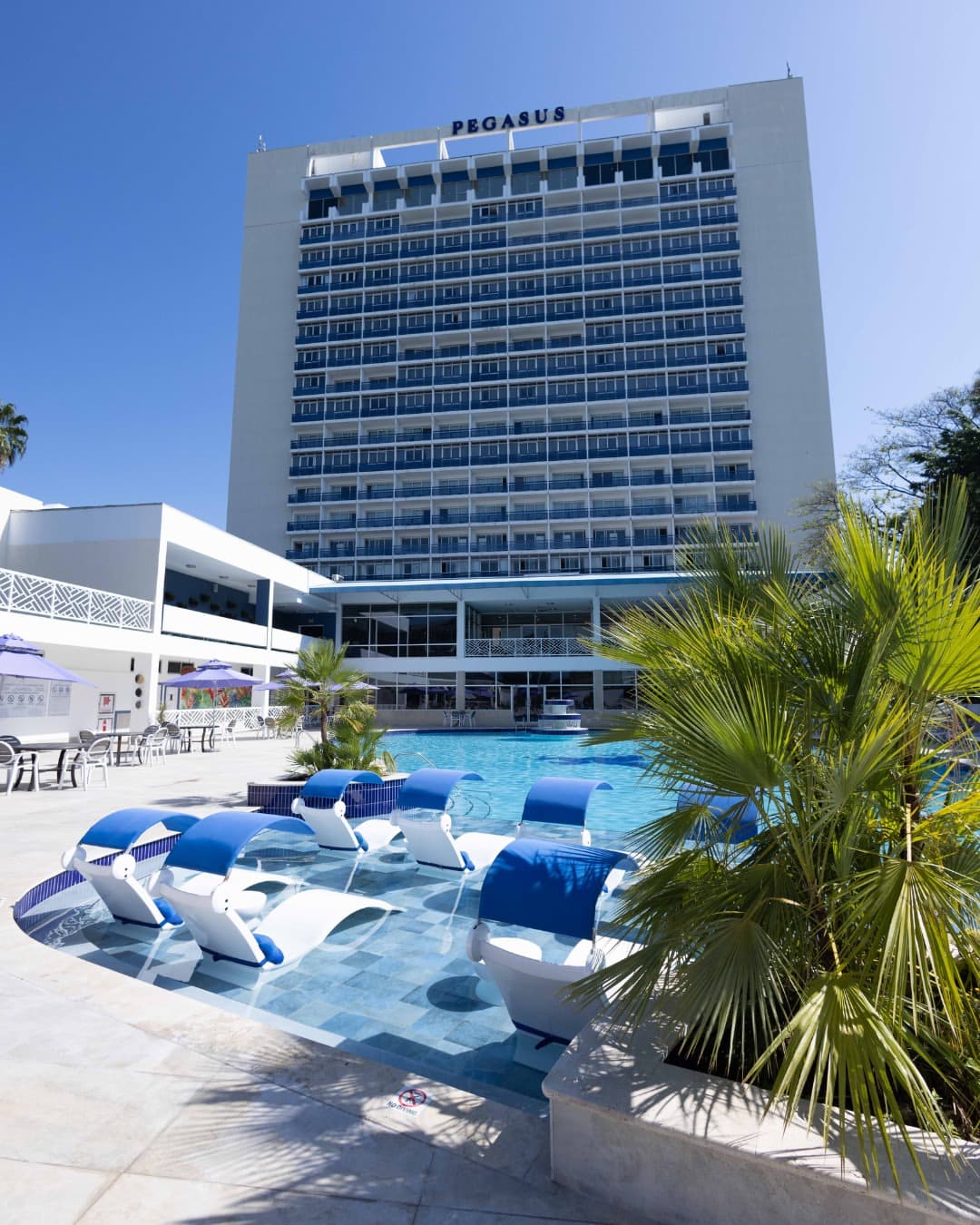
Facade of the Jamaica Pegasus, a business hotel in Kingston, Jamaica
TOURISM
Tolotra

Jamaica Pegasus, named Caribbean’s Leading Business Hotel at the 2026 World Travel Awards

The Jamaica Pegasus has just been named the Caribbean’s Leading Business Hotel 2026 at the World Travel Awards. Before it, only one other hotel had received this title: the Hilton Barbados, in 2007. Between a hotel founded in 1968, a U.S. president, and students seeking shelter from a hurricane, here’s what this award reveals about Kingston. On October 11, 2026, in Green Island, Hanover Parish, the World Travel Awards presented their trophies for the Caribbean and the Americas. One of them made its way to Kingston. The Jamaica Pegasus was named Caribbean’s Leading Business Hotel, in other words the best business hotel in the Caribbean. As head of the Courtleigh Group, which owns the property, Kevin Hendrickson can savor a moment that has taken nineteen years to come around again. Competing with it are hotels in Cuba, Trinidad and Tobago, the Dominican Republic, and Jamaica. The Gran Hotel Manzana Kempinski
Read More »
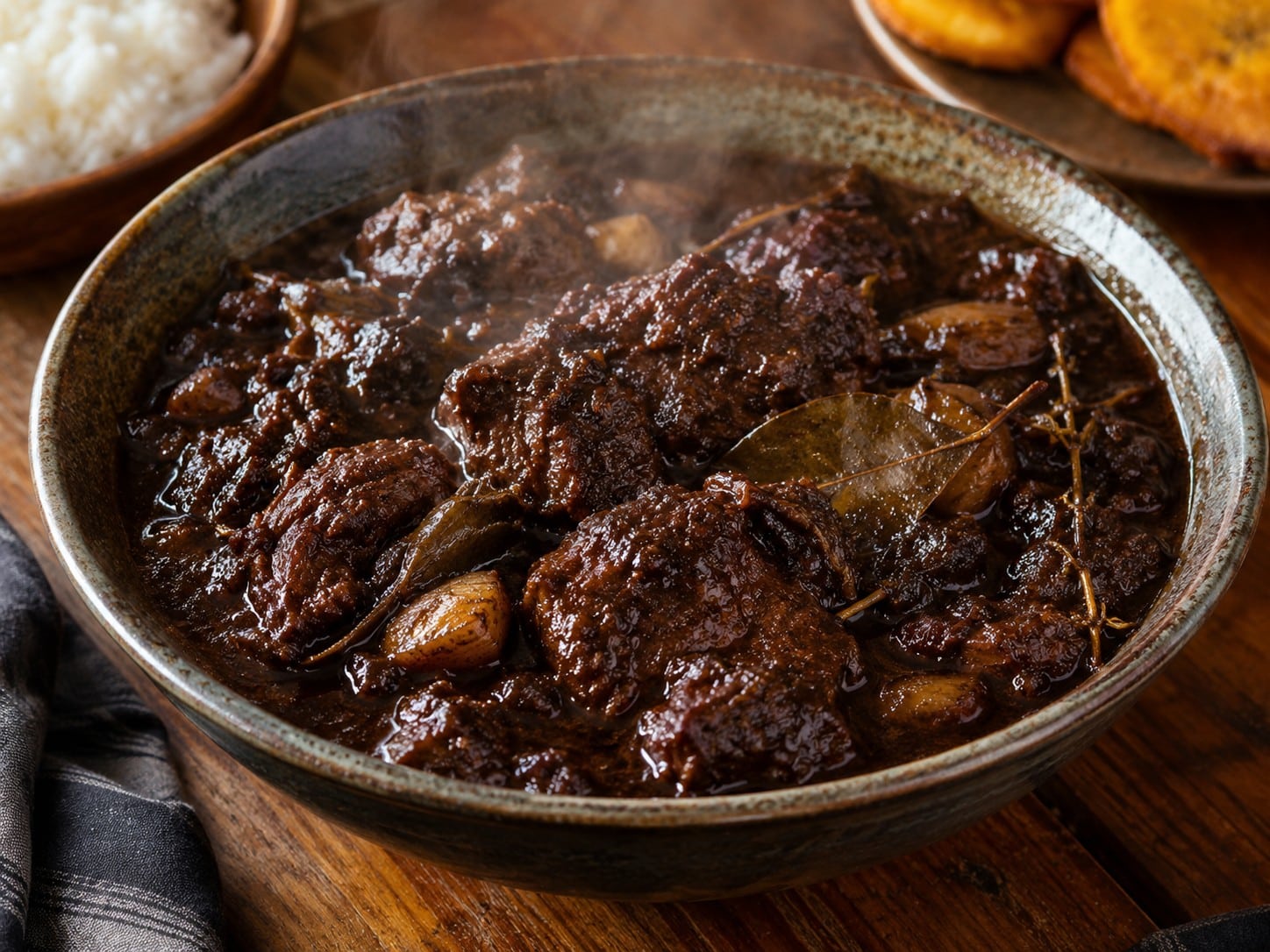
Steaming bowl of Guyanese pepperpot, a dark cassareep stew, served with rice and fried plantains
CULINARY ART
Tolotra

Pepperpot, the Guyanese stew that we heat up day after day

Guyanese pepperpot is a dark stew, simmered for hours with cassareep, a bitter cassava juice. Served on Christmas morning, it is reheated daily to keep it fresh. Considered the national dish, it originates from the country’s indigenous peoples. A black stew that heralds Christmas On December 25, in many Guyanese homes, people wake up to the smell of pepperpot. The pot has been simmering on the stove since the day before. The stew is thick, an almost black brown, with a flavor somewhere between bitter and sweet. It is served with plait, a braided bread, or with cassava bread, the other traditional side dish. Pepperpot, a dish of meat simmered for a long time, is considered Guyana’s national dish. Served at Christmas and New Year’s, it shares the festive table with garlic pork, black cake, and sorrel drink. In the interior of the country, some families eat it year-round. The
Read More »
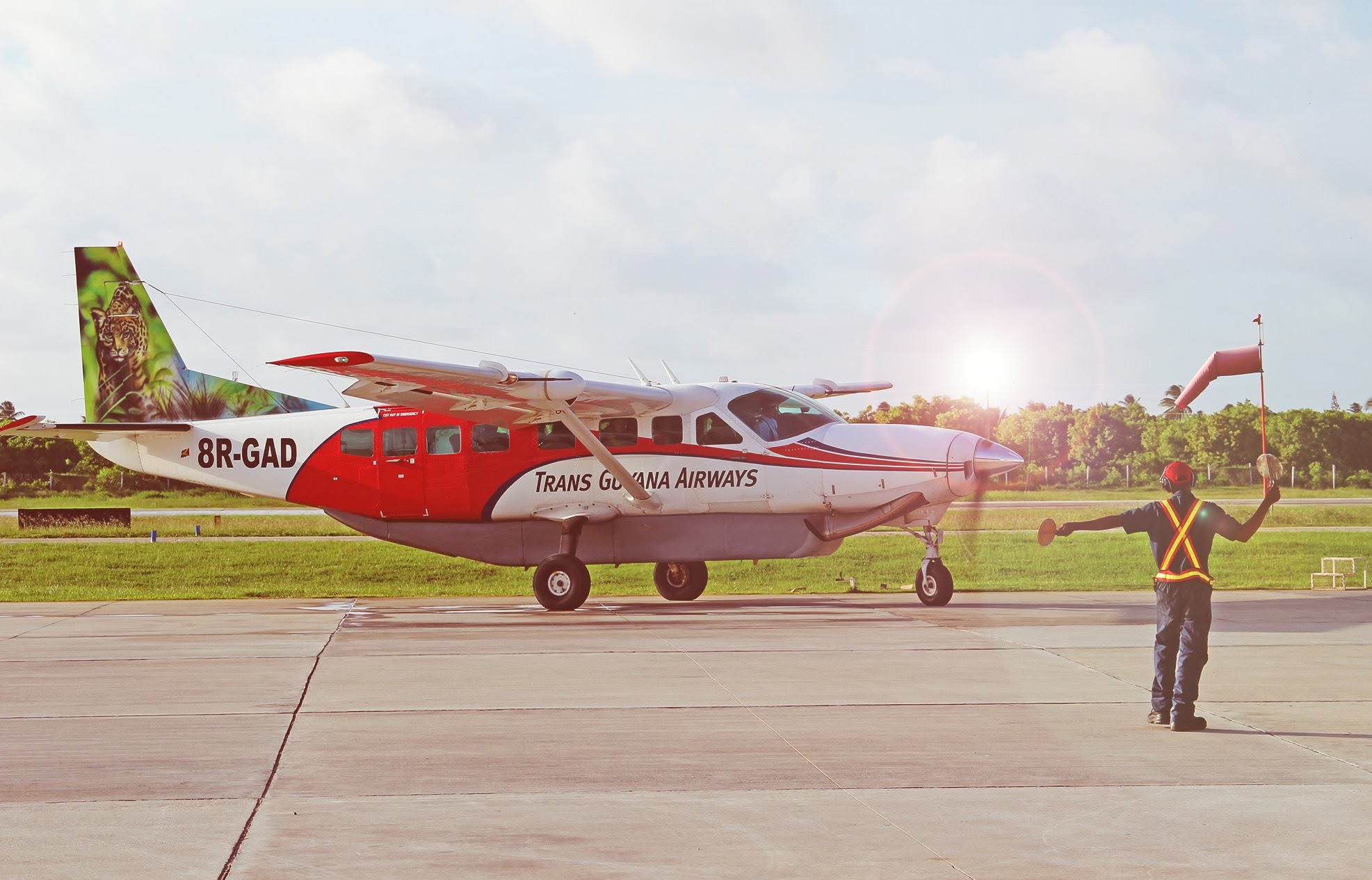
Trans Guyana Airways aircraft 8R-GAD on the runway, guided by a ground crew member
AIR
Tolotra

Direct Flight Between Guyana and French Guiana: Trans Guyana Airways Promises 1 Hour 15 Minutes Versus 24 Hours by Road

There is currently no direct flight between Guyana and French Guiana. However, following the air services agreement signed on September 30, 2026, which replaces the 1976 agreement, Trans Guyana Airways is planning at least two flights per week between Georgetown and Cayenne, though no dates have been announced. In Georgetown, Guyana, the journey to Cayenne begins with a three- to four-hour drive to Moleson Creek. Next comes a ferry that departs only once a day, a crossing into Suriname, and then a second border crossing. That’s still what it takes in 2026 to reach French Guiana from English-speaking Guyana. The direct flight between Guyana and French Guiana being planned by Trans Guyana Airways would cut this journey from nearly 24 hours to about 1 hour and 15 minutes, according to the airline. Direct Flight Between Guyana and French Guiana: What the September 30, 2026 Agreement Unlocks On September 30, 2026,

Read More »

conTACT RK

we'd love to have your feedback on your experience so far

Join The List

Join our Richès Karayib community!  Sign up for our newsletter.

Want To Maximize Your Business Presence On Riches Karayib?

Complete the form to start the application