A simple word, a deep nuance
If you ask a Jamaican how he’s doing, and he replies “Irie”, don’t just say “I’m fine too”. You might miss the point. The word doesn’t simply say that a day is going well. It carries a broader idea: to be at peace, at one with oneself, with others, with the world. It’s precisely this nuance that separates a polite greeting from a way of living life.
In a conversation, the word can be an answer, a greeting or a way of closing an exchange. It may be light, almost smiling, but it is never empty. Depending on the context, it signals a refusal to accept tension, a desire to remain calm, or a choice not to let external disorder take over.

From Jamaican Patwa to Rastafari
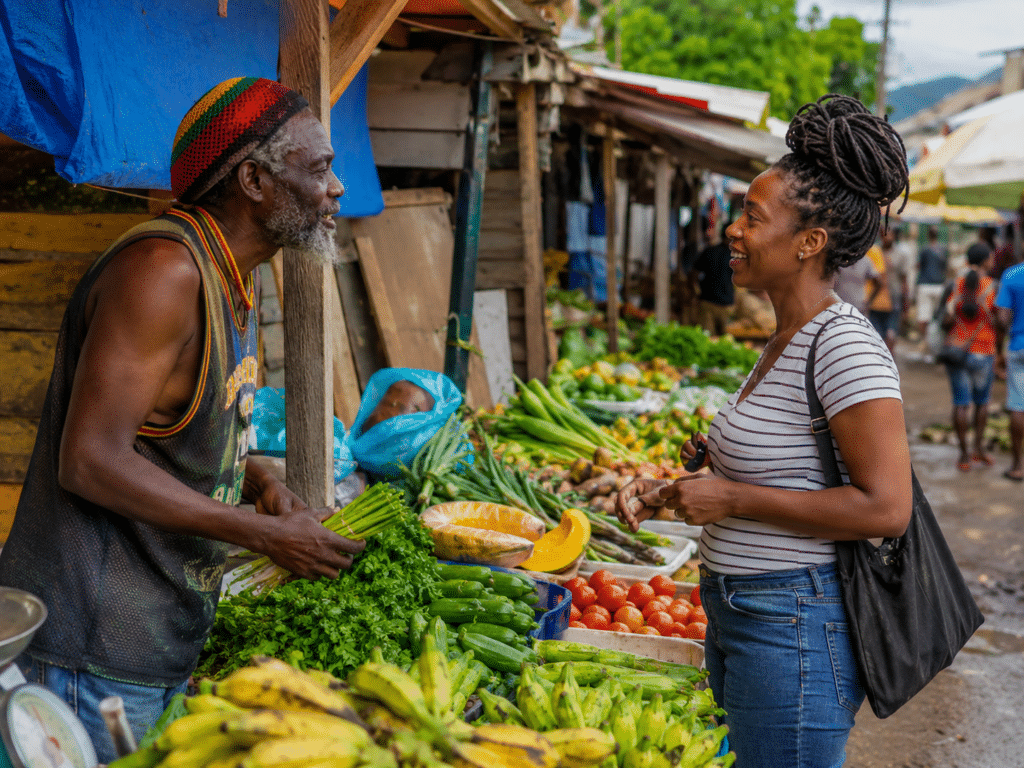
“Irie” is one of the best-known words in Jamaican Patwa, the popular Jamaican language long wrongly reduced to broken English. We read it on T-shirts in Kingston, hear it in reggae songs, see it on bar signs in Negril or in travelers’ souvenirs. But its real significance cannot be measured in shop windows. It can be understood in the cultural history of Jamaica, between Rastafari, reggae and everyday customs.
Today, the word is strongly associated with the Rastafari movement, which originated in Jamaica in the 1930s. For many Rastafarians, “Irie” doesn’t just refer to a pleasant mood. It can express a spiritual condition: living in harmony with Jah, the name given to God in Rasta theology; with livity, a just, natural and coherent way of life; and with creation, understood as all living things.
Between Jah, livity and Babylon
In this worldview, the opposite of “Irie” is not simply sadness. It’s Babylon: a word which, in Rastafari parlance, refers to the oppressive, materialistic and corrupt system from which we must distance ourselves. This opposition gives the term a particular density. To say “Irie” is not just to say that all is well. It’s sometimes a way of affirming that we’re seeking balance despite the pressures of the world.

A controversial origin, a worldwide distribution
The exact origin of the word is still debated. Several explanations link it to the English word “all right”, which has passed through Jamaican sounds and customs. Other hypotheses are circulating, but require caution and cross-checking. What is solid, however, is the modern use of the term in Jamaican Patwa and its international spread through music. In the 1970s, the reggae music of Bob Marley, Peter Tosh and Burning Spear helped to spread the vocabulary of Rastafari outside Jamaica.
The uniqueness of “Irie” lies in its ability to travel far and wide, while retaining a recognizable Jamaican flavor. Young people in Europe, Latin America, Africa and Asia sometimes use it without knowing its roots. The word then becomes a feel-good formula, almost a slogan. But its circulation is also a reminder of the cultural power of an island whose music, language and imagination have left their mark on the whole world.
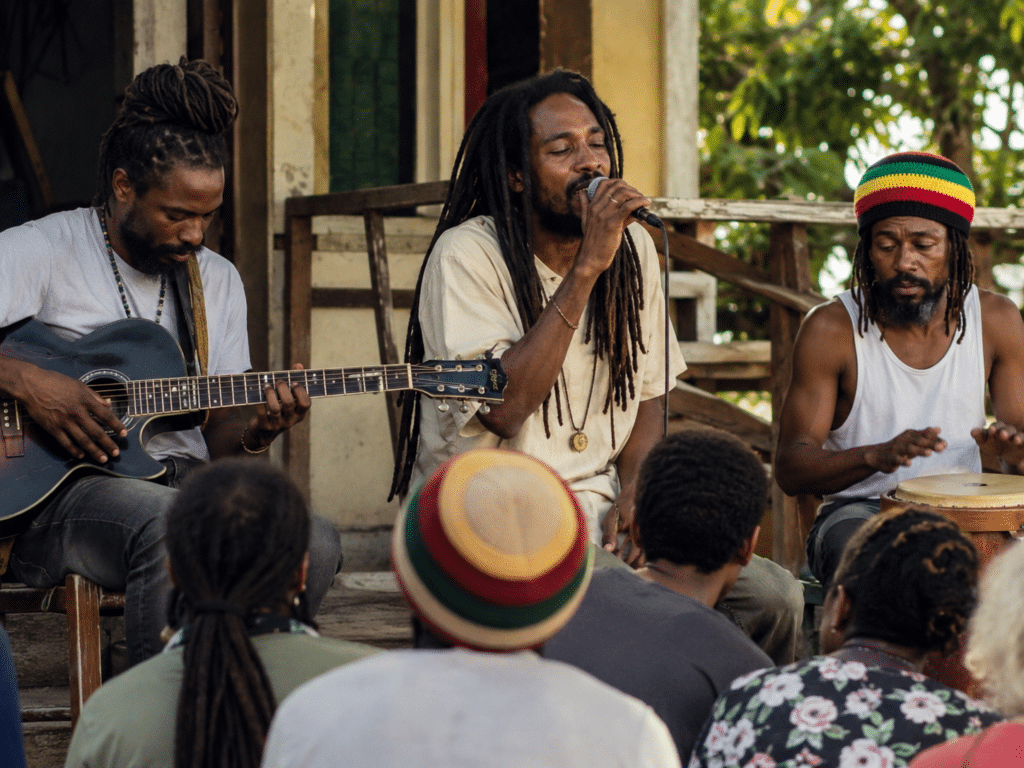
When a word becomes a cultural symbol
In Kingston today, some defenders of the Jamaican language are worried that the word is being reduced to a tourist product. Professor Carolyn Cooper, a leading expert on Jamaican culture, has often reminded us that Jamaican Patwa is not an inferior language, but a linguistic system with its own grammar, history and social depth. “Irie” carries this depth: it speaks of a relationship to the body, to community, to faith and to dignity.

Why "Irie" doesn't translate so easily
The word deserves more than a quick translation. “Ça va” is not enough. “Good” isn’t always enough either. “Irie” expresses a sought-after state, an inner peace, a confidence, sometimes a gentle resistance. It does not erase difficulties. It affirms that a different relationship with the world is always possible.
And next week, RK Words crosses yet another sea. We’re heading for Suriname, to “lobi”, a word in Sranan Tongo that means “love” in a different way. Stay with us.

“Irie” is a Jamaican Patwa word often used to express a state of well-being, peace and balance. It doesn’t just mean that you’re doing well. In its Jamaican usage, it can also convey a form of harmony with oneself, with others and with the world. This is what makes the word so difficult to translate into French as a single expression.
“Irie” is strongly associated with Rastafari, a religious and cultural movement born in Jamaica in the 1930s. In this context, the word can take on a spiritual dimension. It refers to a way of living in harmony with Jah, with livity and with creation. It is also opposed to Babylon, a term used in Rastafari parlance to designate an oppressive, materialistic system.
“Irie” spread widely thanks to the cultural power of Jamaica, particularly through reggae and the Rasta imaginary. The 1970s played a major role in this circulation, with artists such as Bob Marley, Peter Tosh and Burning Spear. Today, the word is sometimes used as a feel-good formula, but its deeper meaning remains linked to Jamaican history, language and culture.