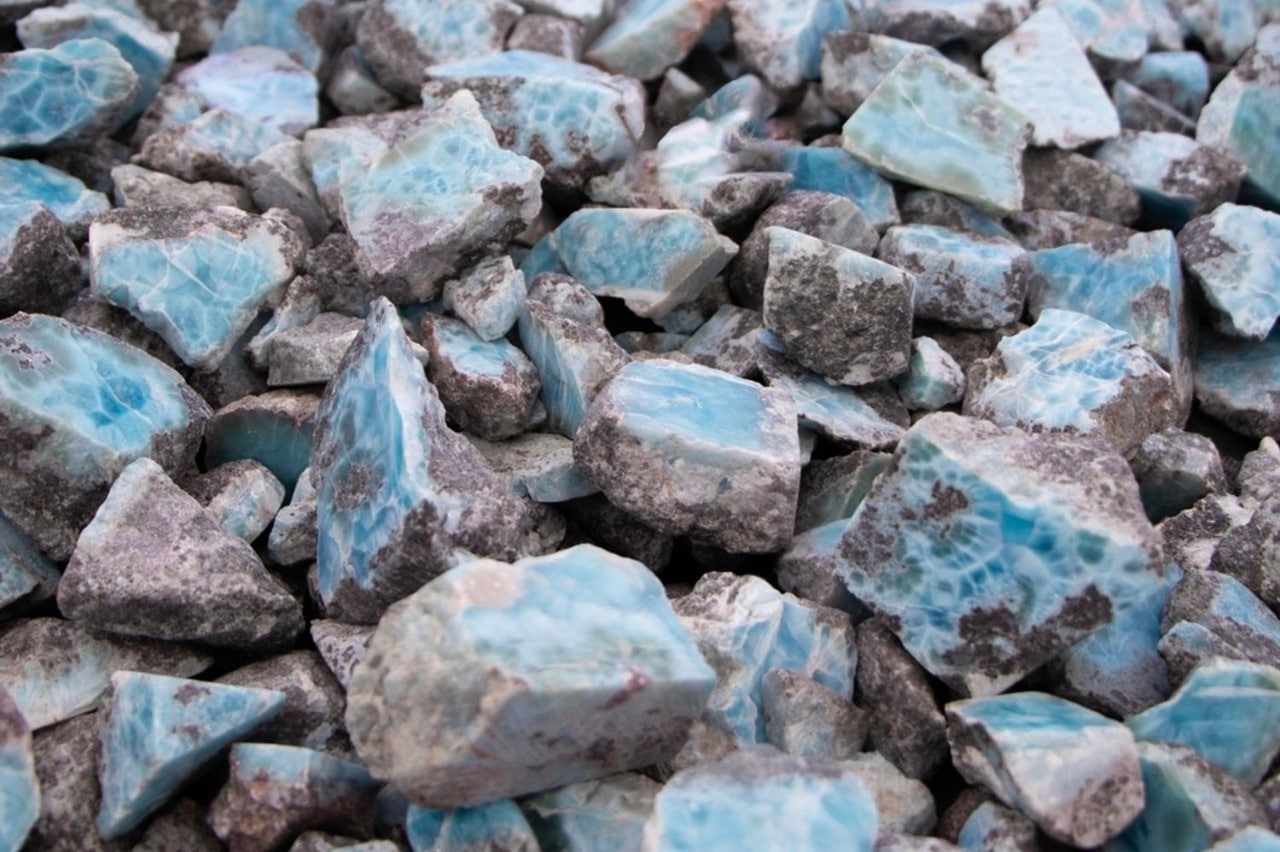
In Barahona, in the southwestern part of the Dominican Republic, a blue stone bridges geology, craftsmanship, and national identity. Larimar is not only prized for its color: its history is tied to a specific region, to those who mine it, and to those who craft it. From the Sierra de Bahoruco to the jewelry workshops, its journey illustrates how a local resource can become cultural heritage, a symbol, and a cause for conservation.
In Barahona, a stone begins its journey
In 1974, Dominican artisan Miguel Méndez became interested in a blue stone known in the Barahona region. Together with geologist Norman Rilling, he helped identify its deposit and develop its use in jewelry. Méndez also gave it its name: “Larimar,” a combination of “Larissa,” his daughter’s first name, and “mar,” the Spanish word for “sea.” Behind this name, which has become familiar in the Dominican Republic, lies a history deeply rooted in a region, a family, and a tradition of craftsmanship.
Larimar: Why Is This Stone So Unique?
Larimar is a blue variety of pectolite that Dominican authorities claim is unique to the country. Its deposit is located in the Sierra de Bahoruco, in the southwestern part of the Dominican Republic, specifically in the communities of Los Checheses and La Filipina, in the province of Barahona. Its color, which ranges from light blue to deeper shades, gives it an instantly recognizable visual identity.
But its uniqueness lies not only in its appearance. It stems above all from its geographical origin: Barahona is not merely a backdrop for the stone; it is the place that gives it its history. This geographical context changes the way we view it: behind every crafted piece lies the concept of a heritage that the country intends to preserve.
When stone passes through the hands of artisans
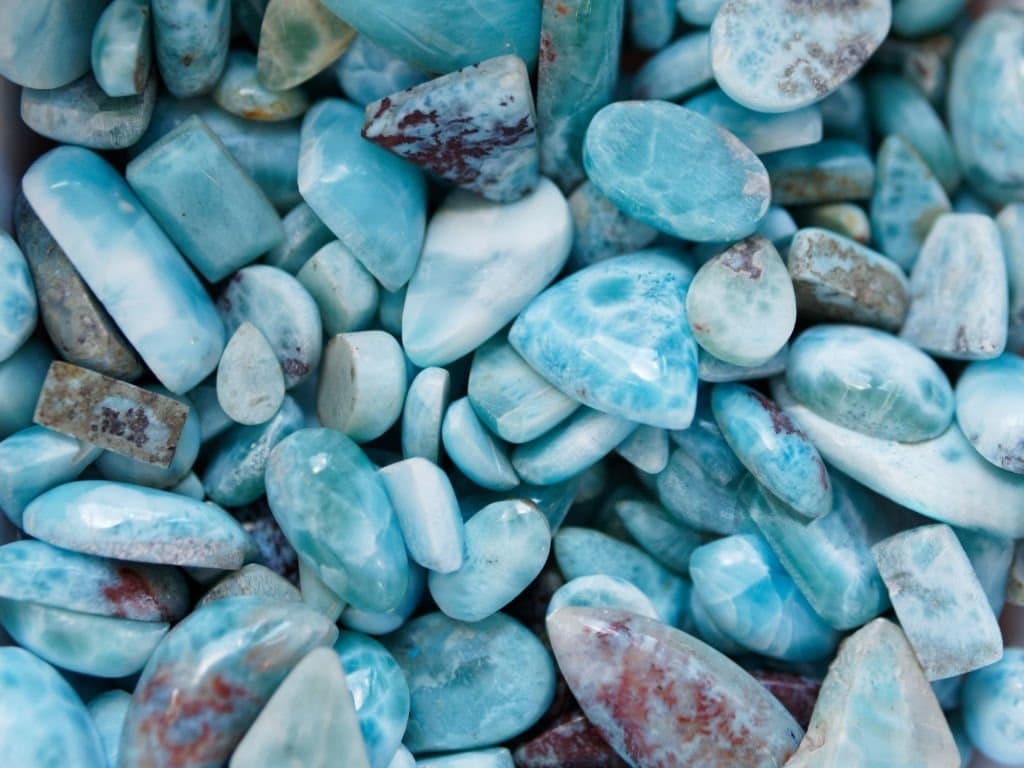
Extracting this stone is just the beginning. Once it’s out of the ground, the material must be sorted, cut, polished, and then transformed. That’s where artisans play a vital role. Jewelry, pendants, rings, and decorative pieces give the stone a second life and transform a mineral resource into a cultural artifact. In December 2025, Dominican authorities reported that at least half of the extracted material remained in the country to be processed locally, particularly in the fields of handicrafts and jewelry.
This transformation represents a significant challenge: retaining more value within the region rather than simply exporting raw materials. It also helps maintain a visible connection between the stone’s origin and the processes that give it its final form before it enters the international market.


How did Larimar become a Dominican symbol?
This relationship between the stone, the region, and the craftsmanship has gradually transcended commercial boundaries. On November 4, 2011, Law 296-11 designated Larimar as the “National Stone” of the Dominican Republic. Since the passage of another law in 2018, November 22 has also been designated as National Larimar Day.
These recognitions lend an institutional dimension to what the artisans and communities of Barahona have been building for decades. Choosing this stone, then, is no longer simply a matter of selecting a blue stone. The stone evokes a place, a history of transformation, and an identity that the country has chosen to officially recognize.

Protecting the name “Larimar Barahona”
The next question was almost inevitable: How can this designation of origin be protected when the stone is exported? The answer today lies in the “Larimar Barahona” designation of origin. Its international registration under the World Intellectual Property Organization’s Lisbon System allows the name to be legally linked to the territory from which it originates.
In June 2026, the Dominican Ministry of Energy and Mines reported that this designation was protected in 28 countries. The goal goes beyond combating the misuse of the name. It also aims to improve traceability and encourage cutting, polishing, and jewelry making in the Dominican Republic.
From Barahona to the World: The True Story of Larimar
The story of this stone ultimately tells of much more than just a geological curiosity. A material buried in the Sierra de Bahoruco became a resource, then a craft, a national symbol, and now a heritage that the Dominican Republic seeks to protect beyond its borders. In this story, Barahona remains, even today, both the starting point and the central thread.
Perhaps this is where the true heritage value of this stone lies. Its uniqueness stems not only from its rarity, but also from the connection between a place, people, and the processes that transform the stone. Protecting this connection also raises a broader question: in the Caribbean, a region rich in traditions deeply rooted in their territories, how many other forms of craftsmanship could, in turn, become cultural heritage that is better recognized, better passed down, and better protected?
Larimar is a blue variety of pectolite associated with the Dominican Republic. Its deposit is located in the Sierra de Bahoruco, in the province of Barahona.
Larimar has become a national symbol associated with Dominican identity, craftsmanship, and expertise. It was designated the national gemstone of the Dominican Republic in 2011.
The “Larimar Barahona” designation of origin protects the connection between the stone and its region of origin. In particular, it aims to preserve the stone’s traceability, authenticity, and the value created locally through its processing.