Kundengo Minier and César Namnúm: Two Ambassadors of Dominican Music

Kundengo Minier

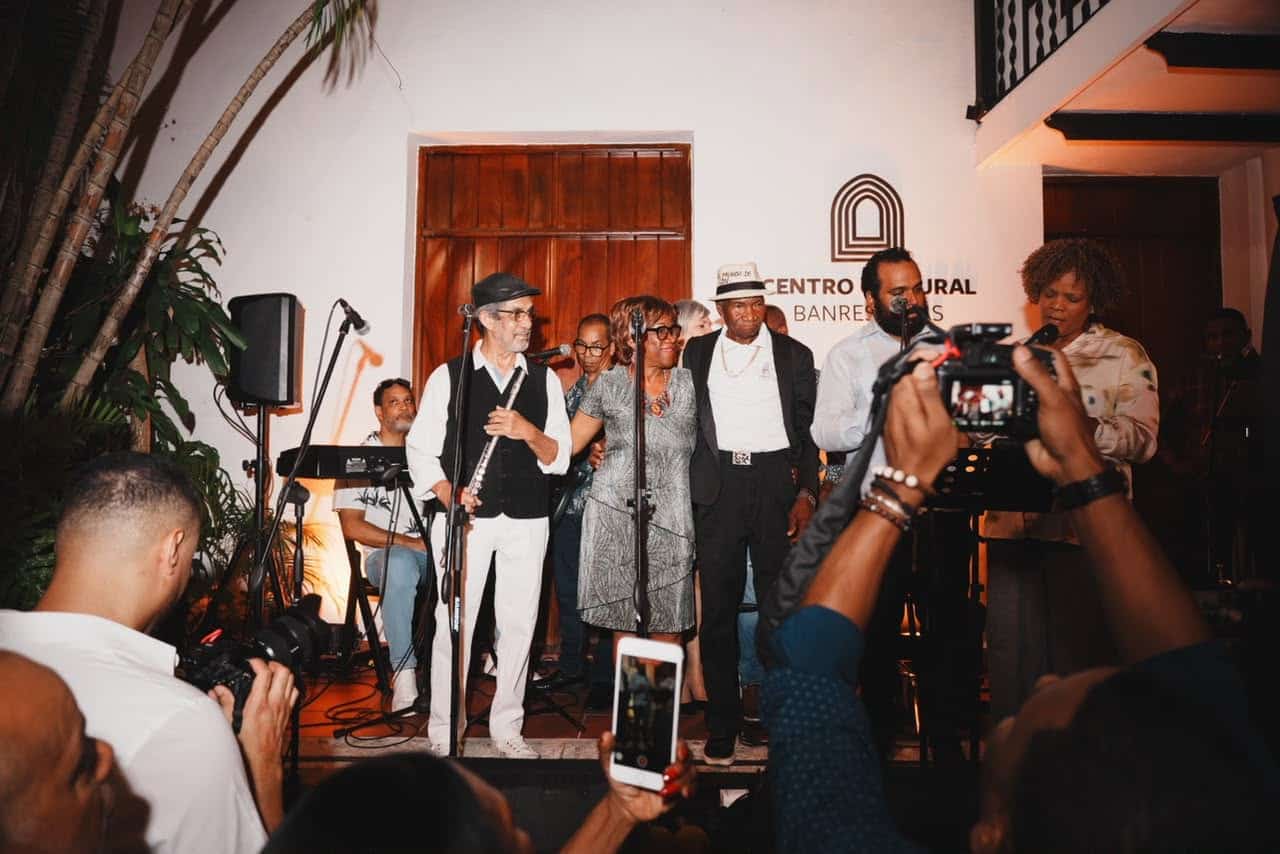
In Santo Domingo, Kundengo Minier and César Namnúm were recently honored for more than five decades dedicated to traditional Dominican music and sound. But during the concert A Ritmo de Son, the two men weren’t just there to receive an award: they picked up their instruments, shared the stage, and reminded everyone that a musical heritage remains alive as long as it continues to be played.

A tribute that ends with music

There were plaques of recognition and tributes. But above all, there was music. Kundengo Minier and César Namnúm shared the stage during A Ritmo de Son, a concert led by Roberto Bobadilla and the Son Urbano ensemble. The evening blended sound, dance, and cultural memory. The two musicians performed several songs, including “Ven mi morena”, “Celo al aire”, “Isabel”, La Paloma and A la loma de Belén. Their collaboration culminated in “Cuarto de Tula”. A moment that summed up the spirit of the evening: the two men were not being celebrated for a chapter that had closed, but for the music they continue to share.

The Centro Cultural Banreservas and the Fundación Arte y Cultura Raíces sought to recognize careers spanning more than five decades dedicated to the preservation, research, and dissemination of sound. Behind this tribute lies a question: How does music endure across generations without becoming merely a memory?

Kundengo Minier
@César Namnúm
Kundengo Minier
@César Namnúm
Kundengo Minier
@César Namnúm

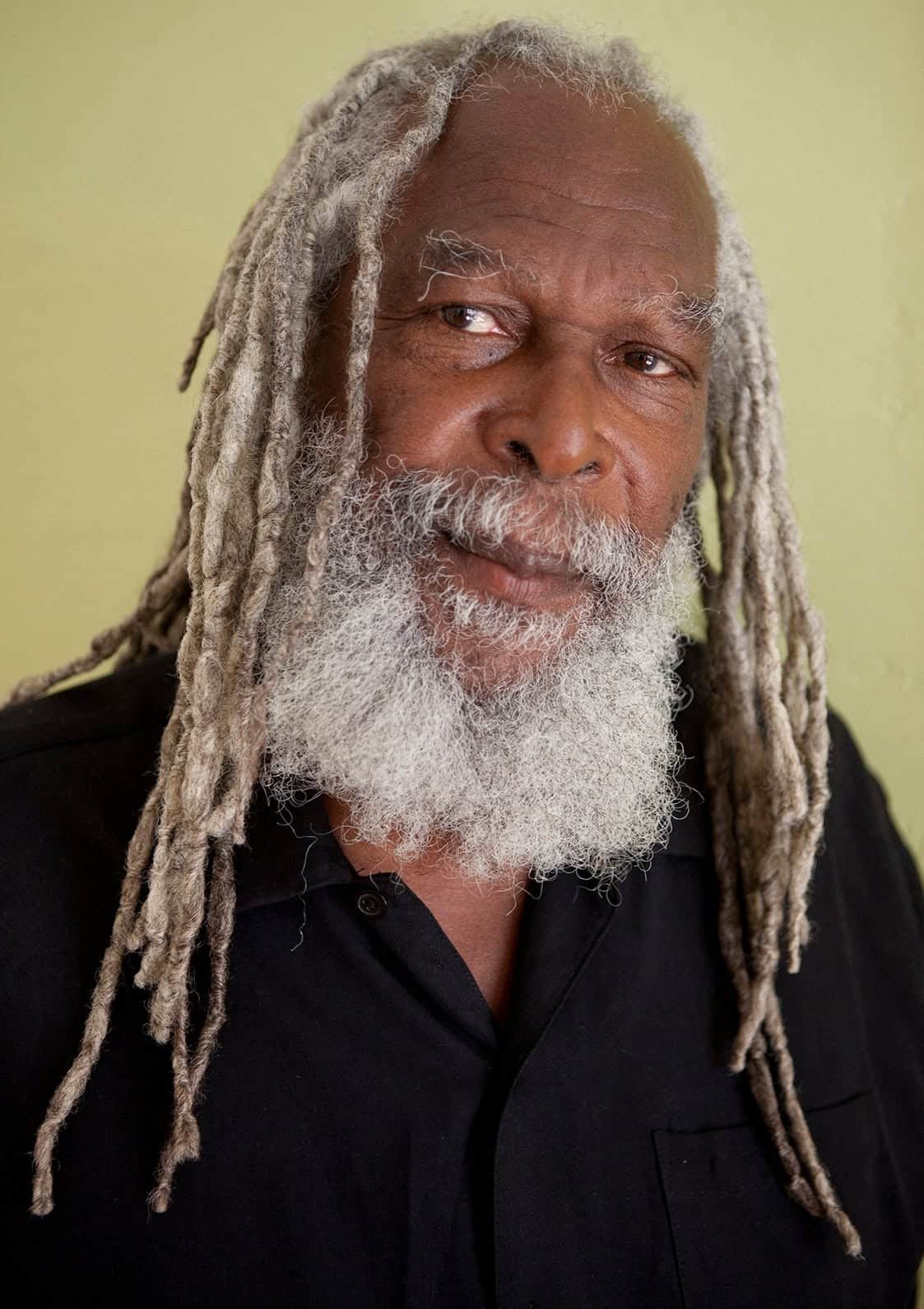
Kundengo Minier: Passing on Knowledge Through the Hands

At Kundengo Minier, the answer lies first and foremost in the performance itself. A guitarist and cuatrista, he also builds his own instruments. For more than fifty years, his career has been dedicated to preserving and promoting the sound and other forms of expression found in traditional Dominican music.

This aspect gives his journey a special power. Passing on music isn’t just about preserving recordings or recounting what it once represented. In his case, this transmission also involves the physical aspect: crafting an instrument, understanding its tones, holding it in one’s hands, and continuing to play. Heritage thus becomes tangible. It lives on in craftsmanship and in the gestures that others can observe, learn, and then replicate.

Kundengo Minier
@Kundengo Minier

César Namnúm: Keeping Memory Alive

César Namnúm represents another way of bringing this music to life. A musician, speaker, and writer, he is known for his work researching, promoting, and disseminating traditional Dominican music and other musical forms. While Kundengo Minier embodies, in particular, instrumental practice and instrument-making, César Namnúm reminds us that a tradition must also be recounted, documented, and shared in order to continue to thrive.

These two paths complement each other. One shows how a culture is passed down through hands and instruments. The other highlights the importance of speech, research, and dissemination. Together, they give the word “preservation” a much more vibrant meaning.

Kundengo Minier
@César Namnúm

Dominican music isn't just for show

Maybe that’s what the evening A Ritmo de Son showed most clearly. After the tribute, the music continued with Son Urbano and a set list that included, among others, “La Zona merece un son”, Son a Villa Francisca, Son de San Antón or even Tribute to Piro Valerio. The audience was swept up in the rhythm and the dance. The sound, therefore, was not presented as a museum exhibit to be viewed from a distance. It filled the space, brought the musicians together, and got those who had come to hear it moving.

Preserving traditional music also means ensuring that it continues to be heard and performed. It means creating spaces where it can be performed, where its stories can be told, and where new audiences can discover it.

Who will take over?

After more than five decades of work, Kundengo Minier and César Namnúm embody two complementary ways of passing on Dominican music. Their recognition celebrates what they have already accomplished, but also draws attention to what still needs to be shared. For a musical heritage does not survive solely through those who have carried it for fifty years. It also depends on those who subsequently choose to learn it, play it, tell its story, and share it.

The question raised by this tribute therefore looks as much to the future as it does to the past: after Kundengo Minier and César Namnúm, whose hands, voices, and stages will keep the Dominican sound alive?Preserving traditional music also means ensuring that it remains heard and practiced. It means creating spaces where it can be performed, where its stories can be told, and where new audiences can discover it.

Kundengo Minier is a Dominican musician, guitarist, cuatrista, and instrument maker. For more than five decades, he has been helping to preserve and pass on traditional Dominican music and sounds.

César Namnúm is a Dominican musician, speaker, and writer. His career has focused primarily on the research, promotion, and dissemination of traditional music and other musical expressions of the Dominican Republic.

Kundengo Minier and César Namnúm were honored in Santo Domingo for more than fifty years dedicated to the preservation, research, and promotion of Dominican sound and traditional music.

Leave a Reply

Your email address will not be published. Required fields are marked *

More articles from RK

Kundengo Minier
HISTORY & HERITAGE
Tolotra

Kundengo Minier and César Namnúm: Two Ambassadors of Dominican Music

In Santo Domingo, Kundengo Minier and César Namnúm were recently honored for more than five decades dedicated to traditional Dominican music and sound. But during the concert A Ritmo de Son, the two men weren’t just there to receive an award: they picked up their instruments, shared the stage, and reminded everyone that a musical heritage remains alive as long as it continues to be played. A tribute that ends with music There were plaques of recognition and tributes. But above all, there was music. Kundengo Minier and César Namnúm shared the stage during A Ritmo de Son, a concert led by Roberto Bobadilla and the Son Urbano ensemble. The evening blended sound, dance, and cultural memory. The two musicians performed several songs, including “Ven mi morena”, “Celo al aire”, “Isabel”, La Paloma and A la loma de Belén. Their collaboration culminated in “Cuarto de Tula”. A moment that summed

Read More »
One-one coco full basket
HISTORY & HERITAGE
Tolotra

One-One Coco Full Basket: In Jamaica, every little effort counts

In Jamaica, sometimes just a few words are enough to remind us that even a small gesture is never truly insignificant. “One-one coco full basket” is one of those expressions that sticks in your mind: a simple image—a basket filling up little by little—and behind it, an idea of patience, perseverance, and progress. One-one coco full basket has even spread far beyond everyday conversation. In 2013, it lent its name to a fundraising campaign aimed at supporting the relocation to Canada of a group of Maroons from Charles Town, Jamaica. This choice perfectly captured the spirit of the proverb: even a small contribution can be part of something greater. What does “One-one coco full basket” mean? The expression can be understood this way: one coconut at a time, the basket eventually fills up. But its meaning obviously goes beyond the basket. It reminds us that an important goal can be

Read More »
San Basilio de Palenque
HISTORY & HERITAGE
Tolotra

San Basilio de Palenque: Freedom Transformed into a Living Culture

In San Basilio de Palenque, in the department of Bolívar in northern Colombia, the memory of freedom is still spoken, sung, taught, and organized as part of daily life. UNESCO presents San Basilio as one of the first free African villages in the Americas and as a major site commemorating the resistance to slavery. A freedom that shaped a region San Basilio de Palenque grew out of the history of the palenques—communities established by people who had fled slavery. In the 17th century, these settlements served as refuges and allowed their inhabitants to rebuild their lives outside the slave system. San Basilio is the historic palenque that has endured to this day, developing a particularly unique cultural space. At the heart of this thesis is the figure of Benkos Biohó, a cimarron —a term referring to those who fled slavery—and a key figure in the anti-slavery struggle, as well as

Read More »

conTACT RK

we'd love to have your feedback on your experience so far

Join The List

Join our Richès Karayib community!  Sign up for our newsletter.

Want To Maximize Your Business Presence On Riches Karayib?

Complete the form to start the application