Valley of the Ingenios: More Than 50 Sugar Mills Spanning 225 km² in Cuba

Yellow arcaded manor house of the Manaca Iznaga estate in the Valle de los Ingenios, near Trinidad, Cuba

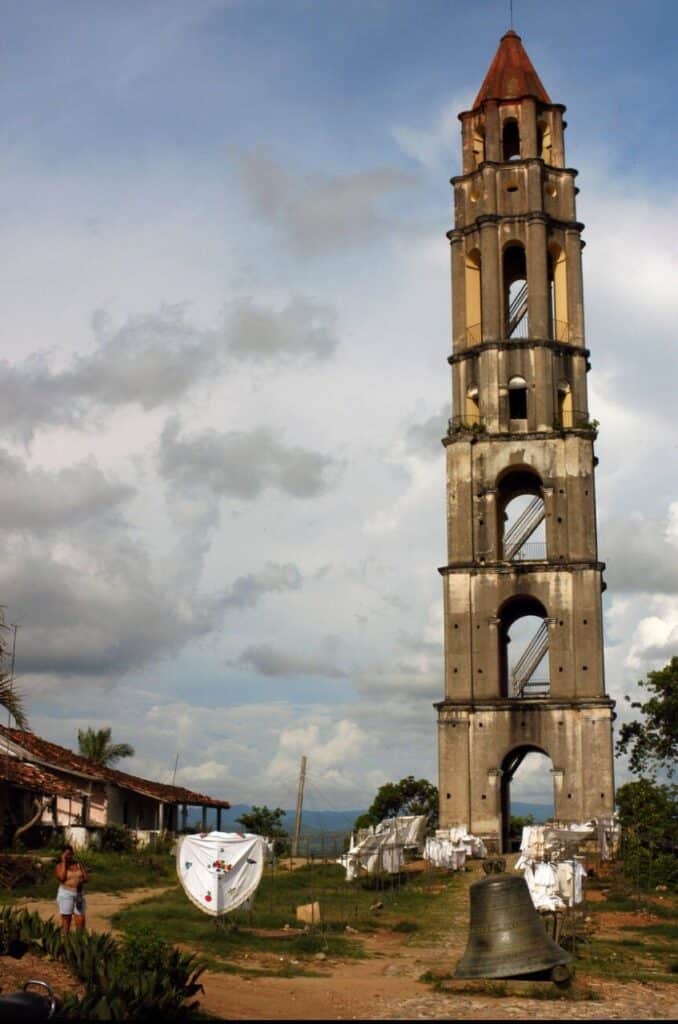
The Ingenios Valley, northeast of Trinidad, covers 225 km². In 1827, more than 50 sugar mills were in operation there, and more than 11,000 people were working as slaves. A brick tower still towers over these fields, bearing witness to that era. Seven levels of brick and lime mortar, with a plan that transitions from square to octagonal, standing over 43 meters tall. The Manaca Iznaga Tower is visible from afar. Alejo María del Carmen Iznaga y Borrell had it built in the early decades of the 19th century on an estate purchased in 1795 by his father, Pedro José Iznaga, and which he inherited in 1831.

It served as a bell tower and a lookout post, towering over the fields. The bell marked the passing of the days, and the view took in the crops. A local legend tells of two brothers who are said to have challenged each other to see who could build the most magnificent structure. The reality, however, is darker. This tower overlooked a system based on forced labor, in the heart of the Ingenios Valley.

Manaca Iznaga Tower in the Valle de los Ingenios, near Trinidad, Cuba
The Manaca Iznaga Tower, more than 43 meters tall, still dominates the valley.

Valle de los Ingenios, three valleys northeast of Trinidad

The word “ingenio” refers to the sugar mill and the surrounding estate. Here, it refers to three neighboring valleys—San Luis, Santa Rosa, and Meyer—located about a dozen kilometers from Trinidad. Together, they cover 225 km², more than twice the area of inner Paris.

Trinidad has existed since 1514. Diego VelĆ”zquez made it the third city founded by the Spanish in Cuba. The sugar industry did not take off there until the late 18th century, and subsequently dominated the landscape for a hundred years. The historic center—37 hectares surrounding the Plaza Mayor—has been protected since 1978. The valley has been protected since 1989. In 1988, both were inscribed together on the UNESCO World Heritage List. The Palacio Cantero now houses the city’s history museum.

Green mountains overlooking the Valle de los Ingenios, near Trinidad, Cuba
The mountains that frame the valley, northeast of Trinidad.
Palm trees and distant hills in the Valle de los Ingenios, near Trinidad, Cuba
The valley seen from above, between palm trees, farmland and hills.

The Ingenios Valley in 1827: What the Numbers Tell Us

More than 50 sugar mills, more than 11,000 slaves. That’s an average of more than 200 people per estate and nearly 49 enslaved people for every square kilometer of the valley. Each ingenio required workers to cut the sugarcane, stoke the boilers, and transport the sugar. The plantations produced approximately 640,000 arrobas—a unit equal to about 11.5 kilograms—or roughly 7,400 metric tons of sugar in a single year.

The fortunes of a few planter families depended on these men, women, and children. On a national scale, the Haitian Revolution opened up a market for Cuban sugar, and the importation of slaves accelerated. This context helps to gauge the scale of the Ingenios Valley, though it does not fully explain it.

Former estate house with white arches and a wooden cart, in the Valle de los Ingenios, Cuba
A former estate house with white arches, lined with large trees.
Roots of a large tree in front of a former estate house, in the Valle de los Ingenios, Cuba
The roots of a large tree in front of a former estate house.

What the Ingenios Valley Has Preserved and What It Has Lost

More than 70 former sugar plantations can still be found in the area, including thirteen manor houses. Many are now nothing more than ruins. The industry’s decline stretched over many years and then accelerated in the 1990s. The valley’s last sugar mill officially closed in 2005. Since then, the valley has ceased to produce the sugar that had shaped it for over a century. What remains is a landscape of ruins.

An album of lithographs published in Havana in 1857, *Los ingenios*, had, however, captured the image of Cuba’s great sugar mills at their peak. The text is by Justo GermĆ”n Cantero, who extols the beauty of the Trinidad Valley. In particular, he praises the Buenavista estate, which he considers the most pleasant in the San Luis Valley.

The tower, a landmark of the Ingenios Valley, has stood the test of time. It appears in the inventory of assets drawn up after Alejo Iznaga’s death in 1845. Two interpretations of its purpose coexist. A lookout for fires and leaks, or a display of wealth. In the fall of 2025, it closed to the public for renovations, which were entrusted to a small Cuban company for approximately one million pesos. The beams, columns, and steps on the sixth level were to be replaced, and the bell tower repainted.

Ruins of a former sugar mill with its chimneys in the Valle de los Ingenios, Cuba
The ruins of a former sugar mill, a witness to the valley's sugar past.
Valle de los Ingenios tourist train crossing the valley in Cuba
The tourist train that runs through the valley.

Who watches over the Ingenios Valley today?

Since 1978, the tower has been designated a national monument. A conservator’s office, established in 1997, oversees the heritage of Trinidad and its valley. Protecting the brickwork is a first step. Passing on what this tower has witnessed is another—and a far more difficult one. In a valley without sugar, who will speak the names of those who cut the cane?

Viewing telescope at a lookout facing the Valle de los Ingenios, Cuba
From a lookout, a telescope overlooks the whole valley.
Sugar cane fields at the foot of the mountains in the Valle de los Ingenios, Cuba
Sugar cane fields at the foot of the mountains: the landscape that shaped the valley.

Frequently Asked Questions About the Ingenios Valley

The Ingenios Valley is located in Cuba, northeast of Trinidad, about a dozen kilometers from the city. It encompasses three neighboring valleys—San Luis, Santa Rosa, and Meyer—spanning 225 km².

In 1827, the Ingenios Valley was home to more than 50 sugar mills and more than 11,000 enslaved people. That averages out to more than 200 people per plantation.

An ” ingenio” refers to a sugar mill and the estate surrounding it. The Valley of the Ingenios takes its name from these sugar estates.

Leave a Reply

Your email address will not be published. Required fields are marked *

More articles from RK

Yellow arcaded manor house of the Manaca Iznaga estate in the Valle de los Ingenios, near Trinidad, Cuba
TOURISM
Tolotra

Valley of the Ingenios: More Than 50 Sugar Mills Spanning 225 km² in Cuba

The Ingenios Valley, northeast of Trinidad, covers 225 km². In 1827, more than 50 sugar mills were in operation there, and more than 11,000 people were working as slaves. A brick tower still towers over these fields, bearing witness to that era. Seven levels of brick and lime mortar, with a plan that transitions from square to octagonal, standing over 43 meters tall. The Manaca Iznaga Tower is visible from afar. Alejo María del Carmen Iznaga y Borrell had it built in the early decades of the 19th century on an estate purchased in 1795 by his father, Pedro José Iznaga, and which he inherited in 1831. It served as a bell tower and a lookout post, towering over the fields. The bell marked the passing of the days, and the view took in the crops. A local legend tells of two brothers who are said to have challenged each
Read More Ā»
Caribbean Cinema
FILM & VIDEO
Tolotra

S8/10 – Stories from Caribbean Cinema: Youth, Women, and New Pathways. Texts by Guillaume Robillard. Ciclic, 2026.

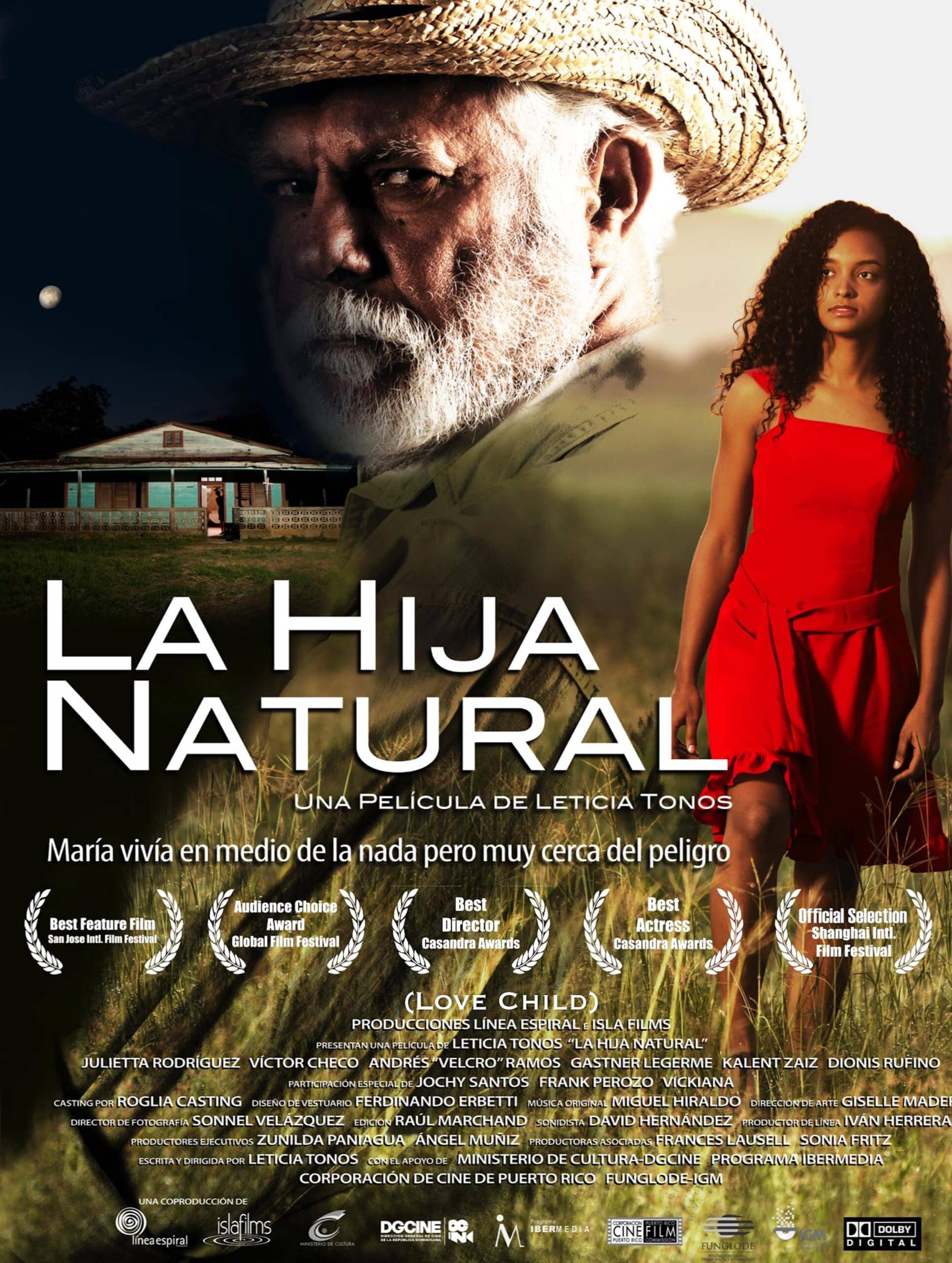
The history of Caribbean cinema now moves into the 2000s and 2010s. After seven installments and several decades of filmmaking, this eighth installment brings together three films from Guadeloupe and the Dominican Republic, each exploring individual journeys that serve as gateways to broader social realities. *NĆØg Maron* explores the lives of urban youth in Guadeloupe. *La Hija Natural* follows a young woman who sets out to find her father in the Dominican Republic. *Le Bonheur d’Elza* also tells the story of a family quest that takes its main character all the way to Guadeloupe. You are now on the eighth episode out of ten. The first seven are already available on RichĆØs Karayib. After this one, there will be two more episodes to explore the most contemporary Caribbean cinema. 2005: GUADELOUPE – *NƈG MARON*, BY JEAN-CLAUDE BARNY NĆØg Maron is the film of a generation. Starring two Guadeloupean dancehall stars,

Read More Ā»
Portrait of Bob Andy, Jamaican singer and songwriter, in front of a green wall
MUSIC
Tolotra

“Bob Andy,” from Maxfield Park, made it into the UK Top 5 in 1970

Bob Andy, born Keith Anderson in Kingston in 1944, is one of Jamaica’s greatest songwriters. He wrote ā€œI’ve Got to Go Back Homeā€ in 1967, reached number five on the British charts in 1970 with Marcia Griffiths, and was awarded the Order of Distinction in 2006. His career, however, began on the streets. Bob Andy, a homeless child from Kingston As a child, Bob Andy had neither a stable home nor a real school. He would later describe himself as a runaway who was practically homeless, sleeping rough in Rockfort, Kingston. Placed in the Maxfield Park children’s home, he taught himself to play the piano and sang in the choir at Kingston Parish Church.Ā  This education, though he never earned a diploma, would remain a source of pride for him. It was in the choir that the young Keith Anderson befriended Tyrone Evans. Together, they formed a vocal group, the

Read More Ā»

conTACT RK

we'd love to have your feedback on your experience so far

Join The List

Join our RichĆØs Karayib community! Ā Sign up for our newsletter.

Want To Maximize Your Business Presence On Riches Karayib?

Complete the form to start the application