Bridgetown was built in successive layers around the same Amerindian bridge, which in turn became a slave port, a Sephardic synagogue, and a British garrison, with a street layout that has remained organic where other Caribbean colonial cities opted for a grid pattern. Since 2020, Bridgetown has been removing the statues of its colonial past one by one, while working to have its historic buildings designated as a UNESCO World Heritage Site.
Bridgetown, a capital city born from a bridge
Before it was called Bridgetown, the place had another name, Indian Bridge, after a wooden bridge built by Native American peoples over the Careenage—the natural cove where ships would be laid on their sides for repairs—and around which the city would grow. English settlers established themselves there on July 5, 1628, under the authority of London merchants. The name Bridgetown would come later, in honor of a governor, Sir Tobias Bridge. Eleven years after colonization, in 1639, Barbados established a Parliament, which is now the third-oldest in the Commonwealth still in operation.
The city, then, is not merely a colonial trading post situated on a white-sand beach. From its very first century, it has administered, legislated, and governed an entire island from this very neighborhood clustered around the bridge.
The Economy That Built Bridgetown
This early success came at a price. Between 1627 and 1807, approximately 387,000 enslaved Africans were sent to Barbados to fuel the sugar economy that made the city’s fortune. Sugar, rum, and molasses were then shipped from the docks of the Careenage to Europe and the Americas, shipment after shipment. The warehouses, docks, and beautiful facades we see today in the old town were built through this triangular trade, and acknowledging this is part of the city’s complete history—not just a footnote we quickly skip over.
A community that left its mark on Bridgetown
It was in this same Bridgetown that, in 1654, Sephardic Jewish refugees settled after being expelled from Dutch Brazil following its reconquest by Portugal. A Jewish presence there had already been reported as early as 1628, one year after the arrival of the English. A year after their arrival, in 1655, an ordinance issued by the Council of Barbados granted them civil rights—a rare gesture for the time. These families also brought with them valuable knowledge—that of sugarcane cultivation—which they passed on to the island’s planters. Their community grew to about eight hundred people by the eighteenth century.
Their synagogue, Nidhe Israel, still stands today; it was rebuilt after a hurricane in 1831 thanks to ninety congregants, and then saved from scheduled demolition in 1985. In 2008, an excavation beneath the rabbi’s house—prompted by a remark from Israeli tourists—unearthed a 17th-century ritual bath, one of the oldest in the Americas.
Bridgetown, a true showcase of the Empire
A few streets away, the Saint Ann Garrison served as the base for the British West Indies Regiment during the 18th and 19th centuries. This regiment, established in 1795, initially drew its ranks from men purchased as slaves on sugar plantations to serve as soldiers, before a law passed in 1807 finally granted them their freedom. Its vast parade ground, the Garrison Savannah, has hosted horse races popular with officers and dignitaries since the mid-eighteenth century, a tradition that continues today.
The city also proudly displays its loyalty to the Crown. In 1813, the city erected a statue of Admiral Nelson in Trafalgar Square, thirty years before London erected its own column in his memory. For a long time, it sought to be the impeccable showcase of the Caribbean’s “Little England.”
Bridgetown Comes to Terms with Its Past
This superficial loyalty eventually began to crack. Barbados declared its independence on November 30, 1966. In 1999, Trafalgar Square became National Heroes Square. In 2011, UNESCO inscribed “Historic Bridgetown and its Garrison” on the World Heritage List, noting in particular its non-grid street layout, a legacy of medieval English towns rather than the Spanish or Dutch grid patterns that characterize the rest of the colonial Caribbean.
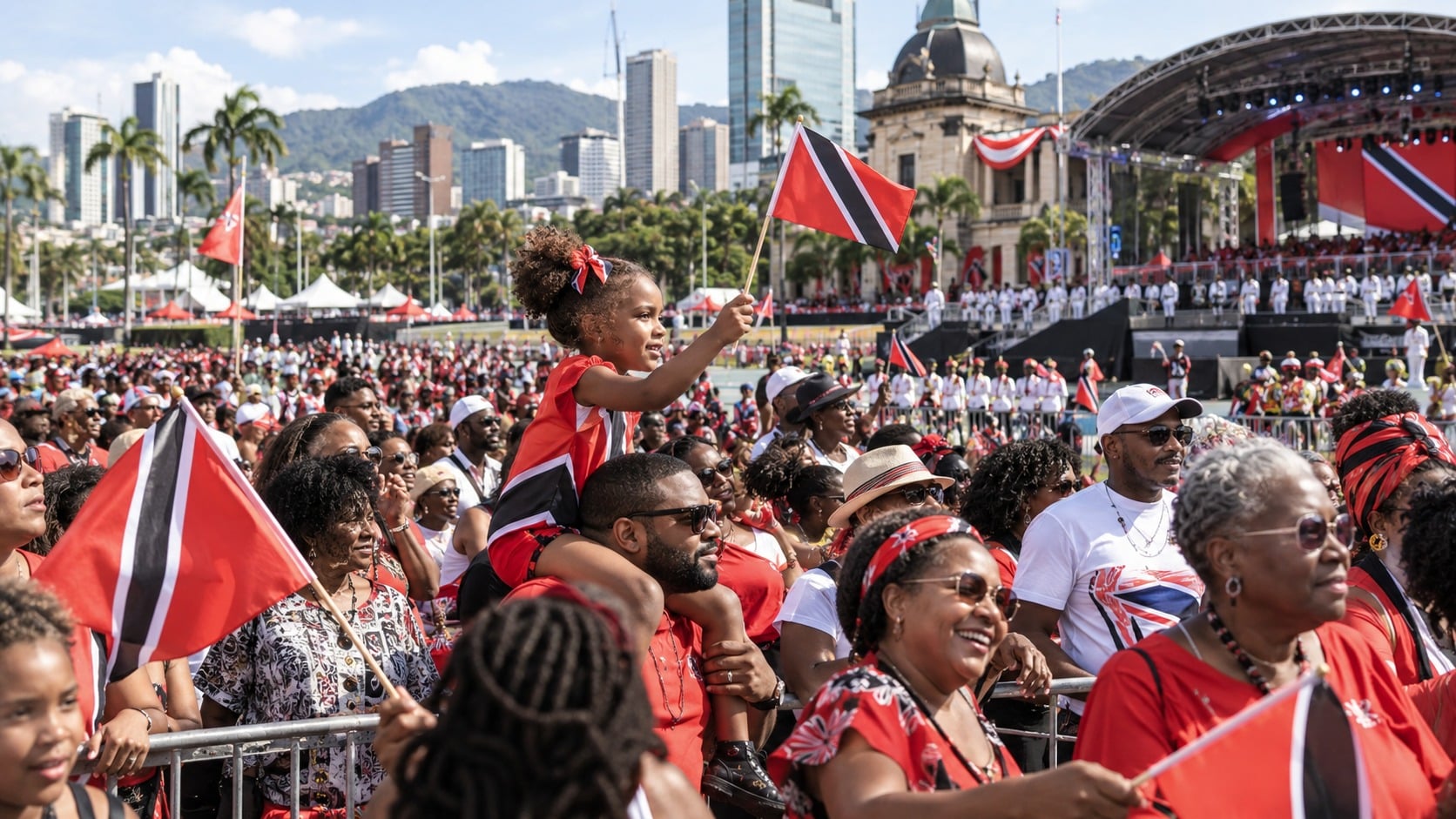
Then, on November 16, 2020—International Day for Tolerance—the statue of Nelson was moved from the square to the Barbados Museum, housed in the former buildings of the Garrison Regiment. On November 30, 2021, exactly fifty-five years after gaining independence, Barbados became a republic and removed the British monarch from the position of head of state.
The city, therefore, does not choose between memory and modernity. It places certain symbols in a museum and has its historic buildings protected by UNESCO—all as part of the same effort, within almost the same decade. The original bridge, however, has long since disappeared, replaced by more modern versions, the latest of which dates from 2006. But the place it marks remains the same. The question this capital city poses today is not whether its colonial past should be forgotten, but which of its many faces—indigenous, mercantile, religious, slave-owning, or military—it still chooses to show to those who pass through it every day.
The site was originally called Indian Bridge, named after a wooden bridge built by Native American tribes across the Careenage. After English settlers arrived in 1628, the name Bridgetown eventually took hold in honor of Governor Sir Tobias Bridge.
English settlers established themselves on the site on July 5, 1628. Eleven years later, in 1639, Barbados established a Parliament, which is now the third-oldest in the Commonwealth still in operation.
In 2011, UNESCO inscribed “Historic Bridgetown and its Garrison” on the World Heritage List, recognizing in particular its organic street layout—a legacy of medieval English towns—which contrasts with the Spanish or Dutch grid patterns found in other Caribbean colonial cities.