History of sugar cane
The history of rum begins in the 17th century, when European settlers introduced sugarcane to the Caribbean. Christopher Columbus is often credited with bringing the plant to the island of Hispaniola (Haiti and the Dominican Republic) in the late 1400s. The first sugar cane plantations were established, and sugar quickly became a valuable commodity for Europe.
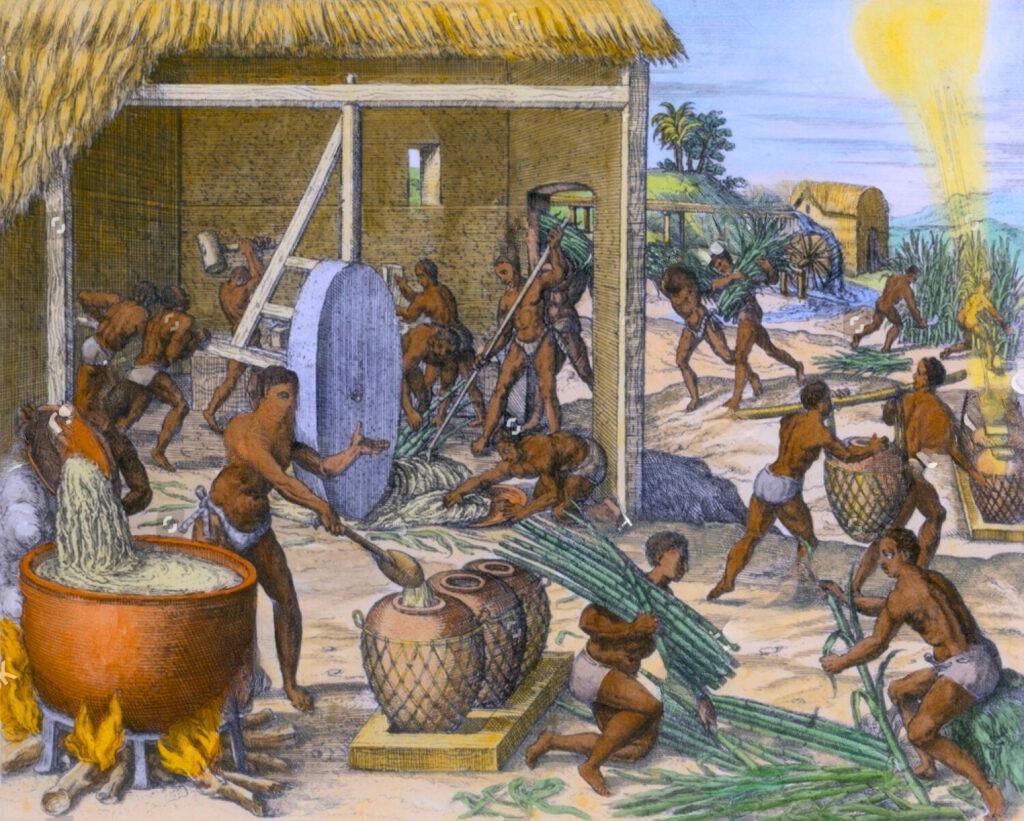
Rum emerges as a by-product of sugar production. Slaves working on plantations discovered that fermented sugarcane juice could be distilled to produce an alcoholic beverage. This process gave rise to terms like guildive and tafia, before the word rum became commonplace in the 18th century.
The history of rum begins in the 17th century, when European settlers introduced sugarcane to the Caribbean. Christopher Columbus is often credited with importing the plant to the island of Hispaniola (Haiti and the Dominican Republic) in the late 1400s. The first sugar cane plantations were established, and sugar quickly became a valuable commodity for Europe.
Rum emerges as a by-product of sugar production. Slaves working on plantations discovered that fermented sugarcane juice could be distilled to produce an alcoholic beverage. This process gave rise to terms like guildive and tafia, before the word rum became commonplace in the 18th century.
Rum-making
The history of rum begins in the 17th century, when European settlers introduced sugarcane to the Caribbean. Christopher Columbus is often credited with importing the plant to the island of Hispaniola (Haiti and the Dominican Republic) in the late 1400s. The first sugar cane plantations were established, and sugar quickly became a valuable commodity for Europe.
Rum emerges as a by-product of sugar production. Slaves working on plantations discovered that fermented sugarcane juice could be distilled to produce an alcoholic beverage. This process gave rise to terms like guildive and tafia, before the word rum became commonplace in the 18th century.
Rum and Caribbean culture
Economic and tourism impact
The production of this liqueur also has a significant economic impact on Caribbean territories. Distilleries attract tourists eager to learn more about the production process and taste different types. Events such as rum festivals celebrate the drink and reinforce its role in local cultural identity.
The journey from sugar to rum illustrates not only an artisanal process, but also a rich cultural heritage that continues to evolve in the Caribbean. For connoisseurs and novices alike, the world of rum offers a fascinating experience well worth exploring.
It’s much more than just a drink in the Caribbean; it’s a cultural and historical symbol. It is often associated with local celebrations, rituals and traditions. For example, toddy, a mixture of rum with water and sometimes lemon, was popularized by British Admiral Vernon in the 18th century as a remedy for scurvy.
What’s more, each Caribbean island produces its own style. Martinique is famous for the agricultural version with an Appellation d’Origine Contrôlée (AOC), while Guadeloupe produces the industrial and agricultural type. These differences reflect not only production techniques, but also the unique cultural influences of each region.
The different types of rum produced in the Caribbean
The Caribbean is renowned for its varied production, with each island having developed its own style and manufacturing methods. Here’s an overview of the main types to be found in this region rich in culture and history.
Agricultural type
Origin: Martinique and Guadeloupe
Characteristics: Made from fresh sugarcane juice rather than molasses, it has a more vegetal and often more complex taste.
It is often considered a top-of-the-range product.
Notable examples:
- Clément
- Barbancourt (Haiti)

Type Molasses
Origin: Cuba, Dominican Republic, Jamaica, and other islands
Characteristics: This type is generally produced from molasses, a sugar by-product.
It can vary in taste from light and mild to rich and spicy.
Notable examples:
- Havana Club (Cuba)
- Brugal (Dominican Republic)
- Appleton Estate (Jamaica0


Type White
Characteristics: Often unaged or very briefly aged, it is clear and light, perfect for cocktails. It is generally distilled at high alcohol levels.
Use: Ideal for drinks such as Mojito or Daiquiri.

Type Amber
Characteristics: moderately aged, it has a golden color and a richer flavor than white. It is often used in more complex cocktails.
Type Old
Caractéristiques : Aged for several years in oak barrels, it develops deep, complex aromas. It is often drunk neat or with a little water.
Type Spicy
Caractéristiques : Infused with spices such as cinnamon, vanilla or ginger, it offers a unique taste experience and can be drunk neat or mixed in cocktails.
Type Flavoured
Characteristics: it is flavored with various tropical fruits or other flavors. Popular for fruity cocktails.
Navy type
Origin: Several Caribbean islands
Characteristics: traditionally used by the British Navy. It is often a blend with different types created to be robust and rich in flavor.
Demerara type
Origin : Guyana
Caractéristiques : Made from Demerara sugarcane molasses, it is known for its rich, earthy flavors. It is often used in cocktails or enjoyed neat.
Notable examples: El Dorado.

The most famous rums of the Caribbean islands
The most famous rums of the English-speaking islands
The English-speaking Caribbean islands are renowned for their rich tradition of production, offering a variety of styles and flavours.
Here’s a look at some of the most famous from these territories.
- Mount Gay Rum (Barbados)
- Origin : Barbados
- Caractéristiques : Considered the world’s oldest producer, Mount Gay was founded in 1703. Their rums are renowned for their quality and complexity, with a range from light white to rich old.
- Appleton Estate (Jamaica)
- Origin: Jamaica
- Caractéristiques : With over 265 years of history, Appleton Estate is famous for its rich, aromatic versions, often made from molasses. Their expressions include young rums and popular aged blends.
- Cruzan Rum (US Virgin Islands)
- Origin: St. Croix, U.S. Virgin Islands
- Features: Founded in 1760, Cruzan is known for its varied type, ranging from light whites to rich older wines. Their production focuses on quality and authenticity.
- John Watling’s Rum (Bahamas)
- Origin : Bahamas
- Caractéristiques : Produced in Nassau, it is made from local sugar cane and is known for its distinctive taste and smoothness. John Watling’s Rum is frequently considered an excellent choice for cocktails.
- Don Q (Puerto Rico)
- Origin: Puerto Rico
- Caractéristiques : Don Q is the most popular in Puerto Rico, produced since 1865. It is appreciated for its sweetness and versatility in cocktails.
- Pusser’s Rum (British Virgin Islands)
- Origin: British Virgin Islands
- Caractéristiques : Pusser’s Rum is known for its association with the British navy and its robust taste, generally used in classic cocktails such as the Painkiller.
- Black Tot Rum (Various Caribbean islands)
- Origin: Mix of Caribbean islands
- Caractéristiques : It pays tribute to British naval traditions and combines rums from several islands to create a richly aromatic blend.
- Hampden Estate (Jamaica)
- Origin: Jamaica
- Caractéristiques : Renowned for its highly esterified, powerful type, Hampden Estate produces rums that are often considered among the best in the world for lovers of intense flavors.
These brands represent just a sample of the rich diversity of products on offer in the English-speaking Caribbean islands. Each distillery brings its own unique touch, making this region a veritable paradise for spirits lovers.
The most famous rums of the French-speaking islands
They are produced in the French Caribbean territories of Martinique, Guadeloupe and Marie-Galante.
Martinique
- Clément: Founded in 1887, known for its top-of-the-range agricultural type.
- JM: Founded in 1845, located in the north of the island.
- Neisson: Founded in 1931, located in the northwest of France.
- La Favorite: Founded in 1842, using copper stills.
- St James: Founded in 1765, one of the oldest distilleries.
- Depaz: Founded in 1651, located in the northeast.
- Trois Rivières: Founded in 1660, using wild yeasts for fermentation.
- La Mauny: Produces the highest quality agricultural type.
- Bally: Famous for its pyramid-shaped bottle.
- HSE (Habitation Saint-Étienne): Offers the old type with special finishes.
- A1710: A recent brand with innovative expressions.
Guadeloupe
- Damoiseau: One of the biggest producers of the agricultural type.
- Bologna: An agricultural and industrial product.
- Montebello: Offers a wide range of products.
- Mon Repos: Quality agricultural product.
- Longueteau: Known for its traditional methods.
- Séverin: A locally appreciated agricultural product.
Marie-Galante
- Bielle: Produces artisanal agricultural rums.
- Bellevue: Offers superior quality agricultural rums.
- Père Labat: Located in Marie-Galante, known for its artisanal rums.
These brands represent part of the richness and diversity of rums produced in these French Caribbean territories. Each distillery brings its own unique touch to the tradition of rhum agricole.
The most famous rums from the Spanish-speaking islands
The Spanish-speaking islands of the Caribbean, including Cuba, Puerto Rico and the Dominican Republic, are renowned for their quality rums. Here’s an overview of the brands and types of rum that stand out in this region.
Cuba
Cuba is famous for the light, refined type, often made from molasses. Iconic brands include:
- Havana Club: This world-renowned brand offers a wide range of products, from white to aged.
- Santiago de Cuba: representing the Cuban tradition, with cuvées such as Santiago de Cuba 11 ans.
- Diplomatico: Although a Venezuelan brand, it is frequently associated with Cuban tradition and is highly appreciated for its Reserva Exclusiva.
Puerto Rico
Puerto Rico also produces top-quality rums, generally milder and sweeter. Notable brands include :
- Bacardi: One of the world’s best-known brands, offering a wide range of products from white to black.
- Don Q: Another popular brand that focuses on handcrafted products, notably the Don Q Gran Añejo.
- Ron del Barrilito: Renowned for its unique barrel aging, it is considered a local treasure.
Dominican Republic
The Dominican Republic is renowned for its rich, complex type. Here are a few brands to discover:
- Brugal: An iconic brand of oak-aged spirits, including Brugal 1888.
- Barceló: Known for its refined style, Barceló offers vintages such as Barceló Imperial.
- Matusalem: Often called the “rum of kings”, Matusalem is famous for its unique solera aging process.
Each type of rum
offers a unique experience that reflects not only local ingredients but also the cultural traditions of the Caribbean islands. Whether you’re a connoisseur or a novice, exploring these different styles will allow you to fully appreciate the richness of the Caribbean heritage.