Rendez-vous aux Jardins: see the real thing at the Domaine d’Émeraude

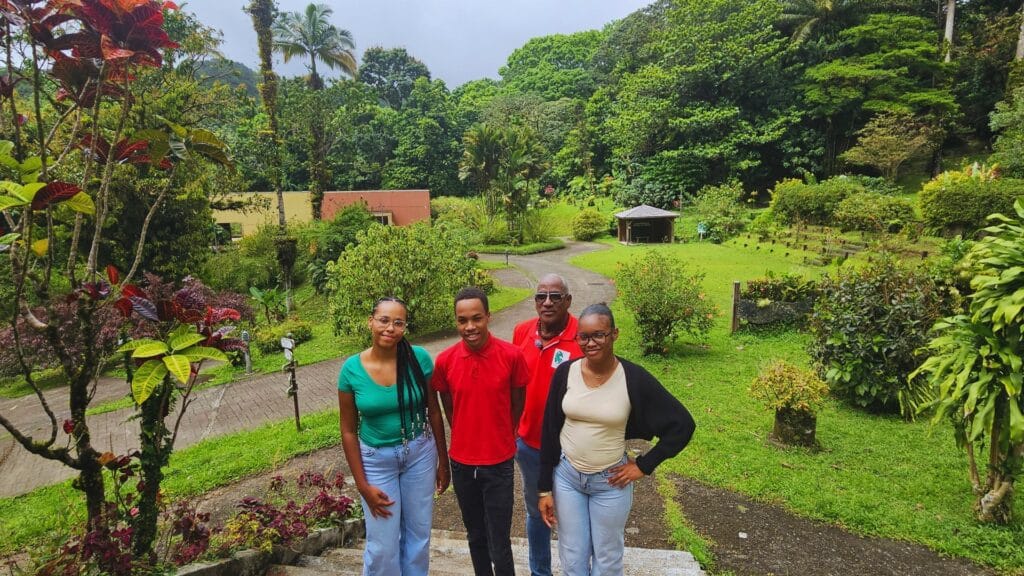
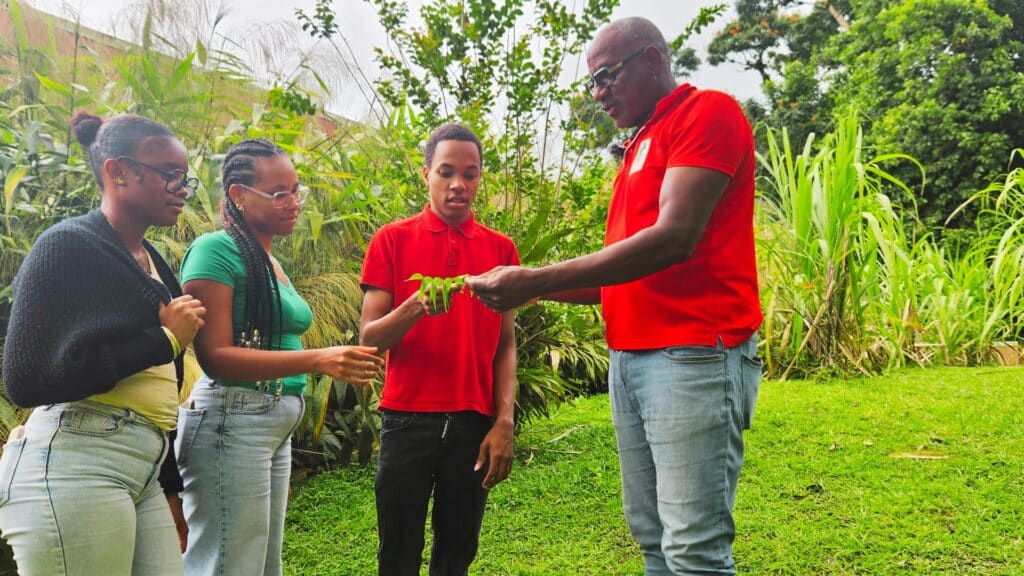
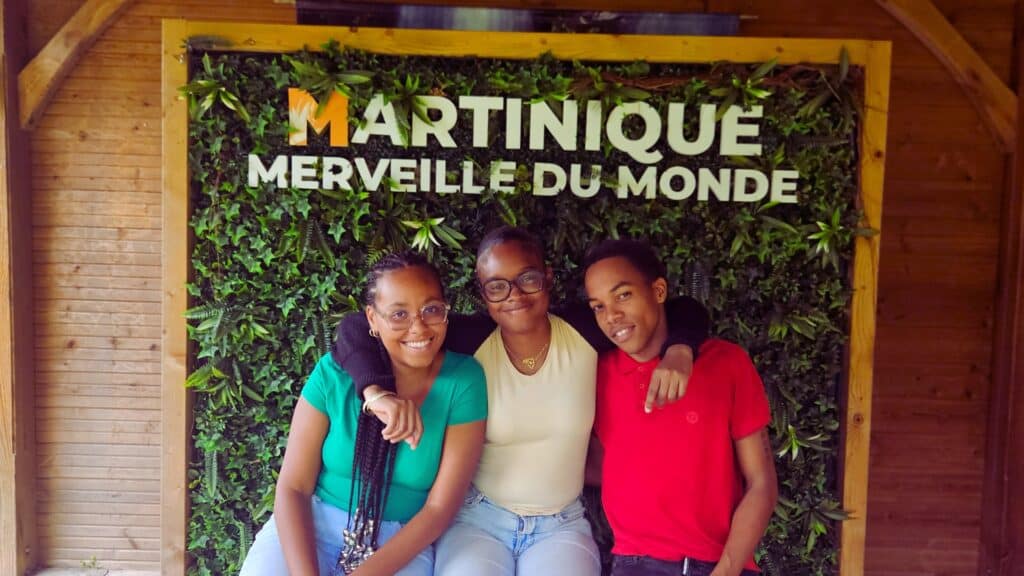
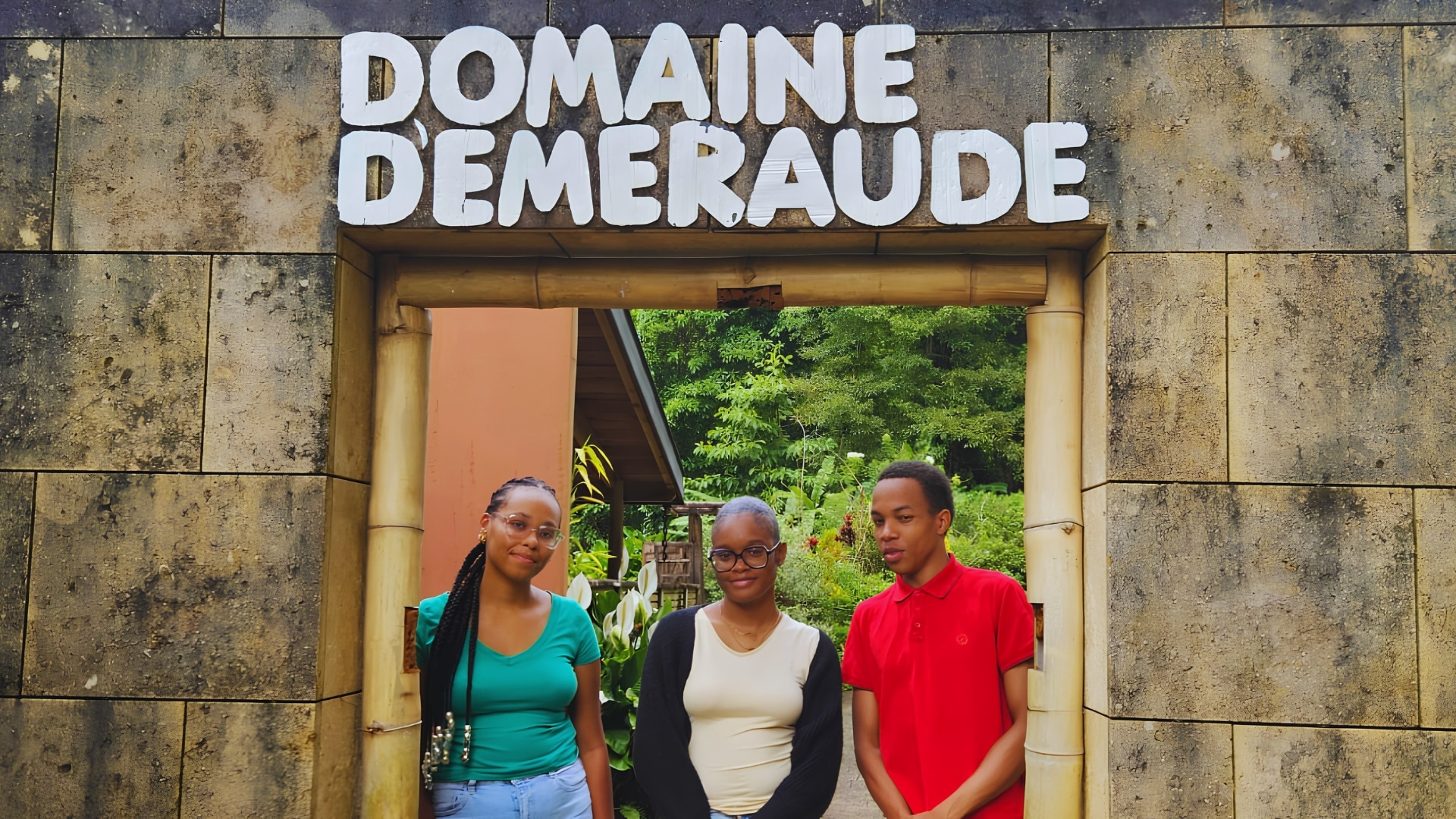
Kévin, Maya and Maeva at Domaine d'Émeraude

For the grand finale of the RK Heritage series at Rendez-vous aux Jardins 2026, Kévin Belcoua returns. After discovering five gardens alongside his grandparents Émile and Jocelyne, he wanted to pass on his experience to others: he took two classmates, Maya and Maeva, to the Domaine d’Émeraude.

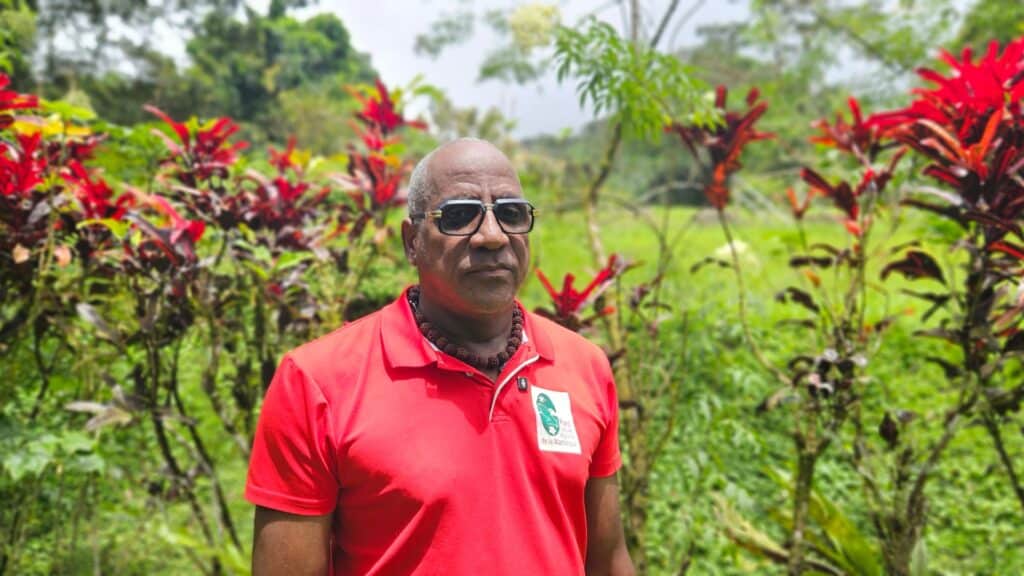
In the heart of Martinique’s hygrophilous forest, under the guidance of Patrick LAPU, nature guide, they discover that learning to see is first and foremost learning to taste, listen, understand… to see truly.

Domaine d'Émeraude
Maeva, Kevin, Patrick Lapu and Maya

Kévin didn’t come alone… After crossing five gardens alongside his grandparents Émile and Jocelyne, he was keen to bring along two classmates for the last of the series. Maya and Maeva had never been to the Domaine d’Émeraude before. Neither had he. But something told him this place was best discovered by more than one person.

Sometimes, the transmission doesn’t go from grandfather to grandson. It circulates laterally, between friends and peers.

Domaine d'Émeraude

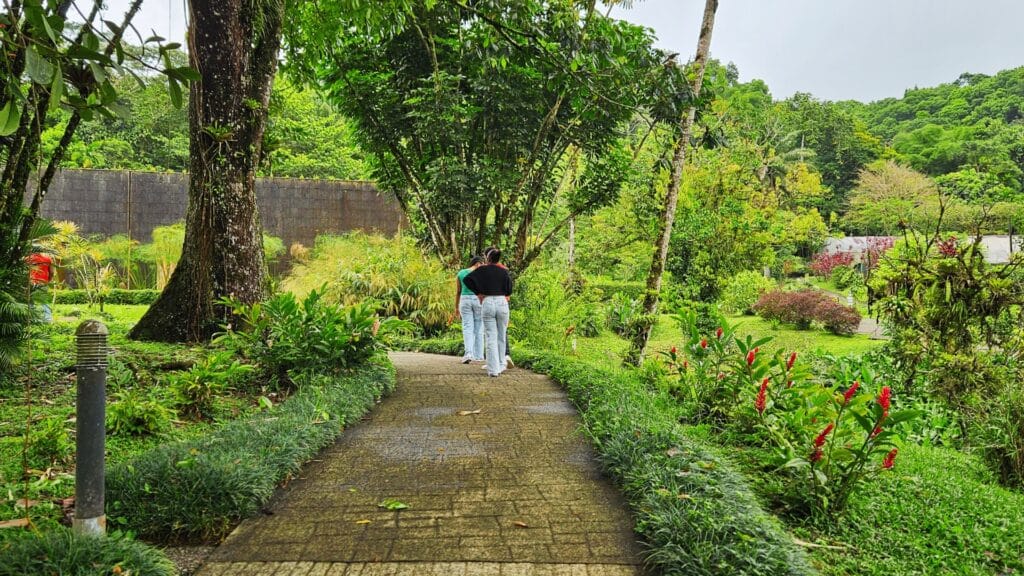
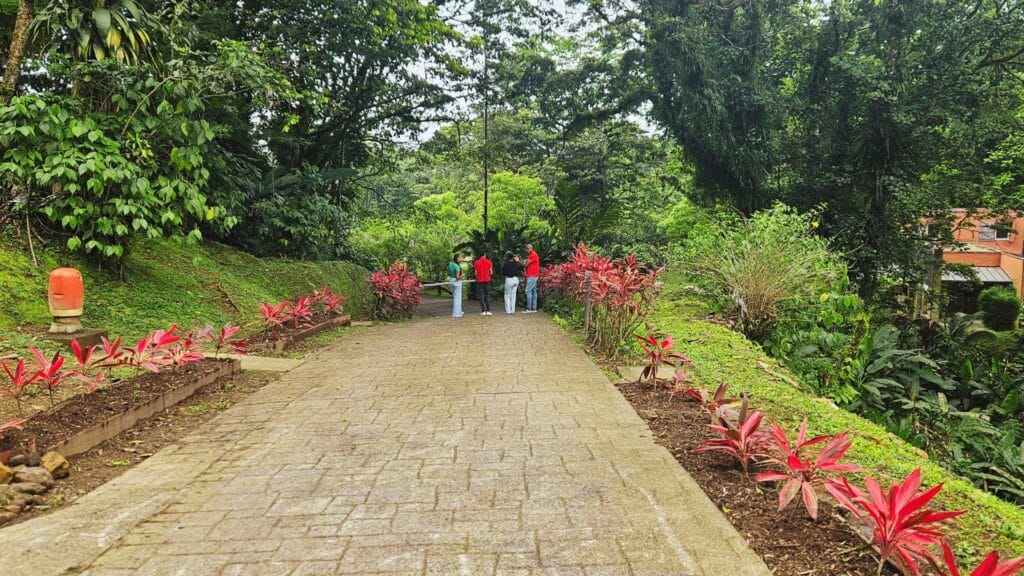
Domaine d’Émeraude is located in Morne Rouge, in the heart of the rainforest, in the shadow of Montagne Pelée. Open to the public since 2010, it has been awarded the Jardin Remarquable label by the French Ministry of Culture. It is here, for the Rendez-vous aux Jardins 2026 under the theme of view, that the three young people will learn to really look.

Domaine d'Émeraude
Domaine d'Émeraude
Domaine d'Émeraude
Domaine d'Émeraude

Le Domaine d'Émeraude, a multi-faceted read

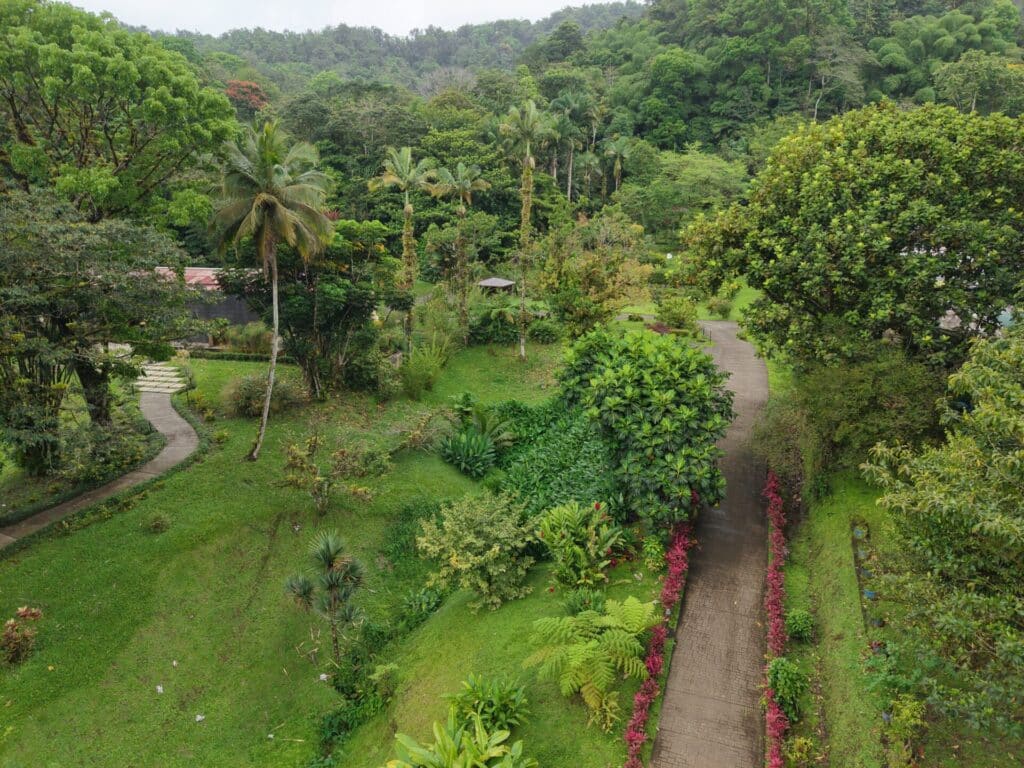
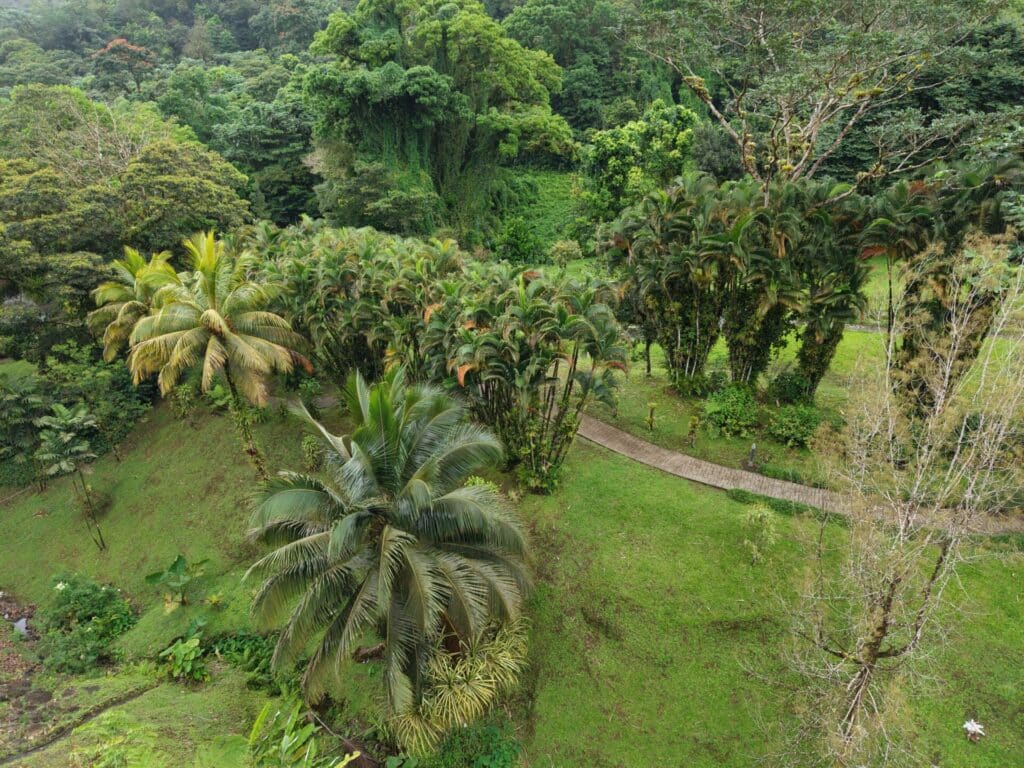
Here at the Domaine d’Émeraude, you’ll find over 2,000 varieties of plants, a mix of medicinal, ornamental and epiphytic plants,” explains Patrick LAPU, guide and nature guide at the Domaine d’Émeraude.

For the past ten years, he has been welcoming and guiding visitors to this site, which he knows down to the last detail.

“That’s my leitmotiv. I love this nature. If I had to do it all over again, I’d do it for 20 or 30 years,” he confides.

Domaine d'Émeraude

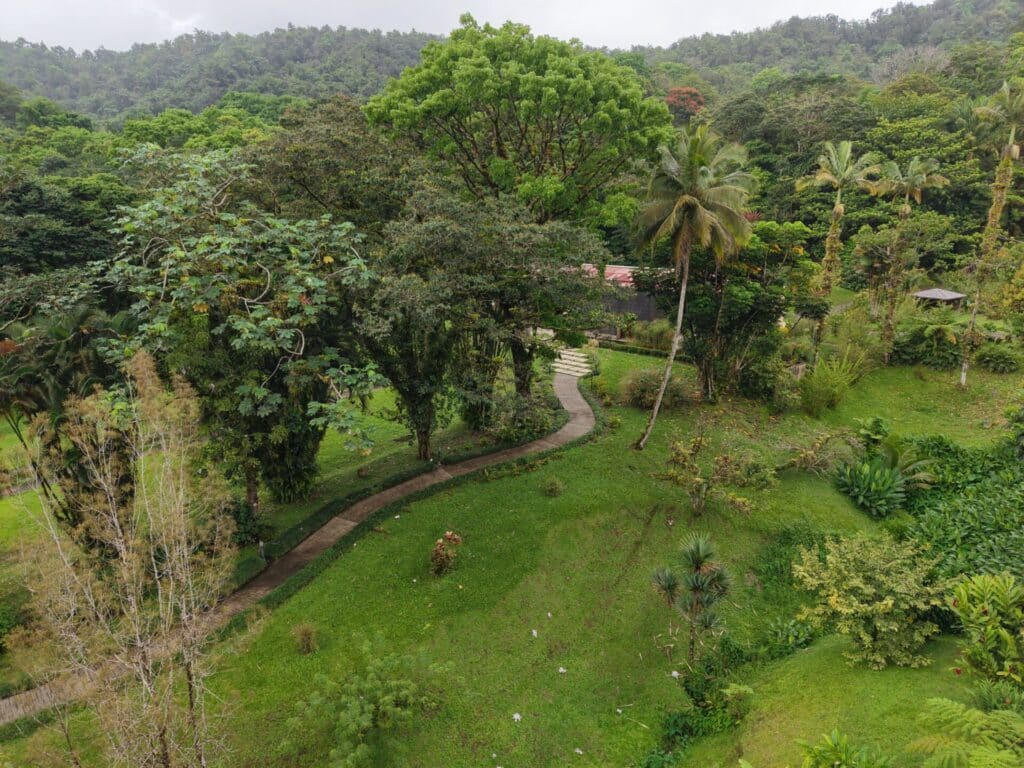
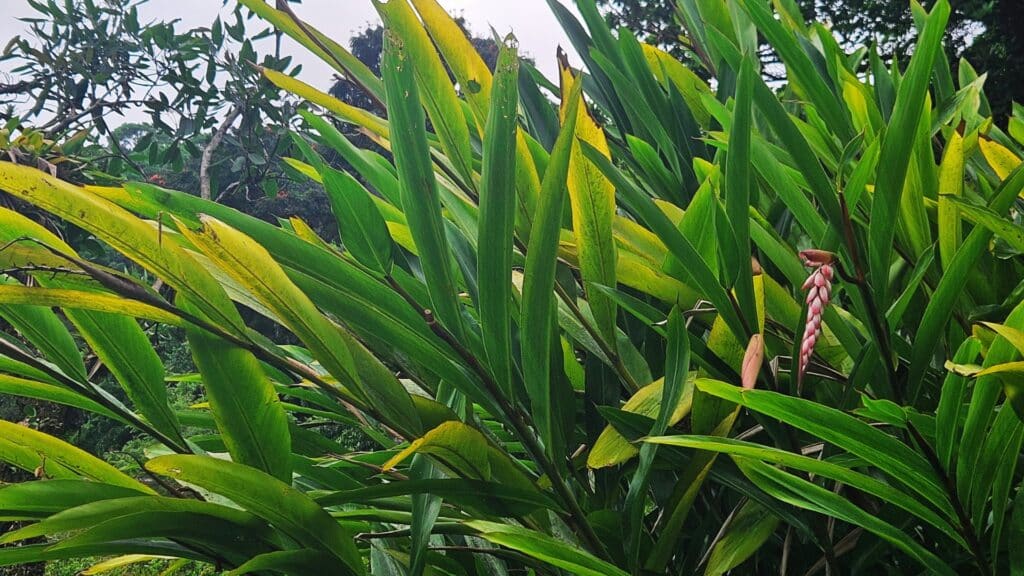
What sets Domaine d’Émeraude apart from the other remarkable gardens in Martinique is its location in the very heart of the hygrophilous forest. ” It’s the climate that produces the variety that sets us apart from the others,” explains Patrick LAPU. Medicinal plants, tree ferns, royal palms, bromeliads, heliconias and cordylines make up a living tableau that changes according to the angle and the time of day.

Domaine d'Émeraude
Domaine d'Émeraude

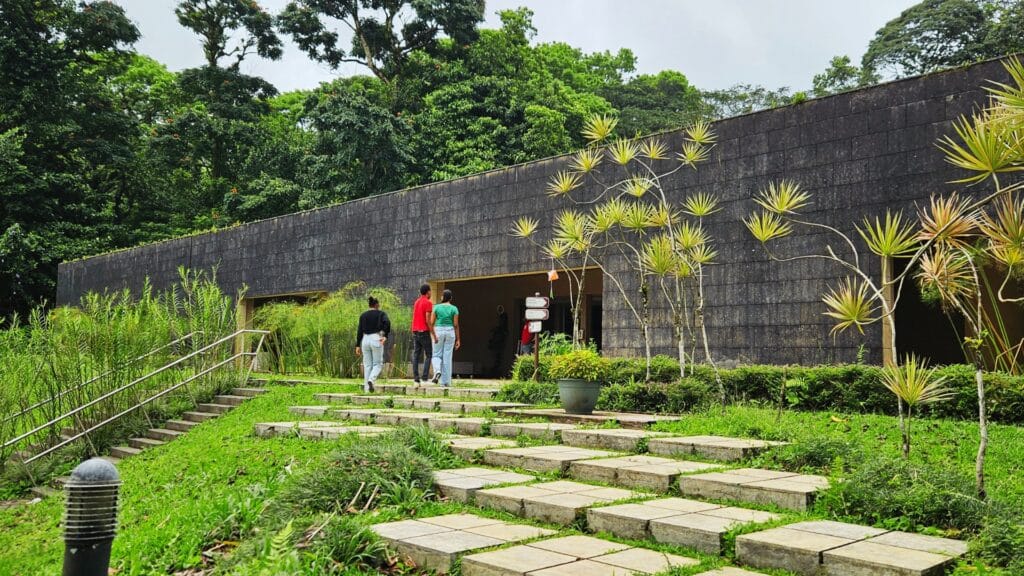
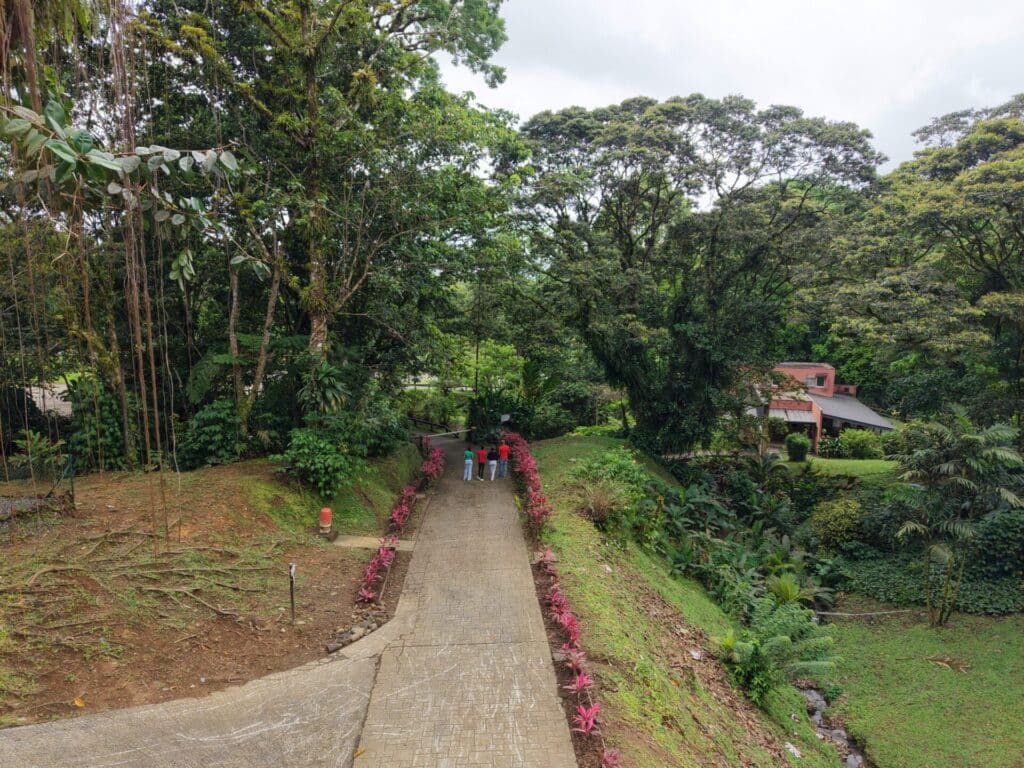
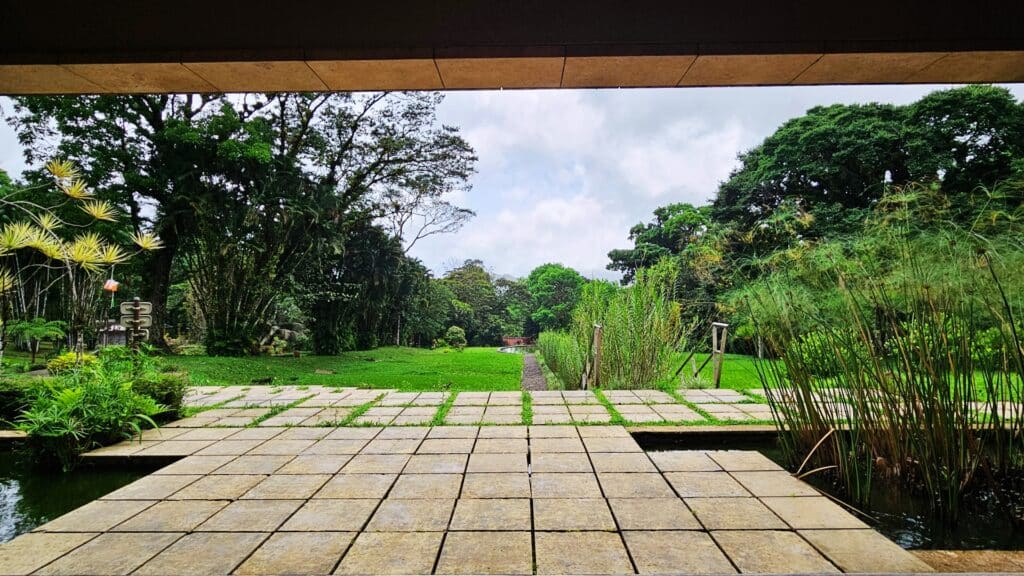
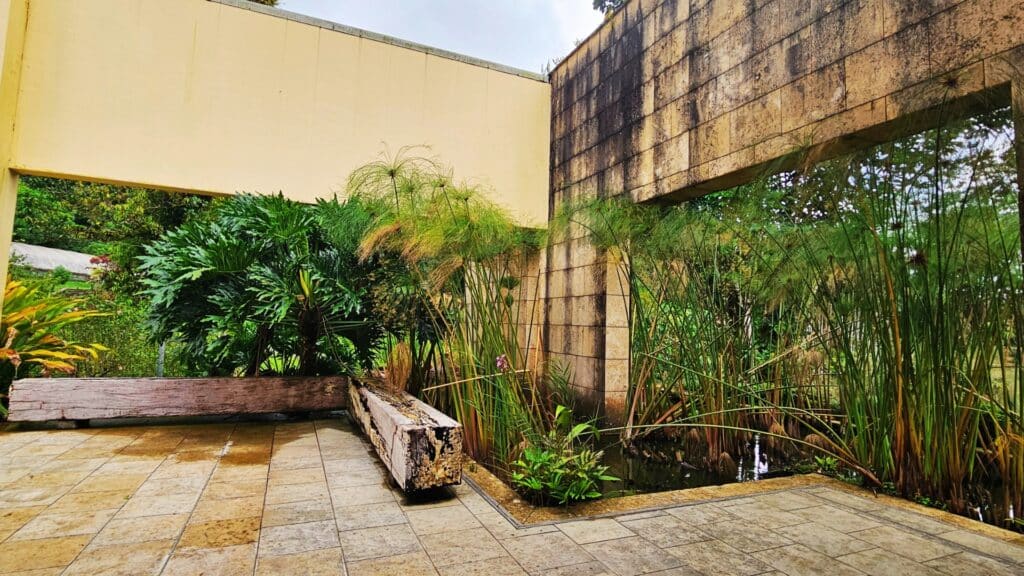
The architecture of the estate deliberately plays with these different interpretations.

You’ll have squares, or “prises de vue”, where you can get a sense of the landscape,” stresses Patrick LAPU.

“From every point of view, you get a different reading.”

Two places are particularly close to his heart: the Exploration Pavilion, which tells the story of Martinique’s volcanic birth, and the Arboretum, where tropical species unfold in majesty.

Domaine d'Émeraude

And when the sky clears, the panorama widens still further: the silhouette of Montagne Pelée and the Pitons du Carbet appear in the distance, adding another dimension to the view.

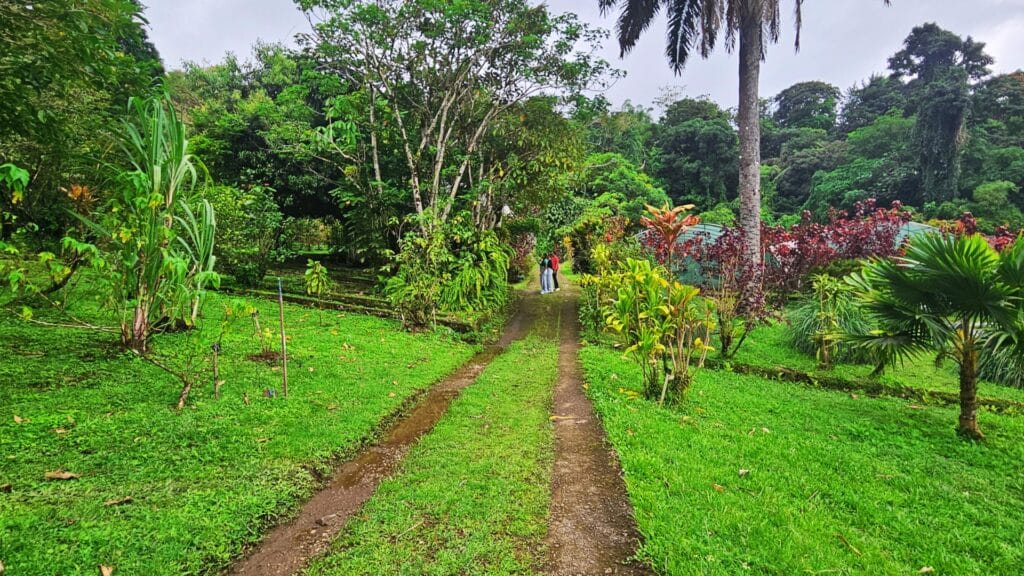
On the day of the visit, the low clouds didn’t lift the veil on this distant view, but the nearby garden revealed all its richness.

Domaine d'Émeraude

Neem, a plant of the future

Kévin, Maya and Maeva chose to let themselves be guided. At Domaine d’Émeraude, visits can be made independently, but when the opportunity arises to be accompanied by one of the site guides, the experience takes on a whole new dimension.

Patrick LAPU stops in front of a slender tree with thin leaves. ” The neem,” he announces.

“Neem is a natural purifier. It cleanses the blood, it purifies.”

Domaine d'Émeraude

Native to India, neem (Azadirachta indica) has been used for thousands of years in traditional medicine. Acclimatized in Martinique, it testifies to the pharmacological wealth of tropical plants, a treasure that Domaine d’Émeraude makes available to the public.

Patrick LAPU delicately picks a few leaves and hands them to the three youngsters. “I invite you to taste them. Chew, you can swallow, there’s nothing to worry about.” Kévin tries first, Maeva follows, Maya closes the line. Faces crinkle: “It’s bitter!”, and Patrick smiles.

“It’s very bitter, yes. But it’s a plant for the future.”

A plant for the future: From the mouth of a guide who has been accompanying visitors for ten years, the formula says it all: nature as a remedy, ancestral knowledge as a resource for the present.

The real view is transmitted in Creole

The neem episode is not an anecdotal detour. It’s exactly what Patrick LAPU wants to get across.

“The role of Domaine d’Émeraude is to raise awareness at an early age, to get to know and understand.”

At a time when global warming is shaking up the island, with the massive arrival of sargassum and the changing seasons, Patrick LAPU has a clear mission: to reconnect with nature.

Domaine d'Émeraude

To say it, he chooses his mother tongue.

“Matinik sé ta nou. Pwotéjé la nati, sé pa ki di an bouch, fok nou fè-y an aksyon.”

(Martinique belongs to us. Protecting nature doesn’t just mean saying it, it means doing it).

Maya and Maeva smile. They know these words, their grandparents told them. Kévin, for his part, nods his head: he has just understood why, after five remarkable gardens discovered with Émile and Jocelyne, he absolutely had to finish here, with his two friends.

Domaine d'Émeraude
Patrick Lapu, Guide and nature guide

Rendez-vous aux Jardins 2026: seeing the real thing as a family (and in friendship)

At a time when there is much talk of reconnection, Domaine d’Émeraude offers an embodied response. Not a show, but a learning experience.

The rainforest is the ultimate,” confides Patrick LAPU.

“The ultimate for someone who’s looking for themselves, who’s going to reconnect. It’s the one that the forest will inspire a lot of things, because you find yourself in the heart of the forest.”

It’s also a message to the people of Martinique themselves.

“Domaine d’Émeraude is not well known in Martinique. Come and visit the estate. It’s a nature interpretation site that will explain to you how, why, and that will allow you to evolve around this nature, to know it, to understand it, to continue.”

Domaine d'Émeraude

The real view is the truth, what you’re going to see, what you’re going to discover,” concludes Patrick LAPU.

Kévin, Maya and Maeva leave the estate with a few neem leaves at the bottom of their bags, perhaps still with the bitter taste that heralds a plant for the future. And with the conviction that they will return, in their turn, with other comrades, other little brothers and sisters.

Six gardens ago, Kévin followed his grandparents. Today, he leads the way.

The transmission has changed hands, and it’s only just begun.

📌 IN PRACTICE

Rendez-vous aux Jardins 2026 – Domaine d’Émeraude

📅 Saturday 6 and Sunday 7 June 2026

📍 Route de Deux-Choux, 97260 Le Morne Rouge, Martinique

🌿 Self-guided tour, can be accompanied by estate guides

An exploration by RICHÈS KARAYIB for Rendez-vous aux Jardins 2026, in partnership with the Direction des Affaires Culturelles (DAC) de Martinique.

Leave a Reply

Your email address will not be published. Required fields are marked *

More articles from RK

Larimar
HISTORY & HERITAGE
Tolotra

Larimar: From Barahona to the World—A Stone That Has Become Part of Our Cultural Heritage

In Barahona, in the southwestern part of the Dominican Republic, a blue stone bridges geology, craftsmanship, and national identity. Larimar is not only prized for its color: its history is tied to a specific region, to those who mine it, and to those who craft it. From the Sierra de Bahoruco to the jewelry workshops, its journey illustrates how a local resource can become cultural heritage, a symbol, and a cause for conservation. In Barahona, a stone begins its journey In 1974, Dominican artisan Miguel Méndez became interested in a blue stone known in the Barahona region. Together with geologist Norman Rilling, he helped identify its deposit and develop its use in jewelry. Méndez also gave it its name: “Larimar,” a combination of “Larissa,” his daughter’s first name, and “mar,” the Spanish word for “sea.” Behind this name, which has become familiar in the Dominican Republic, lies a history deeply

Read More »
Journée mondiale du steelpan
EVENT MANAGEMENT
Tolotra

World Steelpan Day: In Trinidad, Young People March Alongside the Pioneers

This Tuesday, August 11, Trinidad and Tobago celebrates World Steelpan Day with a program built around a powerful idea: connecting those who shaped the movement with the generation that must now carry it forward. In Port of Spain, performances by youth orchestras, the Ancestral Walk, and a closing concert come together to create a day where memory does not stand still. It flows, is played out, and is passed on. In Port of Spain, a day designed to symbolize a passing of the torch Pan Trinbago has chosen “Rhythm and Rise: Youth. Discipline. Culture. Community.” as the theme for the 2026 edition. This choice is no coincidence. For this World Steelpan Day, the organization is clearly placing youth at the center of the program, while paying tribute to the movement’s pioneers. The celebration begins at the Massy Trinidad All Stars Steel Orchestra’s panyard, featuring youth ensembles from various regions of

Read More »
Well mudda sick
HISTORY & HERITAGE
Tolotra

“Well mudda sick!”: But what do these three words really mean?

In the Bahamas, three words are enough to express surprise even before you realize what just happened. Good news breaks, a plan falls through, something exceeds expectations: “Well mudda sick!” might pop up in conversation. Taken literally, the meaning is confusing. In Bahamian usage, however, the expression is much simpler than it seems. Three words that don’t really translate word for word “Well mudda sick!” literally translates to “Well, my mother is sick.” But that’s not what a Bahamian means when they use it. Instead, the expression functions more like an exclamation: “Wow!”, “Oh my!”, “Unbelievable!”, or even “My God!”, depending on the situation and tone. It is precisely this discrepancy that makes it interesting. Someone who knows every single English word can understand the sentence on paper and yet completely miss its meaning in conversation. Here, it’s not just the words that matter. Context, speed, and intonation play a

Read More »

conTACT RK

we'd love to have your feedback on your experience so far

Join The List

Join our Richès Karayib community!  Sign up for our newsletter.

Want To Maximize Your Business Presence On Riches Karayib?

Complete the form to start the application