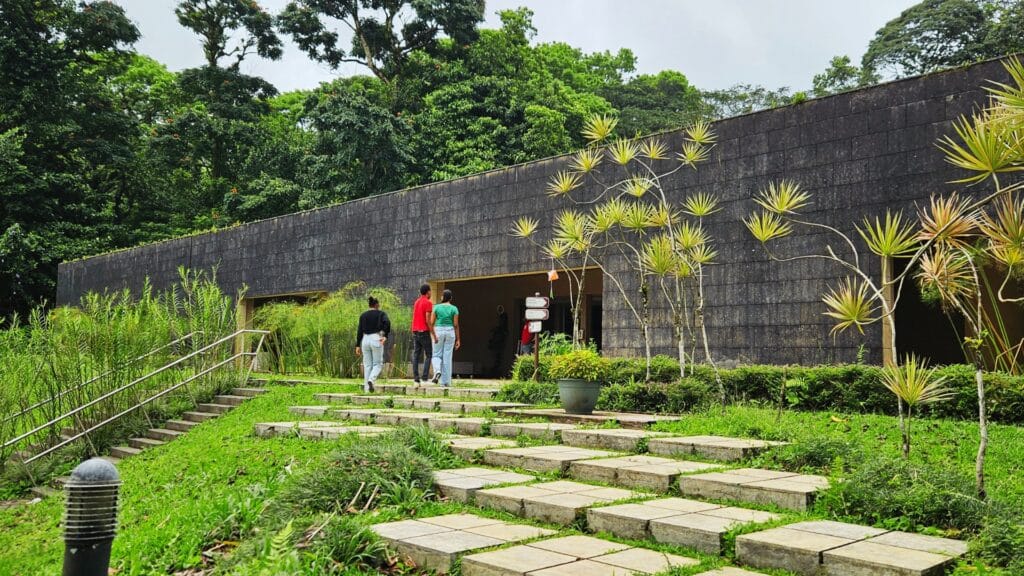
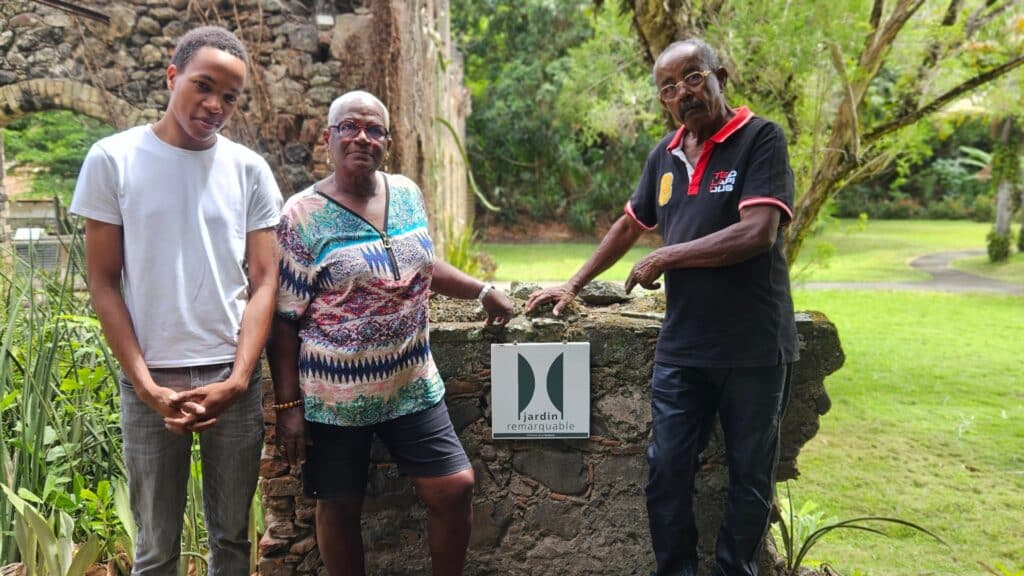
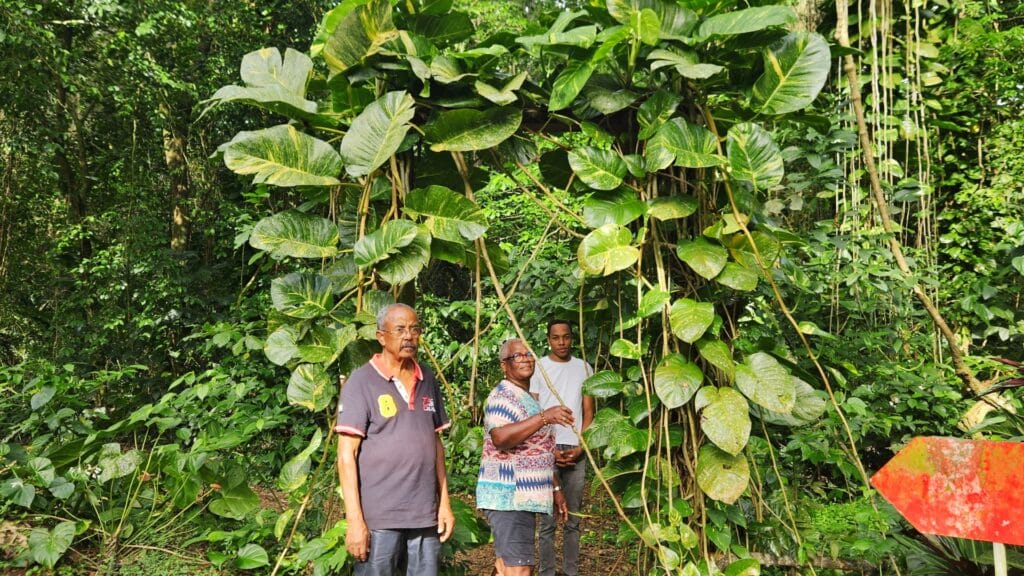
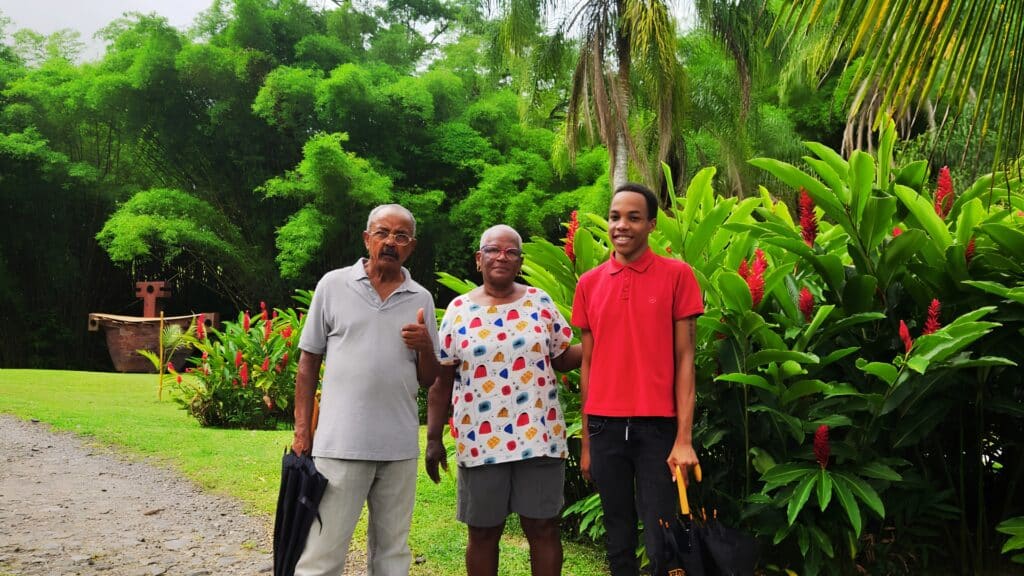
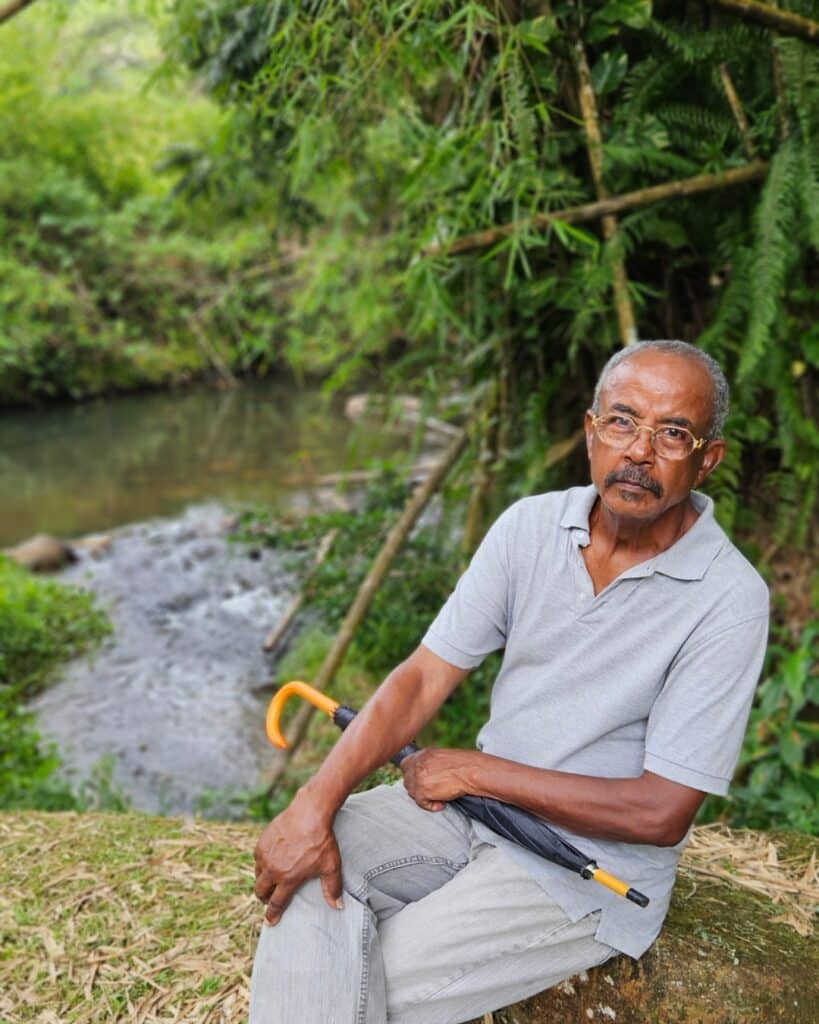
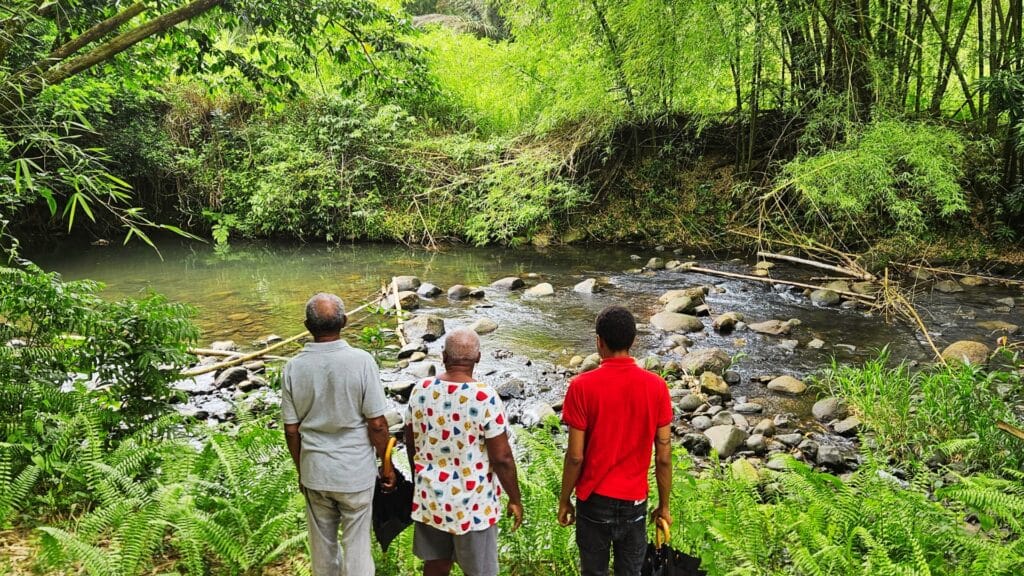
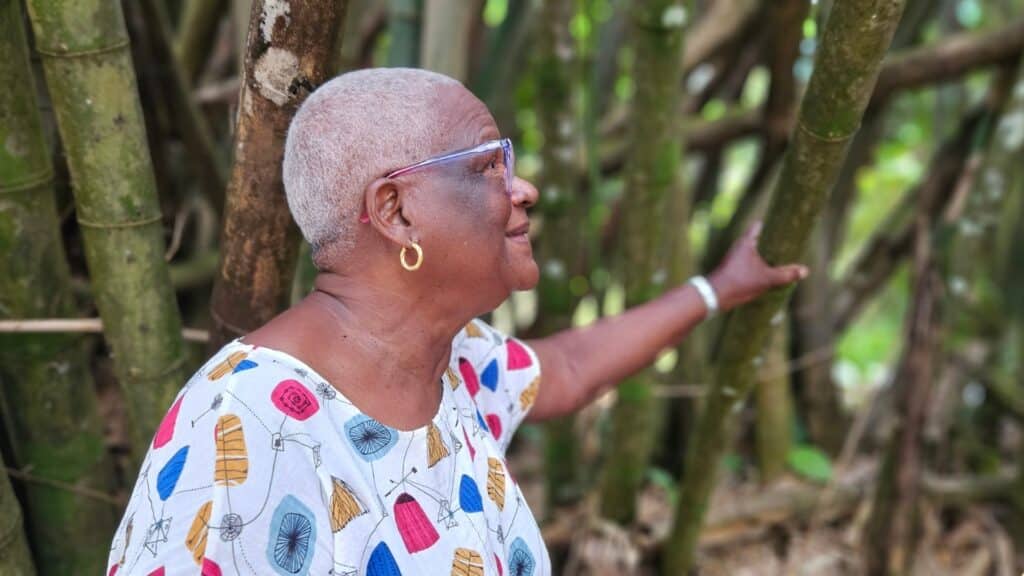
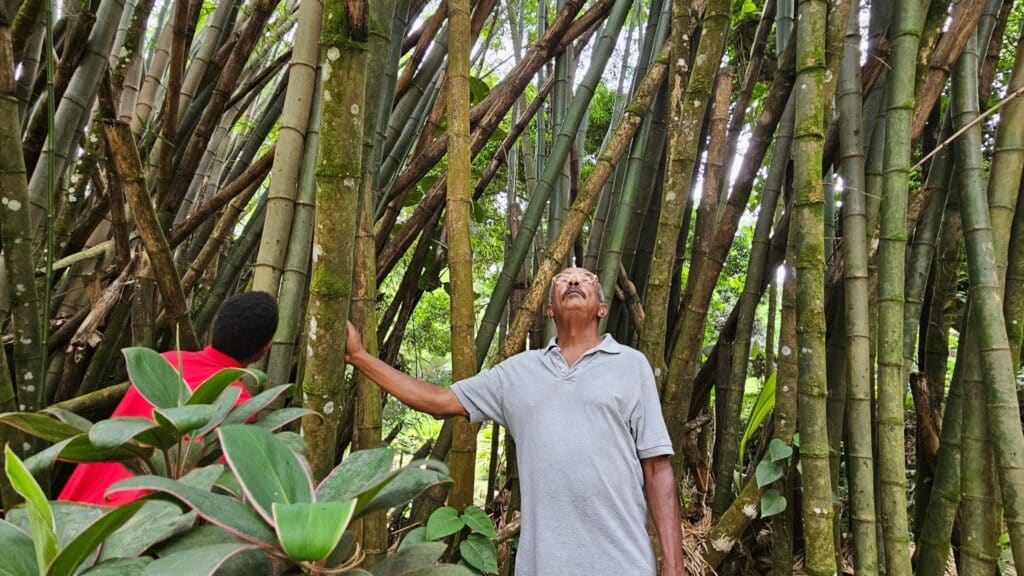
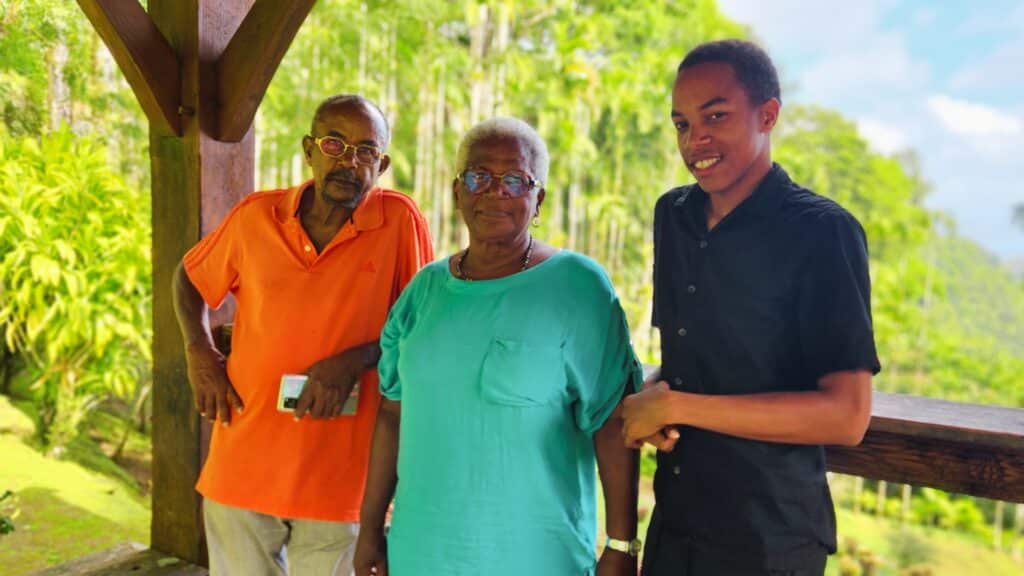
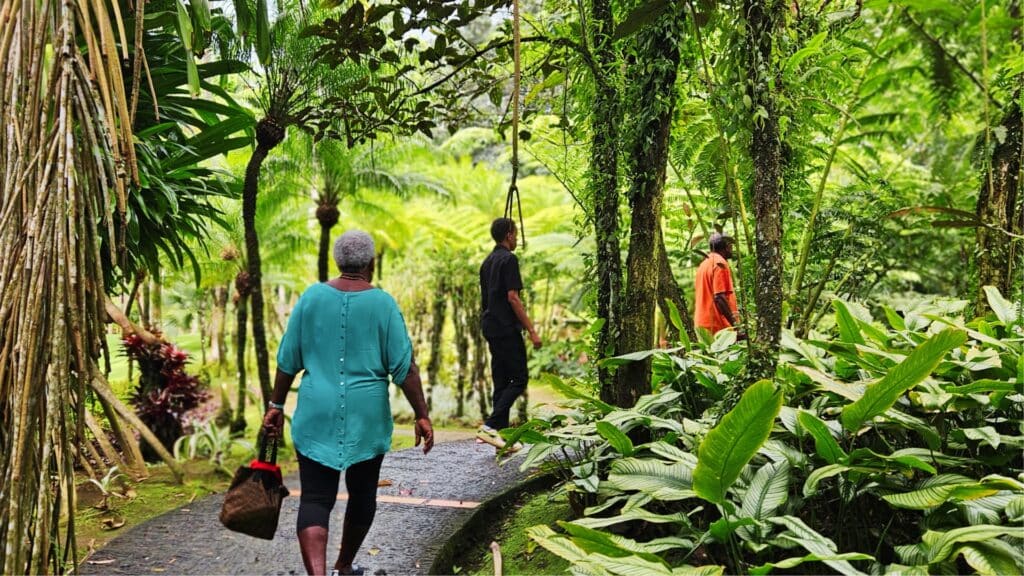
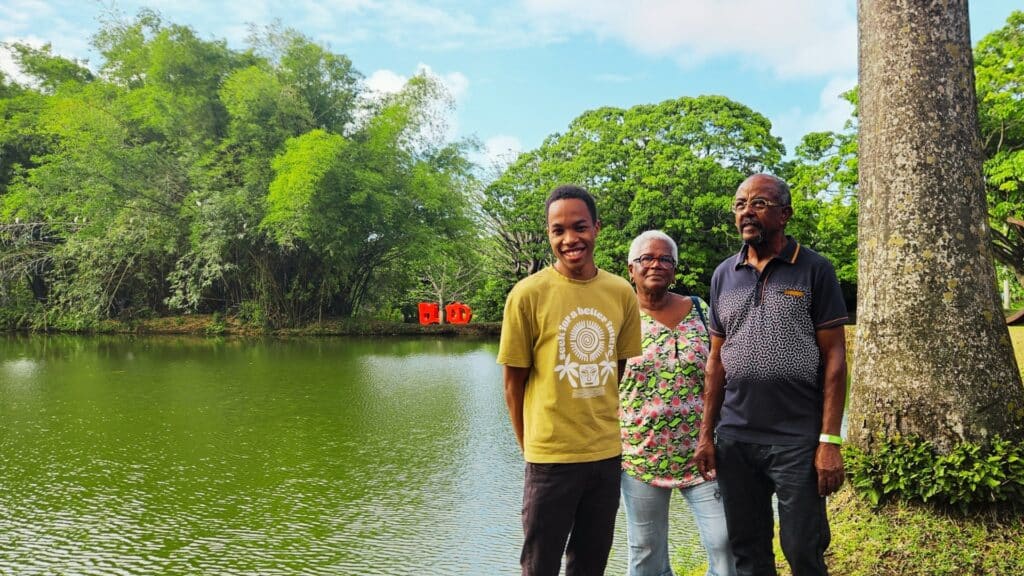
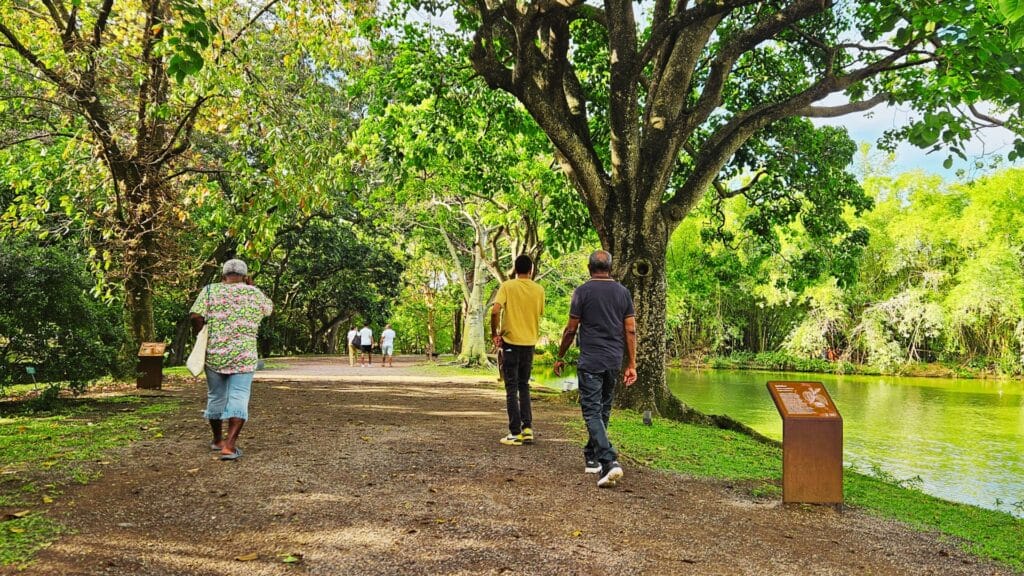
Kévin, Maya and Maeva at Domaine d'Émeraude
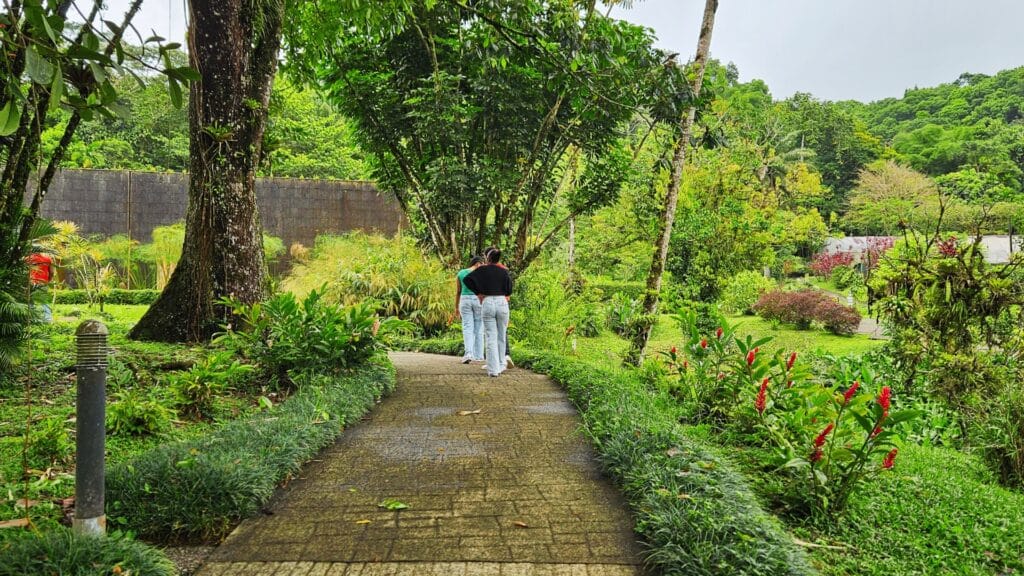
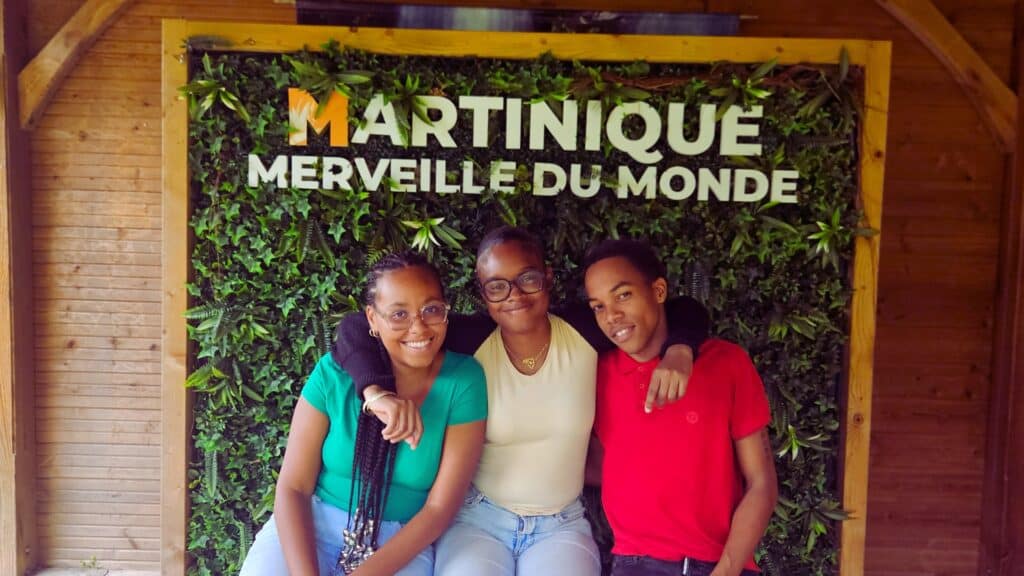
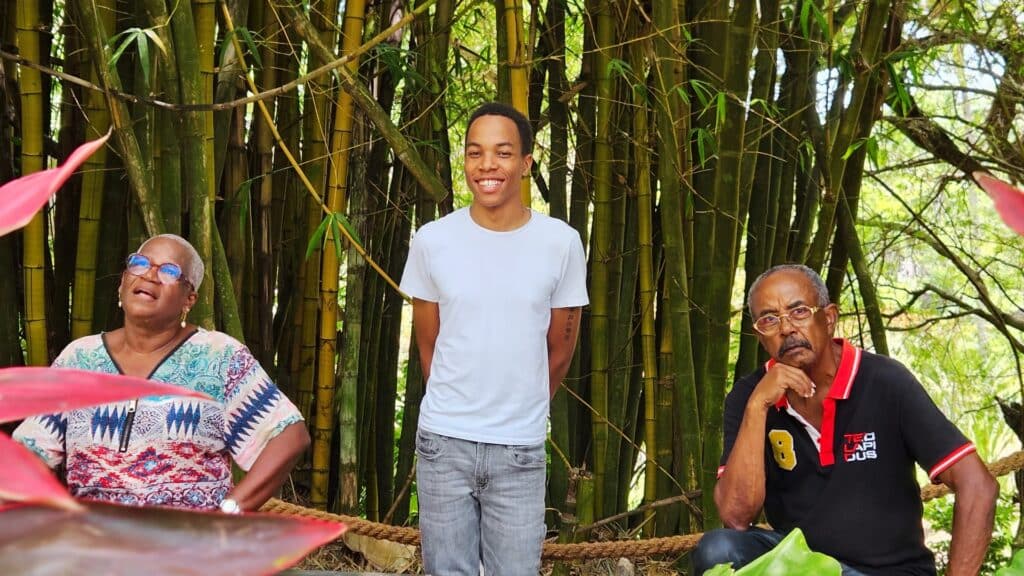
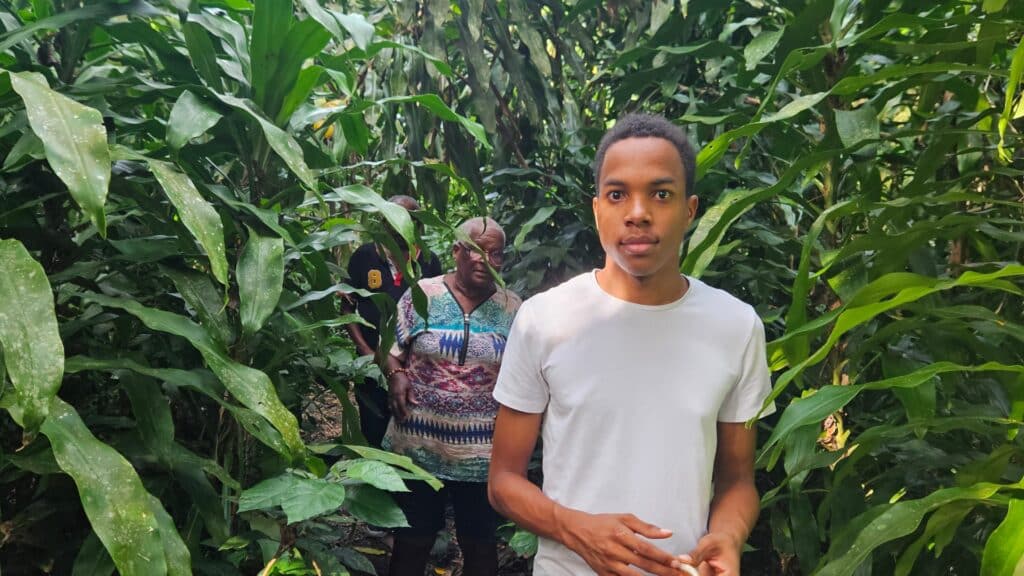
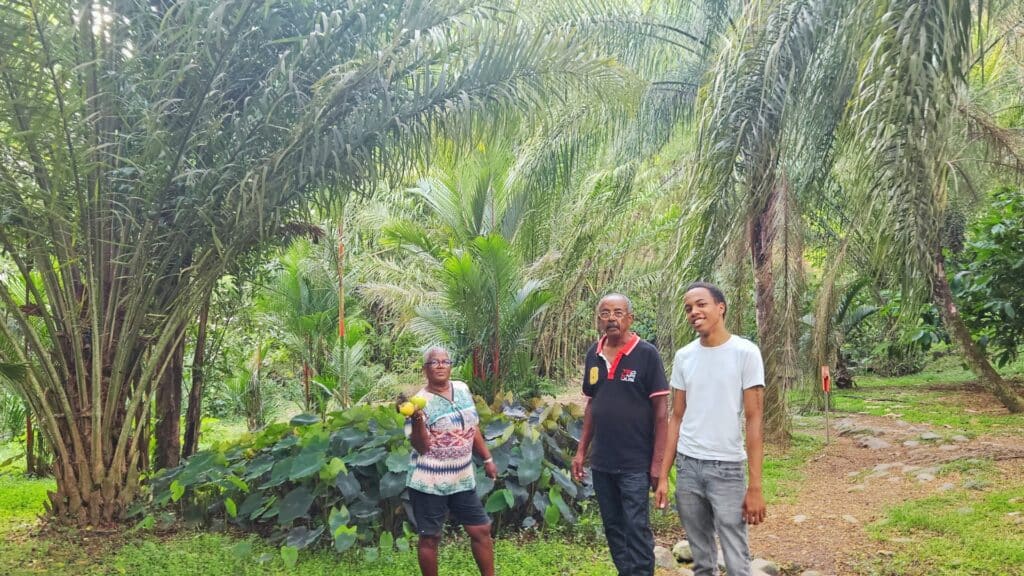
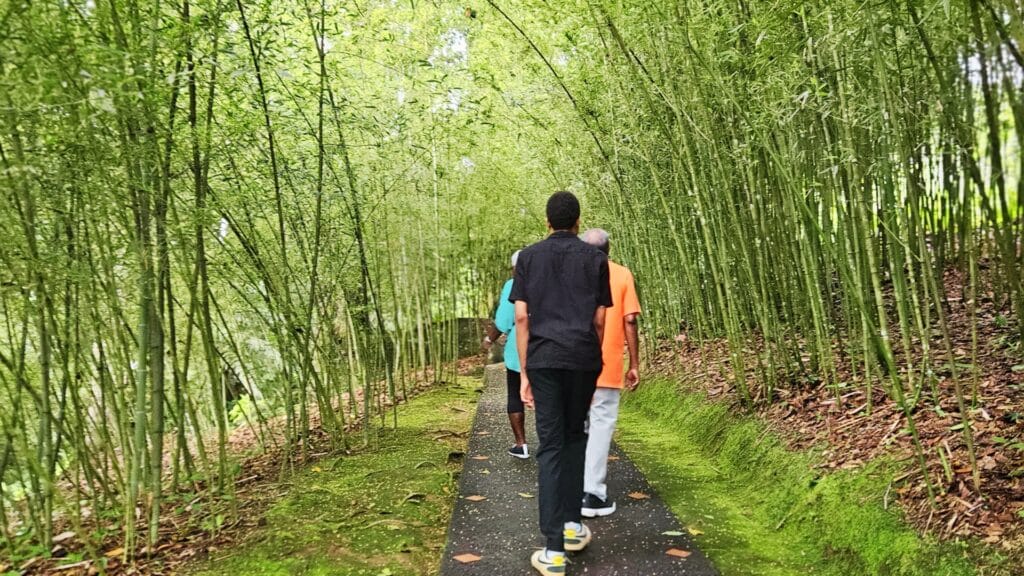
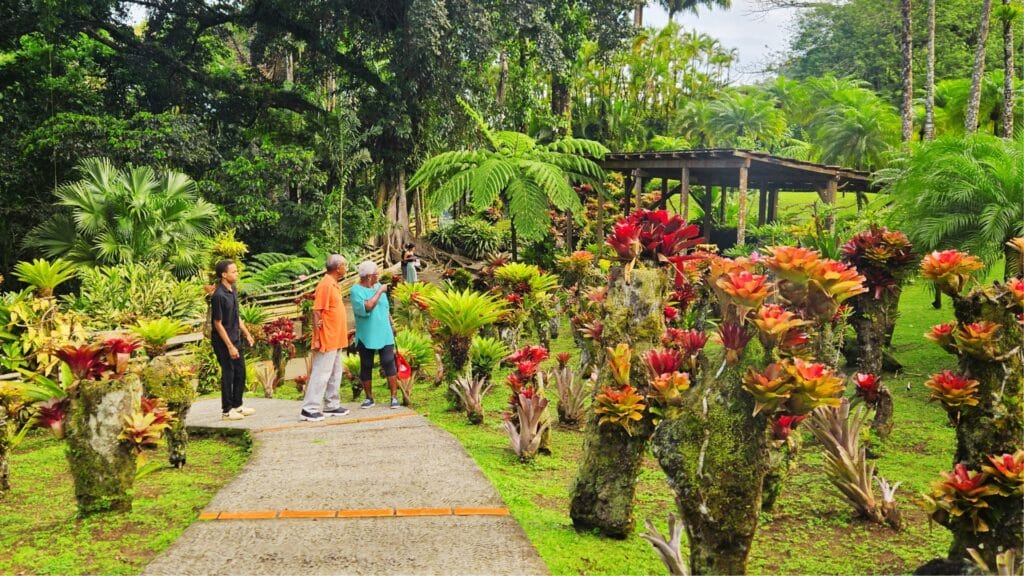
For the grand finale of the RK Heritage series at Rendez-vous aux Jardins 2026, Kévin Belcoua returns. After discovering five gardens alongside his grandparents Émile and Jocelyne, he wanted to pass on his experience to others: he took two classmates, Maya and Maeva, to the Domaine d’Émeraude.
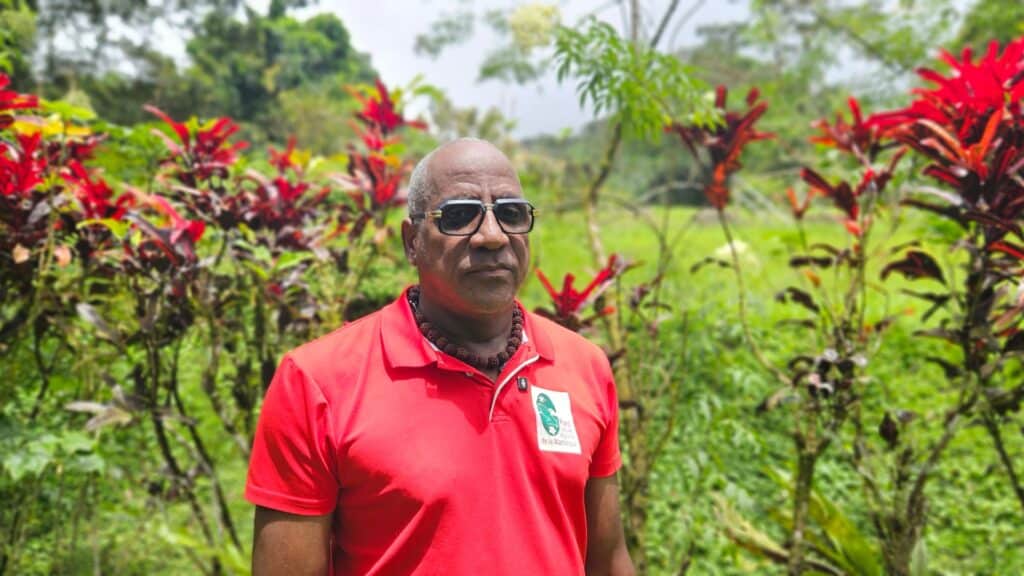
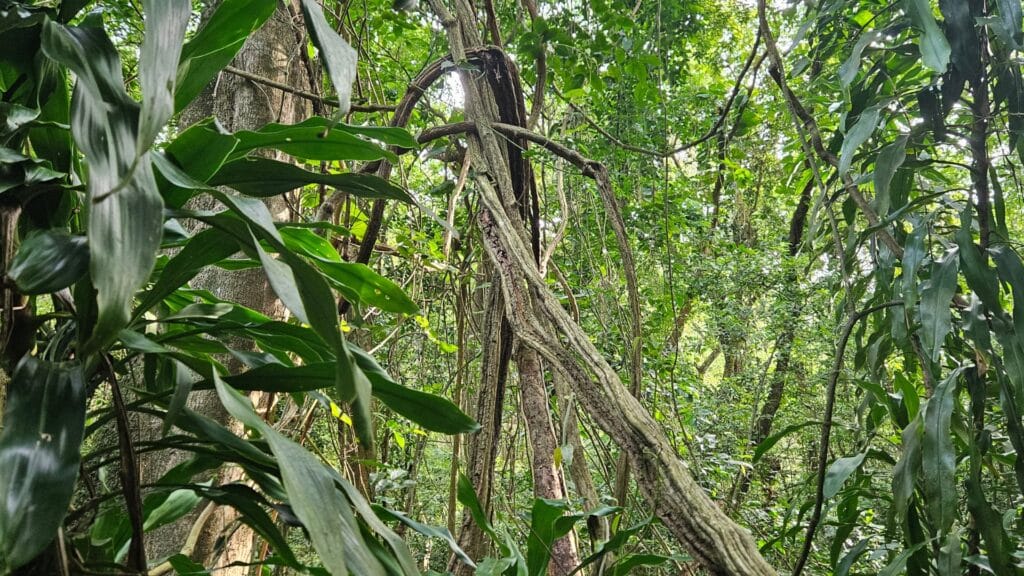
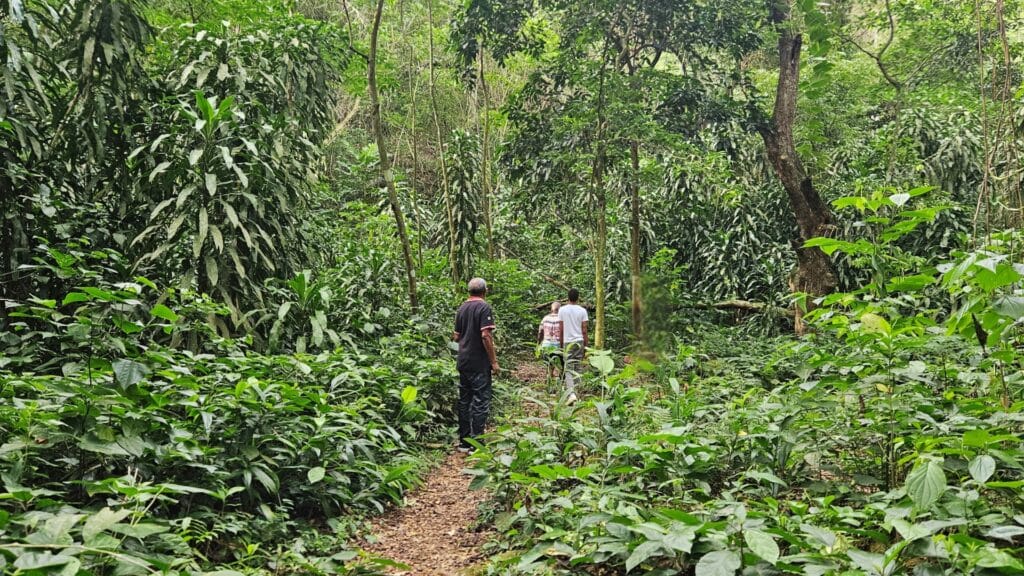
In the heart of Martinique’s hygrophilous forest, under the guidance of Patrick LAPU, nature guide, they discover that learning to see is first and foremost learning to taste, listen, understand… to see truly.
Kévin didn’t come alone… After crossing five gardens alongside his grandparents Émile and Jocelyne, he was keen to bring along two classmates for the last of the series. Maya and Maeva had never been to the Domaine d’Émeraude before. Neither had he. But something told him this place was best discovered by more than one person.
Sometimes, the transmission doesn’t go from grandfather to grandson. It circulates laterally, between friends and peers.
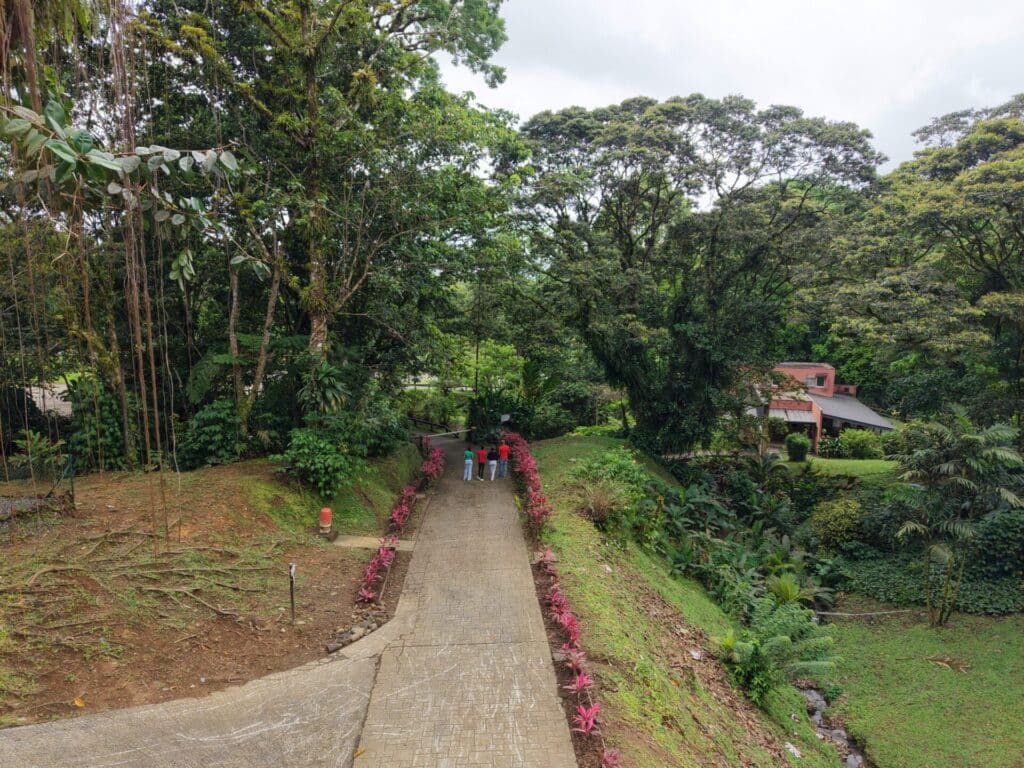
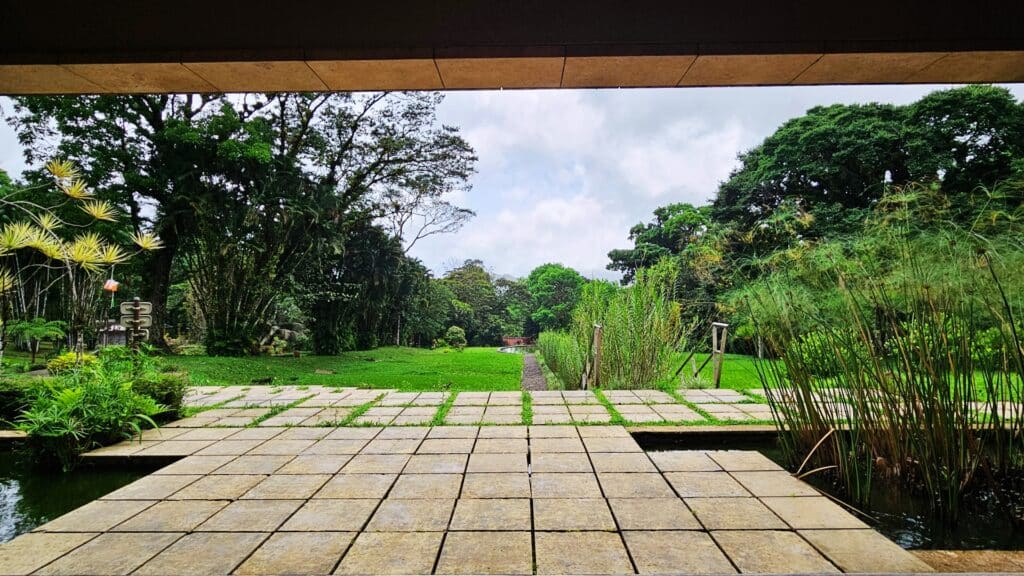
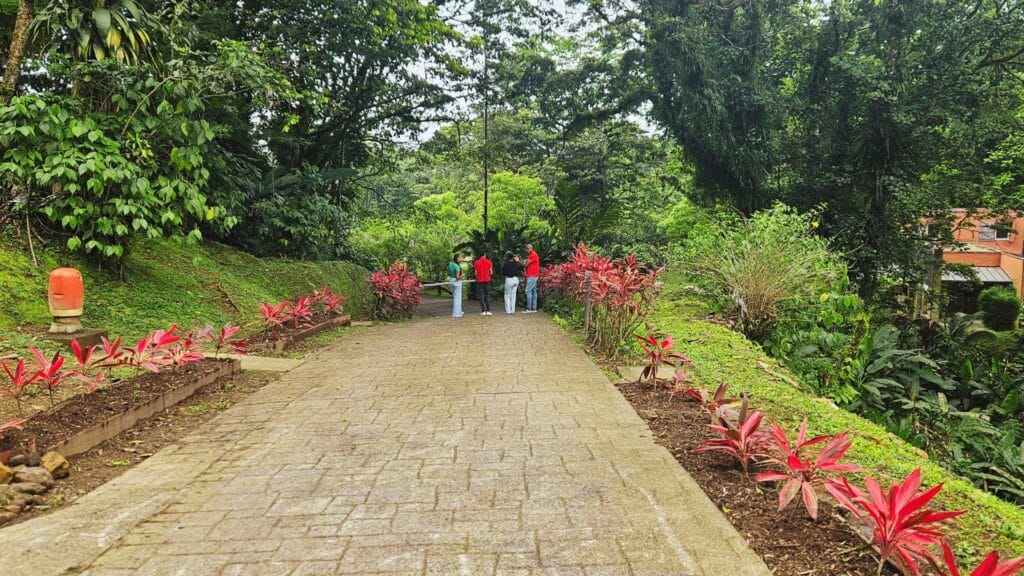
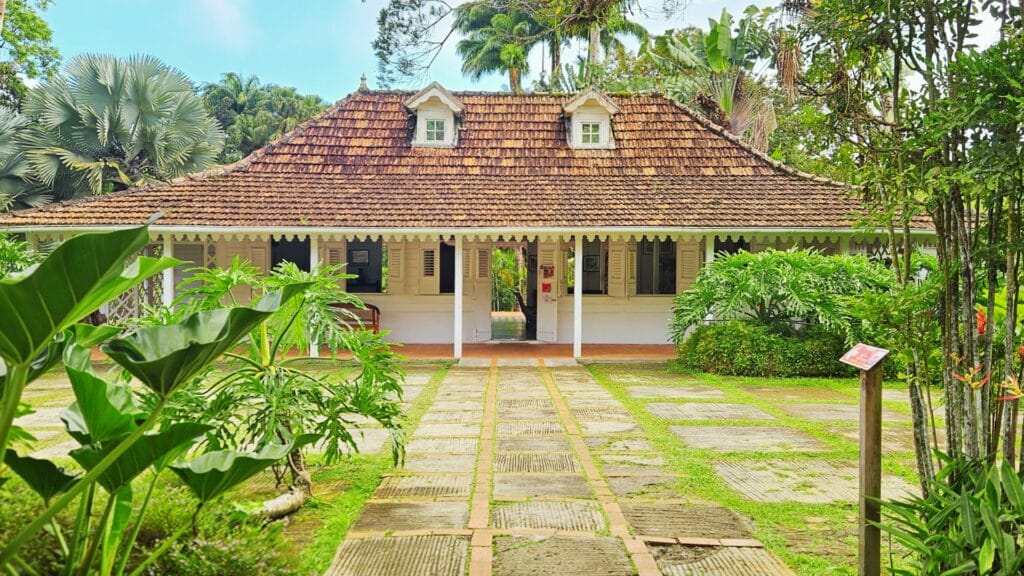
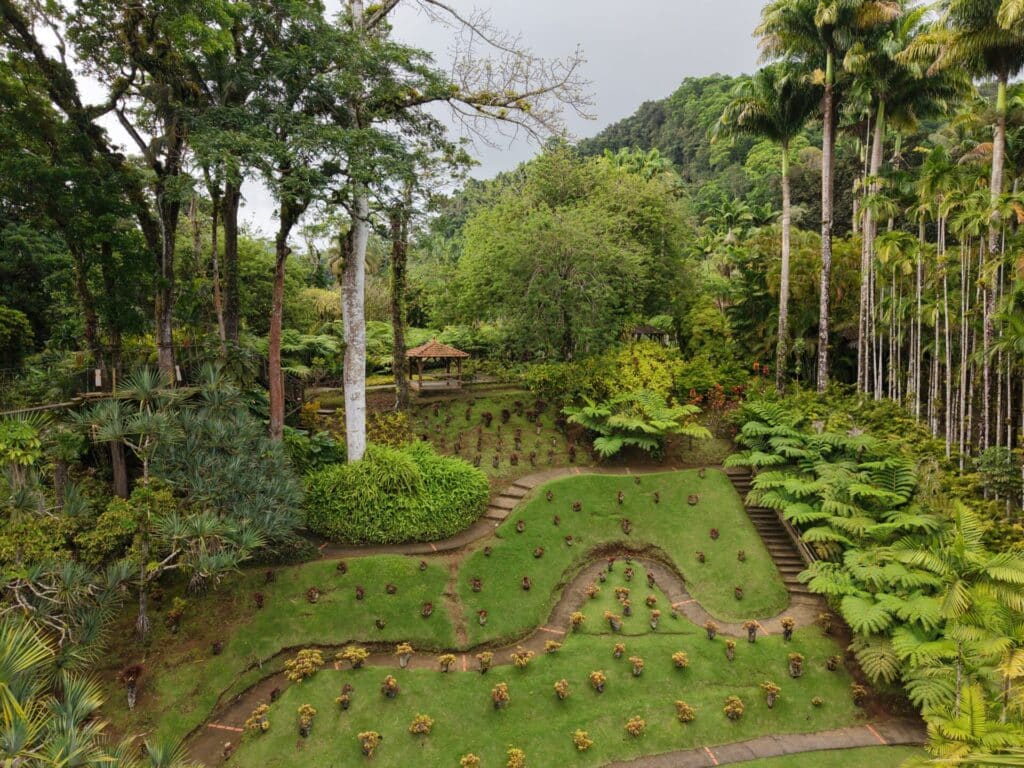
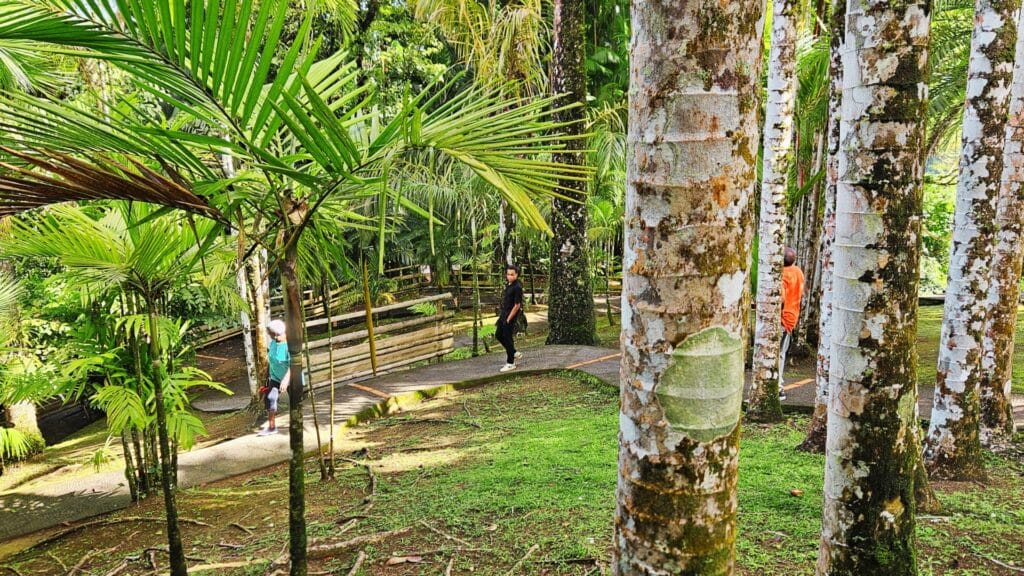
Domaine d’Émeraude is located in Morne Rouge, in the heart of the rainforest, in the shadow of Montagne Pelée. Open to the public since 2010, it has been awarded the Jardin Remarquable label by the French Ministry of Culture. It is here, for the Rendez-vous aux Jardins 2026 under the theme of view, that the three young people will learn to really look.
Le Domaine d'Émeraude, a multi-faceted read
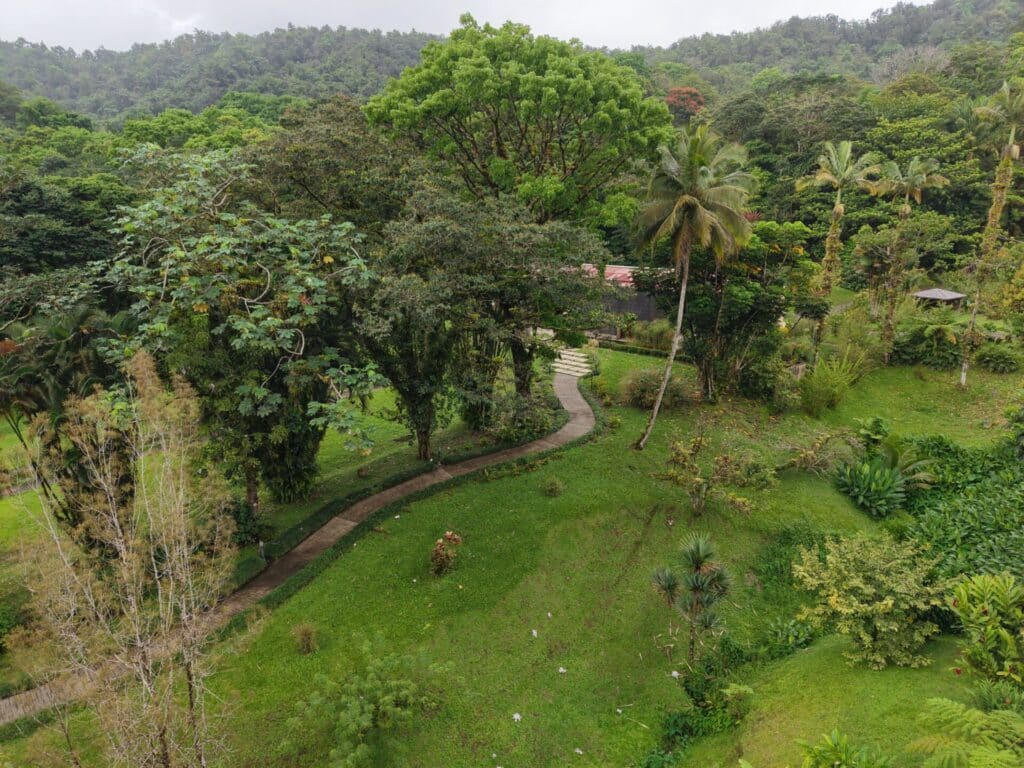
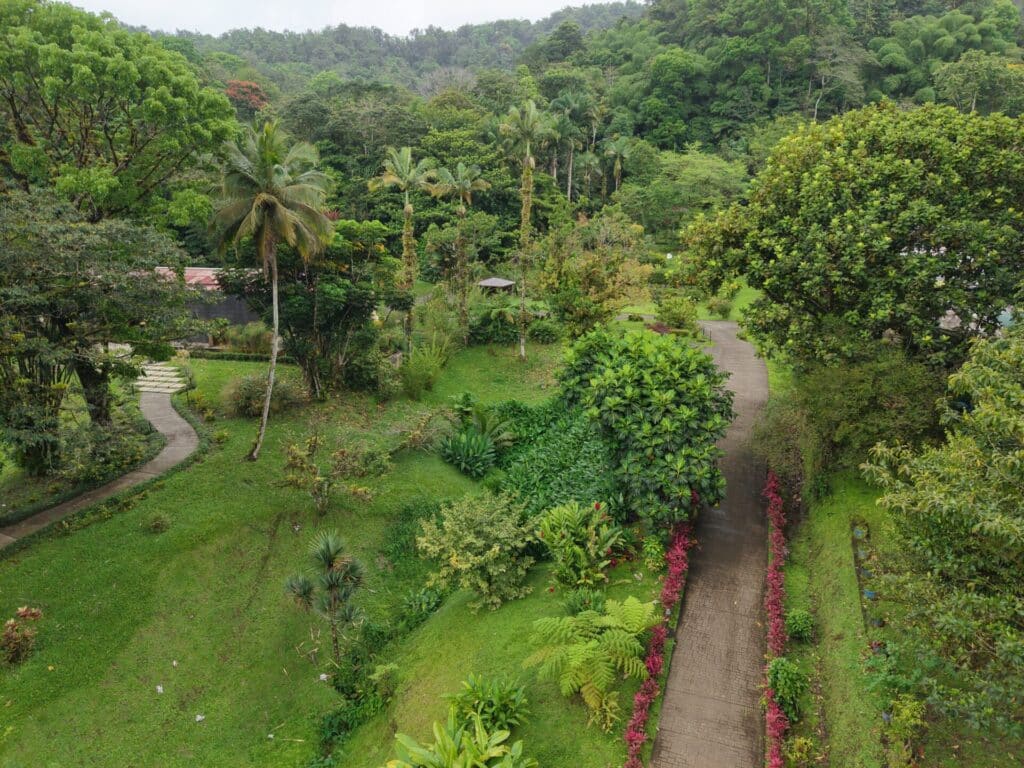
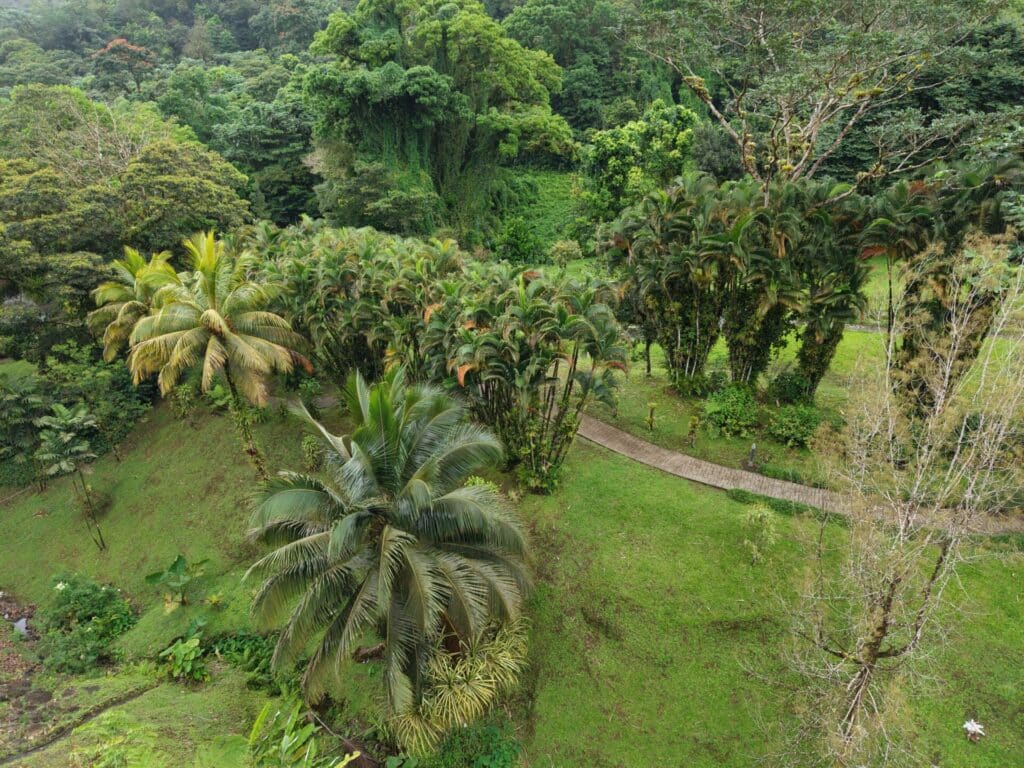
“Here at the Domaine d’Émeraude, you’ll find over 2,000 varieties of plants, a mix of medicinal, ornamental and epiphytic plants,” explains Patrick LAPU, guide and nature guide at the Domaine d’Émeraude.
For the past ten years, he has been welcoming and guiding visitors to this site, which he knows down to the last detail.
“That’s my leitmotiv. I love this nature. If I had to do it all over again, I’d do it for 20 or 30 years,” he confides.
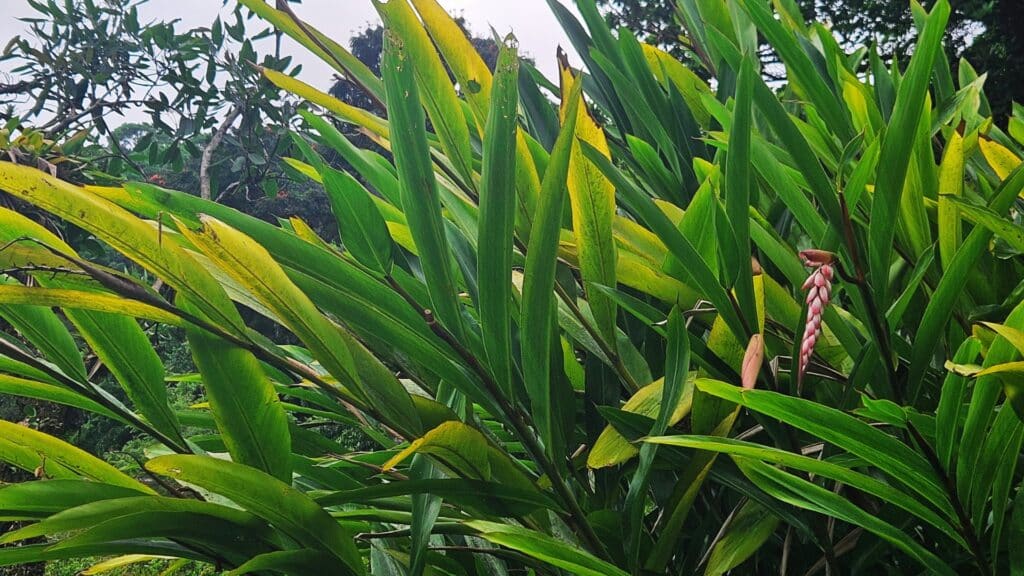
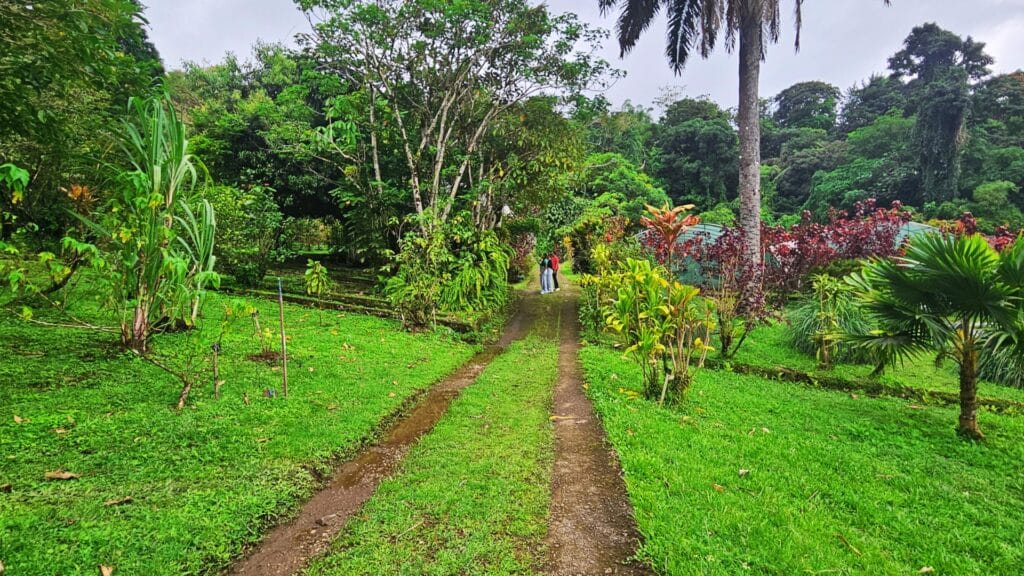
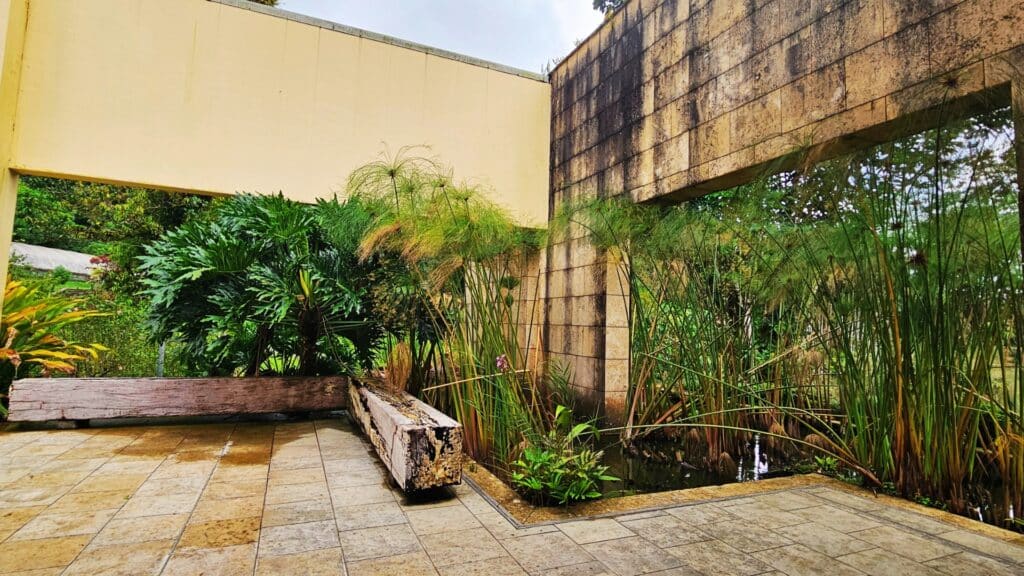
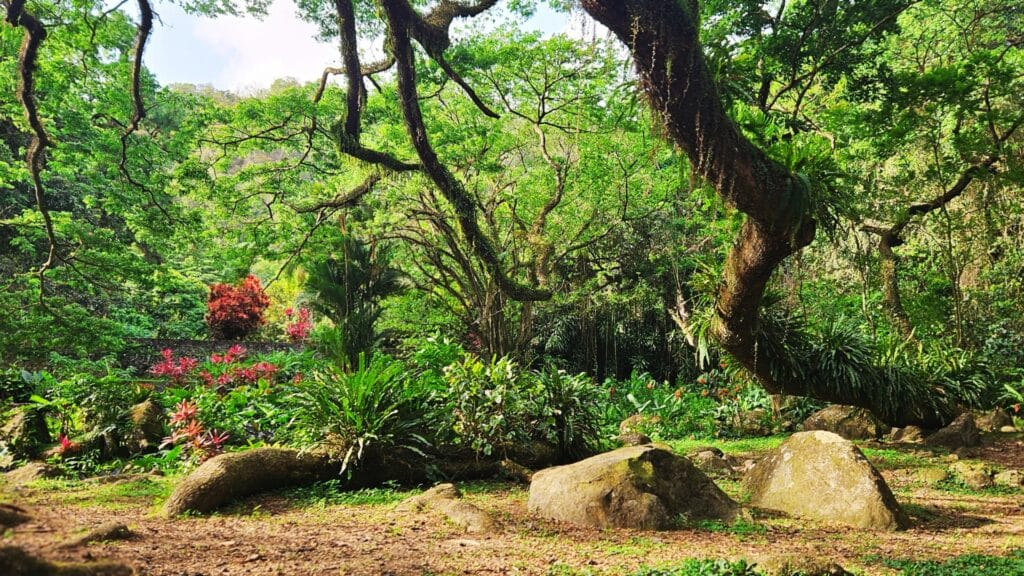
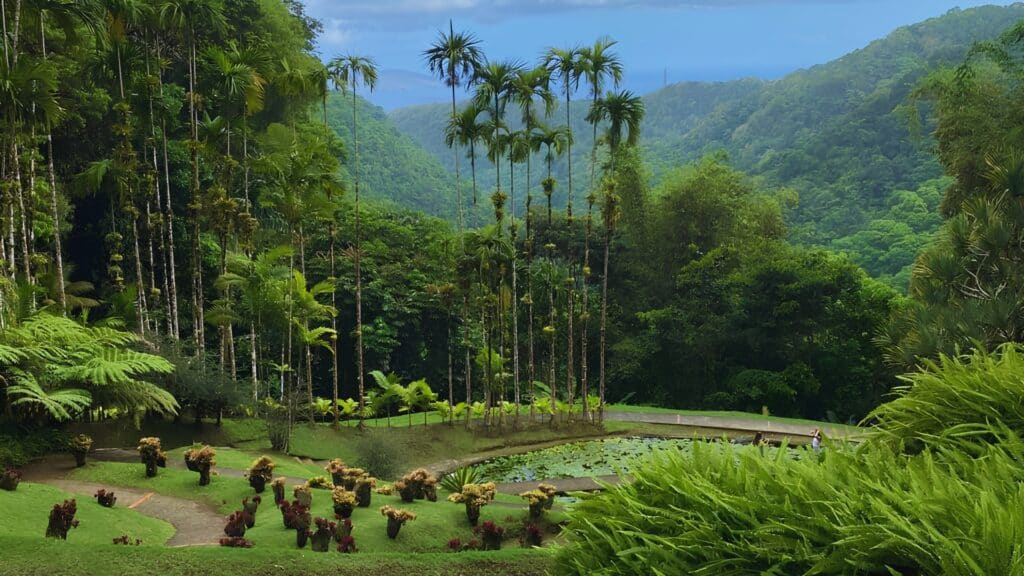
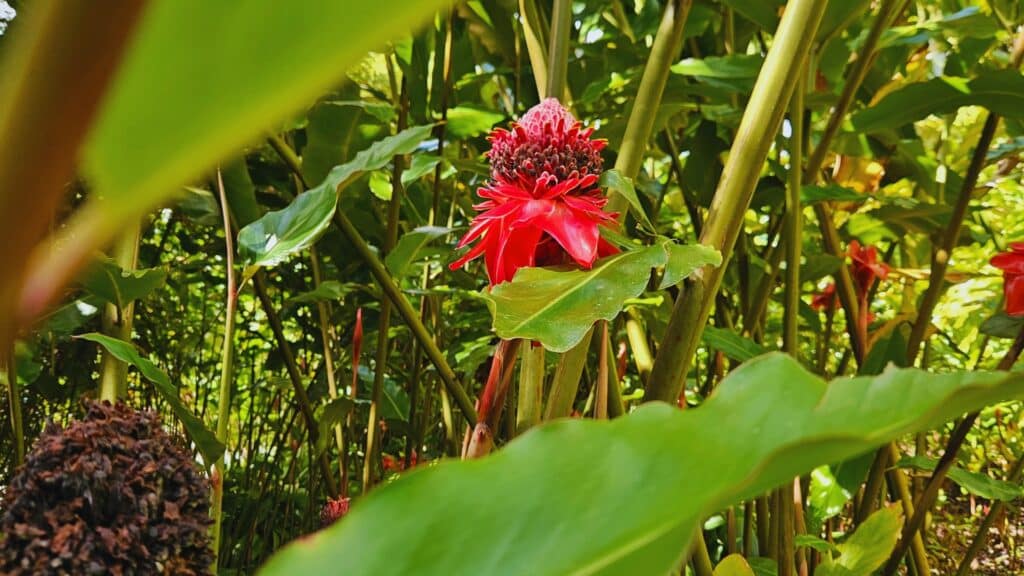
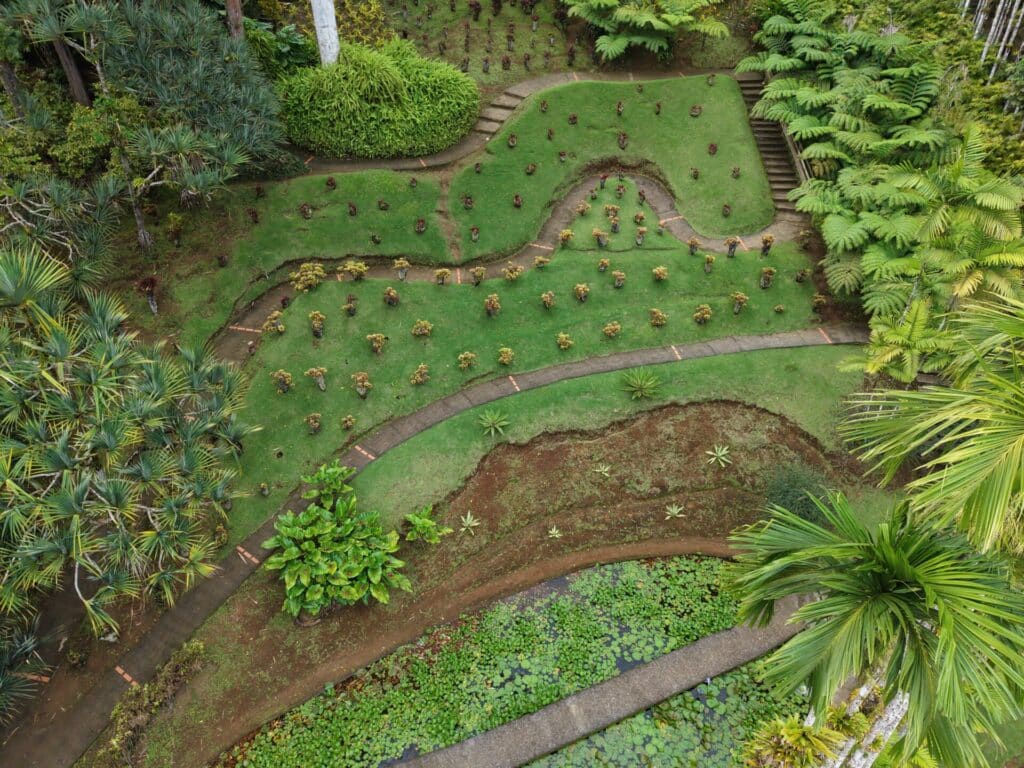
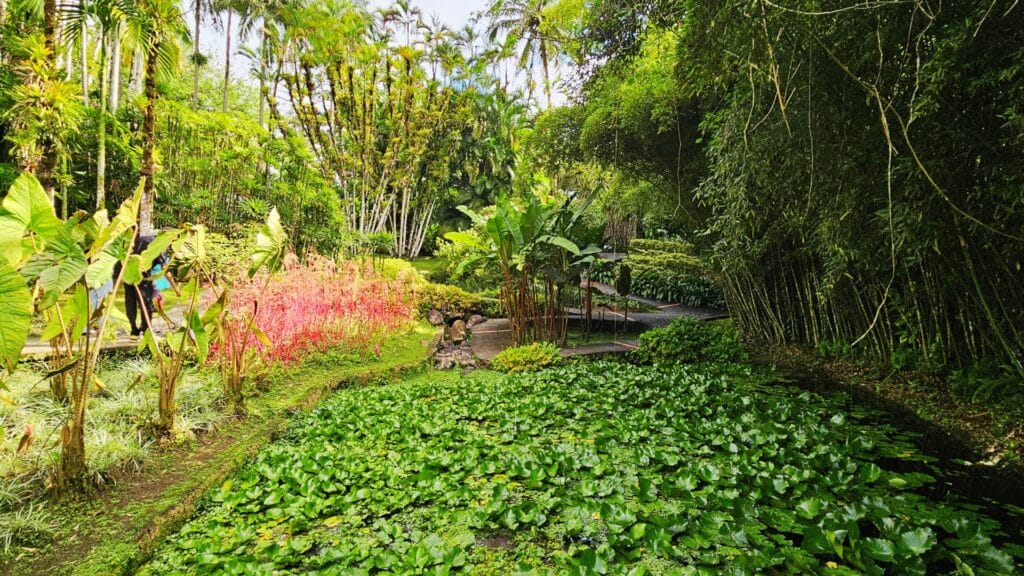
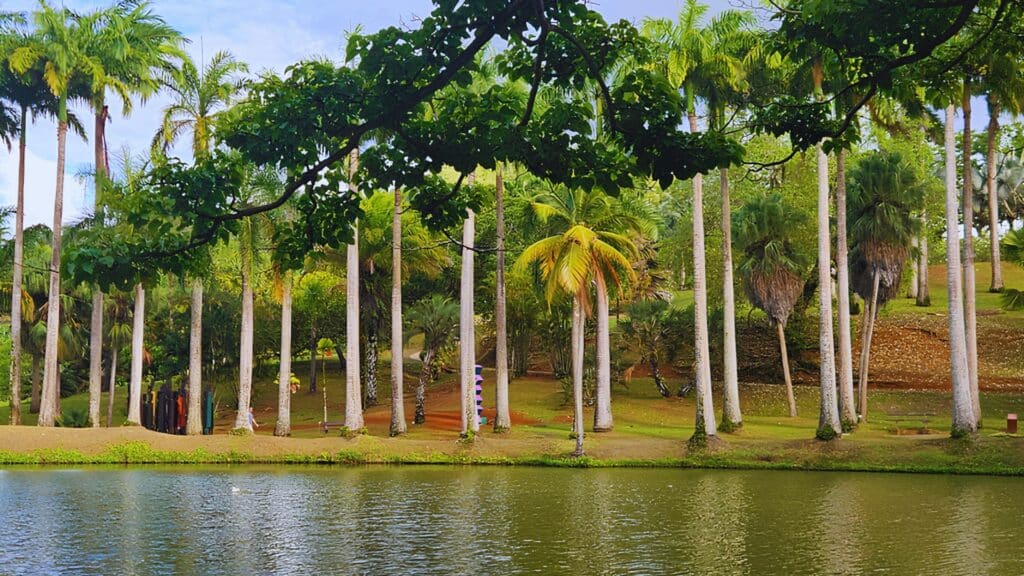
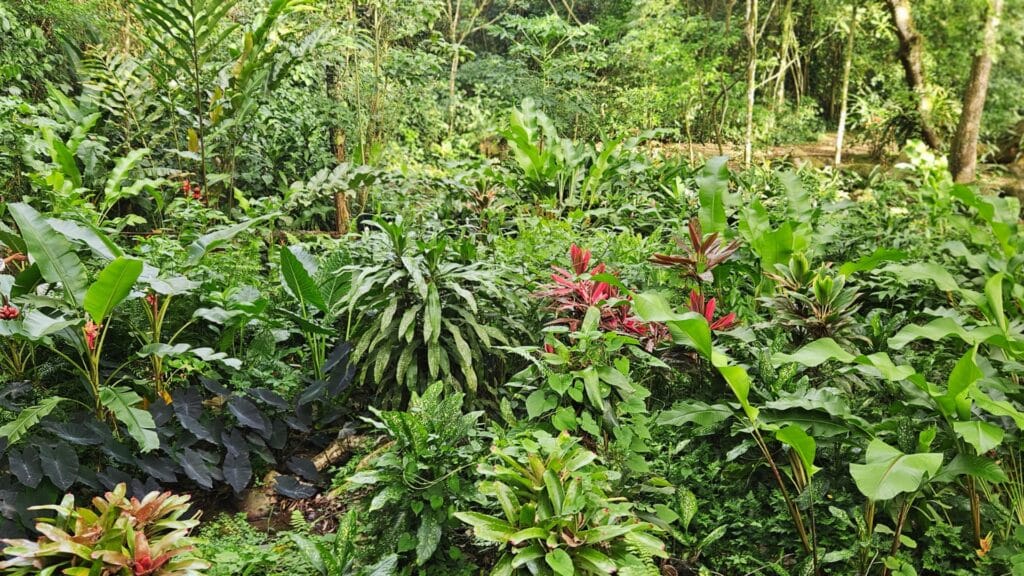
What sets Domaine d’Émeraude apart from the other remarkable gardens in Martinique is its location in the very heart of the hygrophilous forest. ” It’s the climate that produces the variety that sets us apart from the others,” explains Patrick LAPU. Medicinal plants, tree ferns, royal palms, bromeliads, heliconias and cordylines make up a living tableau that changes according to the angle and the time of day.
The architecture of the estate deliberately plays with these different interpretations.
You’ll have squares, or “prises de vue”, where you can get a sense of the landscape,” stresses Patrick LAPU.
“From every point of view, you get a different reading.”
Two places are particularly close to his heart: the Exploration Pavilion, which tells the story of Martinique’s volcanic birth, and the Arboretum, where tropical species unfold in majesty.
And when the sky clears, the panorama widens still further: the silhouette of Montagne Pelée and the Pitons du Carbet appear in the distance, adding another dimension to the view.
On the day of the visit, the low clouds didn’t lift the veil on this distant view, but the nearby garden revealed all its richness.
Neem, a plant of the future
Kévin, Maya and Maeva chose to let themselves be guided. At Domaine d’Émeraude, visits can be made independently, but when the opportunity arises to be accompanied by one of the site guides, the experience takes on a whole new dimension.
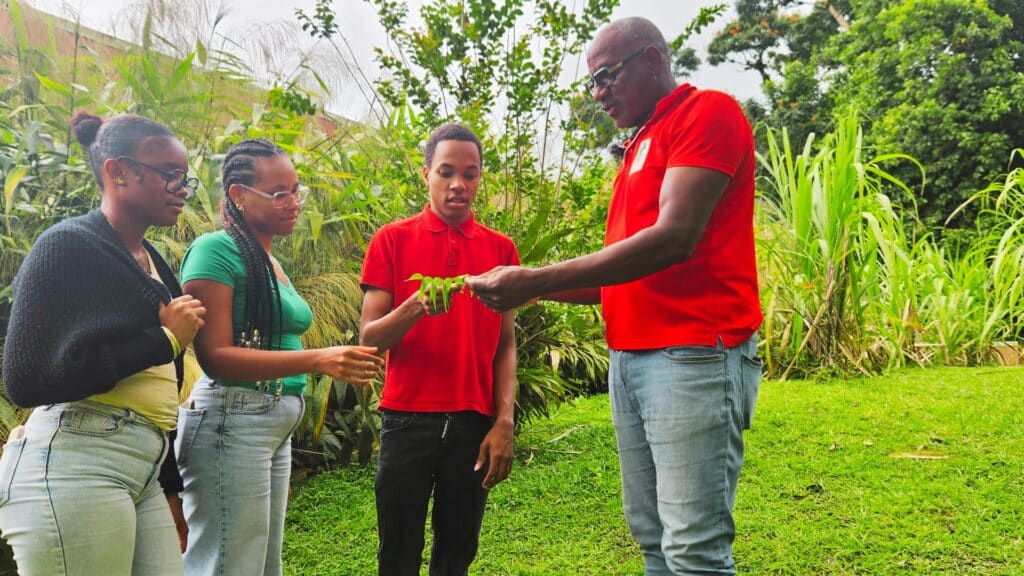
Patrick LAPU stops in front of a slender tree with thin leaves. ” The neem,” he announces.
“Neem is a natural purifier. It cleanses the blood, it purifies.”
Native to India, neem (Azadirachta indica) has been used for thousands of years in traditional medicine. Acclimatized in Martinique, it testifies to the pharmacological wealth of tropical plants, a treasure that Domaine d’Émeraude makes available to the public.
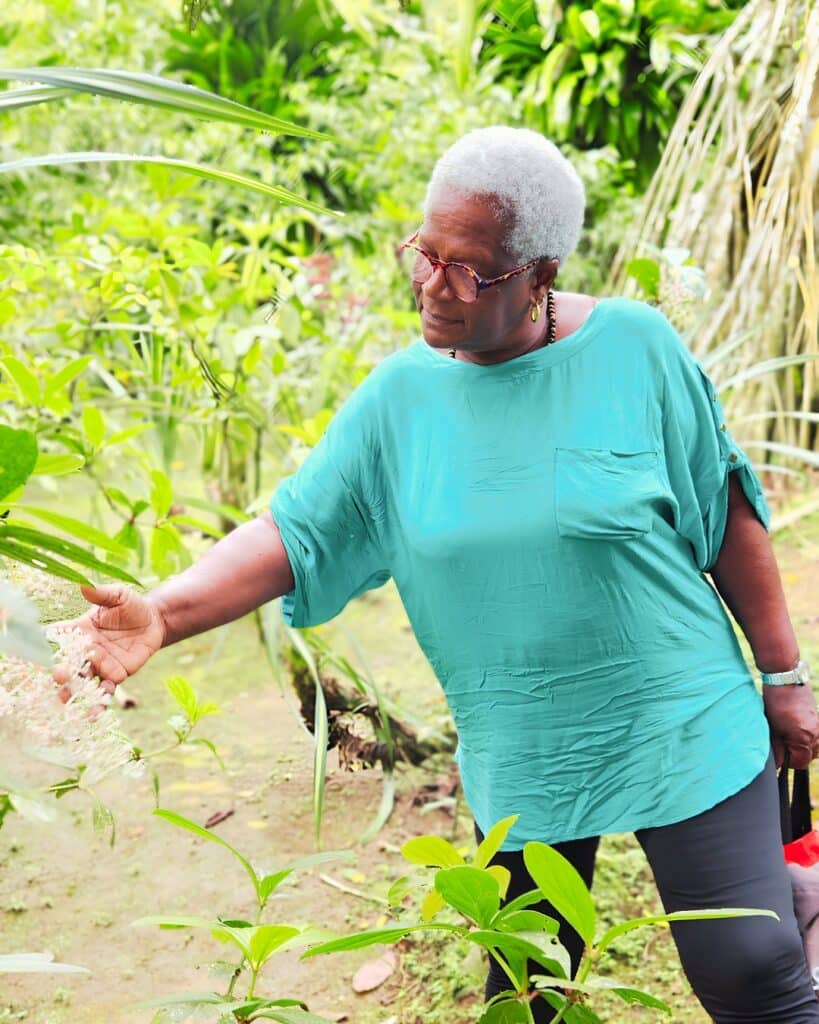
Patrick LAPU delicately picks a few leaves and hands them to the three youngsters. “I invite you to taste them. Chew, you can swallow, there’s nothing to worry about.” Kévin tries first, Maeva follows, Maya closes the line. Faces crinkle: “It’s bitter!”, and Patrick smiles.
“It’s very bitter, yes. But it’s a plant for the future.”
A plant for the future: From the mouth of a guide who has been accompanying visitors for ten years, the formula says it all: nature as a remedy, ancestral knowledge as a resource for the present.
The real view is transmitted in Creole
The neem episode is not an anecdotal detour. It’s exactly what Patrick LAPU wants to get across.
“The role of Domaine d’Émeraude is to raise awareness at an early age, to get to know and understand.”
At a time when global warming is shaking up the island, with the massive arrival of sargassum and the changing seasons, Patrick LAPU has a clear mission: to reconnect with nature.
To say it, he chooses his mother tongue.
“Matinik sé ta nou. Pwotéjé la nati, sé pa ki di an bouch, fok nou fè-y an aksyon.”
(Martinique belongs to us. Protecting nature doesn’t just mean saying it, it means doing it).
Maya and Maeva smile. They know these words, their grandparents told them. Kévin, for his part, nods his head: he has just understood why, after five remarkable gardens discovered with Émile and Jocelyne, he absolutely had to finish here, with his two friends.
Rendez-vous aux Jardins 2026: seeing the real thing as a family (and in friendship)
At a time when there is much talk of reconnection, Domaine d’Émeraude offers an embodied response. Not a show, but a learning experience.
“The rainforest is the ultimate,” confides Patrick LAPU.
“The ultimate for someone who’s looking for themselves, who’s going to reconnect. It’s the one that the forest will inspire a lot of things, because you find yourself in the heart of the forest.”
It’s also a message to the people of Martinique themselves.
“Domaine d’Émeraude is not well known in Martinique. Come and visit the estate. It’s a nature interpretation site that will explain to you how, why, and that will allow you to evolve around this nature, to know it, to understand it, to continue.”
“The real view is the truth, what you’re going to see, what you’re going to discover,” concludes Patrick LAPU.
Kévin, Maya and Maeva leave the estate with a few neem leaves at the bottom of their bags, perhaps still with the bitter taste that heralds a plant for the future. And with the conviction that they will return, in their turn, with other comrades, other little brothers and sisters.
Six gardens ago, Kévin followed his grandparents. Today, he leads the way.
The transmission has changed hands, and it’s only just begun.
📌 IN PRACTICE
Rendez-vous aux Jardins 2026 – Domaine d’Émeraude
📅 Saturday 6 and Sunday 7 June 2026
📍 Route de Deux-Choux, 97260 Le Morne Rouge, Martinique
🌿 Self-guided tour, can be accompanied by estate guides
An exploration by RICHÈS KARAYIB for Rendez-vous aux Jardins 2026, in partnership with the Direction des Affaires Culturelles (DAC) de Martinique.
The Belcoua at Habitation Anse Latouche, Martinique Zoo
For the 2026 Rendez-vous aux Jardins, the Habitation Anse Latouche opens the doors to a unique site, part botanical garden, part zoo and part remains of a dwelling founded in 1643. RICHÈS KARAYIB follows the Belcoua family as they discover the Remarkable Gardens of Martinique.
That day, between monumental cheese trees, semi-liberty atelas and butterflies in the greenhouse, they discovered that looking at living things is already a commitment to protecting them.
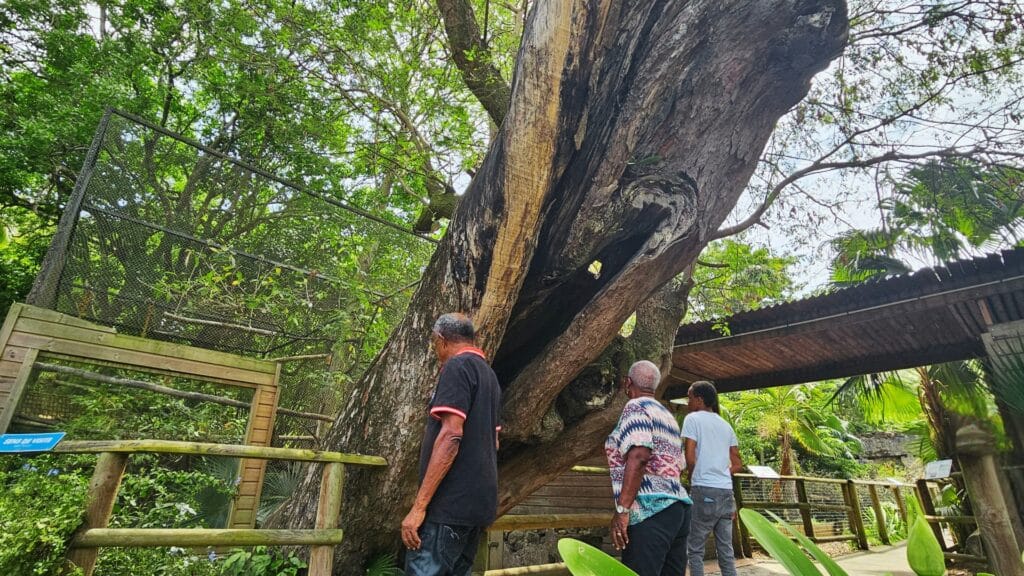
At the entrance to the park, the Belcoua family stops. In front of them, the trunk of an old tamarind tree, massive and blackened, resisting cyclones and years. Jocelyne stops, gazing up at the top. Kévin and Émile, nearby, observe the majestic tree.
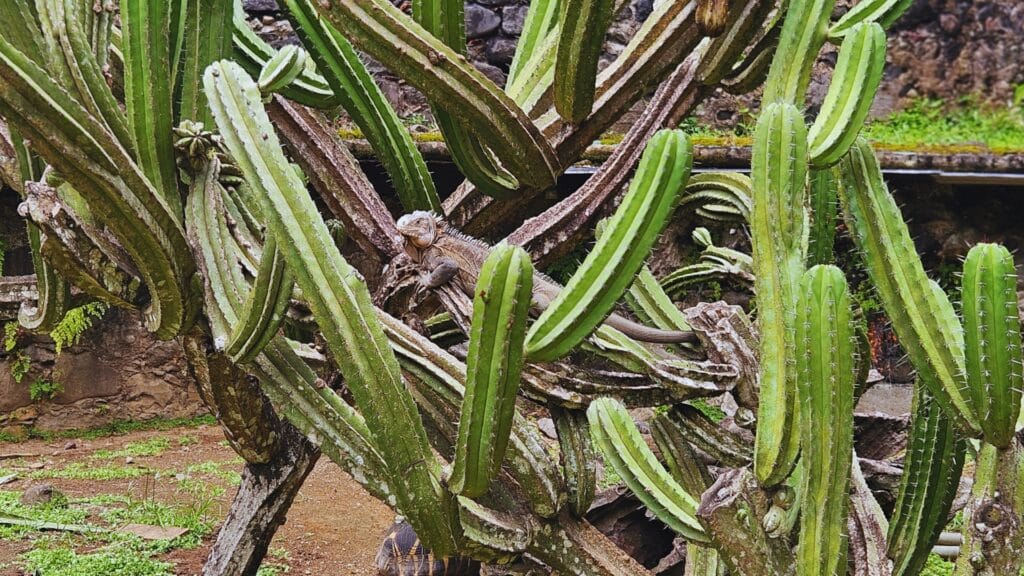
Somewhere in the foliage, a bird call pierces the silence. A little further on, iguanas roam freely. Here, plant, mineral and animal cohabit in the same space. And the visit has only just begun…
It is precisely this attention to the living that Habitation Anse Latouche intends to highlight on June 6 and 7, during the 2026 edition of Rendez-vous aux Jardins in Martinique, this year on the theme of the view.
A theme that resonates here in a singular way: we don’t just see plants or animals, we see an entire ecosystem – plant, animal and heritage – that needs to be looked at in order to be protected.
Habitation Anse Latouche, a memory born in 1643
Straddling the communes of Le Carbet and Saint-Pierre, Anse Latouche is one of Martinique’s oldest settlements.
“The first stones were laid in 1643 by the d’Orange family,” says Jimmy Limousin.
At its peak, the estate covered 300 hectares. It was the largest Martinique home of its time.
The story comes to an abrupt end on May 8, 1902: the fiery cloud from Mount Pelée sweeps across Saint-Pierre.
“The flaming cloud was stopped by the gully on that side,” says Jimmy Limousin.
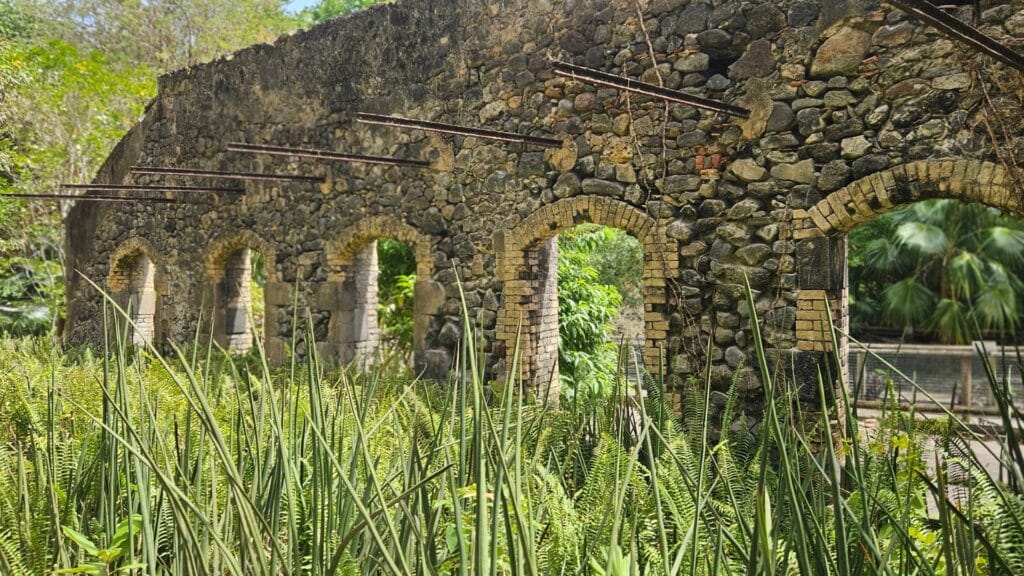
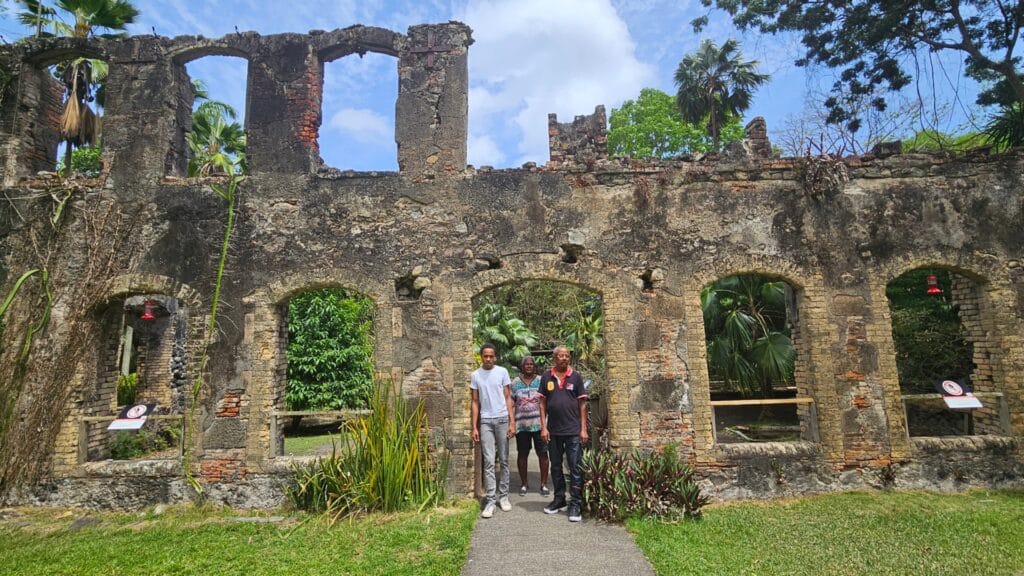
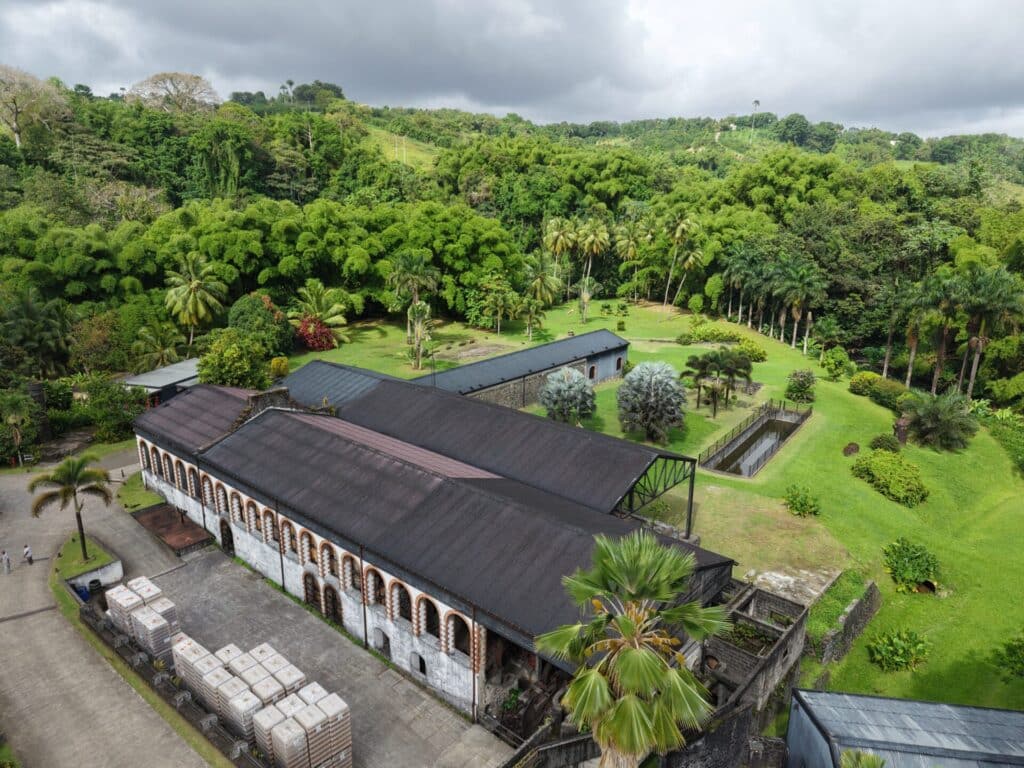
The Anse Latouche dwelling is blown up. All the remains visible today – arcades, steam engine, bullock carousel, manioquerie – are post-eruption ruins, fragments that have survived the century.
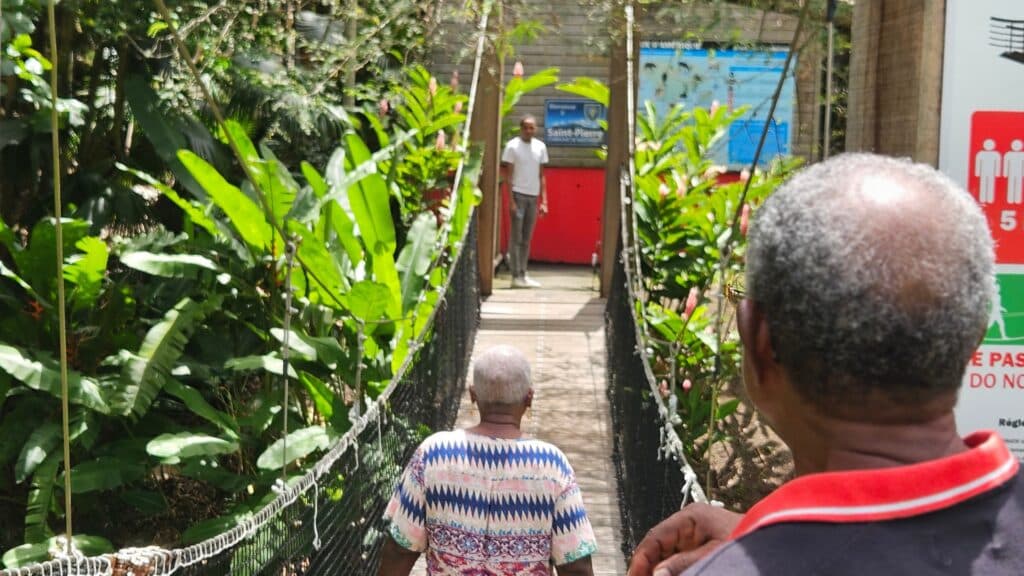
In the middle of the promenade, a Himalayan footbridge spans the ravine. The sign at the entrance recommends a maximum of five people. Kévin goes first, Jocelyne follows, Émile closes the gap.
At the other end, a blue sign: Saint-Pierre. Crossing this bridge, the visitor passes from one commune to another: from Carbet to Saint-Pierre, along the ravine which, in 1902, stopped the nuée ardente.
Plant intelligence in the heart of ruins
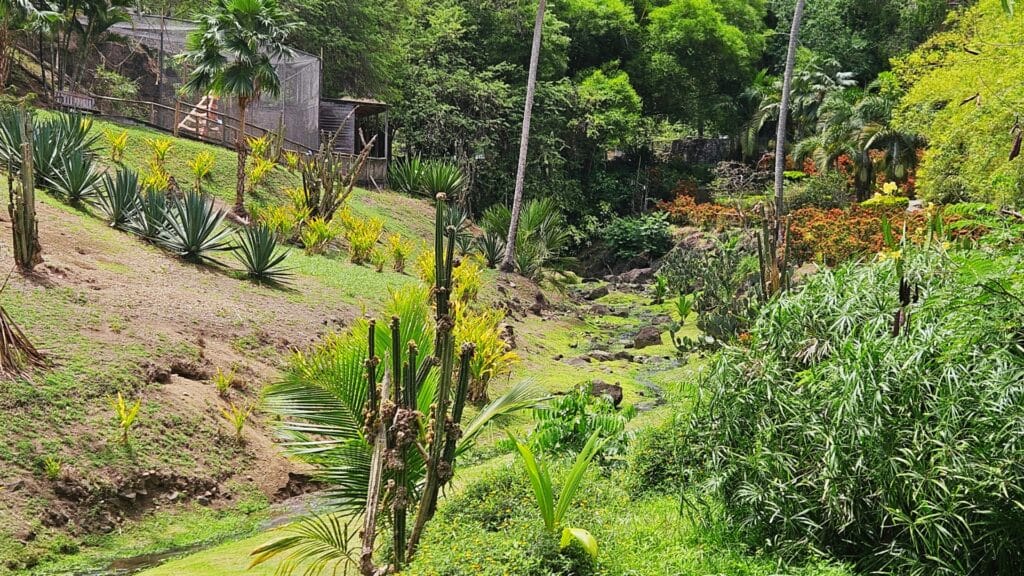
In the 1990s, the site was taken over by Jean-Philippe Thoze, the landscape gardener-botanist who had already created the famous Jardin de Balata a few years earlier. AtAnse Latouche, he designed a park in dialogue with the ruins: curved paths, plant scenography around the remains, bromeliads and orchids placed on the mechanical elements of the old distillery. Plant and mineral respond to each other.
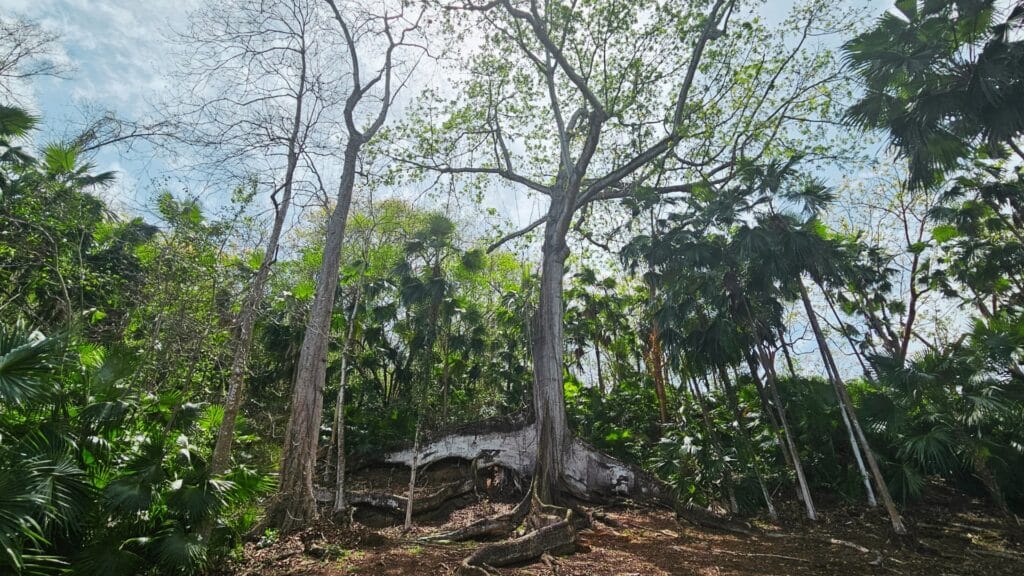
At the bend in the path, the cheese tree appears. Monumental. Its roots form buttresses that rest on the volcanic rock, as if the tree had sculpted its own pedestal to support itself.
“When you look at how it has built up its roots like buttresses, that it has come to lean on volcanic rock to get through whatever nature throws at it, i.e. the cyclones it may have experienced here, it’s still standing, still solid,” observes Jimmy Limousin.
“We’re talking about plant intelligence. “
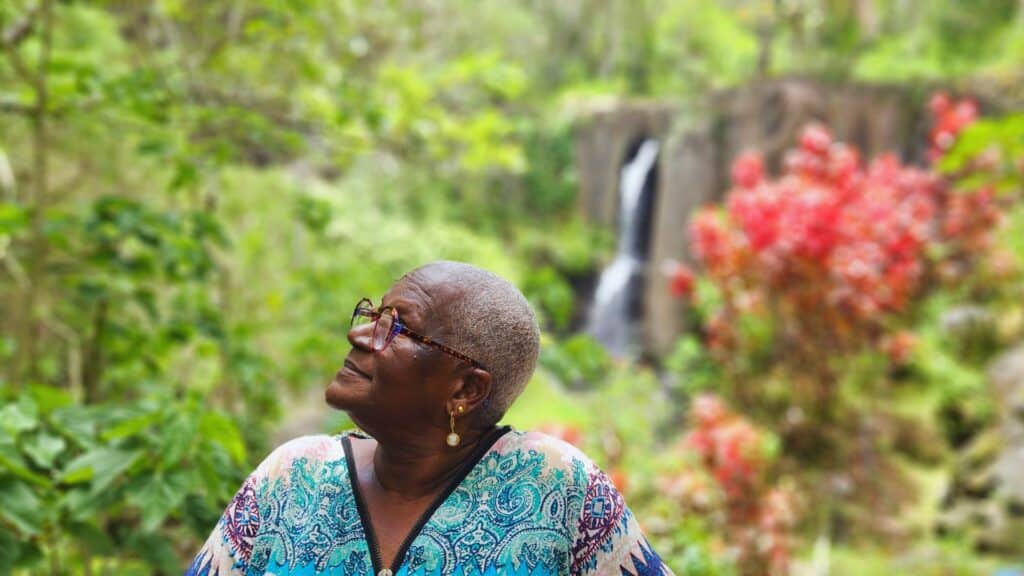
It’s in this dialogue between stones and plants that Jocelyne stops a little further on. Behind her, a waterfall cascades down through lush vegetation and colorful flowers: an idyllic setting.
She looks up, holds her breath. Here, the past is not immobile: it is crossed by water, taken up by vegetation, sublimated by light.
Martinique Zoo, a showcase for the Caribbean-Guyanese biotope
In 2012, the adventure took a new turn. Franck and Angélique Chaulet, two wildlife enthusiasts, took over the site from Jean-Philippe Thoze. They decided to set up the Zoo de Martinique, which opened to the public in 2014.
“When Angélique and Franck added this animal touch to the park, it was done in an existing setting. It was done with great care, with the desire to pass on their passion for protecting the West Indian-Guyanese biotope,” says Jimmy Limousin.
This choice is not insignificant . The French West Indies and French Guiana represent between 90 and 95% of Europe’s biodiversity,” points out Jimmy Limousin.
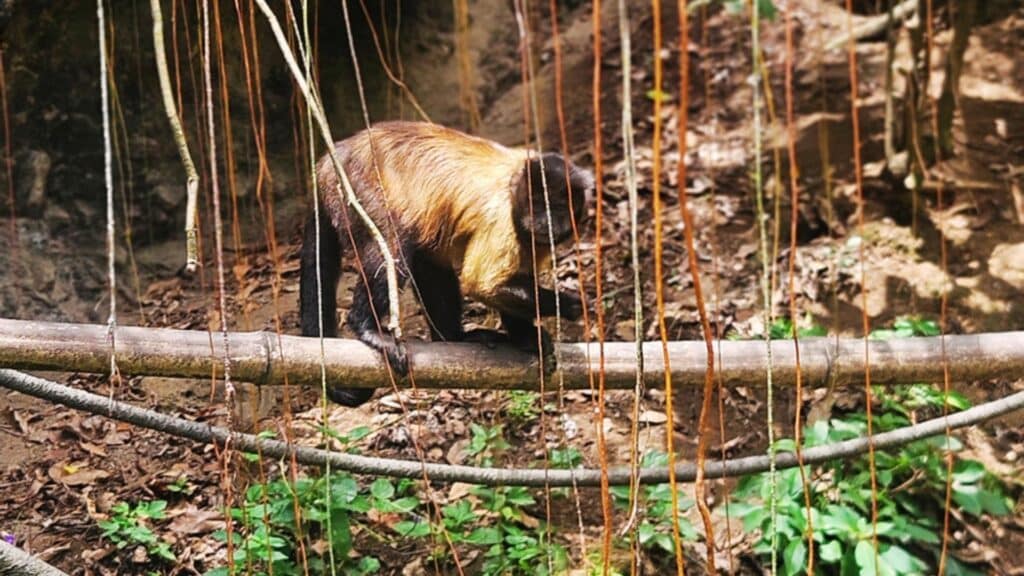
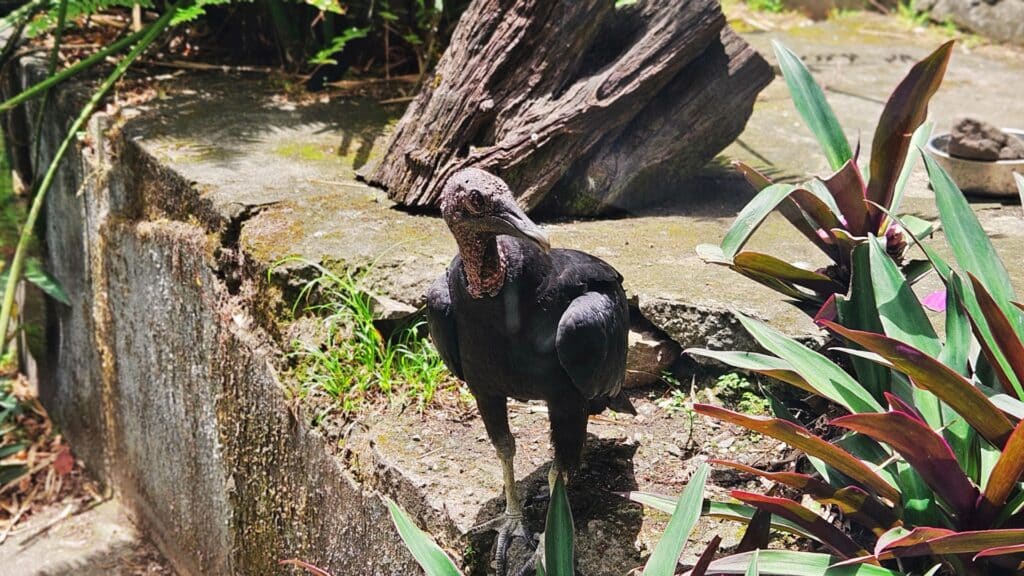
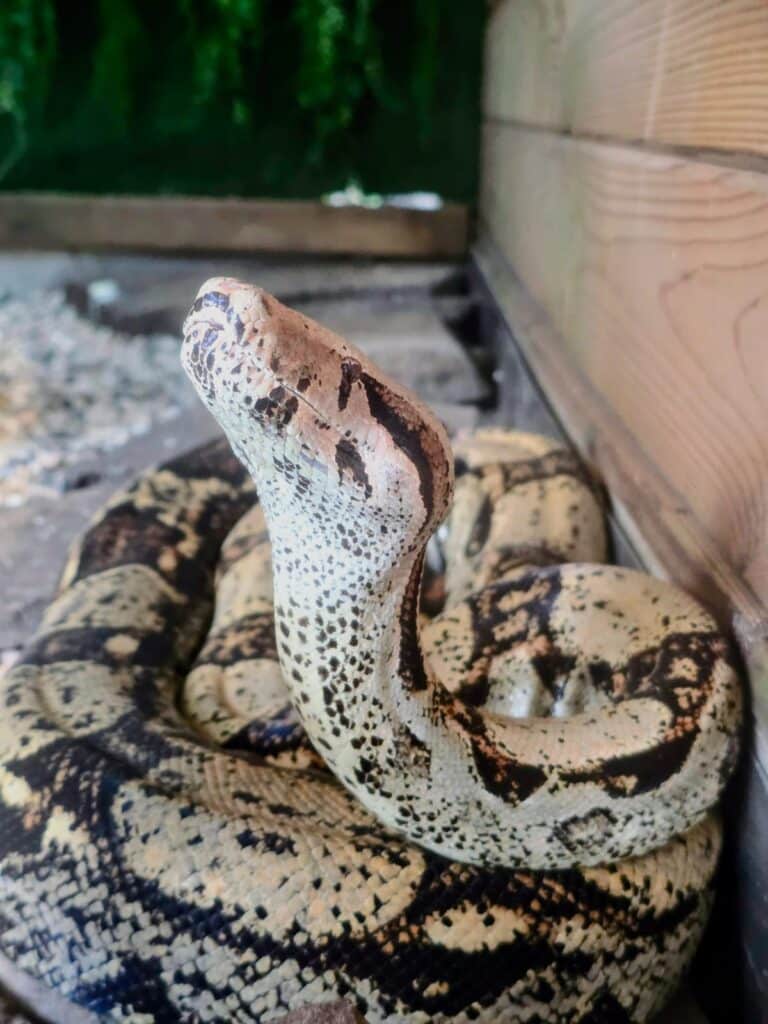
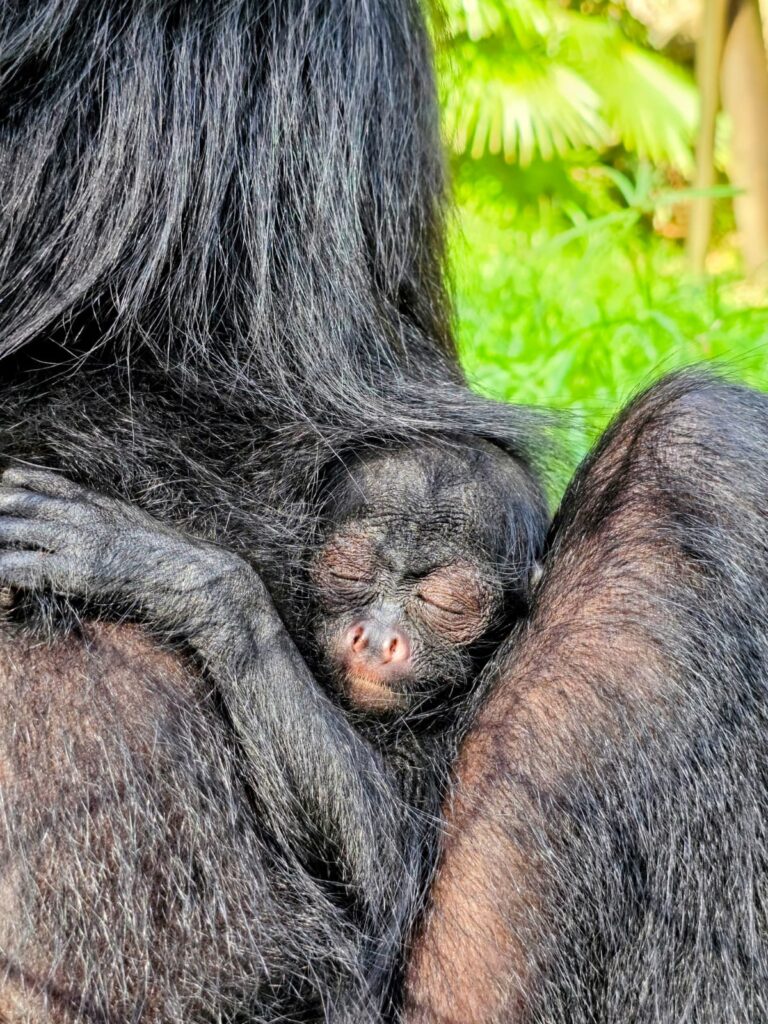
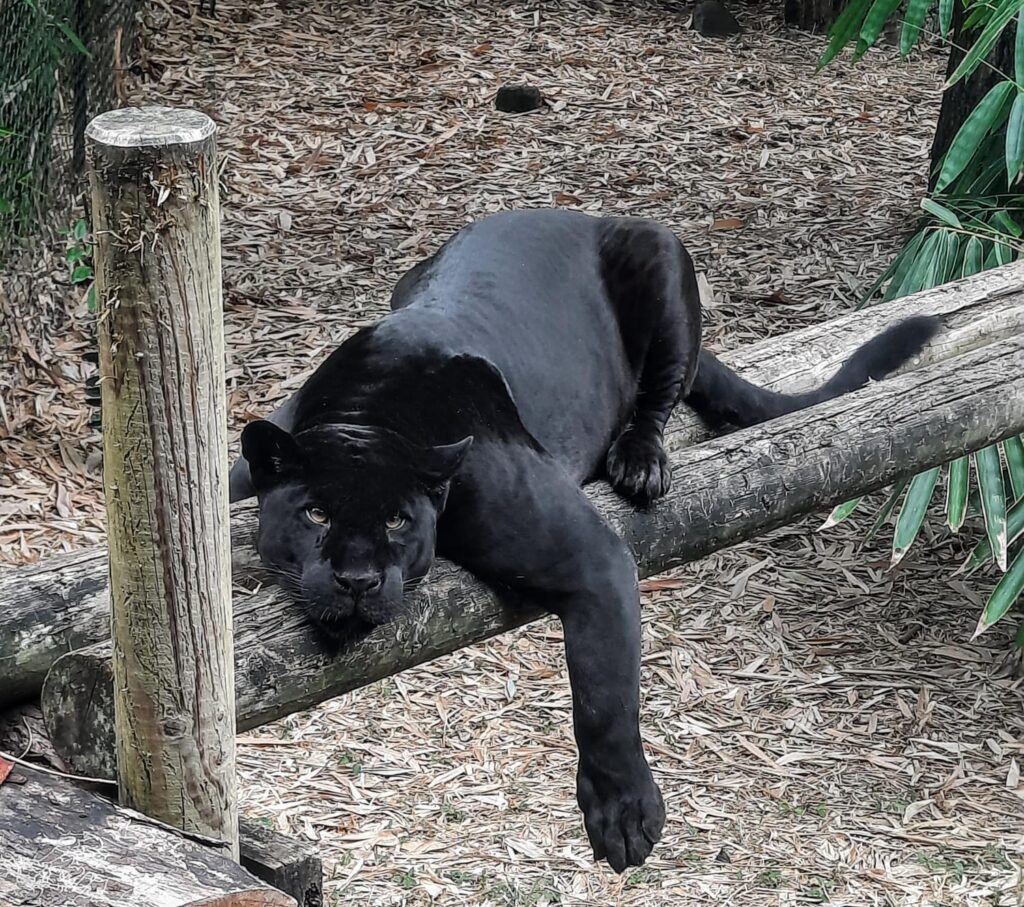
Today, 90% of the livestock on display belong to the West Indian-Guyanese biotope: country iguanas (Delicatissima), emperor tamarins, atelas, urubus vultures and parrots. The remainder comes from seizures made by the authorities on individuals illegally holding exotic species.
“We try to respond in the best possible way, as a host structure, to these requests.”
Some of the park’s residents’ stories tell the whole story. Such is the case of Stone, an atel confiscated in a bar in Saint-Laurent-du-Maroni, French Guiana, where he was exhibited in a cage so cramped that he was left with a hind limb disability. Released into the wild, he died within a few days. At the Martinique Zoo, he has found a second life. What’s more, despite his advanced age, he has reproduced, contributing to the genetic heritage of the species.
“We thought of him as a retiree,” smiles Jimmy Limousin. “But he brought his genetics to our protection and breeding program.”
“Another figure in the park defies time. Bubu, urubu vulture, has been present in Martinique since at least 1994, i.e. over 32 years today, whereas the life expectancy of the species in the wild is 16 years. It is therefore twice as long.
“He has the appetite of an ogre, but the plumage of a teenager,” smiles Jimmy Limousin.
“One wonders if it’s not eternal.
Seeing the living: an act of conservation
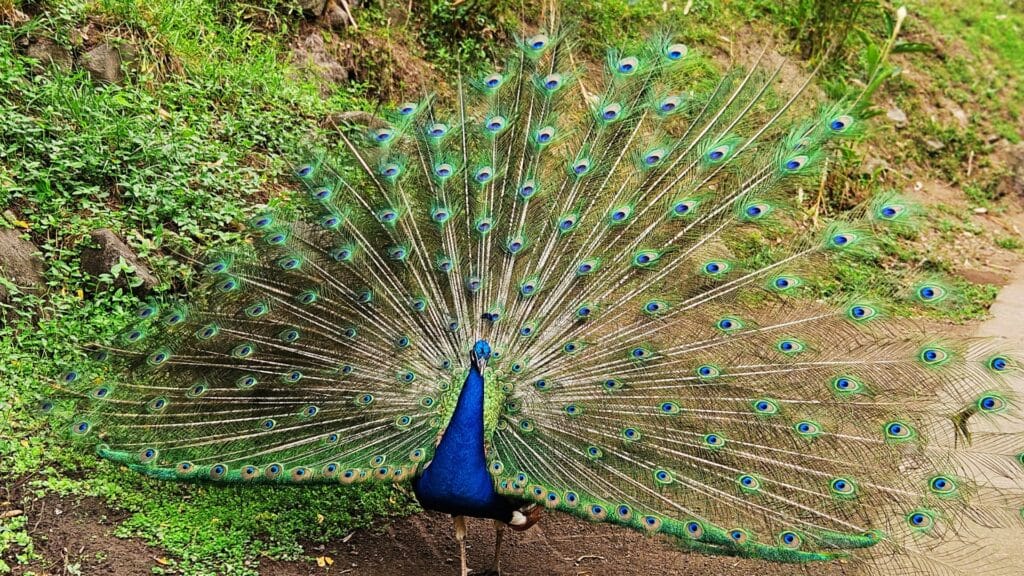
Nearby, a peacock unfurls its wheel. Émile lingers, his gaze caught by the cameo of blue and green feathers.
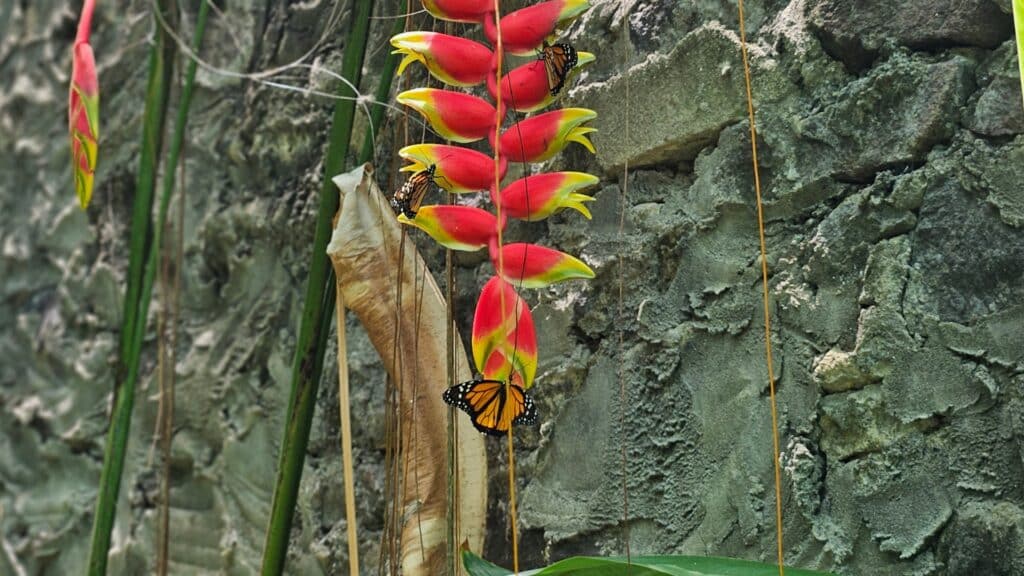
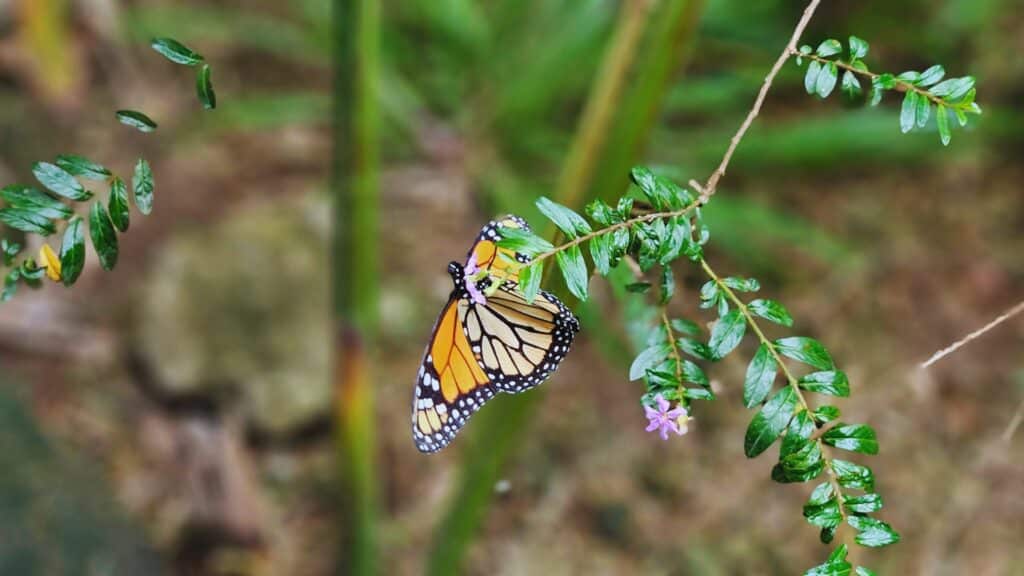
Further on, in the butterfly greenhouse, monarch butterflies fly freely. Resting on the drooping clusters of a heliconia, they gather pollen from the melliferous flowers. “These are melliferous plants on which they come to collect pollen and eat,” explains Jimmy Limousin.
The zoo also provides them with the plants they need to complete their life cycle.
“The more dangerous an animal becomes, the more organized our organizations become,” he continues.
The Zoo de Martinique takes part in European breeding and conservation programs (EEP), coordinated at European level by EAZA (European Association of Zoos and Aquariums).
“The idea is to preserve strong, healthy genetics to protect, conserve and eventually repopulate forests emptied by extinction.
This dimension is not only institutional.
“When you come to the Martinique Zoo, you’re not just a spectator, you’re a conservationist, because you’re helping to fund these programs,” he explains.
Around 30% of proceeds are donated to conservation, via the association SOS Faune Sauvage which operates in French Guiana and Guadeloupe, or through direct support for conservation programs.
Rendez-vous aux Jardins 2026: a garden where everything is alive
At a time when we talk so much about protecting living things, but don’t always know where to start, the Zoo de Martinique offers a concrete response: a change of outlook.
“We all have a role to play in conservation,” Jimmy Limousin sums up, “by respecting the animal world and trying to have as little impact on it as possible.”
For the Rendez-vous aux Jardins on June 6, the Martinique Zoo has chosen to take the opposite tack from the theme of sight: a sensory workshop will invite visitors to close their eyes and rediscover the garden in a different way, through smells, textures and sounds.
It’s another way of seeing living things, through the very things that sight cannot show.
At the end of the tour, the Belcoua family pause for a final look at the park.
Anse Latouche is not a zoo. Nor is it just a garden or a historical site. It’s a place where living things tell their own stories in all their forms: minerals inherited from 1643, plants sculpted by Thoze, animals carried by the Cholette family, memories carried by each and every one of us.
For Émile, Jocelyne and Kévin Belcoua, the journey is coming to an end. One last garden awaits them, but Kevin has decided to discover it in his own way…
📌 IN PRACTICE
Rendez-vous aux Jardins 2026 – Habitation Anse Latouche / Zoo de Martinique
📅 Saturday 6 and Sunday 7 June 2026
📍 Anse Latouche, 97221 Le Carbet, Martinique (on the communes of Le Carbet and Saint-Pierre)
🎟️ Zoo de Martinique regular rates
🌿 Free visit of the botanical park, the Zoo de Martinique and the remains of the Habitation Latouche.
Saturday, June 6 – Guided sensory workshop: rediscover the garden in a different way, voluntarily deprived of sight, through smells, textures, sounds and sensations.
☎️ 05 96 52 76 08 – zoodemartinique.com
An exploration by RICHÈS KARAYIB for Rendez-vous aux Jardins 2026, in partnership with the Direction des Affaires Culturelles de Martinique.
The Belcoua family at Habitation Céron
For the Rendez-vous aux Jardins 2026, the Habitation Céron opens the doors to a park from another era, in the heart of the Prêcheur rainforest, around a 300-year-old zamana tree voted the most beautiful tree in France. RICHÈS KARAYIB follows the Belcoua family on a tour of Martinique’s Remarkable Gardens.
That day, between river, canopy and vistas that reveal themselves with every step, they discover that a garden can be a way of looking in depth.
The Belcouas are about to enter the rainforest. As soon as they enter, Émile, Jocelyne and Kévin realize what awaits them: not a garden, but a forest to cross.
It’s precisely this depth of vision that Habitation Céron intends to showcase on June 6 and 7, during the 2026 edition of Rendez-vous aux Jardins in Martinique, which this year focuses on the theme of view. A theme that resonates here in a singular way: you don’t just see a garden, you walk through a forest.
“When we say rainforest, we imagine a cluster of forests,” says Julie Marraud des Grottes, head of the Habitation Céron factory.
“And it’s having succeeded, through this garden, in creating points of view, points of depth, where precisely you don’t feel suffocated by the forest, but stroll pleasantly through it.”
Habitation Céron, a story from the heart
Nestled in Le Prêcheur, in the extreme north-west of Martinique, Habitation Céron is a former sugar refinery founded in 1658. Just a stone’s throw from Anse Céron, framed by the river and the canopy, the site offers a unique immersion in the heart of the northern Caribbean.
The garden was opened to the public in 1995, closed after Hurricane Dean, then reopened in January 2015. That same year, the Marraud des Grottes family relaunched cocoa production on the historic terroir.
The Jardin Remarquable label was awarded in 2016, the same year that the Zamana was elected France’s most beautiful tree.
But behind the label, what strikes you first at Céron is a story of the heart.
One mother, four children, all born on the estate:
“We’ve all gone off to do our studies left and right, and we’ve all been called back by this place, which is magnificent and which we want to develop, show off and share with others.”
The Zamana, France's most beautiful tree
At the heart of the garden, the Zamana reigns. Over 300 years old, half a hectare of shade. In 2016, it was voted France’s most beautiful tree. “It really is the king of the garden,” says Julie Marraud des Grottes.
“It overlooks this entire garden. It covers half a hectare of shade. It’s really majestic.”
The Zamana is also known as a rain tree, a feature that makes it invaluable: it provides its own shade and the humidity levels required by the plants growing under its canopy, notably cocoa.
“At the foot of the zamanas, we replanted young cocoa plants,” she explains.
The ancestral tree thus becomes the natural guardian of a reborn cocoa plantation.
A walk in the heart of the rainforest
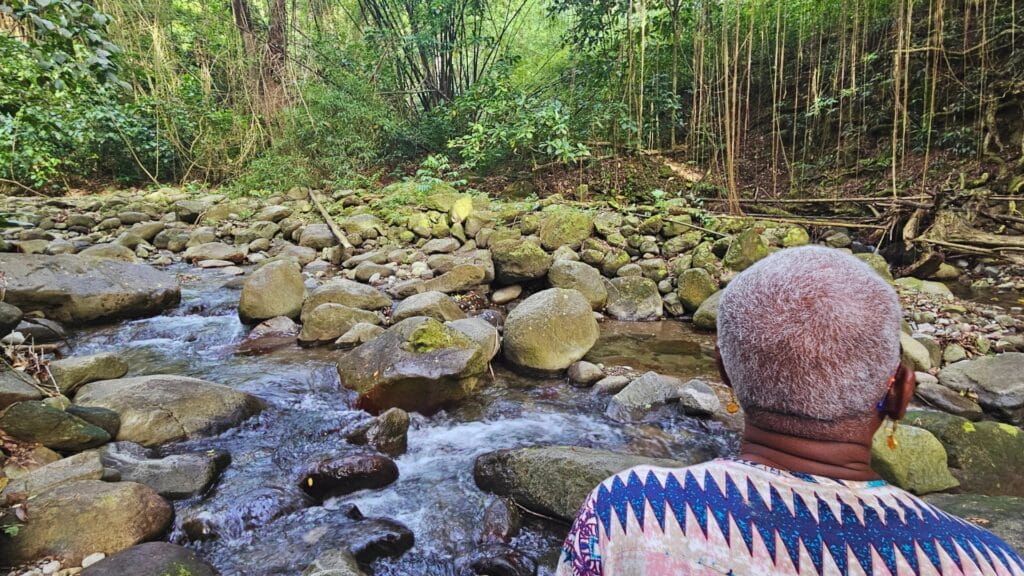
Beyond the Zamana, the park reveals itself on foot. A river runs right through it. Jocelyne stops for a moment: the water, the foliage, the light falling between the trees, all invite her to slow her gaze.
The river is more than just a backdrop. “You can swim in it,” says Julien Marraud des Grottes. For those willing to take off their shoes, the fresh waters of the North Caribbean extend the walk into a sensory experience.
Seeing the garden also means smelling it, touching it, hearing it and sometimes immersing yourself in it.
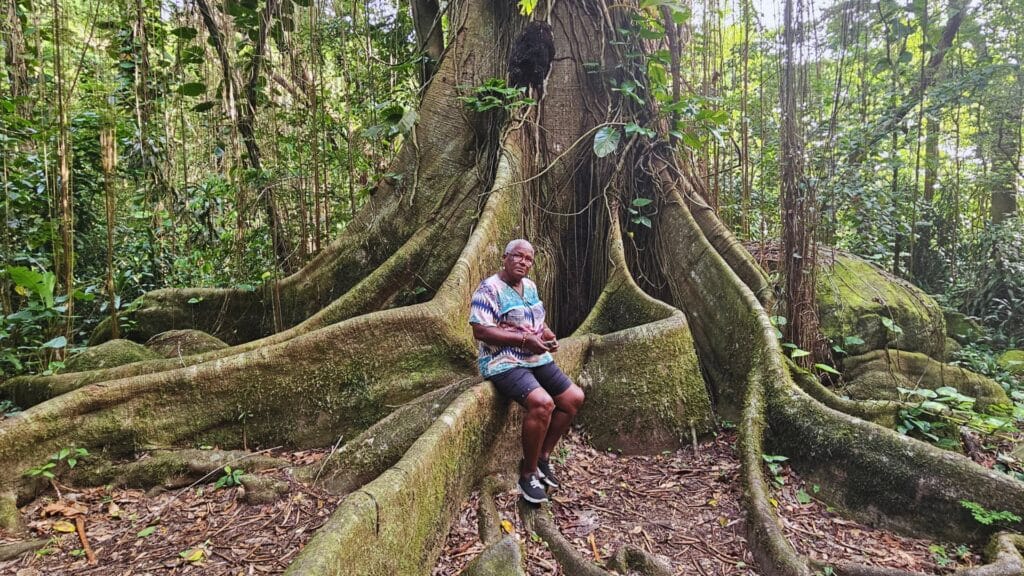
Everywhere, a canopy of enormous trees, cheesemakers, an imposing mango tree producing “divine mangoes” with oversized trunks.
Some of these giants invite you to take a break: Jocelyne sits for a moment in the roots of a cheese tree, just long enough to take in the view from above.
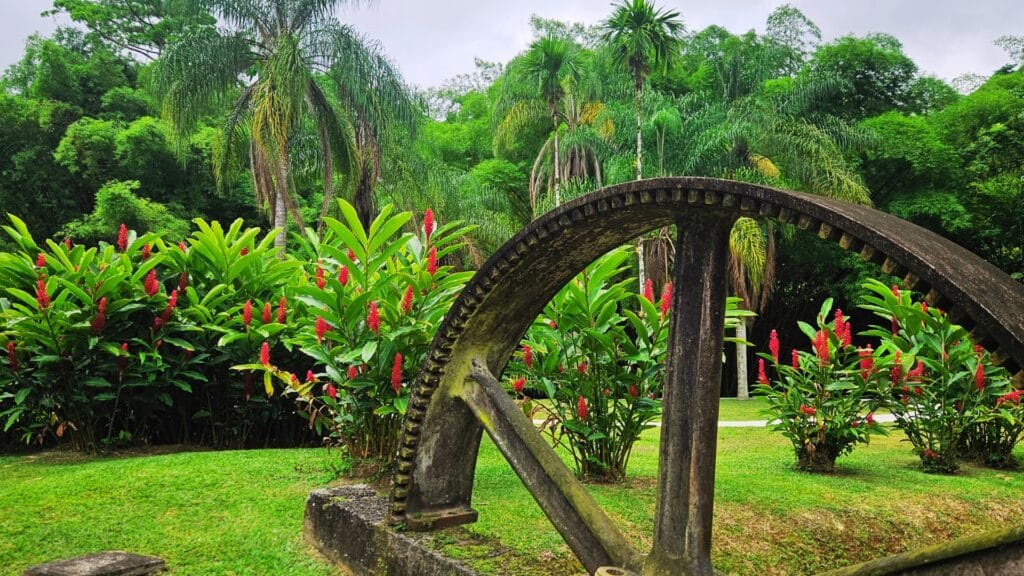
On the ground, a little further on, bromeliads, alpinias, begonias and porcelain roses are interspersed with very old fruit varieties.
In the undergrowth, we find the Cano vine. “It’s a liana that used to be used to make ropes for boats,” says Julien Marraud des Grottes. Able to grow in stone and wrap itself around it without ever breaking, it has long replaced cork and synthetic ropes. It produces a fruit in the form of small canals that can be found on the ground. Here, knowledge isn’t written on signs: it’s passed down from one generation to the next, just like in a family.
The walk has no compulsory path.
“There’s no one compulsory path,” insists Julie.
“You really have to let yourself be carried along and let yourself wander to appreciate all these points of view and points of depth.”
At every turn, your gaze changes. One moment, you’re skirting the river; the next, you’re emerging into a clearing where the canopy opens up; yet another, you come upon an isolated species nestled deep in the undergrowth.
“We get lost without getting lost,” sums up Julie Marraud des Grottes.
It’s all there…
From cocoa to bar: Julie's Factory
Cocoa, too, can be discovered on the walk. Since 2015, ten hectares have been replanted with local hybrids selected from the pods of a century-old cocoa plantation found on the site.
“We made a selection of pods in terms of fruit, size, color, flavor,” says Julie Marraud des Grottes.
“And we started again with the beans. The aim was to revive the terroir.”
Processing takes place on site, from tree to shelf. With a view to reducing waste, the whole fruit is used.
“We really try to revolve around cocoa,” she says. From the pods come a mucilage jam; the husk becomes an infusion and a beer, in partnership with local players, while the grué is blended with a gin. There’s also a spread. And of course the chocolate bar, “the sublimation”, she says.
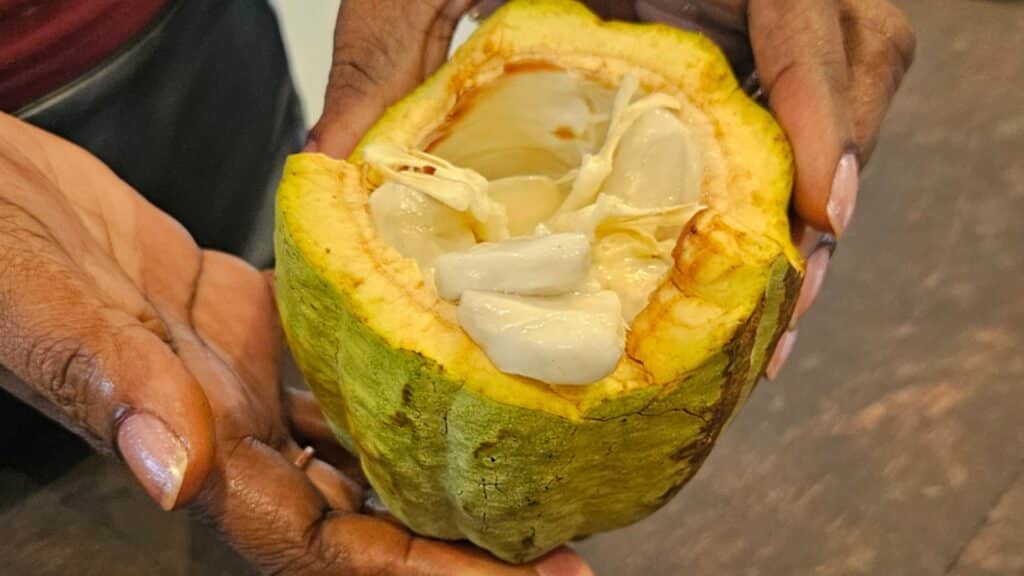
A demonstration that cocoa “isn’t just chocolate, it’s also a fruit”.
Rendez-vous aux Jardins 2026: getting lost without getting lost
At a time when we look at the world through a screen without always taking the time to really see it,Habitation Céron offers a simple answer: put down your phone and relearn how to look deeply.
“Put down your phone and go and admire the luxuriant nature of Martinique and its truly exceptional gardens,” says Julie Marraud des Grottes.
At the end of the tour, the Belcouas take a final break. In the palm alley, Jocelyne holds the fruit and small canals that have fallen from the Cano creeper, the little things you only notice if you take the time to really look.
Seeing in depth means extending your gaze, but above all it means slowing down, listening, touching, sometimes bathing – accepting the garden as a walk rather than a demonstration. Habitation Céron is a living place, supported by a family, where the rainforest becomes a character in its own right: a garden where you lose yourself in the depths, without ever really getting lost…
For Émile, Jocelyne and Kevin Belcoua, the journey continues, with other gardens awaiting them. And we’ll be following them.
📌 IN PRACTICE
Rendez-vous aux Jardins 2026 – Habitation Céron
📅 Saturday 6 and Sunday 7 June 2026
📍 Habitation Céron, Anse Céron, 97250 Le Prêcheur, Martinique
⏰ Open 10:00 am – 5:00 pm all year round
🌿 Free visit of the Remarkable Garden, the cocoa farm and the ancestral Zamana.
🍫 La Fabrique de Julie store on site: handmade chocolates 70%, spreads, jams, grué…
An exploration by RICHÈS KARAYIB for Rendez-vous aux Jardins 2026, in partnership with the Direction des Affaires Culturelles (DAC) de Martinique.
The Belcoua family in the garden of Habitation Saint-Étienne
For the Rendez-vous aux Jardins 2026, the Habitation Saint-Étienne is opening its Gros Morne park with a theme that touches on something profoundly universal: view. RICHÈS KARAYIB follows the Belcoua family as they discover the Remarkable Gardens of Martinique.
That day, between giant bamboos, red palms and the riverbank, they discovered together that a garden can also be seen as well as listened to.
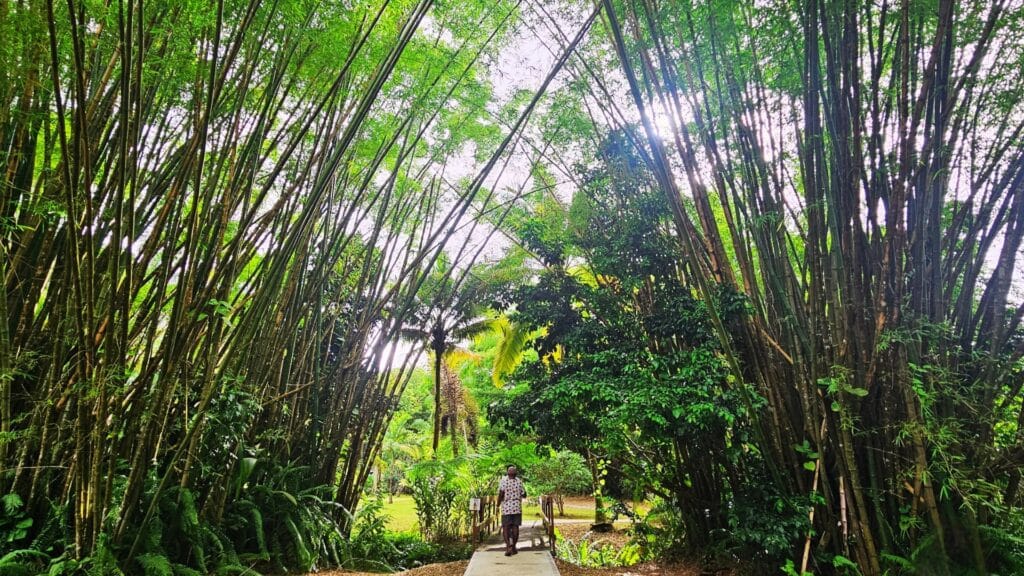
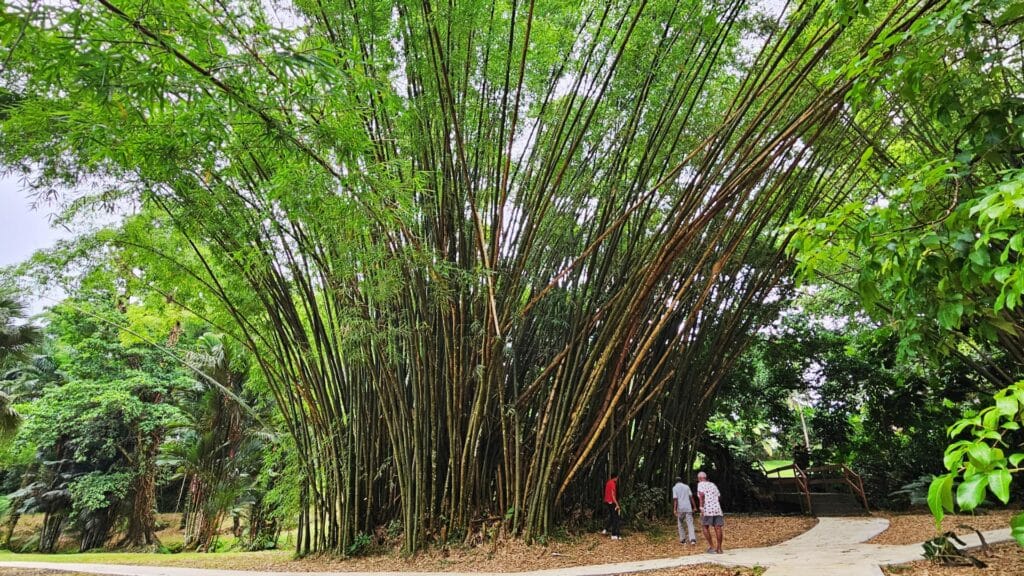
At the end of the driveway, a figure emerges from beneath the giant bamboo. Jocelyne Belcoua leads the way, with Émile and Kévin following a few steps behind. Above them, the bamboo canopy rises so high that it barely lets in the golden light. To the right, you can already make out the murmur of the river. Here, it’s not enough to look – you have to listen too…
It is precisely this double attention to what we see and hear that the Habitation Saint-Étienne intends to honor on June 6 and 7, on the occasion of the 2026 edition of the Rendez-vous aux Jardins in Martinique, placed this year under the theme of sight. A theme that particularly resonates with the identity of the site, where the eye is carried away by all that the ear guesses.
Habitation Saint-Étienne, a remarkable garden since 2015
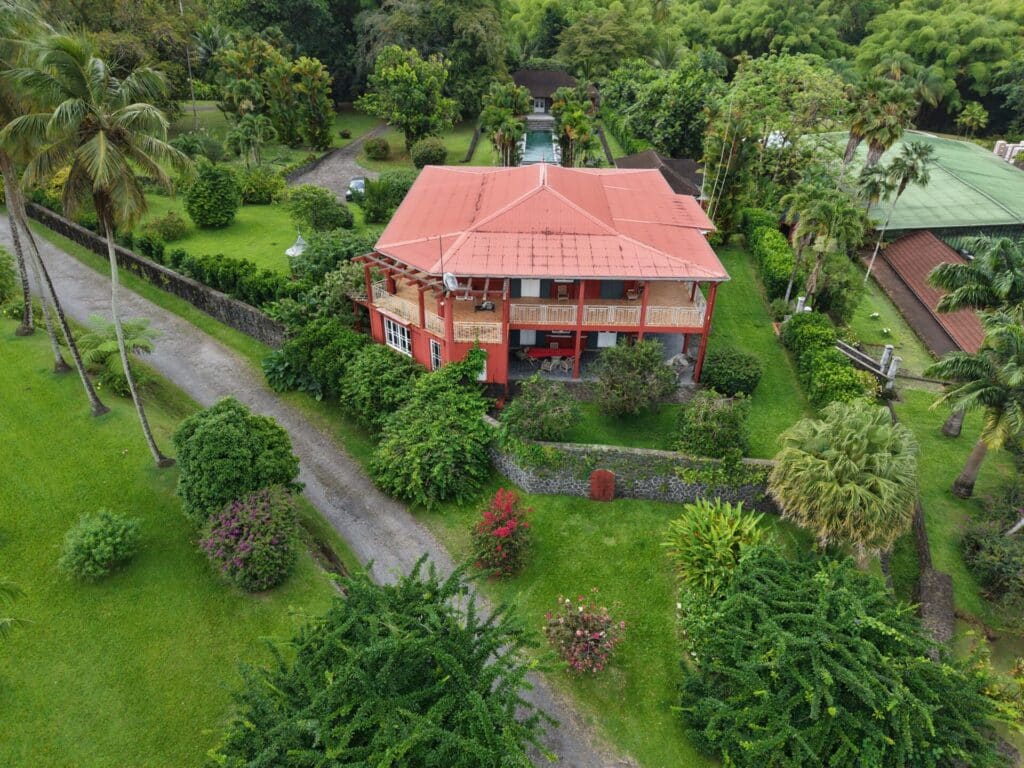
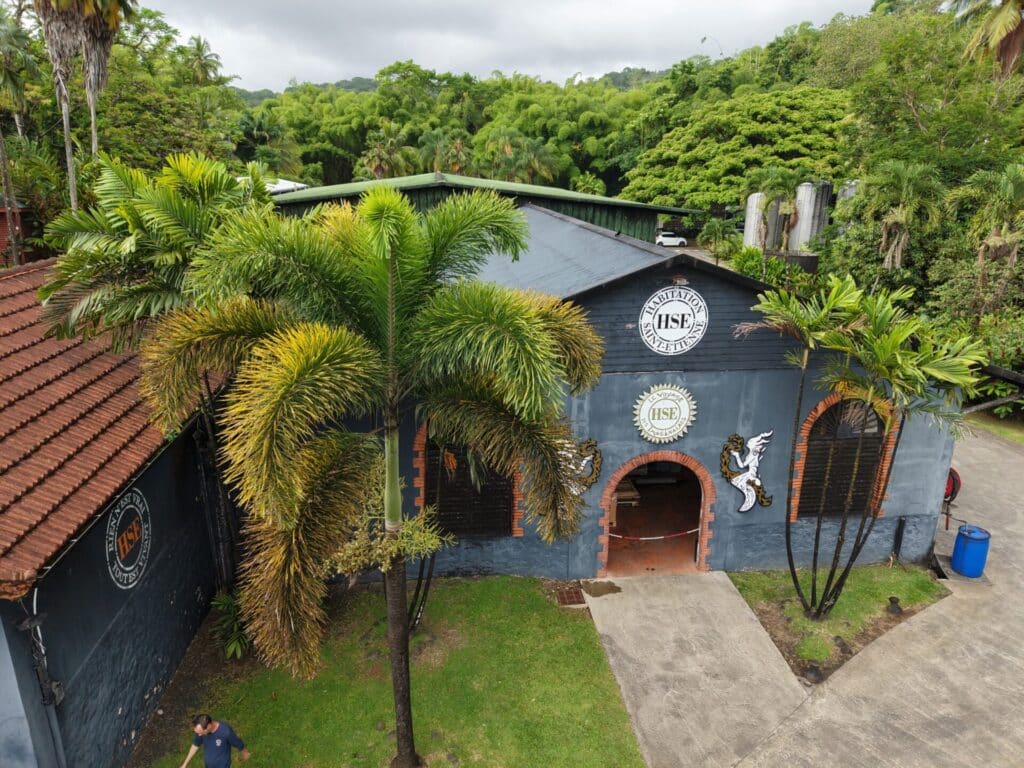
In the heart of Gros Morne, the park extends over a terroir renowned for its richness. “The park is bordered by the Lézarde River all around the home, which provides us with the necessary humidity for the plants to thrive,” explains Cyril Lawson, who has been in charge of developing the HSE brand and the home for almost thirty years.
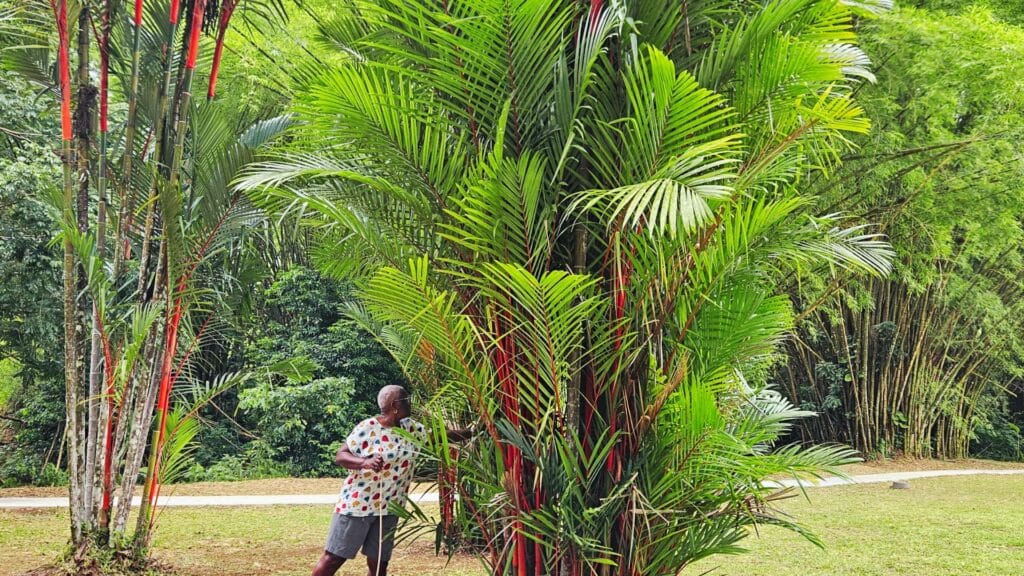
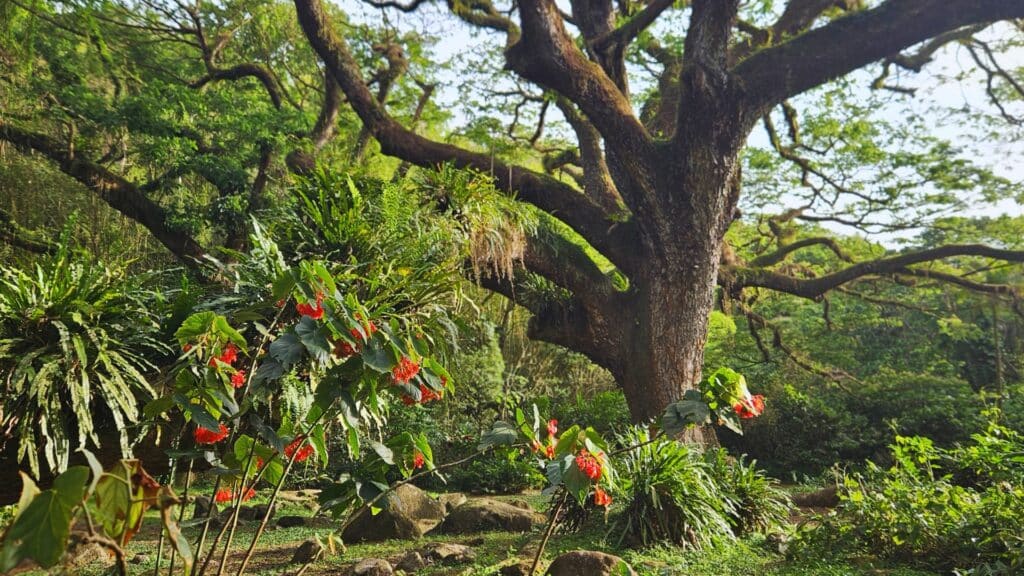
Labelled a Remarkable Garden since 2015, the site is home to over 200 plant varieties. “We have colors, an absolutely intense green, with absolutely spectacular trees,” he continues. Gigantic cursed fig trees, large flamboyants, zamana, red alpinias, strelitzias and porcelain roses. Jocelyne stops in front of a clump of red palms with scarlet trunks reaching skyward in a bouquet, among the first to be imported and acclimatized in Martinique.
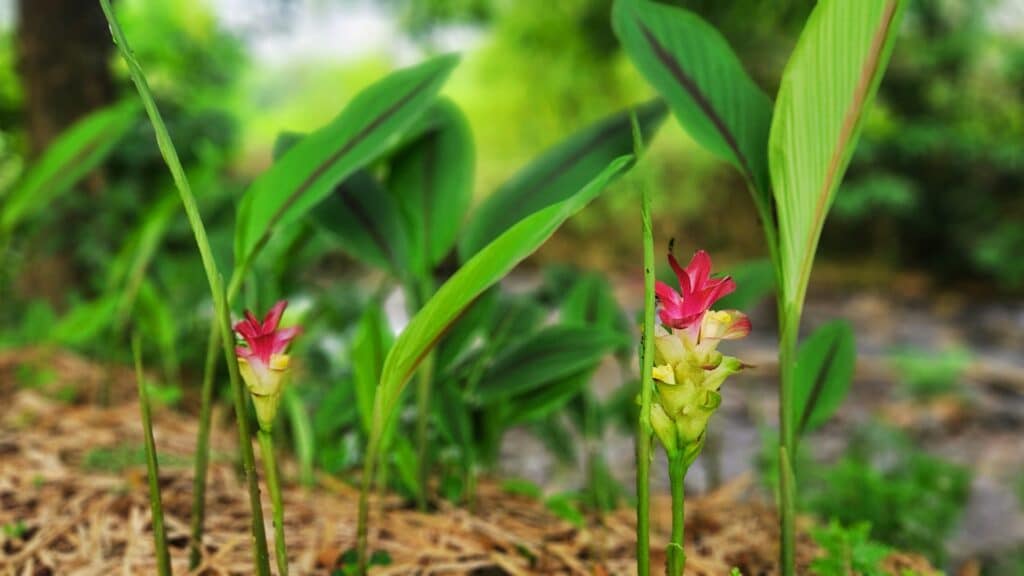
A little further on, a ginger flower catches his eye, a tiny pink sliver at ground level. This heritage was initiated in the mid-90s by José and Florette Hayot, who undertook a major project to structure the gardens when they took over the house.
A free walk between bamboo and the Lézarde River
What sets the place apart is the philosophy behind the visit. “It’s this free-wheeling aspect, where you can wander around and let yourself daydream by the river, or contemplate the alpinias or porcelain roses,” confides Cyril Lawson. The gardens are both maintained and open to the imagination.
It’s here, on the water’s edge, that the heart of the place is revealed.
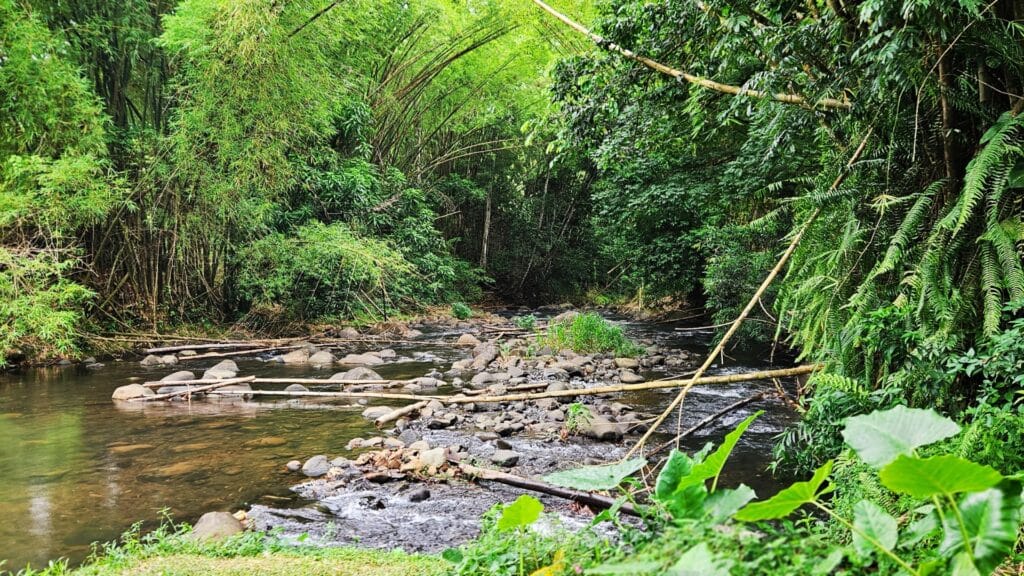
“At the river’s edge, we’re lucky enough to have both the rustle of bamboo leaves, which makes for quite a lulling sound, and also that of the River Lézarde, which flows alongside the house,” says Cyril Lawson.
It’s his favorite place, where he comes to take his breaks when the days are long – “a place that’s quite emblematic of a moment of calm and a moment of pause”.
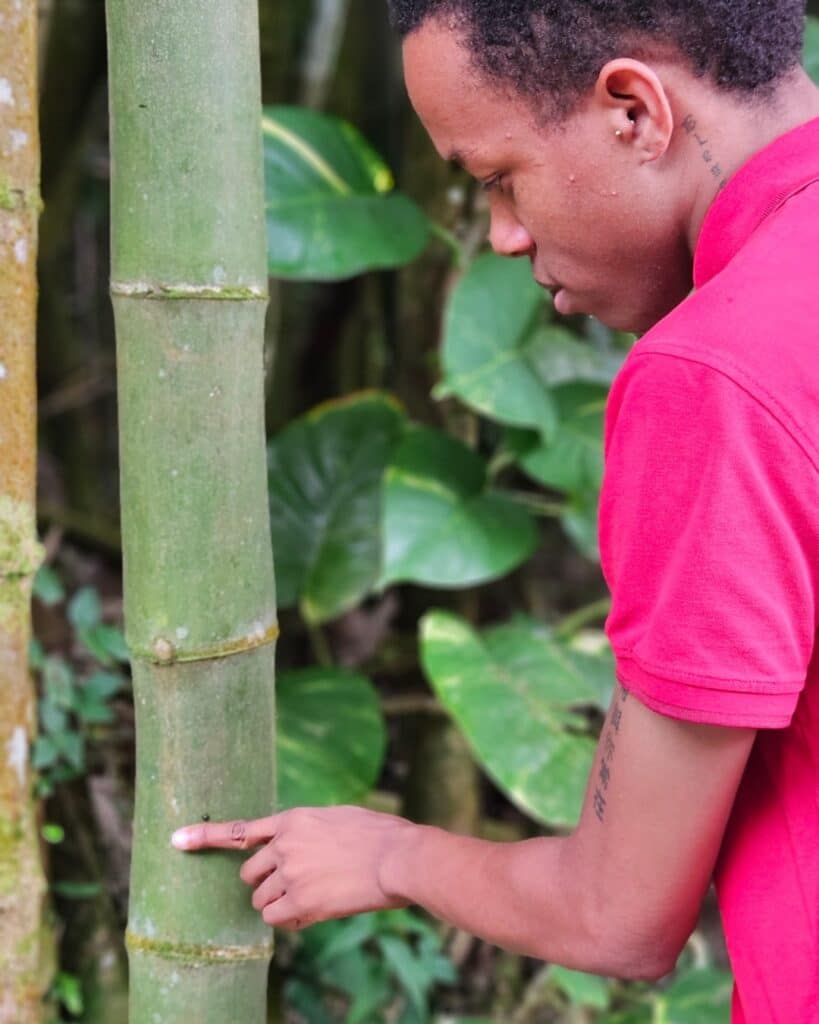
As the walk continues, the Belcouas retrace the river’s course. On the way, Kévin stops in front of a bamboo cane: a ladybug has landed on the bark, and he points at it, observing it closely.
Further on, Émile takes advantage of a large rock at the water’s edge to sit, breathe and listen for a moment.
See as you listen in the heart of a Remarkable Garden
It is in this meeting of sight and sound that the promise of the 2026 edition is played out. The Belcouas stop at the edge of the Lézarde river. In front of them, the water slaloms between the rocks, the bamboo bends its canes over the other bank, the ferns frame the scene. No one speaks.
Further on, under a clump of giant bamboos, Jocelyne, a few metres away, brushes her fingertips against the trunks, her gaze focused. Émile raises his head to the top of the canes.
Sight, the sense in the spotlight this year, is enriched here by a particular quality: that of slowness. Eyes glide up and down.
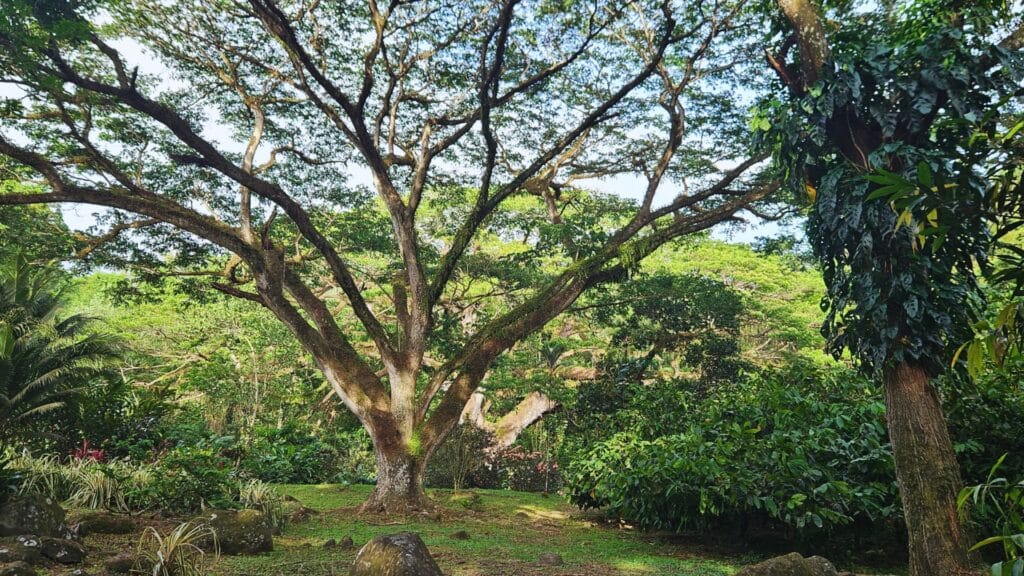
“The eyes will go from the bottom to the top, and from the top to the bottom,” sums up Cyril Lawson.
Everything can be seen on several levels, “at the level of man and above with these great foliage and magnificent trees”.
The Belcoua linger on: an ornamental pineapple erects its scarlet fruit among the variegated leaves. A splash of color you might have missed if you walked too fast, if you didn’t take the time to look.
Rendez-vous aux Jardins 2026: the richness of Martinique
At a time when we talk so much about transmission, but don’t always know where to put it,Habitation Saint-Étienne offers a rare setting: a place where grandparents and grandchildren can share not knowledge, but a feeling, listen to the bamboo, follow the water with their eyes, or look up at a red palm tree.
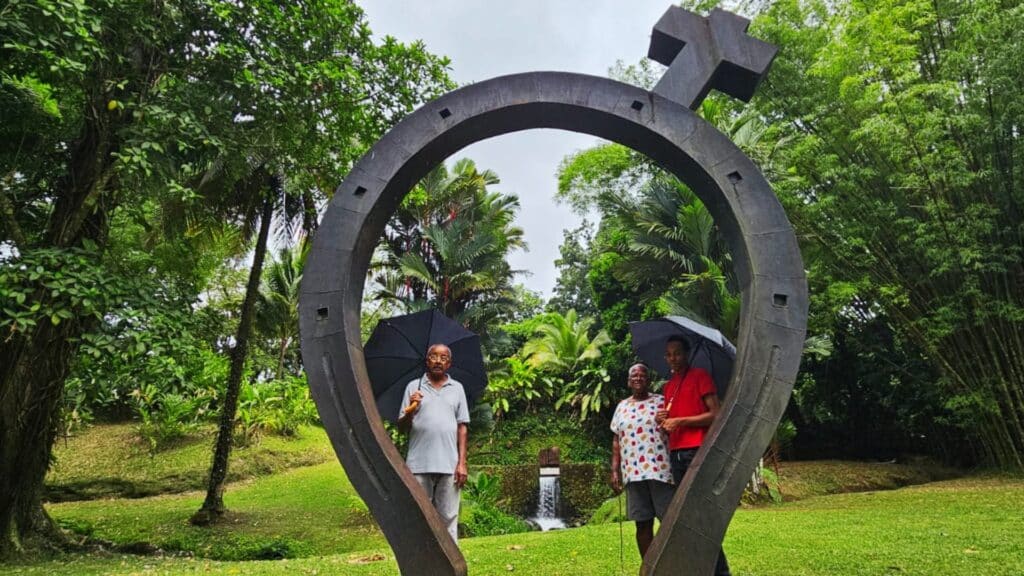
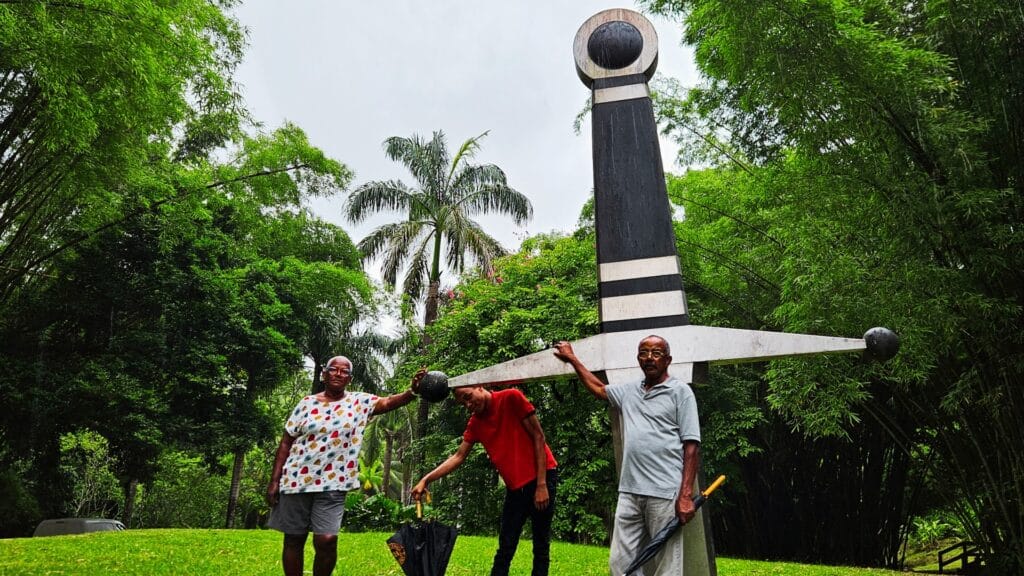
The rain comes in at the end of the visit. The Belcouas take out their umbrellas and slow down again. At the bend in a lawn, they stop in front of a stone arch framing a waterfall at the far end, then cross the garden towards a large sword planted in the ground as a sign.
The park isn’t just plant life: a few works of art, placed like landmarks, punctuate the walk.
If Cyril Lawson had to sum up what we’re going through in one sentence, it would be: “the richness of Martinique”. A wealth of vegetation, culture and heritage.
For Émile, Jocelyne and Kévin Belcoua, the journey continues, with other gardens awaiting them. And we’ll be following them.
📌 IN PRACTICE
Rendez-vous aux Jardins 2026 – Habitation Saint-Étienne (HSE)
📅 Saturday 6 and Sunday 7 June 2026
📍 Habitation Saint-Étienne, 97213 Le Gros Morne, Martinique
🎟️ Free activities, with reservation (limited places for workshops)
🌿 Botanical tours, cocktail, photo and cosmetotherapy workshops and guided tour of the estate
An exploration by RICHÈS KARAYIB for Rendez-vous aux Jardins 2026, in partnership with the Direction des Affaires Culturelles (DAC) de Martinique.
The Belcoua at the Jardin de Balata
For the Rendez-vous aux Jardins 2026, the Jardin de Balata celebrates 40 years of public access with a theme that resonates with its DNA: sight. RICHÈS KARAYIB follows the Belcoua family on a tour of Martinique’s Remarkable Gardens. That day, between royal palms, giant bamboos and panoramic views over the bay of Fort-de-France, they discovered that a garden can also be contemplated like a living painting.
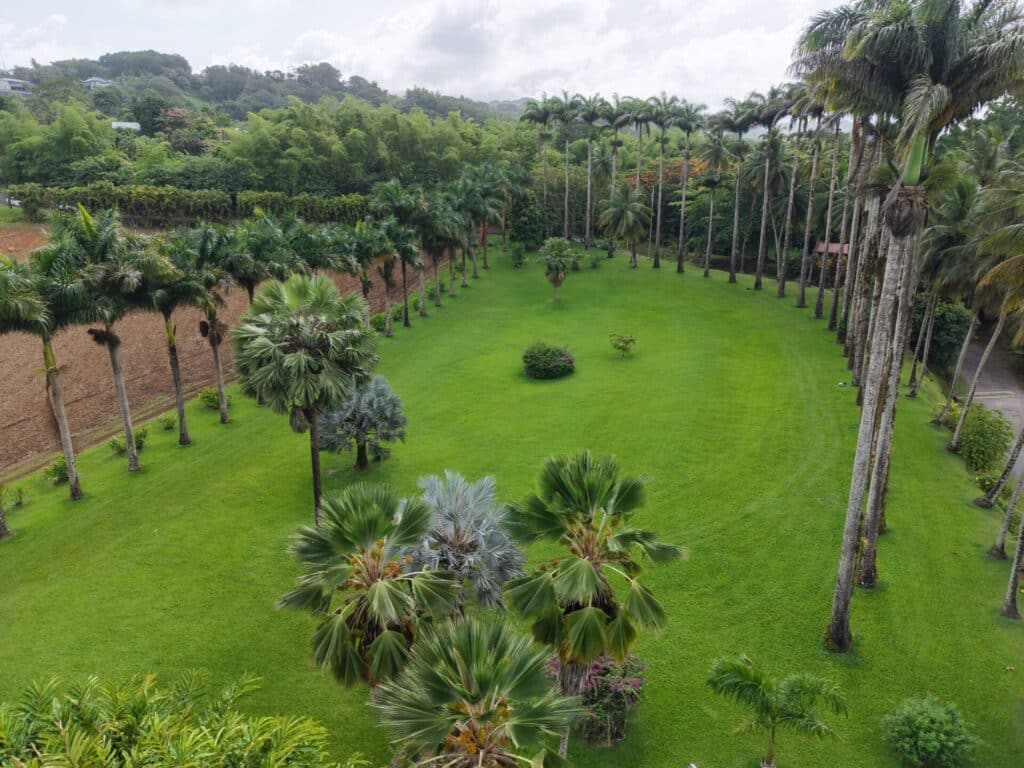
Émile and Jocelyne Belcoua enter a driveway lined with royal palms that seem to caress the sky. Their grandson Kévin walks between them, at the same leisurely pace. To the left, ferns stretch out; to the right, a bush of bromeliads bursts with color. Above, light filters through the foliage and caresses the mossy trunks. The walk hasn’t really begun, but in a way it has already taken place… in that first feeling of calm that descends on the shoulders.
It is precisely this way of inhabiting the gaze that the estate intends to share on June 6 and 7, during the 2026 edition of the Rendez-vous aux Jardins in Martinique, this year under the theme of the view. A theme that particularly resonates with the identity of the site, where tropical nature unfolds over four hectares in panoramas, perspectives and successive wonders.
The Jardin de Balata, an open-air painting
“Jean-Philippe Thoze wanted to create a living, life-size painting to create emotion for visitors,” says Rebecca Jean-Charles, director of Jardin de Balata.
It was in his grandmother’s Creole home that this horticulturist, landscape gardener and artist began to compose his secret garden. Four years later, he opened the doors to the public.
In 2026, the venue celebrates its 40th anniversary.
Four hectares, over 3,000 tropical species patiently assembled: porcelain roses, hibiscus, heliconias, anthuriums, rare orchids, flamboyant bromeliads. But what sets the Jardin de Balata garden apart is the way in which everything has been put together.
“No matter where you stand, you always have this height, this depth, these different colors that have been arranged to give a real work of art,” Rebecca Jean-Charles points out.
“It’s like looking at an open-air painting.”
It is this artist’s eye for plants that has earned the Jardin de Balata its “Jardin Remarquable” label, awarded by the French Ministry of Culture. In addition to its botanical collection, this label recognizes the singularity of a landscape composition conceived as a work of art.
Forty years since the view
Émile takes his time. Jocelyne stops in front of each flower, moves her hand closer without putting it down, observes the veins of a leaf. Kévin walks at their pace, attentive, lingering in front of a tall bamboo tree whose culms rattle gently in the breeze.
“This feeling of well-being has never wavered,” confides Carole Quarteron, sales manager at Jardin de Balata, who has worked here for 36 years.
“The garden remains as soothing as ever. After 40 years, it hasn’t changed a bit.”
The secret of this durability undoubtedly lies in one word: resilience.
“This garden teaches us patience and resilience. We’ve been through a lot here,” says Carole Quarteron, who recalls without dwelling on the passage of cyclone Dean in 2007, a time when the garden was ransacked, trees fell by the hundreds, and the teams had to rebuild everything.
Even today, they’re the ones who keep the place going.
“The gardeners manage to keep the soul of the garden alive and preserve the legacy left by Monsieur Thoze,” says Rebecca Jean-Charles.
The passage of time has only added to the grace of the place: the trunks of the royal palms, now clothed in moss and epiphytes, tell a long, silent story to the attentive visitor.
The view walks, the gaze wanders
“The view only wanders here. The view works,” sums up Carole Quarteron, in a phrase that says it all.
“Every step, in every alley, will dazzle the eye.”
The Belcoua make their way along the giant bamboo alley, a veritable green cathedral with columns reaching skyward.
Further on, the garden opens onto the bromeliad zone, where dozens of varieties in shades of red, yellow and violet create a plant marquetry between tree ferns.
The invitation to visitors is clear: “Raise your eyes to the sky, look up at the palm trees, discover things above”, as Carole Quarteron puts it.
And then look down, observe the moss-covered ground, follow the silhouette of a red heliconia standing like a flame.
And then, at a bend in the road, take in the plunging view over the bay of Fort-de-France. On fine days, the Pitons du Carbet add their silhouette to the panorama.
“We have a view over the bay of Fort-de-France. We’re in a very special place,” smiles Carole Quarteron.
In the Jardin de Balata, wildlife is part of the picture.
“Hummingbirds are the stars of the garden,” says Rebecca Jean-Charles.
These tiny birds, present in great numbers, suspend their flight above the flowers, a magical moment for those who know how to stop and look.
Rendez-vous aux Jardins 2026: stop, relax, look around with the family
At a time when we talk a lot about reconnection without always knowing where to look for it, Jardin de Balata offers a simple and complete answer.
“The Balata garden teaches us to get closer to nature, to reconnect with the simple things that are essential, to recharge our batteries,” explains Rebecca Jean-Charles.
“When visitors come here, they are dazzled by all the beautiful things nature has to offer.”
It’s also a place deeply rooted in Martinique’s heritage. For Carole Quarteron, the challenge is for the whole of Martinique to take ownership of this place and continue to come and discover it.
As much a natural heritage as a cultural one, the Jardin de Balata welcomes both the Martiniquais who return season after season and visitors from further afield, all of whom leave with the same sense of calm in their eyes.
“Our aim is to give everyone the chance to stop, sit back and take a look,” concludes Carole Quarteron.
For Émile, Jocelyne and Kévin, the journey continues, with more gardens to discover. But in the Jardin de Balata, the invitation is clear: come back again and again. And may it last another forty years and beyond.
📌 IN PRACTICE
Rendez-vous aux Jardins 2026 – Jardin de Balata
📅 Saturday 6 and Sunday 7 June 2026
📍 Route de Balata, 97234 Fort-de-France, Martinique
🕘 Open all year round, from 9am to 6pm (last admission at 4:30pm)
🌿 Self-guided tour – allow 1h30 to 2h for the walk
An exploration by RICHÈS KARAYIB for Rendez-vous aux Jardins 2026, in partnership with the Direction des Affaires Culturelles (DAC) de Martinique.
Les Belcoua in the garden of Habitation Clément (Domaine de l'Acajou)
For the Rendez-vous aux Jardins 2026, the Domaine du François is opening up its 15-hectare park to a theme that touches on something profoundly universal: sight. RICHÈS KARAYIB follows the Belcoua family on a tour of the Remarkable Gardens of Martinique. That day, between baobabs, monumental sculptures and tall tropical trees, they discover together that a garden can also teach us to look differently.
Émile and Jocelyne Belcoua set off down the gravel driveway that runs beneath the canopy of tall trees. Kévin walks beside his grandfather, with the same quiet step. To the right, a body of water sleeps under the filtered light of the foliage. Above, the branches form a living roof that draws the eye upwards. The visit hasn’t really begun, but it has, in a way, already taken place. All you had to do was look.
It is precisely this attention to the eye that the estate intends to invite the public to experience on June 6 and 7, on the occasion of the 2026 edition of the Rendez-vous aux Jardins in Martinique, this year under the theme of the view. A theme that particularly resonates with the identity of the site, where tropical nature and contemporary art are in constant dialogue.
Domaine de l'Acajou, Jardin Remarquable since 2011
“The estate covers 160 hectares, and we have dedicated 15 hectares to cultural and tourist activities,” explains Célia Sainville, tourism manager at Habitation Clément.
More than 300 plant species have been identified on this site. Visitors will come across emblematic tropical species such as the breadfruit, the baobab and palms in a collection of eighty varieties, as well as remarkable trees along the way: the cannonball tree, the hourglass tree – all silent presences that invite you to take it easy.
The “Jardin Remarquable” label, awarded by the French Ministry of Culture, recognizes this diversity, as well as the landscaping that organizes the whole.
Two parks coexist here: the old one, which surrounds the historic house, and the new one, planted some thirty years ago. Between the two, there’s a free walk – an hour for those who want to go fast, a whole morning for those who take the time to stroll. Émile takes his time.
Jocelyne stops in front of every palm tree, observing every leaf, every bark.
Kévin walks at their pace, attentive, lingering in front of a cannonball tree he’s discovering for the first time.
Le Jardin des Sculptures: an open-air museum in Martinique
It’s that at the bend of a path, the garden changes nature. What sets this place apart is this open-air museum, born almost by chance.
“In 2011, the Fondation Clément held an exhibition at the Orangerie du Sénat with 22 artists from Réunion, Guyane, Martinique and Guadeloupe,” explains Régine Bonnaire, project manager at the Fondation Clément.
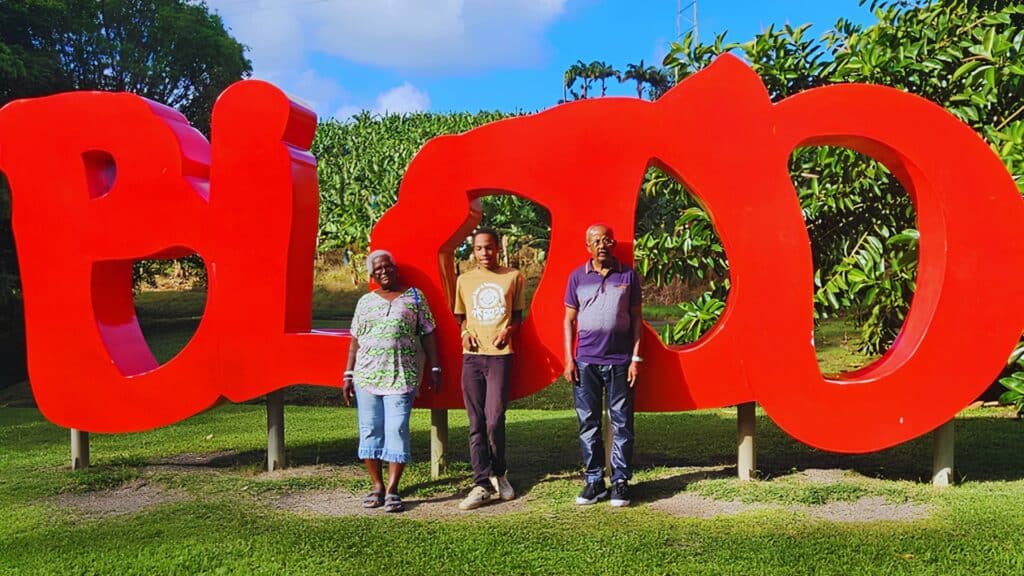
This exhibition, OMA (Outre-mer Art Contemporain), featured works designed for the outdoors. Among them, BLOOD by Thierry Alet and AVANÇONS TOUS ENSEMBLE by Luz Severino.
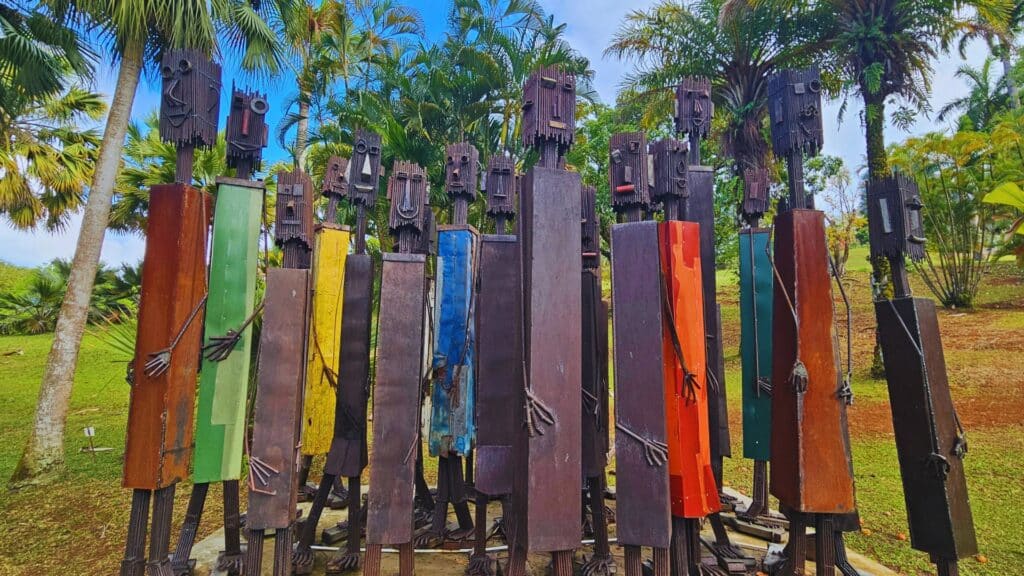
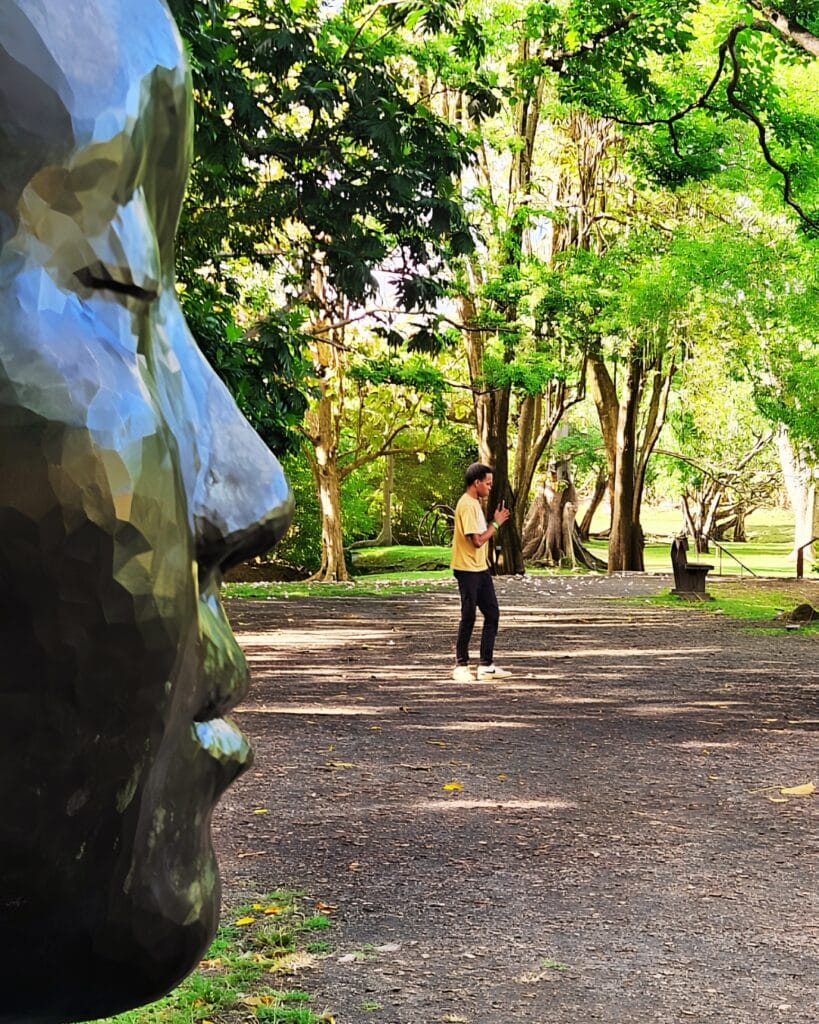
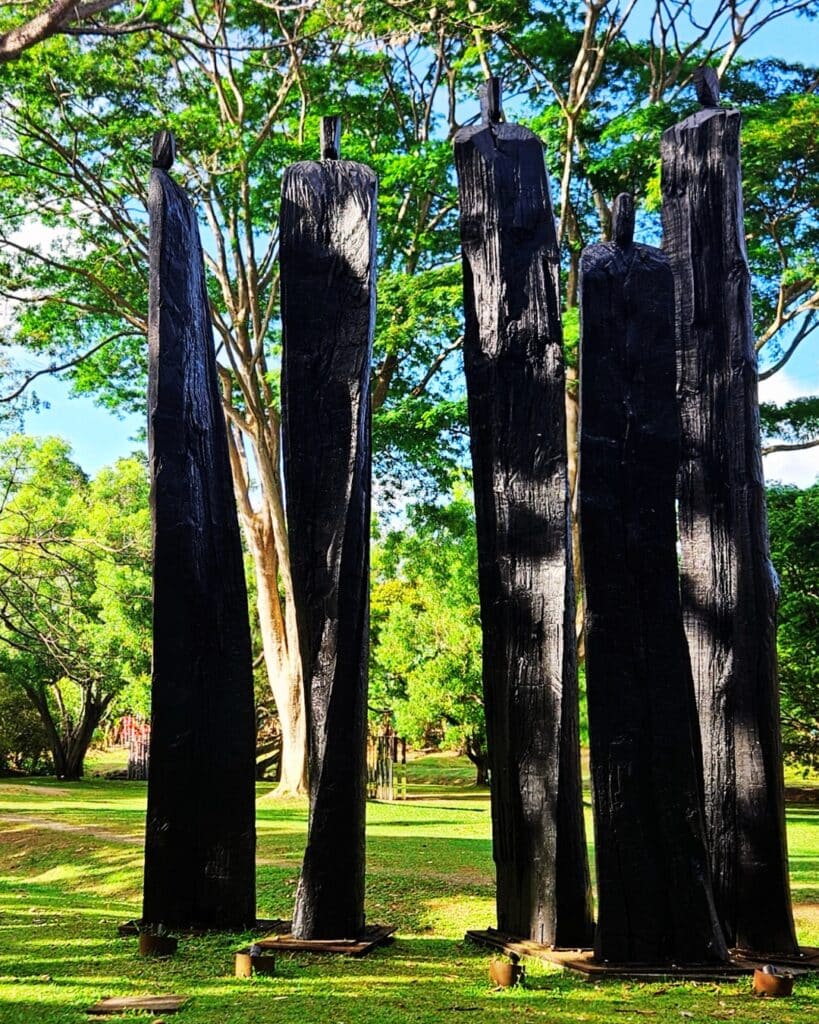
Once the exhibition was over, some of the works were moved to the gardens of Habitation Clément. Thus was born, more by opportunity than by original design, the Jardin des Sculptures. Today, more than twenty monumental works are displayed here, signed by internationally renowned artists such as Daniel Buren and Bernard Venet, as well as Caribbean artists Hervé Beuze, Christian Bertin, Michel Rovelas, Luz Severino and Thierry Alet.
A rare encounter between the global and Caribbean scenes, as close as possible to the visitor.
See art differently in the heart of a Remarkable Garden
It is in this silent dialogue that the promise of the 2026 edition of Rendez-vous aux Jardins is played out.
“People have the impression that contemporary art is something abstruse, that it’s not accessible to everyone,” observes Régine Bonnaire.
“Now, we can learn by having fun, we can learn to look, we can learn to question ourselves.”
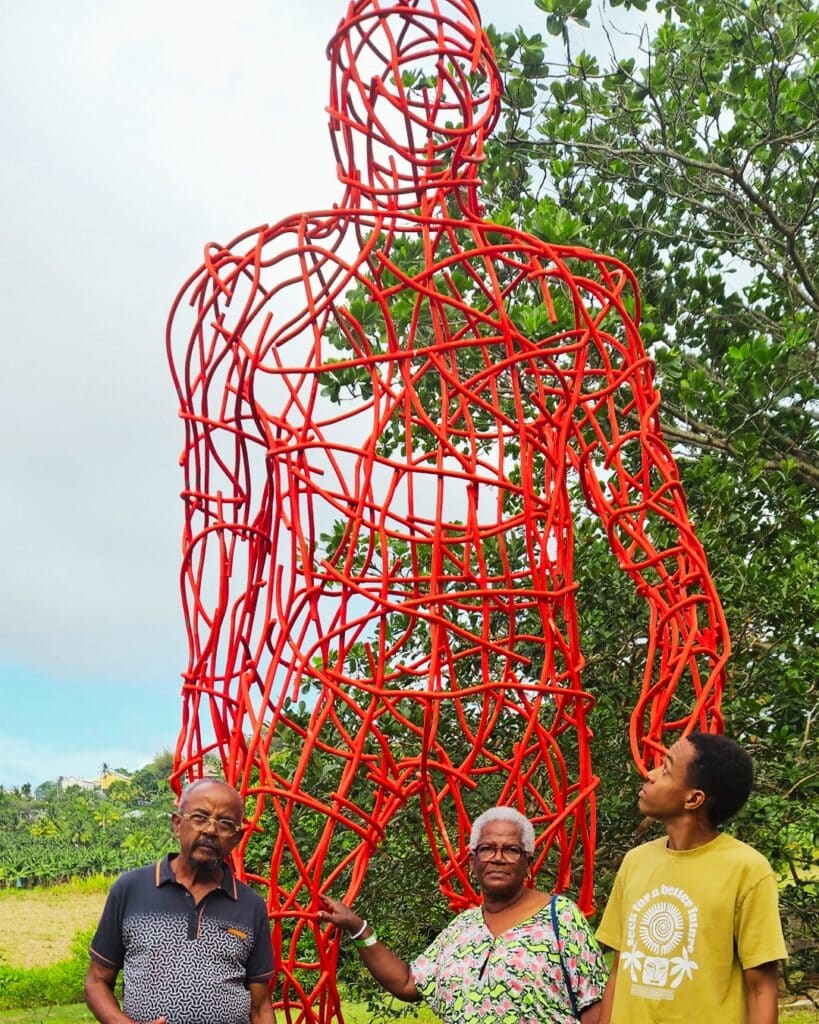
Kévin looks up at the sculpture towering above him.
Jocelyne, without a word, places her hand on the red material.
Émile, beside them, lets himself be penetrated by the presence of the work.
And it is perhaps here, in the end, that the uniqueness of the place is revealed:
“The advantage of the sculpture garden is that you can touch them. You can experiment with the materials, you can play with the sculptures”, Régine Bonnaire points out.
The garden at Habitation Clément invites you to get up close and personal. It’s a place to skirt, to touch and to be amazed. Art becomes a playground as much as an object of contemplation, and for visitors to the Rendez-vous aux Jardins in Martinique, themed tours and workshops will extend this invitation to sharpen the eye.
Rendez-vous aux Jardins 2026: the art of seeing with the family
At a time when we talk so much about transmission, but don’t always know how to bring it to life, Habitation Clément offers a rare setting: a place where three generations can simply discover, observe and marvel together. See a baobab tree, walk around a sculpture, recognize the silhouette of a tree in a work of art, or the motif of a work of art in a tree.
“The aim is to invite visitors to see not only the garden, but also art in a different light”, Régine Bonnaire sums up.
For the Belcoua family, this first visit marks the start of a journey through Martinique’s remarkable gardens.
📌 IN PRACTICE
Rendez-vous aux Jardins 2026 – Habitation Clément (Domaine de l’Acajou)
📅 Saturday 6 and Sunday 7 June 2026
📍 Domaine de l’Acajou, 97240 Le François, Martinique
🎟️ Free admission on both days
🌿 Self-guided tour, workshops and themed tours on site
The first part of the Jardins Remarquables series, an exploration by RICHÈS KARAYIB for the Rendez-vous aux Jardins 2026, in partnership with the Direction des Affaires Culturelles (DAC) de Martinique.