
“Well mudda sick!”: But what do these three words really mean?

Well mudda sick

In the Bahamas, three words are enough to express surprise even before you realize what just happened. Good news breaks, a plan falls through, something exceeds expectations: “Well mudda sick!” might pop up in conversation. Taken literally, the meaning is confusing. In Bahamian usage, however, the expression is much simpler than it seems.

Three words that don't really translate word for word

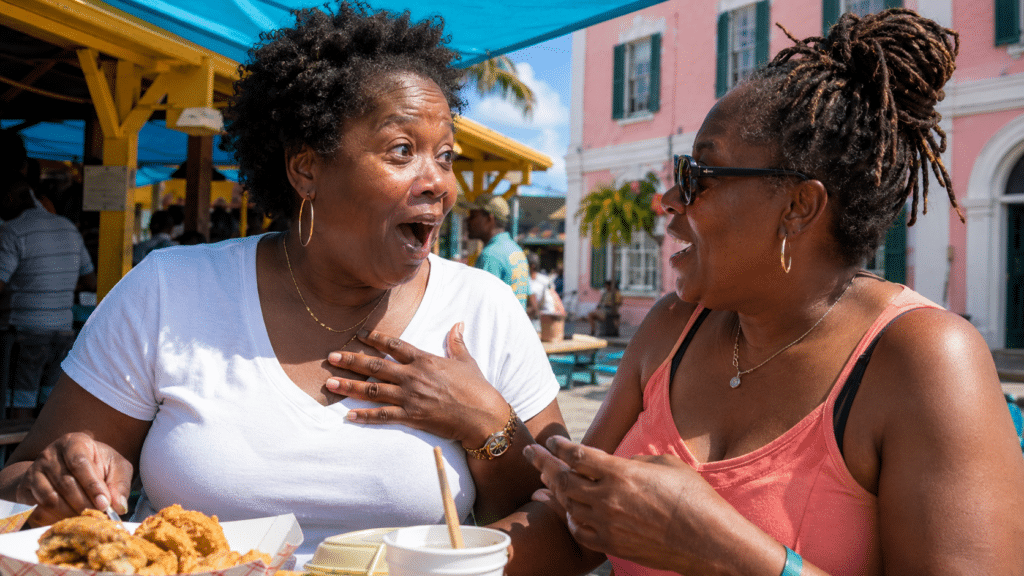
“Well mudda sick!” literally translates to “Well, my mother is sick.” But that’s not what a Bahamian means when they use it. Instead, the expression functions more like an exclamation: “Wow!”, “Oh my!”, “Unbelievable!”, or even “My God!”, depending on the situation and tone. It is precisely this discrepancy that makes it interesting. Someone who knows every single English word can understand the sentence on paper and yet completely miss its meaning in conversation. Here, it’s not just the words that matter. Context, speed, and intonation play a major role.

Well mudda sick

The same expression for the very good… and the very bad

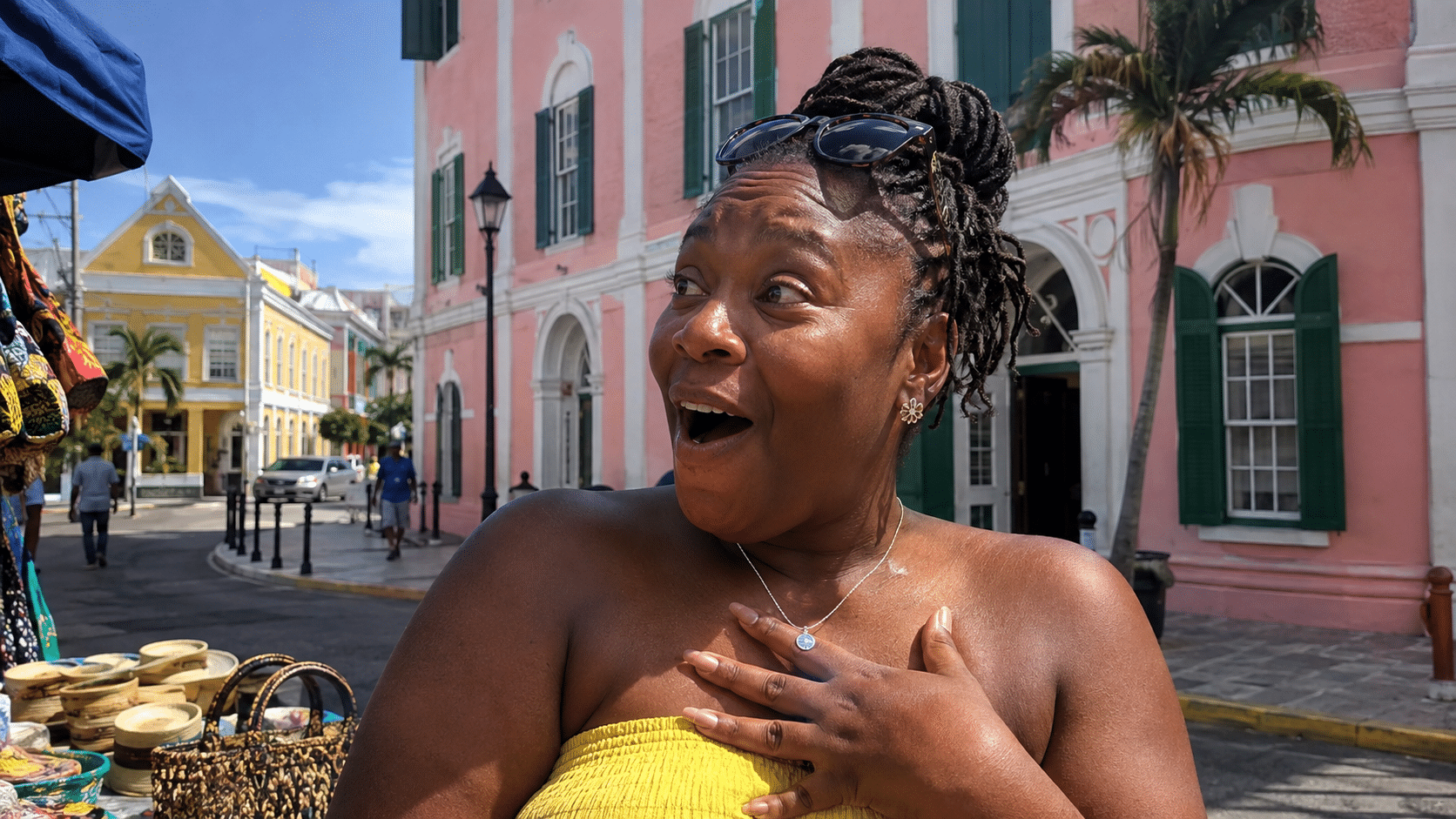
What’s special about “Well mudda sick!” also lies in its flexibility. In the Bahamas, it can be used to express both great news and an unpleasant surprise. A happy announcement can trigger the phrase. So can a sudden disappointment. The meaning, therefore, doesn’t hinge on a single emotion. Above all, the expression conveys the intensity of the reaction. It’s that moment when something stops you in your tracks, surprises you, or forces you to react immediately.

That’s why a single French translation wouldn’t be enough. “Wow!” might work in some cases. “Oh no!” would be more appropriate in others. In other situations, it would simply be “No way!” To understand “Well mudda sick”, you have to look at what just happened.

Well mudda sick

When the Way of Speaking Transforms the Sentence

The form itself says something about Bahamian speech. In a presentation on local expressions, the three words are even grouped together: “WellMuddaSick!”. The explanation emphasizes the rapid pace of speech and the way the words blend together when spoken.

There is also a shorter version of the phrase: “Well Muddo!”, used with the same meaning. This shortening is telling. An expression repeated in conversation eventually takes on a rhythm of its own. It no longer needs to be pronounced like a carefully articulated English sentence to be understood by those who share the same way of speaking. However, we should avoid turning this observation into an absolute rule. Bahamian speech is not uniform. Usage and speech patterns can vary from one island to another within the archipelago.

Well mudda sick

From Conversation to a Recognition Signal

“Well, that’s sick!” isn’t limited to spoken language. The term “MUDDASICK” also appears on clothing and accessories designed by local creators, alongside other words strongly associated with Bahamian vocabulary such as “BEY”. This shift from conversation to clothing speaks to its cultural recognition. A phrase uttered spontaneously can become a symbol that is displayed, printed, and instantly recognized. It then functions almost like a nod among those who already know the code.

Well mudda sick

That’s also what makes this type of expression difficult to convey accurately in another language. You can learn its definition. You can memorize its approximate equivalent. But using it naturally requires understanding when it’s appropriate, with what intonation, and in what kind of conversation.

Well mudda sick

Listen Before Translating

“Well, that’s crazy!” reminds us, above all, that a language can never be reduced to a dictionary. The spoken language of the Bahamas has its own characteristics and is the subject of linguistic studies devoted in particular to Bahamian English and Bahamian Creole. These varieties have long received less attention than other Caribbean Creoles, even though they have their own distinct history and linguistic characteristics.

In this setting, “Well mudda sick” serves as a small gateway. Three very simple English words come together to form a reaction that a literal translation cannot capture. Perhaps that is where the true appeal of Caribbean expressions lies: they force you to listen before translating. And after “Well mudda sick!”, how many other regional phrases seem familiar until you discover they actually mean something entirely different?

Well mudda sick
Well mudda sick

“Well mudda sick” is a Bahamian expression used to convey great surprise or an intense reaction. Depending on the context, it can be similar to “Wow!”, “Oh my!”, or “You’ve got to be kidding me!”.

The expression can be used in response to both good news and an unpleasant surprise. Its meaning depends mainly on the context and the speaker’s tone of voice.

No. A literal translation does not convey the true meaning of the expression. “Well mudda sick” functions primarily as an exclamation specific to Bahamian usage and must be understood in context.

Leave a Reply

Your email address will not be published. Required fields are marked *

More articles from RK

Barbuda
TOURISM
Tolotra

Barbuda: More than 5,000 frigatebirds in an extraordinary lagoon.

In Barbuda, the show begins even before you spot the birds. There is no road leading to the Codrington Lagoon sanctuary. You have to board a boat, travel across the water through the mangroves, and then watch as the black silhouettes of the magnificent frigatebirds (Fregata magnificens) come into view—their colony is one of the largest in the Caribbean. This fact alone is enough to reveal another side of Barbuda. Beyond its pink beaches, the island is home to a lagoon where more than 5,000 of these birds have been recorded, in a colony where a scientific survey counted 1,743 nests. Here, you discover the destination by looking up and understanding the role this lagoon plays in the balance of the entire island. A Ramsar-designated lagoon, nestled between mangroves and reefs The Codrington Lagoon covers 3,600 hectares and has been recognized as a wetland of international importance under the Ramsar

Read More »
Man Mélé
VISUAL ARTS
Tolotra

Martinique – Cécile Vernant: Behind the Scenes of “Man Mélé!” at the Senate’s Orangerie.

At the Senate Orangery, Man Mélé! took on a dimension that Cécile Vernant could not have fully anticipated before the doors opened. As the days went by, the exhibition became a space for encounters, conversations, and exchanges between artists and visitors. Surrounding the artworks, discussions revolved around Martinique and nature, but also memories, cultures, and sensibilities from far beyond the island. The calm before the crowd arrives Every morning, Cécile Vernant arrived before the park opened at 11 a.m. The garden was quiet. She would pass joggers, watch the tai chi groups among the chestnut trees, and enjoy the scent of the flowers. She loved this “calm before the storm.” A few hours later, the atmosphere would change. Cécile Vernant estimates that the Orangerie, which is about 600 m², could accommodate up to 400 visitors at its peak over the course of three to four hours. The busiest day reportedly

Read More »
David Paulus
VISUAL ARTS
Tolotra

David Paulus: More than 100 works that tell the story of Curaçao’s roots.

At the Curaçao Museum, faces seem to speak to one another. Some are familiar; others evoke families, trades, stories, and expressions passed down through the generations. Since August 20, 2026, the exhibition “Rumbo i Raís” has brought together more than 100 works: portraits, mixed-media pieces, and three-dimensional creations. Through this collection, David Paulus reflects on his native island, its people, and the memories that continue to shape Curaçao. The exhibition serves as a meeting point for various aspects of her career. Fashion, visual arts, performance, teaching, and family history all intersect here. Behind the works, a single question keeps recurring: Where do we come from, who shapes us, and what do we choose to pass on? First Aid in Curaçao Born in 1986 and raised in Curaçao, David Paulus says he discovered the joy of creating at an early age. As a child, he helped his mother make dolls to

Read More »

conTACT RK

we'd love to have your feedback on your experience so far

Join The List

Join our Richès Karayib community!  Sign up for our newsletter.

Want To Maximize Your Business Presence On Riches Karayib?

Complete the form to start the application