“All me labour gone in Maxwell Pond”: the Bajan proverb that cites a ghost pond

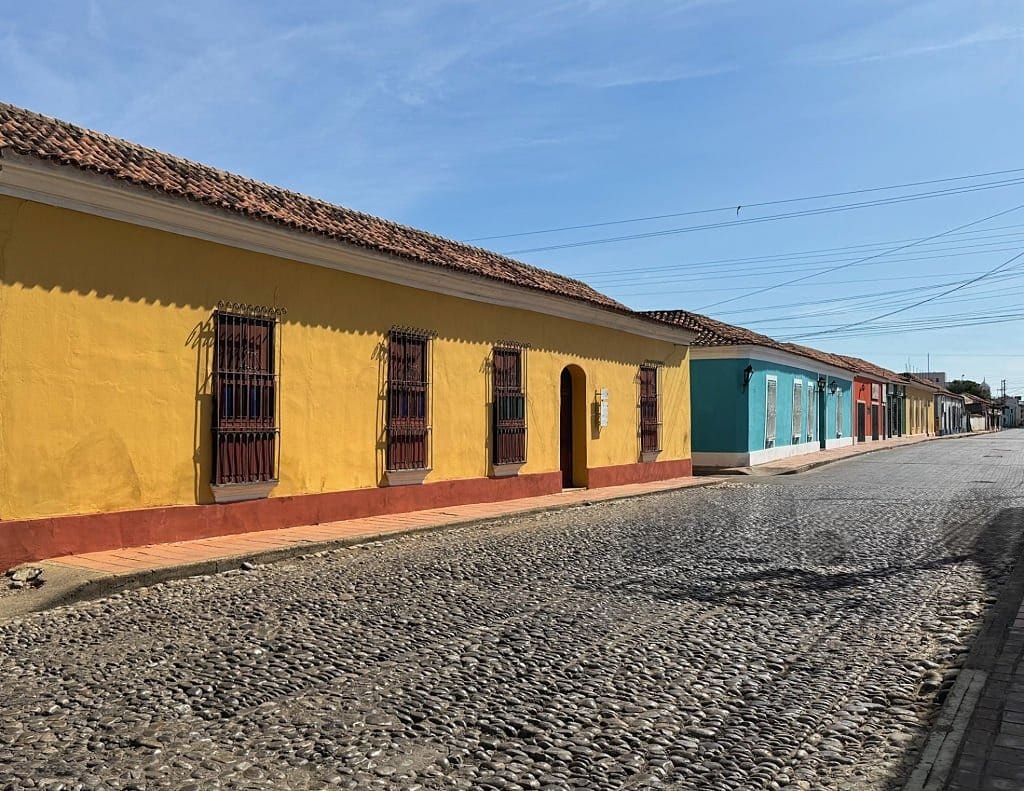
Pond edged with reeds and trees under a blue sky, setting of the Bajan proverb All me labour gone in Maxwell Pond

“All me labour gone in Maxwell Pond” is said in Barbados when effort, or money, is lost for nothing. Literally, all my labour has gone into Maxwell Pond. This Barbadian expression, phrased in the island’s English-based Creole, names a specific pond. Yet no pond of that name has ever been identified.

“All me labour gone in Maxwell Pond”: what does this Bajan proverb mean?

The proverb speaks of a loss, and its form changes from one mouth to the next. “All yuh labour gone in Maxwell pond” is said to someone whose work has gone for nothing. “All his money gone in Maxwell pond” speaks of another person’s money, swallowed up in a venture. The meaning therefore drifts between two kinds of loss: that of labour and that of money.

In every case, “All me labour gone in Maxwell Pond” expresses the same bitterness, that of having given everything for nothing. It refers in particular to a bad investment, a sum of money or an effort put in the wrong place. The image of the pond adds to its force, since water into which something is thrown never gives it back.

The frog hunter and the bread seller

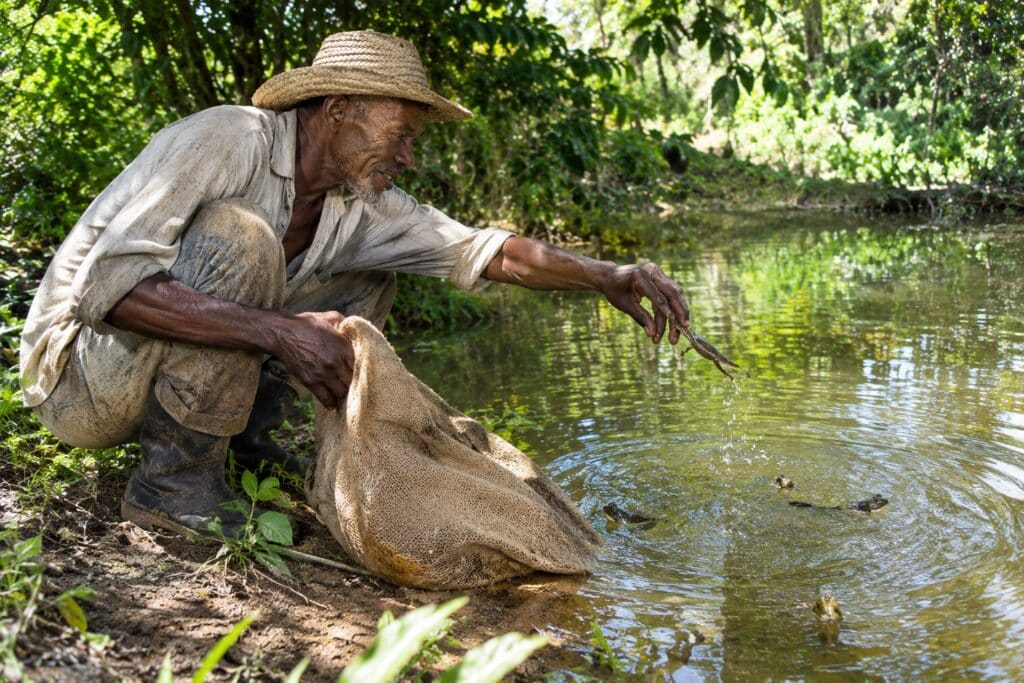
Two stories explain the phrase. In the first, a frog hunter stands one day at the edge of Maxwell Pond. He drops his half-full sack without realising it is open. All the frogs escape into the water. They mattered, because they helped hunt insects without pesticides. The hunter then utters the phrase that will become the proverb, “All me labour gone in Maxwell Pond”: all my labour has gone into the pond.

Frog hunter in a straw hat crouching at the edge of a pond, releasing a frog from a canvas bag
The frog hunter at the edge of the pond, his canvas bag at his feet.
Frog hunter seen from behind, hand on his hat, in front of the frogs escaping from his bag into the pond
“All me labour gone in Maxwell Pond.”

The second story changes place and scene. In “All o’ me labour gone in Lowther’s Pond”, a bread seller takes literally the advice of Ecclesiastes, which tells people to cast their bread upon the waters. He empties a tray into Lowther’s pond, then comes back every day to see whether the bread returns to him. Lowther’s is another estate in Christ Church, which covered 214 acres in the 17th century. It passed by marriage to Robert Lowther, governor of Barbados from 1711 to 1720. In 1832, 222 enslaved people are recorded there, against 118 in 1758.

Pensive bread seller holding a tray of loaves at the edge of a pond surrounded by palm trees
The tray of bread at the water’s edge, in the version of the proverb linked to Lowther’s.

These two stories share the same logic. A clumsy or naive gesture, water that keeps everything, and work that never comes back. The proverb thus exists in two versions, Maxwell and Lowther’s, two estates in the same parish of Christ Church.

“All me labour gone in Maxwell Pond”: the name of a sugar estate

In “All me labour gone in Maxwell Pond”, Maxwell is not an invented name. It refers to a former sugar estate in the parish of Christ Church, in the south of the island. A man named Thomas Maxwell, who died between 1745 and 1751, is said to have owned it. After him, the estate changed hands several times.

Old stone sugar mill beyond a cane field and a low wall, sugar estate landscape in Barbados
An old sugar mill and cane fields, a typical landscape of former sugar estates.

The estate had 234 enslaved people in 1817, then 321 in 1832. In 1913 the estate still existed under the name Maxwell, owned by a certain Jackman. At abolition, its owner at the time, William Thomas Sharp, received compensation of 5,394 pounds. The word “labour” here carries the weight of work that, on a sugar estate, was counted in hundreds of lives.

The proverb thus keeps one foot in the reality of the sugar economy. “All me labour gone in Maxwell Pond” names a specific place in Christ Church, but the pond itself remains impossible to find. In the mouths of Barbadians, the name of a sugar estate has become the image of lost effort.

Maxwell is not alone: Bajan proverbs love place names

At least seven Bajan proverbs, including “All me labour gone in Maxwell Pond”, rest on a place name. “He gine promise you Drax Hall and Kendal” mocks empty promises by offering two of the island’s largest plantations. “You don’t tek down Drax Hall to fix Kendal” reminds us that you do not tear down something precious to repair something lesser. “Dis place hot as Mapp’s millyard” describes a scorching place. “Dem does work at Idle Hall” refers to people with no job, as if they worked in an imaginary place. A dog from the Lazaretto, a former leper asylum, dies at Ragged Point lighthouse, at the eastern tip of the island.

Rocky coast of Barbados beaten by turquoise waves, with a lighthouse on the cliff
The rocky coast of Barbados, beaten by the waves.

These proverbs draw a map of Barbados where every place name hides a story, and where everyday speech keeps the memory of the estates. As for “All me labour gone in Maxwell Pond”, the pond is still waiting to be found. What other place names has the Caribbean kept in its proverbs?

Frequently asked questions

It is a proverb from Barbados meaning that effort or money has been lost for nothing. It is used in particular for a bad investment.

No pond of that name has been identified. The proverb is associated with the former Maxwell sugar estate, in the parish of Christ Church, in the south of Barbados.

Maxwell is the name of a former sugar estate in the parish of Christ Church. A man named Thomas Maxwell, who died between 1745 and 1751, is said to have owned it, and the estate later changed hands several times.

Leave a Reply

Your email address will not be published. Required fields are marked *

More articles from RK

conTACT RK

we'd love to have your feedback on your experience so far

Join The List

Join our Richès Karayib community!  Sign up for our newsletter.

Want To Maximize Your Business Presence On Riches Karayib?

Complete the form to start the application