Coro (Venezuela): A City Built of Earth That Bears the Mark of the Netherlands

Cobbled street in the historic center of Coro with yellow, turquoise and red colonial houses, in Venezuela

Coro, in the state of Falcón, Venezuela, was founded on July 26, 1527. As the first city in the province of Venezuela, it remained its capital until 1576. Its earthen walls, wrought-iron windows, and port facing Curaçao make it one of the most unique cities in the Caribbean.

On August 3, 1806, a yellow, blue, and red flag was raised at Fortín de San Pedro in La Vela de Coro. This was the first time it had flown over the territory of present-day Venezuela. Francisco de Miranda, who led the expedition, then marched toward the city. He did not find the support he had hoped for and withdrew a few days later. Today, Venezuela celebrates August 3 as Flag Day.

Coro, Venezuela: a city founded on July 26, 1527

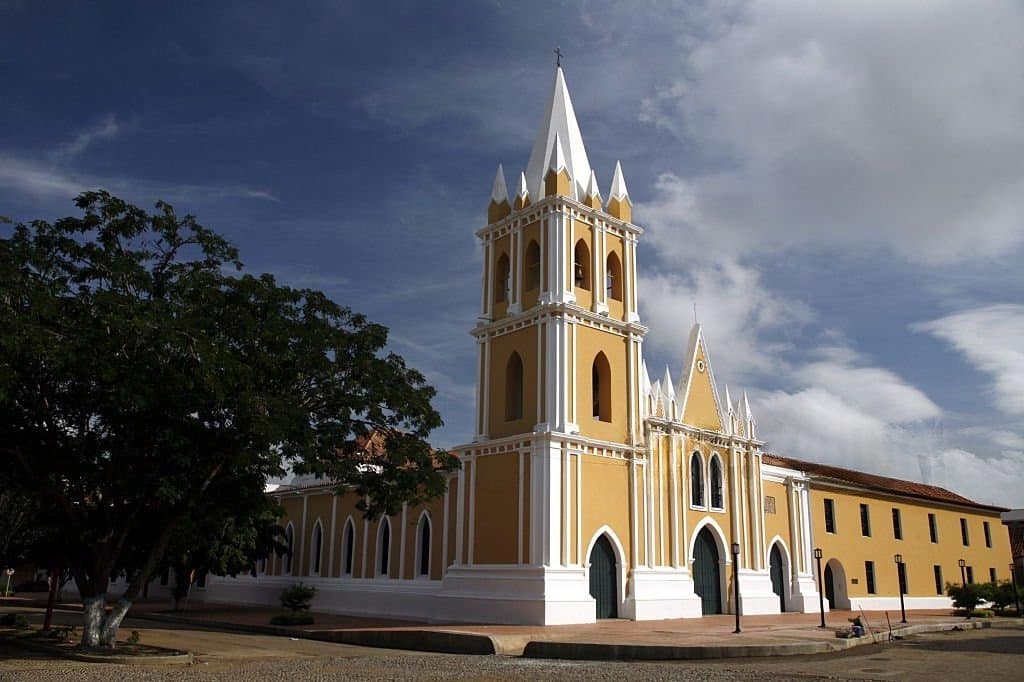
Juan de Ampíes founded Santa Ana de Coro on Caquetía lands. The chieftain Manaure attended the first Mass celebrated on the continent alongside him. In 1531, a papal bull established the Diocese of Coro. The coast also attracted pirates. In 1620, they destroyed the church and convent of San Francisco. The building was rebuilt, and its Neo-Gothic tower dates from 1900. Its most recent restoration was completed in late 2006.

Yellow and white church with a bell tower in the historic center of Coro, Venezuela
A yellow and white church with a bell tower, in the historic center.
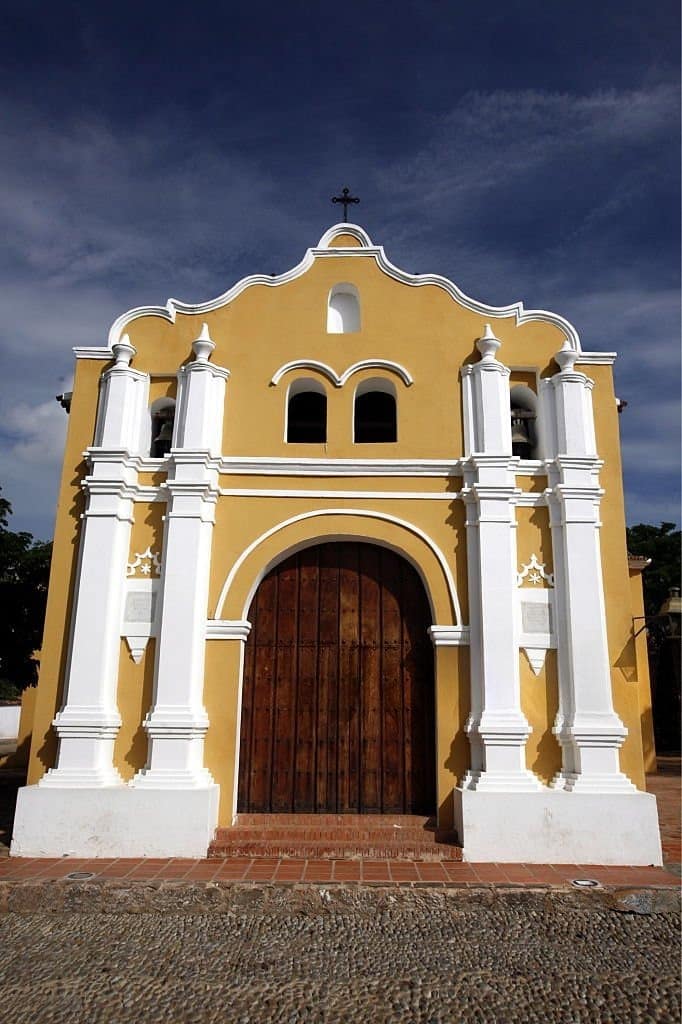
Yellow and white chapel with an ornate gable and a large wooden door in Coro, Venezuela
A yellow and white chapel with an ornate gable.

Earthen houses and iron windows

In the historic center, buildings are constructed of earth. Bahareque consists of a wooden or reed framework filled with mud. Adobe is a brick made of unfired clay. Tapia is earth compacted into a formwork. Many artisans still master these techniques. The original grid-like layout remains visible, and much of the preserved architecture dates from the 17th century.

Pink house with a white door frame and a tiled roof in Coro, Venezuela
A pink house with a white door frame, in the historic center.

Construction of the cathedral began in 1583 but was not completed until the end of the 17th century. The Casa de las Ventanas de Hierro dates from the 17th century. José Francisco Garcés de la Colina built it. It owes its name to its windows, whose wrought iron comes from Andalusia. Its portal exceeds eight meters. The Casa del Tesoro, built in 1770 by the Talavera family, displays the same attention to detail. The 18th-century Balcón de los Arcayas houses the museum of folk pottery.

Red façade with two iron-barred windows and white brackets in Coro, Venezuela
A red façade with iron-barred windows.
Orange colonial house with a wooden balcony, lanterns and a white doorway in Coro, Venezuela
An orange colonial house with its wooden balcony and lanterns.

The designated site includes approximately 602 historic buildings, spread across two areas. The first covers 7.85 hectares in Coro, and the second covers 10.55 hectares around the port of La Vela. Surrounding the city, the Médanos de Coro National Park protects a system of coastal dunes. The shifting sand there contrasts with the city’s earthen streets.

Cobbled street and gray façade with yellow window frames in Coro, Venezuela
A cobbled street and a gray façade with yellow window frames.

Curaçao, across the water

Starting in the second half of the 17th century, a Dutch style of house arrived via Curaçao and Aruba. It blended with Spanish and local building techniques. Willemstad, on Curaçao, bears a similar legacy of these exchanges. These connections also have a human dimension. A Sephardic community from Curaçao settled in the city beginning in 1824. Its cemetery was established in 1832 by Joseph Curiel.

Open wrought-iron gate in a yellow wall with a white scroll in Coro, Venezuela
A wrought-iron gate in a yellow wall.

The connection is not merely historical. In 2023, small boats loaded with fruits and vegetables were scheduled to depart from La Vela de Coro for Curaçao following the reopening of the maritime border. The crossing takes about ten hours.

Why Coro Is on the List of World Heritage in Danger

UNESCO designated the city and its port as a World Heritage Site in 1993. Unusual rains struck the city and La Vela in late 2004 and early 2005. The site has been on the List of World Heritage in Danger since 2005, and it remains on the list today.

White gateway decorated with a carved shell and a green door in Coro, Venezuela
A white gateway decorated with a carved shell.

In April 2026, Venezuelan authorities signed a memorandum to restore 29 buildings—11 in Coro and 18 in La Vela. The Escuela del Barro, or “School of Earth,” trains new artisans and manufactures adobe bricks. Culture Minister Raúl Cazal stated that UNESCO could verify compliance with the requirements in a year and a half. This timeline remains an estimate. Drainage and funding remain areas of concern.

Yellow church façade with a large wooden door and a white frame in Coro, Venezuela
The yellow façade of a church and its large wooden door.

The city thus depends on a fragile balance between the earth that wears away and the hands that know how to repair it. Who will still be building with earth here ten years from now? And what will the World Heritage Committee say when it reviews the site?

Frequently Asked Questions About Coro

The city is located in Falcón State, in western Venezuela. UNESCO inscribed it on the World Heritage List in 1993 for its adobe buildings, which blend local traditions with Spanish Mudéjar and Dutch techniques.

Because unusual rains damaged the city and La Vela in late 2004 and early 2005. The World Heritage Committee inscribed Coro and its port on the List of World Heritage in Danger in 2005, and drainage and site management remain areas of concern.

Starting in the second half of the 17th century, a Dutch architectural style made its way to the city via the islands of Curaçao and Aruba. It influenced the city’s architectural style. The two shores remain connected by trade, with boats sailing between La Vela and Curaçao in 2023.

Leave a Reply

Your email address will not be published. Required fields are marked *

More articles from RK

conTACT RK

we'd love to have your feedback on your experience so far

Join The List

Join our Richès Karayib community!  Sign up for our newsletter.

Want To Maximize Your Business Presence On Riches Karayib?

Complete the form to start the application