Suriname – Paramaribo: over 340 years old, made of wood and still standing

Paramaribo

When you arrive from the Suriname River, it’s not a concrete silhouette that takes shape, but a succession of white plank buildings, lined up for over three centuries. Paramaribo doesn’t have the allure of other South American capitals. It took a strange gamble: to remain made of wood. And it has kept its promise, despite fires, humidity and urban pressures.

A historic center recognized by UNESCO since 2002

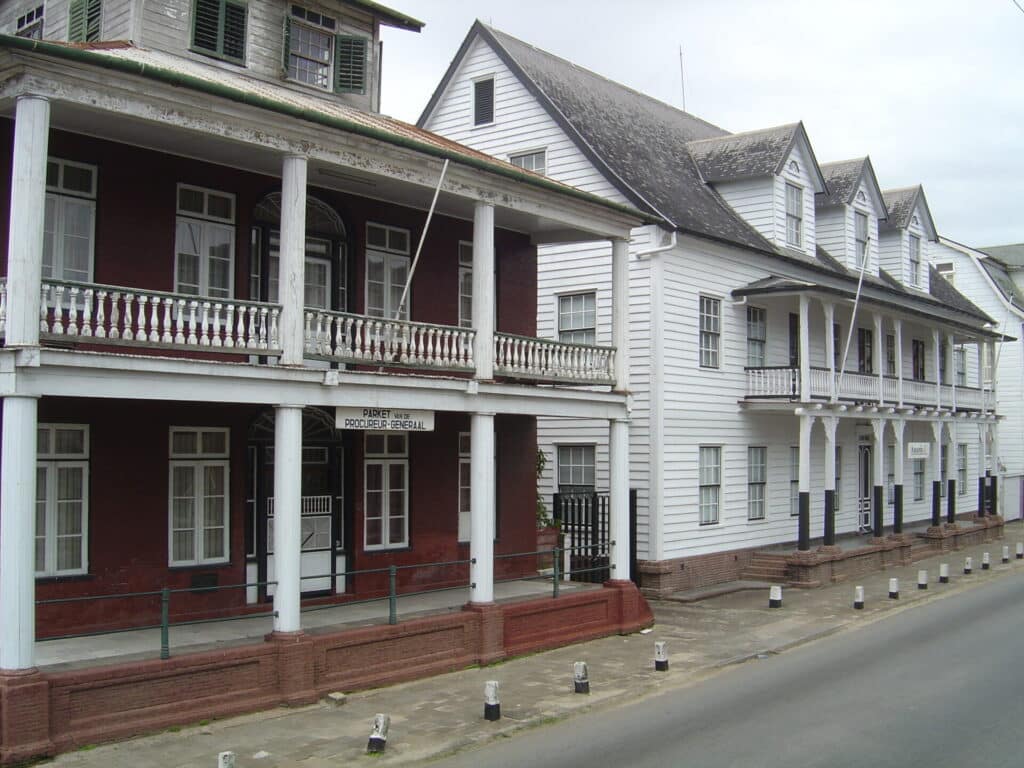
Traced back to 1683, it’s one of the few colonial cities in America whose historic center is still mainly built of wood. Where other capitals have replaced their colonial houses with stone or concrete buildings, Paramaribo has preserved its original street layout and much of its ancient built fabric. This persistence earned Paramaribo its inscription on UNESCO’s World Heritage List on June 29, 2002, on the basis of cultural criteria ii and iv. The fusion of Dutch architecture, European techniques, South American materials and local know-how has been decisive. The city is not a static museum: it’s a living practice.

Paramaribo
©UNESCO
Paramaribo
©UNESCO

Thirty hectares home to major heritage landmarks

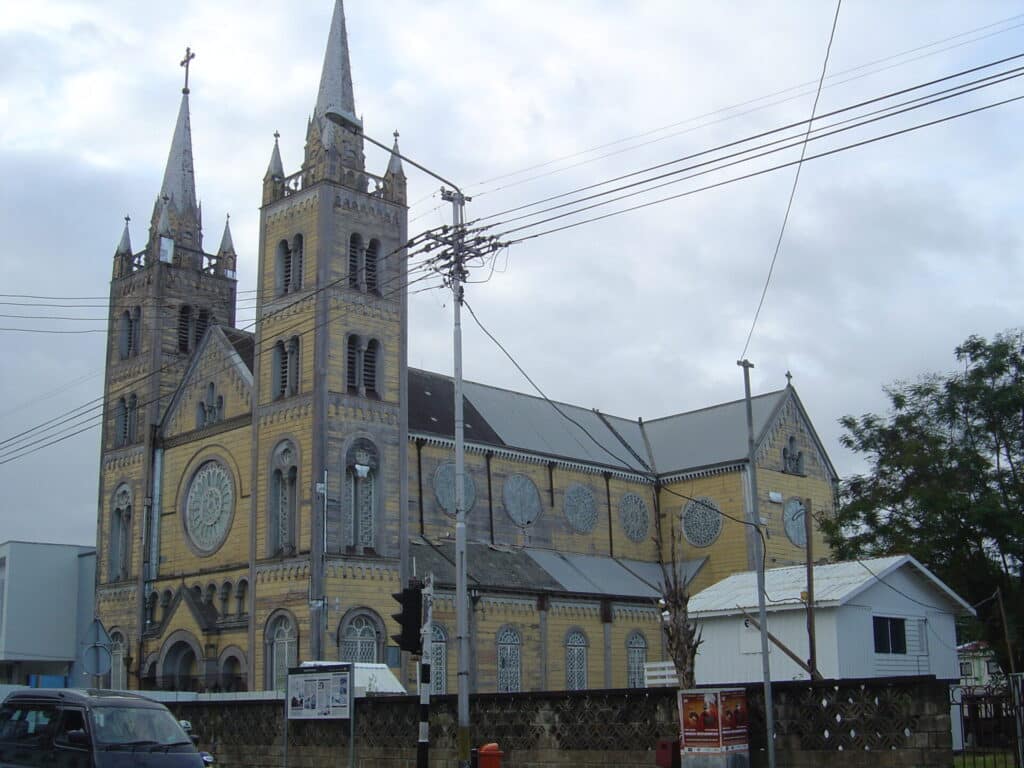
The World Heritage site covers 30 hectares, surrounded by a 60-hectare buffer zone. It includes emblematic buildings such as Fort Zeelandia, built in 1667, the Cathedral of St. Peter and St. Paul, a neo-Gothic Roman Catholic building constructed of wood in 1885, the Neve Shalom synagogue, located in Keizerstraat, and the Presidential Palace, dating from 1730, built of stone with a wooden upper floor. In the same area, the Keizerstraat mosque is a reminder of the capital’s religious plurality. All these sites have one thing in common: they show how Paramaribo has dealt with wood, brick, climate and time.

Paramaribo
©UNESCO
Paramaribo
©UNESCO
Paramaribo
©UNESCO

Why has Paramaribo wood survived the centuries?

Several reasons converge. Firstly, the use of tropical woods from the hinterland, combined with local materials and building techniques handed down over several generations. Secondly, an urban layout adapted to the terrain: the main streets follow shell ridges, which offered a naturally drained base. Last but not least, the main explanation is not only climatic.UNESCO also stresses the role of limited economic growth, which prevented major urban upheavals, alignment breaks and towers in the center.

Paramaribo
©UNESCO
Paramaribo
©UNESCO

A special case in Caribbean urban heritage

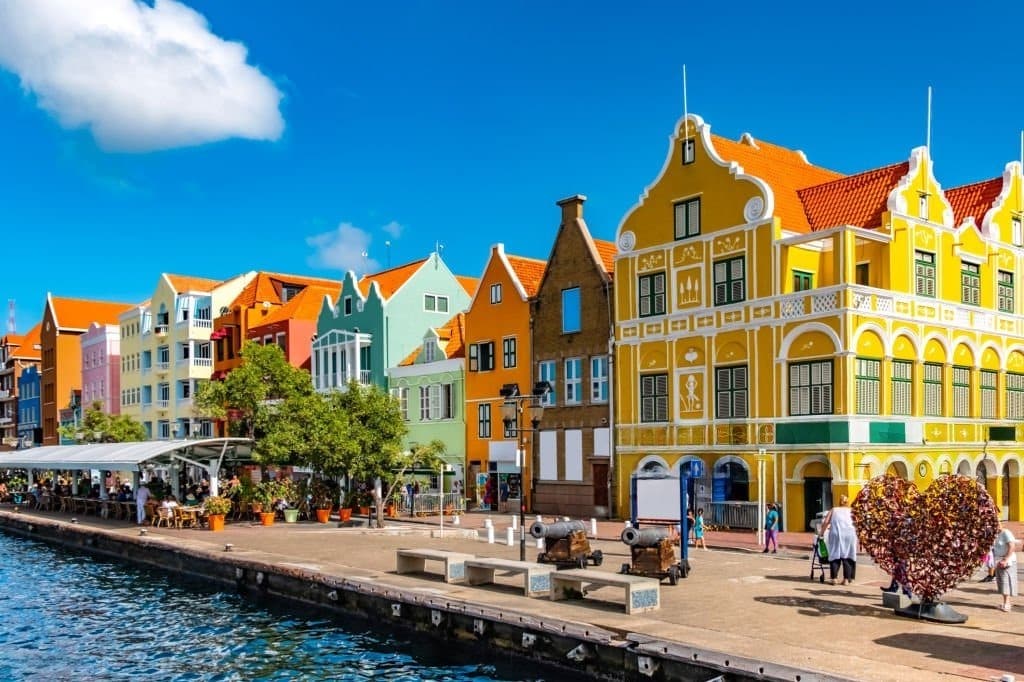
This singularity takes on its full meaning when placed in the context of the Caribbean. In Saint-Pierre, Martinique, the 1902 eruption destroyed most of a growing city. In Port-au-Prince, the 2010 earthquake affected institutions, archives and heritage buildings. Willemstad, Curaçao, has also been a UNESCO World Heritage Site since 1997, but its urban heritage is more marked by stone, stucco and Caribbean colors. Paramaribo presents a different case: a built heritage where perishable materials have continued to structure the visual identity.

Fire, maintenance and real estate pressure still threaten the site

The challenge today is not only nature, but also the economy, fire and real estate pressure. Restoring a wooden building requires resources, know-how and ongoing protection. The Stichting Stadsherstel Paramaribo foundation, set up in 2011, buys, restores and reuses dilapidated historic buildings to preserve the urban landscape. But the fragility remains real. In 2025, the World Heritage Committee expressed its concern after the recent loss of five heritage buildings destroyed by fire. A number of houses remain threatened by lack of maintenance or by projects ill-suited to the old town center.

A historic town that's still alive and kicking

And then there’s the question of use. A historic city only survives if it lives. Paramaribo still hosts governmental, commercial and residential functions in its old center. At the time of the UNESCO dossier, Greater Paramaribo had a population of around 250,000, of which less than 10,000 lived within the proposed perimeter. The streets, institutions, restored houses and fragile buildings show the difference between a museum town and an inhabited heritage.

Paramaribo
©UNESCO
Paramaribo
©UNESCO

More than three centuries after 1683, a memory that still lives on

More than 340 years after the planned 1683 route, Paramaribo remains one of America’s most discreet capitals. It doesn’t shine like Havana, it doesn’t flaunt itself like Cartagena, it doesn’t fascinate like Santo Domingo. But it continues, peacefully, to stand tall: in wood, and in memory. And what if the next generation of Caribbeans rediscovered, in Paramaribo, that a heritage can exist without stones?

Paramaribo has been a UNESCO World Heritage Site since 2002, thanks to its exceptional historic center, laid out since 1683. Suriname’s capital retains much of its ancient urban fabric, marked by a predominantly wooden architecture, the result of a blend of Dutch influences, South American materials and local know-how.

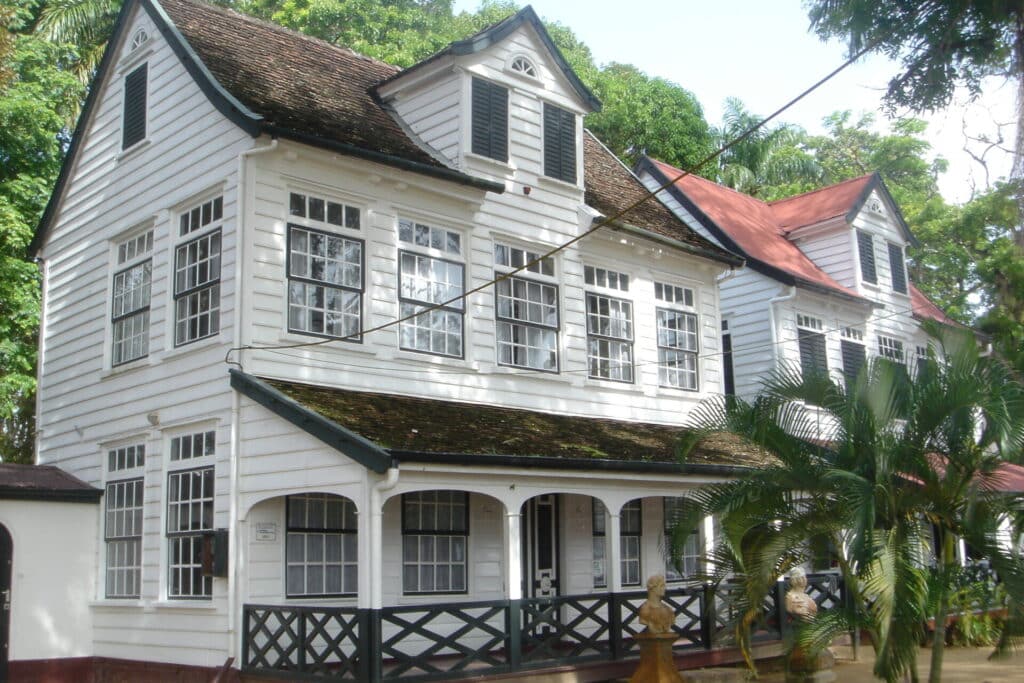
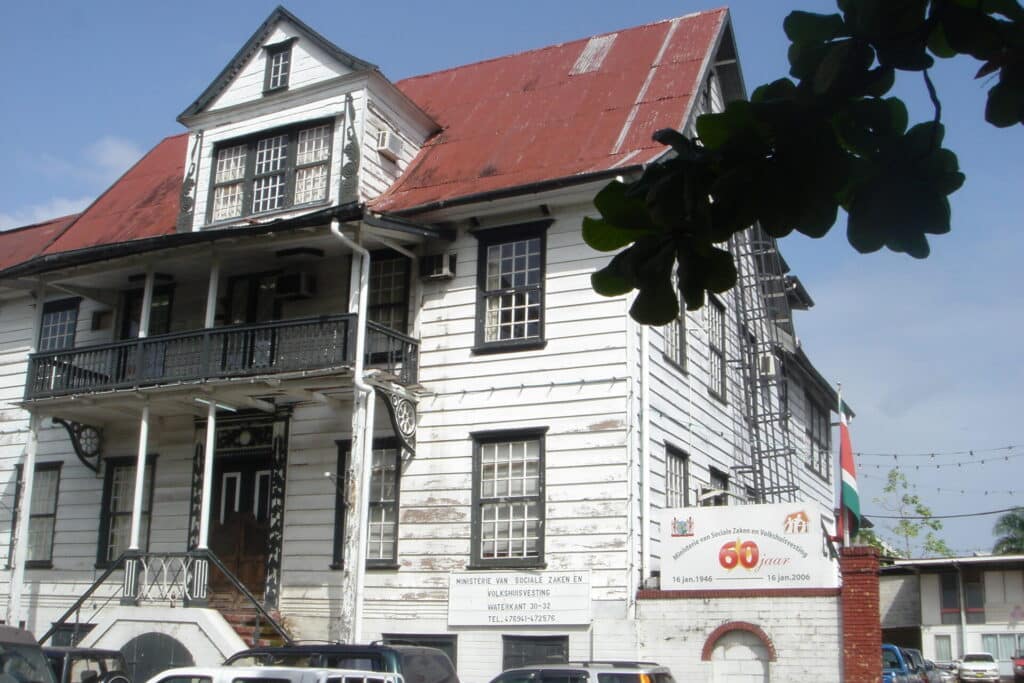
Paramaribo is not entirely built of wood, but its historic center is still mainly marked by wooden buildings. This characteristic gives the capital of Suriname an identity that is rare in South America and the Caribbean, with white facades, high roofs, green shutters and buildings adapted to the tropical climate.

Paramaribo’s historic center features several important sites, including Fort Zeelandia, the Presidential Palace, the Cathedral of St Peter and St Paul, the Neve Shalom synagogue and the Keizerstraat mosque. This UNESCO-listed perimeter shows how Suriname’s capital has preserved a lively urban heritage of government functions, shops, religious sites and residential buildings.

Leave a Reply

Your email address will not be published. Required fields are marked *

More articles from RK

WAL FEST
EVENT MANAGEMENT
Tolotra

Guadeloupe – WAL FEST 2026: 12 frescoes to transform Le Raizet

From May 9 to 17, 2026, the Raizet district of Les Abymes will play host to WAL FEST 2026, billed as Guadeloupe’s first major urban art festival. For ten days, 15 artists from Guadeloupe and elsewhere will create 12 monumental frescoes. The aim is clear: to turn the neighborhood into a free, permanent, open-air museum. The Abymes district at the heart of the project In Raizet, the walls of the Les Esses 1, 2 and 3 residences and of Quartiers 1 and 2 of the SIG will be more than just supports. They will become the visible heart of a cultural project designed in collaboration with residents, neighborhood associations and the Raizet socio-cultural center. WAL FEST 2026 is not just about showing finished works. It wants to make visible the artistic gesture, the live work, the exchanges, the hesitations and the encounters. Co-organized by the WAL association, Wad Al Lub,

Read More »
Paramaribo
HISTORY & HERITAGE
Tolotra

Suriname – Paramaribo: over 340 years old, made of wood and still standing

When you arrive from the Suriname River, it’s not a concrete silhouette that takes shape, but a succession of white plank buildings, lined up for over three centuries. Paramaribo doesn’t have the allure of other South American capitals. It took a strange gamble: to remain made of wood. And it has kept its promise, despite fires, humidity and urban pressures. A historic center recognized by UNESCO since 2002 Traced back to 1683, it’s one of the few colonial cities in America whose historic center is still mainly built of wood. Where other capitals have replaced their colonial houses with stone or concrete buildings, Paramaribo has preserved its original street layout and much of its ancient built fabric. This persistence earned Paramaribo its inscription on UNESCO’s World Heritage List on June 29, 2002, on the basis of cultural criteria ii and iv. The fusion of Dutch architecture, European techniques, South American

Read More »
2025-2026 cruise season
TOURISM
Tolotra

The 2025-2026 cruise season in Martinique: a strong showing for the island’s tourism industry

The 2025-2026 cruise season in Martinique has come to a close on a strong note, with 568,348 passengers announced and a clear increase in patronage over the previous season. In a region where tourism relies as much on hospitality as on the quality of experiences offered ashore, these results reflect the destination’s growing presence on Caribbean itineraries. They also show that Fort-de-France, Saint-Pierre and the local players are moving in the same direction: better welcome, better orientation and better promotion of Martinique’s heritage. Two long-awaited final stops in Fort-de-France The 2025-2026 cruise season will close on Friday, April 24, 2026 with two calls to Fort-de-France. RCCL’s ship is expected to call at the Tourelles terminal with around 2,000 passengers, while Princess Cruises’ Caribbean Princess is scheduled to call at the Pointe Simon terminal with around 3,500 passengers. Most of the cruise passengers are expected to be American, between 7 a.m.

Read More »

conTACT RK

we'd love to have your feedback on your experience so far

Join The List

Join our Richès Karayib community!  Sign up for our newsletter.

Want To Maximize Your Business Presence On Riches Karayib?

Complete the form to start the application