« Après Bondie, c’est la terre »: After God, Dominica chooses the earth

Coat of arms of Dominica with the motto Après Bondie c’est la terre on its scroll, held by two sisserou parrots

Beneath the shield of Dominica’s coat of arms, a scroll carries a phrase in Kwéyòl. « Après Bondie, c’est la terre ». After God, the earth, or “after God the Earth” in the official English translation. Five words of a French-based creole, and a clear hierarchy. In the rank that follows God, Dominica has placed the soil.

« Après Bondie, c’est la terre », an order of things

“Bondie” is the French creoles’ word for the good Lord. “Après” puts what follows immediately behind. The verb “c’est” asserts. The phrase asks for nothing; it states a fact. It says what matters on a volcanic island whose economy rests on agriculture.

The coat of arms illustrates it word for word. Two of its four quarters show a tree on a mound of black rock, the coconut palm on one side, the fruit-laden banana tree on the other. The black is that of the volcanic soil. The sailing canoe in the third quarter recalls the sea, and Dominica’s frog occupies the second. The cross on the shield refers to the Sunday of discovery that gave the island its name. Two sisserou parrots, the national bird, hold it all up. On the flag, designed by Alwin Bully, the black band says the same thing: the black soil on which agriculture depends.

Après Bondie, c’est la terre
The flag of Dominica, by Alwin Bully: its black band evokes the soil.

A 1960 coat of arms, a motto with no signature

The coat of arms was designed in 1960, the year Franklin Baron became Dominica’s first Chief Minister, eighteen years before independence in 1978. It was registered in 1961 at the College of Arms in London. A still-colonial island thus chose to sum itself up through a soil, a fruit, a sea and a language. Who came up with the phrase? Nobody knows. It has no identified author, which gives it the air of a proverb, the kind people say without knowing who said it first. It belongs to everyone, and that is probably why it endures.

Why the land, and nothing else

Because Dominica lived on bananas for a long time. In 1988, the island exported 74,200 tonnes, worth more than 100 million Eastern Caribbean dollars. By 1999, only 27,776 tonnes remained. Production fell by 63%, and the value of exports by 62%. In the mid-1990s, Dominica, which used to sell more agricultural products than it bought, began buying more than it sold.

Bananas nevertheless remain the island’s leading crop, supporting, directly or indirectly, more than a third of the workforce. The banana tree on the coat of arms is therefore no decoration. It tells of an economy, its small planters, its good years and its hard times. The motto, for its part, explains why the island always returns to it. When the market withdraws, the land remains.

Après Bondie, c’est la terre
Bananas remain Dominica's main crop.

« Après Bondie, c’est la terre » after Maria

On 18 September 2017, Hurricane Maria showed what the phrase means. Assessments carried out afterwards estimate that 80 to 100% of roots, vegetables, bananas and plantains were destroyed. Damage and losses in agriculture reached 485 million Eastern Caribbean dollars, nearly 180 million US dollars. Replanting is not a seasonal choice. It is the only way to start again. Since then, the motto has read differently. For the 44th anniversary of independence, in 2022, the local press saw in it an ideal: caring for the land so that it cares for those who live on it.

Après Bondie, c’est la terre

A motto spoken in Kwéyòl

English is Dominica’s official language. Yet the national motto is in Kwéyòl, the language born on the plantations of the 17th and 18th centuries. The choice carries weight. The island’s most official symbol speaks in the language of those who worked the plantations. It also bears the mark of its time. The standard Kwéyòl alphabet was not set until 1981 and 1982, at workshops in Saint Lucia. The motto, which predates it, keeps the “c” of “c’est”, which that alphabet abandoned. The coat of arms writes “C’est la Ter”, without the final “e”. Richès Karayib uses “terre”, which is easier to read for a French-speaking reader, without claiming it is the only possible spelling.

What does the land ask of us today?

« Après Bondie, c’est la terre » promises nothing. It sets an order of priorities that has outlasted independence, the fall of the banana and a hurricane. One question remains, which each generation of Dominican planters asks in turn. What do we owe to a land we place so high?

Après Bondie, c’est la terre

Frequently Asked Questions

The phrase means “after God, the earth”. It is Dominica’s national motto, inscribed beneath the coat of arms. The Dominican government translates it as “after God the Earth” and links it to the importance of the soil in an agricultural economy.

The motto is written in Kwéyòl, a French-based creole. English remains the country’s official language. The spelling on the coat of arms is not that of the standard Kwéyòl alphabet, set in 1981 and 1982.

The coat of arms was designed in 1960 and registered at the College of Arms in London in 1961. The author of the motto is not identified.

Leave a Reply

Your email address will not be published. Required fields are marked *

More articles from RK

Kéni Piperol smiling on the deck of his sailboat, in sailing gear
MARITIME
Tolotra

Kéni Piperol: A Second Route du Rhum to Represent Guadeloupe

With just a few days to go before the 2026 Route du Rhum, Kéni Piperol is preparing for his second solo Atlantic crossing. Four years after his first attempt, which was marred by mechanical trouble, the Guadeloupean sailor is now aiming for a Top 15 finish in the Class40 category. With DrépaVoile, his ambition extends beyond the rankings, as he is combining this new adventure with the fight against sickle cell disease, outreach to young people, and artistic creation. On Friday, October 16, at 10:30 p.m. according to his crew, Kéni Piperol set sail from La Trinité-sur-Mer aboard his Class40, DrépaVoile. The start of the voyage to Saint-Malo was eventful. In rough seas, with gusts reaching 23 knots, the sailboat quickly found its rhythm and maintained a reported average speed of 12 knots throughout the night. At daybreak, conditions eased along the Breton coast. This voyage will take the boat

Read More »
Coat of arms of Dominica with the motto Après Bondie c’est la terre on its scroll, held by two sisserou parrots
HISTORY & HERITAGE
Tolotra

« Après Bondie, c’est la terre »: After God, Dominica chooses the earth

Beneath the shield of Dominica’s coat of arms, a scroll carries a phrase in Kwéyòl. « Après Bondie, c’est la terre ». After God, the earth, or “after God the Earth” in the official English translation. Five words of a French-based creole, and a clear hierarchy. In the rank that follows God, Dominica has placed the soil. « Après Bondie, c’est la terre », an order of things “Bondie” is the French creoles’ word for the good Lord. “Après” puts what follows immediately behind. The verb “c’est” asserts. The phrase asks for nothing; it states a fact. It says what matters on a volcanic island whose economy rests on agriculture. The coat of arms illustrates it word for word. Two of its four quarters show a tree on a mound of black rock, the coconut palm on one side, the fruit-laden banana tree on the other. The black is that
Read More »
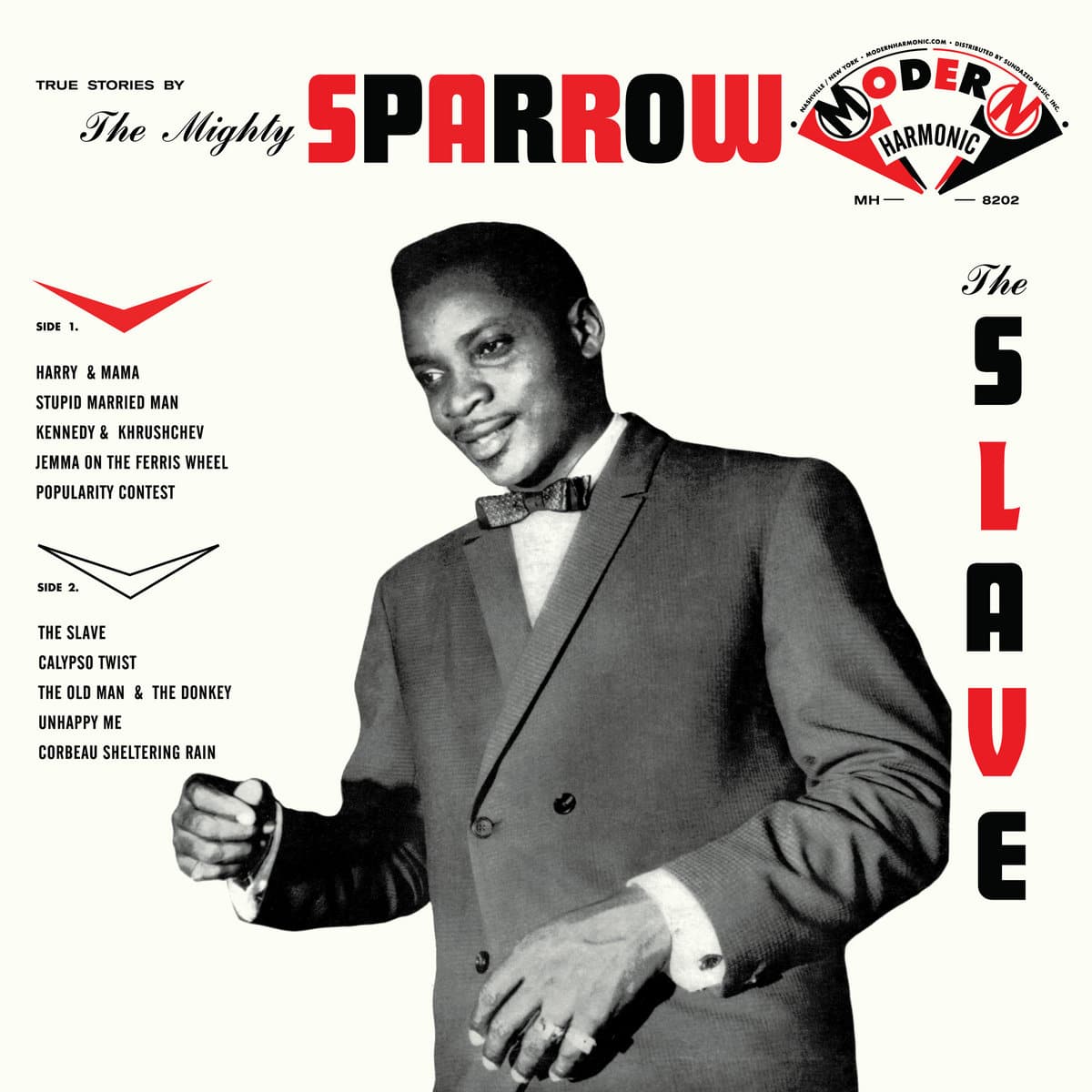
Cover of Mighty Sparrow's album The Slave, with his black-and-white portrait in a suit and bow tie
MUSIC
Tolotra

Mighty Sparrow: Mia Mottley Proposes Studying “The Slave”

Mia Mottley began her tribute to Mighty Sparrow by quoting “The Slave,” a song from 1963. At the calypso artist’s funeral on October 16, 2026, she called for the song to be included in the Caribbean Examinations Council’s curriculum. This idea raises a simple question: what place do Caribbean voices have in schools? Mia Mottley began her tribute to Mighty Sparrow by quoting lines from “The Slave.” On October 16, 2026, at the National Academy for the Performing Arts in Port of Spain, the Prime Minister of Barbados then called for this 1963 song to be included in the Caribbean Examinations Council (CXC) curriculum. She wanted every child in the region to understand both the pain and the mission behind it. She turned to Kamla Persad-Bissessar, Prime Minister of Trinidad and Tobago, so they could work together to convince their counterparts. Persad-Bissessar replied that she would work with her Caribbean
Read More »

conTACT RK

we'd love to have your feedback on your experience so far

Join The List

Join our Richès Karayib community!  Sign up for our newsletter.

Want To Maximize Your Business Presence On Riches Karayib?

Complete the form to start the application