In San Pedro de Macorís, in the Dominican Republic, the Guloyas carry on a tradition of theater, music, and dance that originated in the English-speaking Caribbean. Behind their colorful costumes lies the story of the Cocolos, migrant workers who came to work in the sugar industry. Their heritage, recognized by UNESCO, raises a crucial question today: How do you pass on a culture when its original bearers are passing away?
On the streets of San Pedro de Macorís, the dancers first catch the eye with their tall headdresses adorned with feathers. Ribbons sway to the rhythm of their steps, while drums and flutes accompany the troupe. To the public, it may look like a folk festival. To truly understand this spectacle, however, one must go back to the era when sugarcane was transforming the eastern part of the Dominican Republic.
The Cocolos, Migrants Who Came to Work in the Sugar Industry
In the 19th century, the boom in sugar plantations attracted workers from the English-speaking islands of the Caribbean. Some came specifically from the British Lesser Antilles. They left their homelands to find work in a rapidly expanding economy, one marked by the harsh conditions of agricultural labor and social inequalities. Their settlement intensified in the late 19th century, as the sugar industry expanded around San Pedro de Macorís. These men and women did not form a homogeneous community. They brought with them different experiences, religious practices, and traditions, tied to the islands from which they came.
In the Dominican Republic, they are called “Cocolos.” The word, long laden with contempt, has also come to be a badge of pride. Their story serves as a reminder that Caribbean migration does not only follow routes to Europe or North America; it also connects the islands to one another.
San Pedro de Macorís, a City Shaped by This Presence
The Cocolos are not limited to the world of plantations. In San Pedro de Macorís, they organize their community life around churches, schools, charitable organizations, and mutual aid networks. These institutions allow them to maintain social ties, practice their faith, and pass on certain customs from their homelands.
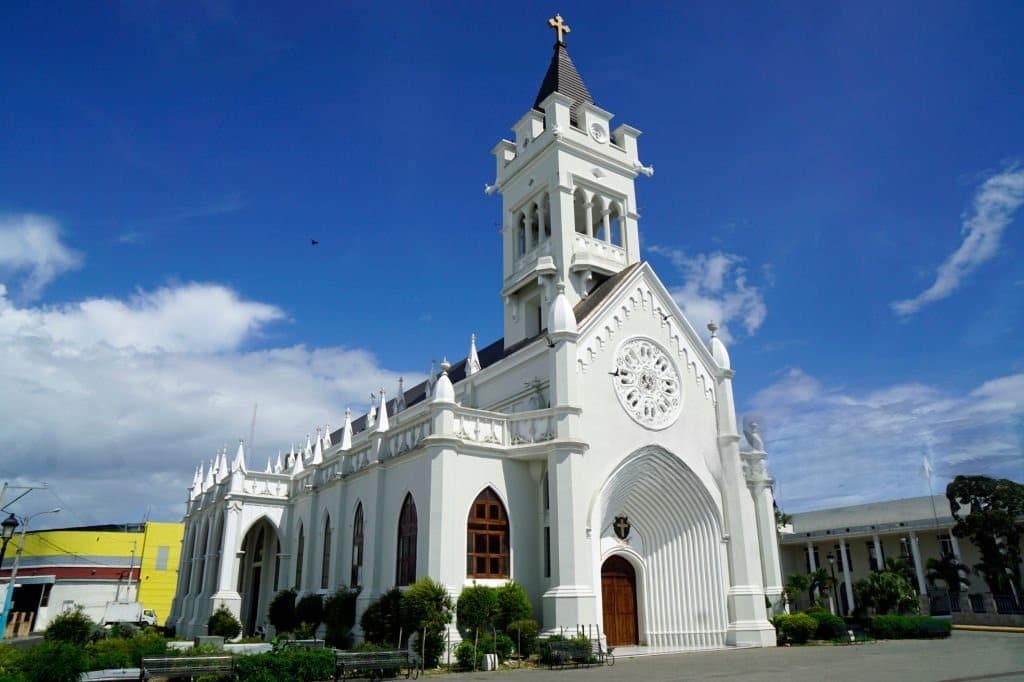
Caribbean English plays a role in their family and community interactions. Over the generations, however, Spanish has become dominant. Some traditions are changing, while others are fading away. Dance theater, meanwhile, retains a special place in the collective memory. It is in this context that one of the most recognizable expressions of this heritage emerges: the Guloyas. Their presence serves as a reminder that Dominican cultural history has also been shaped by contact with other Caribbean territories.
The Guloyas, Theater Told Through Dance
To describe the Guloyas as merely a dance would be an oversimplification. The tradition combines choreographed movements, music, costumes, and acted scenes. In the past, several troupes performed, particularly at Christmas, on St. Peter’s Day, and during Carnival. The repertoire blends rhythms of African origin, biblical references, and stories inherited from British folk theater. Among the stories performed are David and Goliath, Moko-Yombi, and even Cowboys and Indians. The name “Guloyas” is, in fact, commonly associated with Goliath, a character from one of these stories.
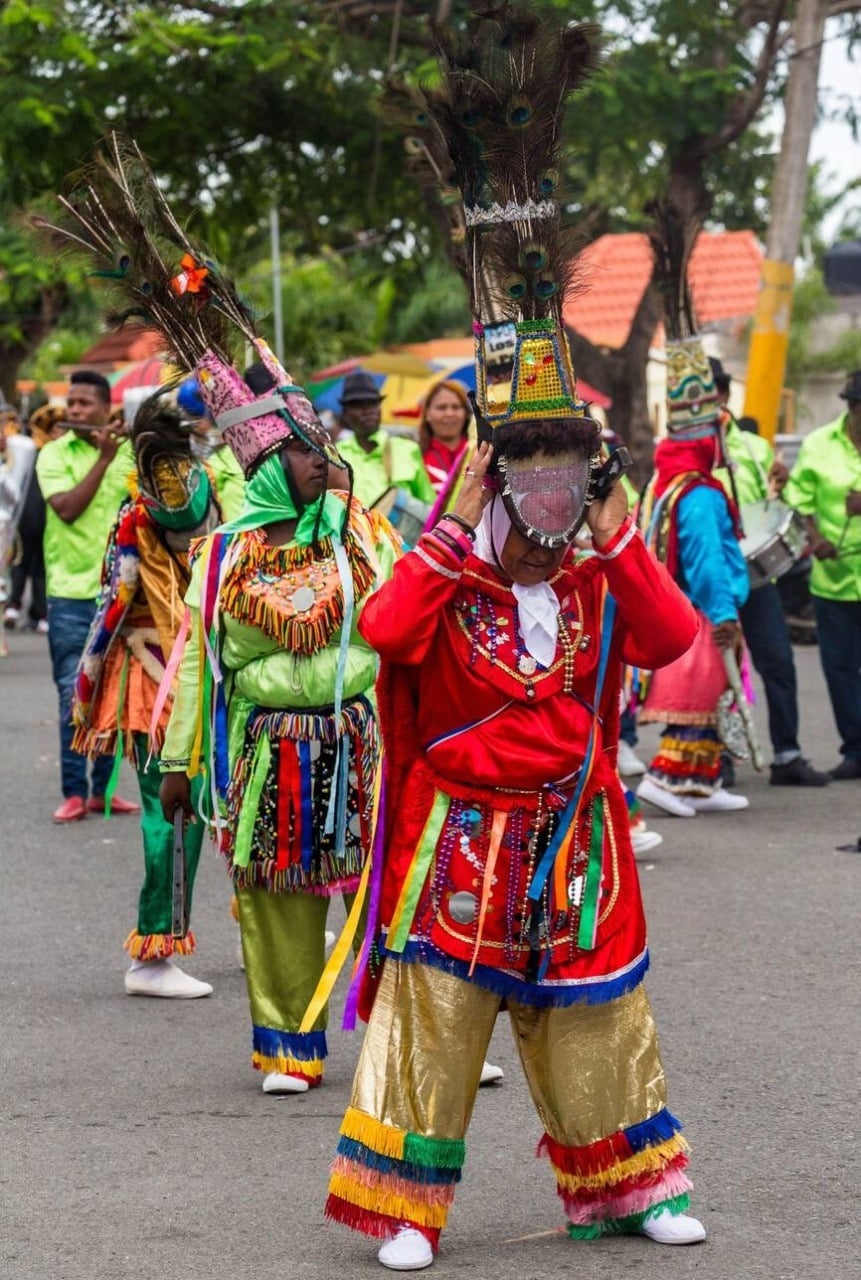
The costumes play a central role in the performance. Imposing headdresses, feathers, mirrors, ribbons, and bright colors give the performers an instantly recognizable appearance. The music relies primarily on drums, snare drums, flutes, and triangles. The movements follow precise sequences: behind the apparent spontaneity lies a skill that has been learned and rehearsed.
This theater also tells the story of an adaptation. Traditions originating in the English-speaking Caribbean have taken on new forms in a Spanish-speaking, predominantly Catholic Dominican setting. Neither a faithful replica of the past nor a mere carnival performance, it bears the marks of this cultural encounter.
International Recognition, but Not a Guarantee
In 2005, UNESCO proclaimed the Cocolo dance-theater tradition a Masterpiece of the Oral and Intangible Heritage of Humanity. It then inscribed it on the Representative List of the Intangible Cultural Heritage of Humanity in 2008.
This recognition brings international visibility to a heritage long associated with a marginalized community. It also serves as a reminder of the Afro-Caribbean contribution to the history of the Dominican Republic. But heritage designation alone is not enough to sustain a troupe, craft instruments, or train new performers. The challenges of passing on this tradition are very real. As older generations pass away, certain knowledge is at risk of being lost. And the people who keep this tradition alive do not always have the necessary resources to prepare costumes, organize performances, or mentor young people.
Passing On Gestures, Stories, and Memory
To address these challenges, a preservation program supported by UNESCO has been planned for January 2024 through April 2026. It brings together the Guloyas of San Pedro de Macorís and the Congos of Villa Mella, another Afro-Dominican tradition. Its goal is to strengthen training, instrument-making, costume preparation, and public awareness.
Yet passing on this heritage goes beyond the technical aspects. Learning a step or a rhythm isn’t enough if you don’t understand why these traditions exist. We must also tell the story of the Cocolos’ arrival, their efforts to build a community, and how their culture found its place in the country.
Today, the Guloyas remain a living expression of San Pedro de Macorís. Their future depends as much on the artists who take the stage as on those who give them the opportunity to teach. Because preserving this tradition isn’t just about keeping the costumes alive: it’s about ensuring that a story continues to be told.
FAQ: The Guloyas in the Dominican Republic
The Guloyas are performers of an Afro-Caribbean dance-theater tradition practiced in San Pedro de Macorís, in the Dominican Republic. This cultural expression combines music, dance, costumes, and theatrical performances inherited from the Cocolos communities.
The Guloyas tradition originated among English-speaking Afro-Caribbean communities who arrived in the Dominican Republic in the 19th century to work in the sugar industry. It retains African and British influences that have been adapted to the Dominican cultural context.
UNESCO recognized the Cocolo dance theater tradition in 2005, before inscribing it on the Representative List of the Intangible Cultural Heritage of Humanity in 2008. This recognition highlights its historical and cultural value, as well as the importance of passing it on.