Festival Quatre Chemins 2026: In Haiti, Art Is Still Alive

Poster of the 23rd Festival Quatre Chemins: painted portrait of Kettly Noël wearing a black hat, on a newspaper background

The Festival Quatre Chemins 2026 kicks off its main phase this Monday, November 23, in Port-au-Prince. Through December 5, theater, dance, readings, and artistic gatherings will mark this 23rd edition, which honors Haitian choreographer Kettly Noël. Behind its theme, “Art Is Alive,” lies an ambition: to continue creating and sharing works of art in a country facing profound challenges.

Festival Quatre Chemins 2026 visual: “Art is alive. Against death.” in green letters on a textured black background
The theme of the 2026 edition: “Art is alive. Against death.” © Festival Quatre Chemins

Festival Quatre Chemins 2026: Creating Despite the Challenges

This year, Kettly Noël holds a special place at the Quatre Chemins Festival. A dancer, choreographer, performer, and actress, she is the guest of honor at an edition that aims to explore life through art. Her presence also highlights the exchanges and knowledge-sharing among artists.

The launch on November 23 marks the start of the festival’s main program. Preparatory activities had already taken place starting on November 9 in Port-au-Prince and Cap-Haïtien. The theme “Art Is Alive,” also highlighted in promotional materials with the slogan “Art Is Alive Against Death,” takes on special significance in the Haitian context. However, Haitian creativity is not limited to the crisis: it is experimenting and renewing its relationship with the public.

Kettly Noël: Dance and the Body’s Memory

Through her career spanning Haiti and the international stage, Kettly Noël has developed a choreographic style in which the body becomes a means of expression in its own right. For this edition, she will present *Un corps qui se souvient* and participate in educational activities. What aspects of our history are preserved in our movements? This work invites us to reflect on individual and collective memory through dance.

The artist’s carte blanche also places contemporary dance at the heart of a festival that has historically been associated with theater. It serves as a reminder that Haitian performing arts are not limited to a single discipline.

Poster of the choreographic performance Un corps qui se souvient: a dancer carrying a large basin on her shoulder
Un corps qui se souvient, a choreographic performance by Kettly Noël. © Festival Quatre Chemins

What is the program for the Festival Quatre Chemins 2026?

Several announced productions highlight the diversity of the program. Guy Régis Jr., the festival’s artistic director, directs *Mes villes debout*, a production that brings together different writing styles and sensibilities. Paula Clermont Péan directs *Traversée*, a play by Xavier Orville. Rolando Etienne is co-director of *L’Épopée du cochon*.

Another announced event, *Ceci n’est pas du théâtre*, brings together director Guy Régis Jr. and Love-Lica Jeannée. These shows are complemented by performances, discussions, and sessions dedicated to the artists’ perspectives. The program also features music, film, literature, and lectures.

In the run-up to the opening, the festival presented staged readings, notably of Jon Fosse’s *Strong Wind*, Marguerite Duras’s *The Malady of Death*, and works by Haitian authors such as Frankétienne. These readings serve as a reminder that theater also begins with words meant to be heard. Schedules, venues, and admission requirements should be checked in the organizer’s updated announcements: the publicly available information does not allow for the creation of a comprehensive schedule for each performance.

Poster of the play L’Épopée du cochon: black-and-white close-up of fingers
L’Épopée du cochon, a play by Cange Pierre Antoine, directed by Rolando Etienne. © Festival Quatre Chemins

Residencies to Support Tomorrow’s Creativity

The Festival Quatre Chemins 2026 is not limited to completed works. Through its residency program, the association also supports artists who are experimenting with new forms. Among them is visual artist François John Woodly, who is developing “Tèt San Kò,” a project that explores invisible wounds, memory, and trauma through visual art. Presentations of works in progress showcase an artist’s creative journey, not just a finished piece. It is also an opportunity to give lesser-known artists a platform alongside established figures.

Poster of the Par Quatre Chemins residency showcase: a tree with red branches on a dark background
Residency showcase Par Quatre Chemins, with François John Woodly, Ar Guens Jean Mary and Marline Bochand. © Festival Quatre Chemins

Since 2003, a hub of the Haitian arts scene

Founded in 2003 by Haitian artists, the festival bears a name chosen by the poet Syto Cavé. “Quatre Chemins” evokes the crossroads, a meeting place steeped in meaning in the Haitian imagination. This name aptly reflects the festival’s evolution: theater now engages in dialogue with dance, the visual arts, and other artistic practices.

In the current context, the stakes go beyond simply maintaining an annual event. The festival allows artists to collaborate, enables new works to be shared, and gives audiences the chance to discover art forms that don’t always find a place elsewhere. From November 23–December 5, the Quatre Chemins Festival thus highlights a reality often overshadowed by news reports from Haiti: the country continues to produce works of art, nurture artists, and foster a cultural dialogue. The question also concerns what happens after the festival: how can we give these artists the means to continue their work throughout the year?

Poster of the dance show La Jeunesse de Legba: a silhouette with colorful outlines on a dark background
La Jeunesse de Legba, a dance show by Troy Wood Assey. © Festival Quatre Chemins

Frequently asked questions

The 23rd edition will take place from November 23 to December 5, 2026, primarily in Port-au-Prince, Haiti. Preparatory activities began on November 9, notably in Port-au-Prince and Cap-Haïtien.

Kettly Noël, a Haitian dancer, choreographer, performer, and actress, is the guest of honor. She is scheduled to appear in *Un corps qui se souvient* and participate in artistic outreach activities.

Among the announced works are *Mes villes debout*, *Traversée*, *L’Épopée du cochon*, *Ceci n’est pas du théâtre *, and *Un corps qui se souvient*. The festival also features readings, talks, and other artistic disciplines. The venues and times for each performance are subject to change; please check the organizer’s updated announcements for details.

Leave a Reply

Your email address will not be published. Required fields are marked *

More articles from RK

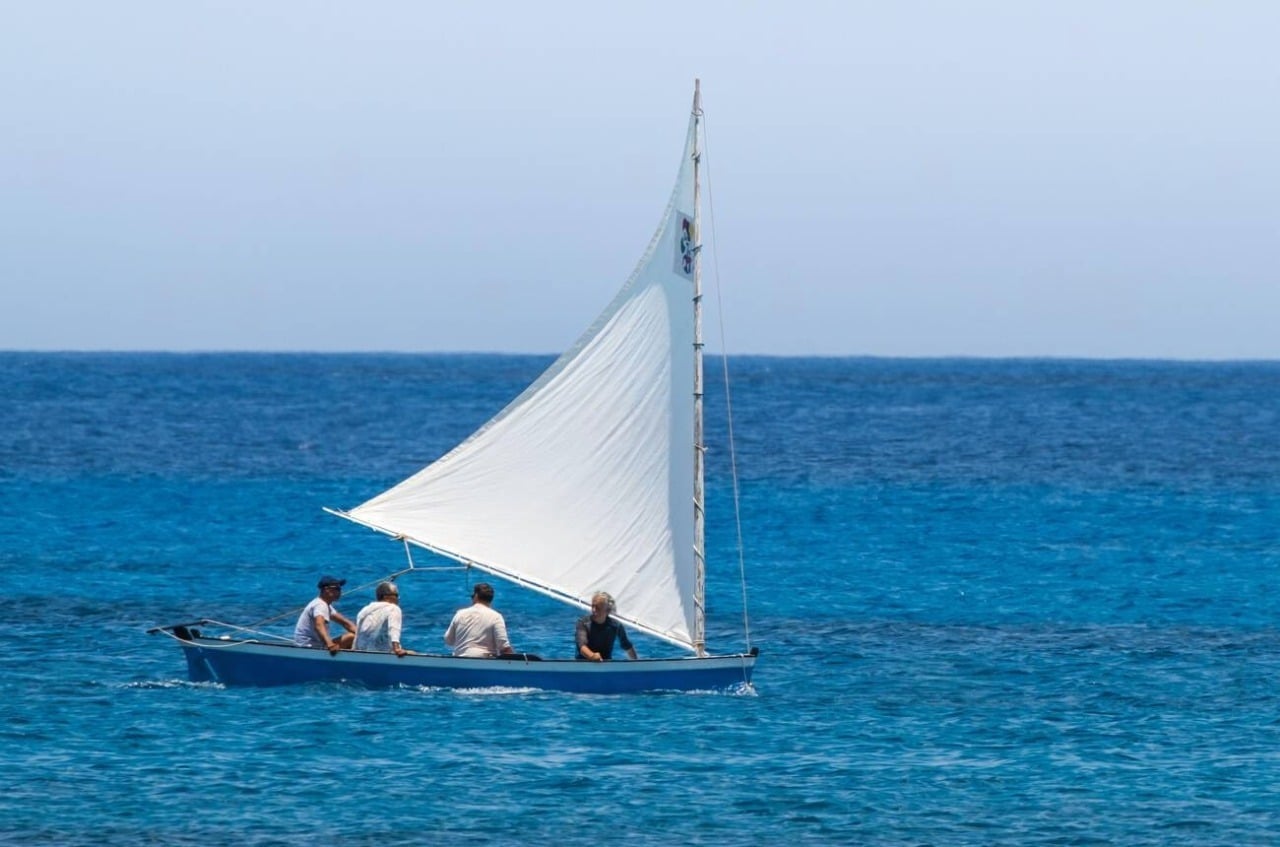
Catboat under white sail with four sailors aboard, at sea in the Cayman Islands
HISTORY & HERITAGE
Tolotra

Catboat: The Little Boat That Shaped the Cayman Islands

In the Cayman Islands, the Catboat evokes a time when the sea was as much a means of livelihood as it was a means of transportation. Designed to hunt turtles, this blue boat became an everyday tool and has since become part of the cultural heritage that sailors and artisans strive to preserve and pass on.
Read More »

conTACT RK

we'd love to have your feedback on your experience so far

Join The List

Join our Richès Karayib community!  Sign up for our newsletter.

Want To Maximize Your Business Presence On Riches Karayib?

Complete the form to start the application