Bahamas – Conch Salad, a tradition of eating raw conch

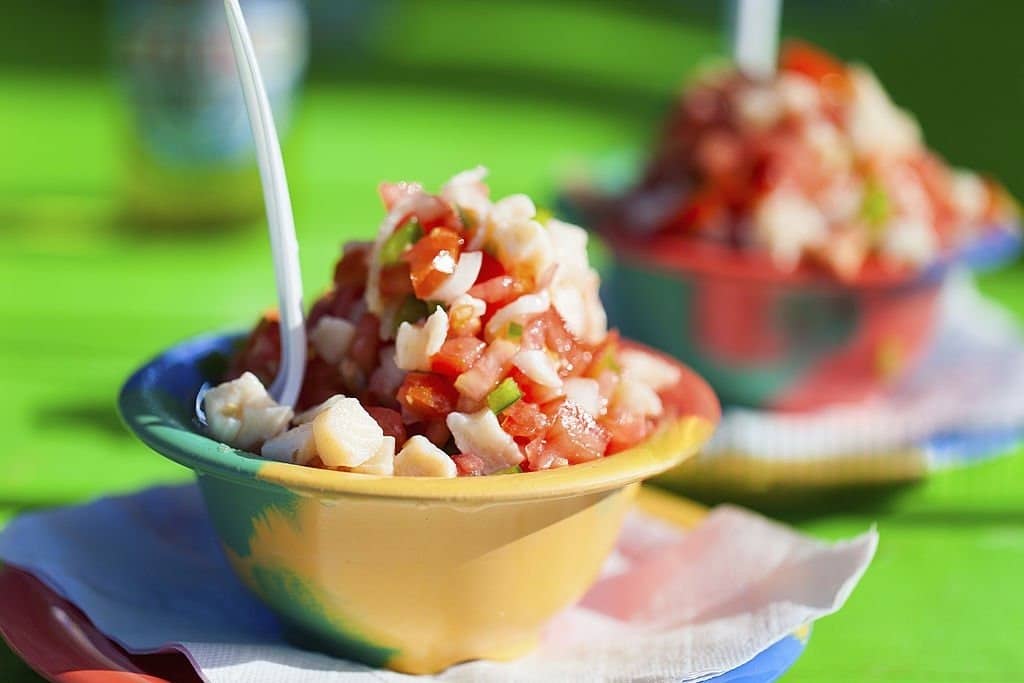
Two colorful bowls of Conch Salad, raw conch with tomatoes and peppers

Under the bridges connecting Nassau to Paradise Island, vendors on Potter’s Cay slice open conch in front of their customers. Mixed with fresh vegetables and citrus juice, this mollusk becomes Conch Salad, an iconic Bahamian dish whose history dates back long before the advent of restaurants.

Kenneth McKenzie has seen both sides of the counter. Before running his own restaurant in Potter’s Cay, he sold conch to shopkeepers. Around the age of eighteen, he began diving to catch them. He then drew on the recipes he learned from his mother to create his menu. His story, told in 2023 after more than forty years in the business, sums up the role of the conch in Bahamian life.

Hands removing conch meat from its shell
The conch is removed from its shell before being cleaned and cut.

Conch Salad: A Legacy of the Bahamas' Maritime Traditions

Long before the arrival of Europeans, the Lucayans, the archipelago’s first inhabitants, were already harvesting marine resources. Archaeological remains attest to their consumption of mollusks and their skill in working with shells. The National Museum of the American Indian houses a conch shell from Great Inagua that has been opened to extract the meat. While these findings do not allow us to pinpoint the exact origin of the Conch Salad as we know it today, they do demonstrate just how integral the conch was to the lives of ancient peoples. Its shell was used to make tools.

Today, the conch remains an important ingredient in Bahamian cuisine. It is used in soups, fritters, and cracked conch, a dish made with tenderized conch meat that is breaded and then deep-fried. Conch salad differs from these dishes in that it is not cooked.

Vendor opening a conch shell on a wooden table
Opening the shell, the first step in preparing conch.

How is traditional Conch Salad prepared?

It all starts with removing the mollusk from its shell. The vendor cleans the meat, then cuts it into small pieces. Next, tomatoes, onions, and bell peppers are placed on the cutting board. The chili pepper adds a spicier kick, while lime, and sometimes orange, season the mixture.

Chopped tomatoes, onions and peppers on a cutting board
Tomatoes, onions and peppers, the fresh base of Conch Salad.

Texture is just as important as taste. The firm flesh of the conch contrasts with the crunch and freshness of the vegetables. The citrus juice alters the texture of the conch without cooking it or eliminating all the microbiological risks associated with raw seafood. Some vendors offer a Conch Salad garnished with mango, pineapple, or apple. These fruity variations demonstrate the creative freedom chefs take with a dish rooted in local traditions.

Bowl of Conch Salad garnished with lime on a pink table
Lime seasons the conch meat.

At Potter’s Cay, Know-How That Is Passed Down

In Nassau, the stalls at Potter’s Cay line the fishing piers alongside fruit and vegetable vendors. The place offers a glimpse into how different food-related trades come together around a single dish. The food is often prepared to order. Customers can watch the vendor at work and choose a seasoning that’s more or less spicy. On Arawak Cay, known for its Bahamian restaurants, salad is also among the specialties served.

Aerial view of Nassau and Paradise Island in the Bahamas
Nassau and Paradise Island, in the Bahamas.

For vendors, Conch Salad is a source of income. For their customers, it’s also a way to reconnect with familiar flavors. The cook’s gestures, from handling the knife to measuring out the citrus, give each stall its own character.

Conch Salad being prepared in two cups with a knife
Each portion of Conch Salad is prepared to order.

What does the future hold for Conch Salad in the face of the decline in the conch population?

This proximity to the sea, however, has its limits. The high demand for conch, both in the Bahamas and abroad, has contributed to the overfishing of certain fishing grounds. When adult individuals become too scarce, they face greater difficulties in reproducing. The Bahamas National Trust is conducting awareness campaigns to promote sustainable fishing. Research published in 2024 also shows that breeding populations within a marine reserve can help replenish populations beyond its boundaries.

Bahamian island fringed by turquoise water, seen from above
The turquoise waters of the Bahamas archipelago.

Preserving the conch is therefore just as important for fishermen as it is for restaurant owners. Behind a serving of Conch Salad lies an entire economy that depends on the health of the seabed. At Potter’s Cay, the tradition lives on with every order. The question remains: how will the Bahamas pass on to future generations not only this familiar flavor, but also the trades and skills that bring it to life?

Two bowls of Conch Salad on a green table facing the sea
A Conch Salad to enjoy by the sea.

Frequently asked questions

Conch Salad is a Bahamian specialty made with sliced raw conch, tomatoes, onions, bell peppers, chili peppers, and citrus juice. It is prepared in particular on Potter’s Cay and Arawak Cay in Nassau.

The traditional preparation method emphasizes the texture of the fresh flesh and citrus seasoning, without cooking. However, lime juice does not guarantee the elimination of pathogens.

Fishing pressure driven by local and international demand has reduced some conch populations. The scarcity of adult breeders can hinder their recovery. Sustainable fisheries management and marine reserves help protect them.

Leave a Reply

Your email address will not be published. Required fields are marked *

More articles from RK

conTACT RK

we'd love to have your feedback on your experience so far

Join The List

Join our Richès Karayib community!  Sign up for our newsletter.

Want To Maximize Your Business Presence On Riches Karayib?

Complete the form to start the application