In the Bahamas, on the island of Eleuthera, a rocky strip about nine meters wide separates the Atlantic Ocean from a turquoise bay. Nicknamed “the narrowest place on Earth,” the Glass Window Bridge stands where a natural arch once stood. Behind this spectacular landscape lies a road that is essential to the locals.
Glass Window Bridge: What Do These Nine Meters Really Mean?
North of Eleuthera, the road narrows abruptly. To the east, the Atlantic crashes against a rocky coastline; to the west, Eleuthera Bay appears much more peaceful. Between the two, the limestone strip is only about 30 feet, or 9.14 meters, wide at its narrowest point. The nickname “the narrowest place on Earth” evokes this striking contrast. However, it does not correspond to an officially recognized geographical record.
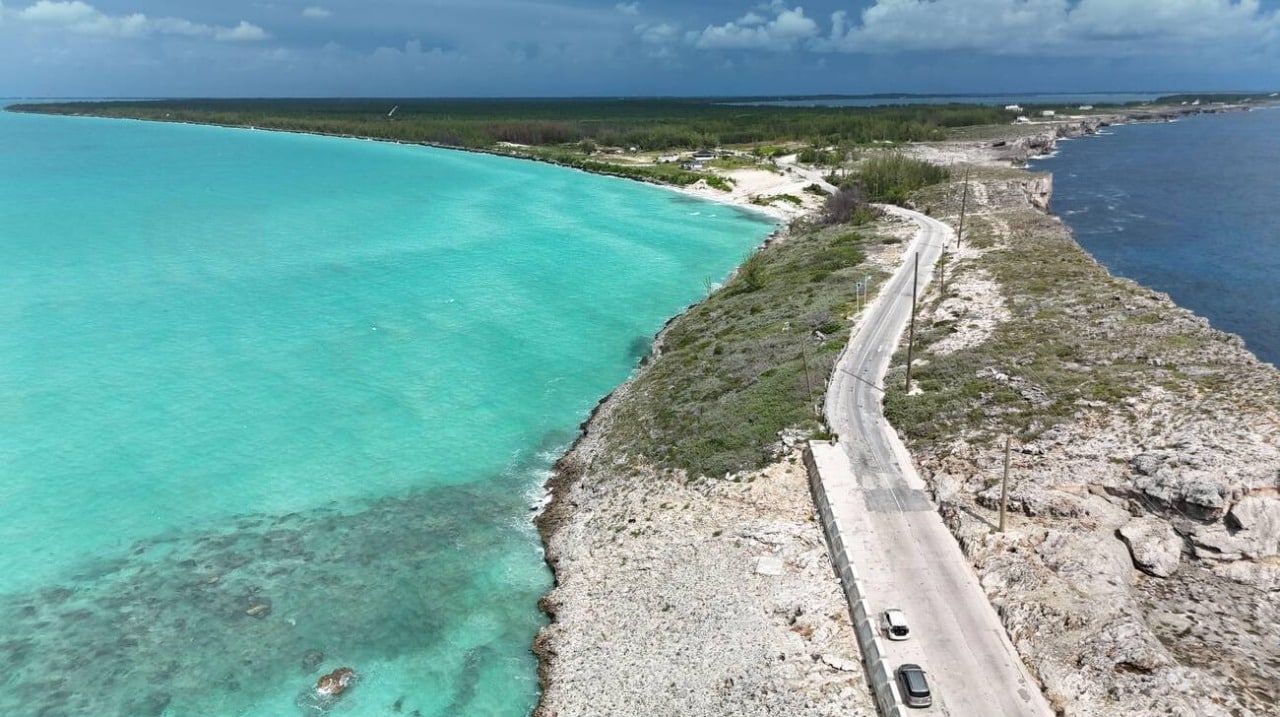
And the nine meters do not refer to the length of the bridge. Built in 1990, the current bridge is nearly 40 meters long and spans a gap in the rock. It carries the road that connects the north and south of this very long island.
Why Does the Water Change Color on Each Side?
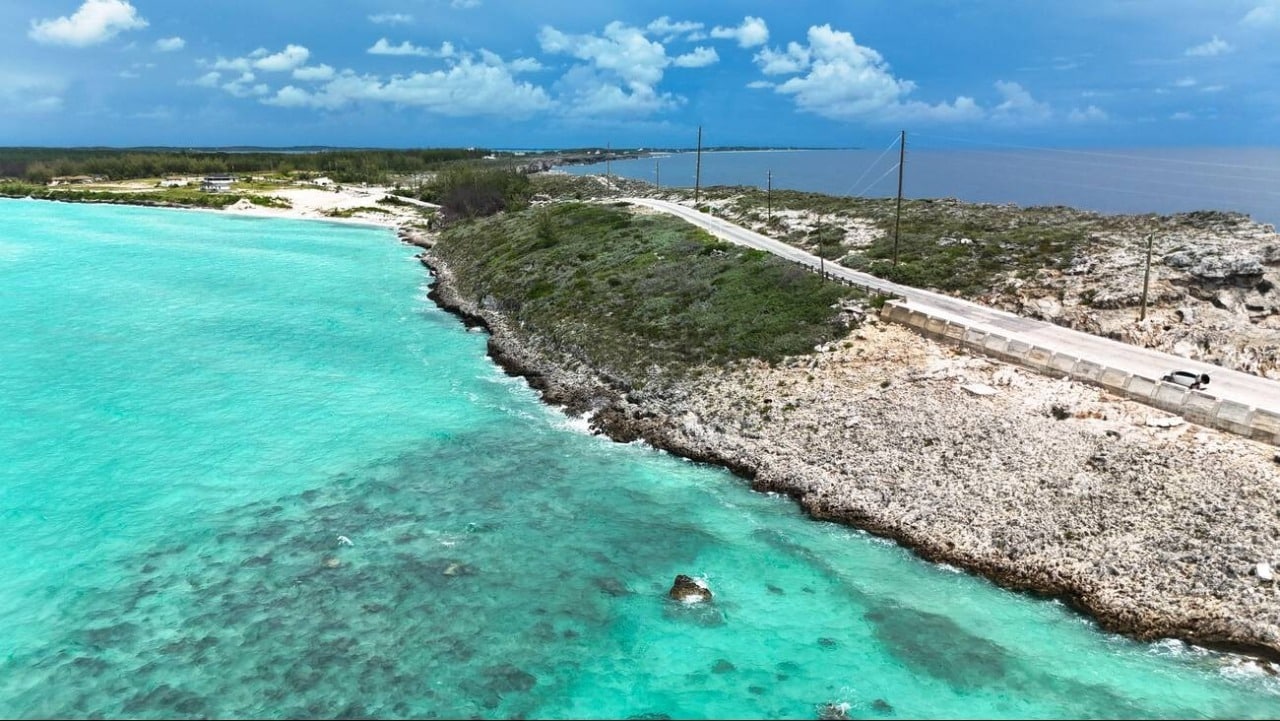
The aerial views almost give the impression of looking at two different worlds. On one side, the deep blue of the Atlantic; on the other, the turquoise waters of the Bight of Eleuthera, the bay to the west. Contrary to a common misconception, it is not the Caribbean Sea that borders the bridge.
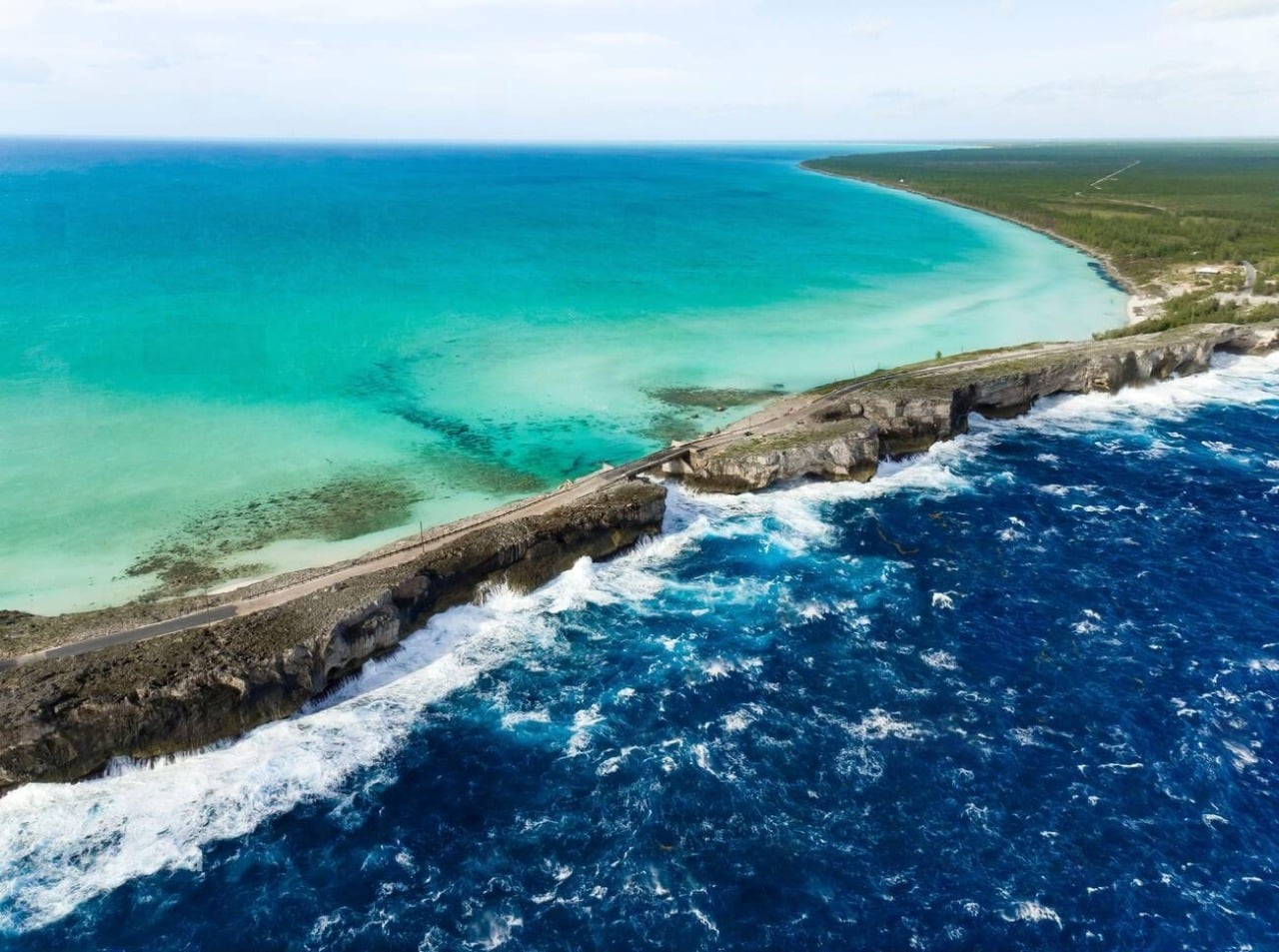
This contrast does not indicate where two oceans meet. To the east, the deep waters absorb more light and appear dark. To the west, the bay, which is more sheltered and shallower, reveals a light-colored seabed that enhances the turquoise hues. The state of the sea further accentuates the difference. The Glass Window Bridge thus allows visitors to observe, at a single glance, the effect of the underwater topography on the color of the water.
A Natural Window You Can No Longer See
Long before the concrete was poured, a limestone arch spanned the passage. Marine erosion had carved out the rock, creating a “window” through which one could see the water on the other side.
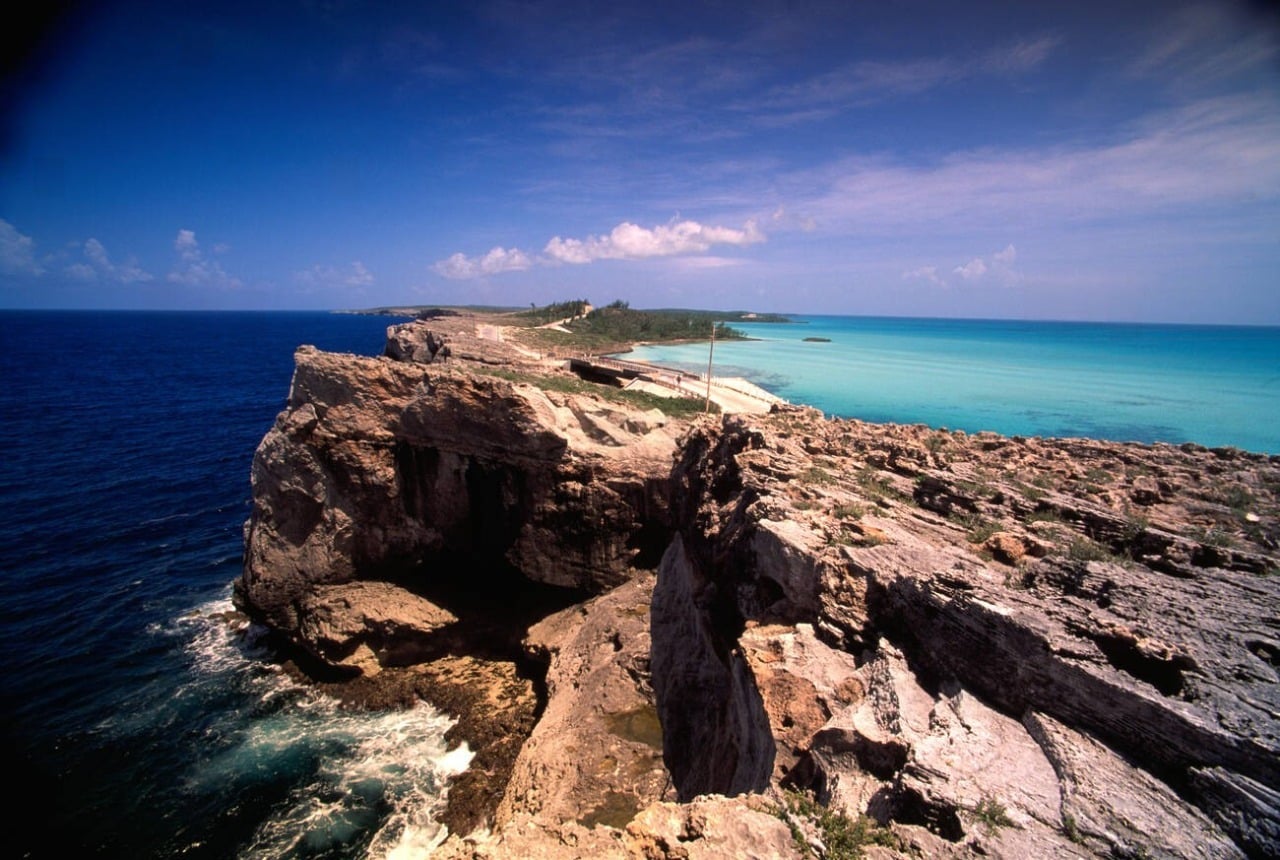
The name Glass Windows already appeared in travel accounts from the 1870s. Around 1885, the American painter Winslow Homer depicted the arch in a watercolor now held at the Brooklyn Museum in New York. His painting shows a landscape that today’s visitors can no longer see. The arch that originally formed the Glass Window Bridge eventually disappeared under the onslaught of storms. The exact date of its destruction remains uncertain. The watercolor, however, allows us to appreciate just how much the site has changed.
“Rages” Capable of Moving the Bridge
The locals have long been familiar with the ferocity of the swell. As early as the 19th century, travelers were already describing rages, those sudden surges of the sea that can occur even when the wind seems light. In 1872, a wave reportedly caught people gathered near the arch by surprise.
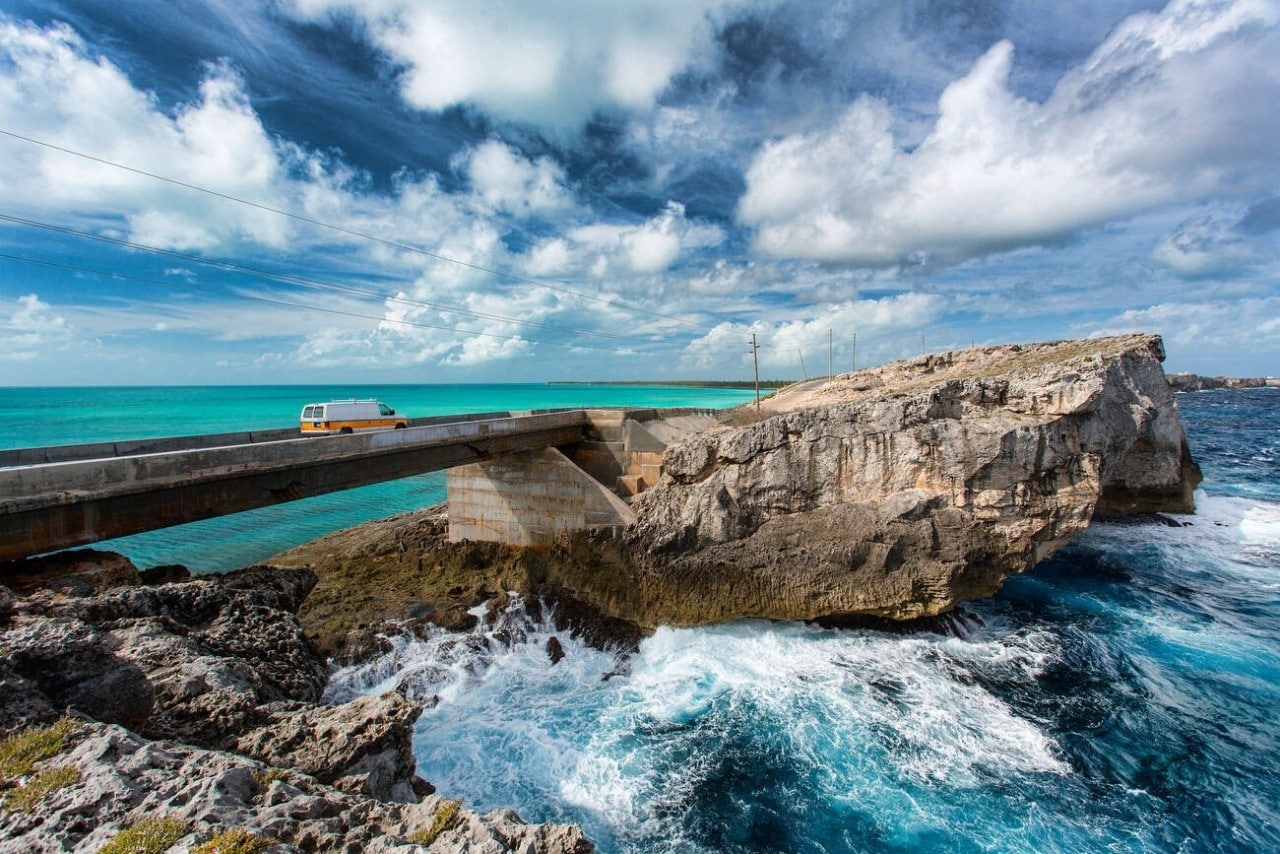
In 1991, an exceptional episode lifted the bridge, which had been built the previous year, and shifted it several meters. Hurricanes Andrew in 1992, Floyd in 1999, and Michelle in 2001 added to the damage. At the Glass Window Bridge, waves can crash over the rocks and flood the roadway. The danger is therefore not limited to when a hurricane passes directly over the island: a strong swell from the open sea is sometimes enough to close the road.
The Only Road Link Between Two Parts of the Island
The Glass Window Bridge is not just a place where visitors stop to take photos. It is the only road link between the north and south of Eleuthera. A closure could disrupt travel, maintenance work, and access to services.
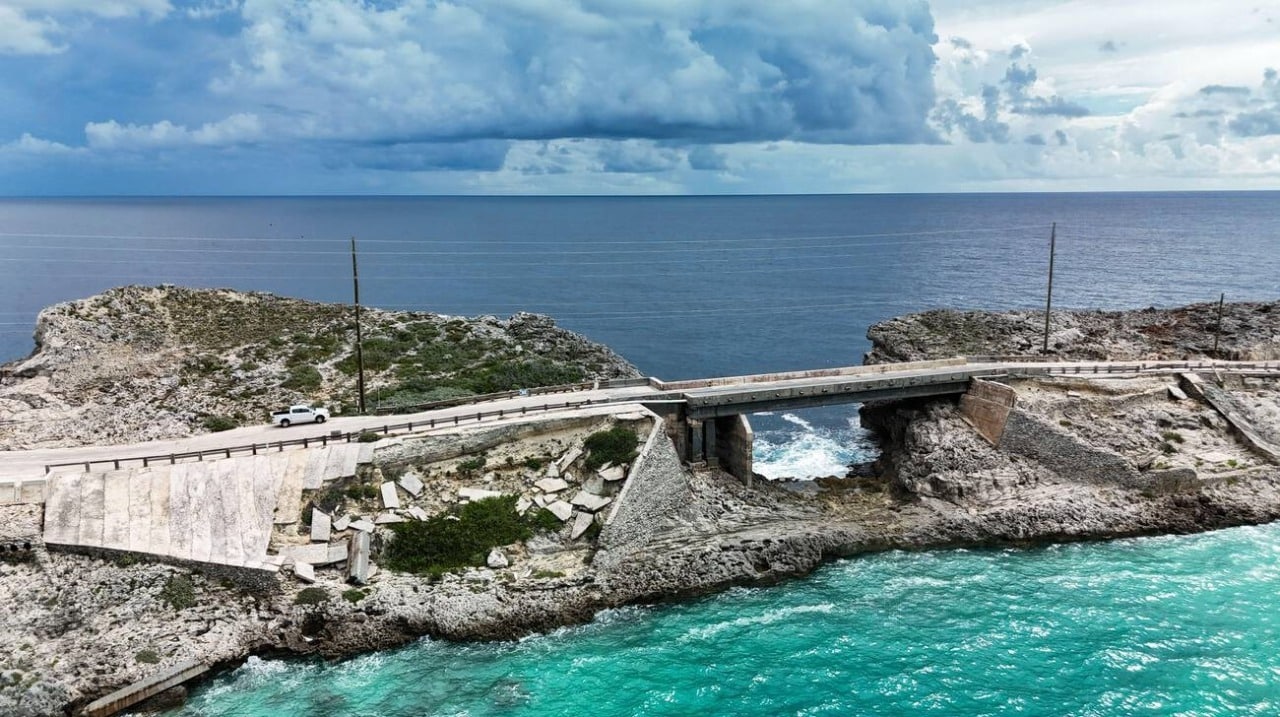
In October 2026, a power outage in the northern part of the island provided a concrete example of this. Bad weather and the closure of the bridge prevented crews from Bahamas Power & Light from immediately accessing the affected areas. Repair work resumed after the bridge reopened. The road, which looks so impressive from the air, also ensures the continuity of essential services on a daily basis.
A New Bridge to Better Withstand the Waves
The Bahamas is preparing to replace the weakened structure. According to plans presented in 2026, the new structure would be built approximately five meters higher and shifted about 18 meters toward the bay, with two traffic lanes and sidewalks. The goal is to reduce the risk of flooding while maintaining this essential connection. The start of major construction is planned for 2027, subject to the project’s progress.
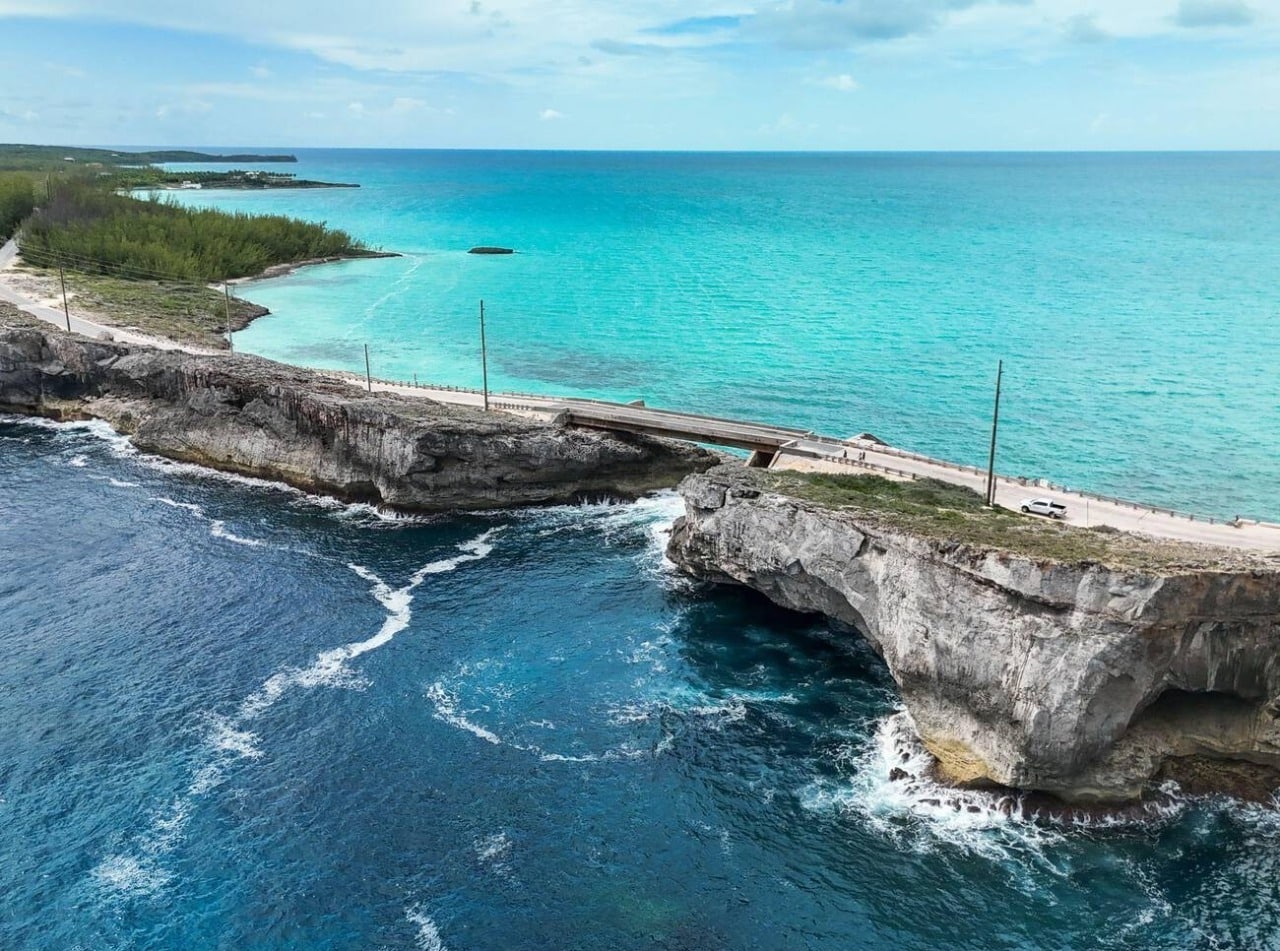
The challenge facing the future Glass Window Bridge goes beyond engineering. It’s about protecting residents without losing what makes this crossing so special. On this narrow strip of rock, history reminds us that landscapes are never static. The natural arch has disappeared, storms have transformed the site, and today’s infrastructure must adapt.
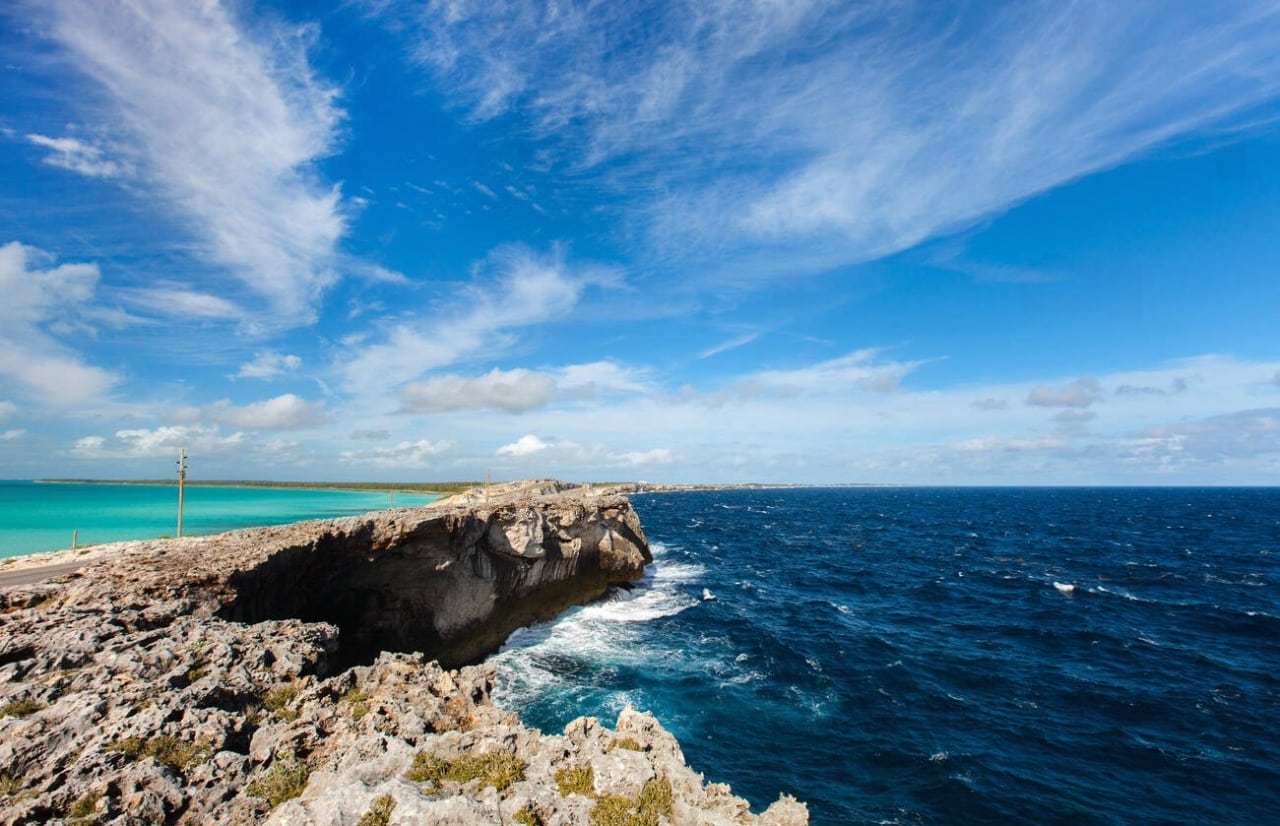
How can we preserve this exceptional landscape while ensuring that the residents of Eleuthera have a safe and sustainable road?
FAQ – Glass Window Bridge
It is so named because of the narrowness of the rocky passage, which is about 9.14 meters wide. This nickname is not an officially recognized geographical record. The bridge itself is about 40 meters long.
The contrast stems mainly from the depth of the water and the nature of the seabed. The Atlantic appears dark blue, while the shallower waters of Eleuthera Bay take on turquoise hues.
Located on Eleuthera Island, it provides the only road link between the north and the south. Closures can disrupt residents’ travel as well as the operations of essential services.