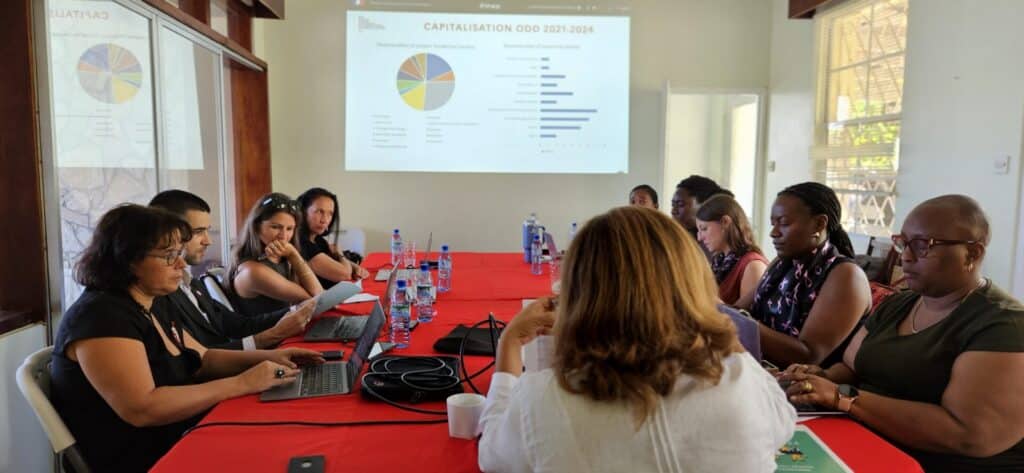
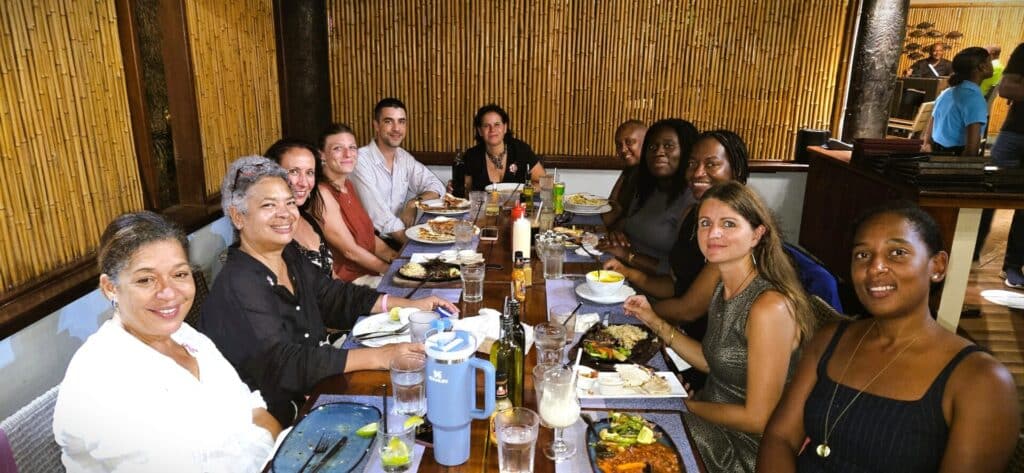
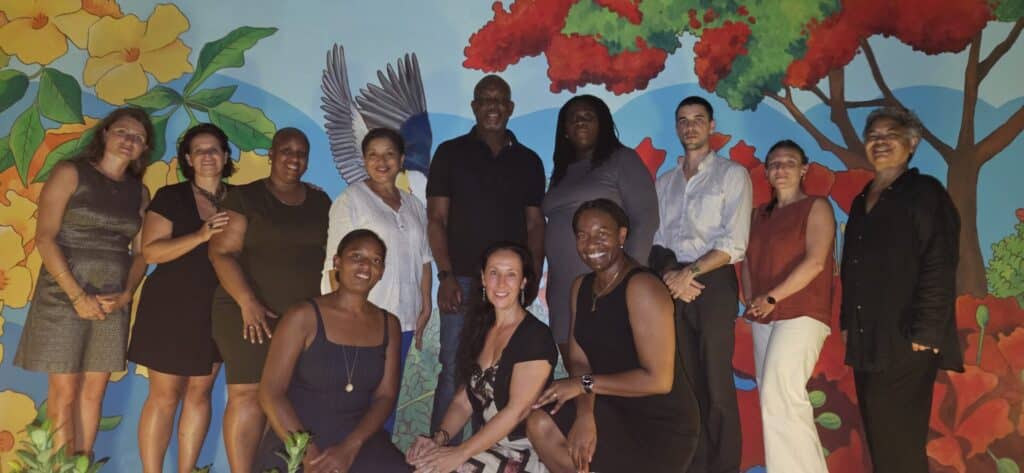
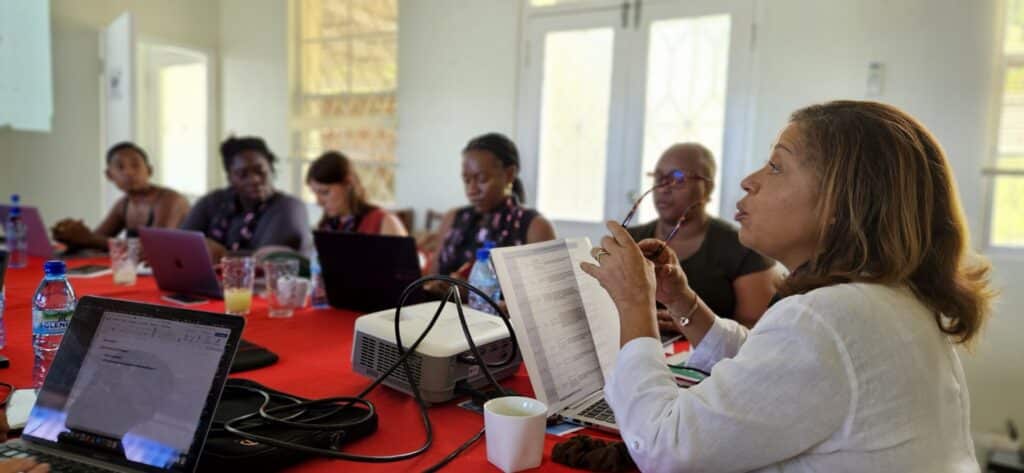
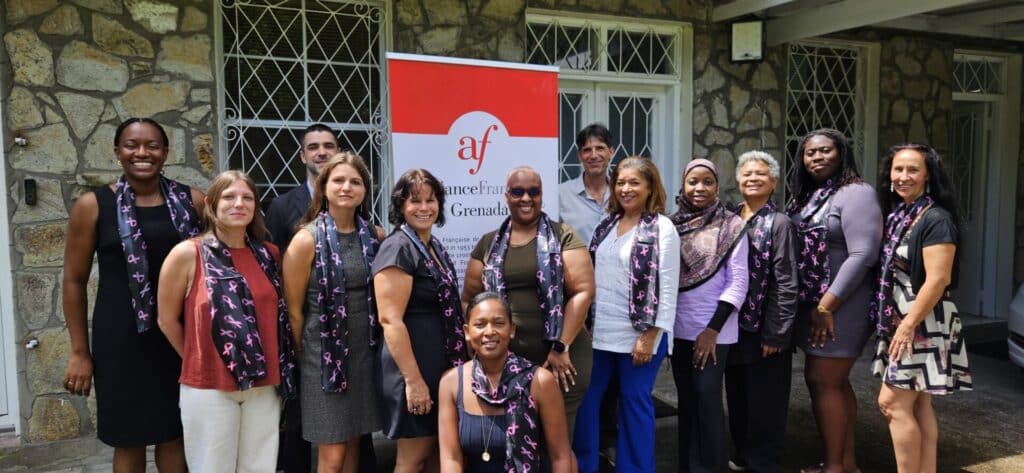
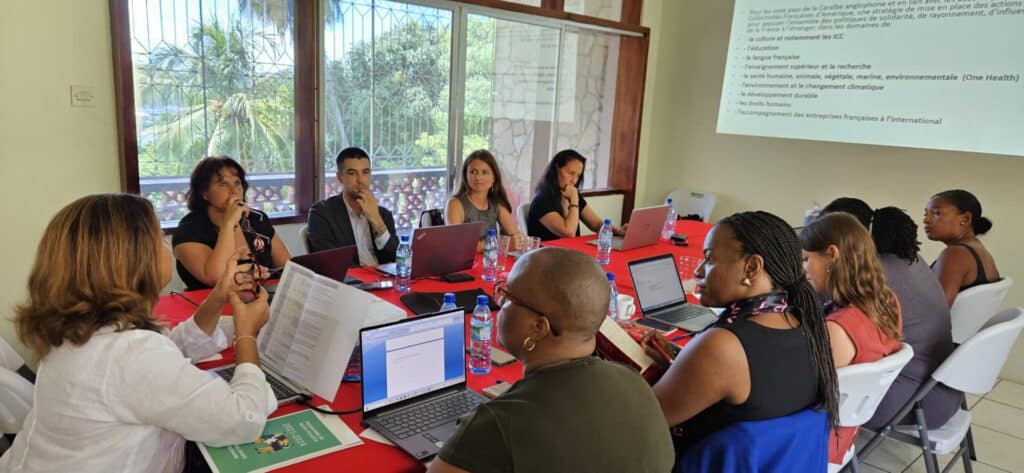
The Rézo 2025 seminar, held in Grenada, brought together the directors of the Alliances Françaises of the English-speaking Caribbean, with the same ambition: to consolidate the links between the territories and reinforce the vitality of the French-speaking world in the region.
Having explored the institutional and strategic vision of this regional cooperation in the previous article, “The Alliances Françaises network at the heart of the Caribbean: cooperating, innovating, sharing”, Richès Karayib now turns the spotlight on those who are at its beating heart.

For several days, the participants shared their experiences, challenges and successes, revealing a common conviction: to bring culture and the French-speaking world closer to the people of the Caribbean via the Alliances Françaises.

Alliances Françaises

An essential meeting for a fragmented network

Each Alliance Française operates on an island, often geographically isolated. This seminar, organized with the support of the Service de Coopération et d’Action Culturelle (SCAC) of the French Embassy in Saint Lucia, was a breath of fresh air for the Alliance Française network. The directors emphasized that these meetings are an essential step: they enable them to exchange tools, compare local realities and together find concrete solutions to shared challenges. They all emphasized the strength of the collective, the richness of exchanges in an English-speaking environment and the complementarity of approaches between territories.

These moments offer both a human and a formative dimension: they re-energize, reinforce solidarity and remind us that, despite the diversity of contexts, the Alliances Françaises move forward with the same ambition – to make the French-speaking world live and shine in the Caribbean. From an institutional point of view, Christiane Bourgeois, Cooperation and Cultural Action Advisor, reminded us that this annual seminar is the only time when all the directors can get together to discuss successes, difficulties and common perspectives.

Alliances Françaises

Nine territories, nine realities, but the same conviction: these times of exchange are essential to maintain the network’s momentum and strengthen cooperation in the Caribbean. Beyond these collective exchanges, it is in the field that the vitality of the Alliances Françaises network takes on its full meaning. Each Alliance Française acts in its own way, in line with the realities of its environment and the languages and cultures of its territory.

Alliances Françaises

A deep-rooted network: ten Alliances, one commitment

Although their contexts differ, the Alliances Françaises of the English-speaking Caribbean share the same vocation: to teach, connect and bring the French-speaking world to life on a daily basis. They adapt to local realities with the same conviction: culture and language are levers for social cohesion, openness and the future.

Grenade – Ilona Forte-Gilbert: teaching differently, connecting differently

The Alliance Française de Grenade operates without permanent premises, a situation that Ilona Forte-Gilbert has turned into an asset.

Courses are now offered online, helping to maintain the French language’s presence and reach new audiences. The Alliance is also involved in schools through educational and cultural activities carried out in partnership with teachers. Out-of-home screenings and workshops keep us in touch with the community.

“Our priority is to remain present and useful, even without a building. Digital technology and partnerships enable us to keep the Alliance going.”

Alliances Françaises

Saint Lucia – Aurélie Gbeffa: coordinating and federating

In Saint Lucia, Aurélie Gbeffa runs the local Alliance and is responsible for regional coordination of the ten Alliances Françaises in the Eastern Caribbean. She assists managers with communication, pooling, associative governance, digital transition and cultural revitalization.

It also pilots the Rézo project, an annual seminar supported by the SCAC, which has become a key event for cohesion and collective reflection. In Castries, the Alliance Française de Sainte-Lucie combines language courses, cultural activities and Creole language promotion through exhibitions and workshops.

“Our strength lies in moving forward together while valuing the cultural diversity of our islands.”

Alliances Françaises

Barbados – Océane Gaillard: promoting French in an English-speaking environment

In Barbados, the Alliance Française acts as a linguistic and cultural bridge. Under the leadership of Océane Gaillard, it has consolidated its foothold in a predominantly English-speaking environment. Educational programs have been set up for schools and adults, and the Alliance has trained members of the Regional Security System in French and Haitian Creole.

On the cultural front, it has welcomed the Guianese troupe Ôtepé, and is developing a program open to different French-speaking expressions.

“We represent a plural Francophonie: France, Africa, Canada and the Caribbean. Culture is our best lever for inspiring the desire to learn.”

Alliances Françaises

Trinidad & Tobago – Anyka Batista: an open and inclusive francophonie

In Trinidad & Tobago, Anyka Batista defends an inclusive and creative Francophonie, which values local languages as much as French. Every October, Creole Heritage Month brings together screenings, conferences and concerts, reflecting a strong commitment to cultural diversity.

The Alliance Française also offers courses for children, teenagers and adults, as well as cultural evenings that encourage encounters between communities. Challenges related to visibility and funding persist, but are offset by a collaborative approach with local schools and institutions.

“We want the Francophonie to be seen as part of our culture, not something external.”

Anyka Batista

Jamaïque – Clovis Lemée: creating living spaces

In Jamaica, Clovis Lemée is revitalizing a historic Alliance Française, transforming it into a place for living and creating. The Language Exchanges, monthly multilingual evenings, bring together a varied public around cultural themes, while the French Library Sessions – mini-concerts filmed in the media library – turn language into a tool for encounters and artistic expression.

“Learning a language is about creating links. That’s what the Alliances Françaises are all about.”

This cultural dynamic is attracting a younger audience and helping to restore the French language to its rightful place in the English-speaking Caribbean.

Clovis Lemée

Saint-Kitts & Nevis – Lucille Caulliez : education and ecology

The Alliance Française de Saint-Kitts & Nevis combines language learning with civic engagement. Her Naturally Learn French project, supported by a grant from the French Embassy to the Eastern Caribbean, Barbados and the OECS, offered six months of free tuition to twelve teenagers from disadvantaged backgrounds, combining French language discovery, ecological workshops and cultural activities. Each month, participants explored local ecosystems, cultivated a garden, created with recycled materials or exchanged online with students from Guadeloupe – a concrete and lively way to learn the language while forging links in the Caribbean.

This project, which earned the Alliance the Green Alliance Award from the Global Environment Facility, illustrates the vitality of an open, sustainable and youth-oriented French-speaking community. She is also developing Francoscop, an audiovisual series produced by young people, dedicated to the French-speaking world.

Director Lucille Caulliez sums up the spirit of the program:

“We want to show that French is a tool for openness and creativity.”

Lucille Caulliez

Dominique – Cévinne M’Voula-Henderson: connecting languages and cultures

Established in 1965, the Alliance Française de la Dominique is active in the educational and cultural fields. The Creole & French Spelling Bees, bilingual spelling contests, encourage students to play with the two languages, understand their complementarity and take pride in them. Training workshops and cultural activities support the enhancement of Creole heritage while promoting the French language.

“The aim is to make French and Creole languages of pride and transmission.”

Alliances Françaises

Guyana – Déborah First-Quao: rebuilding and training

In Georgetown, Déborah First-Quao, recently appointed to Guyana, is re-launching a long-standing but low-profile Alliance Française by focusing on training and educational partnerships. She has created a network of French teachers, developed bilingual workshops at the National Library and renewed ties with local institutions. Cultural and educational initiatives aim to put French back into everyday life, despite major logistical constraints.

“We want to restore French to its rightful place in schools, showing that it can be useful, lively and accessible.”

Alliances Françaises

Suriname – Virginie Lemay: building institutional bridges

In Suriname, Virginie Lemay is strengthening links between the Alliance Française and local institutions. Language training is offered to the security forces, the Ministry of Education, businesses and the hotel industry. La Journée Française, organized with the Collectivité Territoriale de Guyane, is a five-day event featuring exhibitions, professional meetings and concerts.

“French becomes a concrete tool for regional cooperation.

This cross-sectoral approach positions the Alliance Française as a key player in the dialogue between Suriname, Guyana and the rest of the Caribbean.

Alliances Françaises

A shared vision: support, connect, promote

For Christiane Bourgeois, Regional Advisor for Cooperation and Cultural Action at the French Embassy in Saint Lucia, this seminar is an essential moment for consolidating the network’s ties. She points out that it’s “the only occasion of the year when we have the opportunity to meet the directors of the Alliances Françaises”, a privileged time to take stock, exchange practices and difficulties, and set up joint projects.

“The Alliances Françaises are an essential tool for embassies, especially in areas like the Caribbean, where there is no Institut Français. They are local organizations, rooted in the territory, with their own board of directors and their own strategy”. She also recalled the key role played by the Alliances in disseminating the French language and promoting dialogue between peoples, stressing that they promote the language, ensure its teaching and maintain the link between the cultural and the educational, between France and the countries of the region.

Alliances Françaises

Aware of the economic fragility of the associative model, Christiane Bourgeois stresses the importance of the support provided by the Service de Coopération et d’Action Culturelle (SCAC) and the French Ministry of Europe and Foreign Affairs.

Last but not least, it pays tribute to Granada, the seminar’s host, and its people:

“It’s an absolutely authentic island, with extremely friendly people. I encourage all French and Caribbean people to come to Grenada, a country that deserves to be known and appreciated.”

Alliances Françaises

Where the French language comes alive

Over and above balance sheets and figures, these meetings are a reminder that the French-speaking world lives and breathes through the people who make it happen. On every island, the Alliances Françaises gather, transmit and inspire. Anchored in their reality, they build bridges between languages, cultures and generations – a living, inclusive and deeply Caribbean Francophonie.

The Alliances Françaises play a central role in French language teaching, cultural dissemination and dialogue between Caribbean territories. Anchored locally, they adapt their actions to the social, linguistic and cultural realities of each island.

The Rézo seminar is the only annual gathering of all the directors of the Alliances Françaises in the Caribbean. It enables them to share practices, strengthen regional cooperation and maintain a collective dynamic in a geographically dispersed network.

The Alliances Françaises develop tailor-made projects: online or face-to-face courses, actions in schools, ecological projects, cultural events, professional training or institutional cooperation. This adaptability is their strength in a predominantly English-speaking environment.

IEDOM – Behind the influence of France’s overseas territories lies a key challenge: sustainable, inclusive development. As the central bank for the French overseas departments and territories, the “Institut d’émission” plays an essential role in supporting businesses, promoting promising projects, fostering financial education and strengthening the resilience of local economies. A discreet but essential player in the dynamics that also irrigate the economic, cultural and tourist sectors of these territories.

INTERVIEW - Ivan Odonnat, Chairman of the IEDOM

IEDOM
Ivan Odonnat

What exactly is the role of the IEDOM in the French overseas territories?

IEDOM is the “Institut d’émission des départements d’outre-mer” (French overseas departments note-issuing bank). It acts as the Banque de France’s delegated central bank in the overseas territories whose currency is the euro. We are present in Guadeloupe, Saint-Barthélemy and Saint-Martin, Martinique, French Guiana, Mayotte, La Réunion and Saint-Pierre-et-Miquelon. Our head office is located in Paris.

IEDOM
MAP IEDOM

What are your concrete fields of action?

Our missions are many and varied. We put euro bills and coins into circulation, guaranteeing their security and quality. We analyze the financial health of companies, and help individuals in financial difficulty. We also contribute to the financial education of the general public, including young people. Finally, we produce studies on a wide range of topics: economic conditions, inflation, unemployment, the financial situation of companies, payment terms, financing conditions, credit, savings, bank rates.

IEDOM
EDUCFI
IEDOM
EDUCFI
IEDOM
EDUCFI

Do you have a concrete example for an individual in financial difficulty?

When an individual is no longer able to repay their debts, they can file an over-indebtedness application. If the application is accepted, the over-indebtedness commission will choose the best possible solution, depending on the individual’s financial capacities: a break in payments, spreading repayments over a longer period, or even cancelling certain debts if the situation shows no sign of improving.

IEDOM

What about companies? Do you help them find financing?

Exactly. We support very small businesses (VSEs) and small and medium-sized enterprises (SMEs) via our VSE-SME correspondents in our branches. They are available to listen to entrepreneurs about their financing issues and direct them to the right contacts. Simply make an appointment.

IEDOM

What are your financial education missions?

We put in place a range of initiatives to raise public awareness of economic and financial issues. For example, we offer workshops on budgeting, bank accounts and credit. We give advice on how to recognize and avoid financial scams. Finally, we organize sessions on economic concepts to help you understand current debates.

We work in secondary schools, directly with students and their teachers, as well as with social workers and people in financial difficulty.

IEDOM
Financial Education Week in Guadeloupe
IEDOM
Financial Education Week in La Réunion
IEDOM
Financial Education Week in Mayotte.
IEDOM
Financial Education Week in Martinique

How many people work at the IEDOM today?

We have around 250 employees, divided between our head office in Paris and our 6 branches in Les Abymes, Fort-de-France, Cayenne, Mamoudzou, Saint-Denis and Saint-Pierre. All of them are committed to supporting the economies of the French overseas territories on a daily basis, and to assisting them in their transformations.

You’ll find all our branch addresses and information on our missions on our website www.iedom.fr.

By supporting local economies, facilitating access to financing and accompanying entrepreneurial dynamics, the IEDOM plays a full part in the economic, cultural and tourist vitality of France’s overseas territories.

IEDOM
IEDOM Guadeloupe
IEDOM Guyane
IEDOM La Réunion
IEDOM
IEDOM Martinique
IEDOM
IEDOM Guyane
IEDOM
IEDOM Mayotte
IEDOM
IEDOM Saint-Pierre-et-Miquelon

Stop arnaques” is the name of the hard-hitting campaign launched by the IEDOM (Institut d’émission des départements d’outre-mer) and the IEOM (Institut d’émission d’outre-mer) to respond to an emergency that is all too often underestimated: the upsurge in bank fraud affecting users in the French overseas territories. This initiative aims to raise awareness and arm citizens against increasingly sophisticated scams, at a time when fraudsters are redoubling their creativity thanks to new technologies.

Fake e-mails, calls from bogus advisors, promises of unconditional credit or even cheque manipulation: the modus operandi may be evolving, but the aim remains the same: to take your money. The “Stop Arnaques” campaign, designed to be accessible and straightforward, is aimed at everyone: individuals, professionals, businesses… And its message is clear: when you value your money, you hold on to it.

The false banking advisor : the enemy behind the reassuring voice

He calls gently. He knows your name, your banking habits. He claims he wants to help you block a suspicious transaction.

In reality, he’s manipulating you. This increasingly common ploy is based on fear and panic. By asking you for your credit card or online banking details, they try to break through the last barriers protecting your savings.

The IEDOM and IEOM institutes remind you of an essential rule: no advisor will ever ask you for your personal codes.

If in doubt, hang up immediately and dial your branch yourself. Check your statements and the status of your means of payment regularly. Anticipation is your best defense.

Stop arnaques

Unconditional credit : hope that traps the most vulnerable

Stop arnaques

In times of difficulty, an immediate credit offer can seem like a lifeline.

That’s precisely where the crooks strike.

In exchange for a few dozen euros in application fees, they promise loans with no verification or guarantees. But once the money is paid, they disappear, leaving the victim with a financial loss and often a loss of confidence.

The reminder from the IEDOM and IEOM is firm: credit is a regulated business.

Any person or entity offering you a loan must be approved. Before giving in to the temptation of an offer that’s too good to be true, check its authenticity.

To refuse is sometimes to protect oneself from a destructive spiral.

The check: vigilance is always necessary

Often perceived as a traditional method of payment, cheks are nevertheless the most frequently defrauded.

The scam is simple: the scammer offers to fill it in for you, under the pretext of helping you.

But he takes the opportunity to change the amount or the name of the beneficiary. As a result, you lose control over what should have been a secure transaction.

The “Stop arnaques” campaign emphasizes good practice: fill in your checks, without leaving any empty fields.

Amount in figures and words, date, place, beneficiary and signature: everything must be completed without exception.

This simple gesture can prevent major losses.

Stop arnaques

A clear, straightforward and educational prevention system

With “Stop arnaques”, the IEDOM and IEOM have chosen to speak the truth. No complex jargon, just short, visual, high-impact messages adapted to the realities of the French overseas territories. Three colorful visuals, widely distributed online, summarize the right reflexes to adopt in the face of these everyday pitfalls.

This campaign is not simply a reminder to be cautious. It reflects a deep commitment to protecting users in the French overseas territories in the face of a constantly evolving threat. It aims not only to alert, but also to empower those who, every day, may be targeted.

Stop arnaques

When you value your money, you hold on to it

One of the campaign’s most powerful slogans: “Quand on tient à son argent, on le retentient” (When you value your money, you hold on to it) – perfectly illustrates the spirit of “Stop arnaques”: vigilance is a vital reflex. In a digital world where attempted scams can appear at any time, it’s no longer enough to be aware of the risks: we need to adopt the right behaviors.

By providing clear, practical information that is widely disseminated, the IEDOM and IEOM are providing a structured response to a social problem. Banking scams are not inevitable. As long as you stay informed, keep your distance from suspicious solicitations, and remember that there’s no emergency that justifies giving up your confidential codes.

Stop arnaques

“Stop arnaques” : a call for collective responsibility

While prevention messages are important, the fight against fraud also requires collective mobilization. Raising awareness among family and friends, supporting the most vulnerable, reporting suspicious attempts… everyone can play a part in spreading this vigilance.

“Stop arnaques” isn’t just a campaign. It’s an outstretched hand to all those who, sometimes, don’t dare ask questions, or recognize too late that they’ve been tricked. It’s also a message of hope: in the face of ever more audacious swindlers, the best response remains information, solidarity and prudence.

When you value your money, hold on to it!

Born in Sainte-Rose, Guadeloupe, and based in Antigua for almost 25 years, Michael Eutrope embodies a vision of Caribbean luxury rooted in transmission, refinement and authenticity. With an international career in the prestige hotel industry, he combines experience, rigor and creativity to reinvent upscale tourism in the Caribbean. Here’s a look back at the career and convictions of a man who makes service an art and the territory a place of expression.

A Caribbean journey in the service of hotel excellence

Trained as a chef in Guadeloupe, then in France and England, Michael Eutrope climbed the restaurant ladder to become a manager in the luxury hotel business. After a spell in the French army as maître d’hôtel to generals, he forged a rigorous protocol that has stayed with him ever since. But it was in Antigua that he found his professional equilibrium, becoming a reference in the discreet luxury sector. Today, at the head of MDE Luxury Hospitality Consultant  wich accompanies villas and prestigious homes, offering a tailor-made service worthy of the finest hotels.

Michael Eutrope

Caribbean luxury: authenticity, service and customization

For Michael Eutrope, luxury isn’t about gilding the lily, it’s about getting it right. “True luxury is a clean beach, a good meal, a shower that works and human service,” he sums up. His vision is rooted in local culture: he values traditions, local products and Caribbean hospitality, without ever compromising on quality. Tailor-made is his signature: organizing an experience around sugar cane or the mango festival becomes a pretext for cultural immersion. For him, it’s only by restoring meaning and roots to luxury that the Caribbean will be able to make a lasting impact.

A sustainable hotel industry and talent to discover

Michael Eutrope advocates a human-scale hotel model, based on ecology, the experiential and quality of life. He believes in the potential of farmhouse boutique-hotels, which grow what they serve to their guests in a short circuit. We don’t want 300-room hotels anymore,“he says,” but unique places that are tailored to each customer. He invites Caribbean youth to dream big and embark on careers of service with pride, and appeals to the diaspora: come back to pass on and inspire new generations.

Michael Eutrope

Rekindling the spirit of welcome

“We were very well brought up in the 60s and 70s. We need to rediscover our savoir-être, pass it on and serve with pride,” he insists. Michael Eutrope embodies a Caribbean that dares to distinguish itself through excellence, while remaining true to its DNA. A source of inspiration for all those involved in Caribbean tourism.

Michael Eutrope

Luxury with roots, looking to the future

Through his journey, Michael Eutrope reminds us that the Caribbean doesn’t need to copy external models to shine. By focusing on people, service quality, cultural heritage and sincere hospitality, it can offer the world a unique vision of luxury, warm and sustainable. An invitation to reinvest our territories with boldness and authenticity.

Michael Eutrope

Richès Karayib Introduces Yoni Alpha, Better Known by His Artist Name “Paille” – The Man “Paille”

Paille, a masterful singer-songwriter of Reggae-Dancehall from Martinique, has made a significant mark over the past 20 years with his compelling musical narratives and performances. His career showcases a notable evolution in musical style and thematic depth. With each album and song, he brings thoughtful production and lyrical maturity, consistently addressing complex subjects with a unique artistic voice.

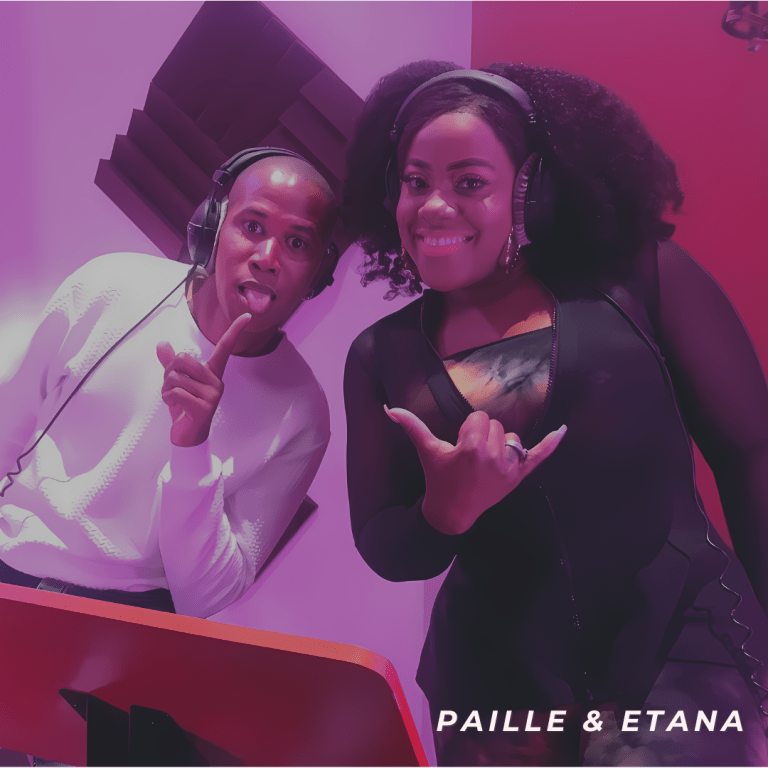
Throughout his illustrious career, Paille has collaborated with a broad spectrum of Caribbean talents, including legends like Kassav and contemporary stars such as Etana, Konshens, Anthony B, Meryl, Straïka D, and the notably talented DJ Avalanche. These collaborations have not only enhanced his musical repertoire but also expanded his influence across Caribbean cultures, solidifying his status as a Caribbean artist.

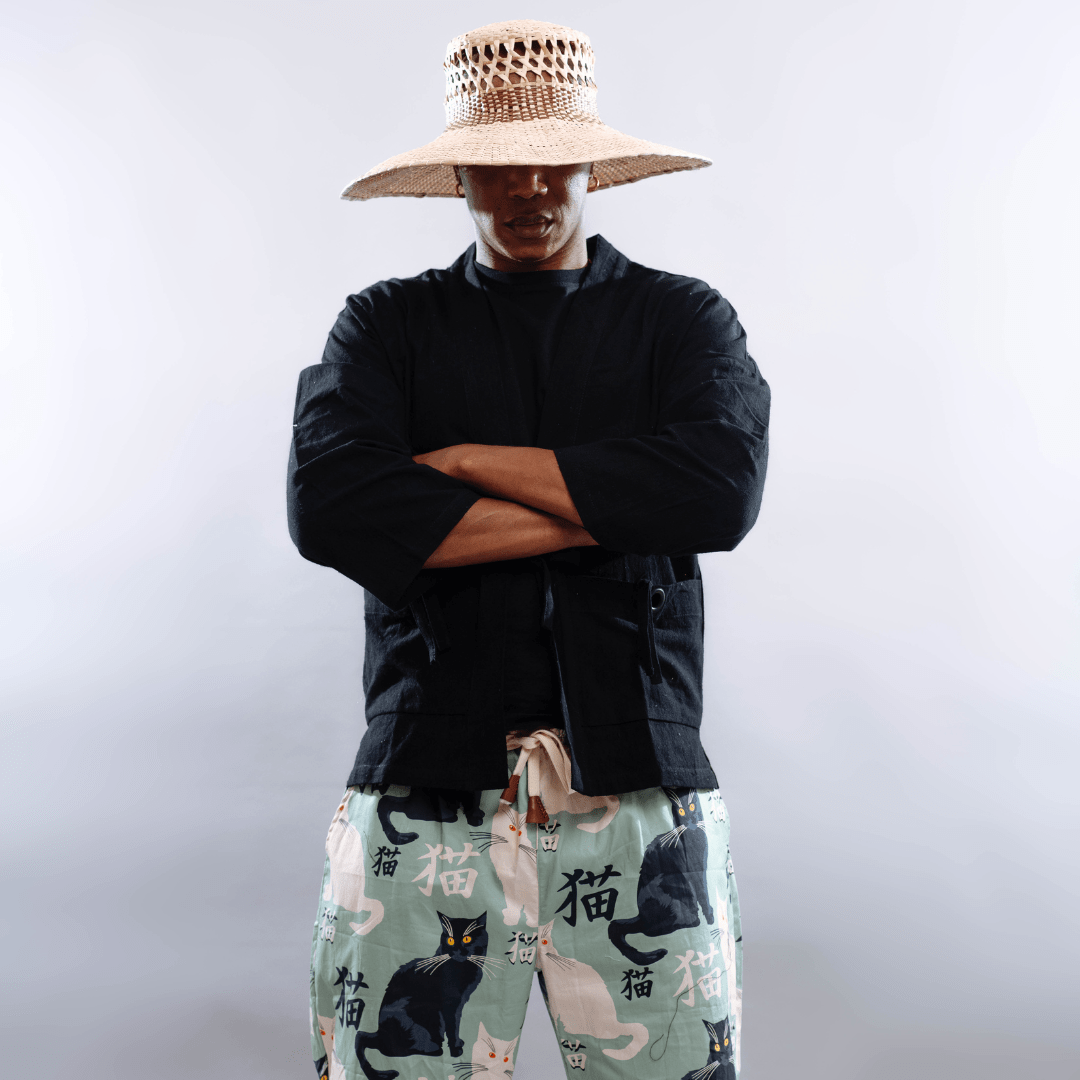
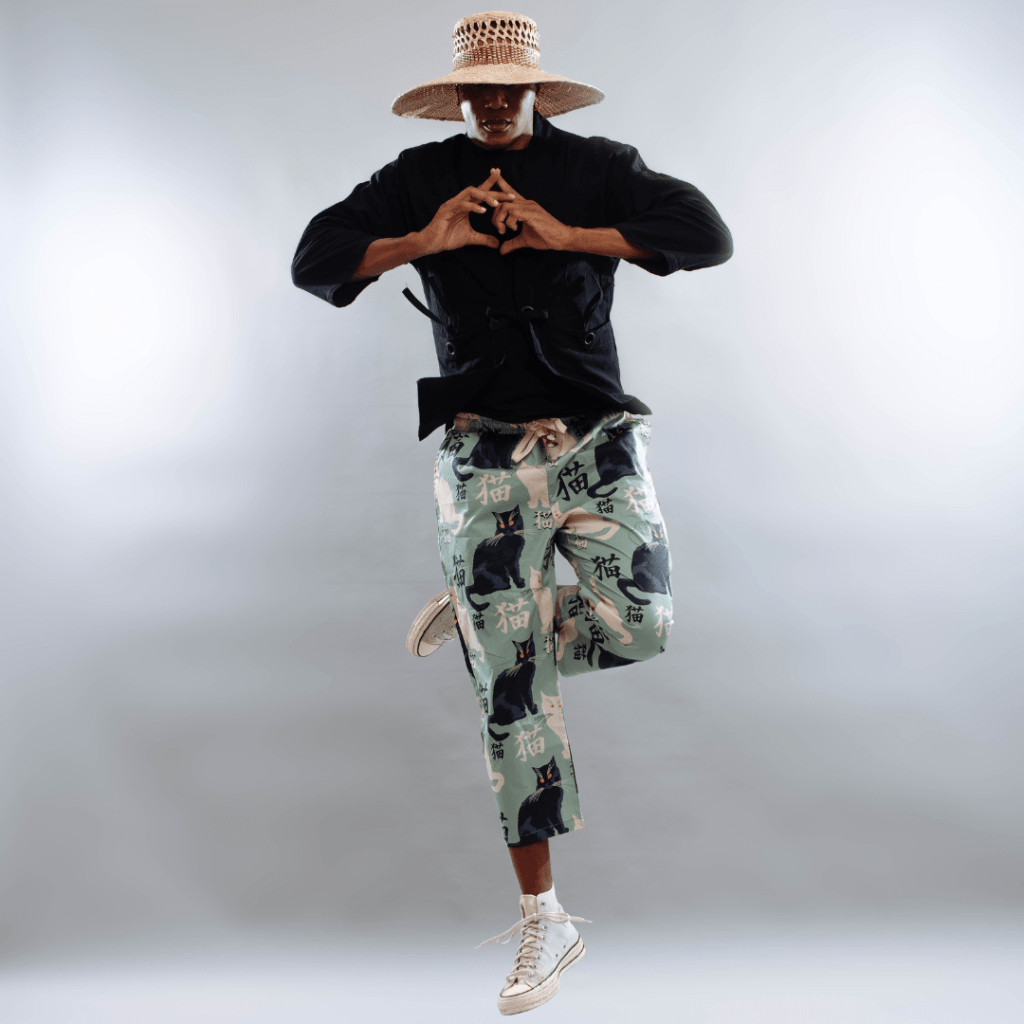
Join us as we delve deeper into the life and music of The Man “Paille,” who intriguingly hides behind his straw hat. Discover the significant impact he continues to have across the Caribbean music landscape and look forward to exploring his latest musical ventures in the sections that follow.

WHO I AM

I am called PAILLE since 1997, it’s a nickname that basically has nothing to do with music, it came from the expression “Boulé An Pay” (which means drunk in creole) and as I had some experiences with alcohol during my youth the nickname remained and became PAILLE, my artist name.

We laugh about it now but at the time it was not fun.

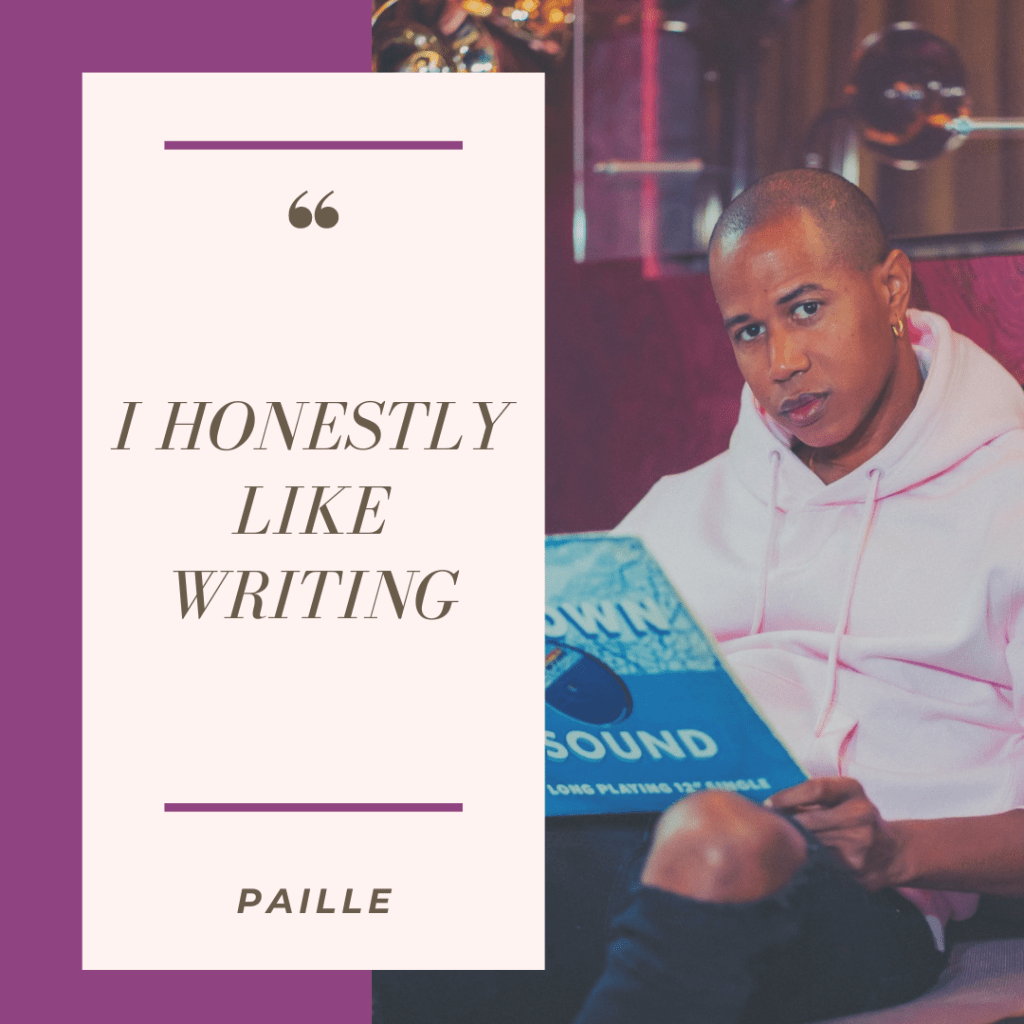
I sing more Dancehall, Raggae, Hip Hop, but honestly I like writing, no matter the kind of music, no matter what the tempo is.

I like the storytelling logic and rap, Dancehall do it well.

There are lighter music, which will be interesting for their musical qualities like zouk, but which are also necessary at times, it depends of the mood, period … and lots of things.

MY BEGINNINGS

I believe I’ve always been someone who hums and mutters lyrics I wrote myself. Even back in school, I’d find myself on stage, belting out the few lines I had penned.

Then, around 2000-2001, I ended up in Byronn’s studio quite by chance, and we tried out a ‘little something’. I wasn’t pleased with the outcome because I really struggled to express what I had in my head through the microphone.

I wanted to get better, so I started going to the studio more and more, until soon it was all I did…

And then, things took off.

First Song

“PA SA PALÉ BAY,” but not in the form it’s known today.

The Ones I Prefer

Once they’re released, the songs aren’t mine anymore. You have to be passionate about what you’re doing as you’re doing it.

That said, some songs are more enjoyable to write because the ideas flow better or the perspective on the issue seems more intriguing.

However, I’m naturally more motivated by the ones yet to come, as I’ll be listening, revising, searching for the right word, the right way to pronounce, rather than those that are already completed.

PAILLE'S LONG AWAITING ALBUM RELEASE

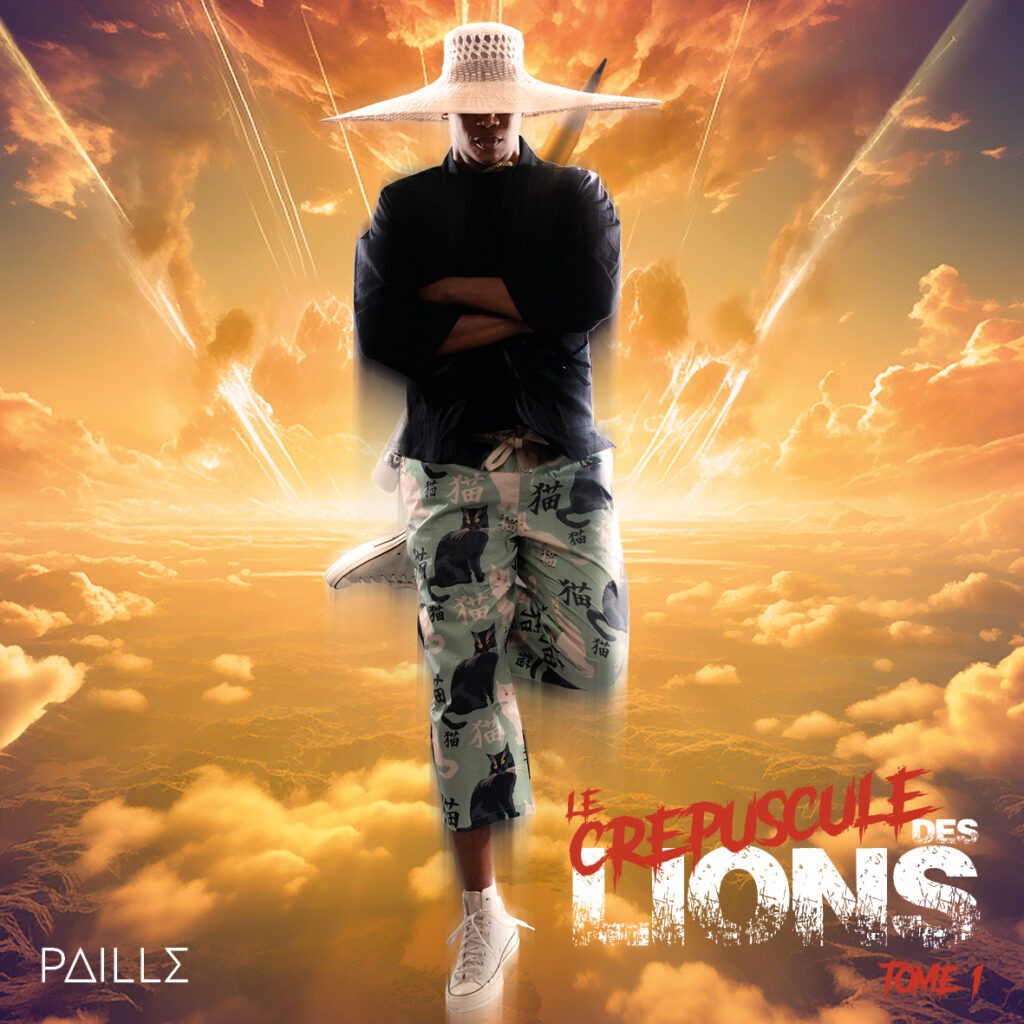
“Le Crépuscule des Lions”

A Fusion of Genres and Emotions

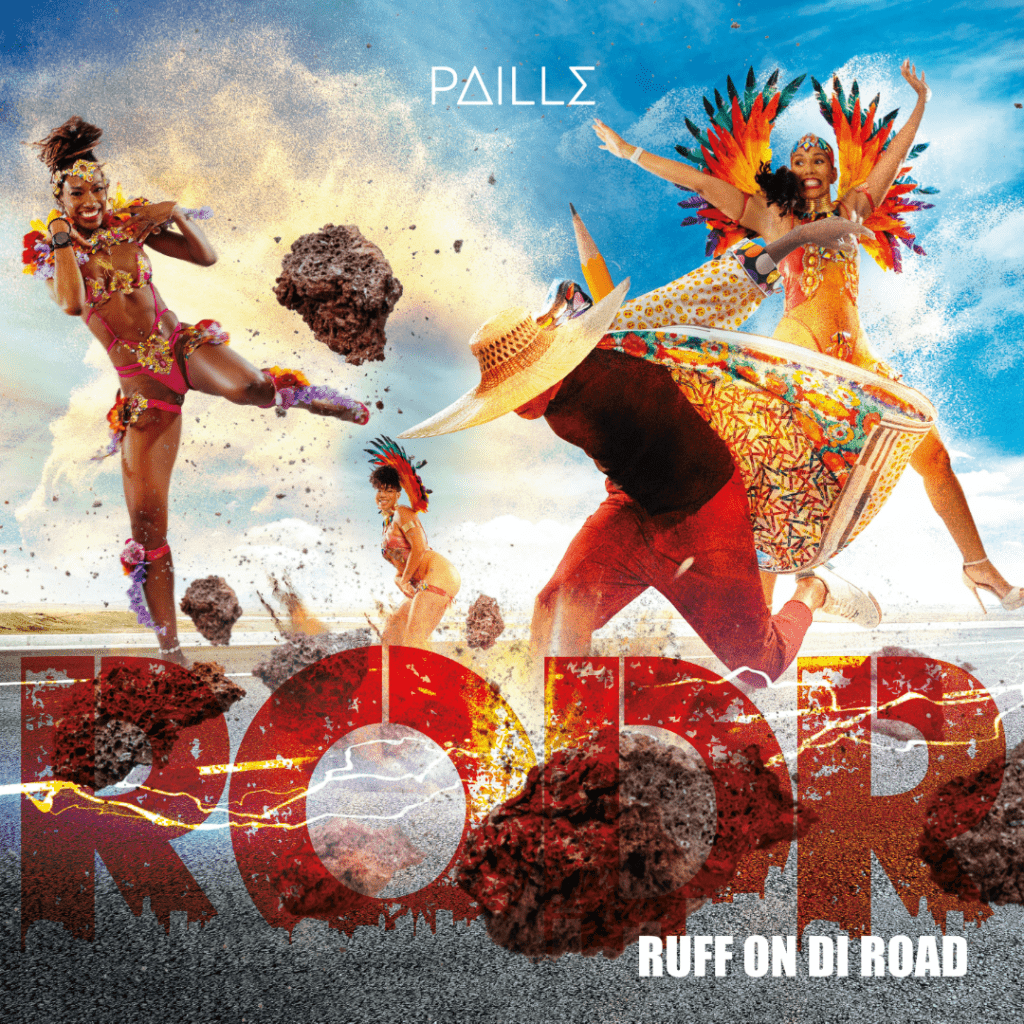
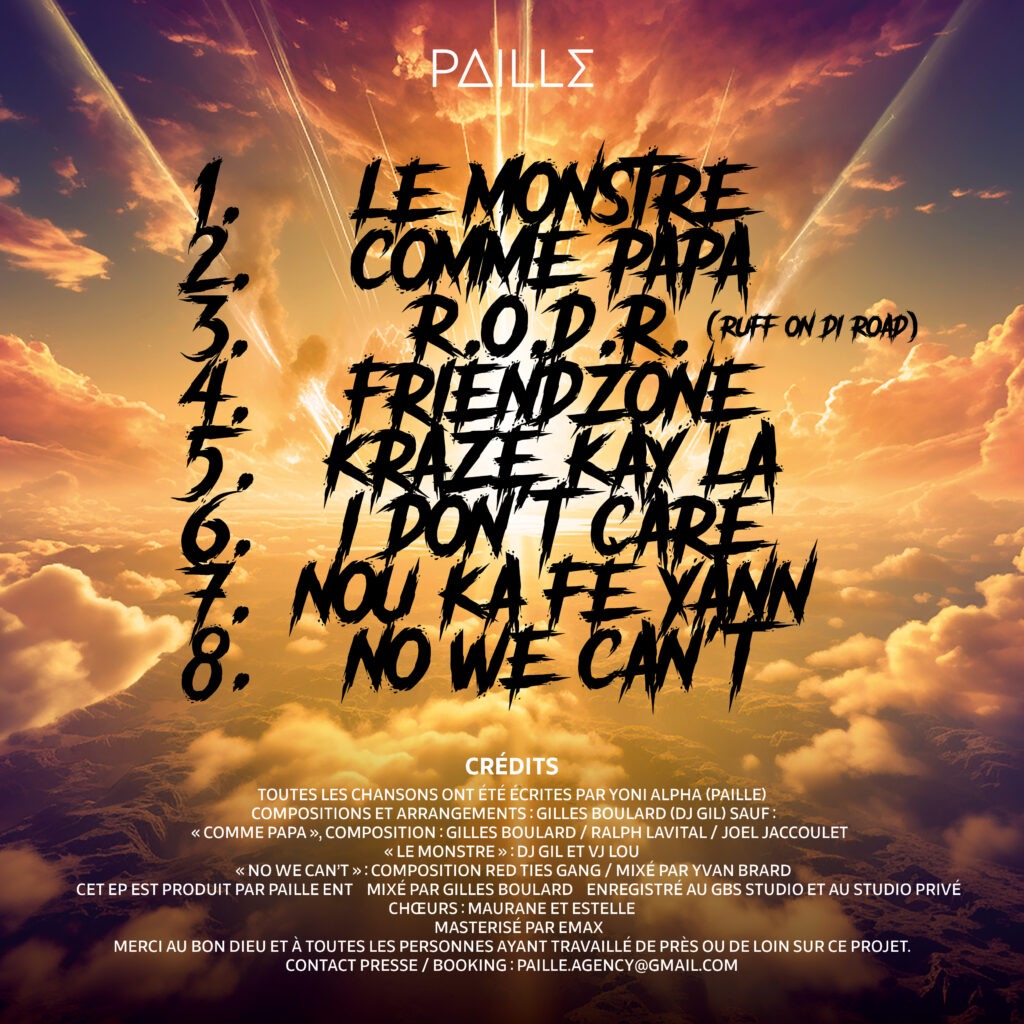
“Le Crépuscule des Lions” offers a mix of musical styles, combining dancehall, zouk, soca, and reggae. Each track serves as a narrative chapter that provides listeners with a profound emotional and thematic journey. From the introspective “Le Monstre” to the energetic “Ruff On Di Road,” and the reflective “Friendzone,” Paille uses his distinctive lyrical approach to explore complex themes.

0:00 / 0:00
RODR - RUFF ON DI ROAD

Friendzone”: Navigating Unspoken Love

“Friendzone” captures the all-too-familiar whirlwind of unspoken love. Paille masterfully weaves this tale with poetic lyrics and melodious Zouk rhythms, painting a vivid picture of the emotions that linger just beneath the surface. Each verse delicately explores the depths of love that remains unreciprocated, resonating with anyone who’s found themselves yearning for someone just out of reach. This track not only touches the heart but also evokes a tender familiarity, making it an  anthem for the love we’ve silently held close.

“Comme Papa”: Sensuality and Emotion

“Comme Papa” by Paille is a masterclass in the art of seduction, blending poetic lyrics with sensual vibes to explore the nuances of love and allure. Directed by Vianney Sotès, the accompanying music video pushes artistic boundaries. This track is an anthem to love’s power, promising an unforgettable auditory experience where Caribbean rhythms meet urban pop, captivating a diverse audience.

Collaboration with DJ Avalanche

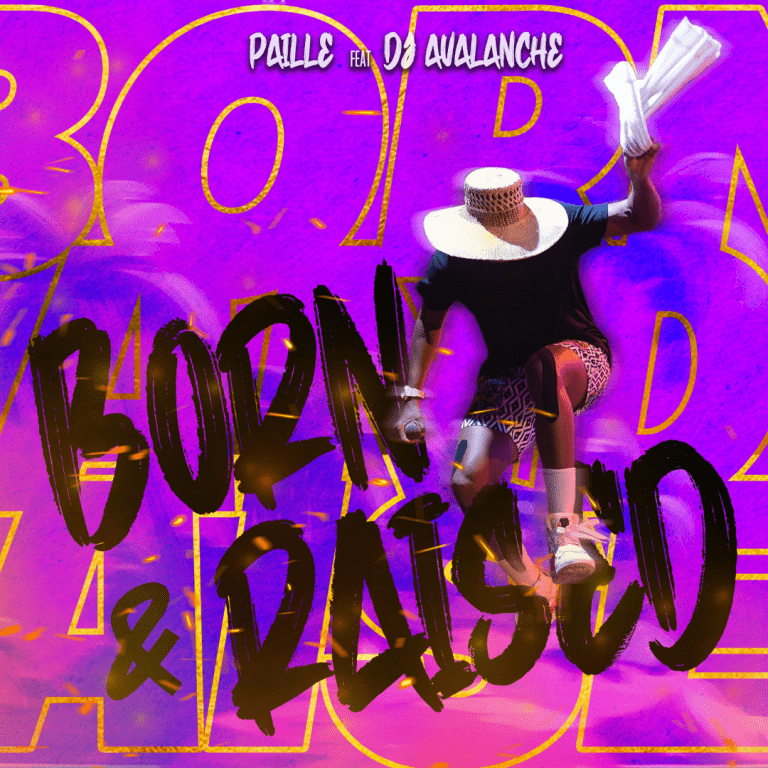
A major release is “Born n’ Raised,” crafted in collaboration with DJ Avalanche. This track has resonated strongly within the Soca community for its powerful message of unity and celebration of Caribbean identity. With its compelling lyrics and anthem-like quality, it is poised to become a staple in caribbean playlists.

0:00 / 0:00
BORN N' RAISED

A Rich Tapestry of Musical Exploration

Discover here the album

THE STAGE, MY PLAYGROUND

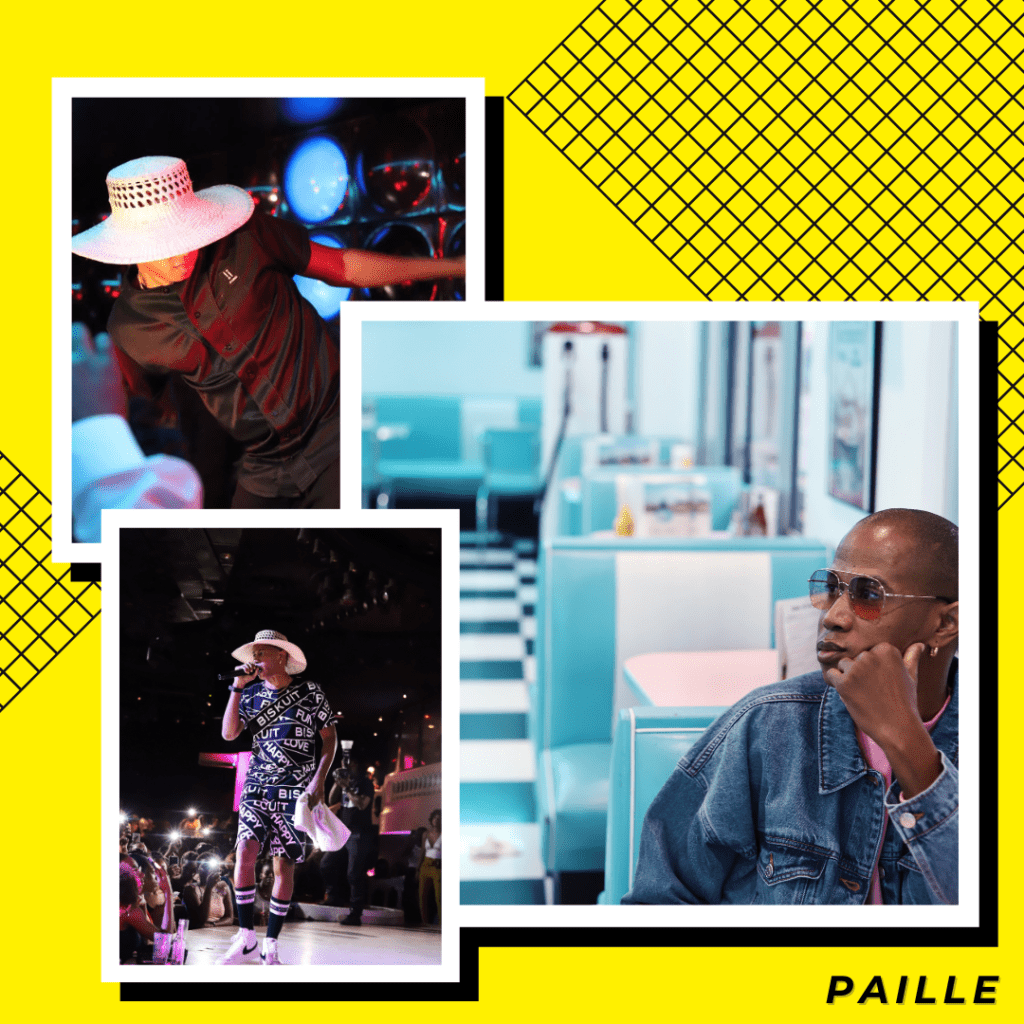
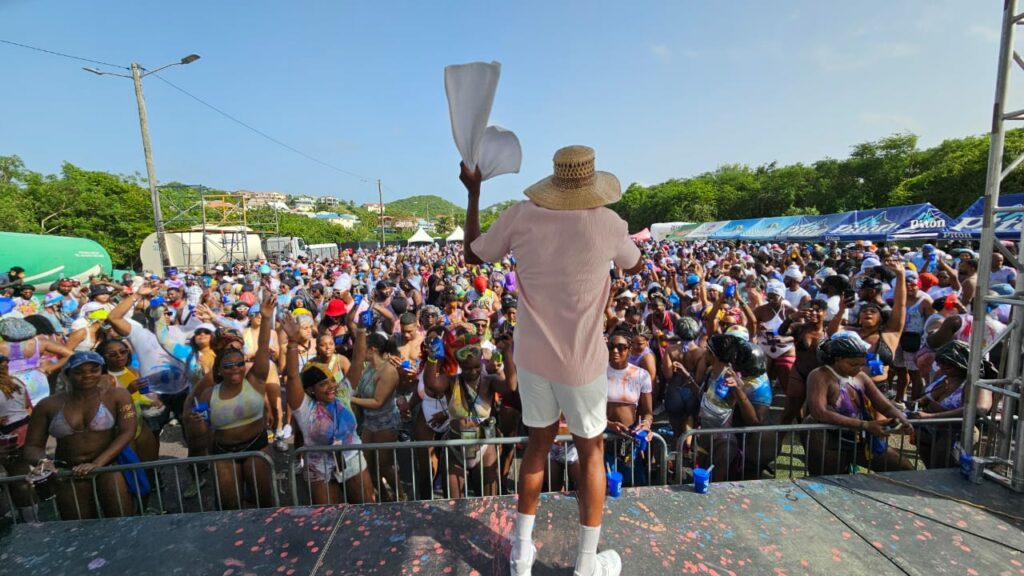
I’ve performed at the Bacchanal Block in Saint-Lucia, the UBERSOCA Cruise, twice at Bercy, the ‘Nuit de l’Outre-Mer’ and at the Olympia with E.sy Kennega. 

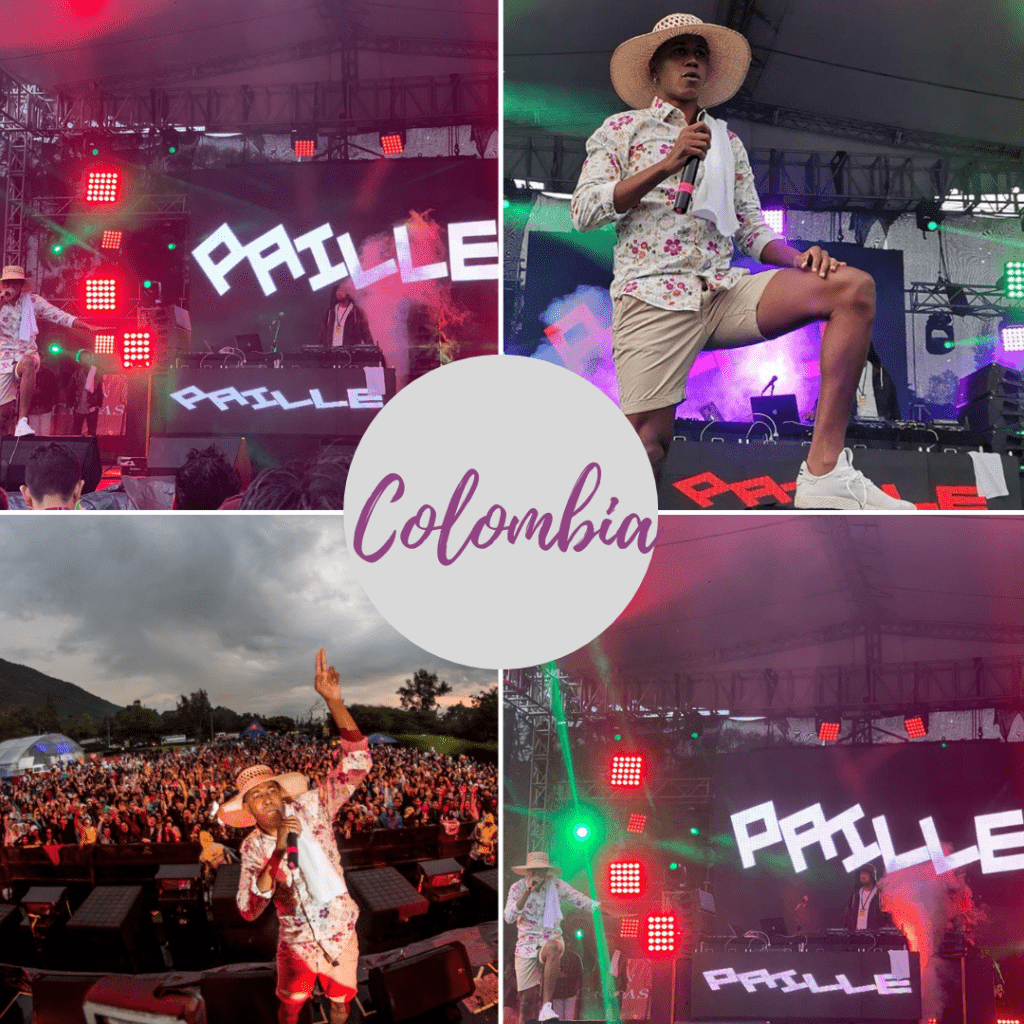
My music has taken me to festivals across the globe in Morocco, Canada, Colombia, Germany, Switzerland, and Reunion.

Interestingly, it all began quite modestly. When Byronn and I first made music together in Sainte-Luce, it was simply about expressing ourselves through song in our hometown.

Bacchanal Blocko - Ceasar Army - Saint-Lucia

PAILLE'S PLAYLIST

Playlist

9 Videos

AND THE CARIBBEAN...

Traveling to Dominica and Saint Lucia revealed how English-speaking Caribbean islands share knowledge and news among themselves, as seen in Saint Lucia’s news coverage of nearby islands like Saint Vincent and Barbados.

In contrast, French Caribbean islands display a notable lack of awareness about each other’s histories, suggesting that building a unified Caribbean identity requires better mutual understanding.

True closeness comes from understanding, which involves education, explanation, and exchange—ideally taught in schools at a young age.

Asking adults, who have already formed their beliefs and certainties, to challenge these or to construct a new Caribbean identity is nearly impossible. It’s more effective and necessary when minds are still open and eager to learn.

Yet, given today’s fast-paced world, it’s unlikely we’ll find the time to truly understand each other, though it would go a long way in breaking down prejudices.