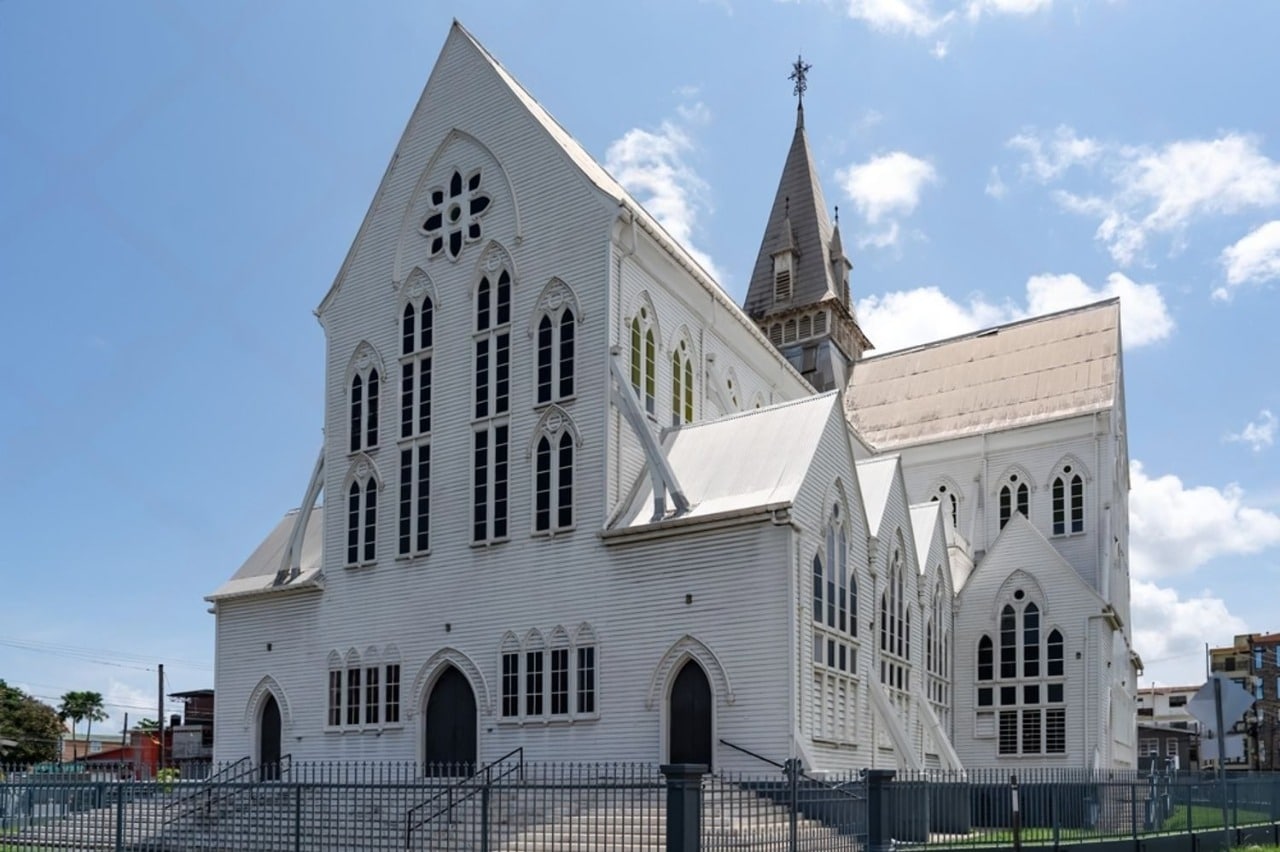
To celebrate Heritage Days 2026, Richès Karayib, in collaboration with Direction des Affaires Culturelles (DAC) Martinique , invites everyone to explore the island’s historic monuments using its interactive heritage map. You don’t always have to travel across Martinique to make a discovery.
Just a few blocks from home, there may be a church whose history you’re unaware of. Along a road you travel every week, an old house may tell the story of several centuries of economic and social change. A public building, a market, a distillery, or the remains of an industrial site may be part of our protected heritage without those who pass by them every day even realizing it. This is precisely what European Heritage Days help us remember every year: heritage isn’t just what we visit. It’s also what surrounds us.
Heritage Days—Start with Your Local Community
For the 2026 European Heritage Days, the interactive map developed by Richès Karayib makes it very easy to change your perspective.
You can start by searching for your town and discovering the historic monuments protected there. Then you can see what’s in the neighboring town. And, as you make one discovery after another, you can gradually expand your exploration.
In total, the tool features 122 historic monuments spread across 29 municipalities.
The point is precisely to showcase a side of Martinique that isn’t always seen from this perspective: its religious buildings, homes, forts, civil structures, traces of industrial activity, and the remnants left behind by the major events that have shaped the island.
Choose a story rather than a destination
For those who don’t know where to start, six itineraries offer a different way to explore Martinique. The 1902 eruption allows visitors to follow in the footsteps of one of the major turning points in Martinique’s history. The Rum Trail puts plantations, distilleries, and sugarcane-related heritage into context. The Sacred Heritage tour invites you to see churches and religious buildings in a new light. The forts illustrate the strategic position Martinique has held over the centuries.
City centers offer a chance to rediscover buildings we sometimes walk past without even looking up.
Finally, the legacy of slavery invites us to explore the sites that bear witness to this history and its impact on Martinique’s heritage. The map can thus be used to plan an entire day’s outing, or simply to choose one or two places to explore near home.
“I’d like the map to evoke that little moment of surprise: ‘I’ve been walking past this for years and didn’t even know it was a historic landmark.’ Because we often know places without really knowing their history.” – Sabrina Ajax, founder of Richès Karayib.
A Heritage to Share
The exploration doesn’t end with the JEP. Available for free year-round in the RK Patrimoine section of richeskarayib.com, the map is offered in French, English, and Spanish so that Martinique’s heritage can also be discovered and understood by visitors to the island as well as by Caribbean and international audiences. The European Heritage Days can thus serve as a starting point. Choose your town. Find a site. Read its history. Then go see it. And perhaps, when you return home, you’ll no longer look quite the same way at that building you’ve been passing by your whole life.