The KONPA has just made history. On December 10, 2025, at the annual session of the Intergovernmental Committee, the UNESCO has officially inscribed “Le Compas d’Haïti” on the Representative List of the Intangible Cultural Heritage of Humanity. A new milestone for this rhythm born in the 1950s, which has become one of the pillars of Haiti’s identity and a musical language shared throughout the Caribbean.
This decision is not just symbolic: it confirms the cultural, social and intergenerational importance of KONPA, and its role in building a collective imagination well beyond Haiti’s borders.
Worldwide recognition for a living heritage
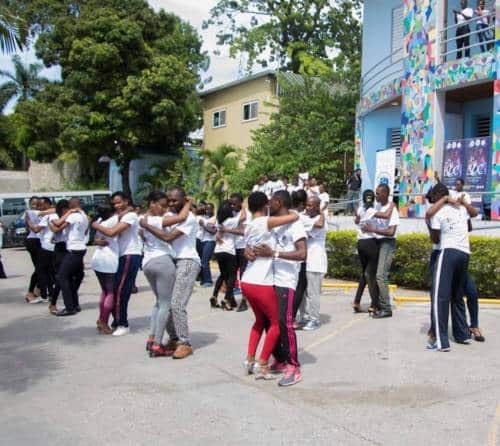
For UNESCO, KONPA ‘s listing is due to its unique ability to bring people together. Behind the notes, there is a real sociability, a set of gestures, codes, practices and transmissions that have been passed down through several generations. It can be danced, learned and inherited. It accompanies moments of joy as well as times of fragility, offering a cohesive space where art and everyday life come together.
Rather than providing a technical description, the recognition highlights what this music represents for those who wear it: an emotional bond, a landmark, a way of saying “us”. It’s also a heritage shaped in the streets, balls, community festivals, international tours and home studios of passionate musicians. The expression “collective memory of the nation”, often used in Haiti, takes on its full meaning here: KONPA tells a social story as much as an aesthetic one.
From Nemours Jean-Baptiste to the diaspora: seventy years of musical creation
When Nemours Jean-Baptiste developed KONPA in the middle of the XXᵉ century, he didn’t yet know that he was inaugurating a musical revolution. By modernizing Haitian meringue, structuring the rhythm and imposing rigorous orchestration, he gave Haiti an instantly recognizable style.
What follows is a collective adventure. Tabou Combo blazes an international trail. Skah Shah, D.P. Express, Zenglen, Carimi and many others developed new sound signatures. In the 2000s, digital platforms further accelerated distribution and enabled the diaspora to amplify the movement. Today, artists like Joé Dwèt Filé bear witness to this continuity, blending tradition and modernity.
Its inclusion on the UNESCO list recognizes a vibrant tradition that is constantly being reinvented, not only in Haiti, but also in New York, Montreal, Paris, Miami and Fort-de-France.


National pride, collective emotion and responsibility
Both in Port-au-Prince and in Haitian communities abroad, the announcement gave rise to an immense sense of pride.
Haiti, often approached from the angle of crises, appears here for what it also is: a major cultural power, whose contribution to the world far exceeds the usual representations.
UNESCO’s recognition of KONPA rebalances the narrative. It highlights the creativity, endurance and structuring role of culture in a country that has never ceased to innovate despite adversity.
It also recalls the importance of the players: conductors, singers, dancers, sound engineers, teachers, promoters of balls, researchers and enthusiasts who have kept this tradition alive.
But with this pride comes a new responsibility. UNESCO speaks of backup and transmission and perpetuation.
We now need to protect sound archives, support music schools, strengthen dance spaces, support young artists, and integrate this heritage into structured cultural policies.

After the Soup Joumou and the cassave: heritage continuity
KONPA is part of a wider movement. In 2021, the Soup Joumou a symbol of freedom and dignity, was added to the Intangible Heritage List. In 2024, it was the turn of the cassave. The cassava, which has been adopted by several Caribbean countries, is now recognized for its role in regional culinary traditions.
With these three elements – soup, bread and rhythm – Haiti puts forward three essential pillars: feeding, gathering and dancing. Together, they form a deeper reading of Haitian identity, where culture is not a decoration, but a structuring force.


An open future for the musical Caribbean
The inclusion of KONPA opens up a whole new range of possibilities: artistic residencies, thematic festivals, educational creations, cultural tourism circuits, regional cooperation. It is a reminder that the Caribbean is one of the world’s great sound laboratories, capable of giving birth to musical traditions that are becoming international benchmarks.
KONPA, now recognized by UNESCO, has a new visibility. It’s up to Haiti, its diaspora and the Caribbean to make it a lasting lever, a living heritage, a creative space where transmission remains central.
FAQ
It has been included in UNESCO’s intangible heritage list because of its central role in Haitian and Caribbean society. This music and dance constitute a living tradition, handed down for generations, which structures social life, accompanies major community events and reflects Haiti’s cultural identity. UNESCO recognizes the value of this transmission, the richness of the associated practices and the importance of KONPA as a driving force for cohesion and creativity.
Registration brings international visibility and institutional legitimacy to KONPA players. For Haiti, it is a lever for cultural diplomacy and a means of promoting an often little-known heritage. For artists, dancers, producers and teachers, this recognition can encourage the development of training programs, archive projects, international tours and educational initiatives aimed at preserving and transmitting the genre.
Registration does not freeze KONPA: on the contrary, it recognizes an ever-evolving tradition. The genre will continue to be transformed by contemporary influences, the diaspora, technology and new generations of musicians. The difference is that this dynamic will now be supported by a more structured safeguarding framework, encouraging the transmission, documentation and valorization of practices while leaving room for creativity.