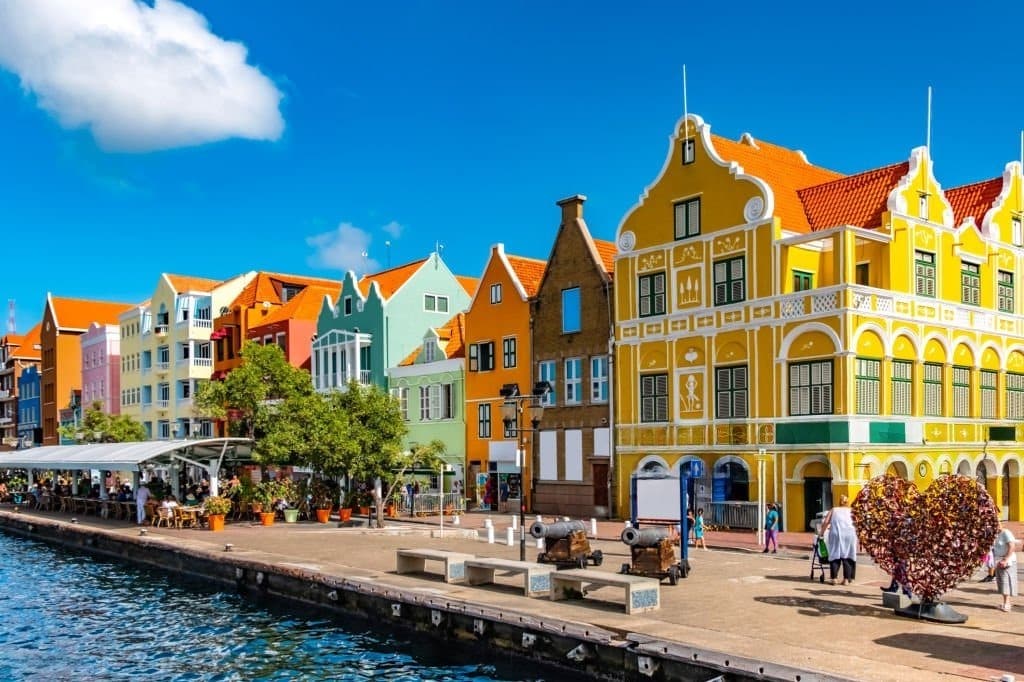
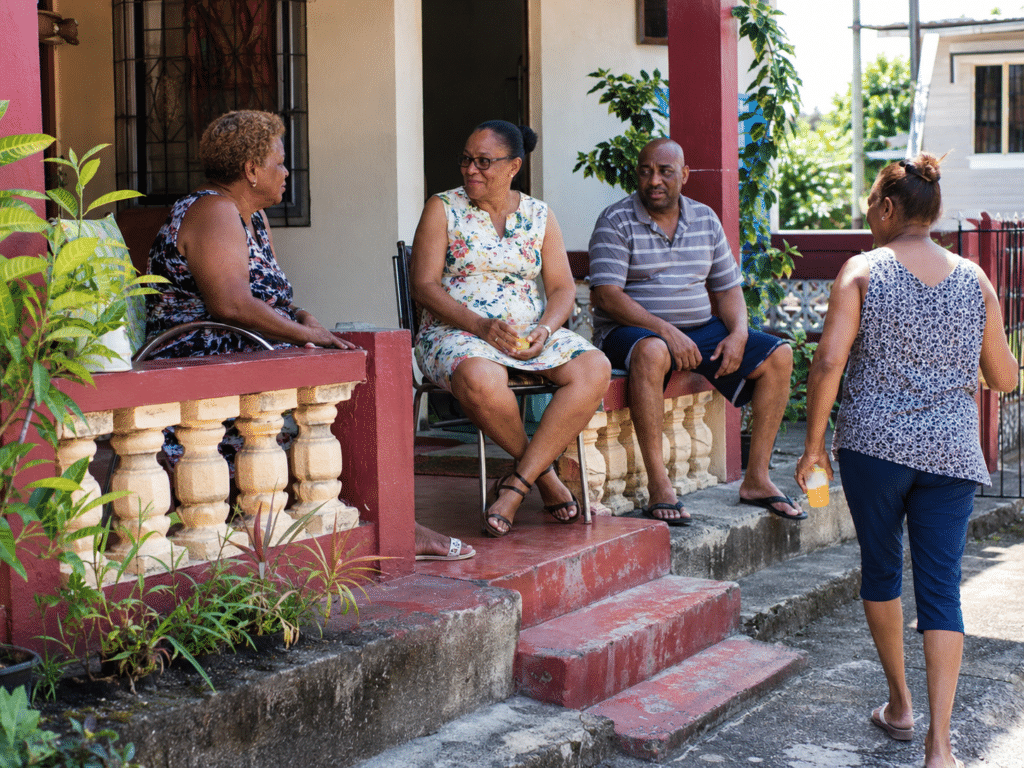
Imagine the end of a day in Trinidad. A few close friends gather in front of a house, near a street vendor, or around a table. They talk, they laugh; someone arrives, then another. No one really asks when it’s time to wrap things up. It’s not just “hanging out.” It’s a “lime.”
A simple word for a moment that matters
In Trinidad and Tobago English, to hang out means spending time with others in an informal way. The word can also function as a noun: in that case, it refers to the gathering itself. The official Tourism Trinidad website translates “liming” as “hanging out,” whether you’re with just one person or a group of friends. But this translation doesn’t tell the whole story.
It doesn’t necessarily have to involve a specific activity. It can take place over a meal, an outing, a steelpan rehearsal, or a night out. It can also arise almost spontaneously, when a conversation drags on and no one feels the need to leave. What matters isn’t what we accomplish, but the quality of the time we spend together.

Do nothing, but do it together
Seen from the outside, liming could be mistaken for idleness. Yet this apparent emptiness is filled with conversation, humor, observation, and relationships. A study published by the University of the West Indies describes it as a social leisure activity that promotes integration. It also highlights the importance of “picong,” the playful and inventive banter that animates certain Trinidadian conversations.
Everyone can talk about their day, comment on current events, tease a friend, or listen to others’ stories. Topics overlap with no set order. A serious discussion might be interrupted by a joke, only to resume a few minutes later. The moment doesn’t have to be productive to be meaningful. It strengthens bonds.

Nor is this term limited to a single generation. A study conducted among 242 residents of Trinidad, aged 18 to 74, used it to explore the enduring nature of positive social relationships as people age. The authors remain cautious, but their question already speaks volumes: the ” “lime” help maintain the connection?
The word also appears in everyday expressions. You can go “lime,” organize a river “lime,” or extend a rehearsal with a panyard “lime.” Tourism Trinidad, for example, describes the Caura River “lime” as a day spent by the water with food, drinks, tables, chairs, and good company. The setting may change, but the idea remains the same: simply being together is the whole point.

An origin that is less certain than is commonly believed
According to the Oxford English Dictionary, the verb“lime”has been attested in Caribbean English since at least 1941. Its exact origin, however, remains a matter of debate. The dictionary suggests a possible connection to “limey,” an old term associated with the British, but popular accounts offer other explanations. In the absence of certainty, it is best not to turn a hypothesis into an official story.
This uncertainty in no way diminishes the power of the word. It has been adopted, adapted, and has become deeply rooted in local usage. Today, it belongs to that category of words that can be translated but are difficult to replace. “Going out,” “hanging out,” or “spending time together” describe the action. It also conveys the atmosphere, the flexibility, and the importance placed on others.

Timeshares as an Asset
In a daily life often structured around schedules, goals, and results, he advocates for a different way of measuring the value of a moment. Simply being present is enough. Conversation becomes the activity itself. Time spent with others is not considered wasted time.
Perhaps this is where this word becomes more than just a Trinidadian expression. It reminds us that a society is also built in spaces without a set agenda: in front of a house, by a river, in a panyard, or around a shared meal. It doesn’t put life on hold. It’s part of it. After Trinidad and Tobago and its art of shared time, RK Words will head to Puerto Rico. Next week, it’s time for “ay bendito”

In Trinidad and Tobago, “lime” refers to spending time with other people in a casual setting. A file It can bring friends, neighbors, or family members together for a conversation, a meal, or simply a moment shared. The word evokes both the gathering itself and the relaxed atmosphere that accompanies it.
Translate “lime” The phrase “hanging out with friends” conveys the general idea, but does not fully capture its cultural significance. In Trinidad and Tobago, the file values presence, interaction, humor, and the time we devote to others. It’s not just about doing nothing: conversation and camaraderie become the main activity.
A “file” can happen almost anywhere: in front of a house, in a bar, near a street vendor, by a river, or after a steelpan rehearsal. Some people refer to it as river lime or panyard lime. The location may change, but the essence remains the same: getting together without a strict schedule and enjoying the time we spend together.