On June 21, 2026, the streets, squares, and cultural venues of Martinique, Guadeloupe, and French Guiana hosted concerts, open-mic nights, and musical gatherings. In these three territories, the Music Festival took on different forms, drawing on local repertoires and featuring both amateur and professional artists.

The 45th Music Festival, open to everyone
Created in 1982 at the initiative of Jack Lang, Maurice Fleuret, and Christian Dupavillon, the Music Festival celebrated its 45th edition this year. Its purpose remains the same: to showcase live music, bring together music lovers and professionals, and offer free concerts on June 21. The event is now celebrated in more than a hundred countries.
In France’s Caribbean and Amazonian territories, this common framework is reinterpreted in light of local realities. Zouk, gwoka, biguine, reggae, Creole jazz, percussion, urban music, and South American influences can all come together in a single program. This diversity does not turn the three territories into a uniform whole. Rather, it shows how each one adapts a national event to its own music scenes, languages, and musical trends.
In Martinique, a route connecting the city center and the neighborhoods
In Fort-de-France, the city had announced a musical route designed to bring artists and the public together between the city center and various neighborhoods. The city’s call for participation also involved volunteers in the organization, in keeping with the event’s participatory spirit.
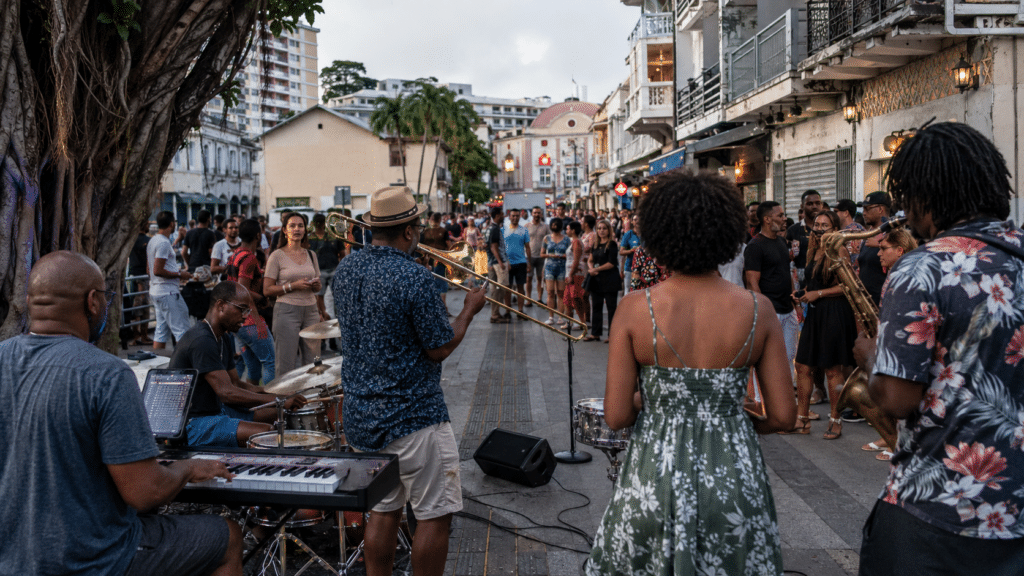
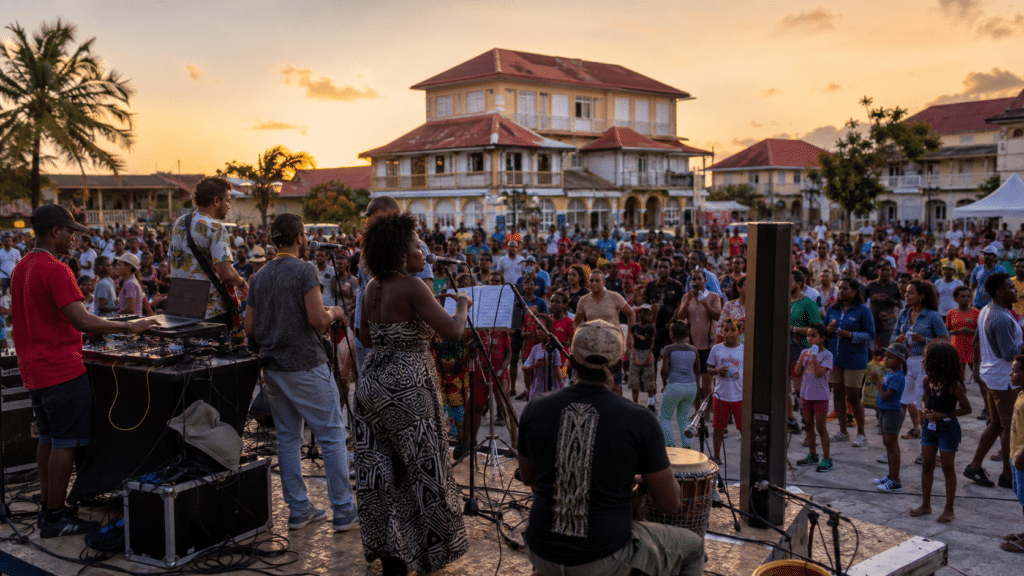
Across the island, the program spanned several municipalities and, in some cases, lasted the entire weekend. At Schœlcher, the Village Musical featured more than 200 artists spread across seven venues. Gospel, reggae, salsa, percussion, traditional music, DJ sets, and urban music were among the offerings. This juxtaposition of generations and musical styles illustrates one of the strengths of the Music Festival: creating a shared stage without imposing a dominant genre.
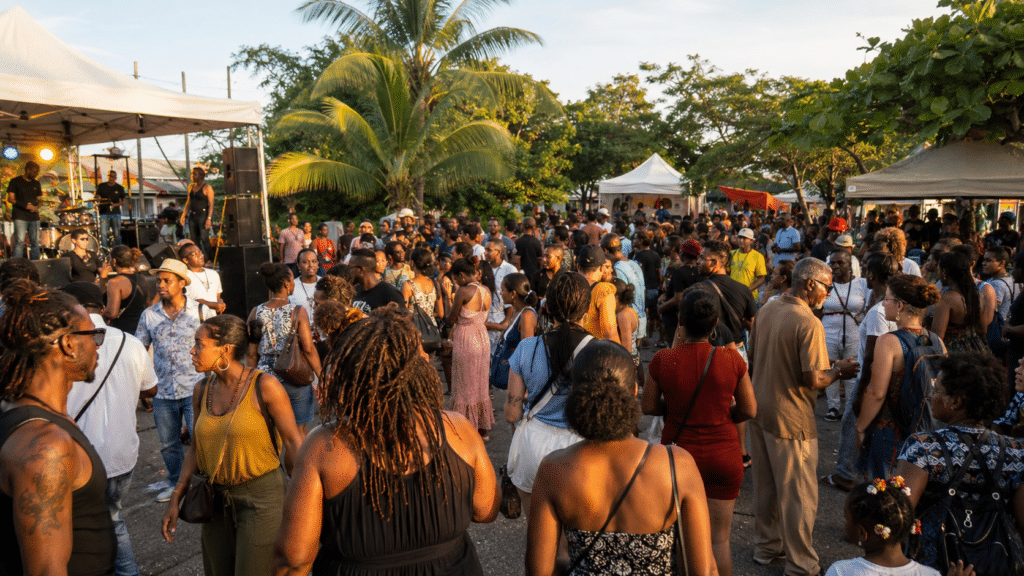
In Guadeloupe, Musical Heritage Takes Center Stage
In Pointe-à-Pitre, the program featured a special edition of the Marché de Kalina, from 8:30 a.m. to 5:00 p.m. at Place de la Victoire, celebrating Guadeloupean culture and traditions, with artistic performances. The event was therefore more of a cultural and musical celebration than a large evening concert.
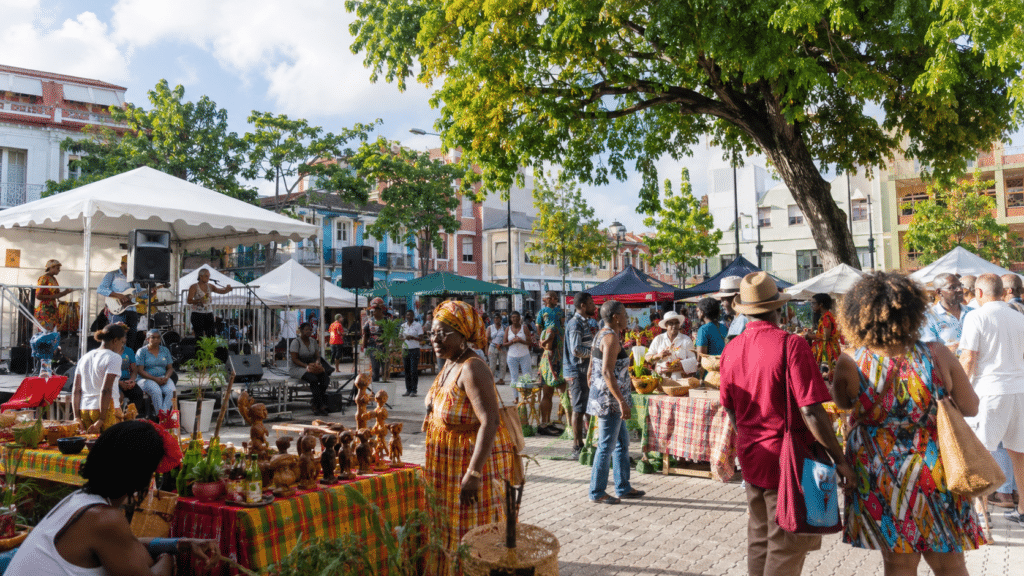
Elsewhere in the archipelago, the programs gave prominent coverage to Guadeloupe’s musical heritage. In Le Moule, the two-day program featured a meeting with Pierre-Édouard Décimus and Maalkhéma, an event centered on the ka, an open mic, as well as zouk, biguine, jazz, and gospel. This lineup serves as a reminder that the Music Festival can also convey musical history, showcase the region’s instruments, and bridge the gap between heritage and contemporary creation.
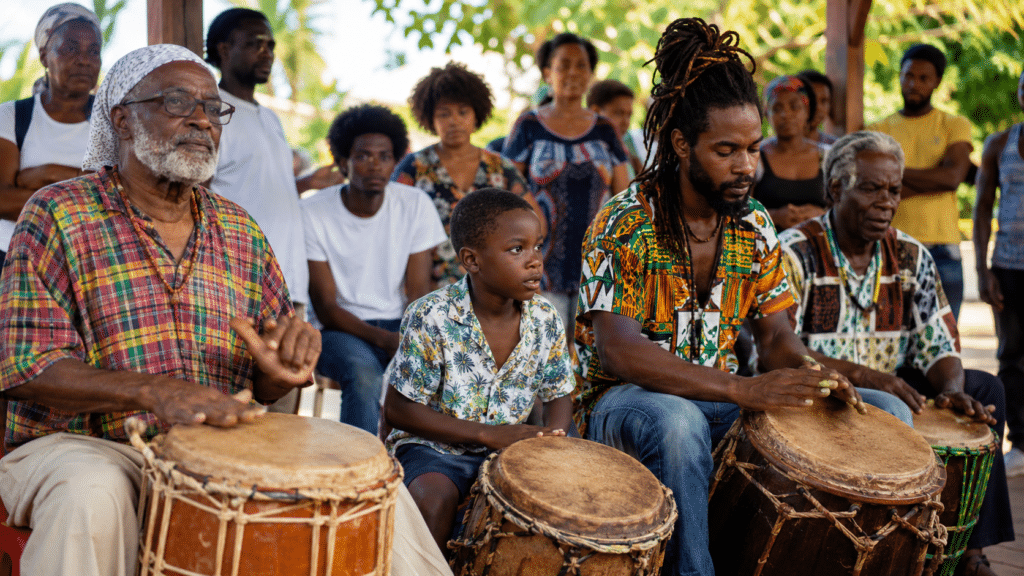
In French Guiana, open-air venues between the city and the Amazon
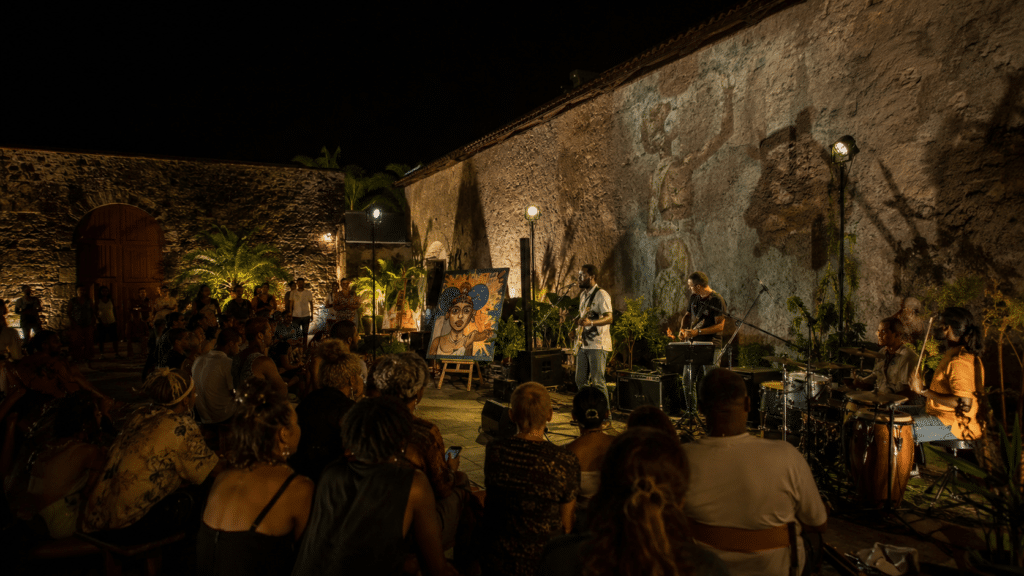
In French Guiana, the Music Festival took on several forms. In Cayenne, a number of events took place in public spaces. An open-mic stage was scheduled to begin at 4 p.m. on Place des Chaînes Brisées, followed by another event on Place des Palmistes starting at 6 p.m. featuring several DJs. The Kayenn’Art festival, held at La Poudrière over the weekend, also combined visual arts, local creations, and musical performances.
These proposals reflect a unique soundscape. Guyanese music is shaped by its interaction with Creole, Bushinengue, Surinamese, Brazilian, and Caribbean musical traditions. However, we must avoid reducing these exchanges to a single border or a single genre: they follow migration patterns, languages, media, artistic collaborations, and the history of the Guiana Shield.
Why does the Music Festival remain accessible?
Free admission remains one of the defining features of the Music Festival. This does not mean that every event can be organized without rules or coordination. Municipalities issue calls for participation, designate venues, and oversee the setup. However, public access to the concerts included in the program remains free.
When it comes to ticketed cultural events, this principle fosters a different relationship with the stage. The audience can move from one venue to another, listen to an unknown band, or stop by an open mic without having to buy a ticket. This accessibility fosters encounters, even if it is not, on its own, sufficient to measure the cultural success of a festival.
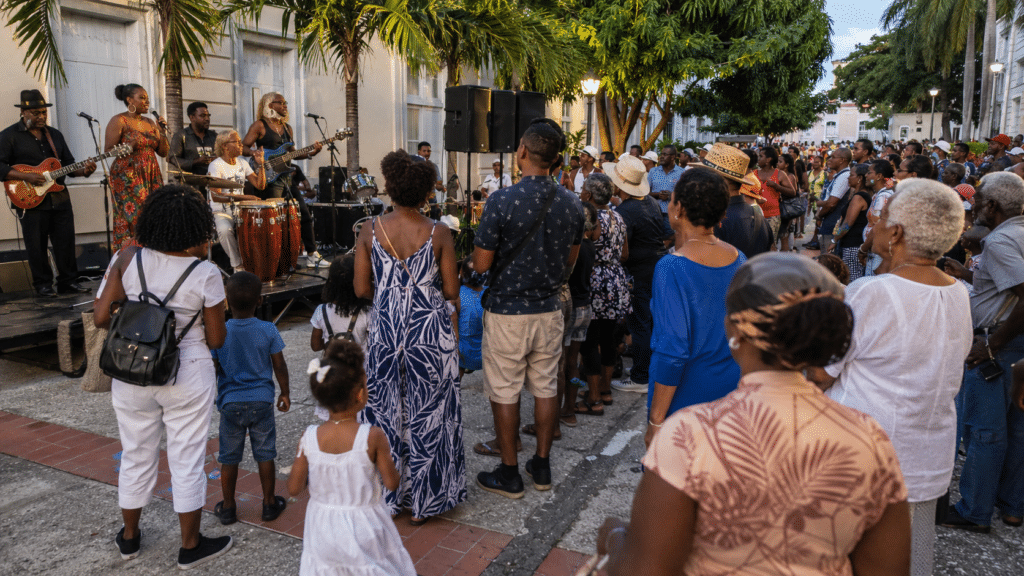
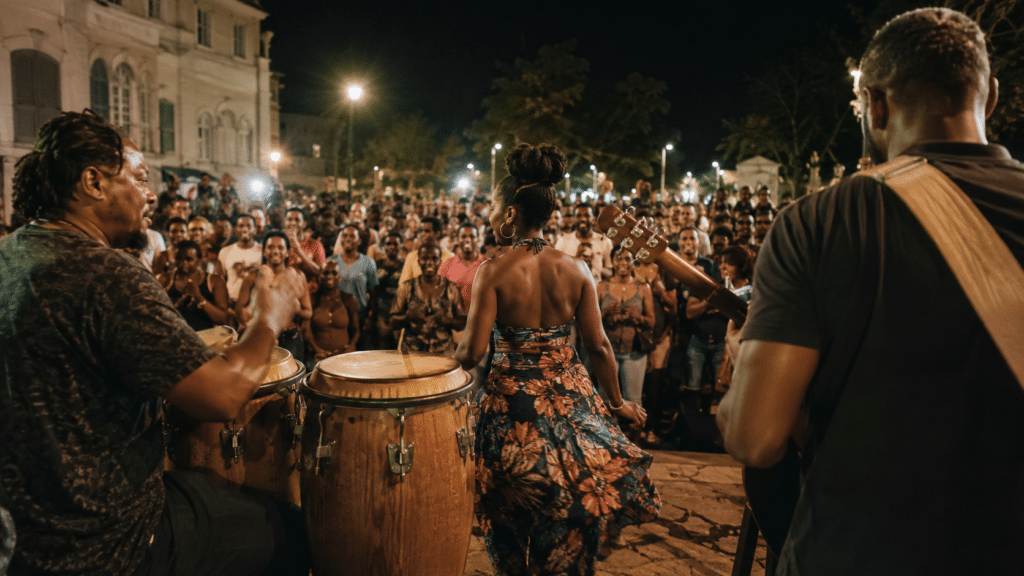
The 2026 Music Festival was officially held on June 21, with some events taking place over several days during the weekend. This 45th edition featured concerts, open-air stages, and cultural events in several towns across Martinique, Guadeloupe, and French Guiana.
In Martinique, Fort-de-France offered a musical tour connecting the city center with the neighborhoods, while Schœlcher featured more than 200 artists across seven venues. In Guadeloupe, the Kalina Market in Pointe-à-Pitre and the activities organized in Le Moule highlighted local cultures. In French Guiana, Cayenne hosted open-air stages at the Chaînes Brisées and Palmistes squares, as well as the Kayenn’Art festival at La Poudrière.
The Music Festival allows amateur and professional artists to perform for free in public spaces. In Martinique, Guadeloupe, and French Guiana, it also highlights local and regional musical genres, such as zouk, gwoka, biguine, reggae, percussion, urban music, and Amazonian influences.