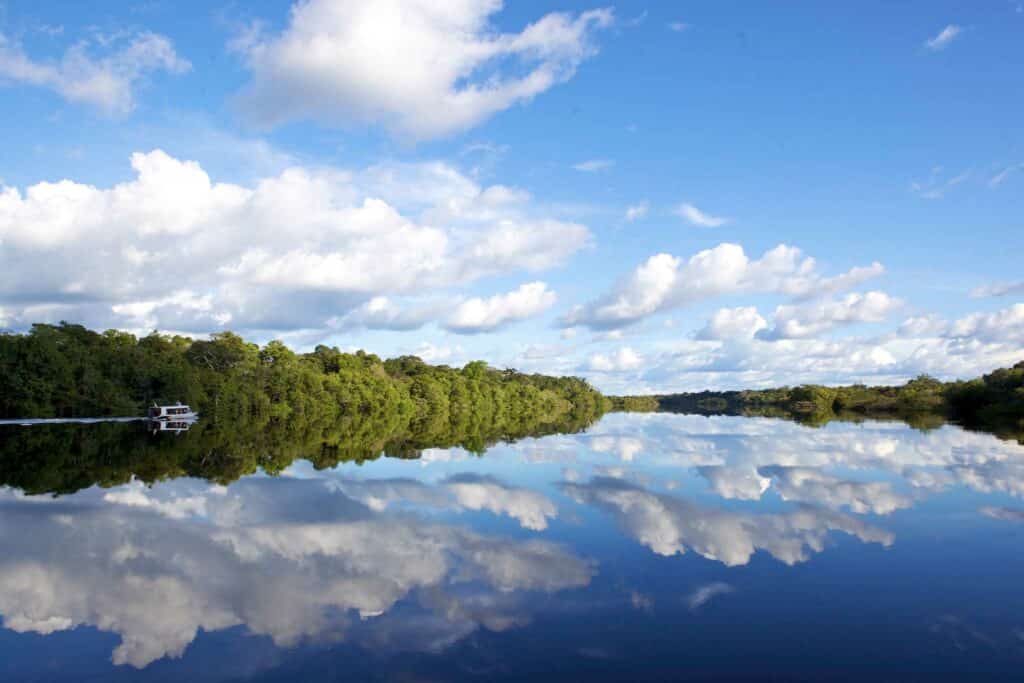
COP30: this name refers to the 30ᵉ Conference of the Parties to the United Nations Framework Convention on Climate Change, to be held from November 10 to 21, 2025 in Belém, Brazil. Held for the first time in the heart of the Amazon, this international conference will bring together more than 190 national delegations, heads of state, NGOs, scientists and representatives of civil society to negotiate urgent measures to deal with worsening climate disruption.
This geographic choice marks a turning point: the world’s largest tropical forest becomes both the backdrop and the focus of discussions. Faced with record levels of deforestation, loss of biodiversity and growing pressure from the extractive industries, COP30 aims to redefine the priorities in the fight against climate change by placing the protection of ecosystems at the heart of international commitments.
Curupira: an ancient spirit for the challenges of the future
To embody this decisive edition, Brazil has chosen a figure from indigenous legends: Curupira the mythical guardian of the Amazon rainforest. Far from being a consensual symbol, this character embodies a form of resistance. In Tupi-Guarani tradition, he is depicted as a small man with red hair and upturned feet, capable of outwitting intruders and fiercely defending his territory.
His name, formed from the words “curumin” (boy) and “pira” (body), evokes both childhood and vitality. Curupira is no mere folkloric character: he is deeply rooted in the collective memory of the forest peoples, and his influence extends beyond Brazil’s borders.
In French Guiana, it takes the name Makilili. In Colombia, it becomes Madre Monte. In Ecuador, it’s known as Sachamama, the mother of trees. In the Peruvian Amazon, it is known as Chullachaqui. In Suriname and Guyana, he is referred to as Winti-boskopu or Watramama. All these avatars fulfill the same mission: to protect the forest from predators.
A shared territory, a common emergency
The Amazon covers more than five million square kilometers and crosses nine countries: Brazil, Colombia, Peru, Bolivia, Ecuador, Venezuela, Suriname, Guyana and French Guiana. This vast territory is home to some 34 million inhabitants, including hundreds of indigenous peoples, often on the front line of the effects of extractivist policies and the climate crisis.
By choosing Curupira as its official mascot, COP30 is sending out a strong signal: the recognition of ancestral knowledge and local struggles, and the full involvement of Amazonian populations in global debates.
COP30 promises to be a strategic moment in international climate governance. Several crucial issues will be addressed in Belém:
✔️ Implementing a fair energy transition, with concrete support for the most vulnerable populations.
✔️ The creation of a global fund to preserve tropical forests, with announced support from China.
✔️ The aim is to mobilize $1,300 billion a year by 2035 to finance adaptation to climate change.
✔️ Sensitive negotiations around the reduction of fossil fuels, in a country like Brazil, a major oil producer.
These challenges are compounded by strong popular pressure. Brazilian civil society, researchers and indigenous organizations expect ambitious decisions. In this context, Curupira is not just a symbol: it has become the voice of an Amazon that is demanding its place at the negotiating table.
And what about the Caribbean?
The Caribbean territories are participating fully in COP30, as members of the Framework Convention and representatives of the Small Island Developing States. They include Barbados, Trinidad and Tobago, Haiti, Saint Lucia, Jamaica, Cuba, Antigua and Barbuda, Dominica, Saint Kitts and Nevis, Grenada and Saint Vincent and the Grenadines.
Why is their presence essential? Because these countries, although low emitters of greenhouse gases, are bearing the full brunt of climate change: increasingly violent cyclones, rising sea levels, water stress, coastal erosion and the collapse of marine biodiversity.
For the Caribbean, COP30 is an opportunity to advocate specific financing mechanisms tailored to their vulnerability, as well as to showcase their often innovative local initiatives in resilience, sustainable agriculture and risk management.
An educational and symbolic device around Curupira
Not every climate conference has had a mascot, but Curupira marks a breakthrough. At COP28, a sea turtle symbolized the fragility of marine ecosystems. But until now, no figure had embodied a protective force rooted in popular belief.
Curupira is to be presented in the form of educational and symbolic objects: posters, educational games, school events and workshops in the “citizens’ villages” running parallel to the official conference. This choice aims to raise awareness of global climate issues among a wider public, especially young people, through a figure from the collective imagination.
Curupira, the Amazon's red alert to the world
Through Curupira, COP30 is reminding us that the answers to ecological crises will not only come from laboratories or ministries. They will also require listening to local communities, recognizing local knowledge and redefining our relationship with living things.
By setting up its debates in the Amazon, COP30 is opening a new chapter. For the Caribbean, as for the Amazonian countries, it’s a question of transforming a long-marginalized voice into a lever for global decision-making. And perhaps by looking Curupira in the eye, leaders will understand that the forest is not asking for charity. It demands respect.
2024 was a pivotal year for connectivity in the Caribbean, marked by a series of initiatives that transformed the region’s aviation landscape. Airlines expanded their operations, introducing new routes and improving existing services. This review examines the advances made, the challenges encountered and the economic implications of these changes for the region.
New flights and connections
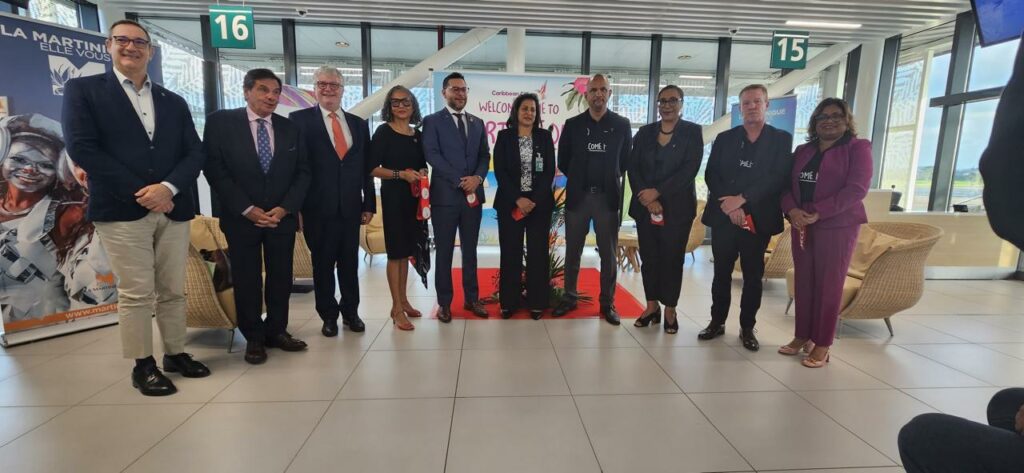
One of the most remarkable features of 2024 was the launch of several new flights, strengthening connectivity between the islands. These include Caribbean Airlines inaugurated direct services to Martinique, facilitating travel between the English- and French-speaking islands. Likewise LIAT Airlines has re-established routes to the British Virgin Islands, offering travelers additional options for exploring the region.
This expansion of the air network has met the growing demand for inter-island travel, stimulating tourism and trade. Passengers now enjoy greater choice, flexibility and convenience.
LIAT Airlines
Événement de bienvenue de Caribbean Airlines en Martinique Source : Caribbean Airlines
Economic impact
Increased connectivity has had a significant impact on the Caribbean economy. By making it easier for tourists to travel, airlines have helped to boost the hotel and restaurant sectors. For example, the increase in visitor numbers to Martinique and the Virgin Islands led to an increase in hotel bookings and restaurant spending, benefiting local businesses.
Statistics show that passenger numbers were up 15% on the previous year, testifying to the effectiveness of the new routes. Local governments have also benefited from this dynamic through increased tax revenues linked to the tourism sector.
Sustainability and Social Responsibility
Another important aspect of the 2024 review was the airlines’ commitment to sustainable practices. Royal Caribbean for example, has taken significant steps to reduce its carbon footprint. By using biofuels and investing in green technologies, airlines are striving to address environmental concerns while continuing to grow.
In addition, airlines have introduced social responsibility programs, supporting local communities and promoting sustainable development initiatives. This has helped to strengthen the relationship between the companies and the communities they serve.
Regional collaboration
Improved connectivity has also encouraged greater collaboration between countries and islands in the region. Governments have recognized the importance of working together to maximize the benefits of tourism. Initiatives such as the Caribbean Tourism Organization have been strengthened, enabling an exchange of ideas and best practices between industry players.
This cooperation has been essential in promoting events and festivals that attract visitors throughout the year, contributing to a more uniform and sustainable tourist season.
Challenges to overcome
Despite the progress made, connectivity in the Caribbean is not without its challenges. Airlines face issues such as increasing competition, fluctuating fuel prices and the need to modernize airport infrastructure. Continued investment is needed to ensure that the region’s airports can accommodate the growing volume of passengers.
Future prospects
Looking ahead, it’s clear that connectivity in the Caribbean will continue to evolve. Airlines plan to open new routes and improve existing services. Governments and local businesses must work together to ensure that this growth is sustainable and beneficial to all.
The overall picture of connectivity in the Caribbean in 2024 is positive. Thanks to initiatives to expand air links and promote sustainable practices, the region is well positioned for continued economic growth. By overcoming challenges and strengthening collaboration, the Caribbean can assert itself as a key destination on the global tourism scene.