The partnership between CTO and The Travel Foundation marks an important step in the evolution of tourism policies in the Caribbean. At the ITB Berlin 2026 international trade fair, the region’s tourism leaders confirmed that they would strengthen their cooperation to support a more sustainable tourism model, more resilient to climate change and more focused on local communities.

In a region where the economy is heavily dependent on tourism, climate change is no longer an abstract issue. The effects of global warming, the intensification of weather phenomena and the erosion of coastal ecosystems now represent immediate challenges for many island territories. It is against this backdrop that the partnership between CTO and The Travel Foundation takes on a strategic dimension. The objective is clear: to transform climate commitments into concrete actions capable of supporting the economic and social future of Caribbean destinations.

ITB Berlin, a strategic venue for the voice of the Caribbean

Every year, ITB Berlin brings together the world’s key tourism players: ministries, international organizations, airlines, destinations and industry experts. For the Caribbean, this event is an essential platform for recalling a reality that is often underestimated on an international scale: small island states are among the territories most exposed to the effects of climate change.

At a session devoted to the gap between climate risks and adaptation solutions in tourism, the Secretary General and CEO of the Caribbean Tourism Organization, Dona Regis-Prosper, highlighted the region’s real-life experience. The devastating hurricanes that regularly hit the Caribbean, rising sea levels and increasing pressure on marine ecosystems have had a profound impact on the territories. Today, this first-hand experience is a driving force for rethinking the region’s tourism strategies. The partnership between CTO and The Travel Foundation is precisely in line with this dynamic of transformation.

CTO et The Travel Foundation

Moving from climate talk to concrete solutions

At the heart of the partnership between CTO and The Travel Foundation lies one overriding conviction: climate strategies must now go beyond declarations of intent. Caribbean destinations already have numerous studies, scientific data and prospective scenarios on climate risks. However, a persistent challenge remains: transforming this information into genuinely funded and operational projects.

This is one of the points raised by Narendra Ramgulam, Deputy Director of Sustainable Tourism at the Caribbean Tourism Organization. According to him, the region has no shortage of ideas and analyses, but the concrete implementation of projects is often hampered by a lack of access to funding. In this context, the partnership between CTO and The Travel Foundation aims to bridge the gap between strategic planning and real action on the ground.

Dona Regis-Prosper, Secretary-General and CEO, Caribbean Tourism Organization, speaking during the ITB Berlin.

A tourism model focused on local communities

One of the major thrusts of the partnership between CTO and The Travel Foundation concerns the role of local populations in tourism development. In many Caribbean destinations, the economic benefits of tourism sometimes remain concentrated in certain segments of the industry. The new cooperation framework aims to foster a more inclusive approach in which tourism projects generate direct benefits for communities.

This vision also implies a strengthening of local skills in sustainable tourism professions, as well as increased support for economic initiatives that enhance the region’s natural and cultural resources. This approach is in line with a global trend in the tourism sector. Today’s travelers are increasingly interested in responsible, authentic experiences that are closely linked to the realities of the areas they visit.

Caribbean tourism faces structural transformation

The partnership between CTO and The Travel Foundation comes at a pivotal time for the Caribbean tourism industry. Several profound transformations are redefining the future of the sector. The intensification of extreme climatic phenomena, the gradual weakening of coral reefs, the erosion of certain beaches and the evolution of travelers’ expectations in terms of sustainability are gradually changing the balance of regional tourism.

These elements are not just about the environment. They directly influence the tourism experience, the competitiveness of destinations and the livelihoods of many local populations. Against this backdrop, strengthening the resilience of Caribbean tourism is becoming as much an economic priority as an environmental one.

International cooperation to strengthen resilience

The renewal of the partnership between CTO and The Travel Foundation formalizes a strengthened collaboration between two organizations committed to the transformation of global tourism. The Travel Foundation has been working for several years on initiatives to make tourist destinations more sustainable, notably through climate planning, tourism flow management and ecosystem protection.

For its part, the Caribbean Tourism Organization represents the tourism interests of many of the region’s territories and plays a central role in coordinating regional policies. By combining their expertise, the two institutions aim to develop tools and strategies that will enable Caribbean destinations to better anticipate climate risks, while maintaining their attractiveness to tourists.

A regional vision for the future of Caribbean tourism

Beyond technical cooperation, the partnership between CTO and The Travel Foundation is also part of a broader vision: that of a coordinated regional approach to sustainable tourism. The Caribbean shares many common realities. The economies of many territories rely heavily on tourism, the islands remain particularly exposed to climatic risks, and the region boasts an exceptional natural and cultural heritage.

In view of these common characteristics, regional cooperation appears to be an essential lever for developing solutions tailored to the specific characteristics of island destinations. This approach is also in line with the ambitions of the CTO Reimagine Plan, a strategy that aims to reposition Caribbean tourism around sustainability, innovation and resilience.

The Caribbean, a global laboratory for sustainable tourism

Through the partnership between CTO and The Travel Foundation, the Caribbean is also seeking to assert its role in international debates on the future of tourism. The challenges facing the region today could foreshadow those that other tourist destinations will have to face in the coming decades. From this perspective, the Caribbean can become a veritable laboratory of innovation for climate-resilient tourism strategies, sustainable management of island destinations and the integration of communities into the tourism economy.

The stakes involved in the partnership between CTO and The Travel Foundation extend far beyond regional borders. The solutions developed in the Caribbean could inspire other regions of the world facing similar challenges.

The partnership aims to develop concrete strategies to make Caribbean tourism more resilient in the face of climate change, while supporting local communities.

Caribbean destinations have to cope with intensifying hurricanes, beach erosion, coral reef degradation and rising sea levels.

The Caribbean Tourism Organization aims to position the Caribbean as a sustainable destination, capable of reconciling tourism development, ecosystem protection and benefits for local populations.

The integration of Richès Karayib into the Caribbean Broadcasting Union (CBU) marks a new stage in the development of Caribbean media. This membership formalizes Richès Karayib’s regional roots and reinforces its determination to actively contribute to the structuring of the Caribbean media landscape.

In a context where the circulation of content remains fragmented between linguistic and geographic territories, joining the Caribbean Broadcasting Union represents a strategic lever for boosting the visibility and circulation of Caribbean content.

The Caribbean Broadcasting Union, a pillar of the Caribbean media landscape

The Caribbean Broadcasting Union is the regional organization that federates the Caribbean media, covering radio, television, print and digital platforms. It plays a central role in cooperation between broadcasters, the circulation of content, the professionalization of players in the sector and the promotion of Caribbean productions.

Every year, the Caribbean Broadcasting Union organizes the CBU Media Awards. These awards recognize the most outstanding productions in radio, television, print and digital. These awards are a major event for Caribbean media professionals, helping to raise standards of journalistic and editorial quality in the region. By becoming a member of the Caribbean Broadcasting Union, Richès Karayib joins a structured and recognized network at the heart of regional media dynamics.

Richès Karayib

A strategic step for Richès Karayib

Since its creation, Richès Karayib has been promoting culture, heritage, tourism and the women and men who shape the Caribbean’s attractiveness and influence. Membership of the Caribbean Broadcasting Union consolidates this trajectory by opening up new prospects:

  • – publishing cooperation on a regional scale
  • – increased circulation of content
  • – professional exchanges between member media
  • – enhanced visibility with institutional and economic players

Joining the Caribbean Broadcasting Union also enables Richès Karayib to place its productions within a demanding regional framework, where content quality, journalistic rigor and editorial impact are decisive. This new step comes at a time when the medium is developing its print, digital and audiovisual formats, with a clear ambition: to connect Caribbean territories beyond linguistic borders.

Richès Karayib

Building a structured Caribbean media space

The Caribbean is rich in talent, culture and initiative. However, content produced in one territory is still not widely distributed to other islands and countries in the region. One of the major challenges of the Caribbean Broadcasting Union is precisely to promote this circulation and encourage regional collaboration.

By joining the Caribbean Broadcasting Union, Richès Karayib is affirming its desire to play an active part in this dynamic. This is not just institutional recognition, but a commitment: to contribute to a more connected, visible and structured Caribbean media.

This approach is in line with Richès Karayib’s mission to promote the region’s talents, initiatives and heritage, while encouraging synergies between regions.

Setting course for the CBU Media Awards

As part of this membership, Richès Karayib will take part in the 37th CBU Media Awards organized by the Caribbean Broadcasting Union. Richès Karayib’s participation is in line with the company’s commitment to professionalization and regional outreach.

Beyond the competition, the CBU Media Awards represent a space for Caribbean media to meet, exchange ideas and gain visibility. For RK, it’s a further opportunity to promote a committed editorial voice in the service of the Caribbean.

Richès Karayib

A new development phase

Joining the Caribbean Broadcasting Union marks a natural evolution for Richès Karayib. After consolidating its presence in the French-speaking Caribbean, the medium is now taking a decisive step towards wider regional integration.

In a changing media environment, where cooperation, editorial quality and international visibility are essential, joining the Caribbean Broadcasting Union is a strong signal.

Richès Karayib’s ambition is to contribute to a more visible, coherent and assertive Caribbean media.

The Caribbean Broadcasting Union (CBU) is the regional media organization for the Caribbean, covering radio, television, print and digital platforms. It promotes cooperation, the circulation of content and the professionalization of players in the sector.

Membership of the Caribbean Broadcasting Union enables Richès Karayib to join a structured regional network, boost its visibility on a Caribbean scale and develop editorial collaborations with other member media.

The CBU Media Awards are an annual competition organized by the Caribbean Broadcasting Union to recognize the best radio, television, print and digital productions in the region.

Together for a radiant Caribbean, the Alliances Françaises become bridges between cultures, languages and territories.

At the RÉZO seminar in Grenada, the directors and presidents of the Alliances Françaises of the English-speaking Caribbean met to strengthen cultural and linguistic cooperation in the region and define new common directions.

Supported by the French Embassy’s Service de Coopération et d’Action Culturelle (SCAC), which also took part in some of the discussions, the seminar was an opportunity to strengthen synergies between the Alliances Françaises network and consolidate dialogue with the SCAC, in a spirit of listening and collaboration.

Alliances Françaises
Suelin Low Chew Tung (President, AF Grenada), Aurélie GBEFFA (Director, AF Saint Lucia and Regional Coordinator), Ilona Fort-Gilbert (Director, AF Grenada) and Christiane Bourgeois (CORCAC)

Between exchanges, common strategies and innovative projects, this meeting outlined the contours of a more open, inclusive and modern French-speaking and multilingual Caribbean.

A key moment for an evolving network, serving a Caribbean that learns, shares and shines.

Alliances Françaises

A meeting with a family flavour

Sometimes they’ve known each other for years, sometimes only through a screen. But from the very first minutes, the laughter, hugs and warmth of the reunion remind us that, in the Caribbean, the Alliances Françaises network is above all a human adventure.

Over the course of three days, directors and presidents shared their experiences from country to country – from day-to-day challenges to local pride and a shared determination to build a stronger, more united and more visible network. In the room, diversity was evident in the accents, the backgrounds and the ideas. From Jamaica to Trinidad and Tobago, each voice brought its own nuance, its own experience, its own way of bringing culture and the French-speaking world to the heart of the territories.

Welcomed by Ilona Fort-Gilbert, Director, and Suelin Low Chew Tung, President of the Alliance Française of Grenada, participants spent several days exchanging ideas and reflections in an atmosphere that was both productive and warm.

Alliances Françaises
Suelin Low Chew Tung (left) and Ilona Fort-Gilbert (right) (Alliance Française de Grenade)
AF Team of Grenada - Dalia Barbour (Support Staff), Mathias Dorel (Honorary Consul of France), Ilona Forte-Gilbert (Director), Nafessah Abdullateef (Secretary of the Executive Committee), Suelin Low Chew Tung (President)

Around the table, the directors: Aurélie Gbeffa (Saint Lucia and regional coordinator of the Alliances Françaises of the Eastern Caribbean), Océane Gaillard (Barbados), Virginie Lemay (Suriname), Lucille Caulliez (Saint Christophe-et-Niévès), Cévinne M’Voula (Dominique), Anyka Batista (Trinidad and Tobago), Ilona Forte-Gilbert (Grenada), Déborah First-Quao (Guyana) and Clovis Lemée ( Jamaica), as well as Christiane Bourgeois (CORCAC – Saint Lucia) and Suelin Low Chew Tung (President – Grenada).

Alliances Françaises

Joining them by videoconference were the presidents: Charlene White-Christian (Dominica), Ruben Del Prado (Suriname), Danielle Parkinson (Trinidad and Tobago), Kara Daly (Saint Kitts and Nevis), Delphine Hadley and her successor Denvil Douglas (Saint Vincent and the Grenadines), and Stuart Defreitas, vice-president (Guyana).

christoane bourgeois
Alliances Françaises

During the discussions, Christiane Bourgeois, Regional Counsellor for Cooperation and Cultural Action (Conseiller Régionale de Coopération et d’Action Culturelle – CORCAC), Head of the Cultural and Cooperation Department (Service de Coopération et d’Action Culturelle – SCAC) of the French Embassy to the Eastern Caribbean, Barbados and the OECS, underlined the essential role of the Alliances Françaises in promoting French and Caribbean culture.

The Regional Counsellor for Cooperation and Cultural Action – CORCAC structures its action around cultural, educational, scientific and economic cooperation, seeking to link French priorities – culture, the French-speaking world, sustainability and human rights – to the specific needs of the countries of the English-speaking Caribbean. We believe that it’s not just the structures, but also the committed men and women on the ground who bring this open, supportive and creative French-speaking community to life.

“The Alliances Françaises are essential partners.”

The presence of Jean-François Hans, Geographical Delegate for Zone C at the Fondation des Alliances Françaises, reminded us from Paris of the importance of the network’s global cohesion.

Charter of values, governance tools, visual identity and support for local teams: the Foundation ensures that quality and ethics are shared across all five continents.

“A large Alliance must always reach out to a smaller one. That’s our collective DNA.”

This solidarity, the driving force behind the movement, takes on its full meaning in the Caribbean, where logistical and human challenges combine with cultural and linguistic richness.

A global Francophonie rooted in local realities

Founded in 1883, the Alliances Françaises network is now the world’s largest cultural network, with over 820 establishments in 135 countries.

In the English-speaking Caribbean, ten Alliances promote the French language and culture: Barbados, Saint Lucia, Dominica, Grenada, Jamaica, Saint Kitts and Nevis, Guyana, Saint Vincent and the Grenadines, Trinidad and Tobago and Suriname.

In 2024, they welcomed over 1,000 learners, delivered 9,000 hours of courses and organized 160 cultural events, bringing together over 7,000 participants.

These figures reflect a living, dynamic reality: the Caribbean Francophonie is not just an idea, it’s a daily presence in classrooms, galleries, festivals and the streets of island capitals. Francophonie thrives on exchanges, local initiatives, and the passion of those who keep the French language alive.

A network in motion: between vision and action

Projet Rézo

Driven by a shared desire to see the network evolve, the RÉZO project is a real driving force for the Alliances Françaises of the English-speaking Caribbean, and a way of thinking about the network differently: more collaborative, more agile, more visible.

Supported by the French Embassy’s Service de Coopération et d’Action Culturelle (SCAC), it aims to strengthen regional coordination, pool tools and professionalize teams. Over the course of the sessions, discussions highlighted a shared ambition: to harmonize practices, encourage pedagogical innovation and strengthen skills, while consolidating the place of the French-speaking world in plural linguistic environments.

Under the coordination of Aurélie Gbeffa, six areas of work were addressed:

  • Associative governance and transparency: strengthening internal management and communication with members.
  • Team training: consolidating skills and promoting regional mobility.
  • Certifications and educational quality: aligning training and evaluation standards across the network.
  • Digital transition: developing collaborative tools and shared digital resources.
  • Setting up RÉZO projects: creating and leading joint projects between Alliances.
  • Revitalizing media libraries: modernizing cultural spaces to better reflect today’s audiences and practices.

Each Alliance leaves with a personalized roadmap, proof of a shared commitment and a strong regional dynamic.

Micro-projects

In the same vein, the SCAC has reiterated its key role in supporting and facilitating micro-projects. These subsidies, allocated each year to local project leaders, are a concrete lever for the implementation of cultural, educational and civic initiatives throughout the region.

A virtuous mechanism that supports local creativity, while promoting training and autonomy for local players. Beyond the financial aspect, this initiative, a signature of the French Ambassy of Saint Lucia, reflects a form of close, human-centered diplomacy that fosters exchange and cooperation between Francophone and Anglophone territories.

From Saint Lucia to Dominica, from Trinidad and Tobago to Grenada, the micro-projects supported reflect the diversity of shared challenges: culture, education, the environment, inclusion and innovation. These are just some of the areas in which the Alliances Françaises, supported by the SCAC, are building bridges between societies and driving sustainable cooperation in the Caribbean.

Alliances Françaises

CARIFRAN

This strategy is also part of the regional dynamic of the CARIFRAN program, dedicated to the training and mobility of teachers of French in the Caribbean.

Implemented by the Organization of American States and funded by the French Embassy to the Eastern Caribbean, Barbados and the OECS to the tune of 453,000 euros, CARIFRAN is helping to strengthen a French-speaking educational community open to inter-island exchanges and linguistic cooperation. It embodies the complementary nature of the network’s educational, cultural and diplomatic activities.

Alliances Françaises

The strength of a fragile network

Over and above the discussions, workshops and decisions, the RÉZO seminar confirmed the vitality of a network in the throes of transformation. But it also served as a reminder of the fragility of an associative model that relies on commitment, passion and solidarity more than on substantial resources.

In the English-speaking Caribbean, as elsewhere, the Alliances Françaises carry out their activities with modest means but remarkable efficiency, and with a real desire to move forward together, thanks to the strength of their teams, their volunteer presidents and the constant support of the SCAC and the Fondation des Alliances Françaises.

Alliances Françaises
The directors of the Alliances Françaises with the Minister of Foreign Affairs, Hon. Joseph Andall

It’s this collective humanity, built on resilience and conviction, that makes the network unique: the ability to forge links, invent and reinvent ourselves, even in the face of uncertainty. And while cultural and linguistic cooperation can sometimes be a challenge, it is also a promise: that of a plural Caribbean, connected, proud of its diversity and capable of writing its future through dialogue between cultures.

On behalf of the French Embassy, Christiane Bourgeois, advisor for cooperation and cultural action, presented the directors of the Alliances Françaises in the Caribbean with scarves, bracelets, and pins in the colors of Pink October, symbols of commitment and solidarity in the fight against breast cancer.

Rich Rum is the new brand launched by world cricket legend Christopher Henry Gayle. Presented on his 46th birthday in Jamaica in September 2025, this collection is intended to mark a milestone in the local rum industry. The project is based on the international image of the “Universe Boss” and on a clear desire to offer a 100% Jamaican premium rum, produced at Lluidas Vale, while maintaining a strong artisanal and national identity.

Chris Gayle, from "Universe Boss" to rum promoter

Christopher Henry Gayle was born in Kingston in 1979 and made his mark on cricket with his power and attacking style. Between 1999 and 2021, he played 483 international matches, scoring over 19,500 runs and hitting 553 sixes. His record of 175 runs from 66 balls in the Indian Premier League remains unsurpassed.

With Rich Rum, Christopher Henry Gayle takes advantage of this worldwide reputation to promote a product that is emblematic of his country. His international credibility becomes a lever for positioning a new Jamaican brand in the most demanding markets.

Rich Rum
©chrisgayle

Three expressions for the same spirit

Rich Rum is available in three versions:

  • – Overproof : which follows in the Jamaican tradition of powerful white rums. The local standard, set at around 63% alcohol, remains an unavoidable benchmark, even if the exact details of the Rich Rum expression have yet to be published.
  • – Dark : designed around the more complex notes of oak barrel aging.
  • – Premium : positioned as the most upscale expression of the collection.

This segmentation enables Rich Rum to combine Jamaican identity with international openness.

Rich Rum
@Caribbeannews

Lluidas Vale, a benchmark terroir

Rich Rum is produced in Lluidas Vale, in the mountainous heart of Jamaica. This fertile valley, ideal for growing sugarcane, is home to the Worthy Park estate, whose distillation records date back to 1741.

It’s worth noting, however, that Worthy Park experienced a long hiatus in rum production before its revival in the 2000s, while Appleton Estate, located in the south of the island, has claimed continuous distillation since 1749. This historical nuance sheds light on Jamaica’s rich rum heritage, represented today by a handful of active distilleries.

Copper pot still distillation

Christopher Henry Gayle insists on the technical authenticity of Rich Rum, produced using the traditional Jamaican copper pot still and double retort method. This process accentuates aromatic concentration and develops the esters responsible for the powerful smell and taste of Jamaican rums. The use of this technique, considered a marker of identity, confirms the brand’s commitment to the island’s artisanal heritage.

Jamaican authenticity and integration

One of Rich Rum’s key selling points is the Jamaican ownership of its production. Unlike iconic brands such as Appleton Estate, part of the Italian Campari group, Rich Rum claims to be manufactured under national control.

Christopher Henry Gayle’s model is one of vertical integration: cane cultivation, molasses processing, distillation and bottling on site. This choice ensures the consistency of product quality and strengthens the local economic impact in terms of jobs and income.

Rich Rum
©chrisgayle

A growing, competitive market

The global premium rum market is expanding, with annual growth estimated at around 4% by 2030. Jamaica already enjoys a solid reputation thanks to historic distilleries such as Hampden, Worthy Park, Long Pond, Clarendon and Appleton Estate.

Rich Rum thus arrives in a competitive but buoyant context. Christopher Henry Gayle’s strategy is twofold: to assert Jamaican authenticity and maintain a competitive price to make premium rum accessible to a wider audience. This approach sets Gayle apart from other market players who focus more on exclusivity.

Economic and cultural issues

Beyond the product itself, Rich Rum illustrates a vision: that of a world-renowned sportsman investing in his country and choosing to promote a strategic industry. The Jamaican rum industry contributes to agricultural employment, industrial transformation and tourism.

By creating added value locally, rather than exporting raw molasses, Rich Rum is part of a sustainable development approach. The project also strengthens Jamaica’s identity argument, which already associates reggae, sport and gastronomy with its global cultural brand.

Rich Rum is more than just the launch of a new label. It embodies an entrepreneurial project that combines sporting notoriety, Jamaican heritage and modern business strategy. Production at Lluidas Vale, the use of the still copper pot and the claim to 100% Jamaican ownership give this initiative a strong legitimacy.

With Rich Rum, Christopher Henry Gayle aims to position Jamaica as a benchmark for premium rum worldwide, while consolidating local spin-offs and affirming the value of national know-how.

Rich Rum
©chrisgayle

A Brooklyn-born legend with Jamaican roots

Busta Rhymes, real name Trevor George Smith Jr..was born into a Jamaican family in Brooklyn on May 20, 1972. His parents, Geraldine Green and Trevor Smith Sr. instilled in him an early love of Caribbean music and rhythms. Growing up in New York, in a neighborhood where reggae and hip-hop intersected, helped him to build a unique universe. This cultural mix was to become the very essence of his artistic identity.

From promising beginnings to worldwide acclaim

Before becoming an international star, Busta Rhymes made his mark as a member of Leaders of the New School. This collective gave him his first recognition and helped shape his style. In 1996, he went solo with “The Coming” and its iconic single “Woo Hah! Got You All in Check”, which catapulted him to international stardom. His albums “When Disaster Strikes (1997)” and “Extinction Level Event (1998)” confirmed his status as an extraordinary artist. With his dazzling flow and stage energy, he became a key figure in hip-hop.

Busta Rhymes
@thebiggerpicturebuda

A unique style rooted in the Caribbean

What sets him apart is the way he links his Jamaican roots to the American hip-hop universe. His language blends incisive punchlines, Jamaican patois and spectacular visual staging. His dreadlocks, long worn, have become a signature of his cultural identity.

Each album incorporates dancehall and reggae sounds, like a bridge between Kingston and New York. In 2023, he released “Blockbusta”, an album reminiscent of his intact creativity, followed in 2025 by an EP entitled “Dragon Season”… The Awakening, proof that he is still an innovator.

The Elite Icon Award: an exceptional tribute

In August 2025, Busta Rhymes will receive the prestigious Elite Icon Award at the Caribbean Music Awards at the Kings Theatre in Brooklyn. The award, presented by the Caribbean Elite Group, honors artists who are making their mark on Caribbean culture and influencing the global scene. For him, this distinction not only recognizes his decades-long career, but also his role as a role model and his inexhaustible energy, which inspires new generations.

Busta Rhymes
©Busta Rhymes @nnow1

A major Caribbean ceremony. Caribbean Music Awards

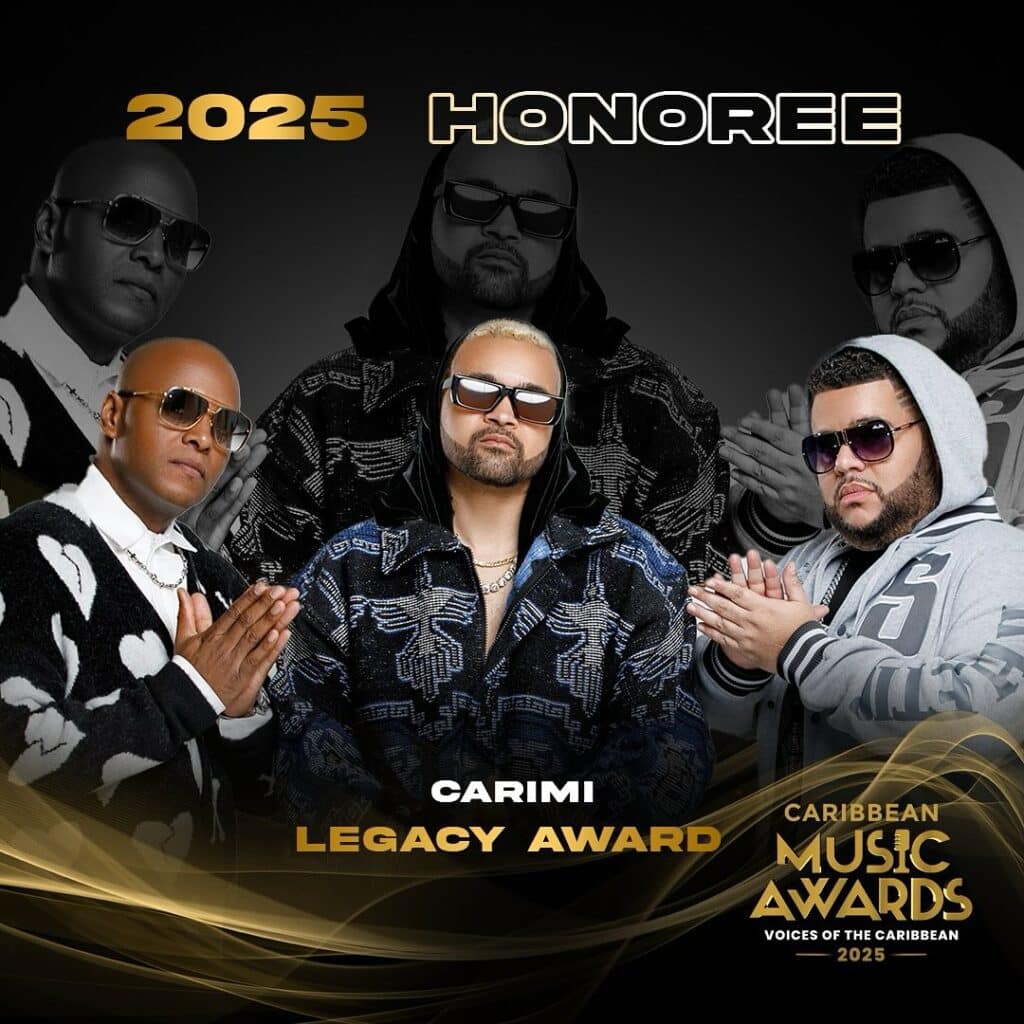
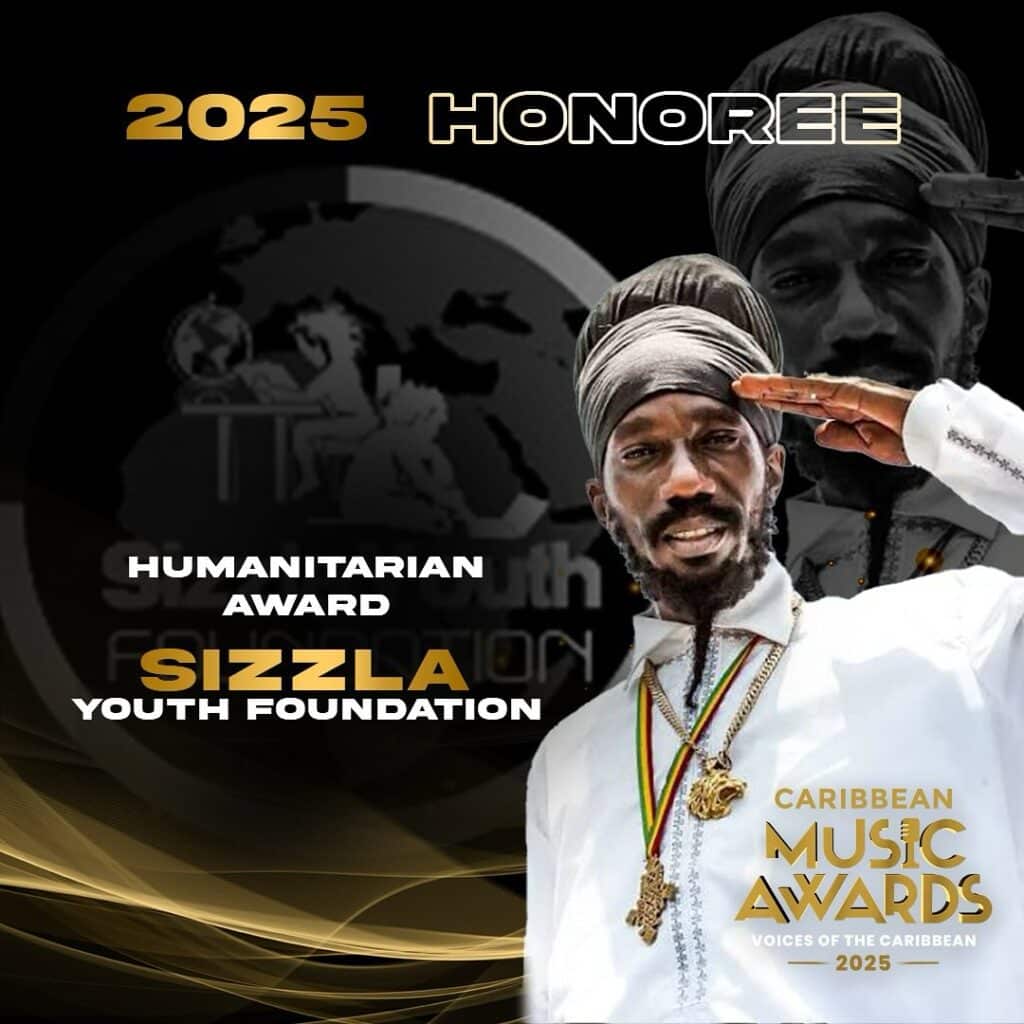
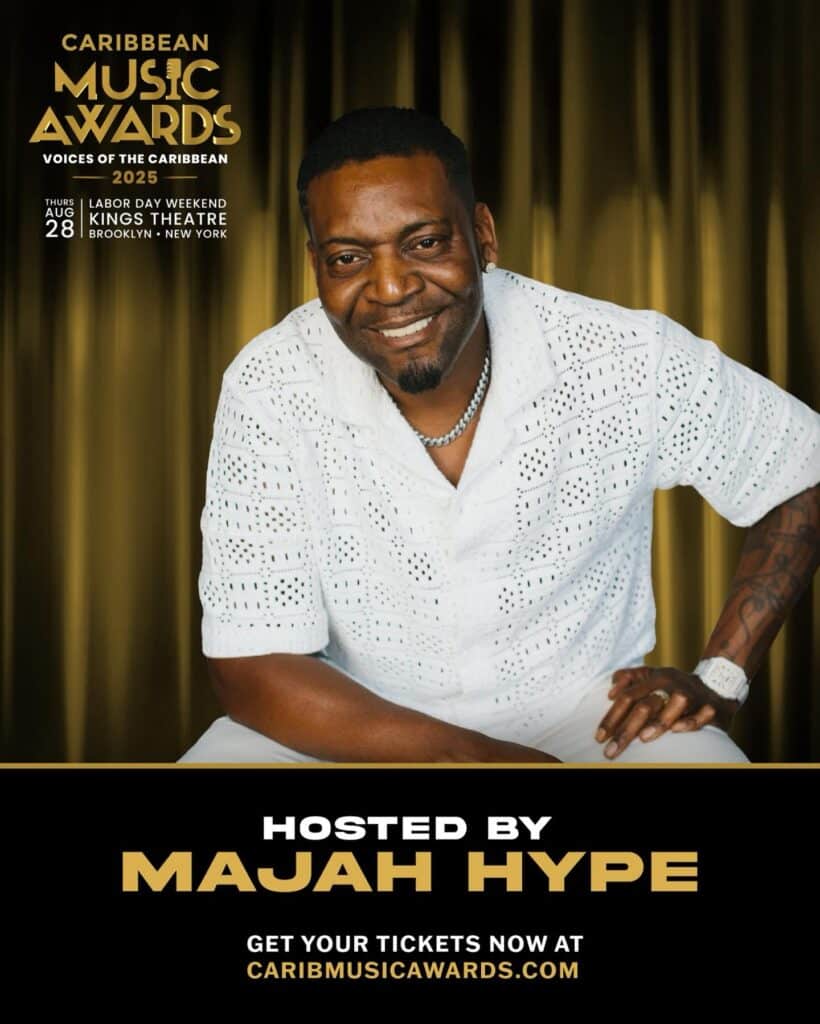
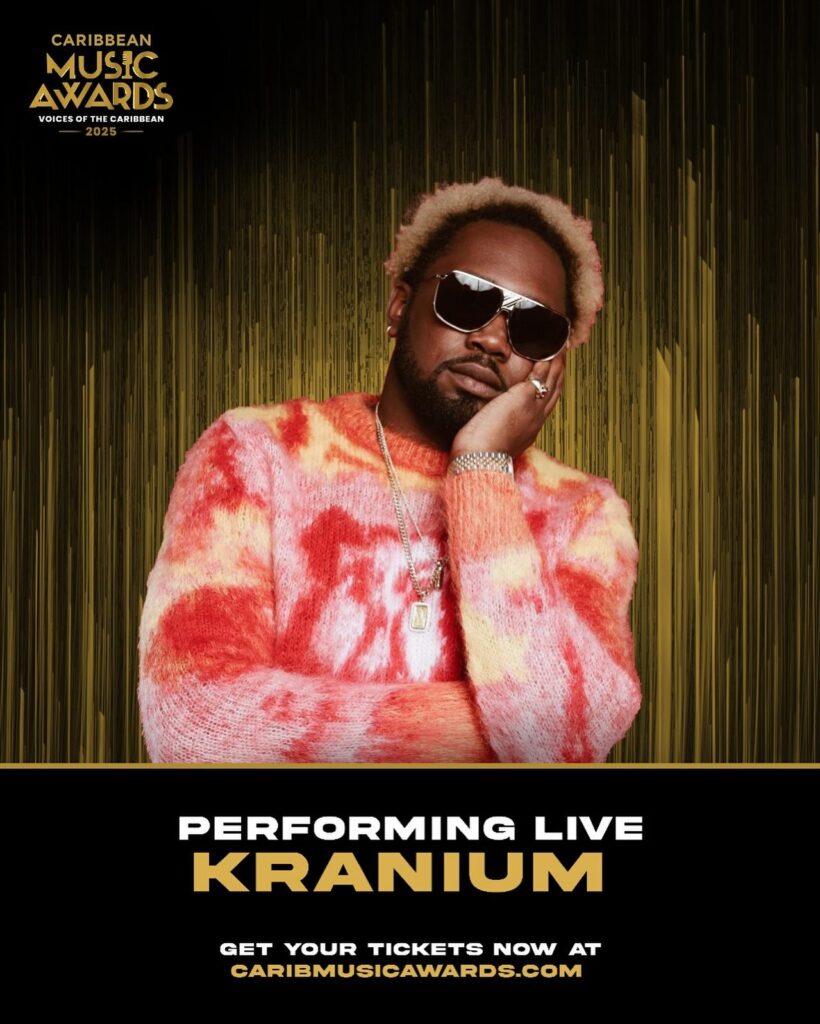
The Caribbean Music Awards 2025 will feature over 200 artists and 40 categories. Among the featured artists: Carimi (Legacy Award), Sizzla Kalonji (Humanitarian Award), Shirleyann Cyril-Mayers (Gospel Honours), Super Blue (Calypso Honours) and Bounty Killer (Lifetime Achievement Award). Performances by Lila Iké, Skinny Fabulous, Kranium, Romain Virgo and Ding Dong will electrify the evening. Hosted by comedian Majah Hype, the event will be an ode to the cultural richness of the Caribbean, whose strength and universality Busta Rhymes perfectly embodies.

Busta Rhymes
Busta Rhymes
Busta Rhymes
Busta Rhymes
Busta Rhymes
Busta Rhymes
Busta Rhymes

The global influence of Busta Rhymes

Awards aside, Busta Rhymes’ impact remains immense. Collaborating with Missy Elliott, Dr. Dre, Wu-Tang Clan and Method Man, he has imposed his style from Los Angeles to Paris, via Kingston. His career is marked by 12 Grammy Award nominations, a symbol of international recognition despite the absence of a trophy. More than just an artist, he is a cultural ferryman who continues to prove that it is possible to remain true to one’s roots while shining on the world stage.

Busta Rhymes
@thebiggerpicturebuda
Busta Rhymes
@thebiggerpicturebuda
Busta Rhymes
@thebiggerpicturebuda

A model for the new generation

Today, he is not only a celebrated artist, but also a source of inspiration. He supports the emerging scene, encourages young talent and conveys the message that authenticity and pride in one’s origins are keys to success. His legacy goes far beyond music: he embodies a vision, a state of mind and a strong Caribbean identity.

With this award, Busta Rhymes definitively enters the legend of Caribbean culture. The Caribbean Music Awards 2025 become the stage for this consecration, honoring an artist who has crossed eras and genres, while carrying the voice of the Caribbean high. His career, punctuated by daring and innovation, continues to inspire and prove that music is a universal language.

The Caribbean Global Awards 2025 is set to make London the global center of Caribbean creativity, innovation and identity. On September 27, the prestigious Cumberland Hotel will be transformed into a stage of honor to celebrate leading figures from the Caribbean and its diaspora. Driven by a strong desire to highlight the talents that are transforming the region, this event promises to be a high point of international recognition.

A meeting place for Caribbean excellence

Organized by the Caribbean Global Institute, the Caribbean Global Awards 2025 will promote the real impact of Caribbean personalities in fields as varied as entrepreneurship, culture, social commitment and scientific research. The evening will feature a gala evening with awards presentations, artistic performances, a sit-down dinner and high-level networking opportunities.

More than just a prize list, the Caribbean Global Awards 2025 will assert a clear ambition: to strengthen Caribbean pride in a globalized world, based on concrete, inspiring success stories.

Caribbean Global Awards 2025
©Caribbean Global Awards
Caribbean Global Awards 2025
©Caribbean Global Awards
Caribbean Global Awards 2025
©Caribbean Global Awards

Distinctions to reflect contemporary dynamics

The prizes awarded at Caribbean Global Awards 2025 will cover several key categories:

  • 🏆 A life’s work
  • 🏆 Cultural excellence
  • 🏆 Social impact
  • 🏆 Scientific innovation
  • 🏆 Ethical business
  • 🏆 Emerging talent

A special mention, the People’s Choice Award – Caribbean Global Leader, will go to an emblematic figure elected by the public. In 2025, Trinidadian Kamla Persad-Bissessar, former Prime Minister of Trinidad and Tobago, will have been chosen as the winner. Her career, marked by a steadfast commitment to education and equal opportunities, has mobilized thousands of supporters in the diaspora.

Caribbean Global Awards 2025
Kamla Persad-Bissessar

A scenography rooted in Caribbean identity

The Cumberland Hotel, located just a stone’s throw from Marble Arch, will welcome guests in a decor blending British elegance with Caribbean cultural references. Traditional fabrics, handicrafts and contemporary works will create an immersive environment, reflecting the diversity of the region’s heritage.

During dinner, guests will discover a selection of emblematic dishes, including Trinidad callaloo, Guadeloupe lambi and Jamaican jerk chicken, revisited by Caribbean chefs based in the UK.

Caribbean Global Awards 2025
©Caribbean Global Awards

A committed artistic program

Singer Angie Lang, a rising star on the soul and Caribbean scene, will open the ceremony with a live performance. Other artists, whose names will be revealed in the coming weeks, will combine traditional music, spoken word and hybrid creations. In keeping with the spirit of the Caribbean Global Awards 2025, the artistic program will showcase the region’s wealth of contemporary expression.

The evening will also feature speeches by entrepreneurs, activists, researchers and educators on the challenges and advances facing their respective territories, underlining the Caribbean’s ability to play its part in major global dynamics.

Caribbean Global Awards 2025
© Angie Lang

A reach beyond the event

The Caribbean Global Awards 2025 will be more than just symbolic recognition. The event will generate tangible effects: scholarships, regional cooperation projects, digital incubators and sustainable innovation funds will all be created in its wake.

Long-term partnerships will also be consolidated with academic institutions, private foundations and diaspora organizations, making this ceremony a strategic lever for the region’s development.

A global stage for an influential Caribbean

By setting up in London, the Caribbean Global Awards 2025 will reaffirm the Caribbean’s place in the international spheres of culture, economics and social innovation. It will help to project a plural, bold and proactive image of a region that is often caricatured or underestimated.

On September 27, 2025, the Caribbean will make its voice heard. Strong, creative, united. And more influential than ever.

From July 6 to July 08, 2025, Montego Bay will vibrate to the rhythm of the 49th CARICOM Summit, where the Heads of State and Government of member countries will meet to discuss the major challenges facing the region. Chaired by Andrew Holness, Prime Minister of Jamaica, the atmosphere at this year’s summit is both solemn and charged with urgency, as each delegation has come with high expectations in terms of food security, economic resilience, the Haitian crisis and, above all, the overhaul of regional logistics.

The corridors of the Montego Bay Convention Centre are buzzing with strategic conversations, while plenary sessions alternate with thematic workshops, giving each territory the chance to make its voice heard.

A demanding regional context

Right from the opening of the 49th CARICOM Summit, the tone was set: the Caribbean is going through a pivotal period. Successive speeches by representatives from Barbados, Trinidad & Tobago, Saint Lucia and Dominica highlighted the reality of logistical disruption, dependence on costly air transport and the fragility of supply chains. The debates were lively, with each head of delegation insisting on the need for concrete and immediate solutions. Behind-the-scenes exchanges testify to a shared determination to make this summit a decisive moment for the region.

49th CARICOM Summit
©CARICOM

The priorities of the Jamaican presidency

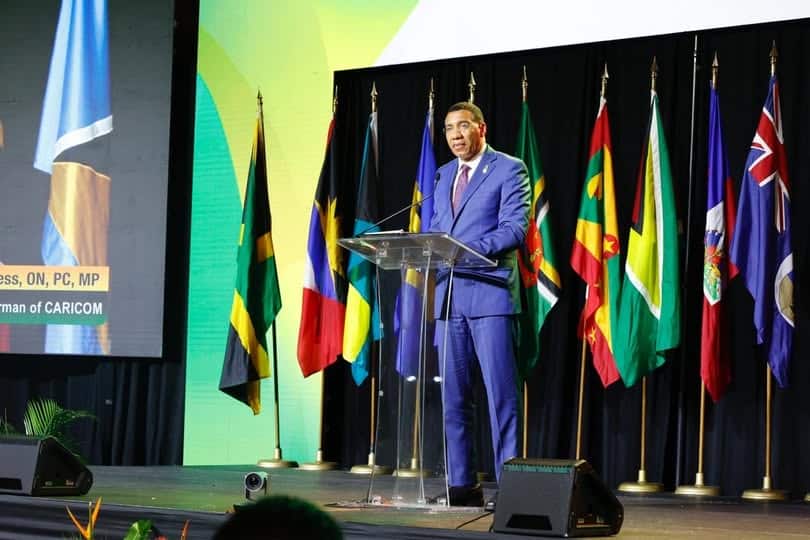
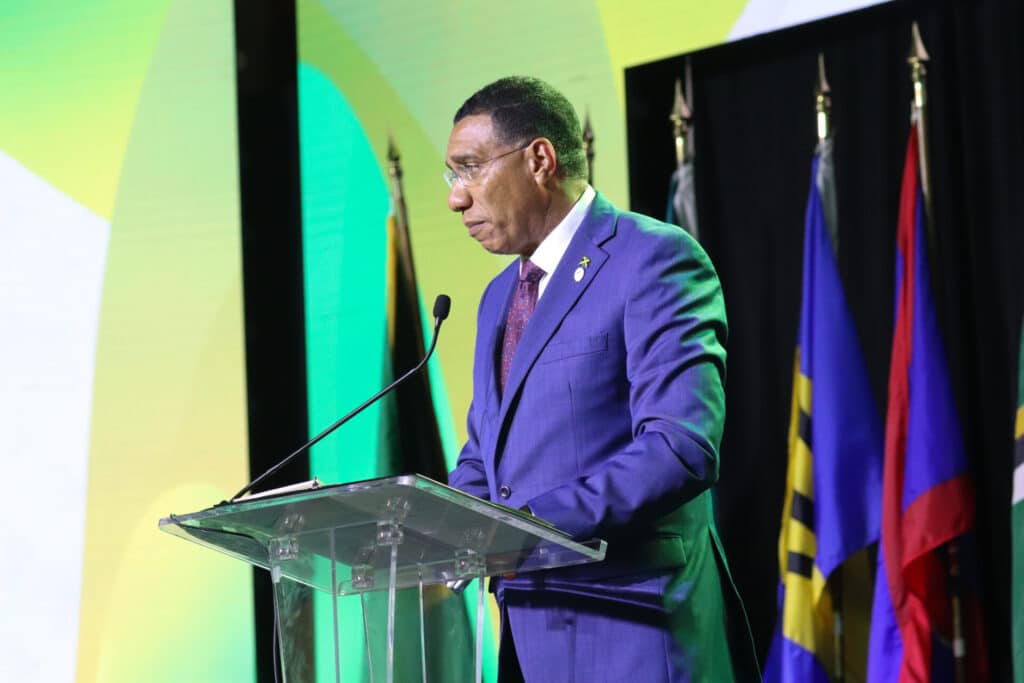
In his inaugural address, Andrew Holness reiterated the importance of strengthening cooperation and diversifying trade, while stressing the need for rapid responses to security and climate issues. His call for collective mobilization did not go unheeded: the 49th CARICOM Summit featured a series of round-table discussions on regional peace, the pooling of resources and the role of young people in building shared prosperity.

49th CARICOM Summit
Andrew Holness, chairman of CARICOM. ©CARICOM
49th CARICOM Summit
©Andrew Holness, chairman of CARICOM. ©CARICOM

Mia Mottley: a plea for logistics transformation

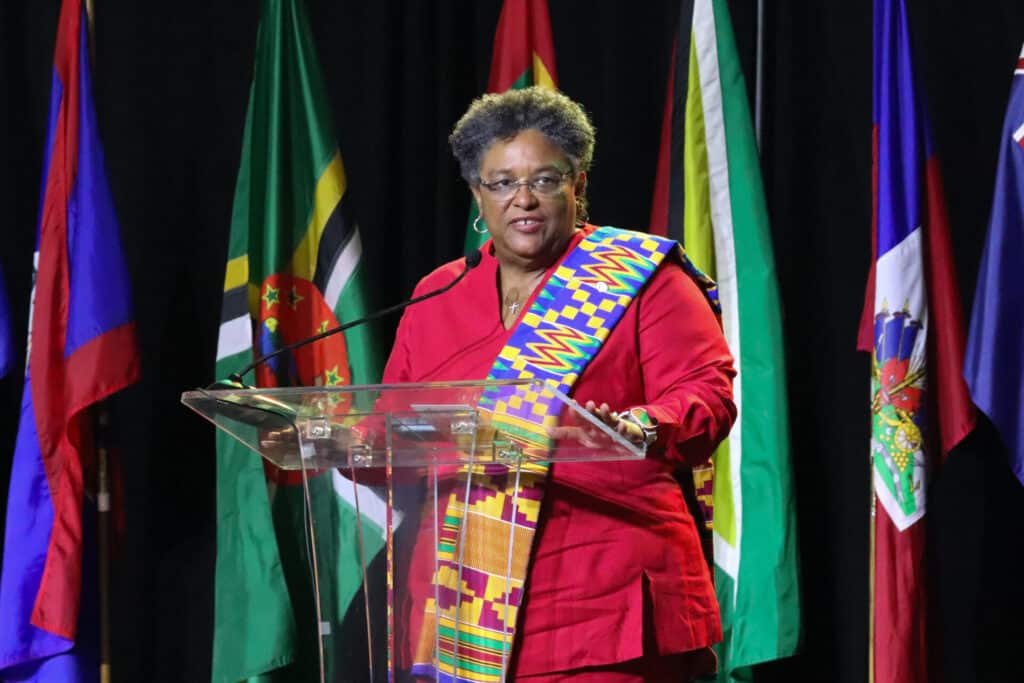
One of the highlights of the 49th CARICOM Summit was the address by Mia Mottley, Prime Minister of Barbados. With eloquence applauded by all participants, she painted a lucid picture of the logistical shortcomings holding back Caribbean development. Her voice, firm and poised, resonated in the auditorium as she spoke of the need for a “regional freight revolution”, stressing the urgent need to democratize transport and restore the sea to its historic role as a link between islands.

49th CARICOM Summit
Mia Mottley. ©CARICOM

Concrete proposals for regional freight

Mia Mottley was not one to rest on her laurels. She announced that two CARICOM member states are in advanced negotiations to acquire cargo aircraft, an initiative she believes will help to fluidify trade and guarantee the supply of essential goods. She also mentioned the expected presentation of a private-sector-led regional ferry project, which could revolutionize connectivity between the islands. These announcements, made at the heart of the 49th CARICOM Summit, were greeted with thunderous applause, a sign that the logistics issue is at the heart of our collective concerns.

49th CARICOM Summit
Mia Mottley. ©CARICOM

Political will at the heart of change

Mia Mottley took advantage of her platform to point out that the success of these projects depends above all on the political will of leaders. She fondly evoked memories of the Federal Maple and Federal Palm, symbols of a time when the sea united the peoples of the Caribbean. Her plea, echoed in several sessions of the 49th CARICOM Summit, found particular resonance with the delegations, who recognized the need to overcome institutional inertia to build a modern, resilient regional logistics system.

49th CARICOM Summit
Mia Mottley. ©CARICOM
49th CARICOM Summit
Mia Mottley. ©CARICOM

The concrete contributions of the 49th CARICOM Summit for member territories

Food security and trade fluidity

Food security was one of the key topics discussed at the 49th CARICOM Summit. Participants emphasized that the establishment of new sea and air links, such as those mentioned by Mia Mottley, will ensure a steady supply of agricultural produce and essential goods. The exchange of best practices between the Ministers of Agriculture and the Economy testifies to a shared desire to optimize logistics circuits and strengthen the food sovereignty of each territory.

Strengthening economic integration and resilience

Discussions on economic integration have highlighted the importance of pooling resources and diversifying trading partners. The 49th CARICOM Summit’s announcements of public and private investment in regional freight pave the way for enhanced cooperation, enabling member territories to better withstand external shocks, whether economic, health-related or climatic. The participants agree that this edition represents a crucial milestone on the road to shared prosperity.

Outlook for youth and innovation

Throughout the workshops, Caribbean youth and technological innovation took center stage. The initiatives presented, whether in training programs, student mobility or support for entrepreneurship, illustrate the determination of leaders to prepare the next generation and give young people the means to become part of the regional dynamic. These perspectives, discussed in depth at the 49th CARICOM Summit, point to new, concrete opportunities for young people.

49th CARICOM Summit

The 49th CARICOM Summit, catalyst for a new regional era

In Montego Bay, the 49th CARICOM Summit continues in a studious and determined atmosphere. Led by the likes of Mia Mottley and Andrew Holness, the region is taking a decisive step towards modernizing its infrastructure and deepening its integration. The discussions, rich and sometimes passionate, bear witness to a collective determination to transform challenges into opportunities and build a sustainable future for all the people of the Caribbean.

📸 Photo gallery: relive the highlights of the opening ceremony ©CARICOM

49e Sommet de la Caricom

IEDOM – Behind the influence of France’s overseas territories lies a key challenge: sustainable, inclusive development. As the central bank for the French overseas departments and territories, the “Institut d’émission” plays an essential role in supporting businesses, promoting promising projects, fostering financial education and strengthening the resilience of local economies. A discreet but essential player in the dynamics that also irrigate the economic, cultural and tourist sectors of these territories.

INTERVIEW - Ivan Odonnat, Chairman of the IEDOM

IEDOM
Ivan Odonnat

What exactly is the role of the IEDOM in the French overseas territories?

IEDOM is the “Institut d’émission des départements d’outre-mer” (French overseas departments note-issuing bank). It acts as the Banque de France’s delegated central bank in the overseas territories whose currency is the euro. We are present in Guadeloupe, Saint-Barthélemy and Saint-Martin, Martinique, French Guiana, Mayotte, La Réunion and Saint-Pierre-et-Miquelon. Our head office is located in Paris.

IEDOM
MAP IEDOM

What are your concrete fields of action?

Our missions are many and varied. We put euro bills and coins into circulation, guaranteeing their security and quality. We analyze the financial health of companies, and help individuals in financial difficulty. We also contribute to the financial education of the general public, including young people. Finally, we produce studies on a wide range of topics: economic conditions, inflation, unemployment, the financial situation of companies, payment terms, financing conditions, credit, savings, bank rates.

IEDOM
EDUCFI
IEDOM
EDUCFI
IEDOM
EDUCFI

Do you have a concrete example for an individual in financial difficulty?

When an individual is no longer able to repay their debts, they can file an over-indebtedness application. If the application is accepted, the over-indebtedness commission will choose the best possible solution, depending on the individual’s financial capacities: a break in payments, spreading repayments over a longer period, or even cancelling certain debts if the situation shows no sign of improving.

IEDOM

What about companies? Do you help them find financing?

Exactly. We support very small businesses (VSEs) and small and medium-sized enterprises (SMEs) via our VSE-SME correspondents in our branches. They are available to listen to entrepreneurs about their financing issues and direct them to the right contacts. Simply make an appointment.

IEDOM

What are your financial education missions?

We put in place a range of initiatives to raise public awareness of economic and financial issues. For example, we offer workshops on budgeting, bank accounts and credit. We give advice on how to recognize and avoid financial scams. Finally, we organize sessions on economic concepts to help you understand current debates.

We work in secondary schools, directly with students and their teachers, as well as with social workers and people in financial difficulty.

IEDOM
Financial Education Week in Guadeloupe
IEDOM
Financial Education Week in La Réunion
IEDOM
Financial Education Week in Mayotte.
IEDOM
Financial Education Week in Martinique

How many people work at the IEDOM today?

We have around 250 employees, divided between our head office in Paris and our 6 branches in Les Abymes, Fort-de-France, Cayenne, Mamoudzou, Saint-Denis and Saint-Pierre. All of them are committed to supporting the economies of the French overseas territories on a daily basis, and to assisting them in their transformations.

You’ll find all our branch addresses and information on our missions on our website www.iedom.fr.

By supporting local economies, facilitating access to financing and accompanying entrepreneurial dynamics, the IEDOM plays a full part in the economic, cultural and tourist vitality of France’s overseas territories.

IEDOM
IEDOM Guadeloupe
IEDOM Guyane
IEDOM La Réunion
IEDOM
IEDOM Martinique
IEDOM
IEDOM Guyane
IEDOM
IEDOM Mayotte
IEDOM
IEDOM Saint-Pierre-et-Miquelon

Stop arnaques” is the name of the hard-hitting campaign launched by the IEDOM (Institut d’émission des départements d’outre-mer) and the IEOM (Institut d’émission d’outre-mer) to respond to an emergency that is all too often underestimated: the upsurge in bank fraud affecting users in the French overseas territories. This initiative aims to raise awareness and arm citizens against increasingly sophisticated scams, at a time when fraudsters are redoubling their creativity thanks to new technologies.

Fake e-mails, calls from bogus advisors, promises of unconditional credit or even cheque manipulation: the modus operandi may be evolving, but the aim remains the same: to take your money. The “Stop Arnaques” campaign, designed to be accessible and straightforward, is aimed at everyone: individuals, professionals, businesses… And its message is clear: when you value your money, you hold on to it.

The false banking advisor : the enemy behind the reassuring voice

He calls gently. He knows your name, your banking habits. He claims he wants to help you block a suspicious transaction.

In reality, he’s manipulating you. This increasingly common ploy is based on fear and panic. By asking you for your credit card or online banking details, they try to break through the last barriers protecting your savings.

The IEDOM and IEOM institutes remind you of an essential rule: no advisor will ever ask you for your personal codes.

If in doubt, hang up immediately and dial your branch yourself. Check your statements and the status of your means of payment regularly. Anticipation is your best defense.

Stop arnaques

Unconditional credit : hope that traps the most vulnerable

Stop arnaques

In times of difficulty, an immediate credit offer can seem like a lifeline.

That’s precisely where the crooks strike.

In exchange for a few dozen euros in application fees, they promise loans with no verification or guarantees. But once the money is paid, they disappear, leaving the victim with a financial loss and often a loss of confidence.

The reminder from the IEDOM and IEOM is firm: credit is a regulated business.

Any person or entity offering you a loan must be approved. Before giving in to the temptation of an offer that’s too good to be true, check its authenticity.

To refuse is sometimes to protect oneself from a destructive spiral.

The check: vigilance is always necessary

Often perceived as a traditional method of payment, cheks are nevertheless the most frequently defrauded.

The scam is simple: the scammer offers to fill it in for you, under the pretext of helping you.

But he takes the opportunity to change the amount or the name of the beneficiary. As a result, you lose control over what should have been a secure transaction.

The “Stop arnaques” campaign emphasizes good practice: fill in your checks, without leaving any empty fields.

Amount in figures and words, date, place, beneficiary and signature: everything must be completed without exception.

This simple gesture can prevent major losses.

Stop arnaques

A clear, straightforward and educational prevention system

With “Stop arnaques”, the IEDOM and IEOM have chosen to speak the truth. No complex jargon, just short, visual, high-impact messages adapted to the realities of the French overseas territories. Three colorful visuals, widely distributed online, summarize the right reflexes to adopt in the face of these everyday pitfalls.

This campaign is not simply a reminder to be cautious. It reflects a deep commitment to protecting users in the French overseas territories in the face of a constantly evolving threat. It aims not only to alert, but also to empower those who, every day, may be targeted.

Stop arnaques

When you value your money, you hold on to it

One of the campaign’s most powerful slogans: “Quand on tient à son argent, on le retentient” (When you value your money, you hold on to it) – perfectly illustrates the spirit of “Stop arnaques”: vigilance is a vital reflex. In a digital world where attempted scams can appear at any time, it’s no longer enough to be aware of the risks: we need to adopt the right behaviors.

By providing clear, practical information that is widely disseminated, the IEDOM and IEOM are providing a structured response to a social problem. Banking scams are not inevitable. As long as you stay informed, keep your distance from suspicious solicitations, and remember that there’s no emergency that justifies giving up your confidential codes.

Stop arnaques

“Stop arnaques” : a call for collective responsibility

While prevention messages are important, the fight against fraud also requires collective mobilization. Raising awareness among family and friends, supporting the most vulnerable, reporting suspicious attempts… everyone can play a part in spreading this vigilance.

“Stop arnaques” isn’t just a campaign. It’s an outstretched hand to all those who, sometimes, don’t dare ask questions, or recognize too late that they’ve been tricked. It’s also a message of hope: in the face of ever more audacious swindlers, the best response remains information, solidarity and prudence.

When you value your money, hold on to it!

From the very first lines of his story, Shaka Pow embodies the rare alliance between artistic passion and scientific rigor. A veritable phenomenon in Jamaica, he has established himself as a singular artist, able to juggle the dancehall scene and hospital corridors with brio. But who’s behind the name that has become synonymous with versatility and success? Let’s delve into the fascinating world of Shaka Pow, the doctor-artist who never ceases to surprise and inspire.

Shaka Pow's family roots and early awakening

A childhood steeped in music

Shaka Pow, whose real name is Dr. Garth McDonald, was born into a household where music was not just a hobby, but a family tradition. From the age of three, he distinguished himself by his ability to imitate the dancehall greats, under the watchful eye of his parents Kasmir and Nellie. Kasmir, owner of a small sound system, and Nellie, a renowned dancer in her youth, pass on to their son an unfailing passion for music and show business.

Parental influence and a taste for show business

Growing up in a house where every corner resonated with reggae rhythms and popular melodies forged Shaka Pow ‘s character. His earliest memories are of impromptu performances in front of the family, where he already captured attention with his natural charisma. This musical atmosphere, combined with an environment conducive to self-fulfilment, laid the foundations for a dual vocation that would continue to grow stronger over the years.

Shaka Pow
©️backayard.com
Shaka Pow
©️backayard.com

From brilliant studies to a passion for Dancehall

A model student conquers medicine

While music plays a central role in Shaka Pow’s life, academic excellence never takes a back seat. After a faultless career at Waterford Primary, St. Catherine High and Kingston College, he entered the Faculty of Medicine at the University of the West Indies in Mona at just eighteen. This early admission was a testament to his unrivalled determination and discipline, qualities that were to become the hallmark of Shaka Pow.

First steps on stage and academic recognition

Far from contenting himself with the university benches, Shaka Pow quickly made a name for himself on the campus cultural scene. He was elected president of the Student Guild’s entertainment department in 1996, energizing student life with memorable events. It was during this period that he opened for major artists such as Beenie Man and Bounty Killa, proving that his talent was not limited to the classroom.

The musical rise of Shaka Pow

Prestigious collaborations and landmark titles

After graduating in 1997 and completing an internship in 1999, Shaka Pow launched himself fully into music production. He collaborates with renowned producers such as Q45, Steely and Clevie, King Jammy’s, Jack Scorpio, Jan Screw, Syt Gordon, Robert Ffrench, and Massive B. Highlights include “Book”, “God Bless”, “Too Experienced” (with Barrington Levy), “Jerry Springer” and “Stress”.

Committed albums and international recognition

2001 marked a turning point with the release of the album “Am The Doo” in the United States, on the Inner Beat Records label. This project propelled Shaka Pow onto the international scene, and opened the doors to numerous festivals and TV shows. In 2009, he followed this up with “Special Design”, a cultural and social album that blends dancehall, gospel and committed reflection. The tracks “Currency” and “Money Machine” were a big hit, as was “Rubba Bounce”, a tribute to dancehall icon ICE.

Stage performances and media impact

Shaka Pow is a fixture on Jamaica’s biggest stages, from Sting and Teen Splash to Professionals in Cabaret and Barrington Levy and Friends. His presence is also noticed on television, with appearances on shows such as “Morning Time”, “CVM at Sunrise” and “On Stage with Winford Williams”. His unique style, at once streetwise, committed and accessible, appeals to a wide and diverse audience.

Shaka Pow: The doctor at the service of the community

A constant commitment to social responsibility

Beyond music, Shaka Pow never forgets his oath as a doctor. As Senior Medical Officer at Victoria Jubilee Hospital, he combines his two passions with inexhaustible energy. He regularly takes part in charity events, community health fairs and school activities, where he puts his skills to work for the most vulnerable.

The song “Book”: education at the heart of the work

The track “Book” perfectly illustrates Shaka Pow’s desire to use music as a vehicle for education. The lyrics, focusing on the importance of learning, earned him invitations to numerous graduation and award ceremonies. This song, which has become emblematic, proves that dancehall can also carry positive and inspiring messages.

Shaka Pow
©️backayard.com

Shaka Pow's heritage and versatility

A respected figure in two worlds

Shaka Pow enjoys unanimous recognition in both the medical world and the music industry. His jovial and benevolent nature has won him the sympathy of his peers and audiences alike. He is praised for his ability to reconcile two demanding careers, while remaining true to his values and identity.

A model of inspiration for young people

Through her journey, Shaka Pow embodies a powerful message: it’s possible to pursue many dreams at once, without ever sacrificing excellence. Her story inspires many young people, in Jamaica and beyond, to believe in their potential and never give up on their ambitions, be they artistic, scientific or social.

Shaka Pow, Jamaica's one-man band

Shaka Pow is the perfect example of multi-faceted success. A dedicated doctor and renowned artist, he demonstrates that no frontier is insurmountable for those who act with passion and determination. His influence extends far beyond Jamaica’s borders, and his commitment, both on stage and in the hospital, continues to inspire and unite. Shaka Pow will undoubtedly remain a key figure for generations to come, symbolizing a Jamaica that is creative, resilient and united.