
“Walk Good”: Why Doesn’t Jamaica Just Say Goodbye?

Walk good

On the eve of Jamaica’s Independence Day, celebrated on August 6, two words capture a unique way of saying goodbye. “Walk good” means more than just “goodbye”: the phrase wishes the person leaving to stay safe, travel safely, and continue on their way under favorable conditions.

A few words spoken as we set off

Imagine a late afternoon in Jamaica. A visit is coming to an end. The door opens. Someone walks down the steps and heads out onto the road. Behind him, a voice simply calls out: “Walk good!”

The person doesn’t just receive a greeting. They take a gesture of care with them. This short phrase conveys the idea of setting off safely, taking care of oneself, and arriving safely at one’s destination. The Jamaica Tourist Board also presents “Walk good” as a farewell greeting that can mean “goodbye,” “take care,” or “have a safe trip.” It is said with good wishes for the person who is leaving.

Walk good

What does “Walk good” really mean?

Taken literally, “Walk good” could be translated as “have a good trip.” But this literal translation isn’t enough. In Jamaican usage, the expression is more like “take care of yourself,” “travel safely,” or “have a safe trip.” It’s said to someone who is leaving. This could be a loved one leaving home, a friend hitting the road again, or a visitor whose stay has come to an end.

The expression can also be written as “Waak gud”. It is defined as a wish for good luck and a safe journey for those who are setting out. What matters, then, is not the act of walking in the physical sense. It is the journey that begins, even if it lasts only a few minutes.

Walk good

A kind suggestion, not an order

“Walk good” does not give an order. The phrase conveys a sense of concern. It says: take care of yourself. Stay safe. May everything go well until you arrive. This nuance explains why a simple “goodbye” doesn’t fully capture its meaning. Saying goodbye brings the exchange to a close. Saying “Walk good” It continues to accompany the person for a little while, even as they are already walking away. The tone naturally plays a role. Among friends or within a family, the phrase can be lighthearted and informal. In a different context, it can take on a more solemn tone.

The University of the West Indies has notably featured her in public tributes, particularly to honor the memory of Louise Bennett-Coverley, known as Miss Lou, or to wish Usain Bolt a safe return. These examples show that the expression can also convey respect, remembrance, and collective affection.

Walk good

When do we use “Walk good”?

The phrase naturally fits into everyday farewells. It can be used to wrap up a visit, to walk someone to the door, or when two people part ways after a conversation. Jamaican cultural guides also describe it as a way to wish someone a safe journey after leaving their host’s home. So it doesn’t require a long journey. The “journey” could be the trip home, the trip to your next appointment, or a new chapter in life. That’s precisely what makes the expression so powerful: it transforms an everyday action into an act of kindness toward others.

Walk good

What “Walk Good” Tells Us About Jamaica

Caribbean languages do more than simply name the world. They also convey ways of navigating relationships. “Walk good” This is simply illustrated by the fact that, even as people part ways, speech still maintains the connection. The phrase is deeply rooted in Jamaica and its patois. It should not be diluted into a vague notion of “Caribbean speech.” Its power stems precisely from its Jamaican roots, its rhythm, and the warmth it conveys at the moment of parting.

On August 5, 2026, it also coincides with the eve of a national holiday. Jamaica gained independence on August 6, 1962 and will therefore celebrate, in 2026, its 64 years of independence. In this context, “Walk good” reminds us that identity is also passed down through the expressions we preserve, repeat, and share with others.

Walk good

More Than Just Goodbye

A door closes. A car pulls away. The person drives off. Yet those two words linger in the air for a few more seconds: “Walk good.” They don’t promise that the journey will be easy. They offer something more human: the hope that it will go well. What if the different ways of saying goodbye also reflected how each region cares for those who are leaving?

Walk good
Walk good

In Jamaica, “Walk good” means “take care,” “have a safe trip,” or “travel safely.” This expression is used to see someone off when they’re leaving.

Jamaicans use “Walk good” to wrap up a visit, wish someone a safe trip home, or see off a loved one, a friend, or a traveler.

“Goodbye” simply means “goodbye.” “Walk good” adds a kind wish: hoping the person will stay safe and continue on their way safely.

Leave a Reply

Your email address will not be published. Required fields are marked *

More articles from RK

Silver Magellan Award 2026 logo awarded to Martinique for its culinary heritage
CULINARY ART
Tolotra

2026 Silver Magellan Award: Martinique Showcases Its Cuisine on the International Stage

Martinique has just won a 2026 Silver Magellan Award for its culinary heritage. Presented by Travel Weekly, this award honors the Martinique Tourism Board in the category of Caribbean culinary destinations. This international recognition highlights the island’s flavors, its culinary expertise, and a growing ambition: to make Martinican cuisine a true travel experience. 2026 Silver Magellan Award: An Accolade for Martinican Cuisine The results of the 2026 Travel Weekly Magellan Awards are now available on the competition’s official website. Martinique is among the winners, having received a silver medal in the “Caribbean – Overall Destinations – Culinary Destination” category. The Martinique Tourism Committee’s (CMT) entry, titled “Martinique: Where Culinary Heritage Comes to Life,” highlights a destination where culinary heritage continues to thrive and be passed down through the generations. Organized by the U.S. trade publication Travel Weekly, the Magellan Awards recognize achievements in various areas of international tourism. Entries are
Read More »
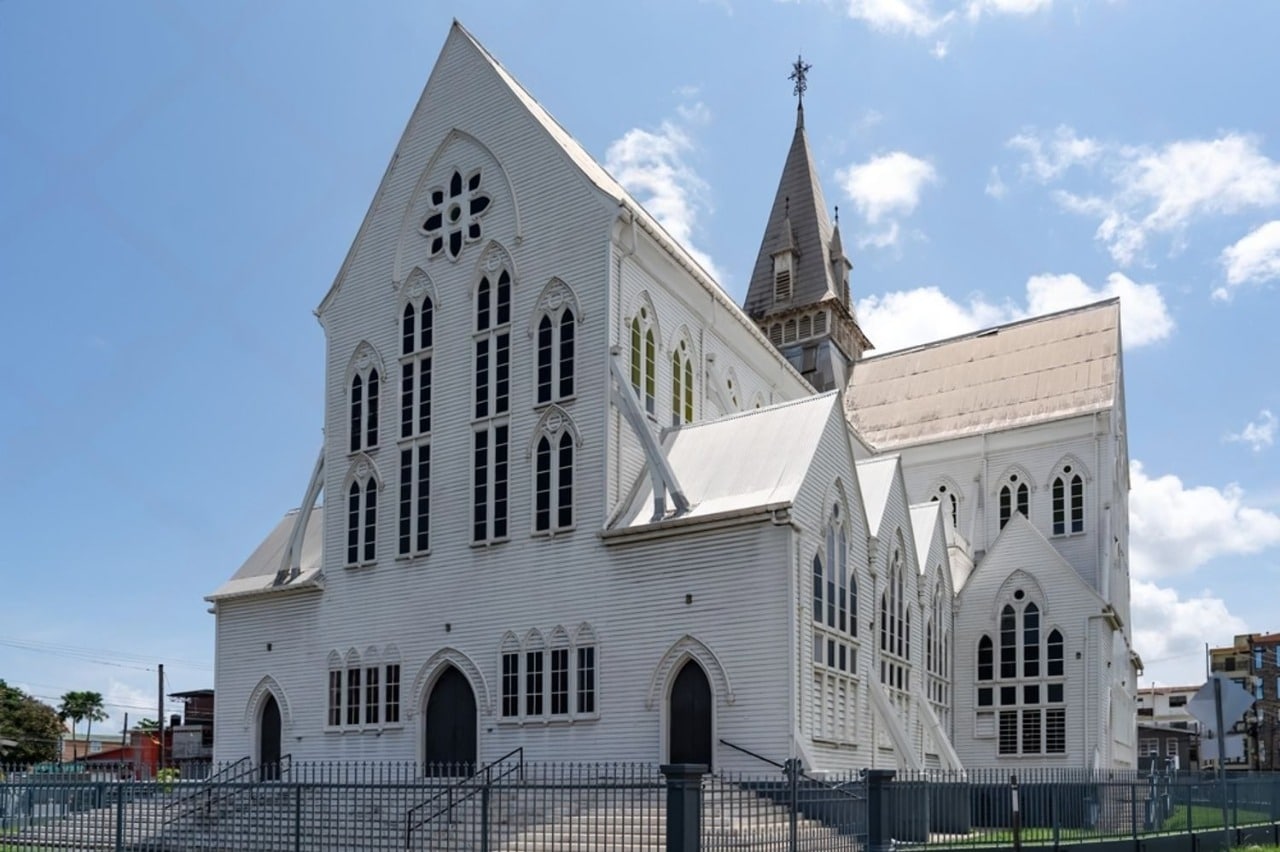
St. George's Cathedral in Georgetown, Guyana, a wooden Anglican church
TOURISM
Tolotra

St. George’s Cathedral in Georgetown: 43.5 meters of wood after the brick

St. George’s Cathedral in Georgetown, Guyana, is approximately 43.5 meters tall and is built of wood. Consecrated on November 8, 1894, it replaced a brick cathedral, completed in 1842, whose tower was deemed too heavy for its foundations. Its history is that of a building made of greenheart, a hardwood native to Guyana, which the diocese must continue to protect. In January 2015, Dean Paul Andrew Carto, rector of St. George’s Cathedral in Georgetown, Guyana, warned that the building’s problems would not be solved by barbecues and bake sales. That statement sums up the challenge facing this landmark. In Georgetown, St. George’s Anglican Church is a large, 43.5-meter-tall wooden structure, and wood requires constant maintenance. St. George’s Cathedral, a 43.5-meter-tall wooden structure in Georgetown St. George’s Cathedral in Georgetown, the capital of Guyana, stands on Church Street and is approximately 43.5 meters, or 143 feet, tall. The UNESCO Tentative List
Read More »
cinémas caribéens
FILM & VIDEO
Tolotra

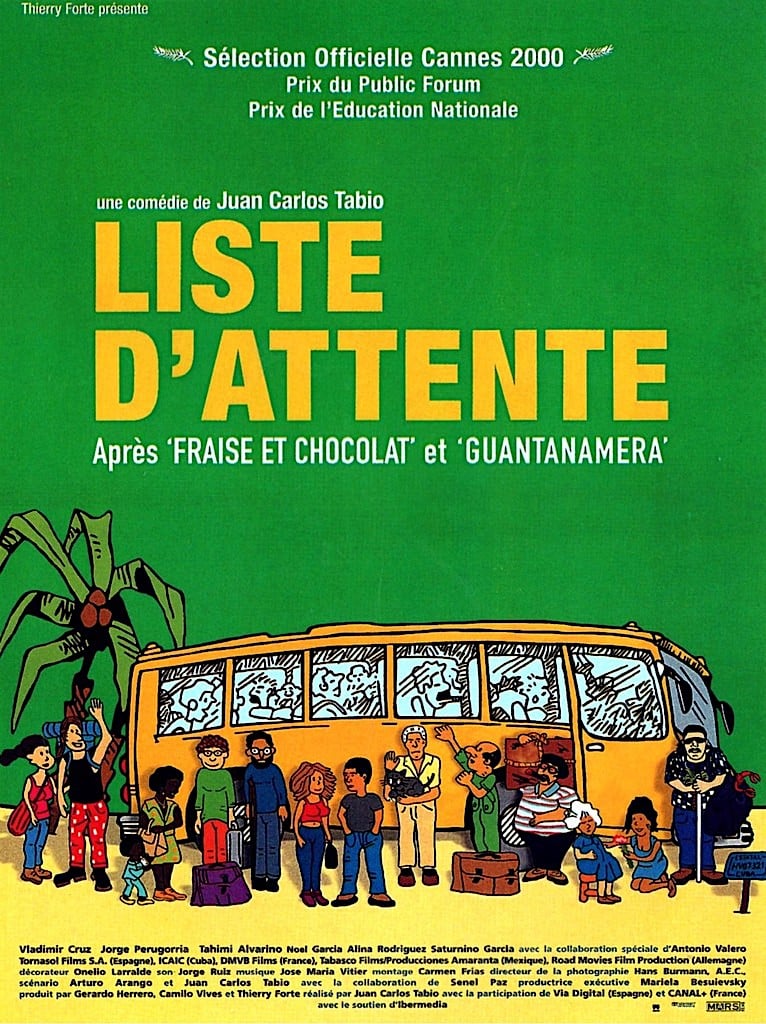
S6/10 – Stories of Caribbean Cinema, Dancehall, Memory, and Cuban Satire. Texts by Guillaume Robillard. Ciclic, 2026.

We’ve reached the halfway point of the series “Stories of Caribbean Cinema.” The first four episodes have spanned nearly three decades of cinema, from Cuba in the 1960s to productions from Martinique and Curaçao in the 1980s. This fifth installment moves into the 1990s with two films set in very different worlds. Euzhan Palcy’s *Siméon* delves into a Caribbean imagination where music, ghosts, and magical realism converge. Raoul Peck’s *The Man on the Quay* revisits François Duvalier’s dictatorship in Haiti through the eyes of a child. You are now reading the fifth episode in a series of ten. Four episodes have already been published on Richès Karayib, and five more will follow in this series through 2025. 1997: JAMAICA – “DANCEHALL QUEEN” BY RICK ELGOOD & DON LETTS Dancehall Queen is one of many Jamaican films that follow the formula established by *The Harder They Come* (Perry Henzell, 1972): Jamaican

Read More »

conTACT RK

we'd love to have your feedback on your experience so far

Join The List

Join our Richès Karayib community!  Sign up for our newsletter.

Want To Maximize Your Business Presence On Riches Karayib?

Complete the form to start the application