On the future EC$5 bill, the face of Grenadian Olympic champion Kirani James will appear alongside that of former Saint Vincent and the Grenadines Prime Minister Robert Milton Cato. This pairing encapsulates the ambition of the new series: to bring to life, through everyday gestures, the stories of those who have left their mark on the Eastern Caribbean.
On July 9, 2026, the Eastern Caribbean Central Bank (ECCB) unveiled the new designs for the five main denominations of the regional currency. For the first time, the 5, 10, 20, 50, and 100 EC dollar bills will no longer feature the portrait of Queen Elizabeth II. Ten figures from member countries will take her place.
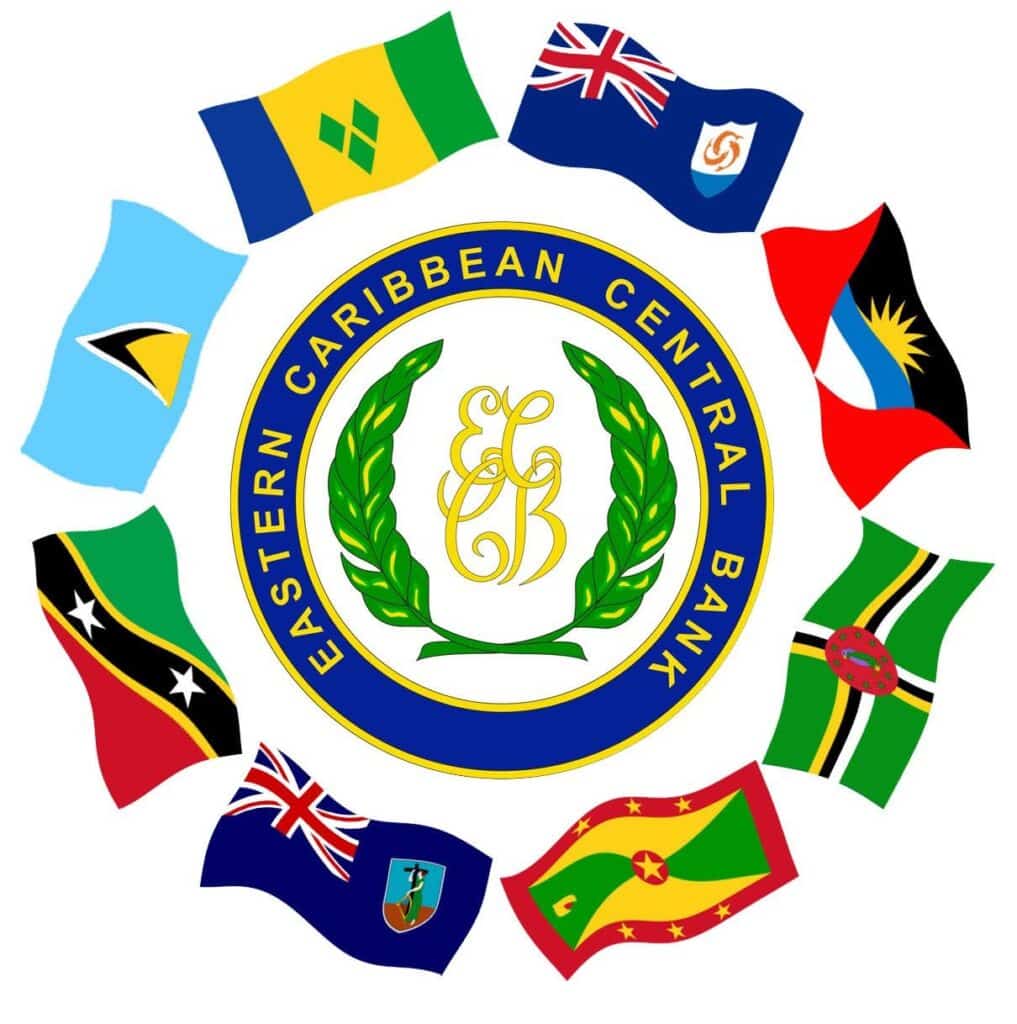
A common currency for eight territories
The EC dollar is the official currency of Anguilla, Antigua and Barbuda, Dominica, Grenada, Montserrat, Saint Kitts and Nevis, Saint Lucia, and Saint Vincent and the Grenadines. These eight member states share a central bank and a currency, but each retains its own national history. The new design specifically seeks to bring these narratives together without blurring them. In the Eastern Caribbean, the banknote thus becomes more than just a means of payment; it becomes a symbol of regional recognition.
Five cuts for ten courses
The $100 bill will feature Saint Lucian economist Sir William Arthur Lewis and Sir John Compton. In 1979, Arthur Lewis received the Bank of Sweden Prize in Economic Sciences for his pioneering work on development. The $50 bill will feature Sir K. Dwight Venner, governor of the ECCB from 1989 to 2015, and Sir Robert Llewellyn Bradshaw. The $20 bill will feature Sir Vere Cornwall Bird Sr. and Dame Mary Eugenia Charles, the first woman elected prime minister in the Caribbean region.
The $10 bill will feature William Henry Bramble and James Ronald Webster. Finally, the $5 bill will feature Robert Milton Cato and Kirani James. As the 2012 Olympic 400-meter champion in London, Kirani James earned Grenada its first-ever Olympic medal.

A decision that has been in the works since 2023
The decision to make this change was not reached in a matter of weeks. On July 21, 2023, the ECCB’s Monetary Council approved the replacement of the image of Elizabeth II. The Central Bank then held public consultations between July and December 2023. According to the ECCB, these discussions revealed strong support for national heroes and the region’s founding figures. The 2026 unveiling thus reflects not only an institutional decision but also the expectations expressed in the countries concerned.
What memory do the tickets choose?
The collection tells a certain story of the Eastern Caribbean . It primarily highlights political leaders, an economist, a pioneer of monetary integration, and an athlete. These figures evoke the region’s path to independence, the building of its institutions, and the determination to establish the region’s presence on the international stage. But the list also sparks debate. Among the ten figures selected, only one is a woman: Dame Eugenia Charles. The arts, literature, and music are not directly represented. This observation does not diminish the significance of the change, but it does show that a currency alone cannot encapsulate the full richness of a region.
By replacing the monarch’s portrait with those of local figures, the Eastern Caribbean is shifting the symbolic center of its currency. They are not merely changing images: they are choosing the faces that will henceforth accompany purchases, wages, and trade. A new question then begins to circulate along with these bills: what other women, artists, thinkers, or builders might one day become part of the shared narrative of the Eastern Caribbean?
📸 @ECCB
The Eastern Caribbean Central Bank is replacing the portrait of Queen Elizabeth II with those of ten prominent figures from the region. This new series aims to better represent the history, achievements, and shared identity of the eight member countries that use the EC dollar.
The five banknotes will feature, among others, economist Sir Arthur Lewis, former Prime Minister Dame Eugenia Charles, former ECCB Governor Sir K. Dwight Venner, and Grenadian Olympic champion Kirani James. Each banknote will feature two regional figures.
The EC dollar is used by eight members of the Eastern Caribbean Monetary Union: Anguilla, Antigua and Barbuda, Dominica, Grenada, Montserrat, Saint Kitts and Nevis, Saint Lucia, and Saint Vincent and the Grenadines.