
Anguilla reaches its highest level of arrivals in 33 years, confirming its power as a Caribbean tourist destination

Anguilla

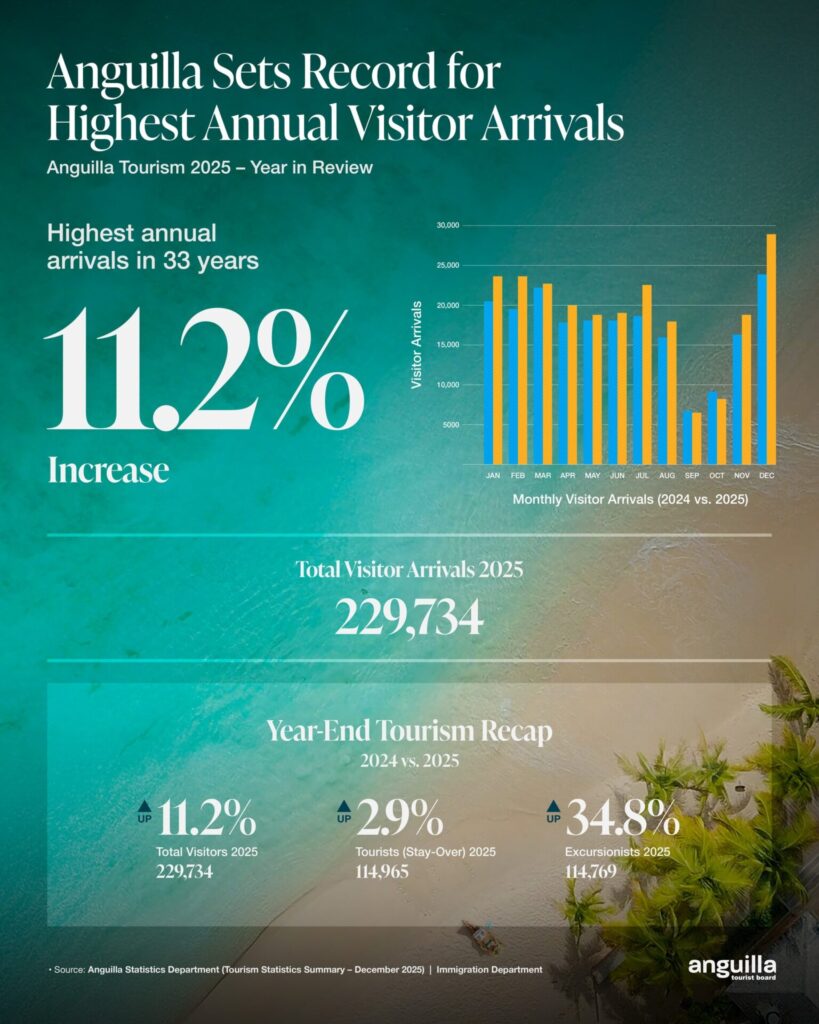
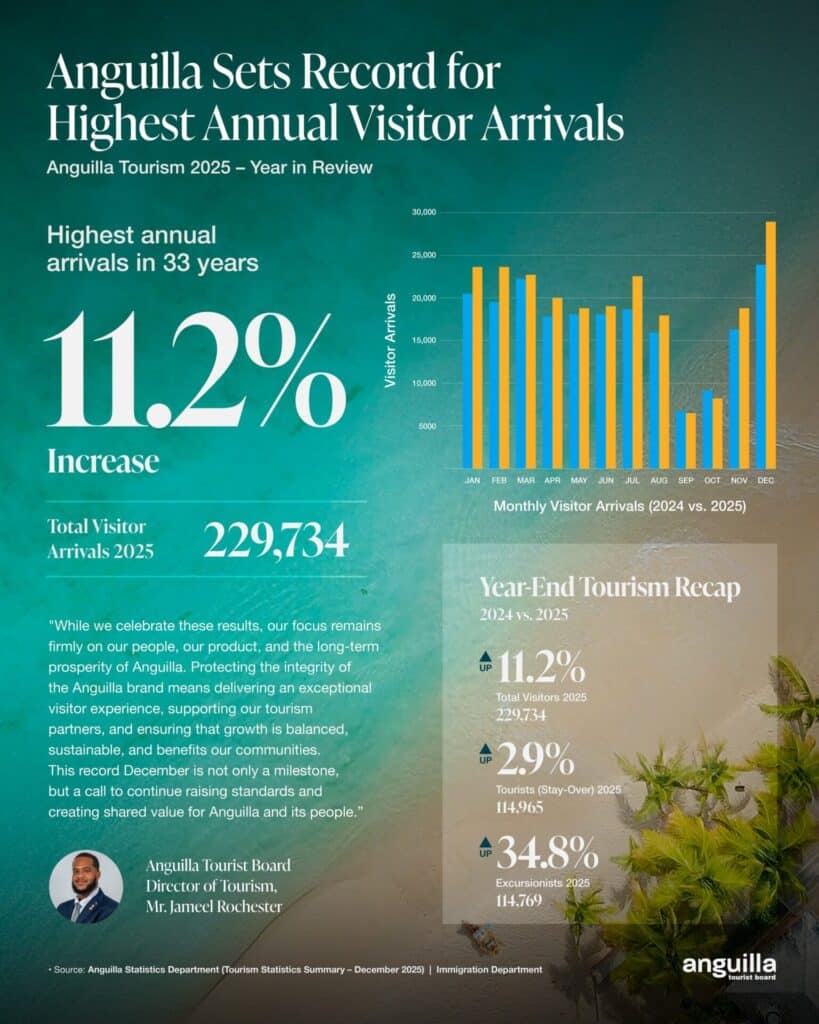
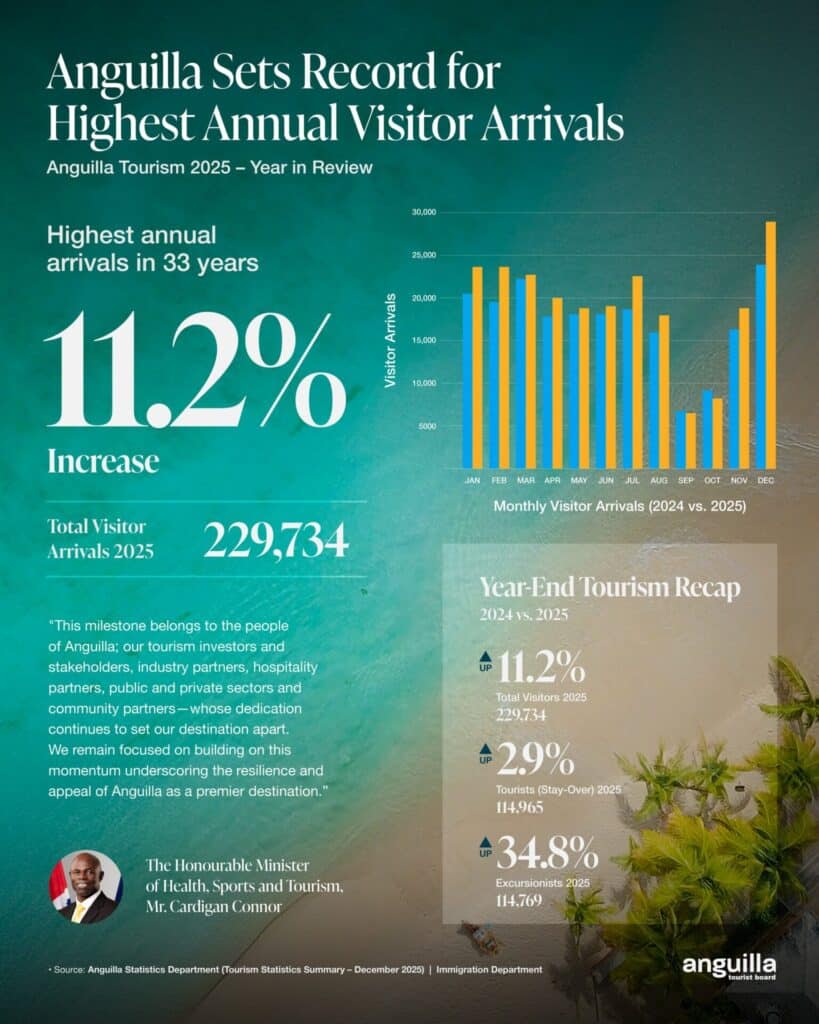
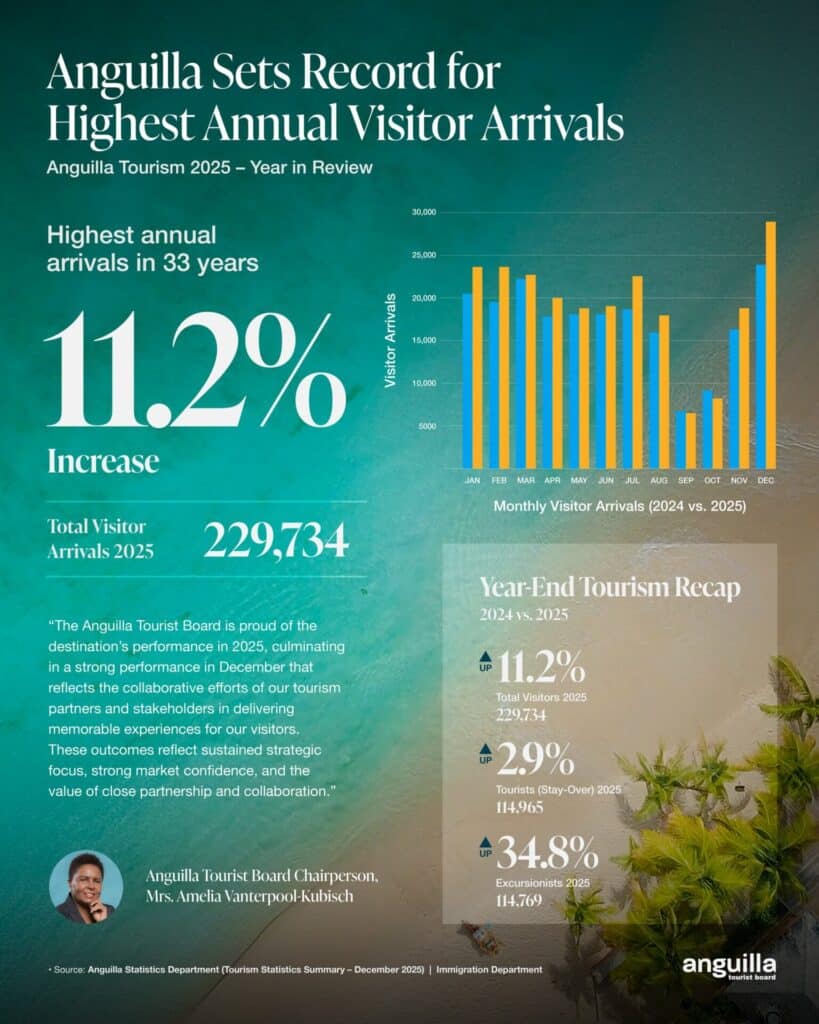
Anguilla has reached a major milestone in its tourism development. In 2025, the island recorded 229,734 visitors its highest number of arrivals in 33 years according to official data from the Department of Statistics and the Anguilla Tourist Board. This performance represents an increase of 11.2% compared to 2024 and confirms the strength of this Caribbean territory’s tourism model.

In a regional context marked by intense competition between destinations, Anguilla has demonstrated its ability to maintain a premium positioning while increasing its visitor numbers.

Anguilla reaches a historic milestone in 2025

The year 2025 will remain a benchmark for the island, which achieves its highest annual visitor volume in over three decades. With 229,734 arrivals, the destination is not only outperforming its recent performance, but also the levels recorded prior to the pandemic. The increase in 11,2 % compared to 2024 illustrates a controlled growth dynamic. It is based on a targeted promotional strategy, continuous improvement of the tourism offering and close collaboration between public and private players in the sector.

This performance also confirms Anguilla’s resilience in the face of fluctuations in the global tourism market, and its ability to maintain a high level of attractiveness to a demanding international clientele.

Anguilla
Anguilla
Anguilla
Anguilla

Growth driven by two complementary segments

The island’s tourism success in 2025 is based on the positive evolution of two major visitor categories: stayover tourists and day-trippers. Stay-over visitors, who spend at least one night on the island, have reached 114,965 arrivals. These figures testify to the good health of the hotel sector and the upscale accommodation on offer. At the same time, the number of day-trippers reached 114,769 arrivals confirming the importance of regional flows.

This complementarity between extended stays and short-term visits is one of the pillars of the island’s tourism model. It enables the island to benefit from a high overall volume of visitors, while diversifying its economic spin-offs.

Anguilla
Anguilla
Anguilla
Anguilla
Anguilla

A particularly dynamic end to 2025

Tourism performance in Anguilla was reinforced by a particularly active final quarter. The month of december 2025 was the best-performing of the year, with 28,855 visitors. This illustrates the attractiveness of the destination during the peak winter season. The months of January, February and March also posted solid results, confirming the loyalty of international customers during the main tourist season. This concentration of arrivals in strategic periods underlines the effectiveness of promotional campaigns in priority markets. In this way, the island is able to consolidate its visitor numbers throughout the year, while capitalizing on its periods of strong demand.

The U.S. market, the main driver of visitor numbers

The U.S. market remains the main contributor to the island’s performance. By 2025, American visitors will account for around 70% of tourist arrivals. This confirms the strategic importance of this customer base. This dominance can be explained by several factors: geographical proximity, accessibility via regional hubs, and Anguilla’s reputation as a high-end, secure destination. Canada and Europe complete the picture, making a more moderate but stable contribution.

However, the gradual diversification of markets remains an objective for tourism authorities, who wish to reduce dependence on a single source.

Anguilla
Anguilla

A quality-oriented tourism strategy

The island’s positioning is based on a clear strategy: quality of experience rather than massification. The island continues to focus on specific segments such as luxury tourism, gastronomy, weddings and wellness holidays. This orientation enables the island to maintain a high level of spending per visitor, while preserving its identity. It also encourages balanced tourism development that respects the environment and local communities.

The results for 2025 demonstrate the relevance of this approach. The island has succeeded in increasing its visitor numbers without compromising its image or the quality of its offering.

Anguilla
Anguilla
Anguilla
Anguilla

A strong signal for the entire Caribbean

Performance in 2025 is a positive indicator for the Caribbean region as a whole. It confirms the sustainable recovery of tourism in the area, and the ability of island destinations to attract a high value-added international clientele. In a changing global tourism environment, the island stands as an example of strategic management and coherent development of its tourism industry. The year 2025 offers encouraging prospects for the years to come.

Anguilla welcomed 229,734 visitors in 2025, its highest level in 33 years. This 11.2% increase can be attributed to the upturn in international tourism and the strength of Anguilla’s upmarket positioning.

The United States is Anguilla’s leading outbound market, accounting for around 70% of visitors, followed by Canada and Europe.

This record strengthens Anguilla’s tourism economy, supports local employment and confirms the island’s place among the Caribbean’s premium destinations.

Leave a Reply

Your email address will not be published. Required fields are marked *

More articles from RK

Journée mondiale du steelpan
EVENT MANAGEMENT
Tolotra

World Steelpan Day: In Trinidad, Young People March Alongside the Pioneers

This Tuesday, August 11, Trinidad and Tobago celebrates World Steelpan Day with a program built around a powerful idea: connecting those who shaped the movement with the generation that must now carry it forward. In Port of Spain, performances by youth orchestras, the Ancestral Walk, and a closing concert come together to create a day where memory does not stand still. It flows, is played out, and is passed on. In Port of Spain, a day designed to symbolize a passing of the torch Pan Trinbago has chosen “Rhythm and Rise: Youth. Discipline. Culture. Community.” as the theme for the 2026 edition. This choice is no coincidence. For this World Steelpan Day, the organization is clearly placing youth at the center of the program, while paying tribute to the movement’s pioneers. The celebration begins at the Massy Trinidad All Stars Steel Orchestra’s panyard, featuring youth ensembles from various regions of

Read More »
Well mudda sick
HISTORY & HERITAGE
Tolotra

“Well mudda sick!”: But what do these three words really mean?

In the Bahamas, three words are enough to express surprise even before you realize what just happened. Good news breaks, a plan falls through, something exceeds expectations: “Well mudda sick!” might pop up in conversation. Taken literally, the meaning is confusing. In Bahamian usage, however, the expression is much simpler than it seems. Three words that don’t really translate word for word “Well mudda sick!” literally translates to “Well, my mother is sick.” But that’s not what a Bahamian means when they use it. Instead, the expression functions more like an exclamation: “Wow!”, “Oh my!”, “Unbelievable!”, or even “My God!”, depending on the situation and tone. It is precisely this discrepancy that makes it interesting. Someone who knows every single English word can understand the sentence on paper and yet completely miss its meaning in conversation. Here, it’s not just the words that matter. Context, speed, and intonation play a

Read More »
Chattel house
HISTORY & HERITAGE
Tolotra

Chattel House: The Hidden Social History Behind Barbados’ Houses

At first glance, they catch the eye with their wooden facades, their colors, and their simple proportions. Yet Barbados’ chattel houses are not merely an architectural signature. Their form reflects a specific social reality: for a long time, some residents could own their homes without owning the land on which they stood. A chattel house therefore had to be movable. Chattel House: A Home Designed for Traveling To understand this unique aspect, we must look back to the post-emancipation period. In Barbados, the emancipation of enslaved people was completed in 1838. However, the island’s land structure remained deeply shaped by the sugar economy. As early as the 17th century, the expansion of sugarcane cultivation had led to the concentration of land in the hands of large plantations. After emancipation, many workers still lived on land belonging to the plantations. They could build a home and own it, without owning the

Read More »

conTACT RK

we'd love to have your feedback on your experience so far

Join The List

Join our Richès Karayib community!  Sign up for our newsletter.

Want To Maximize Your Business Presence On Riches Karayib?

Complete the form to start the application