The Belcoua family at Habitation Céron
For the Rendez-vous aux Jardins 2026, the Habitation Céron opens the doors to a park from another era, in the heart of the Prêcheur rainforest, around a 300-year-old zamana tree voted the most beautiful tree in France. RICHÈS KARAYIB follows the Belcoua family on a tour of Martinique’s Remarkable Gardens.
That day, between river, canopy and vistas that reveal themselves with every step, they discover that a garden can be a way of looking in depth.
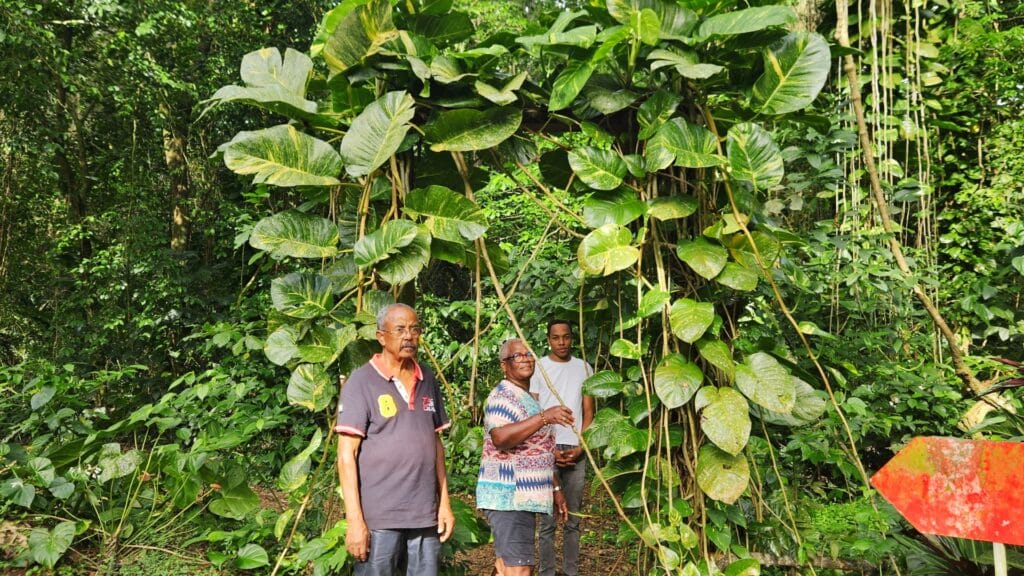
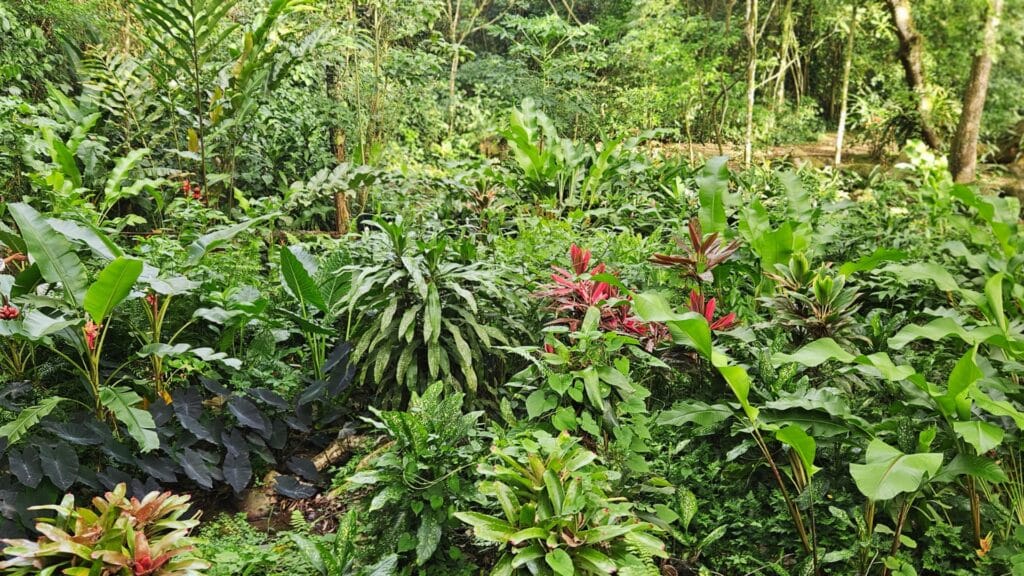
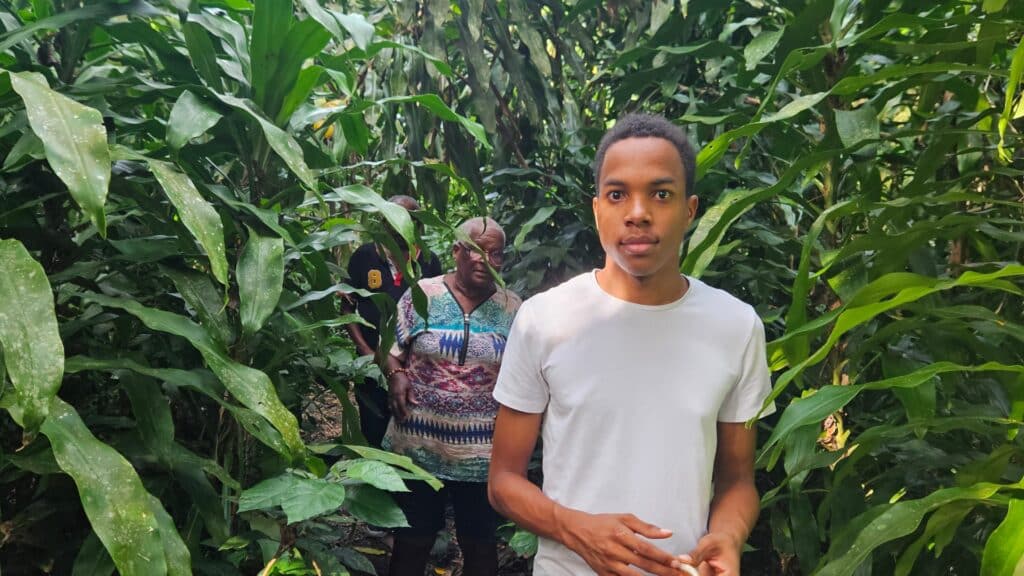
The Belcouas are about to enter the rainforest. As soon as they enter, Émile, Jocelyne and Kévin realize what awaits them: not a garden, but a forest to cross.
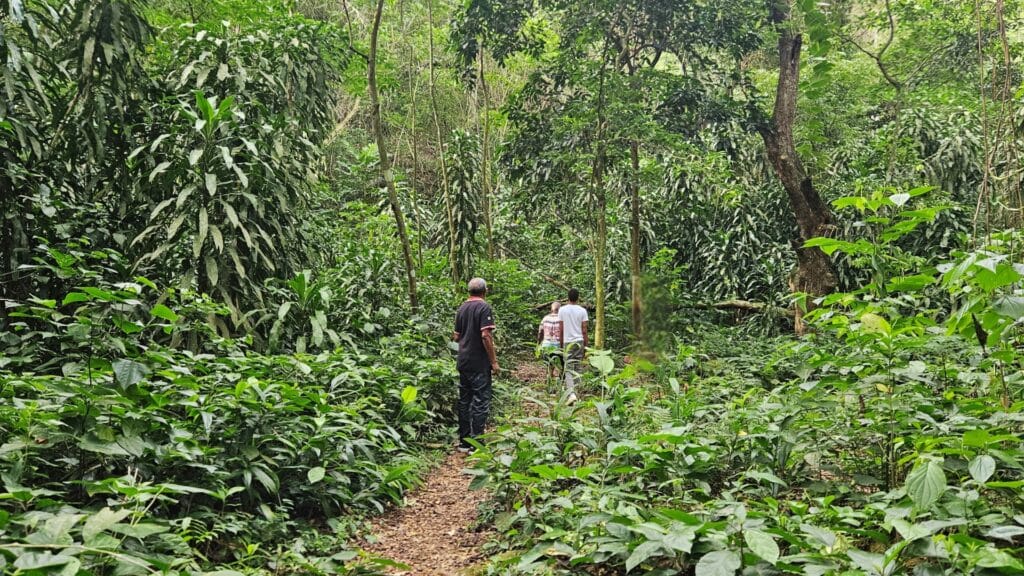
It’s precisely this depth of vision that Habitation Céron intends to showcase on June 6 and 7, during the 2026 edition of Rendez-vous aux Jardins in Martinique, which this year focuses on the theme of view. A theme that resonates here in a singular way: you don’t just see a garden, you walk through a forest.
“When we say rainforest, we imagine a cluster of forests,” says Julie Marraud des Grottes, head of the Habitation Céron factory.
“And it’s having succeeded, through this garden, in creating points of view, points of depth, where precisely you don’t feel suffocated by the forest, but stroll pleasantly through it.”
Habitation Céron, a story from the heart
Nestled in Le Prêcheur, in the extreme north-west of Martinique, Habitation Céron is a former sugar refinery founded in 1658. Just a stone’s throw from Anse Céron, framed by the river and the canopy, the site offers a unique immersion in the heart of the northern Caribbean.
The garden was opened to the public in 1995, closed after Hurricane Dean, then reopened in January 2015. That same year, the Marraud des Grottes family relaunched cocoa production on the historic terroir.
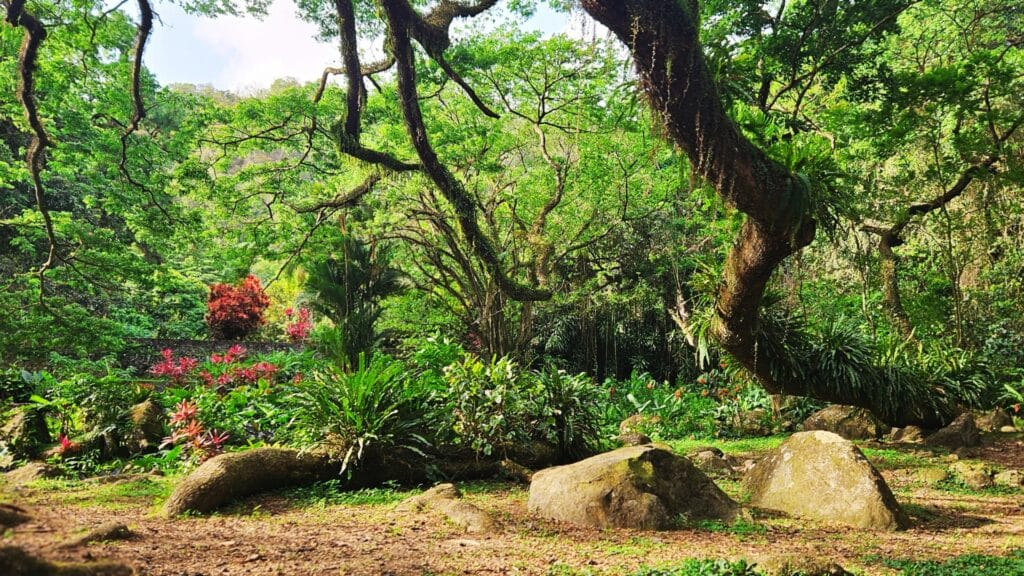
The Jardin Remarquable label was awarded in 2016, the same year that the Zamana was elected France’s most beautiful tree.
But behind the label, what strikes you first at Céron is a story of the heart.
One mother, four children, all born on the estate:
“We’ve all gone off to do our studies left and right, and we’ve all been called back by this place, which is magnificent and which we want to develop, show off and share with others.”
The Zamana, France's most beautiful tree
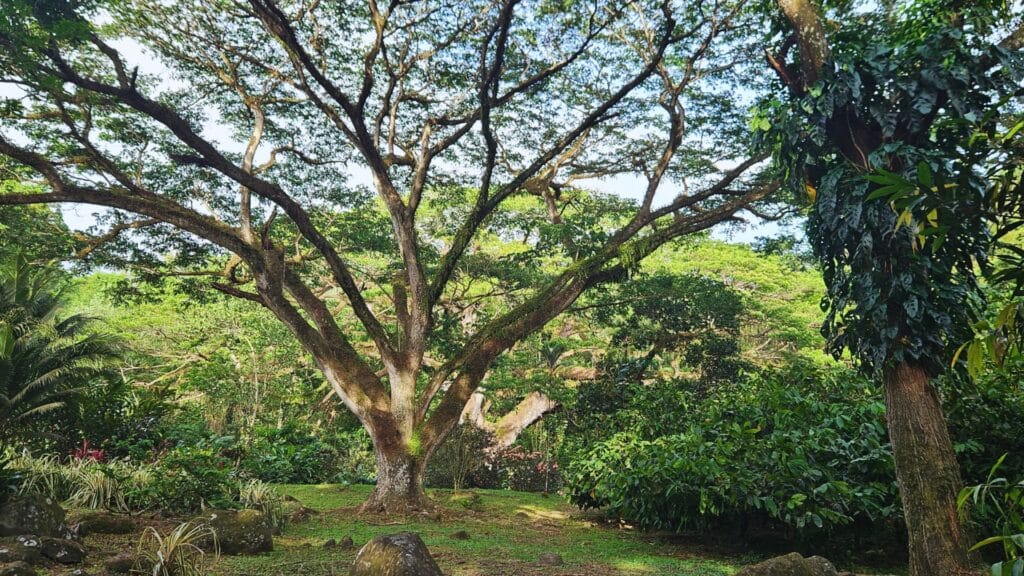
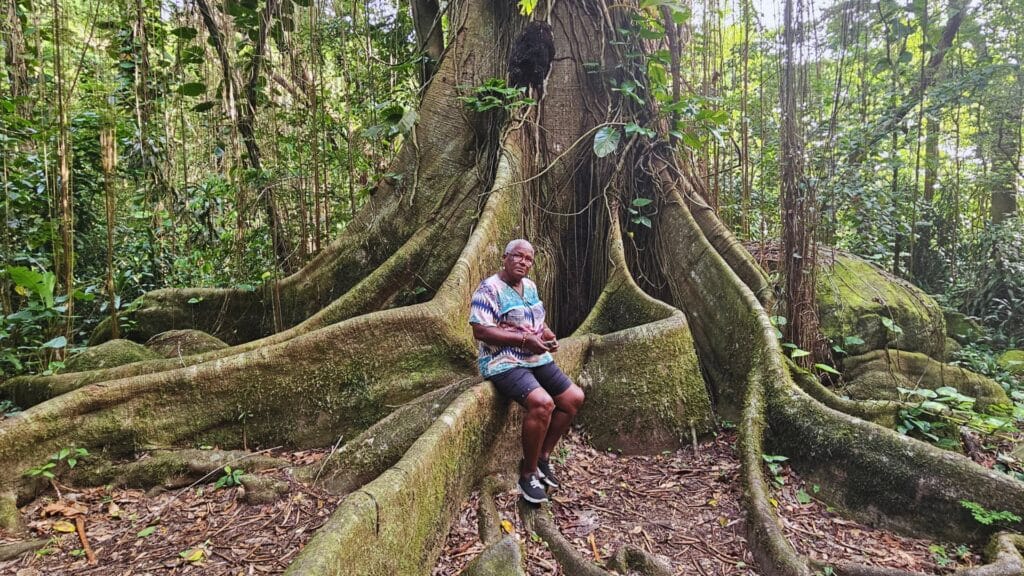
At the heart of the garden, the Zamana reigns. Over 300 years old, half a hectare of shade. In 2016, it was voted France’s most beautiful tree. “It really is the king of the garden,” says Julie Marraud des Grottes.
“It overlooks this entire garden. It covers half a hectare of shade. It’s really majestic.”
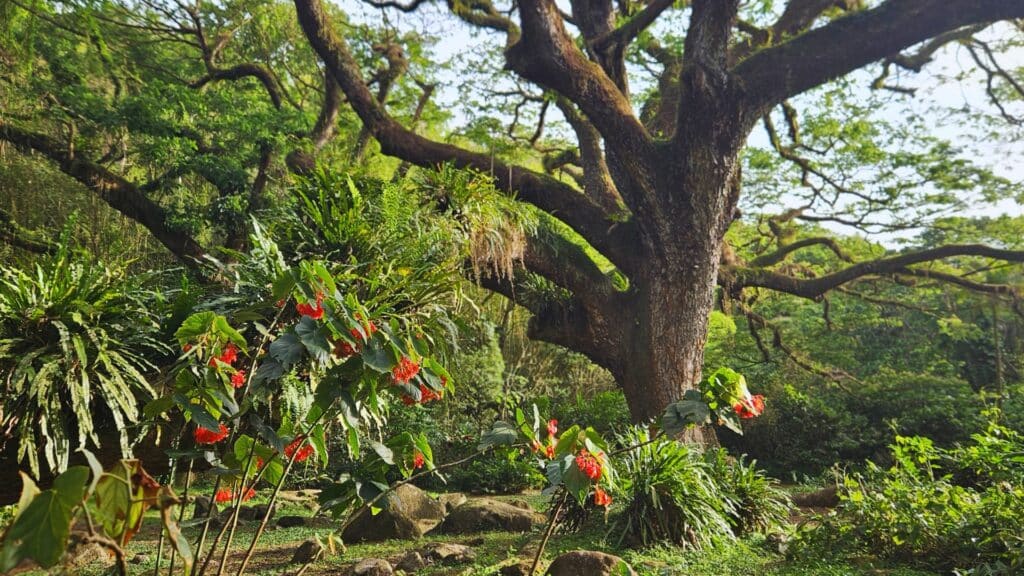
The Zamana is also known as a rain tree, a feature that makes it invaluable: it provides its own shade and the humidity levels required by the plants growing under its canopy, notably cocoa.
“At the foot of the zamanas, we replanted young cocoa plants,” she explains.
The ancestral tree thus becomes the natural guardian of a reborn cocoa plantation.
A walk in the heart of the rainforest
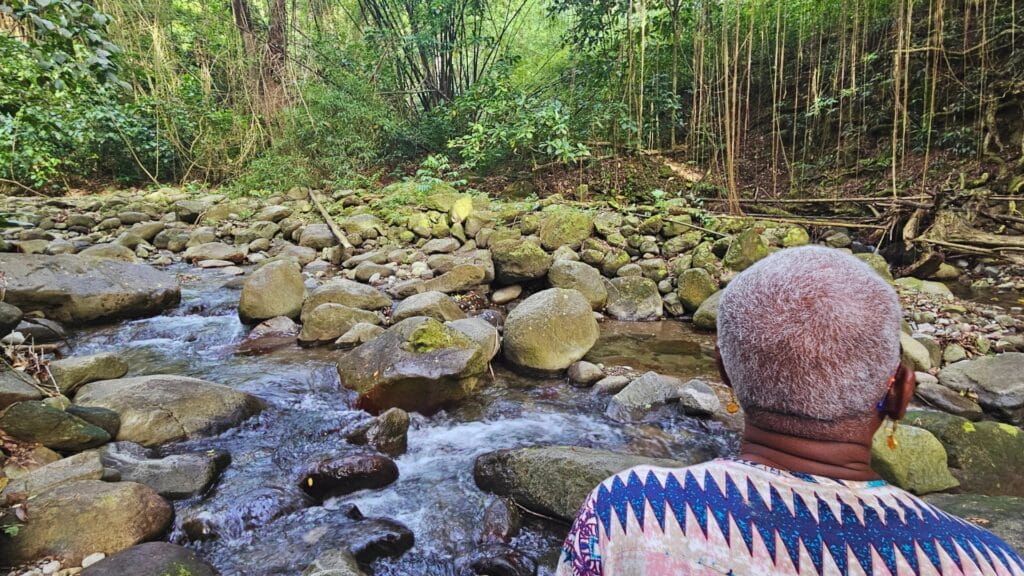
Beyond the Zamana, the park reveals itself on foot. A river runs right through it. Jocelyne stops for a moment: the water, the foliage, the light falling between the trees, all invite her to slow her gaze.
The river is more than just a backdrop. “You can swim in it,” says Julien Marraud des Grottes. For those willing to take off their shoes, the fresh waters of the North Caribbean extend the walk into a sensory experience.
Seeing the garden also means smelling it, touching it, hearing it and sometimes immersing yourself in it.
Everywhere, a canopy of enormous trees, cheesemakers, an imposing mango tree producing “divine mangoes” with oversized trunks.
Some of these giants invite you to take a break: Jocelyne sits for a moment in the roots of a cheese tree, just long enough to take in the view from above.
On the ground, a little further on, bromeliads, alpinias, begonias and porcelain roses are interspersed with very old fruit varieties.
In the undergrowth, we find the Cano vine. “It’s a liana that used to be used to make ropes for boats,” says Julien Marraud des Grottes. Able to grow in stone and wrap itself around it without ever breaking, it has long replaced cork and synthetic ropes. It produces a fruit in the form of small canals that can be found on the ground. Here, knowledge isn’t written on signs: it’s passed down from one generation to the next, just like in a family.
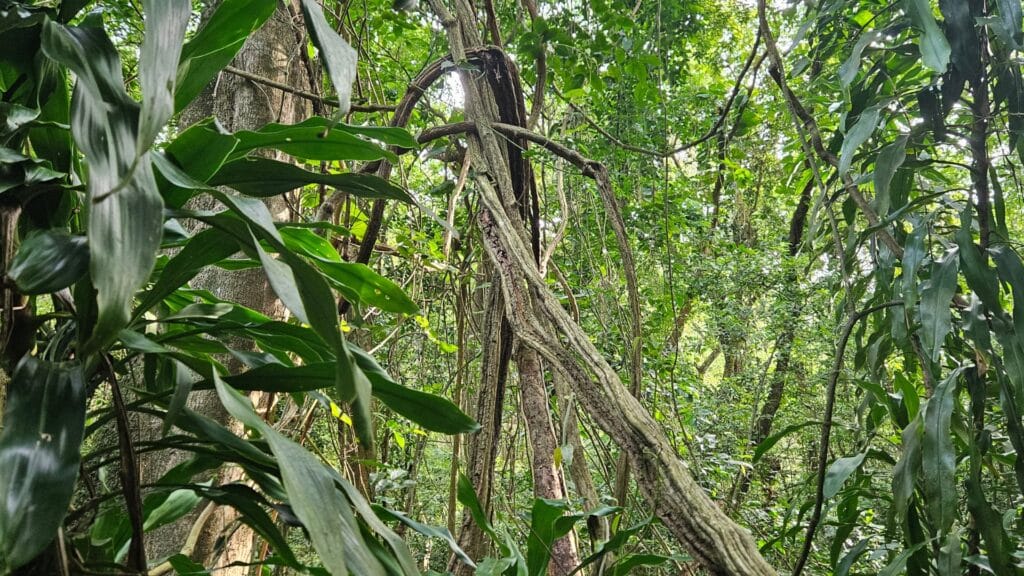
The walk has no compulsory path.
“There’s no one compulsory path,” insists Julie.
“You really have to let yourself be carried along and let yourself wander to appreciate all these points of view and points of depth.”
At every turn, your gaze changes. One moment, you’re skirting the river; the next, you’re emerging into a clearing where the canopy opens up; yet another, you come upon an isolated species nestled deep in the undergrowth.
“We get lost without getting lost,” sums up Julie Marraud des Grottes.
It’s all there…
From cocoa to bar: Julie's Factory
Cocoa, too, can be discovered on the walk. Since 2015, ten hectares have been replanted with local hybrids selected from the pods of a century-old cocoa plantation found on the site.
“We made a selection of pods in terms of fruit, size, color, flavor,” says Julie Marraud des Grottes.
“And we started again with the beans. The aim was to revive the terroir.”
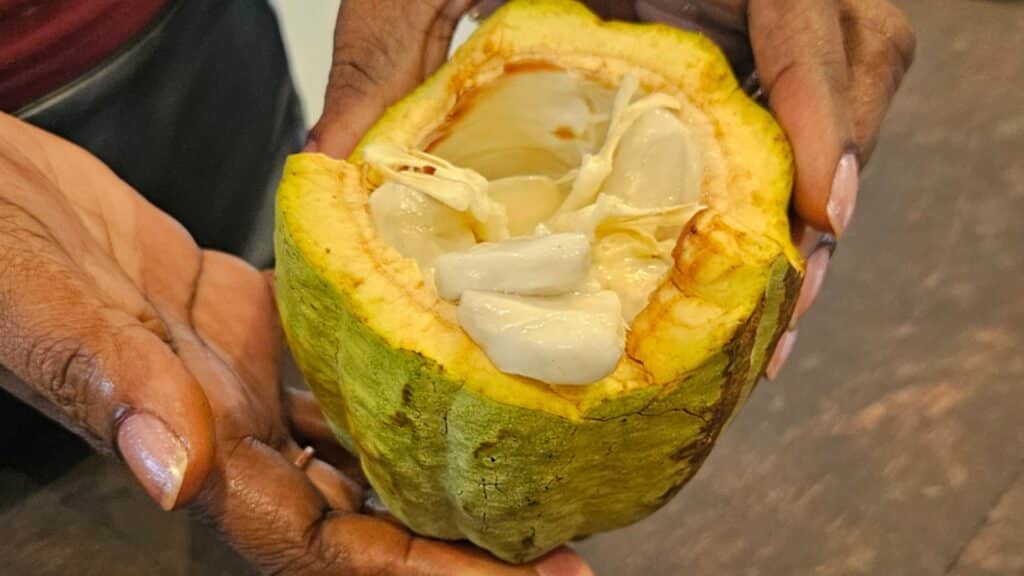
Processing takes place on site, from tree to shelf. With a view to reducing waste, the whole fruit is used.
“We really try to revolve around cocoa,” she says. From the pods come a mucilage jam; the husk becomes an infusion and a beer, in partnership with local players, while the grué is blended with a gin. There’s also a spread. And of course the chocolate bar, “the sublimation”, she says.
A demonstration that cocoa “isn’t just chocolate, it’s also a fruit”.
Rendez-vous aux Jardins 2026: getting lost without getting lost
At a time when we look at the world through a screen without always taking the time to really see it,Habitation Céron offers a simple answer: put down your phone and relearn how to look deeply.
“Put down your phone and go and admire the luxuriant nature of Martinique and its truly exceptional gardens,” says Julie Marraud des Grottes.
At the end of the tour, the Belcouas take a final break. In the palm alley, Jocelyne holds the fruit and small canals that have fallen from the Cano creeper, the little things you only notice if you take the time to really look.
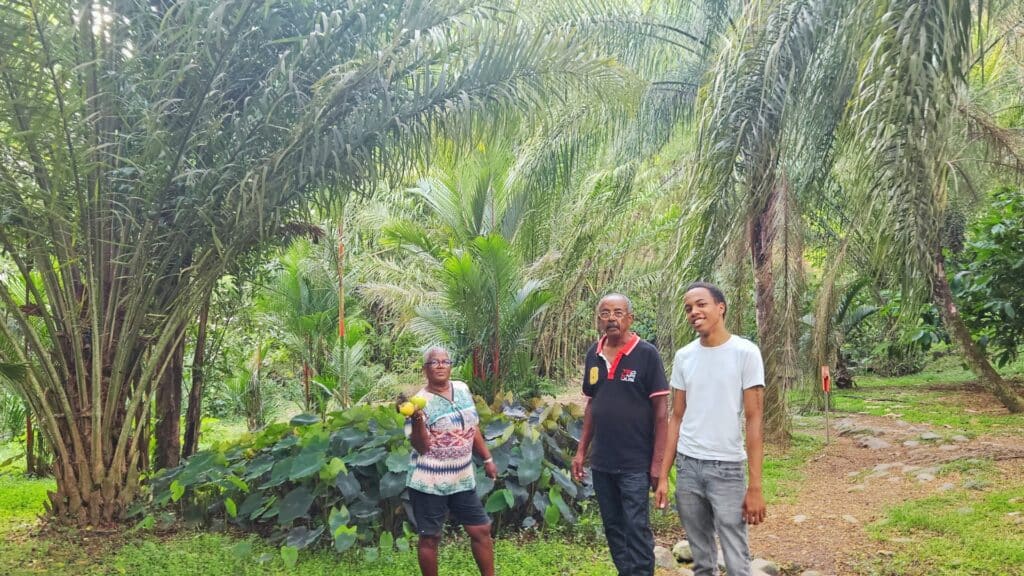
Seeing in depth means extending your gaze, but above all it means slowing down, listening, touching, sometimes bathing – accepting the garden as a walk rather than a demonstration. Habitation Céron is a living place, supported by a family, where the rainforest becomes a character in its own right: a garden where you lose yourself in the depths, without ever really getting lost…
For Émile, Jocelyne and Kevin Belcoua, the journey continues, with other gardens awaiting them. And we’ll be following them.
📌 IN PRACTICE
Rendez-vous aux Jardins 2026 – Habitation Céron
📅 Saturday 6 and Sunday 7 June 2026
📍 Habitation Céron, Anse Céron, 97250 Le Prêcheur, Martinique
⏰ Open 10:00 am – 5:00 pm all year round
🌿 Free visit of the Remarkable Garden, the cocoa farm and the ancestral Zamana.
🍫 La Fabrique de Julie store on site: handmade chocolates 70%, spreads, jams, grué…
An exploration by RICHÈS KARAYIB for Rendez-vous aux Jardins 2026, in partnership with the Direction des Affaires Culturelles (DAC) de Martinique.