Melky Jean, a key figure in Haitian and international culture, has established itself as a pioneer in the world of spirits. From the very first lines of its history, Melky Jean embodies determination, creativity and the will to give a voice to those who lack one. From music to entrepreneurship, she transforms every stage of her life into a profound commitment to identity, transmission and innovation.
An artist at the service of memory and transmission
Melky Jean’s Haitian roots
Born into a family deeply attached to Haiti, she was grew up between tradition and modernity. Her mother and grandmother instilled in her a taste for ancestral recipes such as Kleran and Kremas, while her brother Wyclef Jean introduced her to the international scene. She has never forgotten her origins, and every project she initiates bears the mark of this dual culture, between Haiti and the United States.

A critically acclaimed musical career
Melky Jean first made a name for herself as a singer and songwriter. Her duo Melky Sedeck, formed with her brother Farel Sedeck Guerschom Jean, has made its mark on the R&B and hip-hop scene, with notable collaborations on film soundtracks and international festivals.
She has also shared the stage with artists such as Beyoncé, Carlos Santana, Shakira and Patti LaBelle, and has been recognized by media such as Cosmopolitan, Rolling Stone and VIBE for the power of her voice and the depth of her lyrics. Her song “Care for Haiti” recalls her musical commitment to her country’s history and the fight against stereotypes.
Saint Sauveur 1972: A meaningful entrepreneurial project
The origin of the name and symbolism of Saint Sauveur 1972
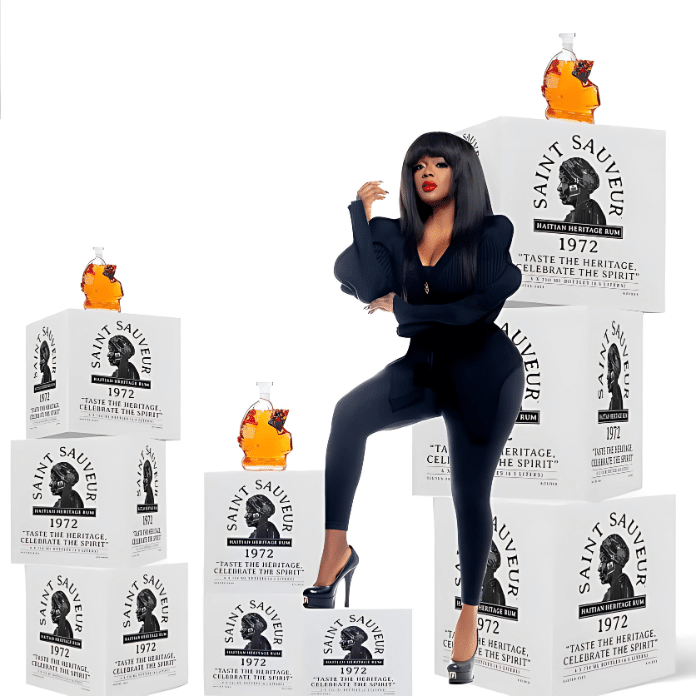
The launch of the rum brand Saint Sauveur 1972 by Melky Jean marks a decisive step in his career. This project is more than just the creation of a drink: it’s a tribute to Haitian history. The name refers to the ship that, in 1972, carried the first Haitian refugees to the United States, embodying the resilience and strength of a community facing exile. For her, every bottle of Saint Sauveur 1972 is “a heritage in a bottle”, a bridge between past and present.
An exceptional rum, the fruit of family know-how
Distilled in Fort Myers, Florida, close to where the original ship arrived, Saint Sauveur 1972 is a four-year aged rum, with notes of toasted oak, vanilla, caramel and a hint of smoke. It reflects Melky Jean for quality and authenticity, while at the same time appealing to a well-informed public curious about new taste experiences. This creation continues a family tradition, in which each generation has brought its own touch to the culture of rum.

A commitment to inclusiveness and diversity in the spirits industry
A bold entrepreneurial vision
Melky Jean doesn’t just offer a product: it wants to transform the spirits industry by infusing it with greater diversity and inclusivity. Through Saint Sauveur 1972. Its aim is to provide a platform for women, people from diverse backgrounds and under-represented designers. Her ambition is to make this brand a movement, not just a business, by promoting the richness of cultures and backgrounds.
A role model for younger generations
As a woman entrepreneur and recognized artist, Melky Jean inspires many young people, particularly those from the Haitian diaspora. She proves that it is possible to succeed without denying one’s origins, and that innovation also requires the transmission of family values and know-how. Her story is an invitation to believe in one’s dreams and to commit oneself to a fairer society.
The role of philanthropy: the Carma Foundation
A concrete commitment to Haiti
Beyond her artistic and entrepreneurial activities, Melky Jean is also a committed philanthropist. She founded the Carma Foundation, an organization dedicated to improving the living conditions of women and children in Haiti, particularly in the fields of health, housing and education. This initiative illustrates the consistency of her commitment, which goes far beyond mere rhetoric.
Recognized leadership
The ability of Melky Jean to unite people around her projects is regularly hailed by the media and institutions. She embodies a new generation of leaders who place humanity, memory and solidarity at the heart of their approach. Her notoriety enables her to raise public awareness of the social and cultural challenges facing Haiti and its diaspora.
Saint Sauveur 1972: A symbol of resilience and pride
A product that tells a story
Saint Sauveur 1972 is not a rum like any other. It carries the history of a people, the memory of an exile, and the pride of a culture that has turned adversity into strength. Each bottle reflects the journey of Melky Jean from its Haitian roots to its international success. This rum invites you to a conscious tasting, where each aroma recalls an episode in Haitian history.
A bridge between Haiti, the United States and the world
By choosing to produce its rum in Florida, Melky Jean strengthens the bond between Haiti and its diaspora. It shows that success can also be collective, and that the Haitian identity has its place on the international stage. Saint Sauveur 1972 becomes a symbol of transmission, sharing and recognition.

Melky Jean has established herself as one of the most influential personalities of her generation, at the crossroads of music, entrepreneurship and philanthropy. Her demanding, creative and committed career inspires experts and novices alike. With Saint Sauveur 1972, Melky Jean offers the world much more than just a rum: it conveys a history, a culture and a forward-looking vision. Its name now resonates as a keyword for excellence, resilience and transmission.