

Tourism 3.0: Jamaica wants to keep its tourist wealth

Tourisme 3.0

At the Montego Bay Convention Centre, the image speaks for itself. Local entrepreneurs showcase their products, hotel representatives circulate, meetings follow one another. Behind these rapid exchanges, one question weighs heavily: when tourism makes money, how much really stays in Jamaica?

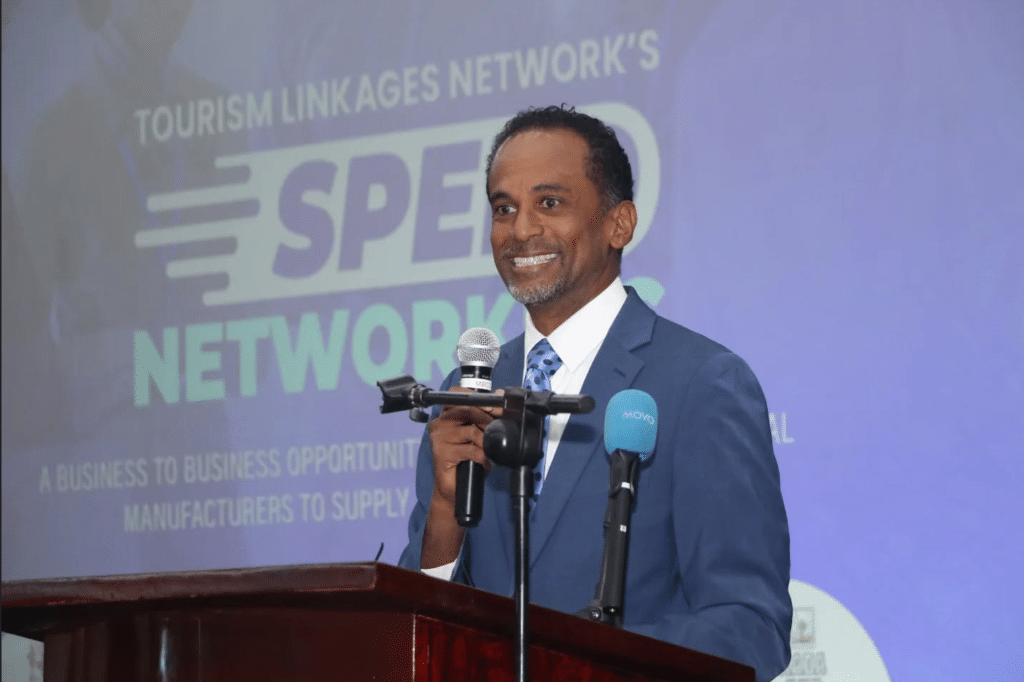
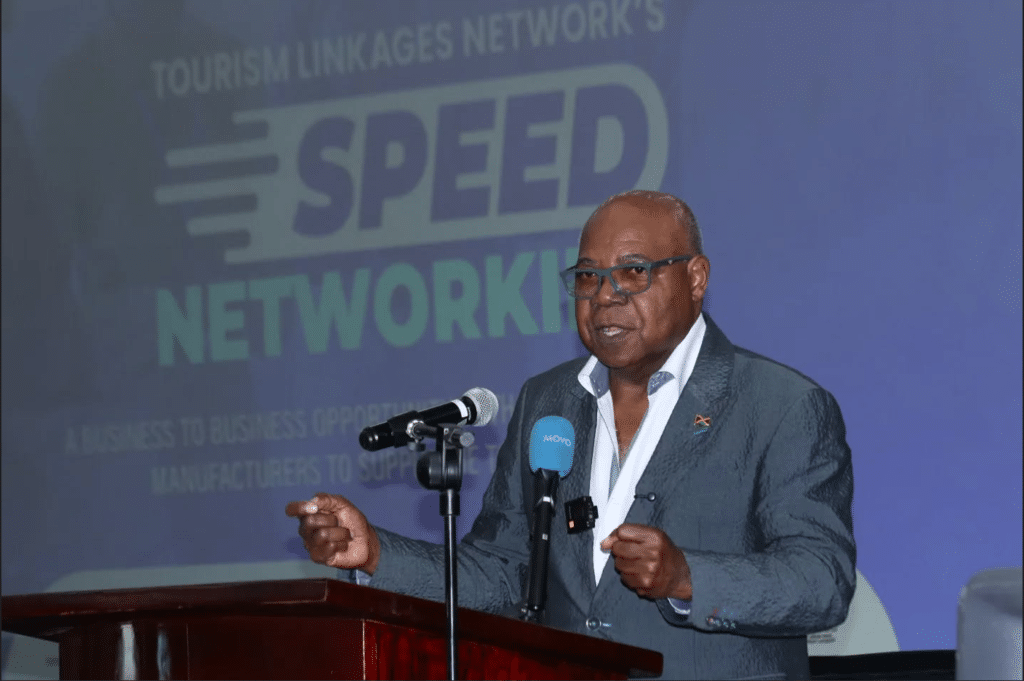
This is at the heart of Tourism 3.0, the new direction championed by Jamaica’s Minister of Tourism, Edmund Bartlett. At the Tourism Enhancement Fund’s 11th Speed Networking Event, he set out a clear ambition: to make tourism a more direct driver for Jamaican producers, artisans, manufacturers and suppliers.

Tourism that no longer just wants to attract

Jamaica knows how to welcome visitors. But the challenge is no longer just to fill hotels or increase arrivals. The real challenge is to retain more value in the territory. Edmund Bartlett has recognized a structural weakness: a large proportion of the goods and services consumed by the tourism industry are still imported. Food, equipment, vehicles, items sold to visitors, specialized services: too much spending still leaves the island instead of feeding its local economy.

With Tourism 3.0, the Jamaican government is looking to change its approach. It’s no longer just about selling a destination. It’s about building a tourism economy where Jamaicans are not just employees, but also suppliers, creators, owners and beneficiaries.

Tourisme 3
©Tourism Enhancement Fund
Tourisme 3
©Tourism Enhancement Fund

The "Local First" challenge

This orientation is in line with the “Local First” policy, which aims to place Jamaican companies at the heart of the tourism chain. The stated objective is concrete: to increase the share of the tourism dollar remaining in the national economy. This point is essential to understanding the scope of Tourism 3.0. In many Caribbean territories, tourism generates substantial revenues, but some of this wealth is exported through imports. Jamaica wants to reduce this economic drain by strengthening its own production capacities.

The Speed Networking Event does just that. This year’s event brought together 137 local manufacturers and 25 tourism companies for scheduled meetings. The aim is not symbolic. It’s about creating contracts, structuring volumes, bringing hotels closer to those who can supply them.

Tourisme 3
©Tourism Enhancement Fund
Tourisme 3
©Tourism Enhancement Fund
Tourisme 3
©Tourism Enhancement Fund
Tourisme 3
©Tourism Enhancement Fund

A strong commitment to local suppliers

Edmund Bartlett also sent a direct message to Jamaican producers. Tourism 3.0 needs creativity, but it also requires consistency. A hotel can’t run on a few samples. It needs sufficient volumes, consistent quality, on-time delivery and competitive prices. This is where Tourism 3.0 becomes a profoundly transformative project. To succeed, local businesses will have to step up their game. Farmers, craftsmen, furniture makers, food producers, object designers and service providers will have to respond to a professional, continuous and demanding demand.

In this sense, Tourism 3.0 is not just about the Ministry of Tourism. It involves agriculture, finance, education, health, security, economic development organizations and professional associations. Tourism becomes a national affair, not just a hotel affair.

©Tourism Enhancement Fund

A new framework for a new ambition

The Jamaican government also wants to modernize the sector’s legal framework, with the development of a new Tourism Authority Act. The aim is to adapt tourism governance to an industry that has become more complex, connected and strategic. This change adds an extra dimension to Tourism 3.0. Jamaica is not just looking to improve its tourism image. It wants to rethink the way wealth flows between visitors, hotels, producers and local communities.

This news isn’t just about the economy. It questions the productive dignity of a Caribbean territory: who feeds tourism? Who produces what it consumes? Who really earns when the world comes to vacation? Jamaica is blazing a trail that other islands will be watching closely. It remains to be seen whether Tourism 3.0 will become a measurable, financed and sustainable reform. For in the Caribbean, the future of tourism will not be played out in arrivals alone. It will also depend on the ability of territories to keep the value they create at home.

Tourism 3.0 refers to the new direction advocated by the Jamaican government to transform tourism into a more local economic lever. The aim is not just to attract more visitors, but to ensure that more of the money spent in the sector stays in Jamaica. This means better integrating local producers, craftsmen, manufacturers, farmers and suppliers into the tourism chain.

Tourism 3.0 is important because it addresses a common weakness in Caribbean tourism economies: a significant proportion of the goods and services consumed by hotels and visitors are imported. Jamaica wants to reduce this dependence by giving more room to local businesses. If successful, this strategy could create more income for Jamaican producers, boost local employment and limit the outward flight of value.

Yes, Tourism 3.0 could be of interest to other Caribbean territories facing similar challenges. In several islands, tourism generates substantial revenue, but local spin-offs are sometimes limited by imports and poorly structured supply chains. The Jamaican approach points to a way forward: connecting hotels, visitors and institutions more closely to local producers, so that tourism benefits local communities more directly.

Leave a Reply

Your email address will not be published. Required fields are marked *

More articles from RK

WHO
FILM & VIDEO
Tolotra

WHO: behind the scenes of Wil Aime’s cinematic gamble

With WHOWil Aime signs his first feature film and returns to the West Indies with a team, a method and a story of creation. In Guadeloupe and Martinique, his tour revealed the other side of the story: that of a film that has been supported for years, between independent creation, territorial support and the desire to make his own cinema. A comeback tour The public saw the theaters, the meetings, the photos, the post-screening exchanges. Behind this tour of WHO in Guadeloupe and Martinique, there was a precise mechanism. Dates to organize. Partners to mobilize. A team to bring in. Above all, one desire: to present the film where part of its imagination took root. From May 30 to June 1, 2026, Wil Aime and his team enjoyed a series of highlights: a special screening at Cinestar, a Creative Talk at Café Papier in Jarry, a screening at Madiana, and

Read More »
Calypso Rose
HISTORY & HERITAGE
Tolotra

Calypso Rose: 86 years old, 800 songs, and still on stage

The victory that changes a name When Trinidad renamed its calypso grand prix “Calypso Monarch” in 1978, it wasn’t by chance. It was because a woman had just won the title for the first time after decades of male domination. The woman’s name was McCartha Linda Sandy-Lewis. On stage, she was known as Calypso Rose. She was 38 years old. Forty-eight years later, in 2026, she is 86, with over 800 songs, more than 20 albums, and a presence that continues to cross international stages. From Bethel to the first songs McCartha Linda Sandy-Lewis was born on April 27, 1940 in Bethel, a village in northwest Tobago. Her father was a Spiritual Shouter Baptist minister, a long-marginalized Afro-Caribbean religious tradition. He opposed his daughter’s musical career. She nevertheless began composing and singing her own calypsos as a teenager, around the age of 15. At the time, calypso was a male

Read More »
Vincy Mas
EVENT MANAGEMENT
Tolotra

Vincy Mas: why the Saint-Vincent carnival starts in June

In Kingstown, capital of Saint Vincent and the Grenadines, the countdown has begun. On June 26, 2026, Vincy Mas will open a new edition under the theme “The Great Escape”. For twelve days, until July 7, the island of around 100,000 inhabitants will host its biggest cultural event. The slogan speaks of warmth, escape and celebration. But behind the poster is a story of timing. In the mas camps, the weeks leading up to the opening are rarely silent. Costumes are being adjusted, sections prepared and the sounds that will accompany the parades rehearsed. Families return from the diaspora, visitors book their places, and Kingstown prepares for a change of pace. Vincy Mas is not an island carnival. It’s an annual landmark around which St. Vincent organizes part of its cultural life. A decisive choice in 1977 The historical uniqueness of the Vincentian carnival lies in a deliberate change. Before

Read More »

conTACT RK

we'd love to have your feedback on your experience so far

Join The List

Join our Richès Karayib community!  Sign up for our newsletter.

Want To Maximize Your Business Presence On Riches Karayib?

Complete the form to start the application