Jamaica. Five months after Hurricane Melissa, the island is sending out a strong signal to the entire Caribbean: the country passed the one million visitor mark in the first quarter and has announced US$956 million in foreign currency earnings. For tourism authorities, this result confirms the speed of the recovery. For industry observers, above all, it shows that a destination hit by a climatic shock can quickly regain its place in the international travel circuit when confidence remains high.
A striking figure, which must be clearly understood
The million mark is impressive, but it needs to be read with care. In Jamaica, the category of visitor arrivals covers more than just tourists staying in hotels. National statistics distinguish between stay-over visitors, cruise passengers and other profiles included in overall arrivals. This nuance is important, as it enables us to correctly measure the scope of the announcement: the country has indeed returned to a high level of visitor arrivals, without this automatically meaning a million holidaymakers staying on site for several nights.
The first data available for 2026 show that the recovery has built up rapidly, but without erasing the consequences of Melissa all at once. In the first two months of the year, stayover arrivals were still below those of the previous year, as were cruise arrivals. The million mark passed in the first quarter is therefore a sign of a solid recovery, in a context that was still fragile just a few weeks earlier.
A recovery also driven by confidence
In island territories, tourism depends on infrastructure, of course, but also on external perception. After a hurricane, travellers want to know that airports are working, roads are passable, hotels are back in business and, above all, that their stay can be enjoyed in good conditions. This is where Jamaica has clearly succeeded in reassuring travellers. The authorities insisted on a central point: international confidence in the country’s ability to recover and maintain a high level of hospitality.
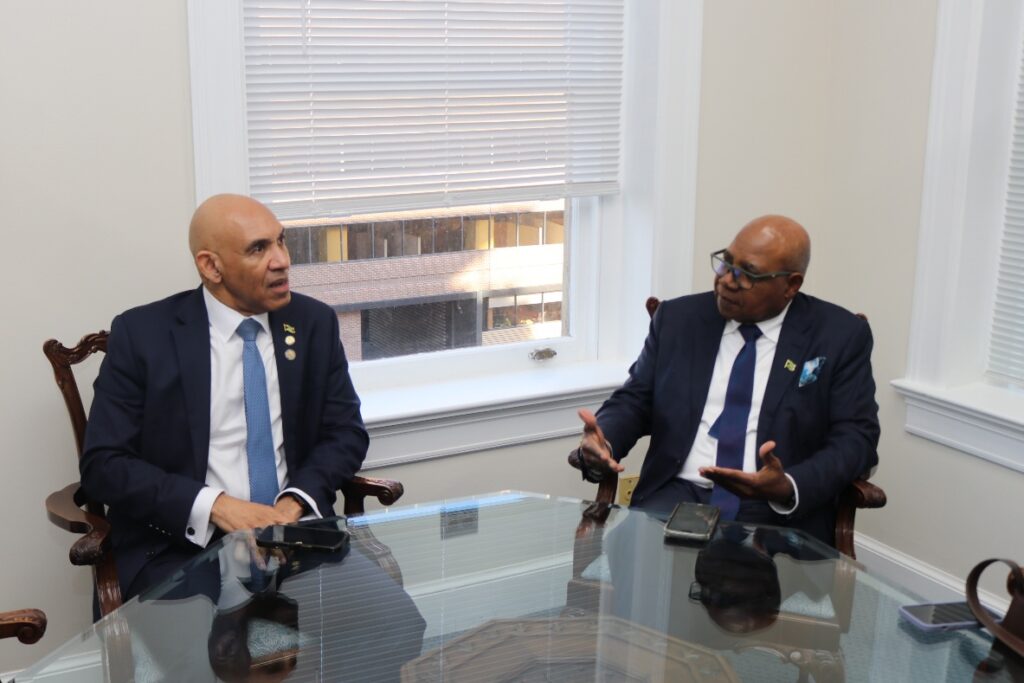
This confidence has been nurtured by another often underestimated player: the diaspora. At a meeting in Washington, Jamaican officials reminded us just how much the country’s communities abroad play a concrete role in its image. Even before making a reservation, future travelers listen to what their relatives, colleagues and friends have to say. When a diaspora speaks confidently about its island, corrects misinformation and encourages visitors to return, it plays a direct part in the recovery.


Market diversification begins to take its toll
Another element worthy of attention is the growth of markets that still occupy a more modest position than North America, but whose rise may reinforce the sector’s stability. Director of Tourism Donovan White reports a 25% year-to-date increase in the Latin American market and a 7% rise from Asia. These developments show that Jamaica is also making progress in the field of diversification, an important issue in limiting dependence on a few traditional emitting basins.
This movement takes on particular importance after a natural disaster. When a territory depends on a limited number of markets, the slightest slowdown can have a serious impact on revenues. Conversely, a broader customer base can cushion shocks and enable business to pick up more quickly. In Jamaica’s case, this gradual opening-up to other parts of the world complements the return of regular visitors.
Beyond the hotels, an entire economy is catching its breath
For Jamaica, this tourism rebound goes far beyond being a good indicator of visitor numbers. On the island, tourism supports an entire chain of activities: transport, catering, agriculture, crafts, services, culture and local commerce. When arrivals return, so does the income that flows back into areas that are sometimes far removed from the major seaside resorts. This is what gives this first quarter an economic and social significance that goes far beyond a simple assessment of the season.
The $956 million announced also serves as a reminder of the importance of foreign currency in the equilibrium of an island economy. In a country exposed to the vagaries of the weather, preserving this capacity to rapidly generate external revenue is becoming a central issue. The result put forward by the authorities does not resolve all the weaknesses revealed by Melissa, but it clearly indicates that the tourism machine has picked up speed again.


What Jamaica is showing the region today
Jamaica offers a picture of resilience that is of interest throughout the Caribbean. The country is demonstrating that rapid recovery relies on several levers at once: rehabilitated infrastructure, credible communication, a mobilized diasporic network and a continued presence on international markets. This million mark does not close the chapter opened by Melissa. Rather, it marks an important milestone: one in which a territory regains the initiative, reassures its visitors and puts an essential part of its economy back into motion.
Because Jamaican statistics use a broad category of visitor arrivals. It encompasses several types of visitation, with a distinction between stays and cruises. This clarification helps us to understand that the million announced corresponds to the total number of visitors recorded over the quarter.
The figures show a rapid recovery, but the first data for 2026 still indicated a decline in some segments compared with the previous year. The turnaround is therefore real and impressive, while still taking place in a period of still recent reconstruction.
Because it directly influences the country’s image abroad. After a hurricane, travelers look for signs of reliability. Jamaican communities based off-island can provide reassurance, correct rumors and encourage travel, helping to sustain bookings and confidence.