Martinique – The bust of Pierre Aliker, a living symbol of memory in action

Pierre Aliker

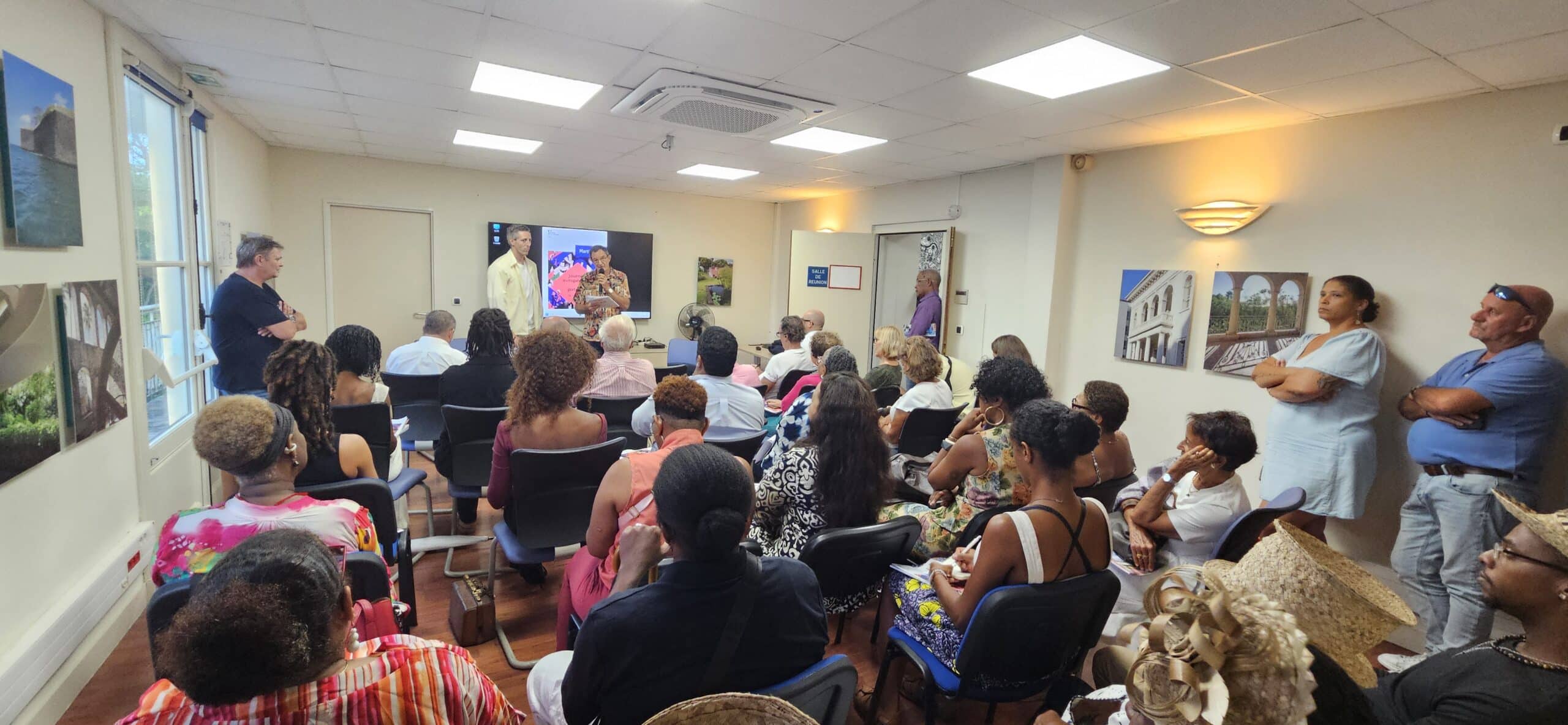
In the residence that bears his name, in Fort-de-France, the inauguration of the bust of Pierre Aliker was not just a tribute to an exceptional man. It embodied a memory in action, rooted in everyday life, driven by a collective vision and a deep commitment to excellence.

Through the sculpted stone, a man’s thoughts take shape at the heart of an inhabited place: a place permeated by the values he carried – care, knowledge, commitment, excellence – and designed to welcome those who in turn work for the common good.

Here, art becomes a vector of meaning, fully part of a heritage, social and societal dynamic.

Pierre Aliker

A place with meaning, a history woven of encounters

In a changing neighborhood, between the hospital and the MFME (Maison de la Femme, de la Mère et de l’Enfant), the Docteur Pierre Aliker residence now stands. An initiative born of the intuition and tenacity of Fabrice Belliard a committed entrepreneur and president of the Murmure d’un Art Caribéen association. Surrounded by his teams, he was able to transform a forgotten piece of land into a space of public utility and memory. The project, matured through thirteen decisive meetings, was built around a simple conviction: to reconcile economic action, memory and social commitment.

The choice to place the bust in the residence itself is not simply a commemorative gesture; it gives a symbolic anchorage to a space. The past dialogues with the present.

Pierre Aliker

This residence, designed to accommodate health students, medical staff and patients, is thus fully in keeping with the life of Dr Pierre Aliker, a figure of Martinican emancipation, doctor, Resistance fighter and politician. By naming the building after him, and then erecting a bust, the team behind the project did more than pay symbolic homage: they anchored a memory in concrete, everyday social use.

Hervé Beuze, the Martinican sculptor behind the work, spoke of the symbolic significance of his creation: a white stone set on a black base, reflecting the complexity of Pierre Aliker’s identity and, more broadly, that of Martinican society. “A whole history is summed up in this stone,” he confides.

Pierre Aliker
Pierre Aliker

Didier Laguerre, mayor of Fort-de-France, emphasized how much this tribute reinforces the city’s collective memory, by permanently inscribing in the public arena the name of a man who embodied integrity, loyalty and a sense of commitment to the service of the greatest number.

Pierre Aliker

When art inscribes history in the city

The historian Gilbert Pago retraced Pierre Aliker’s career with force and precision, underlining the rigor, loyalty and political ethics that guided his life. He reminded us of the uncompromising commitment embodied by Pierre Aliker, from which younger generations can still draw inspiration today.

The installation of Pierre Aliker ‘s bust is no mere anecdote. As sociologist Louis-Félix Ozier-Lafontaine has brilliantly developed Louis-Félix Ozier-Lafontaine this act lends density to urban space. By rejecting the uniformity of “non-places”, it transforms a residential threshold into a symbolic anchor point. “We must give meaning to our places,” he reminds us, insisting on the importance of recognizing ourselves by ourselves.

Pierre Aliker

Through this artistic and memorial gesture, we are also celebrating a model of identity: not a victimized or plaintive identity, but one of excellence and affirmation. This idea, dear to Pierre Aliker, runs through all the speeches. It resonates strongly in the words of Serge Letchimy, who calls for “an emancipation that is conscious, projected and asserted as part of a development dynamic”.

The project thus goes beyond aesthetics: it is political, educational and social. It becomes a tool for regional cooperation, a lever for a “health economy” focused on the Caribbean.

Pierre Aliker

A living memory, a legacy of responsibility

Pierre Aliker’s bust, beyond its sculptural form, carries a living memory. It embodies a fidelity to truth, rigor and transmission. It invites us to reject imported solutions in favor of building “by ourselves and for ourselves”, in the tradition of the man who asserted that “the best specialists in Martinican issues are the Martinicans themselves”.

In this respect, it is part of a wider dynamic: to make culture and memory the pillars of an anchored, lucid and ambitious development for Martinique and, more broadly, for the Caribbean region.

Pierre Aliker
Pierre Aliker
Pierre Aliker
Pierre Aliker
Pierre Aliker
Pierre Aliker
Pierre Aliker
Pierre Aliker
Pierre Aliker
Pierre Aliker

Leave a Reply

Your email address will not be published. Required fields are marked *

More articles from RK

Keisha Bissram
HISTORY & HERITAGE
Tolotra

Keisha Bissram: “Black Cake” Turns a Recipe into a Memory

At Christmas, black cake is a staple on the table. We admire its dark color, its dense texture, and the aroma of the fruit. Yet behind every slice, someone has planned ahead, measured ingredients, waited, and repeated the same steps over and over. With her short film *Black Cake*, Keisha Bissram asks a question: What becomes of a tradition when the woman who kept it alive is no longer there? Keisha Bissram recounts a grieving process that goes beyond the absence of a loved one The film follows Sherry Sankar, an Indo-Caribbean woman grappling with the loss of her mother and profound family upheavals during Christmas. Keisha Bissram does not treat grief as an isolated event. The loss reveals a quiet system: recipes preserved, gatherings organized, tensions absorbed, and traditions upheld—all without us always realizing the effort involved. A mother leaves behind more than just possessions. She may leave behind

Read More »
Vejigantes
HISTORY & HERITAGE
Tolotra

Vejigantes of Loíza: Masks of Afro-Puerto Rican Heritage

As the last weekend of July approaches, Loíza is getting ready to send its masked characters back out onto the streets. Among them, the vejigantes march forward wearing wooden horns and faces carved from coconut shells. Behind their spectacular appearance lies a complex history: that of a Spanish figure that has become, in Puerto Rico, a powerful symbol of Afro-Boricua creativity. A mask shaped by the region A rounded shell, two eye slits, a toothed mouth, and long horns arranged like a crown. The vejigantes of Loíza are instantly recognizable. The material they’re made of sets them apart from those of Ponce, where the caretas are generally made of papier-mâché. . This difference is not merely an aesthetic detail. The coconut ties the mask to the coastal landscape, to the available resources, and to the artisanal craft. The Smithsonian holds several pieces made in Loíza, including a coconut careta attributed

Read More »
Buju Banton
MUSIC
Tolotra

Buju Banton: An iTunes Top 3—What Does This Mean for Dancehall?

With her thirteenth album, “Too Too Bad”, Buju Banton reached No. 3 on the U.S. iTunes Reggae Albums chart. This strong start reflects significant support for the Jamaican artist, though it remains to be seen how long this success will last. On July 17, 2026, Buju Banton released “Too Too Bad,” a 13-track, 35-minute album. Released by Gargamel Music under an exclusive license from VP Music Group, the album debuted at number three on the U.S. iTunes Reggae Albums chart. This chart provides a useful snapshot. It shows that an audience was ready to buy the album right away. However, it does not yet allow us to gauge the album’s total audience or its ability to remain prominent for several weeks. A launch that goes beyond the United States The release of “Too Too Bad” also made an impact on several iTunes reggae charts, notably in Belgium, Canada, the United

Read More »

conTACT RK

we'd love to have your feedback on your experience so far

Join The List

Join our Richès Karayib community!  Sign up for our newsletter.

Want To Maximize Your Business Presence On Riches Karayib?

Complete the form to start the application