Labora Caribbean Art Expedition: sailing to transmit Caribbean memories

Labora Caribbean Art Expedition

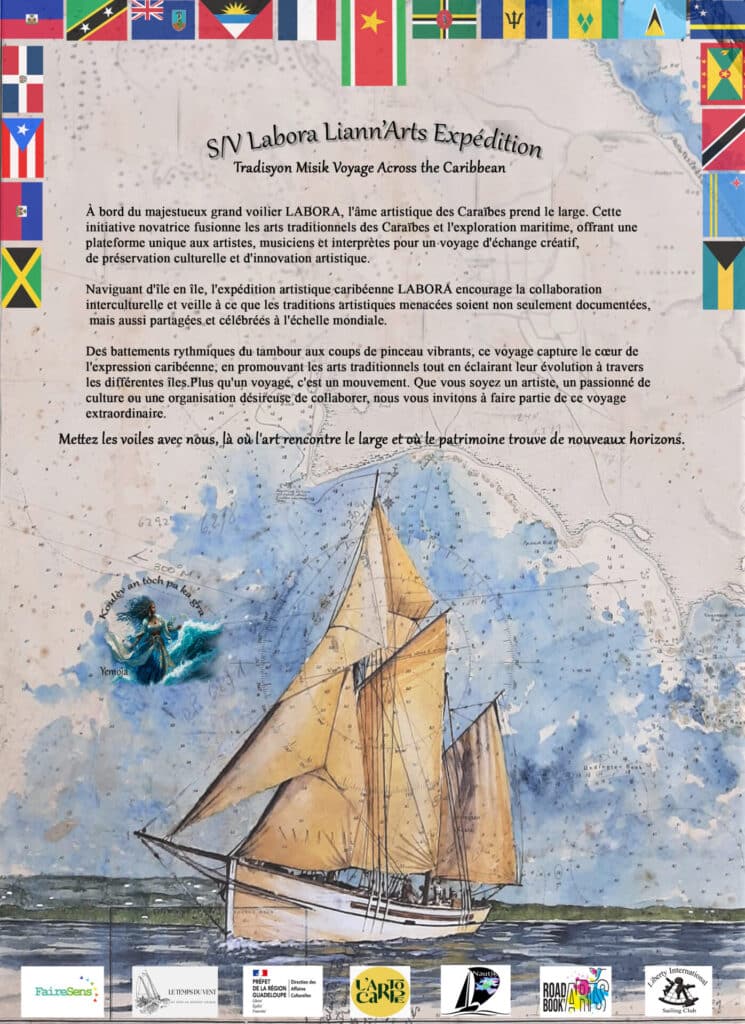
Labora Caribbean Art Expedition is an artistic, maritime and heritage initiative that has taken root in Guadeloupe and is now spreading throughout the Caribbean. Supported by artists, sailors, researchers and institutions, this expedition aboard a traditional sailboat aims to link islands, gather knowledge, promote dialogue between generations and enhance the value of popular cultures that are often marginalized. More than just an artistic program, it is a living process of documentation, transmission and exchange between island communities, with the sea as a link.

Labora Caribbean Art Expedition

A mobile artistic platform born in Guadeloupe around the sailboat Labora

The project takes shape around the S/V Labora, a Danish wooden hajkutter built in 1939, now restored and transformed into a living museum and mobile creative platform. The idea was born in Guadeloupe, particularly during his stopover at the ACTe Memorial during the Rhum Race, where musicians from Grenada came aboard and hundreds of Guadeloupean schoolchildren discovered life on board. This experience gave rise to a collective desire to make the Labora a vehicle for living memory on a Caribbean scale.

Labora Caribbean Art Expedition

Three fundamental axes: traditional arts, navigation and transmission

Labora Caribbean Art Expedition is based on three inseparable pillars:

  • The traditional Caribbean arts (music, dance, visual arts, oral narratives, craft skills).
  • The sailing as a means of transport, but also as a historical link between the islands.
  • The intergenerational transmission through workshops, residencies, documentaries and training courses.

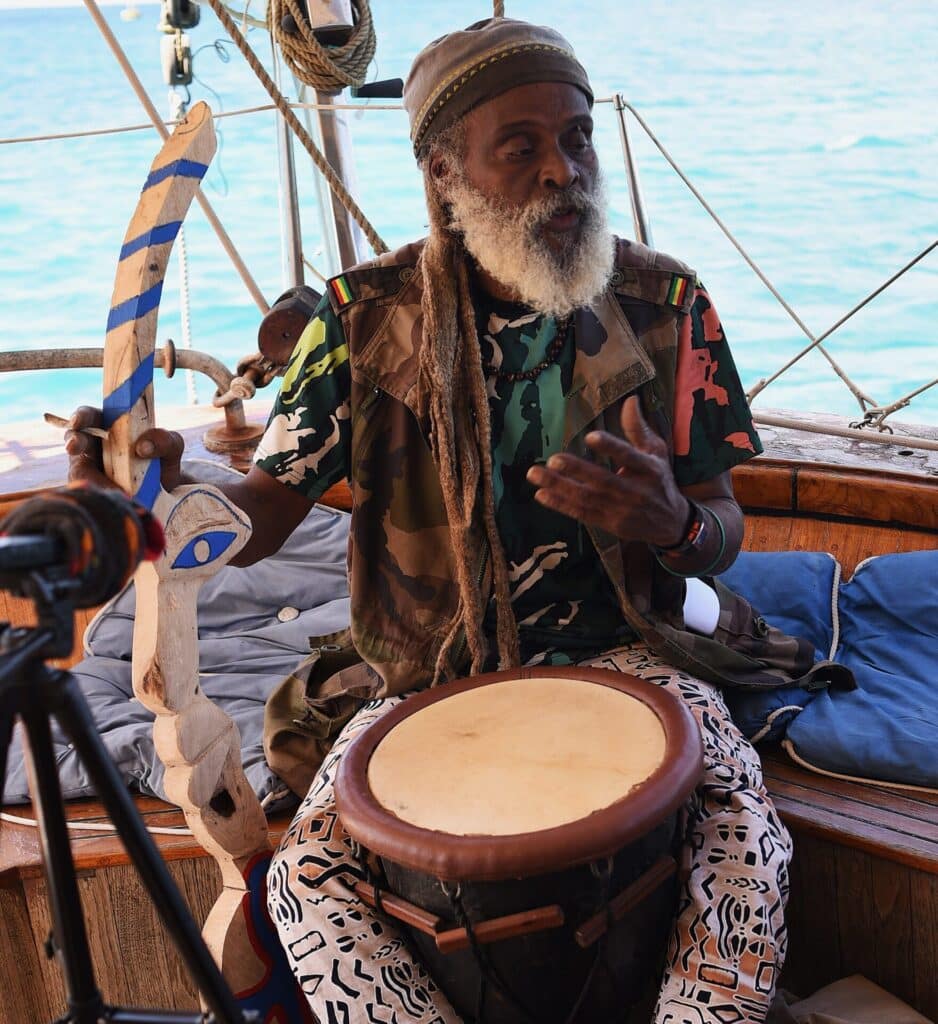
At each port of call, the sailboat becomes both itinerant stage, a place of artistic residence and living archive space.

Labora Caribbean Art Expedition

Responding to island isolation with art and the sea

The project is based on a simple but profound observation: in the Caribbean, many island communities remain isolated isolated by a lack of transport infrastructure which hinders cultural exchanges. The sailboat Labora overcomes these obstacles by creating a creation, documentation and sharing network.. It becomes a tool for dialogue, breaks down prejudice, connects artistsand opens up spaces for collaboration between often distant communities.

Labora Caribbean Art Expedition

Educational, social and scientific objectives

The ambition of Labora Caribbean Art Expedition is to preserve endangered knowledge but also to give them a place in today’s society. The project aims to :

  • Document vanishing traditions through films, recordings films, recordings, photographs, logbooks.
  • Creating digital archives returned to communities and schools.
  • Organize transmission workshops in schools, ports, neighborhoods and villages.
  • Set up an international internship program (in conjunction with anthropology, musicology, ethnology and audiovisual universities).
  • Encourage the emergence of educational initiatives integrating Caribbean cultures into curricula.
Labora Caribbean Art Expedition

A collective project: artists, institutions, researchers, sailors

Three main entities coordinate the project:

  • Road Book’ Arts (Guadeloupe), an association specializing in artistic production and cultural residencies.
  • Le Temps du Vent, a French collective based in Marie-Galante and owner of the Samsara sailboat, dedicated to promoting traditional sailing.
  • The Liberty International Sailing Club (LISC), a transnational structure that pilots the sailboat Labora and brings together sailors, anthropologists, video artists and musicians.

They are accompanied by an extended network of Caribbean and international partners, including :

  • Galerie l’Art s’En Mêle, Artocarpe, United Caribbean Artists, Patoray, Waka Films, FaireSens BeeSiw, La Croisée des Chemins, Pointe-à-Pitre Arts Centre.
  • Anna Chiara Sabatino, Italian researcher and filmmaker in digital storytelling.
  • Tara Douglas, documentary filmmaker from the Adivasi Arts Trust.
  • Mark Lindenberg, anthropologist and filmmaker.
  • Makeda Martel, artistic facilitator and founder of La Croisée des Chemins.
Labora Caribbean Art Expedition

Guadeloupe's central role in project governance

A local committee supports the development and territorial anchoring of the project:

  • Martine Fazer, journalist and director of the International Graffiti and Street Art Festival.
  • Arthur Trouabal, former art expert and trainer.
  • Raymonde Pater Torin dancer, choreographer and specialist in gwoka.

Their involvement ensures that the project remains connected to local realities without exoticism or folklorization.

Expedition schedule and itinerary

The pilot phase will run from January to May 2025 with stopovers in Guadeloupe, Dominica, Martinique and probably Saint Lucia. It will enable us to test formats, evaluate logistics, refine the documentation method, and solidify partnerships. The aim is then to extend the project into 2026 gradually linking Trinidad to Cuba with two to three sailboats sailing in coordination eventually.

Labora Caribbean Art Expedition

An invitation to Caribbean artists

The Labora team is launching a call for participation Caribbean artists wishing to get involved in this collective creative process. Whether musicians, dancers, craftsmen, storytellers, video artists or teachers, all are invited to come on board to share their vision of living heritage and contribute to a shared Caribbean memory.

Labora Caribbean Art Expedition

Labora Caribbean Art Expedition is more than just a cultural expedition. It’s a project political, social and educational which uses traditional navigation as a lever for cohesion, resilience and inspiration. By linking islands, it also links memories, heritages and generations. It proposes a new way of thinking the Caribbean from the sea by floating the forgotten voices, the threatened gestures, and the music that carries the soul of the island peoples.

Leave a Reply

Your email address will not be published. Required fields are marked *

More articles from RK

Martinique – Panama City
AIR
Tolotra

Martinique–Panama City: A New Gateway to the Americas

From December 11, 2026, to March 5, 2027, the route Martinique – Panama City, Air France will offer this route twice a week, with a stopover in Pointe-à-Pitre. More than just a new destination, this route could transform the way people from Martinique travel to Central America, South America, and several Caribbean territories. Martinique – Panama City : Redrawing the Map of Travel From Martinique, certain cities on the American continent appear close on a map, yet are difficult to reach. To get to Quito, Lima, San José, or Tegucigalpa, travelers often have to deal with long routes and inconvenient connections. The new route is expected to reduce this sense of isolation. Passengers will depart from Fort-de-France, make a stop in Pointe-à-Pitre, and then continue on to Panama City. This is therefore not a direct flight, but a new regional route connecting the French West Indies to one of the

Read More »
Sint Eustatius
TOURISM
Tolotra

Sint Eustatius: 11 cannon shots off Oranje Bay

At Fort Oranje, the view descends toward the sea before rising again toward the verdant cone of the Quill. The cannons lined up along the ramparts serve as a reminder that here, on November 16, 1776, eleven shots were fired in response to a salute from an American ship. This historic scene offers a key to exploring Sint Eustatius, a Dutch Caribbean island where the landscapes preserve the memory of the world. Sint Eustatius, where eleven gunshots rang out On that day, the Andrew Doria entered Oranje Bay flying the flag of the rebellious American colonies. After the ship fired thirteen rounds, Governor Johannes de Graaff authorized Fort Oranje to return the salute with eleven rounds, in accordance with maritime protocol. The episode has become known as the “First Salute,” the first official tribute paid by a foreign authority to the new American flag. The significance of this place, however,

Read More »
Aéroport Martinique Aimé Césaire
AIR
Tolotra

Martinique Aimé Césaire Airport: Preserving Martinique’s Hospitality Amid the Summer Rush

Between people leaving for vacation, families returning home, and visitors arriving, the Martinique Aimé Césaire Airport is going through one of the busiest periods of the year. Through September 6, 2026, enhanced measures are in place to handle the increase in traffic without compromising the quality of service. Behind the lines, security checks, and luggage, another challenge is emerging: preserving the Martinique hospitality that is evident from the very first moments. Martinique Aimé Césaire Airport: Maintaining a High Standard of Service During the High Season The peak season began on June 26. According to SAMAC, several hundred thousand passengers are expected to pass through the airport this summer, with traffic projected to exceed last year’s levels. As a result, airlines, ground handling staff, border police, customs officials, and airport crews have stepped up their coordination. This initiative addresses a clear operational need. It also impacts the region’s image. For some

Read More »

conTACT RK

we'd love to have your feedback on your experience so far

Join The List

Join our Richès Karayib community!  Sign up for our newsletter.

Want To Maximize Your Business Presence On Riches Karayib?

Complete the form to start the application