
Isla de Providencia: Colombian island between history, nature and resilience

Isla de Providencia

A little-known island in the heart of the Caribbean

Isla de Providencia remains one of the most unique territories in the Caribbean. Located nearly 700 kilometers from the Colombian coast and just 200 kilometers from Nicaragua, it stands out for its geographical isolation and deep-rooted cultural identity. Far from the mass tourism that shapes the image of many Caribbean islands, it embodies a model of authenticity and preservation.

Its history has long been marked by piracy and smuggling. In the XVIIᵉ century, the island served as a strategic base for English privateers, notably Henry Morgan, who planned several attacks against the Spanish colonies. These tales have forged a collective memory that is still vivid, and give Isla de Providencia a special aura in the Caribbean imagination.

An exceptional natural heritage

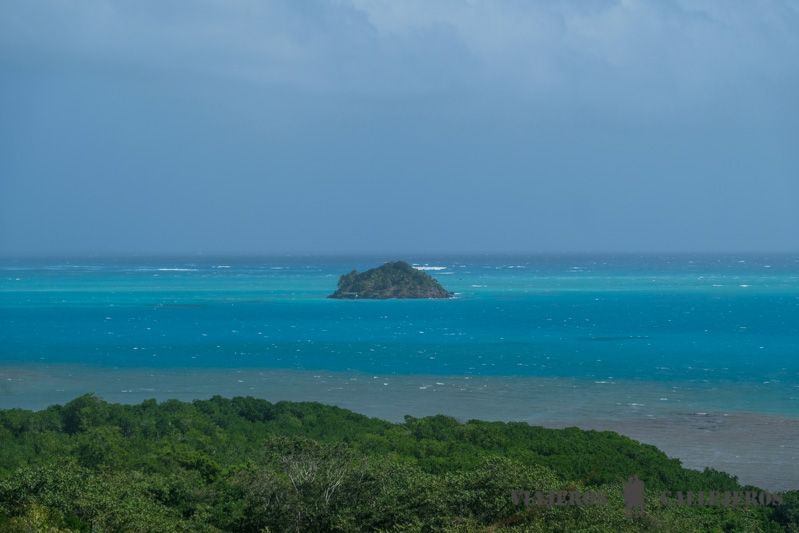
The island is surrounded by the third largest coral reef in the world, classified as a Biosphere Reserve by UNESCO in 2000. This ecological wealth makes Isla de Providencia a sanctuary for marine fauna and a key territory in the fight to protect Caribbean biodiversity. The landscapes alternate between verdant mountains, golden sandy beaches and mangroves, forming a rare balance between nature and culture.

The presence of coral reefs, lagoons and endemic species is a reminder of the island’s importance in regulating marine ecosystems. For researchers and environmentalists, the island is a living laboratory of ecological resilience in the Caribbean. The conservation efforts made by the local population reinforce the island’s reputation as a place where nature is not just a backdrop, but a vital resource.

Isla de Providencia
©voyagefamily
Isla de Providencia
©viajeroscallejeros

A plural cultural identity

The history of Isla de Providencia bears witness to the multiple influences that have shaped it. A former stronghold of the English colonists, marked by the presence of Africans and now part of Colombia, the island retains a lively English Creole language alongside Spanish. Traditional music, blending African rhythms, British tunes and Caribbean sounds, illustrates this unique cultural hybridity.

The island’s gastronomy is based on seafood and coconut milk. The black crab, an endemic species on the island, has become a culinary and identity symbol. Its fishing is governed by strict community rules to preserve the resource, demonstrating how local culture integrates sustainable practices. This collective management is an example of successful community governance, where tradition and modernity come together to serve the common good.

Isla de Providencia
©viajeroscallejeros
Isla de Providencia
©viajeroscallejeros

Resilience in the face of hardship

In November 2020, Isla de Providencia was hit by Hurricane Iota, the most powerful hurricane ever recorded in the area. Nearly 98% of the island’s infrastructure was destroyed, including schools, hospitals, homes and energy networks. In the face of this disaster, the island has embarked on a gradual reconstruction, with the support of the diaspora, NGOs and the Colombian government.

This resilience illustrates the ability of island communities to overcome disasters while affirming their determination to protect their natural and cultural heritage. Inhabitants have opted for environmentally-friendly reconstruction, using more resistant materials and infrastructures designed to limit the impact of future cyclones. Today, despite the difficulties, the island is a model of rebirth in the Caribbean.

Isla de Providencia
©viajeroscallejeros
Isla de Providencia
©viajeroscallejeros

Confidential, sustainable tourism

Unlike its neighbor San Andrés, Isla de Providencia has opted for limited tourism development. A handful of family-run hotels and guesthouses welcome visitors, in a spirit of respect for social and environmental balance. The locals, who are very involved in the organization of hospitality, make tourism a complementary activity rather than a dominant industry.

This strategic orientation protects the island from the excesses of mass tourism and ensures a better distribution of income within the community. It also positions the island as a benchmark for responsible tourism in the Caribbean, attracting a public in search of authenticity and meaning. This measured approach helps to maintain a close bond between the island’s inhabitants and their territory, avoiding the excesses seen elsewhere.

Isla de Providencia
©Charly Boillot
Isla de Providencia
©viajeroscallejeros

Historical and strategic roots

Isla de Providencia ‘s importance extends beyond its island setting. During colonization, it was a strategic point for European powers in the Caribbean Sea. Spanish attempts to recapture the island from English colonists bear witness to its geopolitical value. Today, this memory is reflected in the ruins, oral histories and traditions that remind us that the Caribbean was a place of confrontation, but also of cross-fertilization.
This historical heritage, far from being static, is mobilized by the inhabitants as a lever of identity and tourism. Isla de Providencia is more than just a landscape; it’s also a place where history is embodied in everyday life, through language, music and social practices.

Isla de Providencia
©viajeroscallejeros

A Caribbean off the beaten track

Isla de Providencia illustrates another facet of the Caribbean: a discreet island, driven by its history, marked by climatic challenges, but determined to preserve what makes it unique. With its past as a land of privateers, its rich natural heritage and its resilience in the face of disasters, it symbolizes a Caribbean that looks to the future without denying its roots.

Highlighting the island shows that there are territories in the region that successfully combine cultural identity, historical memory and sustainable strategies. It embodies a more intimate Caribbean, where the balance between man and nature is not a slogan but a lived reality.

Leave a Reply

Your email address will not be published. Required fields are marked *

More articles from RK

Antigua & Barbuda Culinary Month
EVENT MANAGEMENT
Tolotra

Antigua & Barbuda Culinary Month: 31 days to promote Caribbean cuisine

Antigua & Barbuda Culinary Month sets Antigua & Barbuda up for a simple cultural battle: the recognition of a specific cuisine, with its products, its chefs and its memory. In May 2026, Restaurant Week, guest chefs and several regional events will give the archipelago a wider stage than just tourism promotion. Nina Compton, a strong signal for Antigua and Barbuda When New Orleans-based St. Lucian chef Nina Compton, winner of the James Beard Award and star of Compère Lapin restaurant, sets foot in Antigua in May, it’s no courtesy visit. It’s a signal. The chef is part of the Antigua & Barbuda Culinary Month program, organized from May 1 to 31, 2026 by the Antigua and Barbuda Tourism Authority. A Restaurant Week designed for visitors and residents alike Antigua & Barbuda Culinary Month extends an already established Restaurant Week, but gives it a new scale. From May 3 to 17,

Read More »
Opération Pays Propre
COOPERATION
Tolotra

Martinique – Opération Pays Propre: 6.137 tonnes removed from natural sites

Opération Pays Propre reports on its 29th edition in Martinique: 950 participants, 18 natural sites cleaned and 6.137 tonnes of waste collected. Behind these figures, a collective mobilization reminds us that the protection of Martinique’s landscapes also relies on organized actions that are passed on. 950 participants in the field On the natural sites concerned, the gesture is simple, but it says a lot. Picking up a piece of garbage, filling a bag, moving forward as a group, taking a new look at a place you thought you knew. For the 29th edition of Opération Pays Propre, 950 participants took part in this environmental action in Martinique. The mobilization brought together 15 companies, 8 associations and 8 schools. This mix of players gave the action a special significance. The challenge goes beyond cleaning up afterwards. It’s also about making young people, in particular, understand that abandoned garbage doesn’t disappear from

Read More »
Dushi
HISTORY & HERITAGE
Tolotra

Dushi: the papiamento word for the soul of the ABC islands

Dushi, in Papiamento, can mean sweet, good, pleasant, tasty or darling. In the ABC islands of Aruba, Bonaire and Curaçao, this word circulates between the street, the kitchen, music and intimacy. It’s a Caribbean way of recognizing what feels good. A word heard in everyday life If you step off the plane in Aruba, Bonaire or Curaçao, you’ll soon hear it. On a sign, in a conversation, on a T-shirt, at a snack bar, at the market, in a song. A shop assistant may talk about a dushi cake. A mother may call her child dushi. A friend may say that an evening was dushi, not because it was spectacular, but because it left a good warmth in the memory. Translation is not enough Translation helps, but it’s never quite enough. Dushi comes close to “soft”, “sweet”, “good”, “delicious”, “lovable”, “darling”. Yet none of these words really covers all her

Read More »

conTACT RK

we'd love to have your feedback on your experience so far

Join The List

Join our Richès Karayib community!  Sign up for our newsletter.

Want To Maximize Your Business Presence On Riches Karayib?

Complete the form to start the application