
Cooperation between CARICOM member states: 4 Caribbean countries reach historic milestone

Coopération entre États membres du CARICOM

Cooperation between CARICOM member states has taken on a new dimension since 1ᵉʳ October 2025. Barbados, Belize, Dominica and Saint Vincent and the Grenadines have officially lifted barriers to the movement of their citizens. These four nations have launched an unprecedented agreement that allows their nationals to live, work and settle freely within this Caribbean space without work permits. A strong signal for the construction of a more united and supportive region.

A founding agreement for free regional mobility

Launched under the name “Enhanced Cooperation in Free Movement”, this commitment was ratified by heads of government at the 49ᵉ CARICOM summit in Montego Bay. For the first time, Caribbean countries are fully applying the principles of free movement already outlined in the Treaty of Chaguaramas.

Thanks to this agreement, nationals of Barbados, Belize, Dominica and Saint Vincent and the Grenadines can enter, leave, work and reside in the partner countries without a CSME certificate or special permit. They also enjoy limited but effective access to essential public services, including basic health care and primary or secondary education.

This cooperation between CARICOM member states is the first step in a wider project to unify the region in human and economic terms.

Cooperation between CARICOM member states
©CARICOM
Cooperation between CARICOM member states
©CARICOM

Strategic leverage for four complementary economies

  • – For Barbados, the challenge is clear: to cope with an aging population and a shortage of manpower. Bridgetown hopes to attract young workers from neighboring countries to support the key sectors of tourism, services and healthcare.
  • Belize, whose territory is sixty times larger than that of most Caribbean islands, is keen to encourage the settlement of its rural areas and boost its development. With a population of just 400,000 over 22,000 km², the country sees this cooperation between CARICOM member states as an opportunity to attract talent and boost productivity.
  • Dominica and Saint Vincent and the Grenadines, for their part, are focusing on cultural and historical links. In Kingstown, Prime Minister Ralph Gonsalves pointed out that this initiative also has an identity dimension:

“Our Garifuna brothers and sisters in Belize can come and spend more time here, work if they wish, and our citizens are now free to go there.”

Coopération entre États membres du CARICOM

A shared history, the foundation of integration

This cooperation between CARICOM member states is based on a common historical foundation. The four nations share a British colonial experience, a close linguistic heritage and a similar institutional structure. These affinities have facilitated the implementation of a mobility scheme unprecedented in the region.

A common verification mechanism has been set up to filter applications. The authorities retain the right to refuse entry to any individual representing a risk to public order or a financial burden for the host state. This clause aims to preserve the balance between openness and responsibility.

A laboratory for regional integration

The leaders consider this cooperation between CARICOM member states to be a pilot project. If the results are conclusive, it could be extended to other member countries as early as 2026. Discussions are already underway with Jamaica, Saint Lucia and Trinidad & Tobago to join the initiative.

According to regional economists, this cooperation between CARICOM member states represents a major opportunity to facilitate the exchange of skills and strengthen local value chains. By removing administrative constraints, it encourages professional mobility, entrepreneurship and the networking of Caribbean talent.

©CARICOM
©CARICOM

Sustainable social and human benefits

Beyond the figures, the human impact of this agreement is considerable. Thousands of families can now look forward to a future beyond their national borders. Access to employment, training and basic healthcare paves the way for real integration of Caribbean societies.

This cooperation between CARICOM member states also gives new meaning to the Community’s original project: to build a region of solidarity where citizens share the same fundamental rights. It embodies a new generation of regional policies based on trust and reciprocity.

Towards a united and inclusive Caribbean

The entry into force of this measure confirms the region’s determination to write a new page in its history. Cooperation between CARICOM member states goes beyond economic considerations: it symbolizes the political will to unite peoples and strengthen social stability.

By opening their borders to each other, Barbados, Belize, Dominica and Saint Vincent and the Grenadines are demonstrating that another Caribbean is possible: a Caribbean that is mobile, connected and aware of its common destiny.

Leave a Reply

Your email address will not be published. Required fields are marked *

More articles from RK

Bonaire salt marshes: pink ponds and white salt mountains in the south of the island
HISTORY & HERITAGE
Tolotra

Bonaire: 3,700 hectares of salt marshes conceal a history of slavery

At the southern tip of Bonaire, a Dutch-speaking island in the Caribbean, the salt marshes stretch out in pink and white basins across nearly 3,700 hectares—thirteen percent of the island’s total area. This postcard view, photographed every year by thousands of visitors from the coastal road, hides a history dating back more than five centuries, the story of salt that shaped Bonaire’s economy and, for two hundred years, the lives of hundreds of enslaved people. Along EEG Boulevard, which runs along the southern coast of Bonaire, mountains of white salt come into view kilometers before you reach them. Each contains about 10,000 metric tons of salt that is 99.6% pure, piled nearly 15 meters high, with up to 200,000 metric tons stored at any given time. Their whiteness, so intense that you need to keep sunglasses handy, stands in stark contrast to the pink of the neighboring pools. The salt
Read More »
Journées européennes du patrimoine 2026
EVENT MANAGEMENT
Tolotra

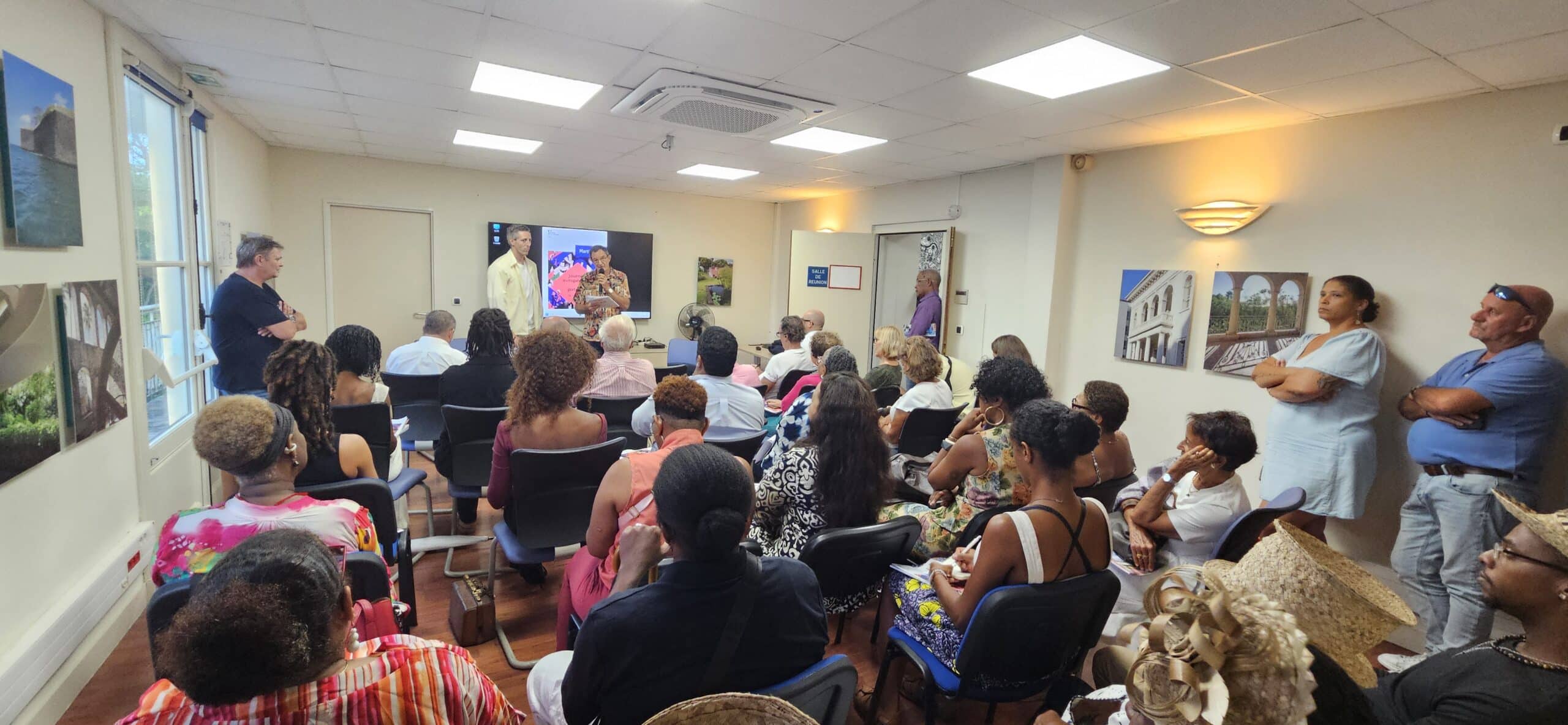
European Heritage Days 2026: Martinique Opens Its Archives.

On September 15, at 5 p.m., the conference room of Martinique’s Cultural Affairs Department is already packed. Journalists, cultural leaders, organizations, artists, and heritage professionals have gathered to find out what the 43rd edition has in store. With just four days to go before the 2026 European Heritage Days , scheduled for September 19 and 20, this press conference already feels like a journey across Martinique—from its Creole huts to its lighthouses, from Saint-Pierre to the monuments we sometimes pass by without really noticing them. European Heritage Days 2026: A Lively Conference Johan-Hilel Hamel, Martinique’s director of cultural affairs, opened the meeting without putting on airs. He even warned that the evening would not be a long monologue. The conversation quickly began to flow. A representative from Les Trois-Îlets speaks, followed by Xavier Nicolas from the Directorate of the Sea, Philippe Villard from the Heritage Foundation, Florence Le Gal from

Read More »
caribbean cinema
FILM & VIDEO
Tolotra

S3/10 – Stories of Caribbean Cinema: Two Perspectives on the Year 1980. Texts by Guillaume Robillard. Ciclic, 2026.

With this third episode, *Stories of Caribbean Cinema* moves into the 1980s. The first two installments covered Cuba, Jamaica, Trinidad and Tobago, and Guadeloupe, from the 1960s through the emergence of Caribbean cinema. This time, two films made in the same year take radically different directions. In Jamaica, *Children of Babylon* explores romantic, sexual, and racial relationships with unusual freedom. In Guadeloupe, *Live Free or Die* draws on several centuries of history centered on the legacy of Commander Ignace. This article is the third installment in a series of ten. Two installments have already been published, and seven more will follow in this chronology of Caribbean cinema. 1980: JAMAICA – “CHILDREN OF BABYLON”, BY LENNIE LITTLE-WHITE This film is unique in Jamaican cinema and, more broadly, in Caribbean cinema as a whole. Far from the social deprivation of Kingston’s ghettos, in a villa in the countryside (complete with a swimming

Read More »

conTACT RK

we'd love to have your feedback on your experience so far

Join The List

Join our Richès Karayib community!  Sign up for our newsletter.

Want To Maximize Your Business Presence On Riches Karayib?

Complete the form to start the application