
“This integration must not be reduced to a mere signature on a piece of paper.” In Saint Lucia, a few hours after French Guiana officially joined CARICOM as its eighth associate member, Gabriel Serville summarized the challenges facing the region following its accession. The president of the Territorial Collectivity of French Guiana describes the resources needed to transform this new status into meaningful and visible cooperation.
On July 7, 2026, in Gros-Islet, French Guiana signed the agreement setting forth the terms of its association with the Caribbean Community. Richès Karayib has already explained the institutional implications of this decision. The interview conducted on site now allows us to look ahead to the next step: what needs to be done to ensure that this regional presence yields concrete results?

Planning for a visit after the signing
The top priority is administrative. Participating in CARICOM meetings, monitoring the committees, and advocating for French Guiana’s interests will require ongoing organization. Gabriel Serville would like to see the creation of a technical entity capable of serving as a liaison between French Guiana and the various regional bodies. This organization will need to develop the region’s positions and bring together the relevant experts. Without this ongoing effort, there would be a risk of having a headquarters without fully leveraging the opportunities it offers. Membership must therefore be an active, day-to-day commitment.

Making French Guiana a regional hub
French Guiana occupies a unique position. It is part of the French and European spheres, while also being part of the Amazon region, South America, and oriented toward the Caribbean. It already maintains direct relations with Suriname, Guyana, and northern Brazil. For Gabriel Serville, this situation could enable the region to become a hub connecting several catchment areas. This ambition requires bringing together the expertise, infrastructure, and needs of regions that still often cooperate on a sector-by-sector basis.

Health, Climate, Water, and Waste: Sharing Expertise
Several areas are cited as priorities. Research on tropical and Amazonian infectious diseases is among the areas of expertise that French Guiana could contribute to joint projects. Water management, waste treatment, and adaptation to climate change could also be areas for collaboration. The goal is both to share expertise and to learn from other CARICOM members. Each territory has its own experiences, challenges, and solutions. Pooling these resources can accelerate responses to risks that know no borders.

Train and retain more young people
Youth mobility is another area of focus. Many young people leave their home regions to find training or employment elsewhere. Gabriel Serville is calling for the creation of more opportunities in the region. Membership could eventually facilitate academic exchanges, specialized training, and career pathways. No specific measures have been announced yet. But regional integration will gain credibility if it truly improves the prospects for future generations.

MALINK and Digital Sovereignty
The digital sector already provides an example of regional cooperation. French Guiana officially joined the Caribbean Telecommunications Union in May 2026 as an associate member. This membership is intended to promote direct exchanges on telecommunications, cybersecurity, and network resilience.
Gabriel Serville also mentions the MALINK submarine cable and a future agreement between French Guiana, SPLANG, and the Surinamese operator Telesur. He presents this project as a way to diversify connections, secure access to bandwidth, and reduce technical dependencies. In his view, control over data and infrastructure is becoming a matter of sovereignty.

Space as an Area of Cooperation
With the space sector and the anticipated arrival of new operators, the territory intends to strengthen its position in the fields of micro-launchers, microsatellites, and aerospace. Gabriel Serville believes that French Guiana can play a leading role in these sectors. This ambition will need to be realized through partnerships, training programs, and applications that benefit neighboring Caribbean countries—such as climate monitoring, telecommunications, risk management, and maritime surveillance. The space sector could thus become a true regional asset.

Building a Stronger Caribbean Voice
The seventh initiative goes beyond the interests of French Guiana alone. Gabriel Serville calls for cooperation based on respect and sharing among French-speaking, English-speaking, and Spanish-speaking territories. In his view, this coordination could help small Caribbean states and territories have a greater say in international discussions.
Membership Judged by Its Initial Results
French Guiana must now build the teams, projects, and alliances that will give substance to its presence in CARICOM. The first test will not be another declaration, but the ability to develop a common project that residents can identify with. Which of these seven initiatives will yield the first visible result?
Membership allows French Guiana to participate more directly in CARICOM’s discussions and activities as an associate member. The challenge now is to translate this institutional presence into concrete projects in the areas of health, climate, training, telecommunications, and regional cooperation.
Gabriel Serville has identified several priorities: establishing a permanent representative office, strengthening cooperation in the health sector, promoting youth mobility, securing telecommunications, enhancing the MALINK cable, and positioning French Guiana in the space sector. These projects are intended to give concrete substance to the membership.
French Guiana is situated at the crossroads of several regions: France, Europe, the Amazon, the Guiana Shield, and the Caribbean. This location enables it to bring together expertise, infrastructure, and regional partners, particularly in the fields of digital technology, research, the environment, and space.
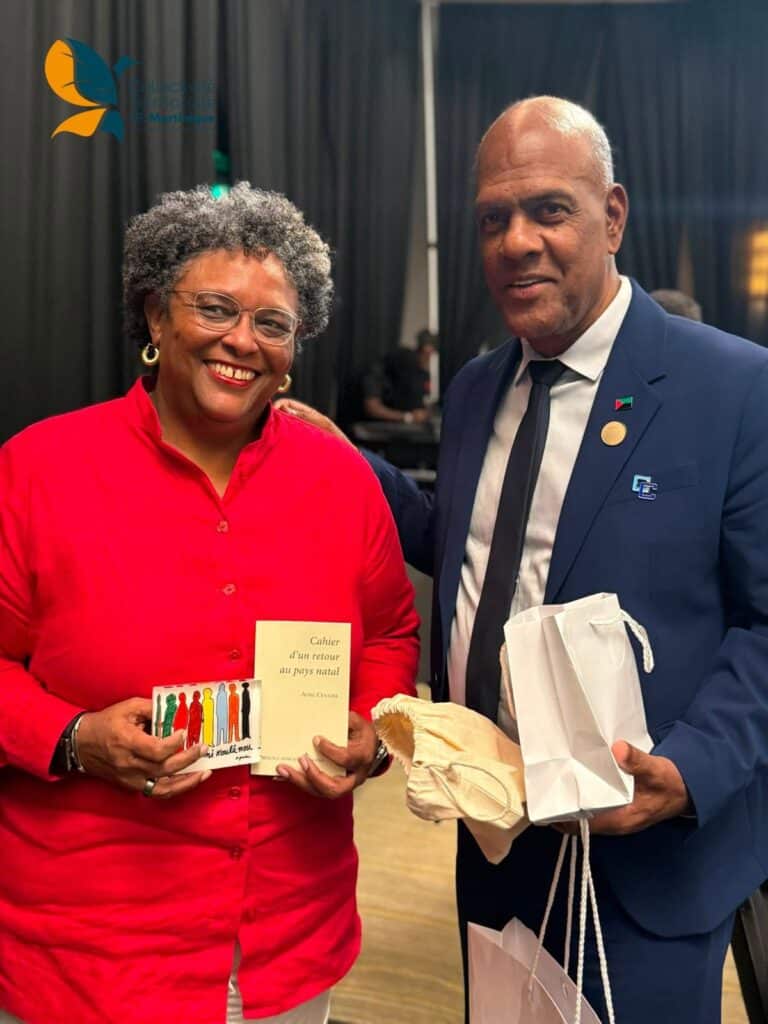
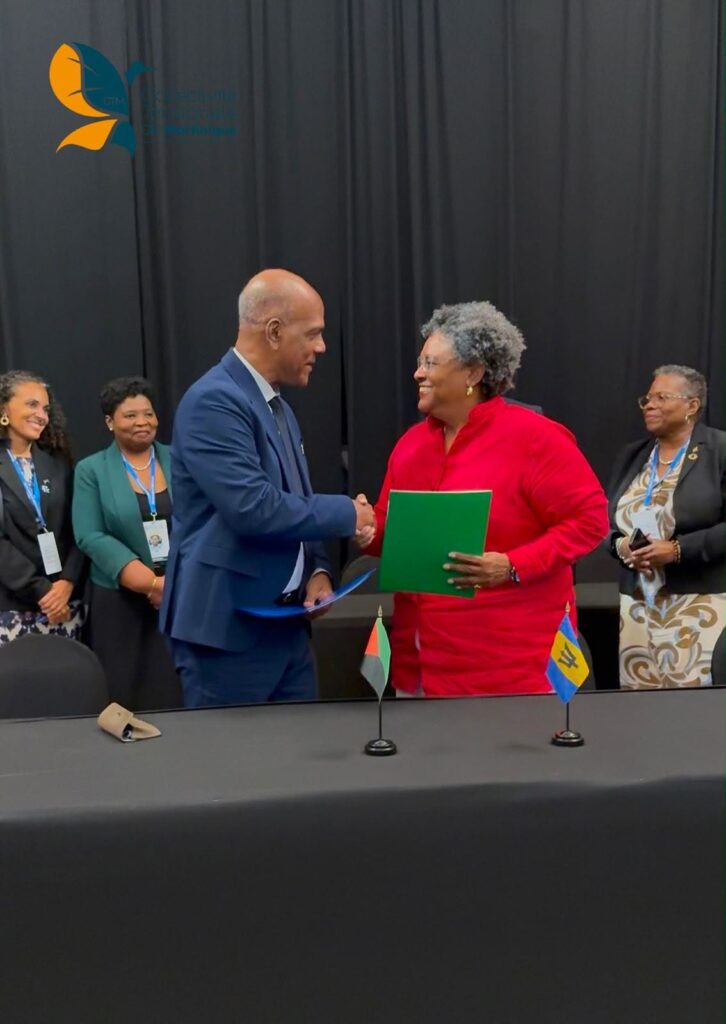
At the CARICOM summit, Martinique did more than just take a new seat. On July 7, 2026, on the sidelines of the meeting held in Saint Lucia, Serge Letchimy and Mia Amor Mottley signed a cooperation agreement between Martinique and Barbados. A concrete goal is taking shape: to transform the Caribbean’s geographical proximity into projects that are monitored, funded, and evaluated.
A first-time participation already focused on action
This signing comes at a special time for Martinique. Having officially become the seventh associate member of CARICOM on June 16, 2026, it was participating for the first time in a Conference of Heads of Government of the regional organization. The agreement with Barbados immediately gives this new phase an operational dimension. It is no longer simply a matter of affirming that Martinique belongs to the Caribbean region. The agreement establishes a bilateral framework for cooperation with a regional neighbor capable of sharing expertise, experiences, and common priorities.
Serge Letchimy sums up this ambition with a clear statement: Martinique is not merely “taking a seat at the table” of CARICOM. It wants to build, propose, and take action. This commitment elevates cooperation beyond a mere diplomatic symbol.
Nine sectors to bring the two regions closer together
The agreement covers nine major areas: cultural and creative industries, sports, education, vocational training, risk management, health, tourism, fisheries, and trade facilitation.
This diversity shows that the relationship we are seeking is not limited to institutions. It directly involves students, artists, athletes, tourism professionals, fishermen, businesses, and healthcare providers.
For young people, this could involve new training programs, skills exchanges, or joint programs. For the cultural sectors, this agreement can build bridges between two neighboring territories that share a regional space but whose languages, administrative systems, and economic networks often remain separate.
Culture as a Tool for Development
The inclusion of the cultural and creative industries among the priorities is by no means secondary. It recognizes culture as an economic sector, a means of regional exchange, and a space for identity-building. Between French-speaking Martinique and English-speaking Barbados, artistic collaborations can also serve as a very concrete way to bridge the gap. Music, film, cultural heritage, visual arts, and digital creation can circulate more easily when institutions organize exchanges, mobilize resources, and oversee projects.
This is where the agreement can take on a truly Caribbean character: not by erasing the differences between the two territories, but by drawing on their unique characteristics to foster new collaborations.
A system designed to deliver results
The agreement provides for a Joint Cooperation Committee, co-chaired by Barbados and the Territorial Collectivity of Martinique. This body will be responsible for defining priorities, approving programs, monitoring their implementation, and reviewing their results. A Technical Secretariat will be responsible for operational oversight. An annual report must detail the actions taken, the resources mobilized, performance indicators, challenges encountered, and the planned program for the following year.
These mechanisms are one of the most important elements of the agreement. Regional cooperation initiatives are often announced with great ambition, but their impact ultimately depends on the timeline, funding, and administrative continuity. By providing for regular evaluations, Martinique and Barbados are demonstrating their commitment to making the relationship measurable—and, above all, to making its effects visible to the populations concerned.
Five years to build a lasting partnership
Signed for five years and renewable, the agreement gives both territories time to develop projects beyond one-off meetings. It also provides a stable framework for their relationship, as Martinique seeks to strengthen its position between the Caribbean, Europe, the Americas, and Africa.
The real test will now begin with the first selected programs. Which projects will be launched first? Which groups will benefit directly? The answer will reveal whether this agreement marks merely a new institutional milestone or the beginning of a partnership capable of bringing about tangible changes in exchanges between Martinique and Barbados.
The agreement establishes a framework for cooperation in nine sectors: cultural and creative industries, sports, education, vocational training, risk management, health, tourism, fisheries, and trade facilitation. It is intended to enable the two territories to develop joint programs and concrete projects.
The cooperation agreement between Martinique and Barbados is valid for a renewable term of five years. This period is intended to allow both partners to launch initiatives, assess their results, and build a lasting relationship that extends beyond one-off institutional meetings.
A Joint Cooperation Committee will set priorities, approve programs, and evaluate results. A Technical Secretariat will provide operational oversight. Each year, a joint report will outline the actions taken, the resources mobilized, the challenges encountered, and the planned program for the following year.
On July 7, 2026, in Saint Lucia, French Guiana officially became the eighth associate member of the Caribbean Community. French Guiana’s accession to CARICOM marks the culmination of more than ten years of growing ties and opens a new framework for cooperation with neighboring territories. It comes two days after Martinique’s first official participation, as an associate member, in the Conference of Heads of Government.
French Guiana's Accession to CARICOM Signed in Saint Lucia
In Gros-Islet, Gabriel Serville, president of the Territorial Collectivity of French Guiana, signed the agreement alongside Philip J. Pierre, prime minister of Saint Lucia and current chair of CARICOM. The ceremony took place during the 51st Ordinary Meeting of the Conference of Heads of Government, held from July 5 to 8, 2026. According to the organization’s secretariat, the July 7 signing made French Guiana its eighth associate member. French Guiana’s accession to CARICOM thus transforms a long-standing diplomatic initiative into an institutional presence in the Caribbean region.
A distinction must be made between French Guiana and the Cooperative Republic of Guyana, a full member of CARICOM since 1973. French Guiana, however, shares a border with Suriname and is part of the Guiana Shield, which is directly linked to developments in South America and the Caribbean.


What French Guiana’s Membership in CARICOM Enables
French Guiana does not become a full member state. However, its status as an associate member allows it to participate, as an observer, in meetings of the Conference of Heads of Government and in several Community institutions. It will be able to take part in the activities of the organizations with which it is associated, propose programs, and benefit from certain regional initiatives. This status does not grant it the same decision-making powers as full members, but it does create a more structured framework for cooperation.
French Guiana’s accession to CARICOM can foster cooperation in several sectors. At the signing ceremony, Philip J. Pierre highlighted regional development, economic exchanges, climate resilience, border issues, security, culture, education, health, and environmental protection. These priorities are particularly relevant to French Guiana. As an Amazonian and European territory located in South America, it faces challenges that extend beyond its borders. Human mobility, public health, biodiversity, and climate risks often require coordinated responses.


More than ten years of regional integration
The process for French Guiana’s accession to CARICOM did not begin in 2026. As early as January 2015, a French Guianese delegation led by Rodolphe Alexandre, then president of the Regional Council, met with the CARICOM Secretary General to discuss becoming an associate member. Discussions were already focused on the economy, health, education, climate, and biodiversity. French Guiana also highlighted its ties with Suriname and Trinidad and Tobago, as well as its expertise in satellite and digital technologies.
An important legal milestone was reached in France in April 2026 with the approval of the agreement on CARICOM’s privileges and immunities. This framework was intended to facilitate the organization’s activities in the relevant French territories. French Guiana’s accession to CARICOM thus marks the territory’s transition from ad hoc cooperation to a lasting institutional relationship.

Two days after Martinique's first appearance
This regional session began on Sunday, July 5. At the opening of the 51st Conference of Heads of Government, Martinique took its seat for the first time as an associate member of CARICOM. The delegation was led by Serge Letchimy, president of the Executive Council of the Territorial Collectivity of Martinique. Its associate membership status took effect on June 16, 2026, following the signing of the accession agreement in February 2025 and France’s deposit of the instrument necessary for its entry into force. Its presence in Saint Lucia marked the first concrete manifestation of this new institutional role.
Two days later, French Guiana also joined the organization. These successive accessions mark a significant development for the French overseas collectives in the Americas. They remain part of France and the European Union, while assuming a more formal role in their regional context. For Martinique, the challenge is to strengthen its ties with neighboring islands. For French Guiana, it is also a matter of aligning its identity as part of the Amazon region with the dynamics of the Guiana Shield and the Caribbean.
French Guiana’s accession to CARICOM must now become a reality
French Guiana’s accession to CARICOM does not immediately transform transportation, economic exchanges, or academic cooperation. It does, however, create a framework within which joint projects can be developed and carried out with greater continuity. The next step will be to determine the institutions and programs in which French Guiana will prioritize participation. It will also be necessary to assess the concrete effects of this status on cultural actors, students, businesses, researchers, healthcare professionals, and residents.
French Guiana’s accession to CARICOM now places the territory within a regional framework where its concerns can be better heard. After more than ten years of discussions, the challenge will no longer be merely to have a seat at the table, but to transform that presence into tangible cooperation. French Guiana has just taken a historic step forward: it remains to be seen which bridges it will choose to build first.

French Guiana’s accession to CARICOM was formalized on July 7, 2026, in Gros Islet, Saint Lucia. The agreement was signed by Gabriel Serville, president of the Territorial Collectivity of French Guiana, and Philip J. Pierre, prime minister of Saint Lucia and current chair of CARICOM. French Guiana thus became the organization’s eighth associate member and participated in the 51st Conference of Heads of Government.
Associate member status allows French Guiana to attend meetings of the Conference of Heads of Government as an observer and to participate in several CARICOM institutions. It may contribute to discussions, propose programs, and benefit from certain regional initiatives. However, it does not have the same decision-making role as a full member state and does not participate in the Council on External and Community Relations.
The accession of French Guiana and Martinique marks a new stage in the regional integration of the French territories in the Americas. Martinique became CARICOM’s seventh associate member on June 16, 2026, before participating in the conference held in Saint Lucia from July 5 to 8. Two days after the opening of that summit, French Guiana became the eighth associate member, thereby strengthening its institutional presence in the Caribbean.
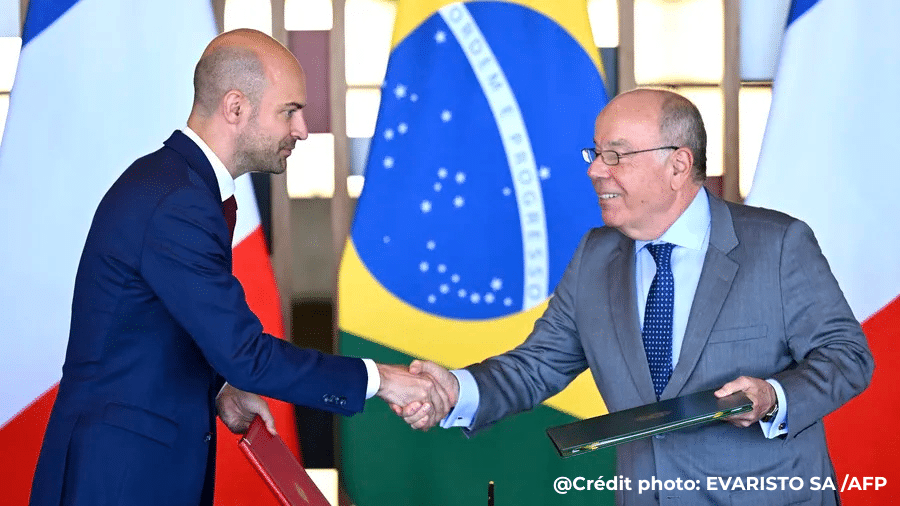
The decision was signed in Brasília, but its effects will be felt along the banks ofthe Oyapock River. On Wednesday, July 1, 2026, France and Brazil adopted a roadmap aimed at strengthening their cooperation along the French Guiana border. In particular, the agreement provides for the suspension of the short-stay visa requirement for Brazilian nationals wishing to travel to French Guiana, effective July 31.
On paper, this is an administrative measure. In reality, it touches on a more sensitive issue: that of a border long perceived by residents as close, yet complicated by regulations. For many Brazilians in Amapá, entering French Guiana has until now required a cumbersome process, even though family, business, and social ties exist on both sides of the river.
An anomaly that is difficult to defend
The France-Brazil announcement rectifies a situation often described as unfair. Brazilian nationals could travel to mainland France without a short-stay visa, but were required to apply for one to enter French Guiana, a French territory located right on their border. This difference in treatment fostered a sense of confusion, and sometimes even of discrimination.
French Guiana is not part of the Schengen Area, which partly explains this special arrangement. But on the ground, the legal explanation was no longer sufficient. In Saint-Georges-de-l’Oyapock, as in Oiapoque, the border is not merely a diplomatic line. It shapes lives, travel, markets, families, and long-standing traditions.
A Human and Strategic Border
France shares its longest land border with Brazil: approximately 730 kilometers between French Guiana and the state of Amapá, in the heart of the Amazon. This geographical reality gives the agreement special significance. France is not merely a European partner in its relations with Brazil. Through French Guiana, it is also a neighbor to South America, the Amazon region, and the Caribbean.
The suspension of short-stay visas does not apply solely to tourism. It can facilitate exchanges, bring residents closer together, support certain businesses, and ease a barrier that had been weighing particularly heavily on border communities. It also acknowledges that French Guiana cannot be understood solely from the perspective of Paris or Brasília, but must be viewed within the context of its own regional context.
Security, Drug Trafficking, and the Environment
This openness does not mean a lack of oversight. The roadmap signed in Brasília also aims to strengthen cooperation against drug trafficking, illegal gold mining, and environmental crimes. These are major challenges in a forested area that is difficult to monitor, where criminal networks operate, illegal gold flows, and intense pressure is being exerted on the Amazon.
The measure therefore strikes a delicate balance: facilitating legal travel while strengthening the fight against trafficking. For the French and Brazilian authorities, the challenge will be to demonstrate that the visa relaxation does not compromise security, but rather is part of a more effective, better-coordinated, and more respectful approach to local realities.


A development to watch closely
We must be clear: this is not a blanket, permanent waiver announced without conditions. The measure concerns the suspension of the short-stay visa requirement for Brazilian nationals entering French Guiana. The rules regarding duration, screening, and entry into the territory therefore remain in effect.
This is more than just a diplomatic agreement between France and Brazil. It demonstrates how an administrative decision can become a symbol of dignity, recognition, and regional cooperation. In Oyapock, the suspension of the short-stay visa marks a new phase. It will not single-handedly resolve border tensions, but it can correct an anomaly and compel both countries to view French Guiana as a true crossroads of the Amazon, the Caribbean, and South America.
Provided, however, that this openness is accompanied by concrete measures: an administrative presence, clear information for travelers, sustained police cooperation, and dialogue with local elected officials. Without these elements, the France-Brazil announcement could remain merely symbolic. With serious follow-through, it can bring about tangible change for those who experience the border firsthand every day—not just in press releases from the capitals, but right where the people affected live.
The France-Brazil agreement signed on July 1, 2026, in Brasília provides for enhanced cooperation between the two countries along the French Guiana border. In particular, it addresses the fight against drug trafficking, illegal gold mining, and environmental crimes. It also provides for the suspension of the short-stay visa requirement for Brazilian nationals wishing to travel to French Guiana starting July 31.
The suspension of the short-stay visa requirement is significant because it corrects a situation that has long been viewed as a border anomaly. Brazilian nationals could travel to mainland France without a short-stay visa, but were required to apply for one to enter French Guiana, even though it is located directly on the border with Amapá. This measure can therefore facilitate family, business, and social ties between the two territories.
No. The suspension applies to the short-stay visa requirement for Brazilian nationals traveling to French Guiana, but it does not eliminate border controls. Travelers must still comply with entry requirements, the authorized length of stay, and the rules applicable in French Guiana. The measure aims to facilitate legal travel while maintaining security cooperation between France and Brazil.
In the Caribbean, a high energy bill can slow down a business. A storm can cut off a road, block a port, or jeopardize a harvest. A security crisis can also extend beyond the borders of a single country. It is against this daily reality that the Canada-CARICOM dialogue is taking on a new dimension today.
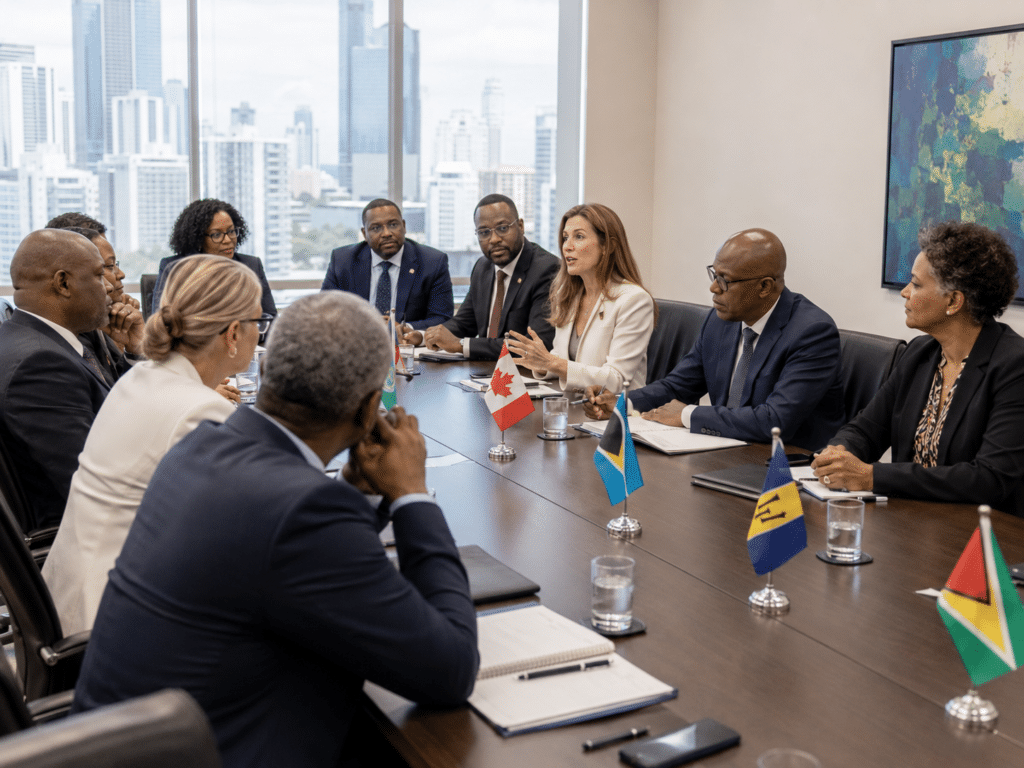
Meeting in Panama City on the sidelines of the 2026 General Assembly of the Organization of American States, the foreign ministers of Canada and CARICOM sought to reinvigorate their strategic partnership. At the heart of their discussions was an action plan focused on three major priorities for the region: security, climate, and the economy.
Cooperation Aimed at Achieving Concrete Results
The Canada-CARICOM partnership builds on the strategic agreement launched in 2023. But the 2026 meeting marks an important milestone: both parties now want to move forward with a plan that is more specific, clearer, and more measurable.
The goal is not merely to demonstrate diplomatic closeness. It is to establish priorities, timelines, and funding mechanisms capable of producing results. For Caribbean countries, this clarity matters. The region faces a range of interrelated challenges: energy costs, climate-related disasters, maritime security, financial vulnerability, and the crisis in Haiti. The Caribbean is not merely asking for aid. It is seeking partners capable of understanding its realities and working alongside it for the long term.
Security: A Regional Emergency
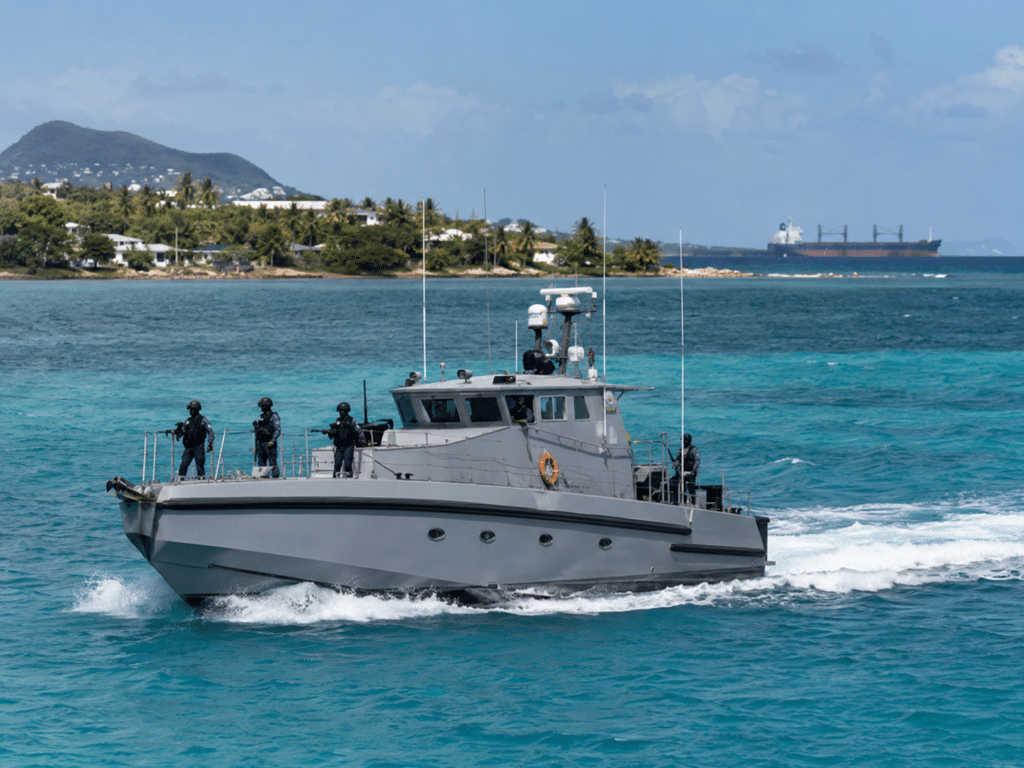
Security is central to this new Canada-CARICOM plan. The ministers discussed transnational crime, gangs, irregular migration, maritime security, and illicit flows. For the region, these issues are not isolated. The sea serves as a link, but it is also an area of vulnerability. Trafficking, criminal networks, cyberthreats, and political crises sometimes spread faster than institutional responses can keep up.
Canada already supports certain regional initiatives through capacity building, targeted interventions, and operational partnerships. The new challenge is to move toward a more coordinated response: better protecting maritime areas, strengthening institutions, sharing relevant information, and limiting the influence of criminal networks.
Haiti: A Crisis That Affects the Entire Caribbean
Haiti is a major focus of the discussions. The political, security, and humanitarian crisis the country is facing has direct consequences for the region. In particular, the ministers highlighted the risks associated with drug and arms trafficking. Support for the Gang Suppression Force was among the topics discussed. This force is intended to help restore security on the ground, with a mandate set to be renewed by the United Nations Security Council.
But the response cannot be limited to security measures alone. The ministers also reaffirmed the right of Haitians to choose their own government. They support the holding of credible elections as soon as conditions permit, as well as efforts to combat corruption and impunity. Haiti serves as a powerful reminder: no lasting stability in the Caribbean can be achieved by leaving a country to face such a profound crisis on its own.

Climate and the Economy: Two Sides of the Same Challenge
The new Canada-CARICOM plan also clearly links climate and the economy. In the Caribbean, a natural disaster is never just a weather event. It affects families, businesses, roads, schools, ports, and public finances. Access to reliable and affordable energy is once again a priority. Overly expensive energy stifles innovation and puts a strain on households. A more stable energy supply can support industry, services, investment, and the transition to more sustainable models.
Trade is also part of the equation. The CARIBCAN program, which grants duty-free access to the Canadian market for most products originating in 18 Caribbean Commonwealth countries and territories, remains an important tool. It serves as a reminder that the Canada-CARICOM partnership is not just about diplomacy. It also encompasses economic opportunities, supply chains, and the ability of Caribbean businesses to expand beyond their local markets.

Greater Attention to the Caribbean's Vulnerability
Another key aspect of the Canada-CARICOM partnership concerns financing. Several Caribbean states are considered middle-income countries. Yet their vulnerability to climate-related disasters, economic shocks, and supply disruptions remains very high. This is one of the region’s major paradoxes. On paper, some countries appear too “advanced” to easily access concessional financing. In reality, a single crisis can undermine years of progress.
The ministers therefore emphasized the need to reform the international financial architecture. The idea is simple: the actual vulnerability of small states must be taken into account more fully—not just their average income.

A plan to follow closely
The coming months will be crucial. Officials still need to finalize the details of the action plan, identify priority initiatives, develop an implementation schedule, and strengthen monitoring efforts. A dialogue among senior officials is scheduled for the fall to advance this work.
The Canada-CARICOM partnership alone will not solve the Caribbean’s challenges. But it says something about the current moment: the region wants to be heard as a strategic area, not just as a vulnerable one. Now the real question remains: Will this new plan bring about visible changes for Caribbean people, businesses, and territories?
The new Canada-CARICOM plan is a roadmap designed to strengthen cooperation between Canada and the Caribbean Community. It is based on three priorities: more resilient economies, climate action, and regional security. The goal is to move from a diplomatic partnership to more concrete actions, with timelines, measurable results, and sustainable financing mechanisms.
Haiti is a key focus because its political, security, and humanitarian crises have repercussions for the entire region. The ministers discussed drug and arms trafficking, support for the Gang Suppression Force, and the right of Haitians to choose their own government. For CARICOM, Haiti’s stability therefore remains a regional issue, not just a national one.
The Canada-CARICOM Partnership directly links climate and the economy. It emphasizes access to reliable and affordable energy, the development of trade, the strengthening of supply chains, and access to financing tailored to the vulnerabilities of small Caribbean states. The goal is to enable the region to better withstand natural disasters, economic shocks, and international crises.
Organized by the Caribbean Chamber of Commerce in Europe (CCCE), the second edition of Caribbean Days brought together various expressions of Caribbean culture at UNESCO headquarters in Paris. Over the course of four days, the event provided a forum for dialogue on regional cooperation, sustainable tourism, and economic relations between the Caribbean and Europe.
A Caribbean-style restaurant with a view of Paris
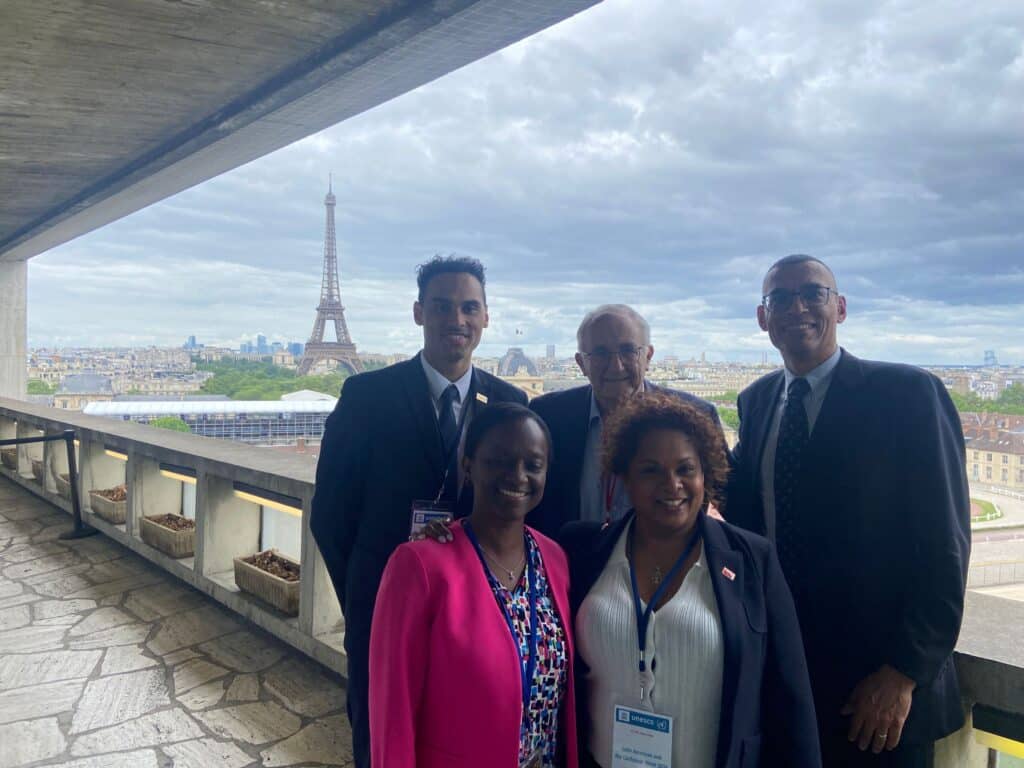
On the roof of UNESCO, Caribbean chefs from the association Les Toques françaises are preparing a three-course Caribbean menu. From the restaurant, guests can see the Eiffel Tower, Les Invalides, and the Left Bank. This scene captures the spirit of the Caribbean Days : to showcase the Caribbean through its creative works and craftsmanship, and then use this cultural presence to foster broader exchanges.
The Caribbean Chamber of Commerce in Europe (CCCE) organized this second edition as part of Latin American and Caribbean Week. Under the theme “Peace, Diversity, and Sustainability,” the event brought together representatives from the cultural, institutional, diplomatic, and economic sectors.
Over the course of four days, the program featured the visual arts, gastronomy, fashion, film, literature, poetry, music, and dance. These disciplines showcased various facets of Caribbean creativity in a venue dedicated to education, science, culture, and heritage.
Creative Industries Take Center Stage
The Caribbean Days highlighted the creative industries as one of the region’s strengths. Cuisine, fashion, film, storytelling, music, and dance served as points of connection between different regions and sectors.
This diversity brought together Caribbean ambassadors, other diplomats, representatives from the public sector, and private-sector stakeholders. Culture thus provided a common framework for discussions on development, investment, and partnerships.
Founded in November 2019, the CCCE’s mission is to facilitate exchanges between the Greater Caribbean and Europe. It also seeks to encourage European investment in the region’s sustainable economic development. In Paris, this mission has taken the form of meetings between institutions, businesses, and Caribbean representatives.
Regional Cooperation Over Lunch
A luncheon discussion focused on cooperation between France’s overseas territories in the Caribbean and CARIFORUM member states. Representatives from the Bank of France, Expertise France, and the OECD gave presentations.
The remarks by French Senator Micheline Jacques, who supports an economic partnership between France’s overseas territories and Haiti, refocused the debate on a concrete question: How can we strengthen ties among the various parts of the Caribbean region?
Through this event, the Caribbean Days brought culture, diplomacy, and the economy closer together. Gastronomy was not merely a backdrop; it served as a framework for dialogue on potential areas of cooperation and on the Caribbean’s role in its relations with Europe.
Sustainable Tourism in the Face of Climate Change
A roundtable discussion was held on sustainable tourism. Geoffrey Lipman, former president of the World Travel and Tourism Council and former deputy secretary-general of the World Tourism Organization, participated alongside Florian Valmy-Desvillers, director of business development for the Caribbean Tourism Organization in the United Kingdom and Europe.
Jo Spalburg, Secretary General of the CCCE, summarized the main message of these discussions. According to him, the acceleration of climate change makes it necessary to develop tourism that is more sustainable and more beneficial to local communities. These communities play a direct role in protecting the region’s natural and cultural heritage for future generations.
This reflection gives the Caribbean Days a specific scope. It links the promotion of Caribbean destinations to the responsibility of preserving what attracts visitors: landscapes, cultural heritage, cultural practices, and local knowledge.

From Cultural Visibility to Partnerships
As this second edition comes to a close, the CCCE is highlighting a collective goal: to transform cultural visibility into collaborations, innovation, and sustainable growth for the region.
The Caribbean Days have shown that culture can foster dialogue among diplomats, institutions, businesses, and creative professionals. What happens next will depend on the ability of the partners gathered in Paris to turn these exchanges into concrete partnerships that benefit Caribbean regions and communities.
Caribbean Days, also known as Journées des Caraïbes, is an event organized by the Caribbean Chamber of Commerce in Europe at UNESCO headquarters in Paris. Over the course of four days, the second edition of the event showcased the visual arts, gastronomy, fashion, film, literature, poetry, music, and dance. The event took place under the theme “Peace, Diversity, and Sustainability,” as part of Latin American and Caribbean Week.
Caribbean Days is organized by the Caribbean Chamber of Commerce in Europe (CCCE). Founded in November 2019, this organization seeks to facilitate exchanges between the Greater Caribbean and Europe, while encouraging European investment in the region’s sustainable economic development. In Paris, the CCCE brought together representatives from the cultural, diplomatic, institutional, and economic sectors to discuss Caribbean culture and challenges.
Caribbean Days combined the promotion of creative industries with discussions on regional cooperation and sustainable tourism. A luncheon forum focused on relations between France’s overseas territories in the Caribbean and CARIFORUM member states. A roundtable discussion also addressed the effects of climate change and the need to develop more sustainable tourism that better benefits local communities working to protect the region’s natural and cultural heritage.
Starting with the 2026–2027 season, Saint Lucia will join the Arsenal family as an official destination partner. This partnership places a Caribbean island at the heart of a strategy aimed at transforming global soccer into tourism, a source of pride, and opportunities for its youth.
A Partnership Formalized in Castries
In Castries, the Saint Lucia Tourism Authority formalized a multi-year global partnership with Arsenal Football Club. The London-based club will now serve as an ambassador for this Eastern Caribbean island, which has a population of approximately 180,500.
This choice is no small matter. Saint Lucia is seeking to raise awareness of its beauty, culture, and tourism offerings among an international audience. The United Kingdom plays a key role in this strategy, as it is one of the island’s main tourism markets. Arsenal serves as a gateway to millions of fans, matches watched in many countries, and platforms capable of spreading the island’s image far and wide. For an island destination, this visibility can make all the difference.


Saint Lucia, a showcase at the heart of English soccer
The partnership provides for Saint Lucia’s presence within the Arsenal ecosystem. In particular, the island will gain visibility at Emirates Stadium during Premier League, Women’s Super League, and cup matches. It will also be featured on the club’s digital platforms and channels.
Today, tourism is no longer limited to trade shows or traditional advertising campaigns. It also plays out through collective emotions. A game, a jersey, a video, a community of fans—these are places of memory, conversation, and sometimes the desire to travel. St. Lucia is therefore positioning its image where attention already exists to spread awareness of its name, its “Let Her Inspire You” campaign, and its identity among an audience that may know Arsenal before it knows the Pitons.
Saint Lucia Looks Back on Its Youth
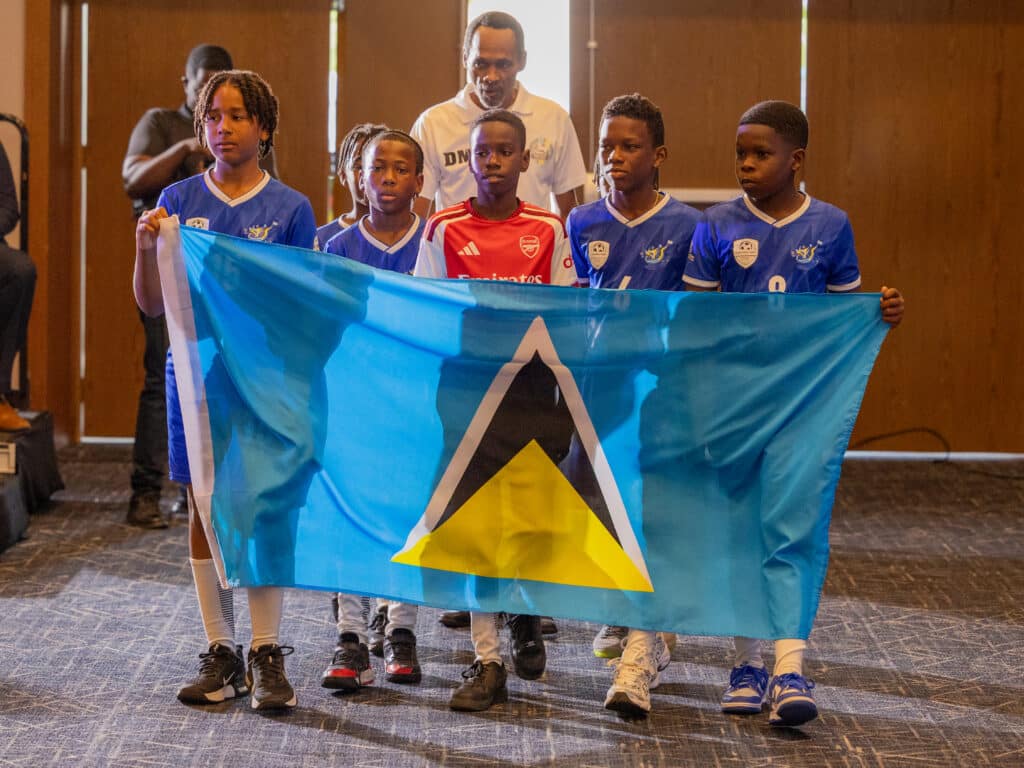
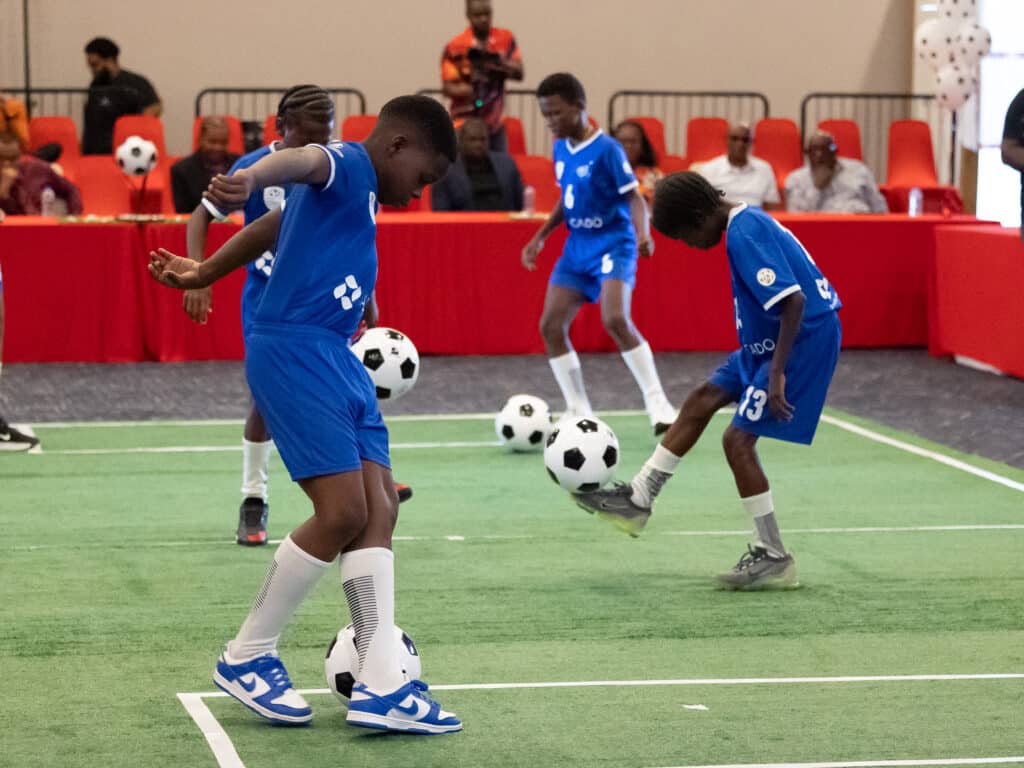
The most interesting part of the agreement lies far from the stands. The partnership is also intended to support the creation of an Academy Hub in Saint Lucia. The stated goal is to create mentoring opportunities and development pathways to help young players develop their talent.
On many islands, sports serve as a common language. They embody children’s dreams, families’ efforts, makeshift fields, local clubs, and coaches who volunteer their time. When an international partnership promises opportunities for young people, it deserves careful consideration. The challenge will be simple to articulate but harder to measure: Can this global visibility produce real results on the ground? For young players in Saint Lucia, the Academy Hub will be the one to watch.


A destination with a story to tell
The island is often described as the only country in the world named after a woman. It is known for the Pitons, aUNESCO World Heritage Site, as well as for its forests, beaches, mud baths at Sulphur Springs Park, its chocolate-making heritage, and its major cultural events.
The Gros Islet Friday Night Street Party, the Saint Lucia Jazz & Arts Festival, the Lucian Carnival, and Creole Heritage Month already give the island a packed calendar of events. The partnership with Arsenal therefore builds on an existing legacy. The involvement of Julien Alfred, Olympic champion and tourism ambassador, further reinforces this perspective. Saint Lucia already knows that sports can project a name far beyond its borders. With Arsenal, the island is simply taking things to a whole new level.
Sports Tourism as a Strategy
This isn’t the first time the Saint Lucia Tourism Authority has partnered with big names in sports. The organization has previously collaborated with the New York Yankees, the Toronto Raptors, the Toronto Maple Leafs, and the Brooklyn Nets. The agreement with Arsenal is therefore part of a broader strategy focused on sports tourism.
Soccer, cricket, rugby, swimming: Saint Lucia wants to attract teams, athletes, visitors, and attention. For a Caribbean island, this strategy can become a powerful tool if it remains rooted in the local community. Visibility alone is not enough. It must fuel the local economy, events, young talent, and cultural recognition. That is where this partnership will truly be judged—not just by the size of the screens or the number of fans reached, but by what it leaves behind on the island.


When an Island Enters the Global Arena
With Arsenal, Saint Lucia is entering a space where sports, tourism, and identity intersect. Soccer becomes a showcase. The island becomes a story. And its youth become a promise to watch. The question now is: to what extent can a small Caribbean island transform the power of a major club into tangible benefits for its people?
Saint Lucia will become Arsenal Football Club’s official destination partner starting with the 2026–2027 season. This multi-year partnership, led by the Saint Lucia Tourism Authority, is intended to boost the island’s international visibility, particularly in the United Kingdom, one of its key tourism markets. It also provides for Saint Lucia’s presence within the Arsenal environment, at Emirates Stadium, during men’s and women’s matches, as well as on the club’s digital platforms.
Saint Lucia is partnering with Arsenal to reach a global audience already passionate about soccer. The goal is to raise the island’s profile beyond traditional tourism campaigns by associating the destination with a club that has a following in many countries. This partnership also helps strengthen the “Let Her Inspire You” campaign and showcase Saint Lucia as a Caribbean destination known for its nature, culture, events, and sports tourism.
The Academy Hub planned for St. Lucia is intended to create mentoring opportunities and pathways to help young players develop their talent. This is one of the most important aspects of the partnership with Arsenal, as it goes beyond mere tourism promotion. The challenge will be to see how this collaboration can produce tangible results for young athletes, local clubs, and the development of soccer on the island.
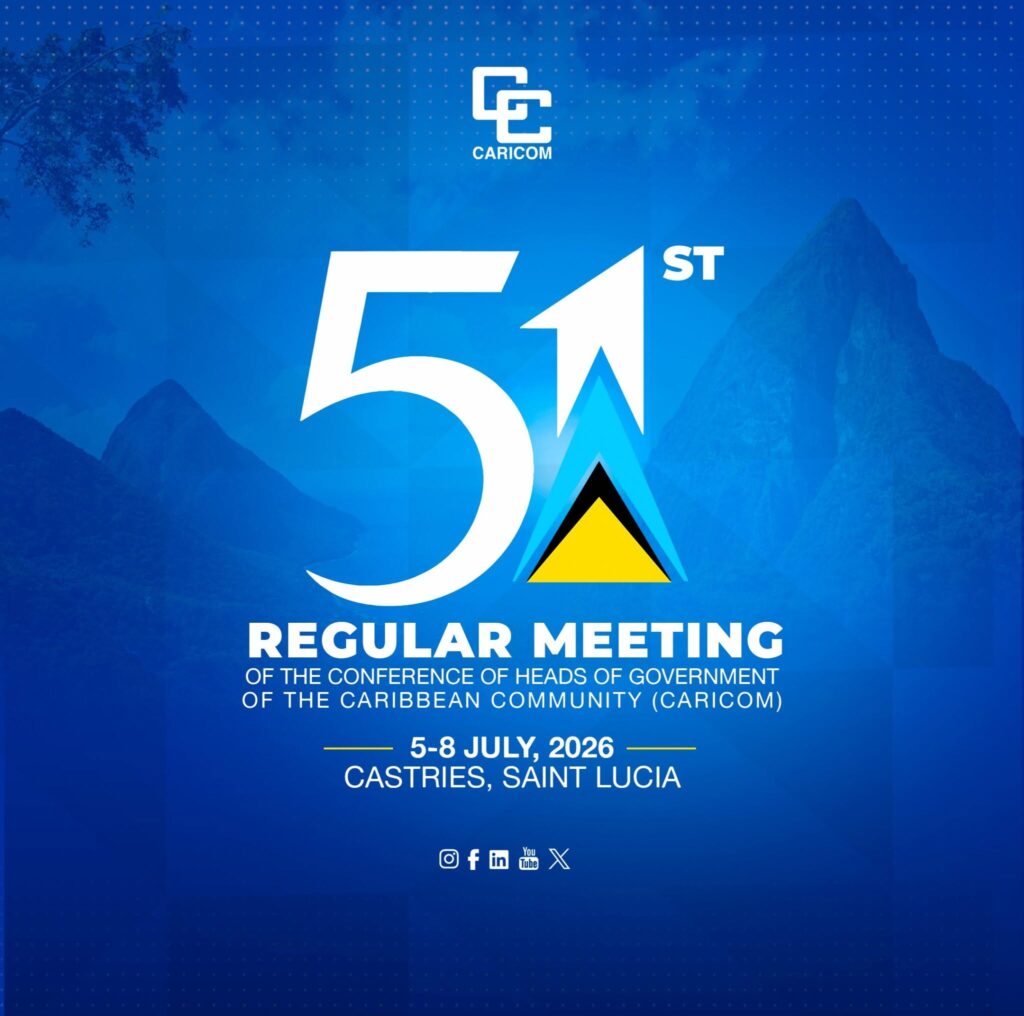
Starting July 1, 2026, Saint Lucia will assume the CARICOM chairmanship for a six-month term. A few days later, the island will host the 51st Regular Meeting of the Conference of Heads of Government, from July 5 to 8. Behind this official schedule, a broader question emerges: How can Caribbean integration be made more tangible for the people?
Saint Lucia Takes Center Stage in the Caribbean Calendar
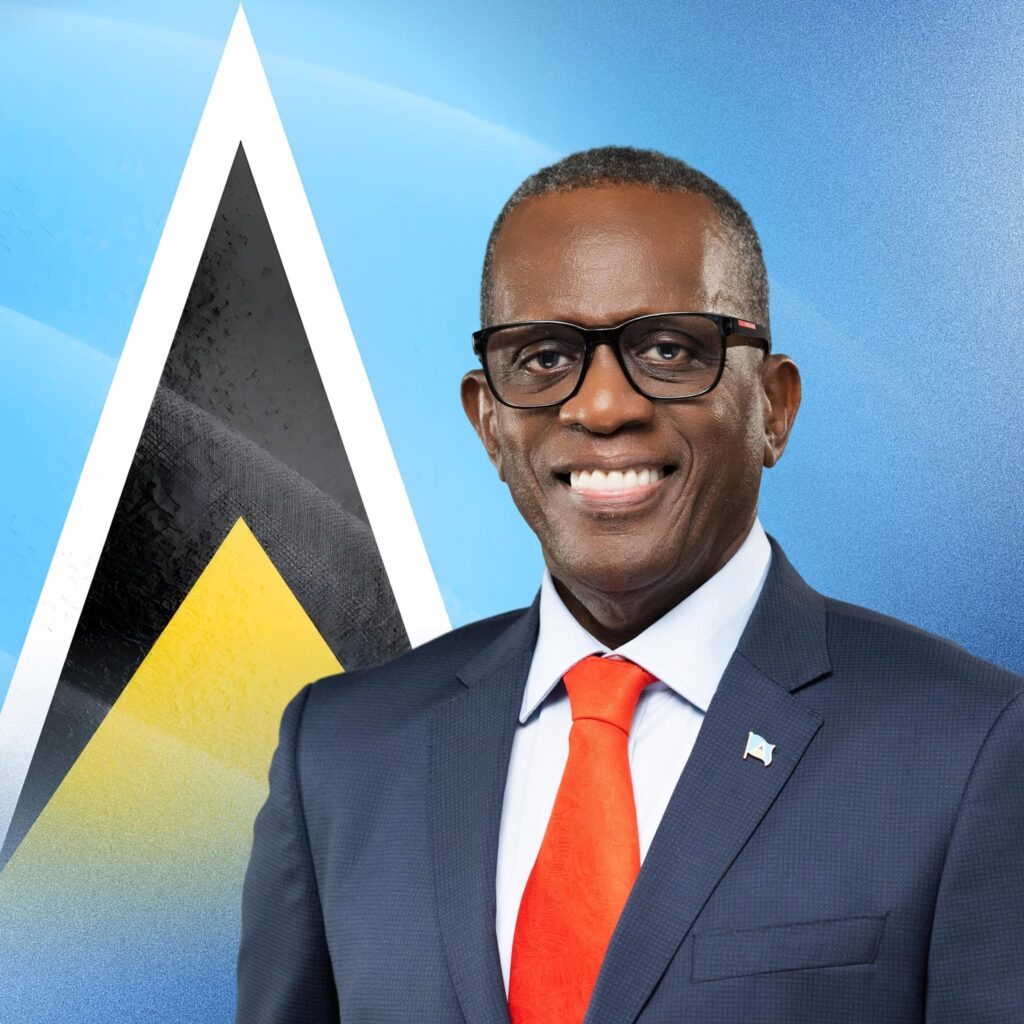
In the coming days, Saint Lucia will become one of the places where the Caribbean will come together to discuss itself, its pressing issues, and its shared future. At the national launch of the meeting, Prime Minister Philip J. Pierre described the event as an important moment for his country and for the entire Caribbean Community.
The schedule is clear. Saint Lucia will assume the CARICOM chairmanship on July 1, 2026. Philip J. Pierre will then succeed Dr. Terrance Drew, Prime Minister of Saint Kitts and Nevis and the organization’s current chair. This chairmanship will last until December 31, 2026.
A rotating presidency, a shared responsibility
Within CARICOM, the presidency rotates among member states. This principle may seem very institutional. Yet it reveals something essential about the region. The small Caribbean states do not face their challenges alone. They take turns, coordinate with one another, and seek to maintain continuity in collective decision-making.
For Saint Lucia, this responsibility comes at a time when the region is facing multiple pressures simultaneously. Climate change, economic vulnerabilities, security, food security, and youth issues are no longer separate topics. They intersect in the daily lives of residents. This is precisely where CARICOM wants to be held accountable: not just in words, but in results.
From July 5 to 8, CARICOM leaders met
The 51st Regular Meeting of the CARICOM Conference of Heads of Government will be held in Saint Lucia from July 5 to 8, 2026. The opening ceremony is scheduled for Sunday, July 5. On Monday, July 6, the heads of government or their representatives will participate in the Heads Retreat, a time set aside for direct discussions among leaders.
The formal sessions will then take place on Tuesday, July 7, and Wednesday, July 8. They are intended to address issues deemed essential to the Community’s future. This format, which combines political discussions and official meetings, aims to create a space for dialogue, coordination, and decision-making.

From Resilience to Renewal
The chosen theme encapsulates the stated ambition: “CARICOM: From Resilience to Renewal in a Changing World.” The phrase stems from an observation well known throughout the Caribbean. The peoples of the Caribbean have learned to persevere in the face of crises. Hurricanes, economic shocks, colonial legacies, and dependence on external factors: resilience is part of the region’s history. But the message conveyed by Saint Lucia is clear: simply holding on is no longer enough. The region wants to enter a phase of renewal—renewal of economies, institutions, cooperation, opportunities, and collective trust.

Decisions that need to be seen
One of the most important points in Philip J. Pierre’s speech concerns the visibility of results. CARICOM cannot remain merely an idea confined to summits, communiqués, or conference rooms. To be meaningful, regional integration must touch the lives of citizens.
This involves concrete issues: better disaster preparedness, security cooperation, climate justice, food security, sustainable development, public health, education, and economic opportunities. These themes may seem broad. They become tangible when a family has to pay for groceries, when an island is rebuilding after a hurricane, or when a young person is looking for a place in the regional economy.

A question for the entire Caribbean
In July 2026, Saint Lucia will host more than just a leaders’ summit. For six months, the island will shoulder a share of the region’s responsibility. The 51st CARICOM meeting will be a moment of diplomacy, but also a political test: Can the Caribbean turn its resilience into tangible decisions? The answer will not be decided solely in Saint Lucia. It will be measured by the entire region’s ability to make Caribbean cooperation a reality that people can see in their daily lives.
Saint Lucia will officially assume the CARICOM chairmanship on July 1, 2026. Prime Minister Philip J. Pierre will then succeed Dr. Terrance Drew, Prime Minister of Saint Kitts and Nevis. This rotating presidency will last six months, until December 31, 2026.
The 51st Regular Meeting of the CARICOM Conference of Heads of Government will be held in Saint Lucia from July 5 to 8, 2026. The opening ceremony is scheduled for Sunday, July 5, followed by the Heads Retreat on July 6 and the formal sessions on July 7 and 8.
This meeting is important because it comes as Saint Lucia assumes the CARICOM chairmanship. It should provide an opportunity for Caribbean leaders to address major issues such as climate, security, economic cooperation, food security, and the future of regional integration. The challenge is to translate political discussions into tangible results for the people of the Caribbean.
On June 2 and 3, 2026, public and economic players from Guadeloupe, Antigua and Barbuda, Dominica and St. Kitts and Nevis sat around the same table in Guadeloupe to work on a very concrete question: how can we better connect nearby islands, whose exchanges are still hampered by transport breaks? The first KARULINK steering committee is not yet launching new lines. It is setting up a method, partners and a timetable to examine the feasibility of regular maritime passenger services.
A first COPIL to move from principle to method
This meeting marks an important milestone for KARULINK, a European territorial cooperation project co-financed by the European Union as part of the INTERREG Caribbean 2021-2027 program. Discussions focused on three areas: feasibility studies for future maritime services, the development of more environmentally-friendly transport solutions, and prospects for economic and tourism cooperation between the partner territories.
This framing is essential. There’s more to a sea link than simply putting a ship out to sea. We need to study the possible flows, the ports involved, land connections, operating costs, standards, security, timetables, ticketing and passenger reception. The entire travel chain needs to be considered. This is one of the challenges of the project’s intermodal approach: to make it easier for passengers to switch from one mode of transport to another.


A Guadeloupean project with a Caribbean scope
KARULINK is led by the STEP Group in Guadeloupe, with several economic and institutional partners: the Antigua and Barbuda Chamber of Commerce, the Dominica Association of Industry and Commerce, the St. Kitts and Nevis Chamber of Industry and Commerce, the Communauté d’Agglomération La Riviera du Levant and the Ville de Bouillante. The project is scheduled to run until December 31, 2027.
Data published by INTERREG Caraïbes indicate a period running from January 4, 2025 to December 31, 2027, with a total cost of 1,868,743 euros, including 1,143,896 euros from the ERDF and 444,535 euros from the EDF. These amounts place KARULINK within a structured, financed and European framework, with measurable objectives.
The sea as a space for cooperation
The appeal of KARULINK lies in its starting point: the sea can once again become a space for traffic, work and cooperation between nearby islands. The project aims to strengthen connectivity within the Guadeloupe archipelago, while exploring new routes to Dominica, Antigua and St. Kitts. It also combines broader objectives: stimulating the tourism economy, promoting low-carbon transport, creating local jobs and developing training in maritime and land transport professions.
This is an important dimension for the Eastern Caribbean. The territories concerned share geographical proximity, commercial exchanges, family ties, tourist traffic and economic needs. Yet regional mobility remains a sensitive issue, as it depends on public decisions, private operators, technical constraints and fragile economic balances. KARULINK should therefore prove that cooperation can produce concrete solutions.


A response to the challenge of regional integration
The project is part of the “A more connected Caribbean” priority of the INTERREG Caribbean program. This priority includes a specific objective dedicated to sustainable, intelligent and cross-border mobility. It corresponds to the stated ambition of reducing obstacles to inter-island mobility and promoting economic, tourist and human exchanges.
For Guadeloupe, the stakes are also strategic. As one of Europe’s outermost regions in the Caribbean, it is seeking to better integrate into its regional environment. KARULINK gives it a pivotal role, not to speak on behalf of other territories, but to build useful, realistic and sustainable links with them.


The next stage will be decisive
At this stage, the available information points to feasibility studies, coordination between partners and preparation of the next steps. Future routes have yet to be defined: routes, frequency, fares, ships, ports and operating partners.
This is where KARULINK will be needed. If successful, the project could provide the Eastern Caribbean with a concrete example of maritime cooperation, at the service of inhabitants, visitors, businesses and territories. June 2 and 3, 2026 have not yet changed the transport map. But they did lay a foundation stone: that of Caribbean mobility conceived from within the region, with its constraints, needs and ambitions.
KARULINK is a European territorial cooperation project designed to strengthen maritime connectivity between several territories in the Eastern Caribbean. It brings together Guadeloupe, Antigua and Barbuda, Dominica and St. Kitts and Nevis, with a concrete objective: to study the establishment of regular maritime passenger links, improve transport intermodality and facilitate economic, tourist and human exchanges between the islands.
The KARULINK project mainly concerns Guadeloupe, Antigua and Barbuda, Dominica and Saint Kitts and Nevis. On the Guadeloupe side, it involves Groupe STEP, the Communauté d’Agglomération La Riviera du Levant and the Ville de Bouillante. The project is in line with a regional approach: to better link geographically close territories, which are still hampered by transport, coordination and organization constraints for maritime flows.
KARULINK is important because it addresses a central issue in the Caribbean: the difficulty of moving easily between islands that are nevertheless neighbors. By working on maritime services, more sustainable transport solutions and better cooperation between public and private players, the project can help strengthen regional integration. It can also support tourism, economic exchanges, family ties and the movement of people in the Eastern Caribbean.
Barbados and Guyana are about to take the next step in Caribbean mobility. From July 1, 2026, eligible citizens of both countries will be able to travel between the two territories with a valid national identity card, without having to present a passport. Behind this administrative measure lies a broader idea: to make regional integration more visible in everyday life.
A national identity card for travel
At airports, the change could be seen at check-in. A Barbadian citizen travelling to Guyana, or a Guyanese citizen travelling to Barbados, will be able to use his or her national identity card for this journey, provided it is valid and recognized under the new bilateral agreement.
This decision does not abolish border controls. Nor does it mean, at this stage, that citizens will automatically have the right to reside or work freely in the other country. The agreement first concerns the document required for travel. This is an important clarification: Barbados and Guyana are making it easier to travel, without announcing a total opening of borders.
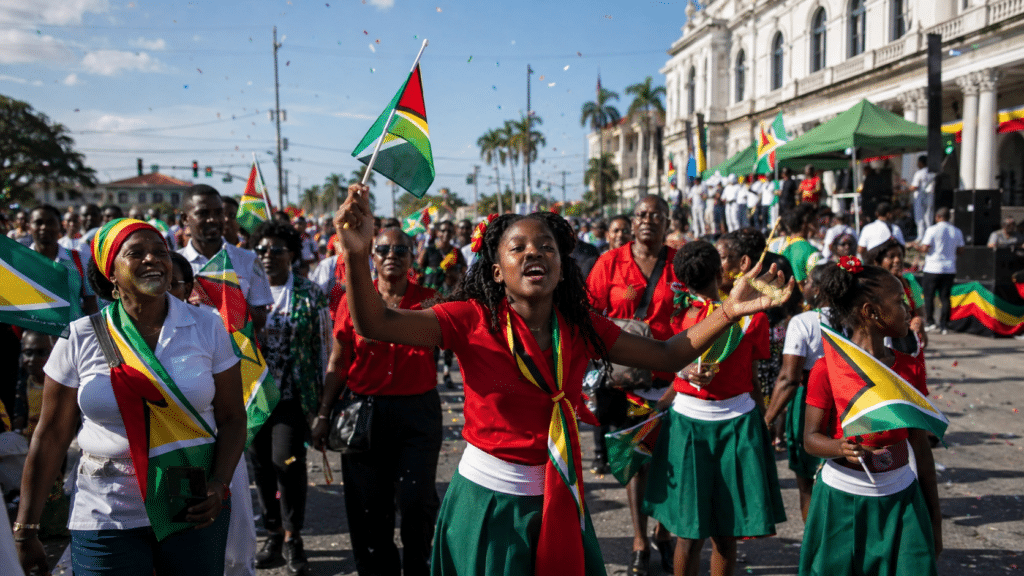
An announcement to mark Guyana's 60th anniversary
The announcement comes at a highly symbolic time: Guyana marks 60 years of independence on May 26, 2026, while Barbados will reach the same milestone on November 30, 2026. The two countries, which have been independent since 1966, have therefore chosen to give this anniversary a very practical translation: bringing their citizens closer together through a simpler procedure.
The political message is clear. In a region with strong historical, family and cultural ties, travel procedures can be cumbersome. By allowing certain citizens to travel with a national identity card, the two governments want to make passage between the territories more accessible.
A strong signal for CARICOM
For decades, CARICOM has championed the idea of a more united Caribbean. But for many locals, this ambition often remains associated with summits, official declarations and institutional texts. Here, integration becomes more concrete. It’s measured by a document you keep in your wallet.
With this decision, Barbados and Guyana are showing that regional cooperation can have a direct impact on their citizens. A family can plan a trip with fewer constraints. An entrepreneur can organize a trip more easily. An artist, a student or a professional will be able to travel to the other country without going through the classic passport procedure, if all the conditions are met.
The measure can also support tourism, cultural and economic exchanges. Barbados and Guyana occupy two different but complementary positions in the English-speaking Caribbean. One is an island with a strong focus on services, tourism and international trade. The other is a continental territory in the throes of economic transformation, with a particular geographical and cultural depth. Bringing them together lends weight to the idea of a less fragmented Caribbean.

Details still awaited
However, we’ll have to wait for further official details. At this stage, the agreement stipulates that eligible citizens will be able to travel with their national identity card. Governments still need to clarify the exact conditions of eligibility, application procedures, rules for minors, length of stay and instructions to be applied by airlines.
These details will be essential to avoid confusion at the time of departure. A mobility measure only really works if citizens, immigration officers and carriers have the same information. It is on this practical ground that the agreement will be judged.
A closer Caribbean, not just in words
The agreement between Barbados and Guyana is a reminder that a region cannot be built on grand principles alone. It is also built with simple decisions, capable of changing habits. Travelling with a national identity card instead of a passport may seem technical. For the citizens concerned, it can become a concrete sign of belonging to a closer regional area.
It now remains to be seen whether this measure will inspire other CARICOM states. For behind this agreement lies a broader question: how far is the Caribbean prepared to go to make regional mobility easier for its own citizens?
From July 1, 2026, eligible citizens of Barbados and Guyana will be able to travel between the two countries with a valid national identity card. They will therefore no longer need to present a passport for this specific journey, according to the new bilateral arrangement announced by the two governments.
The announced agreement primarily concerns the document required for travel. It should not be confused with an automatic right of residence or work. Governments will still have to specify the exact conditions of eligibility, residence rules and procedures applicable to the citizens concerned.
This measure gives concrete form to Caribbean regional integration. By facilitating travel between Barbados and Guyana, it can strengthen family, cultural, tourist and economic ties between two CARICOM member countries, while paving the way for other similar initiatives in the region.
