
Caye Caulker, the Belizean island where slowness becomes strength

Caye Caulker

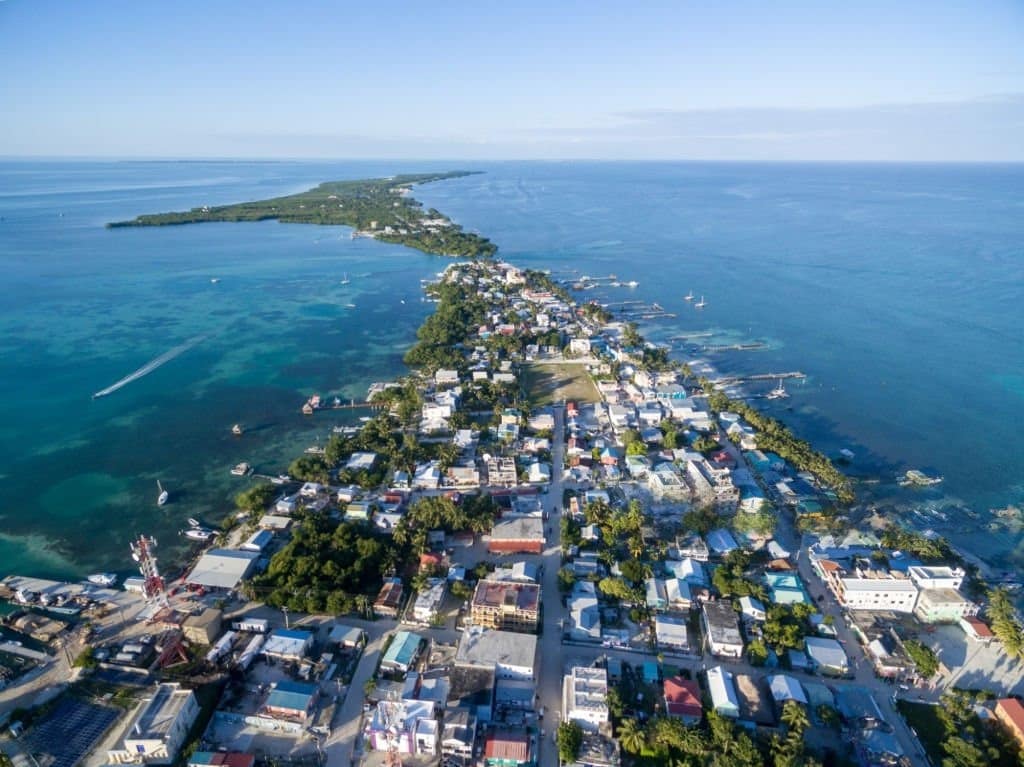
Caye Caulker is a small Belizean island in the Caribbean Sea, close to the Belizean barrier reef. Its identity is based on a simple idea, repeated throughout the island: “Go Slow. This local motto isn’t just an empty slogan; it’s a way of living in the area, welcoming visitors and preserving the island’s distinctive rhythm.

A human-sized island off the coast of Belize

Caye Caulker’s first attraction is its scale. The island is easy to explore on foot, by bike or in a buggy. The sandy streets, small colorful houses, modest accommodations and restaurants overlooking the sea make up a simple setting, where tourism remains close to local life. This organization allows visitors to quickly understand the area, without artificial distance from the locals. Its proximity to Belize City makes it easy to get to, while maintaining a real break with the mainland. On arrival, visitors immediately experience a change of pace: the sound of engines gives way to conversations, boats, wind and the steady movement of the sea.

Caye Caulker
Caye Caulker
Caye Caulker

The coral reef, one of the region's major assets

Caye Caulker’s main natural asset lies offshore. The island is close to the Belize Barrier Reef Reserve System listed as a UNESCO World Heritage site in 1996. This reef system is part of the largest coral reef system in the Atlantic-Caribbean and one of the most important marine ecosystems in the region. This position explains the importance of sea-related activities: underwater observation, outings to the reefs, sailing and supervised fishing. For travelers, Caye Caulker offers direct access to remarkable biodiversity, provided that local rules are respected and responsible operators are chosen.

Caye Caulker
Caye Caulker

The Split, a place that has become a symbol

North of the inhabited part, The Split is one of the best-known spots on Caye Caulker. This channel separates the island into two parts and today functions as a meeting place, bathing and sunset spot. It’s here that the local atmosphere is concentrated: boats passing by, locals chatting, visitors coming to sit facing the water. The site is also a reminder of the fragility of small islands in the face of climatic phenomena. At Caye Caulker, the beauty of the landscape is always accompanied by a very concrete awareness of the environment, currents, reefs and coastal balances.

Caye Caulker

Creole culture visible in everyday life

The island belongs to an English-speaking and Creole Caribbean that is often less present in French-language accounts. English is widely spoken, but local identity is also reflected in the island’s cuisine, music, street life and relationship with the sea. Grilled fish, coconut rice, seafood and simple dishes recall the importance of local resources in daily life. This culture gives the island a distinct personality. Visitors don’t just come for the beach; they encounter a land where hospitality, fishing, slowness and sobriety all come together.

Caye Caulker
Caye Caulker
Caye Caulker
Caye Caulker

Tourism must remain measured

Caye Caulker ‘s popularity is growing, driven by its international reputation and the appeal of Belize. This visibility represents an economic opportunity, but also a challenge. The reefs, mangroves and coastal areas are sensitive. Poorly managed visitor numbers could undermine the very value of the island. For travelers, the right reflex is to choose respectful service providers, limit waste, avoid touching coral, avoid disturbing marine fauna and support small local structures. Caye Caulker offers a lot, but demands real attention in return.

Caye Caulker
Caye Caulker
Caye Caulker

A valuable destination for understanding Belize

Putting Caye Caulker in the spotlight means showing an essential facet of Belize: a Caribbean that is Creole, maritime, popular and focused on preservation. The island has a rare strength: it remains immediately understandable, while opening up to wider issues of reef protection, responsible tourism, island identity and the local economy. For the novice traveler, the island is an accessible gateway to the Belizean Caribbean. For the more experienced reader, it shows how a small territory can build its appeal around a rhythm, a culture and an environment to be protected.

Caye Caulker lies off the coast of Belize in the Caribbean Sea. The island is located close to the Belize Barrier Reef, making it a popular destination for marine activities, including underwater observation and reef excursions.

Caye Caulker is known for its local motto “Go Slow”, its relaxed atmosphere, its sandy streets and its proximity to the Belize Barrier Reef Reserve System, a UNESCO World Heritage Site. The island attracts travelers looking for a simple, seaside holiday rooted in Creole culture.

Caye Caulker is ideal for travelers looking for an island on a human scale, with little traffic, a strong presence of the sea and visible local life. It is particularly suited to those who enjoy walking, reef watching, eating local food and taking the time to understand a territory rather than quickly consuming a destination.

Leave a Reply

Your email address will not be published. Required fields are marked *

More articles from RK

Philippe Faure-Brac
NEWS
Tolotra

Philippe Faure-Brac at Habitation Clément: Martinique rum as seen by a great sommelier.

Philippe Faure-Brac had never visited Habitation Clément before. World’s Best Sommelier 1992, member of the Meilleurs Ouvriers de France with honorary status since 2015, he came to Martinique to look at rhum agricole from its very place of production: the cane, the cellars, the bottling and the tasting. A first visit to Habitation Clément At Habitation Clément, in Le François, this visit had a special significance. Philippe Faure-Brac was already familiar with Clément rums, their quality positioning and their universe. He had also contributed to the book Rhum Clément, une histoire de famille, bringing his insight into the house’s aromatic precision, balance and tradition of excellence. But he lacked the experience of the place. That of the light, the temperature, the atmosphere of the winery and the exchanges with the teams. “The first time in Martinique? I was going to say finally,” he confided, recalling that he had been hoping

Read More »
Boiling Lake
TOURISM
Tolotra

Boiling Lake: 92 °C, 63 m wide, the 2nd largest bubbling lake in the world

Just 8 kilometers east of Roseau, the capital of Dominica, it’s a three-hour walk from Laudat to Boiling Lake. Three hours of humid forest, desolate valley, soil-heated rocks and sulfurous fumes. At the end of the path, a 63-metre-wide pool. Inside, the water bubbles almost continuously, with temperatures measured up to 91.6°C at the edges. It’s the second largest bubbling lake in the world. A rare phenomenon in a UNESCO park The world’s first is Frying Pan Lake in New Zealand’s Waimangu Valley. But the Dominican Boiling Lake is in a class of its own. Firstly, because it can only be reached on foot, after a demanding hike. Secondly, because it is part of a national park that has been a UNESCO World Heritage Site since 1997: Morne Trois Pitons National Park. This makes it one of the most singular geothermal phenomena protected in a world-renowned natural site. A flooded,

Read More »
Tourisme 3.0
TOURISM
Tolotra

Tourism 3.0: Jamaica wants to keep its tourist wealth

At the Montego Bay Convention Centre, the image speaks for itself. Local entrepreneurs showcase their products, hotel representatives circulate, meetings follow one another. Behind these rapid exchanges, one question weighs heavily: when tourism makes money, how much really stays in Jamaica? This is at the heart of Tourism 3.0, the new direction championed by Jamaica’s Minister of Tourism, Edmund Bartlett. At the Tourism Enhancement Fund’s 11th Speed Networking Event, he set out a clear ambition: to make tourism a more direct driver for Jamaican producers, artisans, manufacturers and suppliers. Tourism that no longer just wants to attract Jamaica knows how to welcome visitors. But the challenge is no longer just to fill hotels or increase arrivals. The real challenge is to retain more value in the territory. Edmund Bartlett has recognized a structural weakness: a large proportion of the goods and services consumed by the tourism industry are still imported.

Read More »

conTACT RK

we'd love to have your feedback on your experience so far

Join The List

Join our Richès Karayib community!  Sign up for our newsletter.

Want To Maximize Your Business Presence On Riches Karayib?

Complete the form to start the application