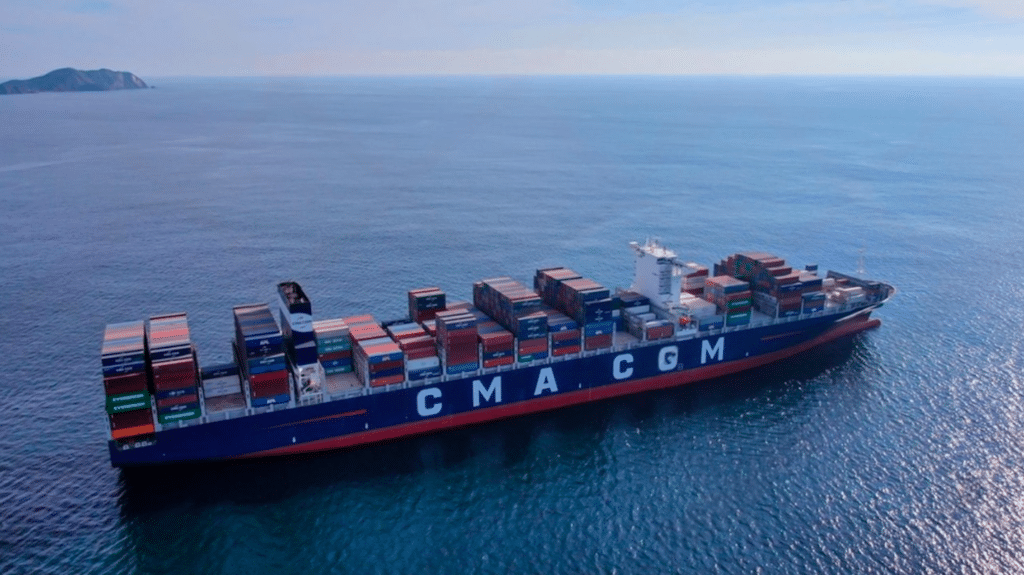
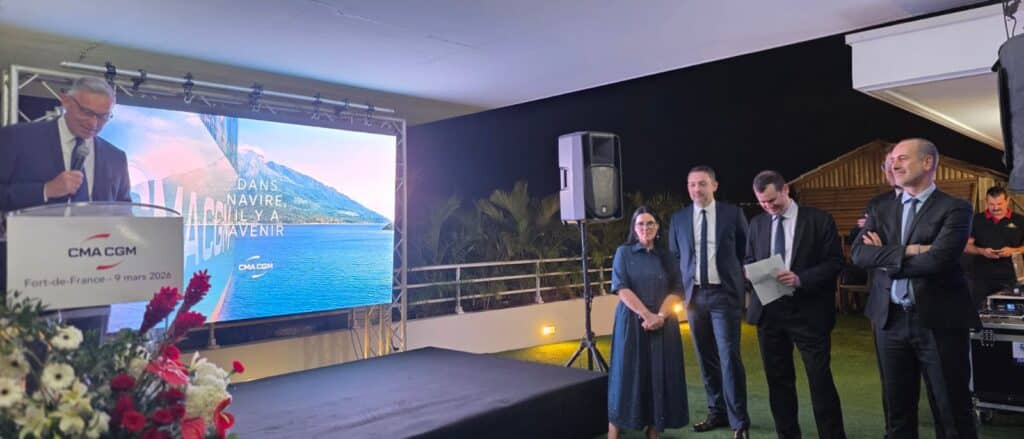
Facing an illuminated 6,000 TEU vessel operating in the middle of the night, on the ninth floor of the Poséidon, with a bird’s eye view of the Fort-de-France terminal, the launch of the PCRF XL maritime service supported by CMA CGM offered a revealing scene of the transformation underway.
Under the terminal’s spotlights, port straddlers and containers move to the rhythm of night-time operations, providing a glimpse of the logistical infrastructure that links Martinique to the rest of the world on a daily basis.
But behind this port mechanism lies a broader question: what if these new maritime routes, beyond transporting goods, were also helping to redefine the place of Caribbean territories in the region’s economic and cultural exchanges?
On a regional scale, these connections could also facilitate the organization of traveling exhibitions, as well as the transport of works, instruments or audiovisual productions between islands – a logistical reality often decisive for cultural projects in the Caribbean.
Supported by CMA CGM, the PCRF XL service is part of a gradual transformation of maritime links between Europe, the French Caribbean territories, the regional Caribbean and Latin America.
Over the past twenty years or so, the vessels operating on these routes have undergone several major changes: from 1,700 TEU units until 2006, then 2,200 TEU vessels, followed by 3,500 TEU vessels, to the 6,000 TEU container ships now deployed by CMA CGM since 2026.
This increase in capacity illustrates a change in scale. It also accompanies a broader ambition: to strengthen the position of the French Caribbean territories in the major maritime flows linking Europe, Latin America and the entire Caribbean basin, as part of a strategy supported in particular by CMA CGM.
A strategic position between the Caribbean and Latin America
This strategy is largely based on the region’s geographical position. Situated close to the major shipping routes linking Europe, North America, Latin America and the Panama Canal, Martinique and Guadeloupe occupy a pivotal position between several economic areas, a position also emphasized by CMA CGM in its logistics analyses…
As Guillaume de Chastellux reminded us at the project presentation:
“The West Indies are the gateway to the Caribbean. We’re at the crossroads of Latin America, facing the Panama Canal with its opening onto the Pacific Ocean, and with Europe and the Mediterranean on the other side.”
In this context, the modernization of port infrastructures and the arrival of larger vessels are not just technical developments. They are also helping to reposition the French Caribbean territories in regional and even international trade.
The maritime hub project led by CMA CGM in partnership with the Grands Ports Maritimes de Martinique et de Guadeloupe aims to increase the overall transhipment capacity of the two islands to approximately 300,000 TEU per year 68,000 today.
Looking at opportunities on a regional scale
In addition to infrastructure, CMA CGM’s management team emphasized the regional dimension of this development at a presentation organized by CMA CGM.
Guillaume de Chastellux put it explicitly:
“I absolutely invite all our customers and partners to get out of their territory and look at the opportunities in the region – trade, industry, processing, re-export, consolidation of goods. The whole field of possibilities is very broad.”
This invitation to broaden horizons refers directly to the regional dynamics of the Caribbean and Latin America. In this area, made up of archipelagos, coastlines and continental territories, the sea remains a central vector for trade, a fact that CMA CGM regularly emphasizes in its regional development strategies…
Strengthening maritime connections can not only facilitate trade flows, but also encourage new cooperation between territories.

Territorial and cultural roots
While the logistical dimension of the project is central, the event also served as a reminder that the Group’s actions are part of a wider territorial environment. Through its foundation and local initiatives, CMA CGM supports a number of social, cultural and environmental projects in the French Caribbean territories.
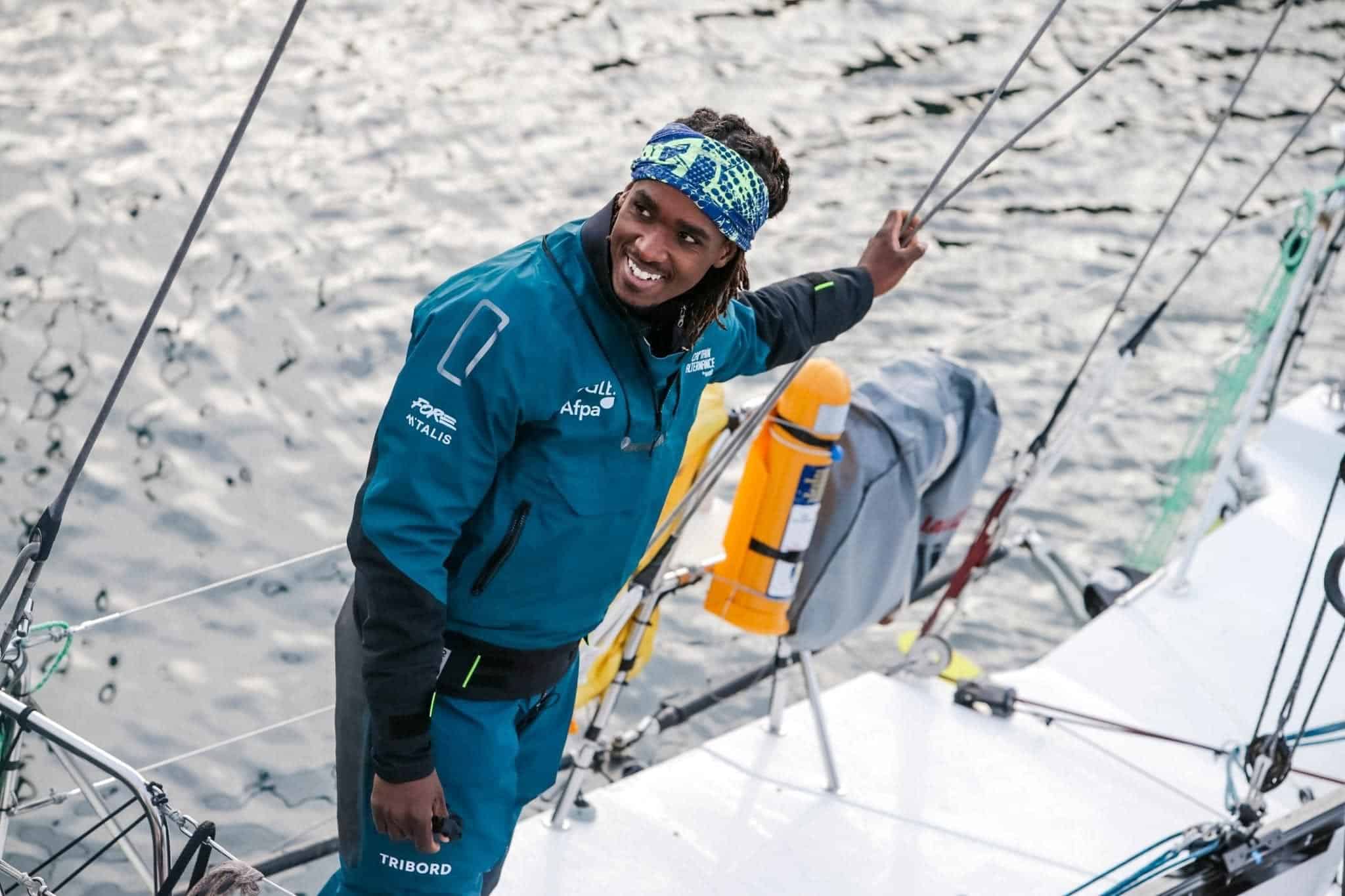
These commitments include support for the Yole ronde de Martinique a nautical discipline emblematic of Martinique’s maritime heritage and a living symbol of the relationship between the sea and the island’s identity.
The Group also supports professional integration initiatives for young people, notably through programs run with the RSMA. The company is also involved in a number of solidarity initiatives with local organizations such as the Food Bank and the Red Cross. This commitment is complemented by environmental initiatives, notably to preserve the mangrove swamp.

A new stage in Martinique's maritime role
Today, three CMA CGM shipping lines serve the port of Fort-de-France. On the horizon 2027 this number is expected to rise to six lines as part of a wider network of some nineteen lines operating in the Caribbean zone. This development could strengthen Martinique ‘s position in regional trade, facilitating connections between the Caribbean islands, Central and South America and Europe.
As these connections develop, another question arises: how these new maritime routes could, in time, also contribute to the wider influence of Caribbean territories in the region and beyond.
The Caribbean lies at the crossroads of major shipping routes linking Europe, North America, Latin America and the Panama Canal. Improved maritime connections can therefore facilitate trade, strengthen regional economic relations and increase the flow of goods between the islands and neighboring continents.
The PCRF XL service aims to modernize maritime links between Europe, the French Caribbean territories, the regional Caribbean and Latin America. The use of 6,000 TEU vessels will increase transport capacity and improve logistics efficiency in the region.
Their geographical position at the heart of the Caribbean basin is a strategic advantage. Located between Europe, Latin America and the shipping routes of the Panama Canal, they can serve as transshipment hubs for redistributing goods to neighboring islands and regional markets.