Ariane 6: French Guiana, the Caribbean pillar of European spaceflight

Ariane 6

On November 4, 2025, the Ariane 6 rocket successfully completed its mission, placing the Sentinel-1D satellite into orbit. Lift-off from the Guiana Space Center in Kourou took place at 6:03 pm under perfectly clear skies. Thirty-four minutes later, the satellite reached orbit, confirming the reliability of the European launcher and the skill of the teams mobilized on site. This success reinforces French Guiana’s place in European space history, and illustrates the decisive role played by this Caribbean territory in global scientific innovation.

A perfectly executed mission

Designed in its twin-engine version, Ariane 6 ensured a flight without the slightest incident. All systems operated stably, from ignition to satellite release. The European Space Agency (ESA) confirmed receipt of the first signal from Sentinel-1D thirty-nine minutes after liftoff, validating the launch as a complete success. This flight marks a new stage in the ramp-up of the Ariane program.

Objective: to guarantee Europe total autonomy of access to space. For French Guiana, this launch consolidates its role as a strategic space base, a symbol of technical and human know-how recognized the world over.

Ariane 6
©CSG Centre spatial guyanais
Ariane 6
©CSG Centre spatial guyanais

The Guiana Space Centre, a driving force for success

For over half a century, Kourou has been home to the French Guiana Space Center, Europe’s spaceport. Its geographical position, close to the equator, allows it to benefit from the Earth’s rotation, saving fuel while increasing payload capacity.
EachAriane 6 launch mobilizes hundreds of specialists: engineers, technicians, operators and safety experts. This activity sustains thousands of direct and indirect jobs in French Guiana, and reinforces the region’s image as a major scientific player. Beyond the local economy, the entire Caribbean region is involved in a project of global scope, uniting innovation, technology and international cooperation.

Ariane 6

Sentinel-1D: a satellite at the service of the Earth

The Sentinel-1D satellite, launched by Ariane 6 is part of the European Copernicus program, designed to observe the planet with unrivalled precision. This satellite replaces Sentinel-1A, launched eleven years ago, and will operate alongside Sentinel-1C. It carries a synthetic aperture radar capable of capturing images of the Earth’s surface, day and night, even under cloud cover.
The data it gathers is essential for maritime surveillance, natural disaster prevention, soil studies and mapping vulnerable areas. Thanks to this information, scientists can monitor land movements, floods and the effects of climate change on coastlines.

Ariane 6

The Caribbean and environmental challenges

From Kourou, satellites powered by Ariane 6 contribute to understanding the climatic phenomena affecting the Caribbean. The region’s islands are among the most exposed to sea-level rise, deforestation and cyclones. Copernicus data enable us to observe these trends and adapt risk management policies.
These radar images are used to map mangroves, monitor coral reef degradation and assess coastal erosion. Through these missions, French Guiana and the Caribbean are actively participating in the global scientific effort to better protect tropical territories. Each launch of This makes Ariane 6 a concrete step towards sustainability and environmental awareness.

Exemplary scientific cooperation

The Sentinel-1D mission is the result of a close partnership between ESA, the European Commission, Thales Alenia Space and Airbus Defence and Space. This cooperation demonstrates the excellence of the European industrial model.
Simonetta Cheli, ESA’s Director of Earth Observation Programs, commented: “This launch aboardAriane 6 completes the Sentinel-1 mission. It ensures the continuity of service that is essential for understanding our environment and for climate research.”

Ramon Torres, Sentinel-1 project manager, praised the collective work of the European and Guyanese teams, underlining the importance of this achievement for the global scientific community. Thanks to these joint efforts, Europe is consolidating its leadership in Earth observation.

Modern, responsible technology

Measuring 60 meters long and weighing nearly 900 tons, Ariane 6 has been designed for flexibility and performance. Its Vulcain 2.1 main engine and reignitable Vinci upper stage enable multiple satellites to be launched on a single mission, while reducing costs and emissions.
The launcher complies with the strictest environmental standards. European engineers have integrated technologies that limit the production of space debris and optimize energy consumption. This concern for efficiency illustrates the desire to reconcile scientific progress with ecological responsibility. By placing Sentinel-1D in orbit, Ariane 6 demonstrates that innovation and sustainability can go hand in hand.

Ariane 6
Ariane 6

French Guiana, between Europe and the Caribbean

The Guiana Space Center embodies the link between Europe and the Caribbean. This tropical territory, both Amazonian and maritime, symbolizes cooperation between continents. In an environment dominated by nature, the presence of the spaceport bears witness to a rare alliance between high technology and preservation of the natural environment.
Each mission is a reminder that French Guiana is not on the bangs of Europe, but at the heart of a global project focused on science and the future. The rockets Ariane 6 rises from this Caribbean territory to serve global research, unite peoples and inspire a new generation of engineers and researchers.

Ariane 6: a shared vision

The successful launch on November 4, 2025 confirms the strength of the European space program. With Ariane 6, Europe has a competitive, safe and sustainable launcher. This success illustrates the ability of European teams to innovate from a Caribbean base.
French Guiana continues to be the pillar of this adventure, linking Earth to space, science to society. Each mission bears witness to the cooperation between nations, and to our confidence in the future. Under the skies of Kourou, the Caribbean proves that it is not only a place of nature, but also a place of progress and excellence.

Leave a Reply

Your email address will not be published. Required fields are marked *

More articles from RK

Man Mélé
VISUAL ARTS
Tolotra

“Man Mélé!”: Cécile Vernant’s Exhibition at the Senate’s Orangerie

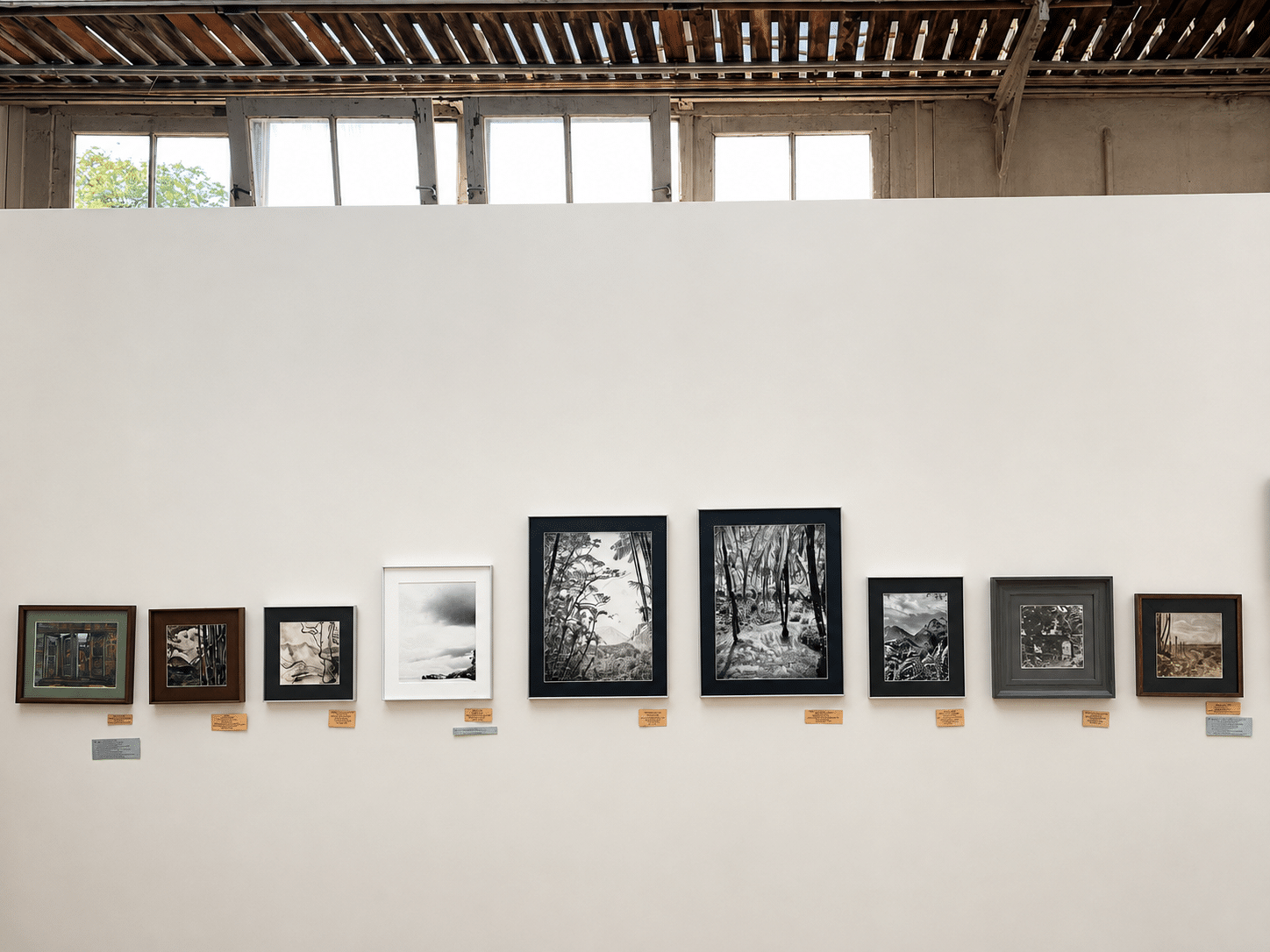
Exhibiting at the Jardin du Luxembourg is often a major milestone in an artist’s career. For artist Cécile Vernant, it is above all an opportunity to connect with the public. From July 17 to 28, 2026, she will present *Man Mélé!* at the Senate’s Orangerie, as part of the Luxembourg Garden Summer Festival. For twelve days, she will personally welcome visitors to this iconic venue at the heart of Parisian cultural life. Selected following the 2026 call for projects, the artist will have 152 m² to showcase her artistic world, where painting, photography, drawing, and ceramics interact freely. After being selected by the Senate, Cécile Vernant reached out to Didier on her own initiative, without having had any prior contact with the company. This choice came naturally: from the brand’s production site, the view takes in the Carbet peaks, a Martinican landscape that runs through her work just as much

Read More »
Saint-Barthélemy
TOURISM
Tolotra

Saint-Barthélemy: 21 km², nearly a century under Swedish sovereignty

When you arrive in Saint-Barthélemy, the first thing you see as you disembark is the name of the capital: Gustavia. Not Sainte-Anne, not Saint-Jean, not a French name. Gustavia. This name marks the beginning of one of the Caribbean’s most unique colonial chapters: that of a French island that became Swedish for nearly a century. A small island long considered unprofitable With an area of 21 square kilometers and a population of 10,660 according to INSEE’s reference population figures as of January 1, 2023, Saint-Barthélemy has a multi-layered history. Christopher Columbus was the first known European navigator to report sighting the island in 1493, during his second voyage. He named it after his brother Bartolomeo. The French established a permanent settlement there in 1648. Philippe de Longvilliers de Poincy, lieutenant general of the American Islands, sent Jacques Gante there with 52 men. Conditions were difficult. There was a shortage of

Read More »
Zouk@Sea by MSC
MARITIME
Tolotra

Zouk@Sea by MSC: 18 weeks of Caribbean music

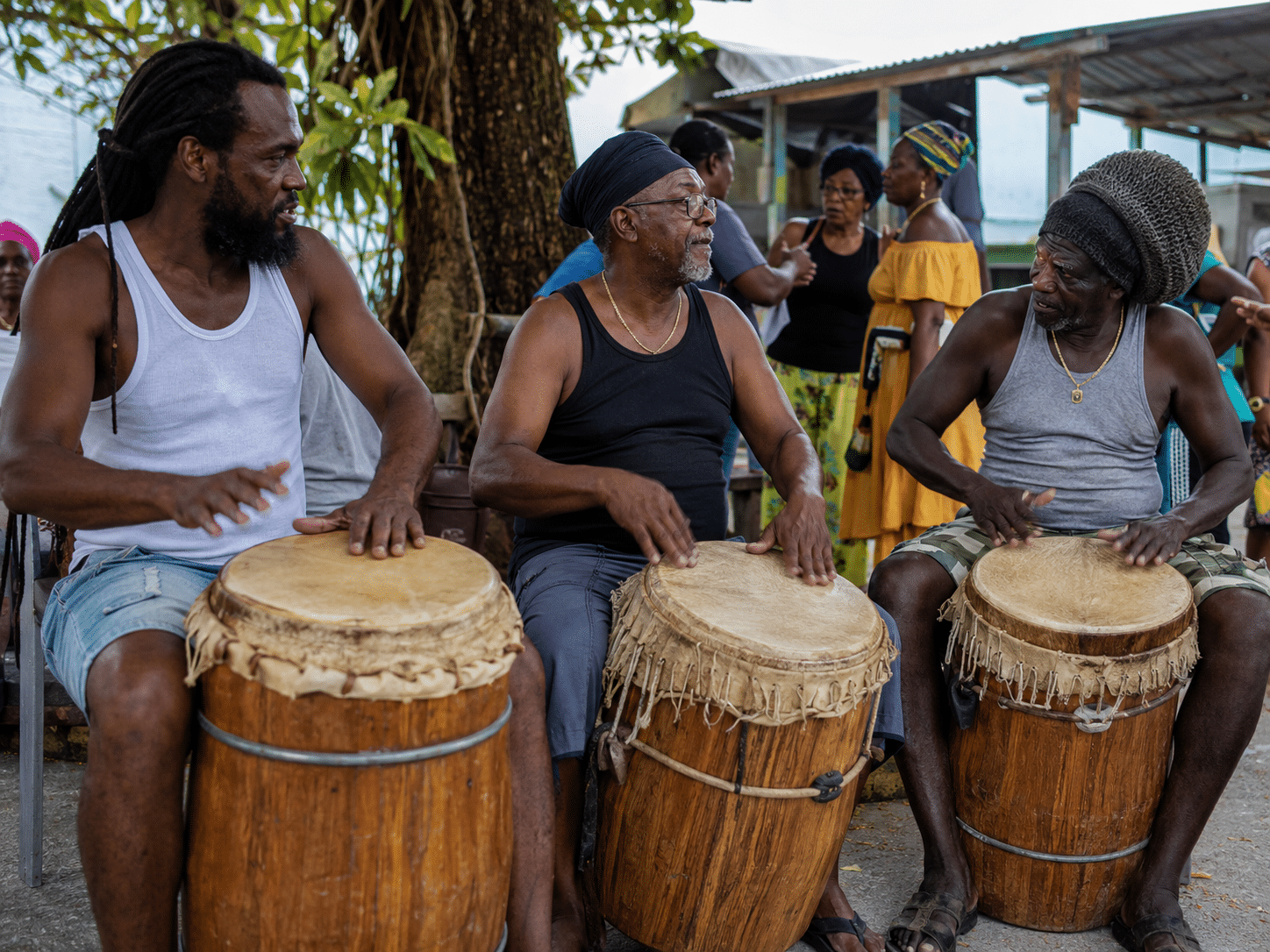
From December 5, 2026, to April 4, 2027, the MSC World Europa will come alive to the rhythms of Caribbean music with the Zouk@Sea by MSC festival. For its third edition, eighteen weeks of musical entertainment will take place on sailings departing from Fort-de-France and Pointe-à-Pitre, featuring artists, live bands, and DJs from Martinique and Guadeloupe. The lineup brings a variety of Caribbean musical styles aboard an international cruise ship: zouk, compas, Creole traditions, urban music, cadence, dancehall, shatta, soca, and DJ sets. A different lineup every week Zouk@Sea by MSC operates on a simple principle: each week, an artist, band, or DJ performs on the cruise. Departures are scheduled for Saturdays from Fort-de-France and Sundays from Pointe-à-Pitre. The season will kick off on December 5 and 6, 2026, with SOS Kantik and a lineup dedicated to Chanté Nwèl. Silonvan will take over on December 12 and 13, followed by

Read More »

conTACT RK

we'd love to have your feedback on your experience so far

Join The List

Join our Richès Karayib community!  Sign up for our newsletter.

Want To Maximize Your Business Presence On Riches Karayib?

Complete the form to start the application