Martinique: when Kalinago voices resonate at the Clément Foundation

Kalinago

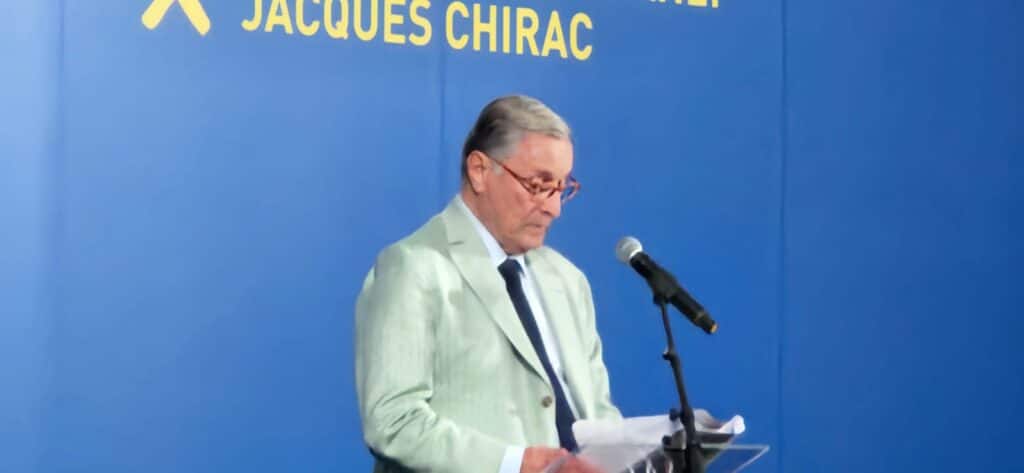
On December 13, 2025, the Fondation Clément in Le François opened the doors to an exhibition that goes beyond the museum. “Aux origines de la Caraïbe: Taïnos & Kalinagos” brings together for the first time 330 works retracing 6,000 years of Amerindian history, from 30 international institutions. Until March 15, 2026, Martinique and Dominica will come together to celebrate a common heritage that has united the archipelago for thousands of years. This unprecedented partnership between the Fondation Clément and the Musée du Quai Branly – Jacques Chirac illustrates a new-found Caribbean unity.

Unprecedented Caribbean cooperation

The exhibition is the fruit of a historic partnership between the Fondation Clément and the Musée du Quai Branly – Jacques Chirac. But it also embodies a symbolic meeting point: Martinique welcomes the President and Chief Kalinago of Dominica, an independent English-speaking country. Beyond borders and political status, the two islands share a common Amerindian heritage that predates European divisions by several millennia.

For Bernard Hayot, President of the Fondation Clément, the stakes are clear: “It’s about offering our young people, our visitors, our researchers, the opportunity to discover here, at home, heritage collections that tell our story.” The Habitation Clément, which welcomed over 250,000 visitors in 2024, is thus asserting its role as a major cultural player in the region.

Kalinago
Bernard Hayot - président de la Fondation Clément

Curated by André Delpuech, General Curator of Heritage, this exhibition brings together, for the first time in the Caribbean, pieces from the Vatican, Berlin, London and Santo Domingo, alongside collections from Martinique, Guadeloupe and the Dominican Republic.

Works include the Taino ceremonial seat (duho) from the Musée du Quai Branly, ceramics from the two-thousand-year-old Saladero culture, and recent archaeological discoveries from the Sainte-Anne excavations in Martinique.

“For the first time, these works are returning to their basin of origin since their creation”, emphasized Martinique Prefect Étienne Desplanques at the inauguration.

A symbolic return that illustrates the desire of Emmanuel Kasarhérou, President of the Musée du Quai Branly, to circulate works of art to their homelands rather than keeping them locked up in European capitals. The 600-square-meter tour traces 6,000 years of history, from the first hunter-gatherers of the 5th millennium to the living communities of today.

Kalinago
Emmanuel Kasarhérou - président du musée du Quai Branly
Kalinago
Prefet de Martinique - Étienne Desplanques

Two Kalinago women at the forefront of history

Sylvanie Burton, President of the Republic of Dominica since 2023, is the first woman and the first Kalinago to hold this office. At her side at the opening, Anette Sanford, the first woman elected chief of the Kalinago Territory of Dominica, represents a living community of over 3,000 people.

“I never thought that in 2023 we would have the first female president of the Republic of Dominica, a Kalinago woman,” confides Sylvanie Burton. “It’s an honor to represent my people. The first peoples of Dominica, the first peoples of the Caribbean, were recognized in this way.” For her, this exhibition goes beyond the museum setting: “It gives us a source of strength: other people internationally recognize our heritage, our cultural identity, and give us the impetus to continue working and living as a people.”

Kalinago
Sylvanie Burton - presidente

Anette Sanford, who recalled in her speech that her ancestors “mastered horticulture and ceramics in the Orinoco Valley”, insists on Kalinago resilience: “What followed in 1492 was a collision that brought wars, massacres and epidemics, almost wiping out our populations. But today, we have endured.”

Kalinago
Annette Sanford

Deconstructing myths, restoring truth

One of the major challenges of the exhibition is to correct distorted historical accounts. “People say a lot of wrong things about indigenous peoples, and this needs to be corrected,” insists Anette Sanford. She cites a specific example: “The island of Dominica is actually called Waitukubuli, named by the indigenous peoples. And the Kalinagos were never cannibals. We had spiritual practices that people have misinterpreted.”

Étienne Desplanques praised the work of archaeologists who, “from one discovery to the next, are shattering misconceptions”. Recent excavations at Sainte-Anne, whose results have been described as exceptional, contribute to this renewed understanding of Amerindian settlement. The exhibition does not shy away from colonial violence: it tackles head-on the massacres, epidemics and exploitation structures that wiped out entire populations. But it rejects the narrative of total disappearance.

The tour also incorporates the documentary “Kalinago Voices”, which captures the living memory of the Dominique community. “I’m particularly proud of this documentary, which ensures that these stories are told by us and for us,” stresses Anette Sanford. A paradigm shift: Kalinagos are no longer objects of study, but subjects of their own narrative.

Kalinago
Kalinago

Rediscovering Caribbean unity

“This exhibition reminds us that the Caribbean is not a fragmented collection of islands divided by colonial borders, but a forgotten cultural unity,” says Anette Sanford. “From the coasts of Venezuela to the shores of Cuba, we were peoples of the sea. The seas were not barriers, but paths that united us.”

This meeting between Martinique and Dominica around the exhibition is a concrete illustration of this vision. Two neighboring islands, separated by colonial history – one French, the other English-speaking and independent – but linked by a common memory that goes back thousands of years.

Sylvanie Burton sees this as a model for the region’s future: “If Caribbean leaders understand that our civilization began with these indigenous peoples, we can all accept and work together as one Caribbean people. It’s a perfect example of how we can work together.”

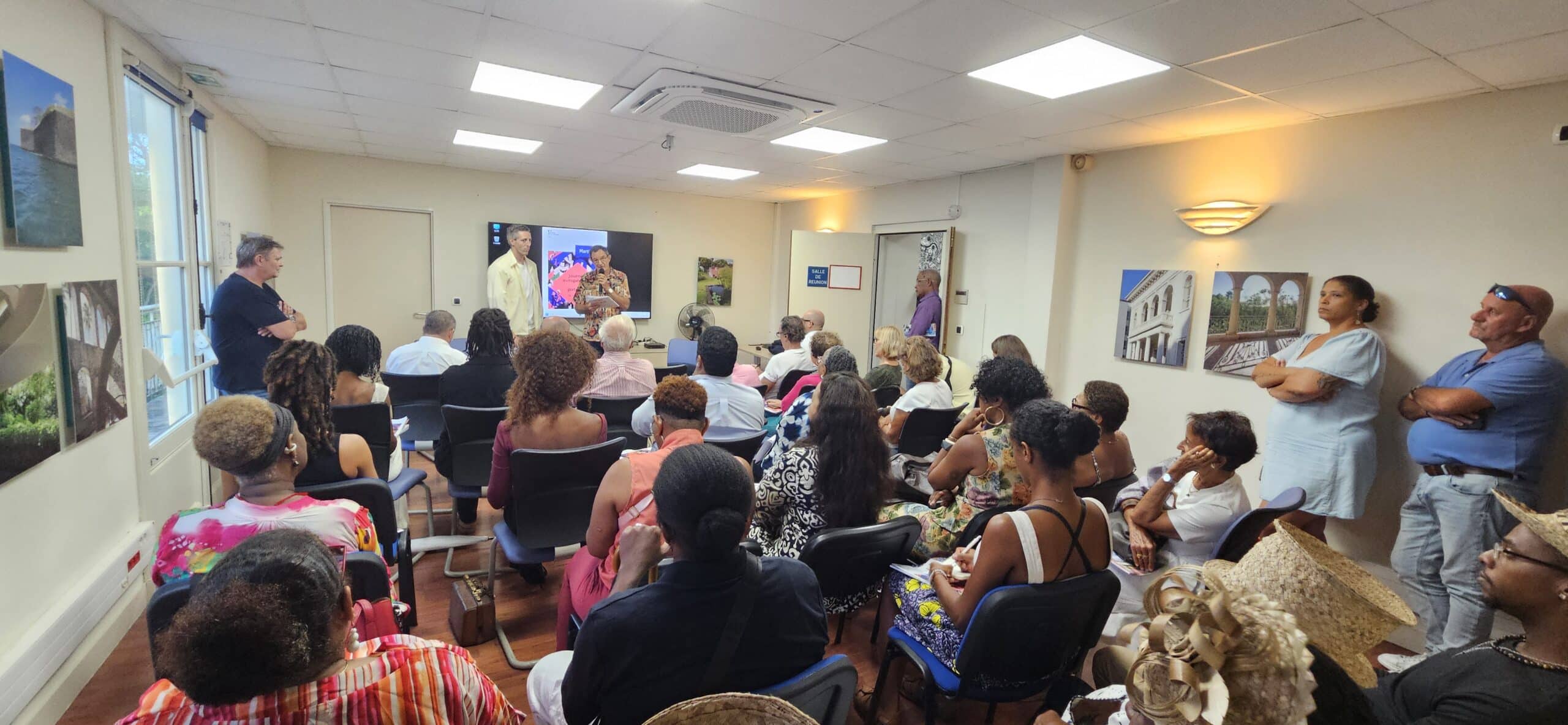
The vernissage was attended by almost 1,500 people, testifying to the anticipation surrounding this heritage recognition.

Bernard Hayot reminds us that “culture is a formidable vector for development” and that “access to culture enables us to transcend borders and meet the world in an enriching confrontation that our island situation makes even more necessary”.

Kalinago
Kalinago
Sylvanie Burton - presidente

Exhibition “At the origins of the Caribbean: Taïnos & Kalinagos”.
Fondation Clément, Le François, Martinique
From December 14, 2025 to March 15, 2026
Free admission | 9 am – 6.30 pm, daily
Over 330 works | 30 partner institutions | 6000 years of history

Kalinago
Kalinago

For Anette Sanford, the message is clear: “I want to encourage the people of Martinique, the people of the Caribbean, to respect indigenous peoples and their rights. Come and visit the Kalinago territory, come and interact with us to see that we are still alive.”

Sylvanie Burton, for her part, sees the exhibition as a model for the future: “We can all come together to understand that our heritage, our origin, the civilization of the Caribbean began with these indigenous peoples. We can all accept and work together as one Caribbean people.”

The presence of these two Kalinago women in the highest positions at this historic opening illustrates that history is written in acts of recognition that shape the future of the Caribbean.

Kalinago
Kalinago

FAQ

The exhibition “At the Origins of the Caribbean: Taïnos & Kalinagos”, presented at the Fondation Clément in Le François, retraces 6,000 years of Amerindian history through more than 330 works from 30 international institutions. It highlights the Taino and Kalinago peoples, their knowledge, their migrations and their living heritage in the contemporary Caribbean.

The joint presence of Silvanie Burton, President of the Republic of Dominica, and Annette Sanford, Chief of the Kalinago Territory, marks a strong institutional recognition of Caribbean indigenous peoples. This is the first time that Kalinago leaders have played a central role in an exhibition of this scale in Martinique, affirming a living memory that is not static.

The exhibition “At the origins of the Caribbean: Taïnos & Kalinagos” is open free of charge at the Fondation Clément, in Le François (Martinique), from December 14, 2025 to March 15, 2026. Open daily from 9am to 6:30pm, the exhibition features a 600 m² immersive journey through the earliest civilizations of the Caribbean.

Leave a Reply

Your email address will not be published. Required fields are marked *

More articles from RK

Philippe Faure-Brac
NEWS
Tolotra

Philippe Faure-Brac at Habitation Clément: Martinique rum as seen by a great sommelier.

Philippe Faure-Brac had never visited Habitation Clément before. World’s Best Sommelier 1992, member of the Meilleurs Ouvriers de France with honorary status since 2015, he came to Martinique to look at rhum agricole from its very place of production: the cane, the cellars, the bottling and the tasting. A first visit to Habitation Clément At Habitation Clément, in Le François, this visit had a special significance. Philippe Faure-Brac was already familiar with Clément rums, their quality positioning and their universe. He had also contributed to the book Rhum Clément, une histoire de famille, bringing his insight into the house’s aromatic precision, balance and tradition of excellence. But he lacked the experience of the place. That of the light, the temperature, the atmosphere of the winery and the exchanges with the teams. “The first time in Martinique? I was going to say finally,” he confided, recalling that he had been hoping

Read More »
Boiling Lake
TOURISM
Tolotra

Boiling Lake: 92 °C, 63 m wide, the 2nd largest bubbling lake in the world

Just 8 kilometers east of Roseau, the capital of Dominica, it’s a three-hour walk from Laudat to Boiling Lake. Three hours of humid forest, desolate valley, soil-heated rocks and sulfurous fumes. At the end of the path, a 63-metre-wide pool. Inside, the water bubbles almost continuously, with temperatures measured up to 91.6°C at the edges. It’s the second largest bubbling lake in the world. A rare phenomenon in a UNESCO park The world’s first is Frying Pan Lake in New Zealand’s Waimangu Valley. But the Dominican Boiling Lake is in a class of its own. Firstly, because it can only be reached on foot, after a demanding hike. Secondly, because it is part of a national park that has been a UNESCO World Heritage Site since 1997: Morne Trois Pitons National Park. This makes it one of the most singular geothermal phenomena protected in a world-renowned natural site. A flooded,

Read More »
Tourisme 3.0
TOURISM
Tolotra

Tourism 3.0: Jamaica wants to keep its tourist wealth

At the Montego Bay Convention Centre, the image speaks for itself. Local entrepreneurs showcase their products, hotel representatives circulate, meetings follow one another. Behind these rapid exchanges, one question weighs heavily: when tourism makes money, how much really stays in Jamaica? This is at the heart of Tourism 3.0, the new direction championed by Jamaica’s Minister of Tourism, Edmund Bartlett. At the Tourism Enhancement Fund’s 11th Speed Networking Event, he set out a clear ambition: to make tourism a more direct driver for Jamaican producers, artisans, manufacturers and suppliers. Tourism that no longer just wants to attract Jamaica knows how to welcome visitors. But the challenge is no longer just to fill hotels or increase arrivals. The real challenge is to retain more value in the territory. Edmund Bartlett has recognized a structural weakness: a large proportion of the goods and services consumed by the tourism industry are still imported.

Read More »

conTACT RK

we'd love to have your feedback on your experience so far

Join The List

Join our Richès Karayib community!  Sign up for our newsletter.

Want To Maximize Your Business Presence On Riches Karayib?

Complete the form to start the application